
|
|
|
|
Vehicle registration plate
|
| |
|
| |
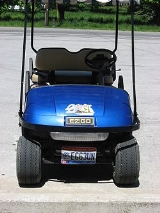
A vehicle registration plate is a metal or plastic plate attached to a motor vehicle or trailer for official identification purposes. The registration identifier is a numeric or alphanumeric code that uniquely identifies the vehicle within the issuing region's database. In some countries, the identifier is unique within the entire country, while in others, it is unique within each state or province. Whether the identifier is associated with a vehicle or a person also varies by issuing agency.

Discussion
Ask a question about 'Vehicle registration plate'
Start a new discussion about 'Vehicle registration plate'
Answer questions from other users
|
Recent Posts

Encyclopedia
A vehicle registration plate is a metal or plastic plate attached to a motor vehicle or trailer for official identification purposes. The registration identifier is a numeric or alphanumeric code that uniquely identifies the vehicle within the issuing region's database. In some countries, the identifier is unique within the entire country, while in others, it is unique within each state or province. Whether the identifier is associated with a vehicle or a person also varies by issuing agency. Depending on the jurisdiction of issue, the vehicle registration plate may be referred to as a license plate, number plate, vehicle tag, license tag, or simply tag.
Legal requirements Most governments require a registration plate to be attached to both the front and rear of a vehicle, although certain jurisdictions or vehicle types, such as motorcycles, only require one plate, which is usually attached to the rear of the vehicle. National databases relate this number to other information describing the vehicle, such as the make, model, color, year of manufacture, engine size, type of fuel used and mileage recorded during the vehicles annual (or bi-annual) road worthiness test, Vehicle identification (Chassis) Number and the name and address of the vehicle's registered owner or keeper.
In some jurisdictions, these registration plates will be permanently assigned to that particular vehicle for its lifetime. Some countries permit the re-registration of the vehicle with "personal" ("vanity" or "Cherished Mark") plates. When the vehicle is destroyed or exported to a different country it will require re-registering in the country of import. China requires the re-registration of any vehicle that crosses its borders from another country, such as overland holiday tourist visits, regardless of the amount of time it is due to remain there; this has to be arranged with prior approval.
In others, such as U.S. states, where they are known as license plates, they may require periodic changing. For cost-saving purposes, however, the tendency for the past three decades has been to simply replace a small decal on the plate's surface, or to use a decal on the windshield to indicate the current expiration date of the registration. Additionally, some jurisdictions follow a "plate-to-owner" policy, meaning that when a vehicle is sold, the seller removes the current plate(s) from the vehicle. Buyers must either obtain new plates from their jurisdiction of residence or attach plates that they already hold from that jurisdiction, as well as formally registering their vehicles, under the buyer's name and the plate number, with the appropriate authorities. A person who sells a car and then purchases a new one can apply to have the old plates put onto this car. One who sells a car and does not buy a new one may, depending on the local laws involved, have to turn the old plates in or destroy them, or may simply be permitted to keep them. Other states keep the plate with the vehicle when ownership passes.
Plates usually are either directly fixed to a vehicle or located in a plate frame which is itself fixed to the vehicle. Sometimes the plate frames contain advertisements inserted by the vehicle service centre or the dealership from which the vehicle was purchased. Vehicle owners can also purchase customised frames to replace the original frames. In some U.S. states, license plate frames are illegal. Plates are designed to conform to certain standards of clarity with regards to being read by the human eye in day or at night, or by electronic equipment. Some drivers purchase clear, smoke-colored or tinted covers that go over the license plate, usually to prevent such electronic equipment from scanning the license plate. Although perhaps useful to those avoiding detection from police, these covers are not legal in the entire United States and their use is discouraged in other countries. The British system of traffic and DVLA number recognition system cameras incorporate filter systems that make such avoidance attempt unworkable, usually with infra-red filters.
Some countries issue registration plates by provincial, territorial, or state governments rather than by National Government.
A licence plate from another state can be worn on a vehicle if the jurisdiction and local laws permits it. If the local laws only assign a rear plate, it is possible to have the license plate of another state, doing so will not result in something illegal.
Also, many jurisdictions have reciprocal agreements with other jurisdictions, allowing license plates from other jurisdictions to be used in their jurisdiction. For example, if a vehicle is registered in any U.S. state, that vehicle may be driven into any other U.S. state without re-registering, unless the owner is moving there. Some jurisdictions, like Texas, will recognize any other jurisdiction's license plate if that jurisdiction recognizes Texas' license plates.
History
License plates have been around almost as long as automobiles, appearing in the earliest period of the transition from the horse, 1890 to 1910. The Netherlands were the first to introduce a national licence plate, first called a "driving permit", in 1898. The first licences were simply plates with a number, starting at 1. By August 8th of 1899 the counter was at 168. When the Dutch chose a different way to number the plates on January 15th 1906 the last issued plate was 2065.
In the U.S., where each state issues plates, New York State has required plates since 1901. At first, plates were not government issued in most jurisdictions and motorists were obliged to make their own. Massachusetts and West Virginia were the first states to issue plates, in 1903.
The earliest plates were made out of porcelain baked onto iron, or simple ceramic with no backing, which made them extremely fragile and impractical. Few examples of these earliest plates survive. Later experimental materials include cardboard, leather, plastic and during wartime shortages copper and pressed soybeans.
Earlier plates varied in size and shape from one jurisdiction to the next, such that if one moved, new holes would be needed drilled into the bumper to support the new plate. Standardization of plates came in 1957, when automobile manufacturers came to agreement with governments and international standards organizations. While peculiar local variants still exist, there are three basic standards worldwide.
- 12 by 6 inches (300 mm by 150 mm) - Used in the majority of the Americas.
- 20.5 by 4.5 inches (520 mm by either 110 or 120 mm) - Used in the bulk of the European countries and many of their former overseas territories.
- 14.5 by 5.3 inches (372 mm by 135 mm) - Used in Australia and some other Pacific Rim countries, about halfway between the dimensions of the other two standards, longer than Western Hemisphere plates but taller than European ones.
Vehicle registration plates by country
Australia
In Australia, vehicle registration plates, usually known as number plates, are normally issued by the State or Territory government; although until 2000, some were issued by the Commonwealth government. Plates are associated with a vehicle and generally last for its life, though as they become unreadable (or for other reasons) they may be recalled or replaced with newer ones. New plates are also issued when the vehicle is registered in another state, or if the owner requests them (though this depends on state laws).
Australian number plates were originally issued with white characters on black plates, with each state and territory being allocated a range of plates inside the larger range AAA000 to ZZZ999. New South Wales, for example, was allocated AAA000 to FZZ999, Victoria was allocated from GAA000, Queensland was allocated OAA000 to QZZ999 and South Australia was allocated from RAA000. This system worked in theory but was soon altered in practice and by 1980 had been almost completely abandoned, with some states having run out of combinations. Tasmania, Western Australia, and the Northern Territory never adopted the system, but the Australian Capital Territory held out to the late 1990s.
The states then chose their own systems. New South Wales, Victoria and South Australia all retained xxx-nnn, but each started over from AAA-000. Queensland reversed the arrangement to nnn-xxx. Western Australia took nxx-nnn, and the ACT kept the Y plate range but substituted the last digit for a letter, giving Yxx-nnx. Victoria is currently the last state to retain the xxx-nnn format as South Australia scrapped the old format as of 1 October 2008.
Current arrangements are listed below.
All current plates are manufactured to uniform dimensions and are made of pressed aluminium, except for certain special series plates; the form of which differs by state and design.
Current standard Australian number plate formats (As at 27/10/2008)
Note: 'x' represents a sequential letter, 'n' represents a sequential number. This list excludes special issue or personalised plate designs.
- Australian Capital Territory: Blue text on white background, with "ACT" above and "CANBERRA - THE NATION'S CAPITAL" below.
Code format: Yxx-nnx - New South Wales: Black text on yellow background, with "NEW SOUTH WALES" below the plate code. Also in circulation are plates showing "NEW SOUTH WALES - THE FIRST STATE" and "NEW SOUTH WALES - THE PREMIER STATE" with code xxx-nnn, from 1980s.
Code format: AB-12-CD. - Victoria: Blue on white background, with "VICTORIA - THE PLACE TO BE" under the plate code. Older plates show "VICTORIA - ON THE MOVE", or "VICTORIA - THE GARDEN STATE" in green on white.
Code format: ABC-123. - Queensland: Maroon text on white background, with "QUEENSLAND - SUNSHINE STATE" or "QUEENSLAND - THE SMART STATE" under the plate code.
Code format: 123-ABC - South Australia: Black on white with "SOUTH AUSTRALIA - THE FESTIVAL STATE" under code.
Code format: S123-ABC. - Western Australia: , Blue on white with WESTERN AUSTRALIA on blue band at top of plate. Older plates black on yellow with format nxx-nnn.
Code format: 1ABC-234. - Tasmania: Green on white with "TASMANIA - Exploring The Possibilities " at bottom and thylacine between the 1st letter and 2 numbers digits. Older plates may show "TASMANIA - HOLIDAY ISLE".
Code format: A -12-BC - Northern Territory: Orange text on white background with "NT - OUTBACK AUSTRALIA" over code.
Code format: 123-456.
To show that a vehicle is registered in Australia, a sticker must be displayed in the lower left corner of either the rear left window or windscreen in annual colours on a 6 year cycle - blue,red, purple, brown, green and orange. This sticker is issued to the registered owner of the vehicle on payment of the next year's registration fee, and shows the expiry date of the registration. They are colour coded for easy recognition of the year of expiry. The sticker shows the plate number, Vehicle Identification Number, Make, Model, and colour of the vehicle, along with other such information. This acts as an anti-theft device, because transplanting the plates from one car to another will be in contrast to the details on the sticker. The Western Australia registration sticker only shows the month and year of expiry.
Botswana
Normal Vehicles have number plates starting with the letter B, followed by three digits, followed by three letters. The digits and letters are assigned by a registar. As with most countries, the three letters will never include the letter 'Q', to avoid confusion with 'O'. Botswana number plates have either a reflective white front and yellow rear background, and black lettering.
|
| |
|
|