
All Topics  
Tay-Sachs disease

 
Tay Sachs Disease

   Email Print
   Bookmark   Link


Tay-Sachs disease


Tay-Sachs disease (abbreviated TSD, also known as GM2 gangliosidosis
Gangliosidosis

Gangliosidosis is a lipid storage disorder caused by the accumulation of lipids known as gangliosides. There are two distinct genetic causes of the disease....
, Hexosaminidase A deficiency or Sphingolipidosis) is a genetic disorder
Genetic disorder

A genetic disorder is an illness caused by abnormalities in genes or chromosomes. While some diseases, such as cancer, are due in part to a genetic disorders, they can also be caused by Environment factors....
, fatal in its most common variant known as Infantile Tay-Sachs disease. TSD is inherited in an autosomal recessive pattern. The disease
Disease

A disease or medical condition is an abnormal condition of an organism that impairs bodily functions, associated with specific symptoms and Medical signs....
 occurs when harmful quantities of a fatty acid
Fatty acid

In chemistry, especially biochemistry, a fatty acid is a carboxylic acid often with a long unbranched aliphatic tail , which is either saturation or Unsaturated compound....
 derivative called a ganglioside
Ganglioside

Ganglioside is a compound composed of a glycosphingolipid with one or more sialic acids linked on the sugar chain. The 60+ known gangliosides differ mainly in the position and number of NANA residue s....
 accumulate in the nerve cells of the brain
Brain

The brain is the center of the nervous system in all vertebrate, and most invertebrate, animals. Some primitive animals such as cnidarian and echinoderm have a decentralized nervous system without a brain, while sponges lack any nervous system at all....
. Gangliosides are lipids, components of cellular membranes, and the ganglioside
Ganglioside

Ganglioside is a compound composed of a glycosphingolipid with one or more sialic acids linked on the sugar chain. The 60+ known gangliosides differ mainly in the position and number of NANA residue s....
 GM2, implicated in Tay-Sachs disease
Tay-Sachs disease

Tay-Sachs disease is a genetic disorder, fatal in its most common variant known as Infantile Tay-Sachs disease. TSD is inherited in an autosomal recessive pattern....
, is especially common in the nervous tissue
Nervous tissue

Nervous tissue is one of four major classes of vertebrate Biological tissue. The function of the nervous tissue is in communication between parts of the body....
 of the brain
Brain

The brain is the center of the nervous system in all vertebrate, and most invertebrate, animals. Some primitive animals such as cnidarian and echinoderm have a decentralized nervous system without a brain, while sponges lack any nervous system at all....
.

The disease
Disease

A disease or medical condition is an abnormal condition of an organism that impairs bodily functions, associated with specific symptoms and Medical signs....
 is named after the British
United Kingdom

The United Kingdom of Great Britain and Northern Ireland, commonly known as the United Kingdom , the UK or Britain,is a sovereign state located off the northwestern coast of continental Europe....
 ophthalmologist Warren Tay
Warren Tay

Warren Tay was a United Kingdom ophthalmologist who in 1881 first described the red spot on the retina of the eye, which is present in Tay-Sachs disease....
 who first described the red spot on the retina
Retina

The vertebrate retina is a light sensitive tissue lining the inner surface of the eye. The optics of the eye create an image of the visual world on the retina, which serves much the same function as the film in a camera....
 of the eye in 1881, and the American
United States

The United States of America is a Federal government constitutional republic comprising U.S. state and a federal district. The country is situated mostly in central North America, where its Contiguous United States and Washington, D.C., the Capital districts and territories, lie between the Pacific Ocean and Atlantic Oceans, Borders of the U...
 neurologist Bernard Sachs
Bernard Sachs

Bernard Sachs was an American neurologist. After graduating with a B.A. from Harvard in 1878, Sachs travelled to Europe and studied under some of the greatest physicians of the time, such as Adolf Kussmaul , Friedrich Daniel von Recklinghausen , Friedrich Goltz , Rudolf Virchow , Karl Friedrich Otto Westphal , Theodor Meynert ...
 of Mount Sinai Hospital, New York
Mount Sinai Hospital, New York

Mount Sinai Hospital, founded in 1852, is one of the oldest and largest teaching hospitals in the United States. In 2008 it was ranked as one of the best hospitals in the U.S....
 who described the cellular
Cell (biology)

The cell is the structural and functional unit of all known Life organisms. It is the smallest unit of an organism that is classified as living, and is often called the building bricks of life....
 changes of Tay-Sachs and noted an increased prevalence in the Eastern Europe
Eastern Europe

Eastern Europe is a term that applies to the geopolitical region encompassing the easternmost part of the Europe. Throughout history and to a lesser extent today, parts of Eastern Europe has been distinguishable from Western Europe and other regions due to cultural, religious, economic, and historical reasons, even though there i...
an Jew
Jew

A Jew is a member of the Jewish people, an ethnoreligious group that traces its ancestry to the Israelites or Hebrews of the Ancient Near East....
ish (Ashkenazi) population in 1887.

Research in the late 20th century demonstrated that Tay-Sachs disease is caused by a genetic mutation
Mutation

In biology, mutations are changes to the nucleotide sequence of the genetic material of an organism. Mutations can be caused by copying errors in the genetic material during cell division, by exposure to ultraviolet or ionizing radiation, chemical mutagens, or virus , or can be induced by the organism, itself, by cellular processes such as s...
 on the HEXA
HEXA

Hexosaminidase A , also known as HEXA, is a human gene.ReferencesFurther reading...
 gene on chromosome 15.


Discussion
Ask a question about 'Tay-Sachs disease'
Start a new discussion about 'Tay-Sachs disease'
Answer questions from other users
Full Discussion Forum


Recent Posts


Encyclopedia


Tay-Sachs disease (abbreviated TSD, also known as GM2 gangliosidosis
Gangliosidosis

Gangliosidosis is a lipid storage disorder caused by the accumulation of lipids known as gangliosides. There are two distinct genetic causes of the disease....
, Hexosaminidase A deficiency or Sphingolipidosis) is a genetic disorder
Genetic disorder

A genetic disorder is an illness caused by abnormalities in genes or chromosomes. While some diseases, such as cancer, are due in part to a genetic disorders, they can also be caused by Environment factors....
, fatal in its most common variant known as Infantile Tay-Sachs disease. TSD is inherited in an autosomal recessive pattern. The disease
Disease

A disease or medical condition is an abnormal condition of an organism that impairs bodily functions, associated with specific symptoms and Medical signs....
 occurs when harmful quantities of a fatty acid
Fatty acid

In chemistry, especially biochemistry, a fatty acid is a carboxylic acid often with a long unbranched aliphatic tail , which is either saturation or Unsaturated compound....
 derivative called a ganglioside
Ganglioside

Ganglioside is a compound composed of a glycosphingolipid with one or more sialic acids linked on the sugar chain. The 60+ known gangliosides differ mainly in the position and number of NANA residue s....
 accumulate in the nerve cells of the brain
Brain

The brain is the center of the nervous system in all vertebrate, and most invertebrate, animals. Some primitive animals such as cnidarian and echinoderm have a decentralized nervous system without a brain, while sponges lack any nervous system at all....
. Gangliosides are lipids, components of cellular membranes, and the ganglioside
Ganglioside

Ganglioside is a compound composed of a glycosphingolipid with one or more sialic acids linked on the sugar chain. The 60+ known gangliosides differ mainly in the position and number of NANA residue s....
 GM2, implicated in Tay-Sachs disease
Tay-Sachs disease

Tay-Sachs disease is a genetic disorder, fatal in its most common variant known as Infantile Tay-Sachs disease. TSD is inherited in an autosomal recessive pattern....
, is especially common in the nervous tissue
Nervous tissue

Nervous tissue is one of four major classes of vertebrate Biological tissue. The function of the nervous tissue is in communication between parts of the body....
 of the brain
Brain

The brain is the center of the nervous system in all vertebrate, and most invertebrate, animals. Some primitive animals such as cnidarian and echinoderm have a decentralized nervous system without a brain, while sponges lack any nervous system at all....
.

The disease
Disease

A disease or medical condition is an abnormal condition of an organism that impairs bodily functions, associated with specific symptoms and Medical signs....
 is named after the British
United Kingdom

The United Kingdom of Great Britain and Northern Ireland, commonly known as the United Kingdom , the UK or Britain,is a sovereign state located off the northwestern coast of continental Europe....
 ophthalmologist Warren Tay
Warren Tay

Warren Tay was a United Kingdom ophthalmologist who in 1881 first described the red spot on the retina of the eye, which is present in Tay-Sachs disease....
 who first described the red spot on the retina
Retina

The vertebrate retina is a light sensitive tissue lining the inner surface of the eye. The optics of the eye create an image of the visual world on the retina, which serves much the same function as the film in a camera....
 of the eye in 1881, and the American
United States

The United States of America is a Federal government constitutional republic comprising U.S. state and a federal district. The country is situated mostly in central North America, where its Contiguous United States and Washington, D.C., the Capital districts and territories, lie between the Pacific Ocean and Atlantic Oceans, Borders of the U...
 neurologist Bernard Sachs
Bernard Sachs

Bernard Sachs was an American neurologist. After graduating with a B.A. from Harvard in 1878, Sachs travelled to Europe and studied under some of the greatest physicians of the time, such as Adolf Kussmaul , Friedrich Daniel von Recklinghausen , Friedrich Goltz , Rudolf Virchow , Karl Friedrich Otto Westphal , Theodor Meynert ...
 of Mount Sinai Hospital, New York
Mount Sinai Hospital, New York

Mount Sinai Hospital, founded in 1852, is one of the oldest and largest teaching hospitals in the United States. In 2008 it was ranked as one of the best hospitals in the U.S....
 who described the cellular
Cell (biology)

The cell is the structural and functional unit of all known Life organisms. It is the smallest unit of an organism that is classified as living, and is often called the building bricks of life....
 changes of Tay-Sachs and noted an increased prevalence in the Eastern Europe
Eastern Europe

Eastern Europe is a term that applies to the geopolitical region encompassing the easternmost part of the Europe. Throughout history and to a lesser extent today, parts of Eastern Europe has been distinguishable from Western Europe and other regions due to cultural, religious, economic, and historical reasons, even though there i...
an Jew
Jew

A Jew is a member of the Jewish people, an ethnoreligious group that traces its ancestry to the Israelites or Hebrews of the Ancient Near East....
ish (Ashkenazi) population in 1887.

Research in the late 20th century demonstrated that Tay-Sachs disease is caused by a genetic mutation
Mutation

In biology, mutations are changes to the nucleotide sequence of the genetic material of an organism. Mutations can be caused by copying errors in the genetic material during cell division, by exposure to ultraviolet or ionizing radiation, chemical mutagens, or virus , or can be induced by the organism, itself, by cellular processes such as s...
 on the HEXA
HEXA

Hexosaminidase A , also known as HEXA, is a human gene.ReferencesFurther reading...
 gene on chromosome 15. A large number of HEXA mutations have been discovered, and new ones are still being reported. These mutations reach significant frequencies in several populations. French Canadians of southeastern Quebec
Quebec

Quebec , in French language, Qu?bec , is a Provinces and territories of Canada in the Central Canada and Eastern Canada regions of Canada....
 have a carrier frequency similar to Ashkenazi Jews, but they carry a different mutation. Many Cajun
Cajun

Cajuns are an ethnic group mainly living in Louisiana, consisting of the descendants of Acadian exiles and peoples of other ethnicities with whom the Acadians eventually intermarried on the semitropical frontier....
s of southern Louisiana
Louisiana

The State of Louisiana is a U.S. state located in the U.S. Southern States of the United States of America. Its capital is Baton Rouge and largest city is New Orleans....
 carry the same mutation that is most common in Ashkenazi Jews. Most HEXA mutations are rare, and do not occur in genetically isolated populations. The disease can potentially occur from the inheritance of two unrelated mutations in the HEXA gene, one from each parent.

Tay-Sachs disease is a rare disease. Other autosomal disorders such as cystic fibrosis
Cystic fibrosis

Cystic Fibrosis is a Genetic disorder affecting the exocrine glands of the lungs, liver, pancreas, and intestines, causing progressive disability due to multisystem failure....
 and sickle cell anemia are far more common. The importance of Tay-Sachs lies in the fact that an inexpensive enzyme assay
Enzyme assay

Enzyme assays are laboratory methods for measuring enzyme activity. They are vital for the study of enzyme kinetics and enzyme inhibitor....
 test was discovered and subsequently automated, providing one of the first "mass screening" tools in medical genetics. It became a research and public health model for understanding and preventing all autosomal genetic disorders.

Symptoms


Tay-Sachs disease is classified in variant forms, based on the time of onset of neurological symptoms. The variant forms reflect diversity in the mutation base.

All patients with Tay-Sachs disease have a "cherry-red" spot, easily observable by a physician using an ophthalmoscope
Ophthalmoscope

The ophthalmoscope is an instrument used to examine the eye. Its use is crucial in determining the health of the retina and the vitreous humor....
, in the back of their eyes (the retina
Retina

The vertebrate retina is a light sensitive tissue lining the inner surface of the eye. The optics of the eye create an image of the visual world on the retina, which serves much the same function as the film in a camera....
). This red spot is the area of the retina which is accentuated because of gangliosides in the surrounding retinal ganglion cells (which are neurons of the central nervous system). The choroid
Choroid

The choroid, also known as the choroidea or choroid coat, is the Blood vessel layer of the eye lying between the retina and the sclera....
al circulation is showing through "red" in this region of the fovea
Fovea

The fovea, also known as the fovea centralis, is a part of the eye, located in the center of the macula region of the retina.The fovea is responsible for sharp central Visual perception , which is necessary in humans for reading , watching television or movies, driving, and any activity where visual detail is of primary importance....
 where all of the retinal ganglion cells are normally pushed aside to increase visual acuity
Visual acuity

Visual acuity is acuteness or clearness of visual perception, especially form vision, which is dependent on the sharpness of the retinal focus within the eye and the sensitivity of the interpretative faculty of the brain....
. Thus, the cherry-red spot is the only normal part of the retina seen. Microscopic analysis of neurons shows that they are distended from excess storage of gangliosides.

  • Infantile TSD. Infants with Tay-Sachs disease appear to develop normally for the first six months of life. Then, as nerve cells become distended with gangliosides, a relentless deterioration of mental and physical abilities occurs. The child becomes blind, deaf, and unable to swallow. Muscles begin to atrophy
    Atrophy

    Atrophy is the partial or complete wasting away of a part of the body. Causes of atrophy include poor nourishment, poor circulatory system, loss of hormone support, loss of nerve supply to the target Organ , disuse or lack of exercise or disease intrinsic to the tissue itself....
     and paralysis
    Paralysis

    Paralysis is the complete loss of muscle function for one or more muscle groups. Paralysis can cause loss of feeling or loss of mobility in the affected area....
     sets in. Death usually occurs before the age of 4 or 5.


  • Juvenile TSD. Extremely rare, Juvenile Tay-Sachs disease usually presents itself in children between 2 and 10 years of age. They develop cognitive, motor, speech difficulties (dysarthria
    Dysarthria

    Dysarthria is a motor speech disorder resulting from Brain damage, characterised by poor articulation . Any of the speech subsystems can be affected....
    ), swallowing difficulties (dysphagia
    Dysphagia

    Dysphagia is the medical term for the symptom of difficulty in swallowing. Although classified under "symptoms and signs" in ICD-10, the term is sometimes used as a condition in its own right....
    ), unsteadiness of gait (ataxia
    Ataxia

    Ataxia is a neurology sign and symptom consisting of gross lack of coordination of muscle movements. Ataxia is a non-specific clinical manifestation implying dysfunction of parts of the nervous system that coordinate movement, such as the cerebellum....
    ), and spasticity
    Spasticity

    Spasticity or muscular hypertonicity is a disorder of the central nervous system in which certain muscles continually receive a message to tighten and contract....
    . Patients with Juvenile TSD usually die between 5–15 years.


  • Adult/Late Onset TSD. A rare form of the disorder, known as Adult Onset Tay-Sachs disease or Late Onset Tay-Sachs disease (LOTS), occurs in patients in their 20s and early 30s. LOTS is frequently misdiagnosed, and is usually non-fatal. It is characterized by unsteadiness of gait and progressive neurological deterioration. Symptoms of LOTS, which present in adolescence or early adulthood, include speech and swallowing difficulties, unsteadiness of gait, spasticity, cognitive decline, and psychiatric illness, particularly schizophrenic
    Schizophrenia

    Schizophrenia , from the Ancient Greek Root schizein and phren, phren- is a psychiatry diagnosis that describes a mental disorder characterized by abnormalities in the perception or expression of reality....
    -like psychosis
    Psychosis

    Psychosis , with adjective psychotic, literally means abnormal condition of the mind, and is a generic psychiatry term for a mental state often described as involving a "loss of contact with reality"....
    . Patients with LOTS frequently become full-time wheelchair
    Wheelchair

    A wheelchair is a wheeled mobility device in which the user sits. The device is propelled either manually or via various automated systems. Wheelchairs are used by people for whom walking is difficult or impossible due to illness , injury, or disability....
     users in adulthood, but many live full adult lives if psychiatric and physical difficulties are accommodated. Psychiatric symptoms and seizures can be controlled with medications.


The development of improved testing methods has allowed neurologists to diagnose Tay-Sachs and other neurological diseases with greater precision. Until the 1970s and 80s, when the molecular genetics of the disease became known, the juvenile and adult forms of the disease were not always recognized as variants of Tay-Sachs. Post-infantile Tay-Sachs was often mis-diagnosed as another neurological disorder, such as Friedreich ataxia.

Etiology and pathogenesis

The condition is caused by insufficient activity of an enzyme called hexosaminidase A that catalyzes the biodegradation of fatty acid
Fatty acid

In chemistry, especially biochemistry, a fatty acid is a carboxylic acid often with a long unbranched aliphatic tail , which is either saturation or Unsaturated compound....
 derivatives known as ganglioside
Ganglioside

Ganglioside is a compound composed of a glycosphingolipid with one or more sialic acids linked on the sugar chain. The 60+ known gangliosides differ mainly in the position and number of NANA residue s....
s. Hexosaminidase A is a vital hydrolytic enzyme, found in the lysosomes, that breaks down lipids. When Hexosaminidase A is no longer functioning properly, the lipids accumulate in the brain and cause problems. Gangliosides are made and biodegraded rapidly in early life as the brain develops. Patients and carriers of Tay-Sachs disease can be identified by a simple blood test
Blood test

A blood test is a medical laboratory analysis performed on a blood sample that is usually extracted from a vein in the arm using a hypodermic needle, or via fingerprick....
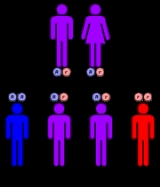
 that measures hexosaminidase A activity. TSD is a recessive genetic disorder, meaning that both parents must be carriers in order to give birth to an affected child. Then, there is a 25% chance with each pregnancy of having a child with TSD. Prenatal monitoring of pregnancies is available.

Hydrolysis
Hydrolysis

Hydrolysis is a chemical reaction during which one or more water are split into hydrogen and hydroxide ions which may go on to participate in further reactions....
 of GM2-ganglioside requires three proteins. Two of them are subunits of hexosaminidase A, and the third is a small glycolipid
Glycolipid

Glycolipids are carbohydrate-attached lipids. Their role is to provide energy and also serve as genetic marker for Cell recognition.They occur where a carbohydrate chain is associated with phospholipids on the exoplasmic surface of the cell biological membrane....
 transport protein, the GM2 activator protein (GM2A), which acts as a substrate specific cofactor
Cofactor (biochemistry)

A cofactor is a non-protein chemical compound that is bound to an enzyme and is required for catalysis. They can be considered "helper molecules/ions" that assist in biochemical transformations....
 for the enzyme. Deficiency in any one of these proteins leads to storage of the ganglioside, primarily in the lysosomes of neuronal cells. Tay-Sachs disease (along with GM2-gangliosidosis and Sandhoff disease) occurs because a genetic mutation inherited from both parents deactivates or inhibits this process. Most Tay-Sachs mutations appear not to affect functional elements of the protein. Instead, they cause incorrect folding or assembly of the enzyme, so that intracellular transport is disabled.

Mutations and polymorphism


The disease results from mutation
Mutation

In biology, mutations are changes to the nucleotide sequence of the genetic material of an organism. Mutations can be caused by copying errors in the genetic material during cell division, by exposure to ultraviolet or ionizing radiation, chemical mutagens, or virus , or can be induced by the organism, itself, by cellular processes such as s...
s on chromosome 15 in the HEXA gene
Gene

A gene is the basic unit of heredity in a living organism. All living things depend on genes. Genes hold the information to build and maintain their cell and pass genetic trait to offspring....
 encoding the alpha-subunit of the lysosomal enzyme
Enzyme

Enzymes are biomolecules that catalysis chemical reactions. Almost all enzymes are proteins. In enzymatic reactions, the molecules at the beginning of the process are called Substrate , and the enzyme converts them into different molecules, the products....
 beta-N-acetylhexosaminidase A. More than 90 mutations have been identified to date in the HEXA gene, and new mutations are still being reported. These mutations have included base pair
Base pair

In molecular biology, two nucleotides on opposite complementarity DNA or RNA strands that are connected via hydrogen bonds are called a base pair ....
 insertions and deletions, splice site mutations, point mutations, and other more complex patterns. Each of these mutations alters the protein product, and thus inhibits the function of the enzyme in some manner. In recent years, population studies and pedigree analysis have shown how such mutations arise and spread within small founder populations
Founder effect

In population genetics, the founder effect is the loss of genetic variation that occurs when a new population is established by a very small number of individuals from a larger population....
. Initial research focused on several such founder populations:

  • Ashkenazi Jews
    Ashkenazi Jews

    File:Juden 1881.JPGAshkenazi Jews, also known as Ashkenazic Jews or Ashkenazim , are the Jews descended from the medieval Jewish ethnic divisions of the Rhineland in the west of Germany....
    . A four base pair insertion in exon
    Exon

    An exon in a gene is a DNA or RNA sequence that is translated into RNA or protein. In contrast, an intron is a DNA sequence in the gene that is not translated....
     11 (1278insTATC) results in an altered reading frame
    Reading frame

    In biology, a reading frame is a contiguous and non-overlapping set of three-nucleotide codons in DNA or RNA. There are 3 possible reading frames in an mRNA strand and six in a double stranded DNA molecule due to the two strands from which transcription is possible....
     for the HEXA gene. This mutation is the most prevalent mutation in the Ashkenazi Jewish population, and leads to the infantile form of Tay-Sachs disease.


  • Cajun
    Cajun

    Cajuns are an ethnic group mainly living in Louisiana, consisting of the descendants of Acadian exiles and peoples of other ethnicities with whom the Acadians eventually intermarried on the semitropical frontier....
    . The same mutation found among Ashkenazi Jews occurs in the Cajun population of southern Louisiana, an American ethnic group that has been isolated for several hundred years because of linguistic differences. Researchers have traced carriers from several Louisiana families to a single founder couple, not known to be Jewish, that lived in France in the 18th century.


  • French Canadians. A mutation that is unrelated to the predominant Ashkenazi mutation, a long sequence deletion, occurs with similar frequency in families with French Canadian ancestry, and has the same pathological effects. Like the Ashkenazi Jewish population, the French Canadian population grew rapidly from a small founder group, and remained isolated from surrounding populations because of geographic, cultural, and language barriers. In the early days of Tay-Sachs research, the mutations in these two populations were believed to be identical. Some researchers claimed that a prolific Jewish ancestor must have introduced the mutation into the French Canadian population. This theory became known as the "Jewish Fur Trader Hypothesis" among researchers in population genetics. However, subsequent research has demonstrated that the two mutations are unrelated, and pedigree analysis has traced the French Canadian mutation to a founding family that lived in southern Quebec in the late 17th century.


In the 1960s and early 1970s, when the biochemical basis of Tay-Sachs disease was first becoming known, no mutations had been sequenced directly for any genetic diseases. Researchers of that era did not yet know how common polymorphism
Polymorphism (biology)

Polymorphism in biology occurs when two or more clearly different phenotypes exist in the same population of a species ? in other words, the occurrence of more than one form or morph....
 would prove to be. The "Jewish Fur Trader Hypothesis," with its implication that a single mutation must have spread from one population into another, reflected the knowledge of the time. Subsequent research has proven that a large number of HEXA mutations can cause some form of the disease. Because Tay-Sachs disease was one of the first genetic disorders for which widespread genetic screening was possible, it is one of the first genetic disorders in which the prevalence of compound heterozygosity
Compound heterozygosity

Compound heterozygosity is the condition of having two recessive alleles that can cause a particular disease in a heterozygous state. In the case of sickle cell anemia, for example, an individual with one allele for hemoglobin S and one allele for hemoglobin C would still develop the disease, despite being heterozygous for both genes....
 was demonstrated.

Compound heterozygosity ultimately explains some of the variability of the disease, including late-onset forms. The disease can potentially result from the inheritance of two unrelated mutations in the HEXA gene, one from each parent. Classic infantile TSD results when a child has inherited mutations from both parents that completely inactivate the biodegradation
Biodegradation

Biodegradation is the process by which organic compound substances are decomposition by the enzymes produced by living organisms. The term is often used in relation to ecology, waste management and natural environmental environmental remediation ....
 of ganglioside
Ganglioside

Ganglioside is a compound composed of a glycosphingolipid with one or more sialic acids linked on the sugar chain. The 60+ known gangliosides differ mainly in the position and number of NANA residue s....
s. Late onset forms of the disease occur because of the diverse mutation base. Patients may technically be heterozygote
Zygosity

In genetics, zygosity refers to the similarity or dissimilarity of the DNA sequences in specific coding segments, or genes, on the homologous chromosomes chromosomes of a zygote, or fertilisation ovum....
s, but with two different HEXA mutations that both inactivate, alter, or inhibit enzyme activity in some way. When a patient has at least one copy of the HEXA gene that still enables some hexosaminidase A activity, a later onset form of the disease occurs. When disease occurs because of two unrelated mutations, the patient is said to be a compound heterozygote
Compound heterozygosity

Compound heterozygosity is the condition of having two recessive alleles that can cause a particular disease in a heterozygous state. In the case of sickle cell anemia, for example, an individual with one allele for hemoglobin S and one allele for hemoglobin C would still develop the disease, despite being heterozygous for both genes....
.

Testing


Two approaches to testing for Tay-Sachs mutations are available. As with all biomedical tests, both approaches produce some false positive and false negative results. The two methods are used in tandem because an enzyme assay can detect all mutations with some inconclusive results, while PCR based methods can give definite results, but only for known mutations. Family history can be used to select a more effective testing protocol.

  • Enzyme assay
    Enzyme assay

    Enzyme assays are laboratory methods for measuring enzyme activity. They are vital for the study of enzyme kinetics and enzyme inhibitor....
    . Enzyme assay techniques detect individuals with lower levels of hexosaminidase A. Development of a serum enzyme assay test made it feasible to conduct large scale screening for Tay-Sachs in targeted at-risk populations such as Ashkenazi Jews. Developed in the late 1960s and then automated during the 1970s, the serum test was a first in medical genetics. It produced few false positives among Ashkenai Jews, the first group targeted for screening, because fewer pseudodeficiency alleles
    Pseudodeficiency alleles

    A pseudodeficiency allele or pseudodeficiency mutation is a mutation that alters the protein product or changes the gene's expression, but without causing disease....
     are found in this population, as compared with the general population. Serum testing gives inconclusive results in about 10% of cases when used to screen individuals from the general population. Serum testing also cannot be used to test pregnant women or women using hormonal birth control pills. To address these deficiencies, other techniques using enzyme assay have been developed. Enzyme testing with platelets or other leukocytes produces inconclusive rates in under 0.5% of cases, and can be used for pregnant women.


  • Polymerase chain reaction
    Polymerase chain reaction

    The polymerase chain reaction is a technique widely used in molecular biology. It derives its name from one of its key components, a DNA polymerase used to amplify a piece of DNA by in vitro enzyme DNA replication....
    . PCR techniques amplify a sample of DNA and then test genetic markers to identify actual mutations. Current PCR testing methods screen a panel of the most common mutations, although this leaves open a small probability of both false positive and false negative results. PCR testing is more effective when the ancestry of both parents is known, allowing for proper selection of genetic markers. Genetic counselors, working with couples that plan to conceive a child, assess risk factors based on ancestry to determine which testing methods are appropriate. As the cost of PCR techniques declines and knowledge about mutations increases, it may become feasible and economical to screen for all known mutations. It may eventually be cost effective to sequence the entire HEXA gene in at-risk individuals, which would identify novel as well as known mutations.


Screening for Tay-Sachs disease was one of the first great successes of the emerging field of genetic counseling and diagnosis. Jewish communities, both inside and outside of Israel, embraced the cause of genetic screening from the 1970s on. Success with Tay-Sachs disease led Israel to become the first country to offer free genetic screening and counseling for all couples. Israel has become a leading center for research on genetic disease. Both the Jewish and Arab/Palestinian populations in Israel contain many ethnic and religious minority groups, and Israel's initial success with Tay-Sachs disease has led to the development of screening programs for other diseases. Israel's success with Tay-Sachs disease has also opened several discussions and debates about the proper scope of genetic testing for other disorders.

Proactive testing has been quite effective in eliminating Tay-Sachs occurrence among Ashkenazi Jews, both in Israel
Israel

Israel officially the State of Israel , is a country in the Middle East located on the eastern shore of the Mediterranean Sea. It borders Lebanon in the north, Syria in the northeast, Jordan in the east, and Egypt on the southwest, and contains geographically diverse features within its relatively small area....
 and in the diaspora
Jewish diaspora

The Jewish diaspora , the presence of Jews outside of the Land of Israel, is a result of the expulsion or emigration of Jews from Israel and religious conversion to Judaism....
. On January 18, 2005, the Israeli English language daily Haaretz
Haaretz

Haaretz is Israel's oldest daily newspaper. It was founded in 1918 and is now published in both Hebrew language and English language in Berliner format....
 reported that as a "Jewish disease" Tay-Sachs had almost been eradicated. Of the 10 babies born with Tay-Sachs in North America in 2003, none had been born to Jewish families. In Israel, only one child was born with Tay-Sachs in 2003, and preliminary results from early 2005 indicated that none were born with the disease in 2004.

Prevention

Three approaches have been used to prevent or reduce the incidence of Tay-Sachs disease in the Ashkenazi Jewish population:

  • Prenatal diagnosis
    Prenatal diagnosis

    Prenatal testing is testing for diseases or conditions in a fetus or embryo before it is born. The aim is to detect birth defects such as neural tube defects, Down syndrome, chromosome abnormalities, genetic diseases and other conditions....
    . If both parents are identified as carriers, prenatal genetic testing can determine whether the fetus has inherited a defective copy of the gene from both parents. For couples who are willing to terminate the pregnancy, this eliminates the risk of Tay-Sachs, but abortion raises ethical issues for many families.


  • Mate selection. In Orthodox Jewish circles, the organization Dor Yeshorim
    Dor Yeshorim

    Dor Yeshorim , also called Committee for Prevention of Genetic Diseases, is an organization that offers genetic screening to members of the worldwide Jewish community....
     carries out an anonymous screening program so that couples who are likely to conceive a child with Tay-Sachs or another genetic disorder can avoid marriage. Nomi Stone of Dartmouth College
    Dartmouth College

    Dartmouth College is a private university, coeducational university located in Hanover, New Hampshire, New Hampshire. Incorporated as "Trustees of Dartmouth College,"...
     describes this approach. "Orthodox Jewish high school students are given blood tests to determine if they have the Tay-Sachs gene. Instead of receiving direct results as to their carrier status, each person is given a six-digit identification number. Couples can call a hotline, if both are carriers, they will be deemed 'incompatible.' Individuals are not told they are carriers directly to avoid any possibility of stigmatization or discrimination. If the information were released, carriers could potentially become unmarriageable within the community." Anonymous testing eliminates the stigma of carriership while decreasing the rate of homozygosity in this population. Stone notes that this approach, while effective within a confined population such as Hasidic or Orthodox Jews, may not be effective in the general population.


  • Preimplantation genetic diagnosis
    Preimplantation genetic diagnosis

    In medicine and genetics preimplantation genetic diagnosis refers to procedures that are performed on embryos prior to implantation, sometimes even on oocytes prior to fertilization....
    . By retrieving the mother's eggs for in vitro fertilization and conceiving a child outside the womb, it is possible to test the embryo prior to implantation. Only healthy embryos are selected for transfer into the mother's womb. In addition to Tay-Sachs disease, PGD has been used to prevent cystic fibrosis
    Cystic fibrosis

    Cystic Fibrosis is a Genetic disorder affecting the exocrine glands of the lungs, liver, pancreas, and intestines, causing progressive disability due to multisystem failure....
    , sickle cell anemia, Huntington's disease
    Huntington's disease

    Huntington's disease, also called Huntington's Chorea , chorea major, or HD, is a genetics Neurodegenerative disease characterized after onset by uncoordinated, jerky body movements and a decline in some mental abilities....
    , and other genetic disorders. However this method is expensive. It requires invasive medical technologies, and is beyond the financial means of many couples.


Therapy

There is currently no cure or treatment for TSD. Even with the best care, children with Infantile TSD die by the age of 5, and the progress of Late-Onset TSD can only be slowed, not reversed. Since Tay-Sachs disease is a lysosomal storage disorder, the research strategies have been those for lysosomal storage disorders in general. Several methods of treatment have been investigated for Tay-Sachs disease, but none have passed the experimental stage:

  • Enzyme replacement therapy
    Enzyme replacement therapy

    Enzyme replacement therapy is a medical treatment replacing an enzyme in patients in whom that particular enzyme is deficient or absent. Usually this is done by giving the patient an intravenous infusion containing the enzyme....
    . Several ERT techniques have been investigated for lysosomal storage disorders, and could potentially be used to treat Tay-Sachs disease. The goal would be to replace the missing enzyme, a process similar to insulin
    Insulin

    Insulin is a hormone with extensive effects on both metabolism and several other body systems . Insulin causes most of the body's cells to take up glucose from the blood , storing it as glycogen in the liver and muscle, and stops use of fat as an energy source....
     injections for diabetes. However, the HEXA enzyme has proven to be too large to pass through the blood into the brain through the blood-brain barrier
    Blood-brain barrier

    The blood-brain barrier is a metabolic or cellular structure in the central nervous system that restricts the passage of various chemical substances and microscopic objects between the bloodstream and the neural tissue itself, while still allowing the passage of substances essential to metabolism function ....
    . Blood vessels in the brain develop junctions so small that many toxic (or large) molecules cannot enter into nerve cells and cause damage. Researchers have also tried instilling the enzyme into cerebrospinal fluid
    Cerebrospinal fluid

    Cerebrospinal fluid , Liquor cerebrospinalis, is a clear bodily fluid that occupies the subarachnoid space and the ventricular system around and inside the brain....
    , which bathes the brain. However, neurons are unable to take up the large enzyme efficiently even when it is placed next to the cell, so the treatment is still ineffective.


  • Gene therapy
    Gene therapy

    Gene therapy is the insertion of genes into an individual's cell and Biological tissues to treat a disease, such as a hereditary disease in which a deleterious mutant allele is replaced with a functional one....
    . Several options for gene therapy have been explored for Tay-Sachs and other lysosomal storage diseases. If the defective genes could be replaced throughout the brain, Tay-Sachs could theoretically be cured. However, researchers working in this field believe that they are years away from the technology to transport the genes into neurons, which would be as difficult as transporting the enzyme. Use of a viral vector
    Viral vector

    Viral vectors are a tool commonly used by molecular biologists to deliver genetic material into cell s. This process can be performed inside a living organism or in cell culture ....
    , promoting an infection as a means to introduce new genetic material into cells, has been proposed as a technique for genetic diseases in general. Hematopoetic stem cell therapy (HSCT), another form of gene therapy, uses cells that have not yet differentiated and taken on specialized functions. Yet another approach to gene therapy uses stem cells from umbilical cord blood
    Cord blood

    Umbilical cord blood is up to 180mL of blood from a Infant that is returned to the neonatal circulation if the umbilical cord is not prematurely clamped....
     in an effort to replace the defective gene. Although the stem cell approach has been effective with Krabbé disease
    Krabbe disease

    Krabbe disease is a rare, often fatal degenerative disorder that affects the myelin sheath of the nervous system. This condition is inherited in an autosomal recessive pattern....
    , no results for this method have been reported with Tay-Sachs disease.


  • Substrate reduction therapy. Other highly experimental methods being researched involve manipulating the brain's metabolism of GM2 ganglioside
    Ganglioside

    Ganglioside is a compound composed of a glycosphingolipid with one or more sialic acids linked on the sugar chain. The 60+ known gangliosides differ mainly in the position and number of NANA residue s....
    s. One experiment has demonstrated that, by using the enzyme sialidase, the genetic defect can be effectively bypassed and GM2 ganglioside
    Ganglioside

    Ganglioside is a compound composed of a glycosphingolipid with one or more sialic acids linked on the sugar chain. The 60+ known gangliosides differ mainly in the position and number of NANA residue s....
    s can be metabolized so that they become almost inconsequential. If a safe pharmacological treatment can be developed, one that causes the increased expression of lysosomal sialidase in neurons, a new form of therapy, essentially curing the disease, could be on the horizon. Metabolic therapies under investigation for Late-Onset TSD include treatment with the drug OGT 918 (Zavesca).


Epidemiology

Historically, Eastern European people of Jewish descent (Ashkenazi Jews
Ashkenazi Jews

File:Juden 1881.JPGAshkenazi Jews, also known as Ashkenazic Jews or Ashkenazim , are the Jews descended from the medieval Jewish ethnic divisions of the Rhineland in the west of Germany....
) have a high incidence of Tay-Sachs and other lipid storage diseases. Documentation of Tay-Sachs in this Jewish population reaches back to 15th century Europe. In the United States
United States

The United States of America is a Federal government constitutional republic comprising U.S. state and a federal district. The country is situated mostly in central North America, where its Contiguous United States and Washington, D.C., the Capital districts and territories, lie between the Pacific Ocean and Atlantic Oceans, Borders of the U...
, about 1 in 27 to 1 in 30 Ashkenazi Jews is a recessive carrier. French Canadian
French Canadian

French Canadian refers to a nation or ethnic group of French people Kinship and Descent that originated in Canada, New France during the period of French colonization of the Americas beginning in the 17th century....
s and the Cajun
Cajun

Cajuns are an ethnic group mainly living in Louisiana, consisting of the descendants of Acadian exiles and peoples of other ethnicities with whom the Acadians eventually intermarried on the semitropical frontier....
 community of Louisiana
Louisiana

The State of Louisiana is a U.S. state located in the U.S. Southern States of the United States of America. Its capital is Baton Rouge and largest city is New Orleans....
 have an occurrence similar to the Ashkenazi Jews. Irish American
Irish American

Irish Americans are citizens of the United States who can claim ancestry originating in Ireland. A total of 36,495,800 Americans reported Irish ancestry in the 2006 American Community Survey....
s have a 1 in 50 chance of a person being a carrier. In the general population, the incidence of carriers (heterozygotes
Zygosity

In genetics, zygosity refers to the similarity or dissimilarity of the DNA sequences in specific coding segments, or genes, on the homologous chromosomes chromosomes of a zygote, or fertilisation ovum....
) is about 1 in 300.

Three general classes of theories have been proposed to explain the high frequency of Tay-Sachs carriers in the Ashkenazi Jewish population:

  • Heterozygote advantage
    Heterozygote advantage

    A heterozygote advantage describes the case in which the Zygosity genotype has a higher relative fitness than either the Zygosity dominant gene or homozygote recessive gene genotype....
    . A continuing controversy is whether heterozygotes
    Zygosity

    In genetics, zygosity refers to the similarity or dissimilarity of the DNA sequences in specific coding segments, or genes, on the homologous chromosomes chromosomes of a zygote, or fertilisation ovum....
    , individuals who are carriers of one copy of the gene but do not actually develop the disease, have some selective advantage. The classic case of heterozygote advantage in humans is sickle cell anemia carriers having resistance to malaria
    Malaria

    Malaria is a Vector -borne infectious disease caused by protozoan parasites. It is widespread in Tropics and subtropical regions, including parts of the Americas, Asia, and Africa....
    , and some researchers have argued that there must be some evolutionary benefit to being a heterozygote for Tay-Sachs as well. Even before the genetics of sickle cell anemia had been explained, there were claims that Tay-Sachs disease might promote reproductive fitness in carriers, perhaps by making heterozygotes more fertile. In the 1970s and 80s, several researchers investigated whether being a Tay-Sachs carrier might have served as a form of protection against tuberculosis
    Tuberculosis

    Tuberculosis is a common and often deadly infectious disease caused by mycobacterium, mainly Mycobacterium tuberculosis . Tuberculosis usually attacks the lungs but can also affect the central nervous system, the lymphatic system, the circulatory system, the genitourinary system, the gastrointestinal system, bones, joints, and even the...
     in medieval Europe. Tuberculosis was prevalent in the European Jewish populations, in part because Jews were forced to live in ghettos. However, several statistical studies have demonstrated that grandparents of Tay-Sachs carriers (who are more likely to have been carriers themselves) died proportionally from the same causes as non-carriers. Another theory (attributed to Gregory Cochran
    Gregory Cochran

    Gregory Cochran is a physicist and adjunct professor of anthropology at the University of Utah who has developed some new ideas in evolutionary medicine and genetic anthropology....
    ) proposes that Tay-Sachs, and the other lipid storage diseases that are prevalent in Ashkenazi Jews
    Ashkenazi Jews

    File:Juden 1881.JPGAshkenazi Jews, also known as Ashkenazic Jews or Ashkenazim , are the Jews descended from the medieval Jewish ethnic divisions of the Rhineland in the west of Germany....
    , reflect genes that enhance dendrite
    Dendrite

    Dendrites are the branched projections of a neuron that act to conduct the electrochemical stimulation received from other neural cells to the cell body, or Soma , of the neuron from which the dendrites project....
     growth and promote higher intelligence when present in carrier form. In this way, Cochran proposes that being a heterozygote provided a selective advantage at a time when Ashkenazi Jews
    Ashkenazi Jews

    File:Juden 1881.JPGAshkenazi Jews, also known as Ashkenazic Jews or Ashkenazim , are the Jews descended from the medieval Jewish ethnic divisions of the Rhineland in the west of Germany....
     were restricted to intellectual occupations. (See Ashkenazi intelligence
    Ashkenazi intelligence

    Ashkenazi intelligence refers to a controversial theory asserting the higher General intelligence factor of Ashkenazi Jews, the Jews of Central Europe and Eastern European origin who are the descendants of Jews who settled in the Rhineland beginning around the year 800....
    .)
  • Reproductive compensation
    Reproductive compensation

    Reproductive compensation was originally a theory to explain why recessive genetic disorders may persist in a population. It was proposed in 1967 as an explanation for the maintenance of Rh negative blood groups....
    . Parents who lose a child because of disease tend to "compensate" by having additional children to replace them. This may maintain and possibly even increase the incidence of autosomal recessive disease.
  • Founder effect
    Founder effect

    In population genetics, the founder effect is the loss of genetic variation that occurs when a new population is established by a very small number of individuals from a larger population....
    . This hypothesis states that the high incidence of the 1278insTATC mutation is the result of genetic drift
    Genetic drift

    Genetic drift or allelic drift is the change in the relative frequency with which a gene variant occurs in a population that results from the fact that alleles in offspring are a Sampling of those in the parents, and because of the role of chance in determining whether a given individual survives and reproduces....
    , which amplified a high frequency that existed by chance in an early founder population.


Because Tay-Sachs disease was one of the first autosomal recessive genetic disorders for which there was an enzyme assay
Enzyme assay

Enzyme assays are laboratory methods for measuring enzyme activity. They are vital for the study of enzyme kinetics and enzyme inhibitor....
 test (prior to polymerase chain reaction
Polymerase chain reaction

The polymerase chain reaction is a technique widely used in molecular biology. It derives its name from one of its key components, a DNA polymerase used to amplify a piece of DNA by in vitro enzyme DNA replication....
 testing methods), it was intensely studied as a model for all such diseases. The researchers of the 1970s often favored theories of heterozygote advantage
Heterozygote advantage

A heterozygote advantage describes the case in which the Zygosity genotype has a higher relative fitness than either the Zygosity dominant gene or homozygote recessive gene genotype....
, but failed to find much evidence for them in human populations. They were also unaware of the diversity of the Tay-Sachs mutation base. In the 1970s, complete genome
Genome

In classical genetics, the genome of a diploid organism including eukarya refers to a full set of chromosomes or genes in a gamete; thereby, a regular somatic cell contains two full sets of genomes....
s had not yet been sequenced, and researchers were unaware of the extent of polymorphism
Polymorphism (biology)

Polymorphism in biology occurs when two or more clearly different phenotypes exist in the same population of a species ? in other words, the occurrence of more than one form or morph....
. The contribution to evolution
Evolution

In biology, evolution is change in the heritability trait of a population of organisms from one generation to the next. These changes are caused by a combination of three main processes: variation, reproduction, and selection....
 of genetic drift
Genetic drift

Genetic drift or allelic drift is the change in the relative frequency with which a gene variant occurs in a population that results from the fact that alleles in offspring are a Sampling of those in the parents, and because of the role of chance in determining whether a given individual survives and reproduces....
 (as opposed to natural selection
Natural selection

Natural selection is the process by which favorable heritable trait become more common in successive generations of a population of Reproduction organisms, and unfavorable heritable traits become less common, due to differential reproduction of genotypes....
) was not fully appreciated.

Since the 1970s, DNA sequencing techniques using PCR have been applied to many genetic disorders, and in other human populations. Several broad genetic studies of the Ashkenazi population (not related to genetic disease) have demonstrated that the Ashkenazi Jews are the descendants of a small founder population, which may have gone through additional population bottlenecks. These studies also correlate well with historical information about Ashkenazi Jews. Thus, a preponderance of the recent studies have supported the founder effects theory.

Historical significance


With the development and acceptance of the germ theory of disease
Germ theory of disease

The germ theory, also called the pathogenic theory of medicine, is a theory that proposes that microorganisms are the cause of many diseases....
 in the 1860s and 1870s, the possibility that science could explain and even prevent or cure illness prompted medical doctors to undertake more precise description and diagnosis of disease. Warren Tay and Bernard Sachs, two physicians of the late 19th century, described the progression of the disease precisely and provided differential diagnostic criteria to distinguish it from other neurological disorders with similar symptoms.

Both Tay and Sachs reported their first cases among Jewish families. Tay reported his observations in 1881 in the first volume of the proceedings of the British Opthalmological Society, of which he was a founding member. By 1884, he had seen three cases in a single family. A few years later, Bernard Sachs, an American neurologist, reported similar findings when he reported a case of "arrested cerebral development" to members of the New York Neurological Society.

Sachs, who recognized that the disease had a familial basis, proposed that the disease should be called amaurotic familial idiocy. However, its genetic basis was still poorly understood. Although Gregor Mendel
Gregor Mendel

Gregor Johann Mendel was an Augustinians priest and scientist, and is often called the father of genetics for his study of the biological inheritance of certain Trait s in pea plants....
 had published his article on the genetics of peas in 1865, Mendel’s paper was largely forgotten for more than a generation, not rediscovered by other scientists until 1899. Thus, the Mendelian model for explaining Tay-Sachs was unavailable to scientists and medical practitioners of the time. The first edition of the Jewish Encyclopedia, published in 12 volumes between 1901 and 1906, described what was then known about the disease:

It is a curious fact that amaurotic family idiocy, a rare and fatal disease of children, occurs mostly among Jews. The largest number of cases have been observed in the United States—over thirty in number. It was at first thought that this was an exclusively Jewish disease, because most of the cases at first reported were among Russian and Polish Jews; but recently there have been reported a few cases occurring in non-Jewish children. The chief characteristics of the disease are progressive mental and physical enfeeblement; weakness and paralysis of all the extremities; and marasmus, associated with symmetrical changes in the macula lutea. On investigation of the reported cases it has been found that neither consanguinity nor syphilitic, alcoholic, or nervous antecedents in the family history are factors in the etiology of the disease. No preventive measures have as yet been discovered, and no treatment has been of any benefit, all the cases having terminated fatally.


The Eugenics Era

Eugenics Congress Logo
According to sociologist Shelley Reuter, early medical writing about Tay-Sachs disease often treated TSD as an exclusively Jewish disease and in the process contributed to a characterization of Jews as a racial group. This treatment mirrored the view of genetic disease in society as a whole, in a time when the Eugenics
Eugenics

Eugenics is a scientific field involving the controlled breeding of humans in order to achieve desirable traits in future generations. Eugenics was at its height in first half of the 20th century and was largely abandoned with the end of World War II....
 movement was ascendant. When the disease was reported in non-Jewish patients, many physicians were skeptical. Often, they questioned the diagnosis, or they speculated that the patient must have “Jewish blood.” Sachs, who was Jewish, at first questioned how the disease could be confined to Jews. But by 1903 he was convinced: "Why children of one race should be affected so much more often than those of others, when the allied conditions show no such preference, remains as great a puzzle as ever."

Among physicians, the characterization of humanity according to race was taken for granted. The question of whether Jews constitute a “pure race” or a “mixed race” was under debate, and Tay-Sachs disease was seen as evidence of a Jewish racial type, which was believed to have a predilection for neurological disorders. Even the Jewish Encyclopedia reflected such a characterization of Tay-Sachs disease:

In the present state of knowledge of the etiology of idiocy and imbecility in general the only cause of their frequency among Jews that may be considered is the neurotic taint of the race. Children descending from a neurotic ancestry have nervous systems which are very unstable, and they are often incapable of tiding safely over the crises attending growth and development. They are often idiots or imbeciles.


In the United States, the World War I
World War I

World War I, or the First World War , was a global military conflict which involved the Great powers, organized into two opposing military alliances: the Allies of World War I and the Central Powers....
 era was a period of rising nativism
Nativism (politics)

Nativism is an opposition to immigration or to specific ethnic or cultural groups because the groups are considered hostile or alien to the natural culture, and it is assumed that they cannot be assimilated....
, of hostility to immigrants. Opponents of immigration often questioned whether immigrants from southern and eastern Europe, such as Italians and Jews, could be assimilated into American society. Reports of Tay-Sachs disease contributed to a perception among some nativists that Jews were an inferior race. Reuter writes, “The fact that Jewish immigrants continued to display their nervous tendencies in America where they were free from persecution was seen as proof of their biological inferiority and raised concerns about the degree to which they were being permitted free entry into the US.”

Mendelian Genetics and Biochemistry

Eugenic and racial theories went out of favor after World War II. Eugenics became associated with Nazi
Nazism

Nazism, officially National Socialism , refers to the ideology and practices of the National Socialist German Workers? Party under Adolf Hitler, and the policies adopted by the dictatorial government of Nazi Germany from 1933 to 1945....
 abuses, such as enforced racial hygiene
Racial hygiene

Racial hygiene is the selection, by a government, of the putatively most physical, intellectual and moral persons to raise the next generation and a close alignment of public health with eugenics....
, human experimentation
Human experimentation

Human subject research , or human subject use involves the use of human beings as research subjects. It is an important part of medical research, and many people volunteer for clinical trials of medical treatments....
, and the extermination
Extermination

Extermination is the act of killing with the intention of eradicating demographics within a population.* When applied to humans, the term genocide is more often used....
 of undesired population groups. Progress in both biochemistry and genetics paved the way for a scientific reappraisal and understanding of Tay-Sachs disease.

With the rediscovery of Mendel’s work after 1900, scientists began to identify human genetic diseases that could be explained by Mendelian patterns. By the 1930s, several hundred cases of Tay-Sachs disease had been reported in medical literature. David Slome, a researcher in the Department of Social Biology at the University of London, summarizing the knowledge of time, concluded that Tay-Sachs disease was caused by a single genetic defect, and that it followed a autosomal recessive pattern of inheritance. Slome also concluded that Tay-Sachs was not exclusively a Jewish phenomenon. “Although initially regarded as being limited to the Hebrew race, undoubtedly authentic cases of the disease have been reported in Gentile families. The author has found records of eighteen such cases in the literature examined.”

By the 1950s, the concept of a metabolic pathway
Metabolic pathway

In biochemistry, a metabolic pathway is a series of chemistry reactions occurring within a cell . In each pathway, a principal chemical is modified by chemical reactions....
 was understood and accepted. In the new model, it was also recognized that genes perform regulatory functions in the cell, controlling enzyme activity in metabolic pathways. This new understanding of metabolic processes paved the way for advances in both biochemistry and genetics that would lead to testing for genetic disease.

A Public Health Model

Tay-Sachs disease has become a model for the prevention of all genetic diseases. In the United States before 1970, the disease affected about 50–70 infants each year in Ashkenazi Jewish families. About 10 cases occurred each year in infants from families without identifiable risk factors. Before 1970, the disease had never been diagnosed at the time of birth. Physicians saw the disease for the first time in infants that failed to thrive, and they could do nothing for the parents or family. Although the genetic basis of the disease was understood, antenatal testing was not available, and families with a Tay-Sachs infant faced a one in four probability of another devastating outcome with each future pregnancy.

Michael Kaback
Michael Kaback

Michael M. Kaback, M.D. is a Professor of Pediatrics and Reproductive Medicine, and chief of the Division of Medical Genetics, at the University of California-San Diego....
, a medical resident in pediatric
Pediatrics

Differences between adult and pediatric medicinePediatrics differs from adult medicine in many respects. The obvious body size differences are paralleled by maturational changes....
 neurology
Neurology

Neurology is a medical specialty dealing with disorders of the nervous system. Specifically, it deals with the diagnosis and treatment of all categories of disease involving the Central nervous system, Peripheral nervous system, and autonomic nervous systems, including their coverings, blood vessels, and...
 at Johns Hopkins University
Johns Hopkins University

The Johns Hopkins University, commonly referred to as Hopkins or JHU, is a private university research university located in Baltimore, Maryland, Maryland, United States....
, saw two Tay-Sachs families in 1969. At the time, researchers had just uncovered the biochemical basis of the disease as the failure of an enzyme in a critical metabolic pathway
Metabolic pathway

In biochemistry, a metabolic pathway is a series of chemistry reactions occurring within a cell . In each pathway, a principal chemical is modified by chemical reactions....
. Kaback developed and later automated an enzyme assay test for detecting heterozygotes (carriers). In the targeted population, this inexpensive test proved statistically reliable, with low rates of both errors and false positives. For the first time in medical history, it was possible to screen broadly for a genetic disease, and a physician or medical professional could counsel a family on strategies for prevention. Within a few decades, the disease had been virtually eliminated among Ashkenazi Jews. Most cases today are in families that do not have identifiable risk factors.

Kaback and his associates also developed the first mass screening program for genetic disease. Every aspect of this landmark study was meticulously planned, including community liaison, blood-draw procedure, laboratory set-up, assay protocol, and follow-up genetic counseling. On a Sunday in May 1971, more than 1800 young adults of Ashkenazi Jewish ancestry in the Baltimore and Washington D.C. area were voluntarily screened for carrier status. The success of the program demonstrated the efficacy of voluntary screening of an identifiable at-risk populations. Within a few years, these screening programs had been repeated among Ashkenazi Jews throughout the United States, Canada, western Europe, and Israel.

In the first 30 years of testing, from 1969 through 1998, more than 1.3 million persons were tested, and 48,864 carriers were identified. In at-risk families, among couples where both husband and wife were carriers, more than 3000 pregnancies were monitored by amniocentesis
Amniocentesis

Amniocentesis , is a medicine procedure used in prenatal diagnosis of chromosomal abnormalities and fetal infections , in which a small amount of amniotic fluid, which contains fetal tissues, is extracted from the amnion or amniotic sac surrounding a developing fetus, and the fetal DNA is examined for genetic abnormalities....
 or chorionic villus sampling
Chorionic villus sampling

Chorionic villus sampling is a form of prenatal diagnosis to determine chromosomal abnormalities or genetic disorders in the fetus. It entails getting a sample of the chorionic villus and testing it....
. Out of 604 monitored pregnancies where there was a prenatal diagnosis of Tay-Sachs disease, 583 pregnancies were terminated. Of the 21 pregnancies that were not terminated, 20 of the infants went on to develop classic infantile Tay-Sachs disease, and the 21st case progressed later to adult-onset Tay-Sachs disease. In more than 2500 pregnancies, at-risk families were assured that their children would not be affected by Tay-Sachs disease. Only three fetuses with infantile TSD were incorrectly diagnosed as being unaffected.

External links