

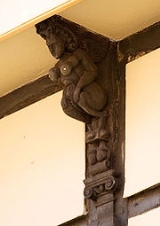
Succubus

Overview
In folklore traced back to medieval legend, a succubus (plural succubi) is a female demon
appearing in dreams who takes the form of a human woman in order to seduce men, usually through sexual intercourse
. The male counterpart is the incubus
. Religious traditions hold that repeated intercourse with a succubus may result in the deterioration of health or even death.
In modern fictional representations, a succubus may or may not appear in dreams and is often depicted as a highly attractive seductress or enchantress, in contrast to the past where succubi were generally depicted as frightening and demonic.
The word is derived from Late Latin
succuba "strumpet" (from succubare "to lie under", from sub- "under" and cubare "to lie"), used to describe the supernatural being as well.
Demon
call - 1347 531 7769 for more infoIn Ancient Near Eastern religions as well as in the Abrahamic traditions, including ancient and medieval Christian demonology, a demon is considered an "unclean spirit" which may cause demonic possession, to be addressed with an act of exorcism...
appearing in dreams who takes the form of a human woman in order to seduce men, usually through sexual intercourse
Sexual intercourse
Sexual intercourse, also known as copulation or coitus, commonly refers to the act in which a male's penis enters a female's vagina for the purposes of sexual pleasure or reproduction. The entities may be of opposite sexes, or they may be hermaphroditic, as is the case with snails...
. The male counterpart is the incubus
Incubus
An incubus is a male demon that has sexual intercourse with sleeping women.Incubus may also refer to:- Film :* Incubus , a film in Esperanto starring William Shatner* Incubus , a horror film starring Tara Reid...
. Religious traditions hold that repeated intercourse with a succubus may result in the deterioration of health or even death.
In modern fictional representations, a succubus may or may not appear in dreams and is often depicted as a highly attractive seductress or enchantress, in contrast to the past where succubi were generally depicted as frightening and demonic.
The word is derived from Late Latin
Late Latin
Late Latin is the scholarly name for the written Latin of Late Antiquity. The English dictionary definition of Late Latin dates this period from the 3rd to the 6th centuries AD extending in Spain to the 7th. This somewhat ambiguously defined period fits between Classical Latin and Medieval Latin...
succuba "strumpet" (from succubare "to lie under", from sub- "under" and cubare "to lie"), used to describe the supernatural being as well.
Unanswered Questions
