
All Topics  
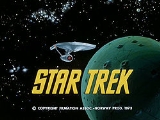
Star Trek: The Animated Series

 
Star Trek: The Animated Series

   Email Print
   Bookmark   Link


Star Trek: The Animated Series


Star Trek: The Animated Series (also known as The Animated Adventures of Gene Roddenberry's Star Trek) is an Emmy Award
Daytime Emmy Award

The Daytime Emmy Awards are awards presented by the New York, New York-based National Academy of Television Arts and Sciences and the Los Angeles, California-based Academy of Television Arts & Sciences in recognition of excellence in United States daytime television programming....
 winning animated
Animation

Animation is the rapid display of a sequence of images of 2-D or 3-D artwork or model positions in order to create an illusion of movement. It is an optical illusion of Motion due to the phenomenon of persistence of vision, and can be created and demonstrated in a number of ways....
 science fiction
Science fiction

Science fiction is a broad genre of fiction that often involves speculations based on current or future science or technology. Science fiction is found in books, art, television, films, games, theatre, and other media....
 television series set in the Star Trek
Star Trek

Star Trek is an American Science fiction on television entertainment series and media franchise. The Star Trek fictional universe created by Gene Roddenberry is the setting of six television series including the original 1966 Star Trek: The Original Series, in addition to ten feature films with Star Trek to be released on May 8,...
 universe and a continuation of Star Trek: The Original Series
Star Trek: The Original Series

Star Trek is a science fiction television series created by Gene Roddenberry that aired from September 8, 1966 to September 2, 1969. Though the original series was titled simply Star Trek, it has acquired the retronym Star Trek: The Original Series to distinguish it from the spinoffs that followed, and from the Star Trek fi...
. The series was aired under the name Star Trek, but it has become widely known under this longer name (or abbreviated as ST:TAS or TAS) to differentiate it from the original live action
Live action

In film, theatre and video, live-action refers to works that are acted out by human actors, as opposed to by animation. As it is the norm, the term is usually superfluous, but it makes an important distinction in situations in which one might normally expect animation, as in a Pixar film, a video game or when the work is adapted from an anim...
 Star Trek
Star Trek: The Original Series

Star Trek is a science fiction television series created by Gene Roddenberry that aired from September 8, 1966 to September 2, 1969. Though the original series was titled simply Star Trek, it has acquired the retronym Star Trek: The Original Series to distinguish it from the spinoffs that followed, and from the Star Trek fi...
.
The success of the original 1960s live action series in syndication and fan pressure for a Star Trek revival led to The Animated Series from 1973-1974, as the source of new adventures of the Enterprise crew, prior to the live-action feature film series that started in 1979 with Star Trek: The Motion Picture
Star Trek: The Motion Picture

Star Trek: The Motion Picture is a 1979 in film science fiction film released by Paramount Pictures. It is the first motion picture based on the Star Trek: The Original Series television series....
.

series was produced by Filmation
Filmation

Filmation Associates was an American production company that produced animated television series for television during the later half of the 20th century....
 and ran for two seasons from 1973 to 1974 on NBC, airing a total of twenty-two half-hour episodes.


Discussion
Ask a question about 'Star Trek: The Animated Series'
Start a new discussion about 'Star Trek: The Animated Series'
Answer questions from other users
Full Discussion Forum


Quotations


Agmar: There is a weapons deactivator in effect here. Your destructive machines will have no effect.

Apparently, the natural laws of our universe don't operate here, Captain.

Captain, I don't know how much more emergency power we can take before we start to break up.

Captain, there's no reason for it but the engines are fading out.

I have the information now, sir. I'll put it on the main screen.

Infinite diversity in infinite combinations... symbolizing the elements that create truth and beauty.


Encyclopedia


Star Trek: The Animated Series (also known as The Animated Adventures of Gene Roddenberry's Star Trek) is an Emmy Award
Daytime Emmy Award

The Daytime Emmy Awards are awards presented by the New York, New York-based National Academy of Television Arts and Sciences and the Los Angeles, California-based Academy of Television Arts & Sciences in recognition of excellence in United States daytime television programming....
 winning animated
Animation

Animation is the rapid display of a sequence of images of 2-D or 3-D artwork or model positions in order to create an illusion of movement. It is an optical illusion of Motion due to the phenomenon of persistence of vision, and can be created and demonstrated in a number of ways....
 science fiction
Science fiction

Science fiction is a broad genre of fiction that often involves speculations based on current or future science or technology. Science fiction is found in books, art, television, films, games, theatre, and other media....
 television series set in the Star Trek
Star Trek

Star Trek is an American Science fiction on television entertainment series and media franchise. The Star Trek fictional universe created by Gene Roddenberry is the setting of six television series including the original 1966 Star Trek: The Original Series, in addition to ten feature films with Star Trek to be released on May 8,...
 universe and a continuation of Star Trek: The Original Series
Star Trek: The Original Series

Star Trek is a science fiction television series created by Gene Roddenberry that aired from September 8, 1966 to September 2, 1969. Though the original series was titled simply Star Trek, it has acquired the retronym Star Trek: The Original Series to distinguish it from the spinoffs that followed, and from the Star Trek fi...
. The series was aired under the name Star Trek, but it has become widely known under this longer name (or abbreviated as ST:TAS or TAS) to differentiate it from the original live action
Live action

In film, theatre and video, live-action refers to works that are acted out by human actors, as opposed to by animation. As it is the norm, the term is usually superfluous, but it makes an important distinction in situations in which one might normally expect animation, as in a Pixar film, a video game or when the work is adapted from an anim...
 Star Trek
Star Trek: The Original Series

Star Trek is a science fiction television series created by Gene Roddenberry that aired from September 8, 1966 to September 2, 1969. Though the original series was titled simply Star Trek, it has acquired the retronym Star Trek: The Original Series to distinguish it from the spinoffs that followed, and from the Star Trek fi...
.
The success of the original 1960s live action series in syndication and fan pressure for a Star Trek revival led to The Animated Series from 1973-1974, as the source of new adventures of the Enterprise crew, prior to the live-action feature film series that started in 1979 with Star Trek: The Motion Picture
Star Trek: The Motion Picture

Star Trek: The Motion Picture is a 1979 in film science fiction film released by Paramount Pictures. It is the first motion picture based on the Star Trek: The Original Series television series....
.

Production

The series was produced by Filmation
Filmation

Filmation Associates was an American production company that produced animated television series for television during the later half of the 20th century....
 and ran for two seasons from 1973 to 1974 on NBC, airing a total of twenty-two half-hour episodes. An early Filmation proposal for this series had children assigned to each of the senior officers as cadets, including a young Vulcan for Mr. Spock. According to interviews with Norm Prescott
Norm Prescott

Norman "Norm" Prescott was co-founder and executive Television producer at Filmation. Born in Boston, Massachusetts, he began his radio career in Boston Massachusetts, becoming program director at station WORL in the late 1940s....
, Paramount offered Roddenberry a substantial sum of money to abandon creative control of the project and let Filmation proceed with their "kiddy space cadet" idea. Roddenberry refused. Filmation would later develop the idea into its own original program: Space Academy
Space Academy

Space Academy was a live-action sci-fi children's television program, produced by Filmation and airing on CBS television on Saturday mornings from 1977 to 1979....
.

The writers of the animated series used, essentially, the same writers' guide that was used for the live-action Star Trek: The Original Series
Star Trek: The Original Series

Star Trek is a science fiction television series created by Gene Roddenberry that aired from September 8, 1966 to September 2, 1969. Though the original series was titled simply Star Trek, it has acquired the retronym Star Trek: The Original Series to distinguish it from the spinoffs that followed, and from the Star Trek fi...
. A copy of the "series bible", as revised for TAS, is held in the science fiction research collection at the Samuel Paley Library, Temple University
Temple University

Temple University is a Commonwealth System of Higher Education public research university in Philadelphia, Pennsylvania. Temple University was founded in 1884 by Dr....
, Philadelphia.

While the freedom of animation afforded large alien landscapes and believable non-humanoid aliens, budget constraints were a major concern and the animation quality was generally only fair, with very liberal use of stock shots (as was often the case with many of Filmation's shows). There were also occasional mistakes, such as characters appearing on screen who were elsewhere, or a character supposed to appear on the bridge's main viewing screen, but then appeared in front, indicating bad ordering of animation plates. These were typically isolated errors however. Occasionally, though, parts of episodes would be animated at a near-theatrical quality level.

Voice casting

The series featured most of the original cast performing the voices for their characters, except for Pavel Chekov
Pavel Chekov

Pavel Andreievich Chekov, , played by Walter Koenig, is a Russian Starfleet officer in the fictional Star Trek universe. In the 2009 Star Trek prequel film, the younger Chekov will be portrayed by Anton Yelchin....
 (Walter Koenig
Walter Koenig

Walter Marvin Koenig is an American actor, writer, teacher and television director, known for his role as Pavel Chekov in Star Trek: The Original Series....
), who was omitted because the show's budget could not afford the complete cast. He was replaced by two animated characters who made semi-regular appearances: Lieutenant Arex
Arex

Lieutenant Arex, voiced by James Doohan, was a recurring character on Star Trek: The Animated Series which ran on NBC from 1973 to 1974.Arex was a Starfleet officer assigned to the U.S.S....
, whose Edosian species had three arms and three legs; and Lt. M'Ress
M'Ress

Lieutenant M'Ress, voiced by Majel Barrett, is a recurring character on Star Trek: The Animated Series which aired on NBC from 1973 to 1974....
, a female Caitian. James Doohan
James Doohan

James Montgomery "Jimmy" Doohan was a Canadian character actor and voice actor actor best known for his role as Montgomery Scott in the television and film series Star Trek....
, and Majel Barrett
Majel Barrett

Majel Barrett-Roddenberry was an United States Actor and Executive producer. She was also the wife of Star Trek creator Gene Roddenberry....
, besides performing their characters Montgomery Scott
Montgomery Scott

Montgomery Scott, or "Scotty", is a character in the original Star Trek series and the films which followed. He was played by the late Irish-Canadian actor James Doohan....
 and Christine Chapel
Christine Chapel

Christine Chapel was a fictional character in the original Star Trek: The Original Series series, and in some of the films based on it. She was played by the late Majel Barrett....
, performed the voices of Arex and M'Ress, respectively.

Initially, Filmation was only going to use the voices of William Shatner
William Shatner

William Alan Shatner is a Canadian double Emmy-, Golden Globe- and Saturn Award-winning actor and novelist. He gained worldwide fame and became a cultural icon for his portrayal of James T....
, Leonard Nimoy
Leonard Nimoy

Leonard Simon Nimoy is an American actor, film director, poet, musician and photographer. He is best known for playing the character of Spock on Star Trek: The Original Series, an American television series that ran for three seasons from 1966 to 1969, in addition to reprising the role in several movie sequels....
, DeForest Kelley
DeForest Kelley

Jackson DeForest Kelley was an American actor known for his starring role as Dr. Leonard McCoy of the USS Enterprise in the television series Star Trek: The Original Series and six of its subsequent movies, as well as an elderly Admiral Dr....
, James Doohan
James Doohan

James Montgomery "Jimmy" Doohan was a Canadian character actor and voice actor actor best known for his role as Montgomery Scott in the television and film series Star Trek....
 and Majel Barrett
Majel Barrett

Majel Barrett-Roddenberry was an United States Actor and Executive producer. She was also the wife of Star Trek creator Gene Roddenberry....
. Doohan and Barrett would also perform the voices of Sulu and Uhura. Leonard Nimoy refused to sign up to lend his voice to the series unless Nichelle Nichols
Nichelle Nichols

Nichelle Nichols is an United Statesn actor, singer and voice artist. She sang with Duke Ellington and Lionel Hampton before turning to acting....
 and George Takei
George Takei

George Hosato Takei Altman is an American actor, best known for his role in the TV series Star Trek: The Original Series, in which he played Hikaru Sulu on the USS Enterprise ....
 were added to the cast — claiming that Sulu
Hikaru Sulu

Hikaru Sulu is a fictional character who is portrayed by actor George Takei in the original Star Trek: The Original Series series, the first six Star Trek films and one episode of Star Trek: Voyager....
 and Uhura
Uhura

Uhura, played by Nichelle Nichols, is a character in Star Trek: The Original Series, Star Trek: The Animated Series, and the first six Star Trek films....
 were of importance as they were proof of the ethnic diversity of the 23rd century and should not be recast.

Koenig was not forgotten, and later wrote an episode of the series, becoming the first Star Trek actor to write a Star Trek story. Koenig wrote "The Infinite Vulcan", which had plot elements of the original Star Trek episode "Space Seed" blended into it.

As is usual for animation, the voice actors did not perform together but recorded their parts separately to avoid clashing with other commitments. For instance, William Shatner
William Shatner

William Alan Shatner is a Canadian double Emmy-, Golden Globe- and Saturn Award-winning actor and novelist. He gained worldwide fame and became a cultural icon for his portrayal of James T....
, who was touring in a play at the time, would record his lines in whatever city he happened to be in and have the tapes shipped to the studio. Doohan and Barrett, besides providing the voices of their Original Series characters and newcomers Arex and M'Ress, performed virtually all of the "guest star" characters in the series, except for a few notable exceptions such as Sarek
Sarek

In the fictional Star Trek fictional universe, Sarek is a Vulcan ambassador, and father of Spock. He was portrayed by Mark Lenard. Jonathan Simpson played a younger Sarek in Star Trek V: The Final Frontier, although Lenard provided the voiceover....
, Cyrano Jones and Harcourt Fenton Mudd, who were performed by their original actors from The Original Series. Occasional other guest voice actors were also used, such as Ed Bishop
Ed Bishop

Ed Bishop , was an United States film, television, stage and radio actor based in United Kingdom....
 (Commander Straker on UFO
UFO (TV series)

UFO is a British television science fiction series created by Gerry Anderson and Sylvia Anderson and produced by the Anderson's and Lew Grade's Century 21 Productions for Grade's ITC Entertainment company....
) who voiced the Megan Prosecutor in "The Magicks of Megas-tu", and Ted Knight
Ted Knight

Ted Knight was an United States actor best known for playing the comedic role of Ted Baxter on The Mary Tyler Moore Show, Henry Rush on Too Close for Comfort , and Judge Smails in Caddyshack....
 (Ted Baxter on The Mary Tyler Moore Show
The Mary Tyler Moore Show

The Mary Tyler Moore Show is an United States television Situation comedy created by James L. Brooks and Allan Burns that aired on CBS from September 19, 1970 to March 19, 1977....
) who voiced Carter Winston in "The Survivor
The Survivor (TAS episode)

"The Survivor" is an episode of Star Trek: The Animated Series....
".

Episodes


St the As
The 22 episodes of TAS were spread out over two brief seasons, with copious reruns of each episode. Most are directed by Hal Sutherland
Hal Sutherland

Hal Sutherland was an animator who became a director of animated productions at Filmation in the late 1960's.Sutherland had a hand in a large number of Filmation's limited animation productions which were broadcast as Saturday morning cartoons....
.

All the episodes of this series were novelized by Alan Dean Foster
Alan Dean Foster

Alan Dean Foster is a prolific United States author of fantasy and science fiction. He currently resides in Prescott, Arizona, with his wife, and is also known for his novelisations of film scripts....
 and released in 10 volumes under the Star Trek Logs banner. Initially, Foster adapted three episodes per book, but later editions saw the half-hour scripts expanded into full novel-length stories.

Star Trek: The Animated Series was the only "Star Trek" series to not feature a cold open
Cold open

A cold open in a television program or Film is the technique of in medias res at the beginning or opening of the show, before the title sequence or opening credits are shown....
 ("teaser") and started directly with the title sequence (although some overseas versions of the original live action series, such as that run by the BBC in the UK in the 1960s and 1970s, ran the teaser before the credits).

The writing in the series benefited from a Writers Guild of America, East
Writers Guild of America, East

Writers Guild of America, East is a trade union representing writers of television and film and employees of television and radio news. The 2006 membership of the guild was 3,770....
 strike in 1973, which did not apply to animation. A few episodes are especially notable due to contributions from well-known science fiction authors:

  • "More Tribbles, More Troubles" was written by David Gerrold
    David Gerrold

    David Gerrold, born Jerrold David Friedman is an American science fiction author who started his career in 1966 while a college student by submitting an unsolicited story outline for the television series Star Trek: The Original Series....
     as a sequel to his famous episode "The Trouble with Tribbles" from the original series. Here Cyrano Jones is rescued from the Klingon
    Klingon

    Klingons are a warrior race in the fictional Star Trek universe. They are recurring villains in the 1960s television show Star Trek: The Original Series, and have appeared in all five spin-off series and seven feature films....
    s, bringing with him a genetically-altered breed of tribbles which do not reproduce but do grow extremely large. (It is later discovered that these are really clusters of tribbles who function as a single tribble, and it is decided that the large numbers of smaller tribbles are preferable to the larger ones.) The Klingons, due to their hatred of tribbles, are eager to get Jones back because he stole a creature they created: a predator that feeds on tribbles. This episode was originally written with the intention of being an episode of the live-action original series, but this was vetoed by Fred Freiberger
    Fred Freiberger

    Fred Freiberger was an United States television producer and script writer. He is best known for his work as producer of the third and final season of science fiction series Star Trek: The Original Series from 1968–1969....
     who wanted serious sci-fi episodes instead.


  • "Yesteryear
    Yesteryear (TAS episode)

    "Yesteryear" is an episode of Star Trek: The Animated Series....
    " is a time-travel episode in which Mr. Spock uses "The Guardian of Forever
    Guardian of Forever

    The Guardian of Forever is a time portal portrayed in the fictional universe of Star Trek....
    ", a time gateway from the original series episode "The City on the Edge of Forever", to travel to his own childhood past. This is the only animated Trek episode written by original series and later Next Generation writer D.C. Fontana. This was the first actual appearance of Spock's pet sehlat, first mentioned in "Journey to Babel" and finally named I-Chaya in this episode. It is worth noting that Star Trek: Phase II
    Star Trek: New Voyages

    Star Trek: Phase II is an award-winning Fan film science fiction series set in the Star Trek universe. The series was created by James Cawley and Jack Marshall in April 2003....
     "In Harm's Way" features the Gateway and nods at Spock's knowledge of it from this episode.


  • Larry Niven
    Larry Niven

    Laurence van Cott Niven is a US science fiction author. Perhaps his best-known work is Ringworld , which received Hugo Award for Best Novel, Locus Award, Ditmar Award, and Nebula Award for Best Novel awards....
    's "The Slaver Weapon", adapted from his own short story "The Soft Weapon". It includes some elements from his Known Space
    Known Space

    Known Space is the fictional setting of several science fiction novels and short stories written by author Larry Niven. It has also in part been used as a shared universe in the Man-Kzin Wars spin-off anthologies sub-series....
     mythos such as the Kzinti and the Slavers
    Thrint

    The Thrintun , in Larry Niven's fictional Known Space universe, were a long-extinct species which ruled the galaxy through telepathic mind control....
    . This is the only Kirk era TV or movie story in which Kirk didn't appear. This episode also has the distinction of being the only animated episode where anyone dies or is killed onscreen.


  • "The Magicks of Megas-tu", by Larry Brody
    Larry Brody

    Larry Brody is an American television writer....
    , sends the Enterprise
    Starship Enterprise

    The Enterprise or USS Enterprise is the name of several fictional starships, some of which are the focal point for various television series and films in the Star Trek franchise created by Gene Roddenberry....
     to the center of the galaxy. Its crew find themselves befriended by a devil-like alien named Lucien, whom they must defend against accusations that he has brought evil to the world of Megas-tu.


Influence on later Star Trek and Filmation series

The U.S.S. Enterprise in this series, while supposedly the same ship as from the original series, had a holodeck
Holodeck

A holodeck is a simulated reality facility located on starships and starbases in the fictional universe Star Trek universe. The holodeck was first seen in the pilot episode of Star Trek: The Next Generation, "Encounter at Farpoint"....
 very similar to the one introduced on Star Trek: The Next Generation
Star Trek: The Next Generation

Star Trek: The Next Generation is a science fiction television program created by Gene Roddenberry as part of the Star Trek franchise. Set in the 24th century, about 70 years after Star Trek: The Original Series, the program features a new crew and a new Starship Enterprise....
, which was set approximately 80 years later. It only appeared once, in Chuck Menville's "The Practical Joker" and was known as the "Rec Room." This feature was originally proposed for the original series (see, e.g., Gerrold, The World of Star Trek) but was never used.

Filmation later went on to produce the hit He-Man and the Masters of the Universe
He-Man and the Masters of the Universe

He-Man and the Masters of the Universe is an United States animated television series produced by Filmation based on Mattel's successful toy line Masters of the Universe....
 (1983-85), which occasionally used modified character and set designs from Star Trek: The Animated Series, mostly as background material. (He-Man and the Masters of the Universe also had several Trek-similar stories, most notably "The Arena", which is very similar to Star Trek: The Original Seriess first season episode, "Arena"). Later series also shared many of the stock sound effects from both Star Trek: The Animated Series and Star Trek: The Original Series. Filmation also recycled some of the background music for Star Trek: The Animated Series in their later shows Shazam!
Shazam! (TV series)

Shazam! was a half-hour live-action television program produced by Filmation , based upon DC Comics' superhero Captain Marvel .The show ran from 1974 to 1977 on CBS; from 1975 to 1977 it was known as The Shazam!/Isis Hour, and included The Secrets of Isis, about an Ancient Egyptian superheroine resurrected in the body of a...
, Tarzan and the Super 7
Tarzan and the Super 7

Tarzan and the Super 7, was a Saturday morning cartoon series, produced by Filmation and originally airing from 1978?1980 on CBS.The show consisted of separate installments featuring seven groups of adventurers;...
and Sport Billy. (Some of the music had already been reused from the previous season's Brady Kids and the Treasure Island
Treasure Island (1972 animated film)

Treasure Island is an animation feature film produced by Filmation and released by Warner Bros. in 1972 . In this adaptation, Treasure Island#Main_characters travels with sidekick Hiccup the Mouse....
feature, and were shared with that season's Lassie's Rescue Rangers
Lassie's Rescue Rangers

Lassie's Rescue Rangers was an animated Television program produced by Filmation and featuring Lassie, running from 1973 to 1975. The hour-long television pilot, Lassie and the Spirit of Thunder Mountain, was part of The ABC Saturday Superstar Movie....
).

In addition, a few facts introduced in the animated series have been referenced in the live-action productions:
  • Kirk's middle name, Tiberius, was first introduced in "Bem". After subsequently being referenced in several Star Trek novels (most notably the novelization of Star Trek: The Motion Picture
    Star Trek: The Motion Picture

    Star Trek: The Motion Picture is a 1979 in film science fiction film released by Paramount Pictures. It is the first motion picture based on the Star Trek: The Original Series television series....
    by Roddenberry), the name was conclusively established as part of the Trek canon in Star Trek VI: The Undiscovered Country
    Star Trek VI: The Undiscovered Country

    Star Trek VI: The Undiscovered Country is the sixth feature film in the Star Trek science fiction franchise. It was released in 1991 in film by Paramount Pictures, and is the last of the Star Trek films to include the entire core cast of the 1960s Star Trek: The Original Series....
    ).
  • Amanda's maiden name, Grayson.
  • A second exit for the bridge, referenced in Franz Joseph
    Franz Joseph (artist)

    Franz Joseph was an artist and author loosely associated with the 1960?s American television show Star Trek: The Original Series. Joseph is perhaps best known for his 1973 Star Trek Blueprints , to date the only set of blueprints of the original Starship USS Enterprise ever officially endorsed by Paramount Pictures, owners of the l...
    's
    Star Fleet Technical Manual and seen in the refitted Enterprise and the NCC-1701-A from the first six Star Trek movies.
  • The kahs-wan ritual Spock endures in "Yesteryear."
  • Klingon commander Kor
    Kor (Star Trek)

    Kor, played by John Colicos, is the first Klingon to appear in Star Trek.The character is introduced in the Star Trek: The Original Series episode "Errand of Mercy "....
    's command of the battlecruiser
    Klothos.
  • Doctor Phlox uses Edosian slugs in his medical bay, and Chef once served up Edosian sucker fish, similar to Earth's catfish, as a meal, in the series Star Trek: Enterprise
    Star Trek: Enterprise

    Enterprise, retitled Star Trek: Enterprise at the start of its third season, was a science fiction television program created by Brannon Braga and Rick Berman and set in the Star Trek universe created by Gene Roddenberry....
    . They come from the same planet as Lieutenant Arex, as do Edosian orchids mentioned by Elim Garak
    Elim Garak

    Elim Garak is a fictional character in the television series Star Trek: Deep Space Nine, in which he is portrayed by Andrew Robinson . In the series, Garak is an exiled spy from the Cardassia Prime nation and a former member of a prestigious Cardassian Intelligence agency called the Obsidian Order....
     in
    Star Trek: Deep Space 9.
  • The Vulcan city, ShiKahr, has been referenced in multiple series (sometimes misspelt "ShirKahr"), and can be seen in an episode of Enterprise. A Vulcan city which looks very similar to the ShiKahr of Star Trek: The Animated Series was shown in the new CGI establishing shots used in the special edition of "Amok Time".
  • Some of the worlds and aliens in the series were included in the 1989 book called Star Trek: The Worlds of the Federation.


Novelties in the series

A personal force field technology known as the life support belt was seen only in
Star Trek: The Animated Series. In addition to supplying the wearer with the appropriate atmosphere and environmental protection it permitted the animators to simply draw the belt and yellow glow around the existing characters, instead of having to redraw them with an environmental suit.

The episode "The Lorelei Signal" provides a rare instance in early Star Trek
Star Trek

Star Trek is an American Science fiction on television entertainment series and media franchise. The Star Trek fictional universe created by Gene Roddenberry is the setting of six television series including the original 1966 Star Trek: The Original Series, in addition to ten feature films with Star Trek to be released on May 8,...
 in which a female took (temporary) command of a starship. Due to the incapacitation of the male members of the crew, Uhura
Uhura

Uhura, played by Nichelle Nichols, is a character in Star Trek: The Original Series, Star Trek: The Animated Series, and the first six Star Trek films....
 assumes command of the U.S.S. Enterprise
USS Enterprise (NCC-1701)

The USS Enterprise is a starship in the Star Trek media franchise. The program depicts its crew's mission "to explore strange new worlds; to seek out new life and new civilizations; to boldly go where no man has gone before" under the command of Captain James T....
 from Scotty. Other instances occurred on the very first and very last adventures ever filmed of the original series:
  • "The Cage
    The Cage (TOS episode)

    "The Cage" is the original pilot episode of the Star Trek: The Original Series science fiction series and Star Trek. It was completed in early 1965, but not broadcast on television in its complete form until 1988....
    ", in which Number One took command after the abduction of Captain Christopher Pike, and
  • "Turnabout Intruder
    Turnabout Intruder (TOS episode)

    "Turnabout Intruder" is a third season, as well as the final first-run episode of Star Trek: The Original Series. It is episode #79, production #79, written by Arthur H....
    ", in which Dr. Janice Lester took over the body of Captain Kirk and assumed command.


"The Lorelei Signal" and "The Infinite Vulcan", the latter written by Walter Koenig, are rare occurrences where Captain Kirk comes close to actually saying, "Beam me up, Scotty
Beam me up, Scotty

"Beam me up, Scotty!" is a catch phrase that made its way into pop culture from the science fiction television series Star Trek: The Original Series....
" (long erroneously believed to be a
Star Trek catchphrase), when he commands "Beam us up, Scotty." Star Trek IV: The Voyage Home
Star Trek IV: The Voyage Home

Star Trek IV: The Voyage Home is the fourth feature film based on the Star Trek science fiction television series. It completes the loose story trilogy started in Star Trek II: The Wrath of Khan and continued in Star Trek III: The Search for Spock....
arguably comes closer to it by having Kirk say "Scotty, beam me up".

Canon issues

At the end of the first season of
Star Trek: The Next Generation

Star Trek: The Next Generation is a science fiction television program created by Gene Roddenberry as part of the Star Trek franchise. Set in the 24th century, about 70 years after Star Trek: The Original Series, the program features a new crew and a new Starship Enterprise....
, all licenses for Star Trek spin-off fiction were renegotiated and the animated series was essentially "decanonized" by Gene Roddenberry
Gene Roddenberry

Eugene Wesley "Gene" Roddenberry was an United States screenwriter and Television producer. He is arguably best known as the creator of Star Trek, an American sci-fi series known for its immense influence on popular culture....
's office. Writers of the novels, comics and role-playing games were prohibited from using concepts from the animated series in their works. Among the facts established within the animated series that were called into question by the "official canon" issue was its identification of Robert April as the first captain of the USS
Enterprise in the episode "The Counter-Clock Incident".

The
Star Trek Chronology
Timeline of Star Trek

The below is an abridged timeline of events established in the group of television shows and feature films set in the fictional Star Trek universe. More exhaustive timelines are available in both Star Trek and in various Fan websites....
by production staffers Michael Okuda
Michael Okuda

Michael Okuda is a graphic designer who is best known for his work on Star Trek. In the mid-1980s, he designed the look of animated computer displays for the USS Enterprise bridge in Star Trek IV: The Voyage Home....
 and Denise Okuda
Denise Okuda

Denise Lynn Okuda is co-author of the Star Trek Encyclopedia, which Amazon.com says is the No. 1 reference book about Star Trek among the well over 100 non-fiction books published in this field....
 does not include the animated series, but does include certain events from "Yesteryear". The timeline in
Voyages of the Imagination dates the events of the series to 2269-2270, assuming the events of the show represented the final part of Kirk's five-year mission, and using revised Alan Dean Foster
Alan Dean Foster

Alan Dean Foster is a prolific United States author of fantasy and science fiction. He currently resides in Prescott, Arizona, with his wife, and is also known for his novelisations of film scripts....
 stardates.

Since Roddenberry's death in 1991 and the consequent firing of Richard H. Arnold (who vetted the licensed tie-ins for Roddenberry's "Star Trek Office" at Paramount during its latter years), there have been various references to the animated series in the various live-action series. In the
Star Trek: Deep Space Nine

Star Trek: Deep Space Nine is a science fiction television program that premiered in 1993 and ran for seven seasons, ending in 1999. Rooted in Gene Roddenberry?s Star Trek universe, it was created by Rick Berman and Michael Piller, at the request of Brandon Tartikoff, and produced by CBS Paramount Television....
episode "Once More Unto the Breach", Kor referred to his ship, the Klothos, which was first named in the TAS episode "The Time Trap". Other DS9 episodes to reference the animated series include "Broken Link
Broken link

Broken link may refer to:*...
", where Elim Garak
Elim Garak

Elim Garak is a fictional character in the television series Star Trek: Deep Space Nine, in which he is portrayed by Andrew Robinson . In the series, Garak is an exiled spy from the Cardassia Prime nation and a former member of a prestigious Cardassian Intelligence agency called the Obsidian Order....
 mentions Edosian orchids (Arex is an Edosian) and "Tears of the Prophets
Tears of the Prophets (DS9 episode)

"Tears of the Prophets" is a sixth-season episode of Star Trek: Deep Space Nine first broadcast on June 17, 1998.In this episode, it is decided that Captain Sisko will be responsible for planning the first steps in the assault on the Dominion forces in the Alpha Quadrant, after he has been bestowed with the 'Christopher Pike Medal of V...
" where a Miranda class starship is called the USS
ShirKahr (sic) after Shikahr, the city from "Yesteryear". David Gerrold
David Gerrold

David Gerrold, born Jerrold David Friedman is an American science fiction author who started his career in 1966 while a college student by submitting an unsolicited story outline for the television series Star Trek: The Original Series....
, who contributed two stories to TAS, stated in an interview his views on the canon issue:

Writer-produer D.C. Fontana discussed the TAS Canon issue in 2007:

More DS9
Star Trek: Deep Space Nine

Star Trek: Deep Space Nine is a science fiction television program that premiered in 1993 and ran for seven seasons, ending in 1999. Rooted in Gene Roddenberry?s Star Trek universe, it was created by Rick Berman and Michael Piller, at the request of Brandon Tartikoff, and produced by CBS Paramount Television....
 references to the animated series include the episode "Prophet Motive" where the title of healer is resurrected from "Yesteryear" as well. Vulcan's Forge is also mentioned in "Change of Heart
Change of Heart

Change of Heart may refer to:In film* Change of Heart , a 1934 movie starring Janet GaynorIn music:* "Change of Heart", an album and song by Jon Gibson ...
", where Worf
Worf

Lt. Commander Worf, played by Michael Dorn, is a main character in both Star Trek: The Next Generation and Star Trek: Deep Space Nine, and also the films based on The Next Generation....
 wants himself and Jadzia Dax
Jadzia Dax

Jadzia Dax, played by Terry Farrell , was a main character during the first six seasons of the science fiction television series Star Trek: Deep Space Nine....
 to honeymoon there.

The
Star Trek: Enterprise

Enterprise, retitled Star Trek: Enterprise at the start of its third season, was a science fiction television program created by Brannon Braga and Rick Berman and set in the Star Trek universe created by Gene Roddenberry....
episodes "The Catwalk
The Catwalk (Enterprise episode)

"The Catwalk" is the 38th episode of the television series Star Trek: Enterprise....
" and "The Forge
The Forge (Enterprise episode)

"The Forge" is the title of a Star Trek: Enterprise television episode from season four....
" included references to "Yesteryear
Yesteryear (TAS episode)

"Yesteryear" is an episode of Star Trek: The Animated Series....
", the latter featuring a CGI
Computer-generated imagery

Computer-generated imagery is the application of the field of computer graphics or, more specifically, 3D computer graphics to special effects in films, television programs, Television commercials, simulators and simulation generally, and printed media....
 rendition of a wild sehlat. The remastered Original Series episode "Amok Time" featured Shikahr in the background as Spock beams up at the episode's end.

In recent years, references to the
Animated Series have also cropped up again in the licensed books and comics. M'Ress
M'Ress

Lieutenant M'Ress, voiced by Majel Barrett, is a recurring character on Star Trek: The Animated Series which aired on NBC from 1973 to 1974....
 and Arex
Arex

Lieutenant Arex, voiced by James Doohan, was a recurring character on Star Trek: The Animated Series which ran on NBC from 1973 to 1974.Arex was a Starfleet officer assigned to the U.S.S....
, characters from the animated series, appear in the
Star Trek: New Frontier

Star Trek: New Frontier is a Star Trek novel series created by John J. Ordover and Peter David and published by Pocket Books. The idea behind it was to create a Star Trek book series with its own continuity and not one that is purely reactionary to the television shows....
novels by Peter David
Peter David

Peter Allen David is an United States writer, best known for his work in comic books and Star Trek novels. David often jokingly describes his occupation as "Writer of Stuff"....
, in which M'Ress and Arex are transported through time to the 24th Century, and are made officers on board the
U.S.S. Trident. (David's previous use of these characters, in TOS movie-era comics published by DC Comics
DC Comics

DC Comics is one of the largest and most popular American comic book and related media companies, along with Marvel Comics. A subsidiary of Warner Bros....
, had been prevented by Gene Roddenberry's office.)

A race introduced in the episode "The Jihad", represented by M/3/Green, is named the Nasat in the Starfleet Corps of Engineers
Starfleet Corps of Engineers

Starfleet Corps of Engineers is a series of novellas set in the Star Trek universe, initially under the title S.C.E. , now under the new title Corps of Engineers ....
 e-book
E-book

An e-book is the digital media equivalent of a conventional printed book. Such documents are usually read on personal computers, or on dedicated computer hardware devices known as e-book readers or e-book devices....
 novellas. These stories feature a regular Nasat character, P8 Blue. The Vulcan city of ShiKahr also appears in many books. Paula Block of CBS Consumer Products
CBS Consumer Products

CBS Consumer Products, a unit of the CBS Corporation, manages the worldwide licensing, merchandising, and video activities for a diverse slate of properties owned or controlled by the CBS Corporation, including CBS Paramount Network Television and CBS Television Distribution...
 is responsible for approving proposals and all completed manuscripts for the licensed media tie-ins, and has granted many such uses of TAS material since Roddenberry's passing.

Amarillo Design Bureau, Inc. has — as part of its license for the Star Fleet Universe
Star Fleet Universe

The Star Fleet Universe is the variant of the Star Trek fictional universe detailed in the series of Star Fleet Battles games from Amarillo Design Bureau Inc....
 series of games — incorporated many aspects of the Animated Series into its works, not least being the inclusion of the Kzinti, although in a modified form. In addition FASA used elements from the animated series in its sourcebooks and modules for its Star Trek role-playing game
Star Trek role-playing game (FASA)

Star Trek: The Role Playing Game is a role-playing game set in the fictional Star Trek universe published and edited by FASA Corporation Corporation from 1982 to 1989....
.

Star Trek: Enterprise

Enterprise, retitled Star Trek: Enterprise at the start of its third season, was a science fiction television program created by Brannon Braga and Rick Berman and set in the Star Trek universe created by Gene Roddenberry....
producer Manny Coto
Manny Coto

Manny Coto is an United States writer, television director and Television producer of films and television programs. He was the executive producer and showrunner of Star Trek: Enterprise#Season 4 in its final season, and executive producer of three seasons of 24 ....
 has commented that had that show been renewed for a fifth season, the Kzinti would have been introduced. Starship designs were produced which closely resemble the Kzinti/Mirak
Kzin

The Kzinti are a fictional, very warlike and bloodthirsty race of cat-like aliens in Larry Niven's Known Space series.The kzin were initially introduced in Niven's story "The Warriors" and "The Soft Weapon," , both collected in Neutron Star ....
 ships from the Star Fleet Universe
Star Fleet Universe

The Star Fleet Universe is the variant of the Star Trek fictional universe detailed in the series of Star Fleet Battles games from Amarillo Design Bureau Inc....
, a gaming universe that includes the boardgame Star Fleet Battles
Star Fleet Battles

Star Fleet Battles is a Military tactics strategy game board wargame set in an offshoot of the Star Trek setting called the Star Fleet Universe....
 and its PC
Personal computer

A personal computer is any general-purpose computer whose original sales price, size, and capabilities make it useful for individuals, and which is intended to be operated directly by an end user, with no intervening computer operator....
 analogue Star Fleet Command.

On June 27, 2007, Star Trek's official site incorporated information from the animated series into its library section.

Reception

Star Trek: The Animated Series was named the 96th best animated series by IGN
IGN

IGN is a multimedia news and reviews website that focuses heavily on video games. Its corporate parent is IGN Entertainment, which owns and controls separate sites such as GameSpy, GameStats, Rotten Tomatoes and AskMen....
. They commented that while it did not have great animation, it being animated allowed the writers more freedom.

Ratings

This was Filmation's only hit series on NBC. The eight other shows (
The Secret Lives of Waldo Kitty

The Secret Lives of Waldo Kitty was a children's television show alternating animation and live footage segments. It took the concept of James Thurber's popular book The Secret Life of Walter Mitty, and parodied it with anthropomorphism dogs and cats....
, Archie/Sabrina Hour, Young (Space) Sentinels, Fabulous Funnies
Fabulous Funnies

Fabulous Funnies was a Filmation cartoon series on NBC that ran for one season in 1978; it featured animated versions of newspaper comic strips and attempted to teach moral lessons to children....
, Batman & The Super 7, Kid Super Power Hour With Shazam, and Sport Billy
Sport Billy

Sport Billy was a 1979 Animation television cartoon made by Filmation, initially for Broadcasting in Germany. In 1982, Filmation carried the show over to the United States of America for Television syndication, and as a summer replacement in NBC's Saturday morning children's programming....
) lasted one season or less. The New Adventures of Flash Gordon
The New Adventures of Flash Gordon

The New Adventures of Flash Gordon, also known as The Adventures of Flash Gordon , is an animated television series. The series is actually called Flash Gordon, but the expanded title is used in official records to distinguish it from Flash Gordon....
 lasted two seasons.

The animated series was, according to the Nielsen ratings
Nielsen Ratings

Nielsen Ratings are audience measurement developed by the AC Nielsen Company, to determine the audience size and composition of broadcast programming....
, not popular enough with young children. According to series' producers it was intended to be enjoyed by the entire family. Although the accuracy of the ratings system conducted by the ACNielsen
ACNielsen

ACNielsen is a global marketing research firm, with worldwide headquarters in New York City. Regional headquarters for North America are located in Schaumburg, IL....
 company has been vehemently disputed by its supporters and detractors since their first implementation, these results have been cited by fans and critics as justification for the show's brief run of only 22 episodes. However, in the 1970s, very few animated series went beyond a few seasons as it was usually more profitable to start a new series. The series did receive critical acclaim and a Daytime Emmy award, the first such award for the franchise. According to both Roddenberry and an NBC press release, this was the justification for six additional episodes being ordered by the network for the series' second season.

Video and DVD releases

  • The complete series was first released in the USA on eleven volumes of VHS
    VHS

    The Video Home System, better known by its abbreviation VHS, is a recording and playing standard developed by JVC and launched in Europe and Asia in September 1976, and the United States in June 1977....
     tapes in 1989. For UK, seven volumes (1x4 episodes and 6x3 episodes on PAL VHS
    VHS

    The Video Home System, better known by its abbreviation VHS, is a recording and playing standard developed by JVC and launched in Europe and Asia in September 1976, and the United States in June 1977....
    ) from CIC Video
    CIC Video

    CIC Video was a home video distributor, owned by Cinema International Corporation , and operated in some countries by local operators. Outside of North America, it distributed films by NBC and Paramount Pictures , CIC's partners....
     completed the series (Released in 1992 in the UK). Although CIC-Taft Australia negotiated an Australasian release, they did not proceed with their plans.
  • A boxed set of the complete series on laserdisc
    Laserdisc

    The Laserdisc is an obsolete home video disc format, and was the first commercial optical disc storage medium. Initially marketed as Discovision in 1978, the technology was licensed and sold as Reflective Optical Videodisc, Laser Videodisc, 'Laservision, 'Disco-Vision, 'DiscoVision, and MCA DiscoVision...
    , was released for the US market in 1997.
  • A Region 1 (USA) DVD box set of the show was released on November 21, 2006, and has since been released internationally for other Regions. It was the last series of Paramount's Star Trek television franchise to be released to DVD.


See also


External links

  • at StarTrek.com
  • at TrekCore.com
  • at danhausertrek.com
  • at Ex Astris Scientia
  • , New York Times DVD review