
All Topics  
Southern African Development Community


   Email Print
   Bookmark   Link


Southern African Development Community


The Southern African Development Community (SADC) is an inter-governmental organization headquartered in Gaborone
Gaborone

Gaborone estimated population 208,411 , is the Capital and largest city of Botswana. Gaborone lies in the flat valley between Kgale and Oodi Hills, on the Notwane River in the south eastern corner of Botswana, and from the South African border....
, Botswana
Botswana

The Republic of Botswana , is a landlocked country in Southern Africa. Citizens of Botswana are called "Batswana" , regardless of ethnicity. Formerly a British protectorate of Bechuanaland Protectorate, Botswana adopted its new name after becoming independent within the Commonwealth of Nations on 30 September 1966....
. Its goal is to further socio-economic cooperation and integration as well as political and security cooperation among 15 southern African states. It complements the role of the African Union
African Union

The African Union is an intergovernmental organisation consisting of 53 African states. Established on 9 July 2002, the AU was formed as a successor to the Organisation of African Unity ....
.

origins of SADC lie in the 1960s and 1970s, when the leaders of majority-ruled countries and national liberation movements coordinated their political, diplomatic and military struggles to bring an end to colonial and white-minority rule in southern Africa.


Discussion
Ask a question about 'Southern African Development Community'
Start a new discussion about 'Southern African Development Community'
Answer questions from other users
Full Discussion Forum


Encyclopedia


The Southern African Development Community (SADC) is an inter-governmental organization headquartered in Gaborone
Gaborone

Gaborone estimated population 208,411 , is the Capital and largest city of Botswana. Gaborone lies in the flat valley between Kgale and Oodi Hills, on the Notwane River in the south eastern corner of Botswana, and from the South African border....
, Botswana
Botswana

The Republic of Botswana , is a landlocked country in Southern Africa. Citizens of Botswana are called "Batswana" , regardless of ethnicity. Formerly a British protectorate of Bechuanaland Protectorate, Botswana adopted its new name after becoming independent within the Commonwealth of Nations on 30 September 1966....
. Its goal is to further socio-economic cooperation and integration as well as political and security cooperation among 15 southern African states. It complements the role of the African Union
African Union

The African Union is an intergovernmental organisation consisting of 53 African states. Established on 9 July 2002, the AU was formed as a successor to the Organisation of African Unity ....
.

History

The origins of SADC lie in the 1960s and 1970s, when the leaders of majority-ruled countries and national liberation movements coordinated their political, diplomatic and military struggles to bring an end to colonial and white-minority rule in southern Africa. The immediate forerunner of the political and security cooperation leg of today's SADC was the informal Front Line States
Front Line States

Front Line States was an organization established to achieve black majority rule in South Africa. It no longer exists. Former members included Angola, Botswana, Lesotho, Mozambique, Tanzania, Zambia, Zimbabwe....
 (FLS) grouping. It was formed in 1980.

The Southern African Development Coordination Conference
Southern African Development Coordination Conference

The Southern African Development Coordination Conference , which was the forerunner of the Southern African Development Community , was formed in Lusaka, Zambia, on 1 April 1980, following the adoption of the Lusaka Declaration by the nine founding member states ....
 (SADCC) was the forerunner of the socio-economic cooperation leg of today's SADC. The adoption by nine majority-ruled southern African countries of the Lusaka declaration on 1 April 1980 paved the way for the formal establishment of SADCC in April 1980.

Membership of the FLS and SADCC sometimes differed.

SADCC was transformed into SADC on 17 August 1992, with the adoption by the founding members of SADCC and newly independent Namibia
Namibia

Namibia, officially the Republic of Namibia, is a country in southern Africa on the Atlantic Ocean coast. It shares borders with Angola and Zambia to the north, Botswana to the east, and South Africa to the south....
 of the Windhoek declaration and treaty establishing SADC. The 1992 SADC provided for both socio-economic cooperation and political and security cooperation. In reality, the FLS was dissolved only in 1994, after South Africa's first democratic elections. Subsequent efforts to place political and security cooperation on a firm institutional footing under SADC's umbrella failed.

On 14 August 2001, the 1992 SADC treaty was amended. The amendment heralded the overhaul of the structures, policies and procedures of SADC, a process which is ongoing. One of the changes is that political and security cooperation is institutionalised in the Organ on Politics, Defence and Security (OPDS). One of the principal SADC bodies, it is subject to the oversight of the organisation's supreme body, the Summit, which comprises the heads of state or government.

In 2008, the SADC agreed to establish a free trade zone with the East African Community
East African Community

The East African Community is an intergovernmental organisation comprising the five east African countries Burundi, Kenya, Rwanda, Tanzania, and Uganda....
 (EAC) and the Common Market of Eastern and Southern Africa (COMESA) including all members of each of the organizations.

Member states

SADC has 14 member states, namely:***** - since 31 March 1990 (since independence)
  • - since 30 August 1994
  • - since 28 August 1995
  • - since 8 September 1997
  • - since 18 August 2005
  • had also previously been a member of SADC from 8 September 1997 until 1 July 2004 than joined again in 2008.


Challenges facing member countries

SADC countries face many social, development, economic, trade, education, health, diplomatic, defence, security and political challenges. Some of these challenges cannot be tackled effectively by individual members. Cattle diseases and organised-crime gangs know no boundaries. War in one country can suck in its neighbours and damage their economies. The sustainable development that trade could bring is threatened by the existence of different product standards and tariff regimes, weak customs infrastructure and bad roads. The socio-economic and political and security cooperation aims of SADC are equally wide-ranging, and intended to address the various common challenges.

Aims of the SADC

SADC's aims are set out in different sources. The sources include the treaty establishing the organisation (SADC treaty); various protocols (other SADC treaties, such as the corruption protocol, the firearms protocol, the OPDS protocol, the health protocol and the education protocol); development and cooperation plans such as the Regional Indicative Strategic Development Plan (RISDP) and the Strategic Indicative Plan of the Organ (SIPO); and declarations such as those on HIV and AIDS and food security. Not all of the pre-2001 treaties and plans have been harmonised with the more detailed and recent plans such as the RISDP and SIPO.

In some areas, mere coordination of national activities and policies is the aim of cooperation. In others, the member states aim at more far-reaching forms of cooperation. For example, the members largely aim to coordinate their foreign policies, but they aim to harmonise their trade and economic policies with a view to one day establishing a common market with common regulatory institutions.

SADC structure and decision-making procedures

The organisation has eight principal bodies:

  • The Summit, comprising heads of state
    Head of State

    Head of state is the generic term for the individual or collective office that serves as the chief public representative of a monarchic or republican nation-state, federation, commonwealth or any other political state....
     or heads of government, are at the top.
  • OPDS, the
  • Council of Ministers
    Council of Ministers

    Council of Ministers can refer to any Cabinet of Minister s in a government. In some countries and organizations there are official councils of ministers; they include:...
    ,
  • Tribunal
    Tribunal

    Tribunal in the general sense is any person or institution with the authority to judge, adjudication on, or determine claims or disputes - whether or not it is called a tribunal in its title....
    ,
  • SADC National Committees (SNCs), and the
  • Secretariat
    Secretariat

    In many countries, a Secretariat is an office complex where officials and administrators, including bureaucrats, conduct a government's business....
    .


Except for the Tribunal (based in Windhoek
Windhoek

Windhoek is the Capital and largest city of the Republic of Namibia. It is located in the central Khomas Region, and had a population of 233,529 in the 2001 census but is now believed to be over 296,000 in 2008....
, Namibia), SNCs and Secretariat, decision-making is by consensus.

SADC in practice

SADC is a weak organisation. It is under-resourced, and the member states are not happy to give it the powers that they agreed to give it when they launched the overhaul of the organisation in 2001.

One significant challenge is that member states also participate in other regional economic cooperation schemes and regional political and security cooperation schemes that may compete with or undermine SADC's aims. For example, South Africa and Botswana both belong to the Southern Africa Customs Union, Zambia is a part of the Common Market for Eastern and Southern Africa
Common Market for Eastern and Southern Africa

The Common Market for Eastern and Southern Africa, is a preferential trading area with nineteen member states stretching from Libya to Zimbabwe....
, and Tanzania is a member of the East African Community
East African Community

The East African Community is an intergovernmental organisation comprising the five east African countries Burundi, Kenya, Rwanda, Tanzania, and Uganda....
.

On Wednesday October 22, 2008, SADC joined with the Common Market for Eastern and Southern Africa
Common Market for Eastern and Southern Africa

The Common Market for Eastern and Southern Africa, is a preferential trading area with nineteen member states stretching from Libya to Zimbabwe....
 and the East African Community
East African Community

The East African Community is an intergovernmental organisation comprising the five east African countries Burundi, Kenya, Rwanda, Tanzania, and Uganda....
 to form the African Free Trade Zone. The leaders of the three trading blocs agreed to create a single free trade zone, the African Free Trade Zone, consisting of 26 countries with a GDP of an estimated $624bn (£382.9bn). It is hoped the African Free Trade Zone agreement would ease access to markets within the zone and end problems arising from the fact that several of the member countries belong to multiple groups.

The African Free Trade Zone effective is the realization of a dream more than a hundred years in the making, a trade zone spanning the whole African continent from Cape to Cairo
Cape To Cairo

Cape to Cairo may refer to:* the Cape to Cairo Railway* the Cape to Cairo Red Line, the 19th century concept of a British-dominated Africa, promoted by Cecil Rhodes...
 and envisioned by Cecil Rhodes and other British imperialists in the 1890's. The only difference is that the African Free Trade Zone is the creation of African Countries for the mutual benefit and development of its member countries. The idea is a free trade zone spanning the whole continent from Cape (Cape Town
Cape Town

Cape Town is the second most populous city in South Africa, forming part of the metropolitan municipality of the City of Cape Town. It is the provincial Capital of the Western Cape, as well as the legislature capital of South Africa, where the Parliament of South Africa and many government offices are located....
 in the Republic of South Africa to Cairo
Cairo

Cairo , which means "the triumphant", is the Cairo and largest city of Egypt.It is the most populous metropolitan area in Egypt and is also one of the most populous in the world....
 in Egypt
Egypt

Egypt is a country mainly in North Africa, with the Sinai Peninsula forming a land bridge in Western Asia. Covering an area of about , Egypt borders the Mediterranean Sea to the north, the Gaza Strip and Israel to the northeast, the Red Sea to the east, Sudan to the south and Libya to the west....
.

In addition to eliminating duplicative membership and the problem member states also participating in other regional economic cooperation schemes and regional political and security cooperation schemes that may compete with or undermine each other, the African Free Trade Zone further aims to strengthen the bloc's bargaining power when negotiating international deals.

Analysts believe that the African Free Trade Zone agreement will help intra-regional trade and boost growth.

Flag

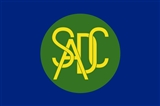
The flag of the organization came from the people of the member countries; a competition was held to design a new flag and in 1995 the new design was chosen. The new flag has a navy blue field with a green circle in the centre, and the SADC logo is in the centre of the green circle. In the official description of the flag, the blue symbolises the sky and ocean that bring water and life, and the green represents the rich flora and fauna. The region's rich gold wealth is represented in the colour of the lettering. The flag was first used in the 1995 SADC Summit at the World Trade Centre in Johannesburg
Johannesburg

Johannesburg also known as Joburg, is the largest city in South Africa. Johannesburg is the province Capital of Gauteng the wealthiest province in South Africa, having the largest economy of any metropolitan region in Sub-Saharan Africa....
.

Leaders


Chairperson

  • Levy Mwanawasa
    Levy Mwanawasa

    Levy Patrick Mwanawasa was a Zambian politician. He was the President of Zambia from January 2002 until his death in August 2008....
     (c2007)
Levy Msanawasa died in Aug 08.
  • Kgalema Motlanthe (2008-present)


Secretaries-General

  • Kaire Mbuende
    Kaire Mbuende

    Kaire Mbuende is a Namibian politician and diplomat. Mbuenda has been the Namibian ambassador to the United Nations since his appointment in August 2006....
     (1994-2001)
  • Prega Ramsamy (2001-2005)
  • Thomas Salomao (2005 - present)


Comparison with other regional blocs


Timeline


2007


  • 2 November - rail link from Chipata
    Chipata

    Chipata, population 32,000, is the capital of the Eastern Province, Zambia of Zambia. Formerly known as Fort Jameson, the city is located near the border with Malawi, along the road connecting the capitals Lilongwe and Lusaka ....
     to Mpika
    Mpika railway station

    Mpika is a major intermediate railway station on the TAZARA railway in northern Transport in Zambia. It has a passenger station, and many goods sidings....
     proposed, providing shorter access to sea at Nacala
    Nacala

    Nacala on the northern coast of Mozambique is the deepest natural port on the east coast of Africa. It serves as the terminal for the Nacala Railway, a rail link to the landlocked Malawi....
    .


2008

  • 12 April "Confusion surrounds Mugabe
    Mugabe

    Mugabe can refer to:*Robert Mugabe, President of Zimbabwe.*Sally Mugabe, first wife of Robert Mugabe.*Grace Mugabe, second wife of Robert Mugabe....
    's appearance at crisis meeting"


See also

  • Common Market for Eastern and Southern Africa
    Common Market for Eastern and Southern Africa

    The Common Market for Eastern and Southern Africa, is a preferential trading area with nineteen member states stretching from Libya to Zimbabwe....
     (COMESA)
  • East African Community
    East African Community

    The East African Community is an intergovernmental organisation comprising the five east African countries Burundi, Kenya, Rwanda, Tanzania, and Uganda....
     (EAC)
  • Economic Community of Central African States
    Economic Community of Central African States

    The Economic Community of Central African States is an organisation for promotion of regional economic co-operation in Central Africa. It "aims to achieve collective autonomy, raise the standard of living of its populations and maintain economic stability through harmonious cooperation"....
     (ECCAS)
  • List of Trade blocs
  • Southern African Customs Union
    Southern African Customs Union

    The Southern African Customs Union is a customs union among five countries of Southern Africa....
     (SACU)


External links