
All Topics  
Slime mould

 
Slime Mould

   Email Print
   Bookmark   Link


Slime mould


Slime mold is a broad term describing fungi-like amoeboid (i.e., like an amoeba
Amoeba

Amoeba is a term used either to describe protists that move by crawling via pseudopods, or to refer to a genus that includes species that move by this mechanism....
) organisms. Their common name refers to part of some of these organism's life cycles where they can appear gelatinous (hence the name slime).


Discussion
Ask a question about 'Slime mould'
Start a new discussion about 'Slime mould'
Answer questions from other users
Full Discussion Forum


Recent Posts


Encyclopedia


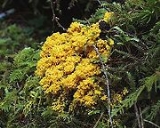
Slime Mold Olympic National Park North Fork Sol Duc
Slime mold is a broad term describing fungi-like amoeboid (i.e., like an amoeba
Amoeba

Amoeba is a term used either to describe protists that move by crawling via pseudopods, or to refer to a genus that includes species that move by this mechanism....
) organisms. Their common name refers to part of some of these organism's life cycles where they can appear gelatinous (hence the name slime). However, this feature is mostly seen with the myxomycetes, which are the only macroscopic slime molds.

Slime molds have been found all over the world and feed on microorganisms that live in any type of dead plant material. For this reason, these organisms are usually found in soil, lawns, and on the forest floor, commonly on deciduous logs. However, in tropical areas they are also common on inflorescences, fruits
Fruit

The term fruit has different meanings dependent on context, and the term is not synonymous in food preparation and biology. In botany, which is the scientific study of plants, fruits are the ripened Ovary of flowering plants....
 and in aerial situations (e.g., in the canopy of trees). In urban areas, they are found on mulch
Mulch

In agriculture and gardening, is a protective cover placed over the soil, primarily to modify the effects of the local climate. A wide variety of nature and Synthetic fiber materials are used....
 or even in the leaf mold
Leaf mold

Leaf mold is a form of compost produced by the fungal breakdown of shrub and tree leaves, which are generally too dry, acidic, or low in nitrogen for bacterial decomposition....
 in gutters. One of the most commonly encountered slime molds, both in nature in forests in the temperate zones of the earth as well as in classrooms and laboratories is the yellow Physarum polycephalum
Physarum polycephalum

Physarum polycephalum belongs to the supergroup Amoebozoa, phylum Mycetozoa, and class Myxogastria. P. polycephalum, often referred to as the ?many-headed slime,? is a slime mold that inhabits shady, cool, moist areas, such as decaying leaves and logs....
.

Taxonomy

Slime molds as a group (sensu lato) are polyphyletic. They were originally represented by the subkingdom Gymnomycota in the Fungi kingdom and included the defunct phyla Myxomycota
Myxomycota

Myxomycota is a phylum of protists phylogenetically related to the group of the Amoebozoa. The latin name comes from the Greek Myxo, that means "slime", and mycota, that means fungus....
, Acrasiomycota
Acrasiomycota

Acrasiomycota is a phylum of slime molds which belongs to the protist group Discicristata. The name acrasio- comes from the Greek Akrasia, meaning "acting against one's judgement." This group consists of cellular slime molds....
 and Labyrinthulomycota. Today, slime molds have been divided between four supergroups and not one of them is included in the Fungi. These are:
  • Mycetozoa
    Mycetozoa

    Mycetozoa is a phylum of slime molds. The Myxogastria, Protosteli, and Dictyosteliida make up the modern phylum . The mycetozoan groups all fit into the unikont supergroup Amoebozoa, whereas the other slime molds fit into various bikont groups....
    , which includes the defunct phylum Myxomycota, belong to the supergroup Amoebozoa
    Amoebozoa

    The Amoebozoa are a major group of amoeboid protozoa, including the majority that move by means ofinternal cytoplasmic flow. Their pseudopodia are characteristically blunt and finger-like,...
     and include:
    • Myxogastria or myxomycetes and Protostelids: syncytial or plasmodial slime molds or protostelids.
    • Dictyosteliida: unicellular slime molds or dictyostelids.
  • Acrasiomycota: slime molds which belong to the supergroup Excavata as the family Acrasidae. They have a similar life style to Dictyostelids.
  • Labyrinthulomycota: slime nets which belong to the supergroup Chromalveolata as the class Labyrinthulomycetes
    Labyrinthulomycetes

    The Labyrinthulomycetes also known as Labyrinthulomycota or Slime nets are a group of protists that produce a network of wiktionary:Filaments or tubes, which serve as tracks for the cells to glide along and absorb nutrients for them....
    .
  • Plasmodiophorids
    Phytomyxea

    The Phytomyxea are a group of protists that are parasites of plants. A more common name for them is the plasmodiophorids, but this does not always include Phagomyxa....
    : parasitic protists which belong to the supergroup Rhizaria
    Rhizaria

    The Rhizaria are a species-rich supergroup of protists. They vary considerably in form, but for the most part they are amoeboids with filose, reticulose, or microtubule-supported pseudopods....
    . They can cause cabbage club root disease
    Clubroot

    Clubroot is a common disease of cabbages, radishes, turnips and other plants belonging to the family Cruciferae . It is caused by Plasmodiophora brassicae, which was once considered a slime mold but is now put in the group Phytomyxea....
     and powdery scab tuber disease
    Powdery scab

    Powdery scab, is a disease that happens to tubers. It is caused by the protozoa Spongospora subterranea, is widespread in potato growing countries....
    .


In more strict terms (sensu stricto) slime molds comprise the group of the mycetozoans (myxomycetes, dictyostelids and protostelids). However, even at this level there are conflicts to be resolved. Recent molecular evidence shows that the first two groups are likely to be monophytelic; however the protostelids seem to be polyphyletic, too. For this reason, scientists are trying to elucidate the relations between these three groups.

Life cycle

They begin life as amoeba
Amoeba

Amoeba is a term used either to describe protists that move by crawling via pseudopods, or to refer to a genus that includes species that move by this mechanism....
-like cells
Cell (biology)

The cell is the structural and functional unit of all known Life organisms. It is the smallest unit of an organism that is classified as living, and is often called the building bricks of life....
. These unicellular amoebae are commonly haploid and multiply if they encounter their favorite food, bacteria
Bacteria

The Bacteria are a large group of unicellular microorganisms. Typically a few micrometres in length, bacteria have a wide range of shapes, ranging from spheres to rods and spirals....
. These amoebae can mate if they encounter the correct mating type and form zygote
Zygote

A zygote is a cell that is the result of fertilization. That is, two ploidy cells—usually an ovum from a female and a sperm cell from a male—merge into a single ploidy cell called the zygote ....
s which then grow into plasmodia which contain many nuclei
Cell nucleus

In cell biology, the nucleus , also sometimes referred to as the "control center", is a membrane-enclosed organelle found in all eukaryote cell ....
 without cell membranes between them, which can grow to be meters in size. One variety is often seen as a slimy yellow network in and on rotting logs. The amoebae and the plasmodia engulf microorganisms. The plasmodium grows into an interconnected network of protoplasmic strands (Ling, 1999).

Within each protoplasmic strand the cytoplasmic contents rapidly stream. If one strand is carefully watched for about 50 seconds the cytoplasm can be seen to slow, stop, and then reverse direction. The streaming protoplasm within a plasmodial strand can reach speeds of up to 1.35 mm per second which is the fastest rate recorded for any organism (Alexopoulos, 1962). Migration of the plasmodium is accomplished when more protoplasm streams to advancing areas and protoplasm is withdrawn from rear areas. When the food supply wanes, the plasmodium will migrate to the surface of its substrate and transform into rigid fruiting bodies. The fruiting bodies or sporangia are what we commonly see, they superficially look like fungi or molds but are not related to the true fungi. These sporangia will then release spores which hatch into amoebae to begin the life cycle again (Ling, 1999).

Slime Mold Plasmodia

In Myxomycetes, the plasmoidal portion of the life cycle only occurs after syngamy, which is the fusion of cytoplasm and nuclei of myxoamoebae or swarm cells. Therefore, all of the nuclei are diploid at this stage and mitosis occurs simultaneously throughout the organism. Myxomycete plasmodia are multinucleate masses of protoplasm
Protoplasm

Protoplasm is the living contents of a cell that are surrounded by a plasma membrane. This term is not commonly used in modern cell biology. Protoplasm is composed of a mixture of small molecules such as ions, amino acids, monosaccharides and water, and macromolecules such as nucleic acids, proteins, lipids and polysaccharides....
 that move by cytoplasmic streaming. In order for the plasmodium to move, cytoplasm must be diverted towards the leading edge from the lagging end. This process results in the plasmodium advancing in fan-like fronts. As it moves, plasmodium also gains nutrients through the phagocytosis
Phagocytosis

File:Phagocytosis in three steps.pngPhagocytosis is the cell process of Phagocytes and Protists of engulfing solid particles by the cell membrane to form an internal phagosome, which is a food vacuole, or pteroid....
 of bacteria and small pieces of organic matter.

The Myxomycete plasmodium also has the ability to subdivide and establish separate plasmodia. Conversely, separate plasmodia that are genetically similar and compatible can fuse together to create a larger plasmodium. In the event that conditions become dry, the plasmodium will form a sclerotium, essentially a dry and dormant state. In the event that conditions become moist again the sclerotium absorbs water and an active plasmodium is restored. When the food supply wanes, the Myxomycete plasmodium will enter the next stage of its life cycle forming haploid spores, often in a well-defined sporangium
Sporangium

A sporangium is a plant or fungus structure producing and containing spores. Sporangia occur in Flowering plant, gymnosperms, ferns, fern allies, bryophytes, Algaee, and Fungus....
 or other spore-bearing structure.

Types of slime mold

Haeckel Mycetozoa
Most slime mold are smaller than a few centimetres, but the very largest recorded reached an area of up to thirty square metres, making them the largest undivided cells known. Many have striking colours such as yellow, brown and white.

Slime molds can generally be divided into two main groups. A plasmodial slime mold involves numerous individual cells attached to each other, forming one large membrane. This "supercell" is essentially a bag of cytoplasm containing thousands of individual nuclei. By contrast, cellular slime molds spend most of their lives as individual unicellular protists, but when a chemical signal is secreted, they assemble into a cluster that acts as one organism.

A common slime mold which forms tiny brown tufts on rotting logs is Stemonitis
Stemonitis

Stemonitis is a distinctive genus of slime moulds found throughout the world . They are characterised by the tall brown sporangium, supported on slender stalks, which grow in clusters on rotting wood....
. Another form which lives in rotting logs and is often used in research is Physarum polycephalum
Physarum polycephalum

Physarum polycephalum belongs to the supergroup Amoebozoa, phylum Mycetozoa, and class Myxogastria. P. polycephalum, often referred to as the ?many-headed slime,? is a slime mold that inhabits shady, cool, moist areas, such as decaying leaves and logs....
. In logs it has the appearance of a slimy webwork of yellow threads, up to a few feet in size. Fuligo
Fuligo

Fuligo is a genus of plasmodial slime mold. In Finland one unusually prominent species with a bright yellow plasmodium, Fuligo septimia, was believed to be used by witches to spoil their neighbor's milk....
 forms yellow crusts in mulch.

The Protostelids' life cycle is very similar to the above descriptions, but they are much smaller, the fruiting bodies only forming one to a few spores.

The Dictyosteliida, cellular slime molds, are distantly related to the plasmodial slime molds and have a very different life style. Their amoebae do not form huge coenocytes, and remain individual. They live in similar habitats and feed on microorganisms. When food runs out and they are ready to form sporangia, they do something radically different. They release signal molecules into their environment, by which they find each other and create swarms. These amoeba then join up into a tiny multicellular slug-like coordinated creature, which crawls to an open lit place and grows into a fruiting body. Some of the amoebae become spores to begin the next generation, but some of the amoebae sacrifice themselves to become a dead stalk, lifting the spores up into the air.

The Acrasidae
Percolozoa

The Percolozoa are a group of colourless protozoa, including many that can transform between amoeboid, flagellate, and encysted stages. These are collectively referred to as schizopyrenids, amoeboflagellates, or vahlkampfids....
 have a life style similar to Dictyostelids, but their amoebae behave differently and are of uncertain taxonomic position.

The Plasmodiophorids also form coenocytes but are internal parasites of plants (e.g., club root disease of cabbages).

Finally, the Labyrinthulomycetes
Labyrinthulomycetes

The Labyrinthulomycetes also known as Labyrinthulomycota or Slime nets are a group of protists that produce a network of wiktionary:Filaments or tubes, which serve as tracks for the cells to glide along and absorb nutrients for them....
 are marine and form labyrinthine networks of tubes in which amoebae without pseudopods can travel.

Slime molds in culture


  • Traditional Finnish
    Finland

    Finland , officially the Republic of Finland , is a Nordic countries situated in the Fennoscandian region of northern Europe. It borders Sweden on the west, Russia on the east, and Norway on the north, while Estonia lies to its south across the Gulf of Finland....
     lore describes how malicious witches used yellow Fuligo (there called "paranvoi," or butter of the familiar) to spoil milk
    Milk

    Milk is an opaque white liquid produced by the mammary glands of female mammals . It provides the primary source of nutrition for newborn mammals before they are able to digestion other types of food....
    .
  • Mycologist Tom Volk reports that the plasmodium of Fuligo
    Fuligo

    Fuligo is a genus of plasmodial slime mold. In Finland one unusually prominent species with a bright yellow plasmodium, Fuligo septimia, was believed to be used by witches to spoil their neighbor's milk....
     is eaten in Mexico
    Mexico

    The United Mexican States , commonly known as Mexico , is a federalism constitutionalism republic in North America. It is bordered on the north by the United States; on the south and west by the Pacific Ocean; on the southeast by Guatemala, Belize, and the Caribbean Sea; and on the east by the Gulf of Mexico....
    .


See also

  • Swarming motility
    Swarming motility

    Swarming motility is a rapid and coordinated translocation of a bacterial population across solid or semi-solid surfaces. This type of motility is an example of an emerging concept in microbiology : bacterial multicellularity....


External links

  • from abc.net.au
  • from Smithsonian Magazine
    Smithsonian (magazine)

    Smithsonian is a monthly magazine published by the Smithsonian in Washington, D.C. The first issue was published in 1970. It is edited by Carey Winfrey....
    * is an online informatics resource for Dictyostelium, a cellular slime mould.
  • Slime Mold Macro Photography Shots
  • is an online nomenclatural information system of slime moulds (Myxomycetes, Dictyostelids and Protostelids) of the world.
  • www.ucmp.berkeley.edu
  • Life cycle of Reticularia lycoperdon at MushrooMania.com.