
All Topics  
Shetland Sheepdog

 
Shetland Sheepdog

   Email Print
   Bookmark   Link


Shetland Sheepdog


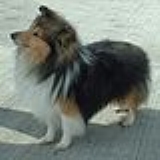
The Shetland Sheepdog, often known as the Sheltie, has been intentionally bred small. Shelties are ideally suited for the terrain of the Shetland Islands
Shetland Islands

Shetland is an archipelago in Scotland, off the northeast coast. The islands lie to the northeast of Orkney, from the Faroe Islands and form part of the division between the Atlantic Ocean to the west and the North Sea to the east....
 in Scotland
Scotland

conventional_long_name = ScotlandAlba|common_name= Scotland|image_flag = Flag of Scotland.svg|flag_width = 130px...
. While they resemble a rough Collie
Rough Collie

The Rough Collie is a dog breed of dog developed originally for herding in Scotland. It is also well known because of the works of author Albert Payson Terhune, and was popularized in later generations by the Lassie novel, movies, and television shows....
 in miniature, they are not a true miniature Collie, as there are many differences in appearance. Shelties are intelligent, family oriented dogs that can be as happy in an apartment in a city as in a house in the country.


Discussion
Ask a question about 'Shetland Sheepdog'
Start a new discussion about 'Shetland Sheepdog'
Answer questions from other users
Full Discussion Forum


Recent Posts


Encyclopedia


The Shetland Sheepdog, often known as the Sheltie, has been intentionally bred small. Shelties are ideally suited for the terrain of the Shetland Islands
Shetland Islands

Shetland is an archipelago in Scotland, off the northeast coast. The islands lie to the northeast of Orkney, from the Faroe Islands and form part of the division between the Atlantic Ocean to the west and the North Sea to the east....
 in Scotland
Scotland

conventional_long_name = ScotlandAlba|common_name= Scotland|image_flag = Flag of Scotland.svg|flag_width = 130px...
. While they resemble a rough Collie
Rough Collie

The Rough Collie is a dog breed of dog developed originally for herding in Scotland. It is also well known because of the works of author Albert Payson Terhune, and was popularized in later generations by the Lassie novel, movies, and television shows....
 in miniature, they are not a true miniature Collie, as there are many differences in appearance. Shelties are intelligent, family oriented dogs that can be as happy in an apartment in a city as in a house in the country. They have a thick double coat that can come in many different colors and patterns. They are vocal dogs, with few health problems; among those they are prone to are hip dysplasia and thyroid
Thyroid

The thyroid is one of the largest endocrine glands in the body. This gland is found in the neck inferior to the thyroid cartilage and at approximately the same level as the cricoid cartilage....
 problems. They are very good house and family dogs. They are very protective and good with children if properly exposed to them as a puppy.

Description


Coat and Colors

Shelties have a double coat, which means that they have two types of fur that make up their coat. The long, rough guard hairs lie on top of the thick, soft undercoat. The guard hairs are water-repellent, while the undercoat provides relief from both hot and cold temperatures. There are three main colors: sable, which ranges from golden to mahogany; tri-colour, made up of black, white and tan; and blue merle
Merle (coat colour in dogs)

Merle is a color combination in dogs? Coat s. It is a solid base color with lighter blue/gray or reddish patches, which gives a mottled or uneven speckled effect....
, made up of grey, white, black.

Bi-Black (white and black) is less common but still acceptable. The best-known color is the sable, which is dominant over other colors. Shaded, or mahogany, sables can sometimes be mistaken for tri-colored Shelties due to the large amount of dark shading on their coats. Another name for a shaded sable is a tri-factored sable and white. This name comes from the breeding of a tri-color to a sable and white, or a tri-factored sable to another tri-factored sable. Another acceptable color in the show ring, but much less seen, is the sable merle, which can often be hard to distinguish from regular sables after puppyhood. The sable merle would have patches of dark brown on a light brown background, as compared to the black and gray of a blue merle.

There are two additional coat colors that are quite rare because they are unacceptable in the breed ring. The color-headed white (majority of fur white, with the head 'normally' marked) is the product of two white-factored dogs being bred. Double merles, the product of breeding two merle Shelties together, can be bred but have a higher incidence of deafness or blindness or retardation than the other coat colors. There have been reports of a brindle
Brindle

Brindle is a coat coloring pattern in animals, particularly dogs, cats, cattle, crested geckos and, rarely, horses. It is sometimes described as "tiger striped", although the brindle pattern is more subtle than that of a tiger's coat....
 Sheltie but many Sheltie enthusiasts agree that a cross sometime in the ancestry of that specific Sheltie could have produced a brindle

Height and Weight
The size of a Sheltie (at the withers) can range from being undersized (under 13 inches) to being oversize (over 16 inches.) The average height of a Sheltie in the United States according to the AKC Standard is between 13 - 16 inches. A measurement of either below 13 inches or above 16 inches will result in being dismissed from the conformation ring. Being dismissed three times will result in the dog being banned from any more conformation classes.

Temperament


The Shetland Sheepdog is an outstanding companion dog and is intensely loyal. It is lively, intelligent, trainable, and willing to please and obey. Shelties are loving, loyal, and affectionate with their family, but are naturally aloof with strangers; for this reason Shelties must be socialized. Some can be quite reserved. Shelties do well with children if they are raised with them from an early age; however, their small size makes it easy for a child to accidentally injure them, so supervision is necessary. Exercise caution when considering an adult Sheltie for a family with young children; they may not be compatible.

Shelties are vocal herding dogs. Correct Sheltie temperament is intensely loyal, affectionate and responsive to his owner; reserved but not shy or fearful . Some shelties display a terrier-like personality, which tends to be hyper, and always on the go; however, this temperament is not sanctioned in the breed standard. Some Shelties can be very timid but this temperament is specifically discouraged by the breed standard . Tendencies towards shyness can be reduced through proper socialization. The average Sheltie is an excellent watch dog, giving alarm barks when a person is at the door, or a car is in the driveway.

Activity level
The herding instinct is strong in many Shelties. They love to chase and herd things, including squirrels, ducks, and children. Shelties love to run in wide-open areas. Shelties usually love to play. They do best with a sensitive, yet firm, owner. The Sheltie is, above all, an intelligent herder and likes to be kept busy, although their activity level usually coincides with their owner's level. Shelties also are very smart, making them highly trainable. Shelties are very good with children. Neglecting a Sheltie's need for exercise and intellectual stimulation can result in undesirable behaviors, including excessive barking, phobias, and nervousness. Fortunately, the reverse is also true: annoying behaviors can be lessened greatly by an hour of exercise that engages the dog with its owner.

Intelligence
Shelties have a high level of intelligence. According to Dr. Stanley Coren
Stanley Coren

Stanley Coren is a psychology professor and researcher who has become best known for a series of books regarding the intelligence of dogs. Through television shows and media coverage that has been broadcast in Canada and the United States as well as overseas, he has become popular with dog owners, while continuing research and instruction in...
, an expert on animal intelligence, the Shetland Sheepdog is one of the brightest dogs, ranking 6th out of 132 breeds tested. His research found that an average Sheltie could understand a new command in less than 5 repetitions and would obey a command the first time it was given 95% of the time or better.

Health


Like the Rough Collie
Rough Collie

The Rough Collie is a dog breed of dog developed originally for herding in Scotland. It is also well known because of the works of author Albert Payson Terhune, and was popularized in later generations by the Lassie novel, movies, and television shows....
, there is a tendency toward inherited malformation and disease of the eyes. Each individual puppy should have his eyes examined by a qualified veterinary ophthalmologist. Some lines may be susceptible to hypothyroidism
Hypothyroidism

Hypothyroidism is the disease state in humans and in animals caused by insufficient production of thyroid hormone by the thyroid gland. Cretinism is a form of hypothyroidism found in infants....
, epilepsy, hip dysplasia, or skin allergies. The expected life span for Shelties is between 10-15 years, although some Shelties are shorter lived, and some are longer lived.

Dermatomyositis
Dermatomyositis

Dermatomyositis is a connective-tissue disease related to Polymyositis that is characterized by inflammation of the muscles and the skin....
 may occur at the age of 4 to 6 months, and is frequently misdiagnosed by general practice veterinarians as sarcoptic
Mange

Mange is a parasite infestation of the skin of animals. Common symptoms include hair loss, itching and inflammation, all of which are caused by microscopic mites....
 or demodectic mange. The disease manifests itself as alopecia
Alopecia

Alopecia or hair loss is the medical description of the loss of hair from the head or body, sometimes to the extent of baldness. Unlike the common cosmetic depilation of body hair, alopecia tends to be involuntary and unwelcome, e.g., androgenic alopecia....
 on the top of the head, supra- and suborbital area and forearms as well as the tip of the tail. If the disease progresses to its more damaging form, it could affect the autonomic nervous system
Autonomic nervous system

The autonomic nervous system is the part of the peripheral nervous system that acts as a control system, maintaining human homeostasis in the body....
 and the dog may have to be euthanized. This disease is generation-skipping and genetically transmitted, with breeders having no clear methodology for screening except clear bloodline records. Deep tissue biopsies
Biopsy

A biopsy is a medical test involving the removal of Cell_s or Biological tissues for examination. It is the removal of tissue from a living subject to determine the presence or extent of a disease....
 are required to definitively diagnose dermatomyositis. Von Willebrand disease
Von Willebrand disease

Von Willebrand disease is the most common hereditary coagulation abnormality described in humans, although it can also be acquired as a result of other medical conditions....
 is an inherited bleeding disorder. In Shelties, affected dogs as a general rule are not viable and do not live long. The Sheltie carries type III of von Willebrands, which is the most severe of the three levels. There are DNA tests that were developed to find von Willebrands in Shelties. It can be done at any age, and it will give three results: affected, carrier and non-affected. Shelties may also suffer from hypothyroidism
Hypothyroidism

Hypothyroidism is the disease state in humans and in animals caused by insufficient production of thyroid hormone by the thyroid gland. Cretinism is a form of hypothyroidism found in infants....
, which is the under-functioning thyroid gland. Clinical symptoms include hair loss or lack of coat, over or under-weight, and listlessness. Research is currently ongoing to further understand the thyroid.

Although small breed dogs are not usually plagued by hip dysplasia, it has been identified in Shelties. Hip dysplasia occurs when the head of the femur and the acetabulum do not fit together correctly, frequently causing pain and/or lameness. Hip dysplasia is thought to be genetic many breeders will have their dogs' hips x-rayed and certified by the Orthopedic Foundation for Animals
Orthopedic Foundation for Animals

The Orthopedic Foundation for Animals is a not-for-profit organization based in Columbia, Missouri that aims to research and prevent orthopedic and Genetic disorder in companion animals....
.

Eyes

The two basic forms of inherited eye diseases/defects in Shelties are Collie eye anomaly
Collie eye anomaly

Collie eye anomaly is a congenital, heredity, bilateral eye disease of dogs involving the retina, choroid, and sclera. It can be a mild disease or cause blindness....
 (CEA) and progressive retinal atrophy
Progressive retinal atrophy

Progressive retinal atrophy is a group of Genetics diseases seen in certain breeds of dogs and, more rarely, cats. It is characterized by the bilateral degeneration of the retina, causing progressive vision loss culminating in blindness....
 (PRA).

CEA can be detected in young puppies by a veterinary ophthalmologist. The disease involves the retina. It is always bilateral although the severity may be disparate between eyes. Other accompanying defects (ophthalmic anomalies) may wrongly indicate a more severe manifestation of CEA. CEA is present at birth and although it cannot be cured, it doesn't progress. That is, the severity of the disease at birth will not change throughout the dog's life. CEA is scored similar to the way hips are. In some countries, the Sheltie gene pool is limited so breeders will breed with a very low scoring CEA. However, most breeders are actively trying to breed this disease out by only breeding with dogs that have "clear" eyes or very low scoring eyes. A CEA score considered too high to breed with may still be low enough not to affect the dog's life. These dogs live happy and healthy lives as pets but should be neutered and not used for breeding. Most breeders have all their adults and every litter tested. Some breeders will supply a certificate from the vet to all their puppy purchasers.

PRA can be detected at any time but usually does not show up until the dog is around 2 years of age. As the name suggests, it is a progressive disease which will eventually result in total blindness. Currently there is no treatment for either disease, but as both diseases (CEA and PRA) are hereditary it is possible to eliminate them using selective breeding.

Ears


Shelties' ears should bend slightly or "tip" at the top to be shown in American Kennel Club
American Kennel Club

The American Kennel Club is a breed registry of purebred dog pedigree in the United States. Beyond maintaining its pedigree registry, this kennel club also promotes and sanctions events for purebred dogs, including the Westminster Kennel Club Dog Show, an annual event which predates the official forming of the AKC, the National Dog Show, an...
 (AKC) shows because they contribute to the proper Sheltie expression. The proper ear is to have the top 1/3 to 1/4 of the ear tipped. If a dog's ears are not bent (referred to as prick ears) it is acceptable to help the ears along to the desired position by bracing them into the correct position and leaving them on for several weeks to several months. Wide set ears can also be a problem, often breaking too low down (referred to as 'hound' ears). These are often harder to correct than prick ears, and must be braced early and consistently throughout the first year. It is easiest to train a dog's ears when the dog is a puppy. The reason for this is because when you train a puppy's ears, the cartilage is still soft and bendable. Another way of solving this is to simply tape the puppy ear into the formation beginning at 6 to 8 weeks of age. Once that cartilage in the ears is hard (usually by the time the puppy is 6 months old), it's impossible to fix the ear set without veterinary procedures.

Activities

In their size group, the breed dominates dog agility
Dog agility

Dog agility is a dog sport in which a handler directs a dog through an obstacle course in a race for both time and accuracy. Dogs generally run off-leash with no food or toys as incentives....
 competitions. They also excel at competitive obedience
Obedience training

Obedience training usually refers to the training of a dog and the term is most commonly used in that context. Obedience training ranges from very basic training, such as teaching the dog to reliably respond to basic commands such as "sit", "down", "come", and "stay", to high level competition within clubs such as the American Kennel Club an...
, showmanship
Showmanship

Showmanship is a competition involving people showing their animals. This can be:*Dog showmanship*Horse showmanshipIt may also refer to:*Showmanship , the skill of making an artistic performance distinctive, effective and appealing to an audience...
, flyball
Flyball

Flyball is a List of dog sports in which teams of dogs race against each other from a start/finish line, over a line of hurdles, to a box that releases a tennis ball to be caught when the dog presses the spring loaded pad, then back to their handlers while carrying the ball....
, tracking
Tracking (dog)

Tracking is a technique in which dogs are trained to locate certain objects, such as a downed bird. Many bird and rabbit hunters train their dogs in tracking....
, and herding
Sheepdog trial

A Sheepdog trial is a competitive List of dog sports in which herding dog breeds move sheep around a field, fences, gates, or enclosures as directed by their handlers....
. Participating in such a sport will satisfy a Sheltie's needs for mental and physical exercise.

Grooming

Shelties have a double coat. The topcoat
Topcoat

Topcoat may refer to:*A short coat made of heavy material; see overcoat*The guard hairs of an animal's fur*A transparent or translucent coat of paint applied over the underlying material as a sealer...
 consists of long, straight, water-repellent hair, which provides protection from cold and the elements. The undercoat is short, furry, and very dense and helps to keep the dog warm. The Sheltie is usually a clean dog and should only need to be brushed once or twice a week (it is helpful to spray-mist with water when brushing). Mats can be commonly found behind the ears, under the elbow on each front leg, and in the fluffy fur on the hind legs (the "skirts").

Although its coat might appear to be a time-consuming task, a once-weekly, but thorough, brushing is all that is needed, though more frequent groomings and trimmings will contribute to a beautiful and tidy coat. Shelties usually shed twice a year, often at spring and fall, and should be groomed more often at those times. A good brushing with an undercoat rake, which removes the dead and loose hair from its coat daily should reduce the amount of hair that is shed. Females will also shed right before or right after giving birth.

It is easiest to teach a dog to tolerate, or even enjoy, grooming if they are shown that it is a pleasurable thing from a young age! Breeders usually teach the dogs to lie on their side, be brushed, and then flip over to the other side. Toenails and hair between the pads need to be trimmed every couple of weeks to ensure traction and to prevent mud and snow from balling up on the feet. Most Shelties learn to love the attention that grooming provides, if the routine is started when the dog is still young.

Show dogs may require more frequent brushing to keep their coats in top condition. Regular brushing encourages undercoat growth, distributes healthful oils produced by the skin, and prevents sores known as "hotspots" which can occur when dead undercoat is allowed to accumulate close to the skin. Show dogs also require trims to certain parts of the coat, including shaping the ears, the topskull, the jawline, paws and topline. There are several published works on the subject, including the book "Sheltie Talk."

Breeding

As with any dog, Shelties should be screened for inheritable genetic diseases before breeding. Both male and female should be tested for thyroid problems, von Willebrands disease and brucellosis, as well as have hip x-rays cleared by the Orthopedic Foundation for Animals
Orthopedic Foundation for Animals

The Orthopedic Foundation for Animals is a not-for-profit organization based in Columbia, Missouri that aims to research and prevent orthopedic and Genetic disorder in companion animals....
 and eyes cleared by .

Breeding colors is also a problem for many beginning breeders. Certain color combinations can produce unwanted or potentially harmful results, such as a blue merle to blue merle breeding, the result of which can be deaf and blind white puppies (called the lethal white.) A tri-color and bi-color are the only two colors that can safely be bred to any other color. By breeding a sable and white to a blue merle, the result can be an unwanted sable merle. A tri-color to a pure-for-sable (a sable and white which can produce only other sable and whites), will produce only sable and whites, but they will be tri-factored sable and whites (which means they have the tri-gene.) There are many more examples of breeding for color, so a good breeder will research what genes each dog carries. There are many different genes contributing to the different colors of the Sheltie, including the bi gene, the merling gene, the sable gene, and the tricolor gene.

Showing Requirements

As with all breeds of dogs there is a certain set of rules that must be followed in order to show them and these vary by country. For example in the United States under American Kennel Club
American Kennel Club

The American Kennel Club is a breed registry of purebred dog pedigree in the United States. Beyond maintaining its pedigree registry, this kennel club also promotes and sanctions events for purebred dogs, including the Westminster Kennel Club Dog Show, an annual event which predates the official forming of the AKC, the National Dog Show, an...
 standards, Shetland Sheepdogs must be within the required height of 13-16 inches at the withers for both males and females. Both male and female must be sexually intact to show, except in the Veteran's class. A complete description of the ideal Sheltie can be found in the American Kennel Club
American Kennel Club

The American Kennel Club is a breed registry of purebred dog pedigree in the United States. Beyond maintaining its pedigree registry, this kennel club also promotes and sanctions events for purebred dogs, including the Westminster Kennel Club Dog Show, an annual event which predates the official forming of the AKC, the National Dog Show, an...
's breed standard.

History

The Sheltie came from the Shetland Islands
Shetland Islands

Shetland is an archipelago in Scotland, off the northeast coast. The islands lie to the northeast of Orkney, from the Faroe Islands and form part of the division between the Atlantic Ocean to the west and the North Sea to the east....
 off the north coast of mainland Scotland
Scotland

conventional_long_name = ScotlandAlba|common_name= Scotland|image_flag = Flag of Scotland.svg|flag_width = 130px...
. Unlike many miniature breeds that resemble their larger counterparts, this breed was not developed simply by selectively breeding
Selective breeding

Selective breeding in domesticated animals is the process of a Breeder developing a cultivated breed over time, and selecting qualities within individuals of the breed that will be best to pass on to the next generation....
 the Rough Collie for smaller and smaller sizes. Rather, he is a descendant of the Collie and while the Sheltie's exact origins are not known it is believed that other types such as the extinct Greenland Yakki dog, the Kings Charles Spaniel (not the Cavalier), the Pomeranian, and possibly the Border Collie were utilized in their development.

During the early 20th century, additional crosses were made to Collies up until the 1940s to help retain the desired Collie type. In fact, the first AKC Sheltie champion's dam was a purebred Collie bitch. It was at this time that the Shetland Sheepdog was known as the Shetland Collie.

The year 1909 marked the initial recognition of the Sheltie by the English Kennel Club, with the first registered Sheltie being a female called Badenock Rose. The first Sheltie to be registered by the American Kennel Club
American Kennel Club

The American Kennel Club is a breed registry of purebred dog pedigree in the United States. Beyond maintaining its pedigree registry, this kennel club also promotes and sanctions events for purebred dogs, including the Westminster Kennel Club Dog Show, an annual event which predates the official forming of the AKC, the National Dog Show, an...
 was "Lord Scott" in 1911. Ironically, the Shetland Sheepdog is only rarely found in Shetland, having been replaced by the Border Collie. It was thought that the Sheltie herded the small sheep of the Shetland Islands, but many now feel that with their diminutive size they were used primarily to chase off scavengers, birds, pests, and wayward livestock which may have wandered into the crofter's gardens. However, this idea cannot explain the natural herding instinct most Shetland Sheepdogs posess even today.

Famous Shetland Sheepdogs

  • Ch Halstor's Peter Pumpkin ROM - The Shetland Sheepdog sire with the most Champions (160).
  • Am/Can/Jap/Int'l Ch.Golden Hylites the Phantom ROM - One of the most expensive and campaigned Shetland Sheepdog sires, sold to a kennel in Japan for a large amount.
  • Badenock Rose - the first Shetland Sheepdog registered with the English Kennel Club.
  • Pikku - Shigeru Miyamoto
    Shigeru Miyamoto

    is a Japanese people video game designer. He created the Mario , Donkey Kong , The Legend of Zelda , F-Zero , Pikmin and Nintendogs franchises for Nintendo game consoles, and mostly works on games as a Game producer....
    's Shetland Sheepdog


See also

  • Shetland animal breeds
    Shetland animal breeds

    Shetland has long had its own distinct animal breeds because of the area being made up of remote islands. Most of its breeds however originated from animals brought from Scandinavia by the Vikings....


External links

  • Shetland Sheepdog associations


  • Other links
    • from Athro Limited