
All Topics  
Sacraments of the Catholic Church


   Email Print
   Bookmark   Link


Sacraments of the Catholic Church


This article is an expansion of a section entitled SacramentsRoman Catholic Church

The Roman Catholic Church or Catholic Church is the Christian Church in full communion with the Pope, the Bishop of Ro...
 within the article: Roman Catholic ChurchRoman Catholic Church Overview

The Roman Catholic Church or Catholic Church is the Christian Church in full communion with the Pope, the Bishop of Ro...
.


The Sacraments of the Catholic Church, "instituted by ChristJesus

Jesus,Some of the historians and Biblical scholars who place the birth and death of Jesus within this range include D....
 and entrusted to the Church, are efficacious signs of grace perceptible to the senses. Through them divine lifeDivine grace

In Christianity, divine grace refers to the sovereign favor of God for humankind, especially in regard to salvation — ...
 is bestowed upon us." They assist individuals in their spiritual progress and growth in holiness. The sacraments contribute to the Church's growth in charity and in giving witness.

Though not every individual receives every sacramentSacrament

A sacrament is a Christian rite that mediates divine grace—a holy Mystery....
, the sacraments as a whole are seen as necessary means of salvation for the faithful, conferring each sacrament's particular grace, such as incorporation into Christ and the Church, forgiveness of sins, or consecration for a particular service.

The Church teaches that the effect of a sacrament comes ex opere operatoEx opere operato

Ex opere operato is a Latin theological expression meaning literally "from the work having worked" and with the specific mea...
(by the very fact of being administered), regardless of the personal holiness of the minister administering it; a recipient's own lack of proper disposition to receive the grace conveyed can block the effectiveness of the sacrament in that person; the sacraments presuppose faith and, in addition, through their words and ritual elements, nourish, strengthen and give expression to faith (Compendium of the Catechism of the Catholic Church, 224).

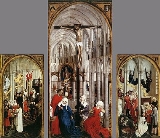
The lists the sacraments as follows: "The whole liturgical life of the Church revolves around the Eucharistic sacrifice and the sacraments. There are seven sacraments in the Church: BaptismFacts About Baptism

Baptism is generally a water purification ritual practiced in many of various religions including Christianity, Mandaeanism,...
, ConfirmationConfirmation (Catholic Church)

Confirmation, known also as Chrismation, is one of the seven sacraments instituted by Christ for the conferral of sanc...
 or ChrismationChrismation

Chrismation is the name given in Orthodox, Oriental Orthodox and Eastern Catholic churches, as well as in the Assyrian C...
, EucharistEucharist (Catholic Church) Overview

Eucharist in the Roman Catholic Church refers to both the celebration of the Mass, that is the Eucharistic Liturgy, and the ...
, PenanceSacrament of Penance (Catholic Church)

In Catholic teaching, the Sacrament of Penance is the method given by Christ to the Church by which individual men and women...
, Anointing of the SickAnointing of the Sick (Catholic Church)

Anointing of the Sick is the ritual anointing of a sick person and is a Sacrament of the Catholic Church....
, Holy OrdersHoly Orders (Catholic Church)

Holy Orders in the Catholic Church includes three orders: bishop, priest, and deacon....
, and MatrimonyCatholic marriage

In the theology of the Catholic Church, marriage, also called matrimony, is an inseparable bond between a man and a woma...
."

Sacraments of Christian initiation

Baptism

BaptismBaptism

Baptism is generally a water purification ritual practiced in many of various religions including Christianity, Mandaeanism,...
 is the first and basic sacrament of Christian initiation. It is administered by immersing the recipient in water or by pouring water on the person's head "in the name of the Father and of the Son and of the Holy Spirit" (cf. Matthew 28:19). The Catholic Church allows sprinkling only if the water then flows on the person's skin. The ordinary minister of the sacrament is a bishop or priest, or (in the Western ChurchLatin Rite

The Latin Rite designates the particular Church, within the Catholic Church, which developed in western Europe and northern ...
, but not in the Eastern Catholic Churches) a deacon. In case of necessityEmergency baptism Summary

An emergency baptism is a baptism administered to a person in imminent danger of death by a person not normally authorized t...
, anyone intending to do what the Church does, even if that person is not a Christian, can baptize. The sacrament frees from original sinOriginal sin

According to Christian tradition, Original sin is the general and non-personal condition of sinfulness into which human bei...
 and all personal sins and from the punishment due to them, and makes the baptized person share in the Trinitarian life of God through "sanctifying grace" (the grace of justification that incorporates the person in Christ and his Church), also making the person a sharer too in the priesthood of Christ. It imparts the "theological" virtuesTheological virtues

The three Theological Virtues listed in the Bible are:...
|hope]] and charityCharity (virtue)

In Christian theology charity, or love , means an unlimited loving-kindness toward all others....
) and the gifts of the Holy Spirit, and marks the baptized person with a spiritual seal or character that indicates permanent belonging to Christ. Baptism is the foundation of communion between all Christians. The many symbols of baptism include a white garment, symbolising innocence and purity, a candle, symbolising the Light of Christ, the Oil of Chrism, which is used to anoint the baby or candidate (catechumen) being baptised and the water to symbolise cleansing and the washing away of sin.

See also

Confirmation

Confirmation or Chrismation is the second sacrament of Christian initiation. "It is called Chrismation (in the Eastern Churches: anointing with holy myron or chrism) because the essential rite of the sacrament is anointing with chrism. It is called Confirmation because it confirms and strengthens baptismal grace." It is conferred by "the anointingAnointing

To anoint is to grease with perfumed oil, animal fat, or melted butter, a process employed ritually by many religions and ra...
 with Sacred ChrismChrism

Chrism, also called "Myrrh," "Holy Oil," or "Consecrated Oil," is a consecrated oil used in the Oriental Orthodox and Easter...
 (oil mixed with balsam and consecrated by the bishop), which is done by the laying on of the hand of the minister who pronounces the sacramental words proper to the rite." These words, in both their Western and Eastern variants, refer to a gift of the Holy SpiritHoly Spirit

In various religions, most notably Trinitarian Christianity, the Holy Spirit is the third consubstantial Person of the Holy...
 that marks the recipient as with a seal. Through the sacrament the grace given in baptism is "strengthened and deepened." Like baptism, confirmation may be received only once, and the recipient must be in a state of grace (meaning free from any known unconfessed mortal sinMortal sin

According to the beliefs of Roman Catholicism, a mortal sin is a sin that, unless confessed and absolved, condemns a person'...
) in order to receive its effects. The "originating" minister of the sacrament is a validly consecrated bishopBishop

A bishop is an ordained member of the Christian clergy who, in certain Christian churches, holds a position of authority....
; if a priest (a "presbyter") confers the sacrament — as is done ordinarily in the Eastern Churches and in special cases (such as the baptism of an adult or in danger of the death of a young child) in the Latin ChurchLatin Rite

The Latin Rite designates the particular Church, within the Catholic Church, which developed in western Europe and northern ...
 (CCC 1312–1313) — the link with the higher order is indicated by the use of oil (known as "chrismChrism Summary

Chrism, also called "Myrrh," "Holy Oil," or "Consecrated Oil," is a consecrated oil used in the Oriental Orthodox and Easter...
" or "myronMyron

Myron was a sculptor from the middle 5th century BCE....
") blessed by the bishop on Holy Thursday itself or on a day close to it. In the East, which retains the ancient practice, the sacrament is administered by the parish priest immediately after baptism. In the West, where administration is normally reserved for those who can understand its significance, it came to be postponed until the recipient's early adulthood; but in view of the earlier age at which children are now admitted to reception of the Eucharist, it is more and more restored to the traditional order and administered before giving the third sacrament of Christian initiation.

See also

Eucharist

The EucharistEucharist

The Eucharist or Communion or The Lord's Supper, is the rite that Christians perform in fulfillment of Jesus' in...
 is the sacrament (the third of Christian initiation, the one that, as stated in CCC 1322, "completes Christian initiation") by which Catholics partake of the Body and Blood of JesusJesus

Jesus,Some of the historians and Biblical scholars who place the birth and death of Jesus within this range include D....
 Christ and participate in his one sacrifice. The first of these two aspects of the sacrament is also called Holy Communion. The bread (which must be wheaten, and which is unleavened in the Latin, Armenian and Ethiopic Rites, but is leavened in most Eastern Rites) and wine (which must be from grapes) used in the Eucharistic rite are, in Catholic faith, transformed in all but appearance into the Body and Blood of Christ, a change that is called transubstantiationTransubstantiation

Transubstantiation is the change of the substance of bread and wine into that of the body and blood of Christ, the chan...
. Only a bishopBishop

A bishop is an ordained member of the Christian clergy who, in certain Christian churches, holds a position of authority....
 or priestPriest

A priest or priestess is a person having the authority, or power , to perform and administer religious rites....
 is enabled to be a minister of the Eucharist, acting in the person of Christ himself. DeaconDeacon

Deacon is a role in the Christian Church which is generally associated with service of some kind, but which varies among the...
s as well as priests are ordinary ministers of Holy Communion, and lay people may be authorized in limited circumstances to act as extraordinary ministers of Holy Communion. The Eucharist is seen as "the source and summit" of Christian living, the high point of God's sanctifying action on the faithful and of their worship of God, the point of contact between them and the liturgy of heaven. So important is it that participation in the Eucharistic celebration (see MassMass (liturgy)

Mass is the term used to describe celebration of the Eucharist in the Western liturgical rites of the Catholic Church, in th...
) is seen as obligatory on every Sunday and holy day of obligationHoly Day of Obligation

In the Roman Catholic Church, Holy Days of Obligation or Holidays of Obligation, less commonly called Feasts of Pre...
 and is recommended on other days. Also recommended for those who participate in the Mass is reception, with the proper dispositions, of Holy Communion. This is seen as obligatory at least once a year, during Eastertide.

See also

Sacraments of Healing

Penance and Reconciliation

The Sacrament of Penance is the first of two sacraments of healing. The Catechism of the Catholic Church mentions in the following orders different names of the sacrament, calling it the sacrament of conversion, Penance, confession, forgiveness and Reconciliation. It is the sacrament of spiritual healing for a baptized person from the distancing from God resulting from sins committed. If a man sins after baptism, he cannot have baptism as a remedy; Baptism, which is a spiritual regeneration, cannot be given a second time.

Reconciliation involves four elements: (1) Contrition (the Penitent's sincere remorse for wrongdoing or sin, repentance, without which the rite has no effect); (2) Confession to a Priest with the faculty to hear confessions (Canon 966.1) - while it may be spiritually helpful to confess to another, only a Priest has the power to administer the sacrament; (3) Absolution by the Priest; and, (4) Satisfaction or Penance.

"Many sins wrong our neighbour. One must do what is possible in order to repair the harm (e.g., return stolen goods, restore the reputation of someone slandered, pay compensation for injuries). Simple justice requires as much. But sin also injures and weakens the sinner himself, as well as his relationships with God and neighbour. Absolution takes away sin, but it does not remedy all the disorders sin has caused. Raised up from sin, the sinner must still recover his full spiritual health by doing something more to make amends for the sin: he must 'make satisfaction for' or 'expiate' his sins. This satisfaction is also called 'penance'" (CCC 1459). In early Christian centuries, this element of satisfaction was quite onerous and generally preceded absolution, but now it usually involves a simple task for the penitent to perform, to make some reparation and as a medicinal means of strengthening against further temptation.

The priest is bound by the "seal of confession", which is inviolable. "Accordingly, it is absolutely wrong for a confessor in any way to betray the penitent, for any reason whatsoever, whether by word or in any other fashion." A confessor who directly violates the sacramental seal incurs an automatic excommunication whose lifting is reserved to the Holy SeeHoly See

The Holy See is the episcopal see of Rome....
.

In some dioceses, certain sins are "reserved" which means only certain confessors can absolve them. Some sins, such as violation of the sacramental seal, consecration of bishops without authorization by the Holy See, direct physical attacks on the PopePope

The Pope is the Bishop of Rome, and, as Successor of Saint Peter, is the head of the Catholic Church....
, and intentional descration of the Eucharist are reserved to the Holy See. A special case by case faculty from the Sacred Penitentiary is normally required to absolve these sins.

See also

Anointing of the Sick

Anointing of the SickAnointing of the Sick Summary

Anointing of the Sick, in which a sick person is ritually anointed, is one of the sacraments of the Roman Catholic Church, t...
 is the second sacrament of healing. In this sacrament a priest anoints the sick with oil blessed specifically for that purpose. "The anointing of the sick can be administered to any member of the faithful who, having reached the use of reason, begins to be in danger by reason of illness or old age" (canon 1004; cf. CCC 1514). A new illness or a worsening of health enables a person to receive the sacrament a further time.

When, in the Western Church, the sacrament was conferred only on those in immediate danger of death, it came to be known as "Extreme Unction", i.e. "Final Anointing", administered as one of the "Last Rites". The other "Last Rites" are Confession (if the dying person is physically unable to confess, at least absolution, conditional on the existence of contrition, is given), and the Eucharist, which when administered to the dying is known as "ViaticumViaticum

Viaticum is the term the Roman Catholic Church uses for the Eucharist given to a dying person....
", a word whose original meaning in LatinLatin

Latin is an ancient Indo-European language originally spoken in Latium, the region immediately surrounding Rome....
 was "provision for a journey".

See also

Sacraments of Vocation

Holy Orders

Main articles: Bishop (Catholic Church)Bishop (Catholic Church)

In the Catholic Church, a bishop is an ordained minister who holds the fullness of the priesthood....
, Priesthood (Catholic Church)Facts About Priesthood (Catholic Church)

The ministerial orders of the Roman Catholic Church includes both the orders of bishops and presbyters, which in Latin is sacer...
, and Roman Catholic DeaconDeacon

Deacon is a role in the Christian Church which is generally associated with service of some kind, but which varies among the...


Holy OrdersOrdination

Ordination is the process in which clergy or monks are set apart and authorized by their religious denomination or seminary ...
 is the sacrament by which a man is made a bishopBishop (Catholic Church)

In the Catholic Church, a bishop is an ordained minister who holds the fullness of the priesthood....
, a priestPriesthood (Catholic Church)

The ministerial orders of the Roman Catholic Church includes both the orders of bishops and presbyters, which in Latin is sacer...
, or a deaconDeacon

Deacon is a role in the Christian Church which is generally associated with service of some kind, but which varies among the...
, and thus dedicated to be an image of ChristIn persona Christi

In persona Christi is a Latin phrase which translates literally as "in the person of Christ." This is an important theo...
. A bishop is the minister of this sacrament. Ordination as a bishop confers the fullness of the sacrament, making the bishop a member of the body of successors of the Apostles, and giving him the mission to teach, sanctify, and guide, along with the care of all the Churches. Ordination as a priest configures the priest to Christ the Head of the Church and the one essential High Priest, and conferring on him the power, as the bishops' assistant, to celebrate the sacraments and other liturgical acts, especially the Eucharist. Ordination as a deacon configures the deacon to Christ the Servant of All, placing him at the service of the bishop, especially in the Church's exercising of Christian charity towards the poor and preaching of the word of God.

Aspirants to the priesthood are required by canon lawCanon law (Catholic Church)

Canon law is the ecclesiastical law of the Roman Catholic Church....
 (canon 1032 of the Code of Canon Law) to go through a seminarySeminary

A seminary or theological college is a specialized and often live-in higher education institution for the purpose of i...
 program that includes, as well as graduate level philosophical and theological studies, a formation program that includes spiritual directionSpiritual direction

Spiritual direction is the practice of being with people as they attempt to deepen their relationship with the divine, or to...
, retreats, apostolate experience, etc. The course of studies in preparation for ordination as a permanent deacon is decided by the episcopal conferenceEpiscopal Conference

In the Roman Catholic Church, an Episcopal Conference, Conference of Bishops, or National Conference of Bishops ...
 concerned.

See also

Matrimony

Matrimony, or Marriage, like Holy Orders, is a sacrament that consecrates for a particular mission in building up the Church, and that provides grace for accomplishing that mission. This sacrament, seen as a sign of the love uniting Christ and the Church, establishes between the spouses a permanent and exclusive bond, sealed by God. Accordingly, a marriage between baptizedBaptism

Baptism is generally a water purification ritual practiced in many of various religions including Christianity, Mandaeanism,...
 persons, validly entered into and consummated, cannot be dissolved. The sacrament confers on them the grace they need for attaining holiness in their married life and for responsible acceptance and upbringing of their children. As a condition for validity, the sacrament is celebrated in the presence of the local OrdinaryOrdinary

An ordinary is an ecclesiastical officer with both pastoral and governmental jurisdiction over a well-defined group of perso...
 or Parish PriestParish priest

Parish priest may refer to*A parish's assigned clergyman...
 or of a cleric delegated by them (or in certain limited circumstances a lay person delegated by the diocesan Bishop with the approval of the Episcopal ConferenceEpiscopal Conference

In the Roman Catholic Church, an Episcopal Conference, Conference of Bishops, or National Conference of Bishops ...
 and the permission of the Holy SeeHoly See

The Holy See is the episcopal see of Rome....
) and at least two other witnesses, though in the theological tradition of the Latin Church the ministers of the sacrament are the couple themselves. For a valid marriage, a man and a woman must express their conscious and free consent to a definitive self-giving to the other, excluding none of the essential properties and aims of marriage. If one of the two is a non-Catholic Christian, their marriage is licit only if the permission of the competent authority of the Catholic Church is obtained. If one of the two is not a Christian (i.e. has not been baptizedBaptism

Baptism is generally a water purification ritual practiced in many of various religions including Christianity, Mandaeanism,...
), the competent authority's dispensation is necessary for validity.

See also , and annulment (Catholic Church)Annulment (Catholic Church)

Annulment in the Catholic Church is a legal procedure according the the Church's Canon Law whereby the Church may judge that...
.

St. Thomas Aquinas

For St. Thomas Aquinas' Biblical justification of the Sacraments, go to Aquinas and the SacramentsFacts About Aquinas and the Sacraments

Aquinas and the Sacraments: The following article is a condensation of the writings of St....

Validity and liceity of administration of the sacraments

As stated above, the effect of the sacraments comes ex opere operato (by the very fact of being administered). Since it is Christ who operates through them, their effectiveness does not depend on the worthiness of the minister.

However, an apparent administration of a sacrament is invalid, if the person acting as minister does not have the necessary power (as if a deacon were to celebrate MassMass (liturgy) Summary

Mass is the term used to describe celebration of the Eucharist in the Western liturgical rites of the Catholic Church, in th...
). They are also invalid if the required "matter" or "form" is lacking. The matter is the perceptible material object, such as water (not wine) in baptism or wheaten bread and grape wine (not potatoes and beer) for the Eucharist, or the visible action. The form is the verbal statement that specifies the signification of the matter, such as, (in the Western Church), "N., I baptize you in the name of the Father, and of the Son, and of the Holy Spirit". Furthermore, if the minister positively excludes some essential aspect of the sacrament, the sacrament is invalid. This last condition lies behind the 1896 judgement of the Holy See denying the validity of Anglican Orders.

A sacrament may be administered validly, but illicitly, if a condition imposed by law is not observed. Obvious cases are administration of a sacrament by a priest under a penalty of excommunication or suspension, and an episcopal ordination without a mandate from the Pope.

Canon lawCanon law (Catholic Church) Overview

Canon law is the ecclesiastical law of the Roman Catholic Church....
 specifies impediments to reception of the sacraments of orders and marriage. Those concerning the first of these two sacraments only concern liceity, but "a diriment impediment renders a person incapable of validly contracting a marriage" (canon 1073).

In the Latin ChurchLatin Rite

The Latin Rite designates the particular Church, within the Catholic Church, which developed in western Europe and northern ...
, only the Holy See can authentically declare when divine law prohibits or invalidates a marriage, and only the Holy See has the right to establish for those who are baptised other impediments to marriage (canon 1075). But individual Eastern Catholic Churches, after having fulfilled certain requirements that include consulting (but not necessarily obtaining approval from) the Holy See, may establish impediments (Code of Canons of the Eastern Churches, canon 792).

If an impediment is imposed by merely ecclesiastical law, rather than being a matter of divine law, the Church may grant a dispensation from the impediment.

Conditions for validity of marriage such as sufficient use of reason (canon 1095) and freedom from coercion (canon 1103), and the requirement that, normally, a marriage be contracted in the presence of the local Ordinary or parish priest or of the priest or deacon delegated by either of them, and in the presence of two witnesses (canon 1108), are not classified in the Code of Canon Law as impediments, but have much the same effect.

Three of the sacraments may not be repeated: Baptism, Confirmation and Holy Orders: their effect is permanent. This teaching has been expressed by the images of, in the West, an indelible character or markSacramental character

According to Catholic Church teaching, a sacramental character is an indelible spiritual mark imprinted by three of the ...
 and of, in the East, a seal (CCC 698). However, if there is doubt about the validity of the administration of one or more of these sacraments, a conditional form of conferral may be used, such as: "If you are not already baptized, I baptize you …"

Ordinary and extraordinary ministers of the sacraments

External links

  • The Sacraments Through the Ages produced by EWTN hosted by Fr. Charles Connor - Real Audio