
|
|
|
|
Point Pelee National Park
|
| |
|
| |
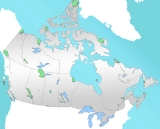
Point Pelee National Park (; French Parc National de la Pointe-Pelée) extends from the mainland of Essex County in southwestern Ontario, Canada. It consists of a peninsula of land, mainly of marsh and woodland habitats, that tapers to a sharp point as it extends into Lake Erie.

Discussion
Ask a question about 'Point Pelee National Park'
Start a new discussion about 'Point Pelee National Park'
Answer questions from other users
|
Encyclopedia
Point Pelee National Park (; French Parc National de la Pointe-Pelée) extends from the mainland of Essex County in southwestern Ontario, Canada. It consists of a peninsula of land, mainly of marsh and woodland habitats, that tapers to a sharp point as it extends into Lake Erie. Middle Island, also part of Point Pelee National Park, was acquired in 2000 and is located just north of the Canada–United States border in Lake Erie. Point Pelee is the southernmost point of mainland Canada. Point Pelee is Located on a foundation of glacial sand, silt and gravel that bites into lake Erie, this spit of land is slightly more than seven kilometers long by 3.5 kilometers wide at its northern base.
History
Point Pelee was made a national park in 1918 at the urging of birders and hunters. Commercial fishing continued in the park until 1969. Point Pelee was the only Canadian national park to allow hunting until duck hunting was ended in 1989. This site was named "Pointe-Pelée" or "bare point" by French explorers because the eastern side was rocky and had no trees.
It forms the southernmost point in mainland Canada (its latitudinal position is the same as the northernmost counties of California) and is part of a bird and butterfly migration corridor over Lake Erie via Point Pelee and the Lake Erie islands. Over 360 bird species have been recorded in the park. The peak time for bird migration is spring, especially May, when tired migrants make first landfall after their journey north across the lake.
Many birdwatchers from North America and abroad visit the park in spring, often staying in the nearby town of Leamington. One attraction, apart from the sheer numbers and variety of bird passing through on migration, is the opportunity to see more northerly breeding species such as Blackpoll Warbler before they move on.
In March 2006 high winds washed away the sand point and all that remained was a platform. In October 2007 the level of lake Erie dropped enough to reveal the point again extending at least half a mile out into the water and at least wide with a beautiful winding curving shape to it and covered with sand and round rocks of all shapes and colours.
Images
See also
- National Parks of Canada
- List of National Parks of Canada
- Long Point
External links
|
| |
|
|