
All Topics  
Photosensitive epilepsy

 
Photosensitive Epilepsy

   Email Print
   Bookmark   Link


Photosensitive epilepsy


Photosensitive epilepsy is a form of epilepsy
Epilepsy

Epilepsy is a common chronic neurological disorder characterized by recurrent unprovoked seizure s. These seizures are transient signs and/or symptoms of abnormal, excessive or synchronous neuronal activity in the brain....
 in which seizure
Seizure

An epileptic seizure is a transient symptom of abnormal, excessive or synchronous neuronal activity in the brain. It can manifest as an alteration in mental state, tonic or clonic movements, convulsions, and various other psychic symptoms ....
s are triggered by visual stimuli that form patterns in time or space, such as flashing lights, bold, regular patterns, or regular moving patterns.

ll persons who have been diagnosed as epileptic, between three and five percent are known to be of the photosensitive type (approximately two people per 10,000 of the general population).


Discussion
Ask a question about 'Photosensitive epilepsy'
Start a new discussion about 'Photosensitive epilepsy'
Answer questions from other users
Full Discussion Forum


Recent Posts


Encyclopedia


Photosensitive epilepsy is a form of epilepsy
Epilepsy

Epilepsy is a common chronic neurological disorder characterized by recurrent unprovoked seizure s. These seizures are transient signs and/or symptoms of abnormal, excessive or synchronous neuronal activity in the brain....
 in which seizure
Seizure

An epileptic seizure is a transient symptom of abnormal, excessive or synchronous neuronal activity in the brain. It can manifest as an alteration in mental state, tonic or clonic movements, convulsions, and various other psychic symptoms ....
s are triggered by visual stimuli that form patterns in time or space, such as flashing lights, bold, regular patterns, or regular moving patterns.

Incidence

Of all persons who have been diagnosed as epileptic, between three and five percent are known to be of the photosensitive type (approximately two people per 10,000 of the general population). Often persons with PSE have no history of seizures outside of those triggered by visual stimuli. Females are more commonly affected than males, and there is distinct genetic
Genetics

Genetics , a discipline of biology, is the science of heredity and Genetic variation in living organisms. The fact that living things inherit traits from their parents has been used since prehistoric times to improve crop plants and animals through selective breeding....
 correlation. Symptoms usually first appear during childhood or adolescence, with a peak at the beginning of puberty, and few people present with PSE after the age of 20.

Symptoms

Persons with PSE experience epileptiform seizures upon exposure to certain visual stimuli. The exact nature of the stimulus or stimuli that triggers the seizures varies from one patient to another, as does the nature and severity of the resulting seizures (ranging from brief absence seizures to full tonic-clonic seizures). Many PSE patients experience an “aura” or feel odd sensations before the seizure occurs, and this can serve as a warning to a patient to move away from the trigger stimulus.

The visual trigger for a seizure is generally cyclic, forming a regular pattern in time or space. Flashing lights or rapidly changing or alternating images (as in clubs, around emergency vehicles, in action movies or television programs, etc.) are an example of patterns in time that can trigger seizures, and these are the most common triggers. Static spatial patterns such as stripes and squares may trigger seizures as well, even if they do not move. In some cases, the trigger must be both spatially and temporally cyclic, such as a certain moving pattern of bars.

Several characteristics are common in the trigger stimuli of many PSE patients. The patterns are usually high in luminance contrast (bright flashes of light alternating with darkness, or white bars against a black background). Contrasts in color alone (without changes in luminance) are rarely triggers for PSE. Some patients are more affected by patterns of certain colors than by patterns of other colors. The exact spacing of a pattern in time or space is important and varies from one individual to another: a patient may readily experience seizures when exposed to lights that flash seven times per second, but may be unaffected by lights that flash twice per second or twenty times per second. Stimuli that fill the entire visual field are more likely to cause seizures than those that appear in only a portion of the visual field. Stimuli perceived with both eyes are usually much more likely to cause seizures than stimuli seen with one eye only (which is why covering one eye may allow patients to avoid seizures when presented with visual challenges). Some patients are more sensitive with their eyes closed; others are more sensitive with their eyes open.

Sensitivity is increased by alcohol consumption, sleep deprivation, illness, and other forms of stress.

Television

Television
Television

Television is a widely used telecommunication mass-media for transmitting and receiving moving , either monochrome or color, usually accompanied by sound....
 has traditionally been the most common source of seizures in PSE. For patients with PSE, it is especially hazardous to view television in a dark room, at close range, or when the television is out of adjustment and is showing a rapidly flickering image (as when the horizontal hold is incorrectly adjusted). Modern digital television sets that cannot be maladjusted in this way and refresh the image on the screen at very high speed present less of a risk than older television sets.

Some PSE patients, especially children, may exhibit an uncontrollable fascination with television images that trigger seizures, to such an extent that it may be necessary to physically keep them away from television sets. Some patients (particularly those with cognitive impairments, although most PSE patients have no such impairments) self-induce seizures by waving their fingers in front of their eyes in front of bright light or by other means.

Some UK television broadcasters and studios now screen content through the "Harding FPA Test
Harding Test

The HardingFPA Flash and Pattern Analyser is a software solution that is used to analyse video content for flashing and stationary patterns which may cause harm to those who suffer from photosensitive epilepsy according to guidelines set by Ofcom in the UK....
", an objective standard of assessment of potential to trigger seizures in the susceptible population.

Television programs
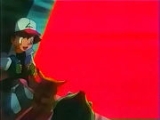
In some cases, specific television programs featuring certain types of visual stimuli have provoked seizures in a small minority of television viewers, including some viewers with no prior history of seizures of any kind. The "Denno Senshi Porygon" episode of Pokémon
Pokémon

is a media franchise owned by the video game company Nintendo and created by Satoshi Tajiri around 1995. Originally released as a pair of interlinkable Game Boy line Console role-playing game video games, Pok?mon has since become the second most successful and lucrative video game-based media franchise in the world, behind only Nintendo's own...
 is the most frequently cited example (see the Public responsibilities section, below); broadcast of the program in Japan
Japan

Japan is an island country in East Asia. Located in the Pacific Ocean, it lies to the east of the Sea of Japan, People's Republic of China, North Korea, South Korea and Russia, stretching from the Sea of Okhotsk in the north to the East China Sea and Taiwan in the south....
, which includes strong flickering scenes, produced seizures in a surprising number of viewers, even though the proportion of viewers affected was extremely low.

2012 London Olympics promotional film incident
An animated segment of a film promoting the 2012 London Olympics (released at the same time as its controversial logo) was blamed for triggering seizures in people with photosensitive epilepsy. The charity Epilepsy Action
Epilepsy Action

Epilepsy Action is a United Kingdom based charitable organization providing information, advice and support for people with epilepsy.Formed in 1950 as British Epilepsy Association , it provides freephone and email helplines and a wide range of information booklets....
 received telephone calls from people who had had seizures after watching the film on television and online. In response, it was reported that London 2012 Olympic Committee removed the offending segment from its website.

Fluorescent lighting

When functioning correctly, the flicker rate of fluorescent lighting is very high (twice the mains frequency). However, a faulty fluorescent lamp
Fluorescent lamp

A fluorescent lamp or fluorescent tube is a gas-discharge lamp that uses electricity to Excited state mercury vapor. The excited mercury atoms produce short-wave ultraviolet light that then causes a phosphor to fluorescence, producing Light....
 can flicker at a much lower rate and trigger seizures. The Job Accommodation Network
Job Accommodation Network

The Job Accommodation Network is a service provided by the Department_Of_Labor's Office of Disability Employment Policy . JAN is one of several ODEP projects....
 (http://www.jan.wvu.edu) lists reduction or elimination of fluorescent lighting as an appropriate accommodation for many conditions including epilepsy. The Canadian department of Labor states that the newer lights are problematic for fewer people, but still cause problems for many.

Video games

While computer displays in general present very little risk of producing seizures in PSE patients (much less risk than that presented by television sets), video games with rapidly changing images or highly regular patterns can produce seizures, and video games have increased in importance as triggers as they have become more common. Some people with no prior history of PSE may first experience a seizure while playing a video game. Often the sensitivity is very specific, e.g., it may be a specific scene in a specific game that causes seizures, and not any other scenes. Most video games are required by law to include a warning for PSE sufferers describing the increased risk of seizures that gamers may experience.

Web design

As with video games, rapidly changing images or highly regular patterns such as flashing banner ads or irregular fonts can trigger seizures in people with photosensitive epilepsy. Two sets of guidelines exist to help web designers produce content that is safe for people with photosensitive epilepsy:

  • The World Wide Web Consortium
    World Wide Web Consortium

    The World Wide Web Consortium is the main international standards organization for the World Wide Web . It is arranged as a consortium where member organizations maintain full-time staff for the purpose of working together in the development of standards for the World Wide Web....
     have produced Web Content Accessibility Guidelines
    Web Content Accessibility Guidelines

    Web Content Accessibility Guidelines are part of a series of Web accessibility guidelines published by the World Wide Web Consortium's Web Accessibility Initiative....
    . Version 1, produced in 1999, suggest designers allow users to control flickering or avoid causing the screen to flicker at all .


  • In the U.S.
    United States

    The United States of America is a Federal government constitutional republic comprising U.S. state and a federal district. The country is situated mostly in central North America, where its Contiguous United States and Washington, D.C., the Capital districts and territories, lie between the Pacific Ocean and Atlantic Oceans, Borders of the U...
    , websites provided by federal agencies are governed by section 508 of the Rehabilitation Act. This says that pages shall be designed to avoid causing the screen to flicker with a frequency greater than 2 Hz
    Hz

    Hz or hz may mean:*Herero language *Hertz, unit of frequency*Hamilton Zoo, New Zealand...
     and less than 55 Hz.


Diagnosis


Diagnosis may be made by noting the correlation between exposure to specific visual stimuli and seizure activity. More precise investigation can be carried out by combining an EEG
EEG

EEG commonly refers to electroencephalography, a measurement of the electrical activity of the brain.EEG may also refer to:* Emperor Entertainment Group, a Hong Kong-based entertainment company...
 with a device producing Intermittent Photic Stimulation
Intermittent Photic Stimulation

In medicine, Intermittent Photic Stimulation, or IPS, is a form of visual stimulation used in conjunction with EEG to investigate anomalous brain activity triggered by specific visual stimuli, such as flashing lights or patterns....
 (IPS). The IPS device produces specific types of stimuli that can be controlled and adjusted with precision. The testing physician adjusts the IPS device and looks for characteristic anomalies in the EEG, such as photoparoxysmal response (PPR), that are consistent with PSE and/or may herald the onset of seizure activity. The testing is halted before a seizure actually occurs.

Sometimes diagnostic indicators consistent with PSE can be found through provocative testing with IPS, and yet no seizures may ever occur in real-life situations. Many people will show PSE-like abnormalities in brain activity with sufficiently aggressive stimulation, but they never experience seizures and are not considered to have PSE.

Treatment and prognosis


No cure is available for PSE, although the sensitivity of some patients may diminish over time. Medical treatment is available to reduce sensitivity, with sodium valproate
Sodium valproate

Sodium valproate or valproate sodium is the sodium salt of valproic acid and is an anticonvulsant used in the treatment of epilepsy and bipolar disorder, as well as other psychiatric conditions requiring the administration of a mood stabilizer....
 being commonly prescribed. Patients can also learn to avoid situations in which they might be exposed to stimuli that trigger seizures and/or take steps to diminish their sensitivity (as by covering one eye) if they are unavoidably exposed. These actions together can reduce the risk of seizures to almost zero for many PSE patients.

Some PSE patients have trigger stimuli that are so specific that they are never likely to encounter them in real life. Their PSE may only be discovered by accident in an unusual situation or during examination for other complaints.

Public responsibilities

Pikachu Seizure 2
The effects of stroboscopic lighting
Strobe light

Strobe light or stroboscopic lamp, commonly called a strobe, is a device used to produce regular flashes of light. It is one of a number of devices that can be used as a stroboscope....
 became apparent when it first became popular in discotheque
Discothčque

A discoth?que, , is an entertainment venue or club with music record played by "Discaires" through a PA system, rather than an Live band dance....
s during the 1960s. Many authorities responded by regulating the permissible frequency ranges of flashing lights in public places.

Photosensitive epilepsy was again brought to public attention in late 1997 when the Pokémon
Pokémon (anime)

Pok?mon is an ongoing Japanese anime series, which has since been adapted for the North American and European television market. It is somewhat based on the Pok?mon and a part of the Pok?mon franchise....
 episode "Denno Senshi Porygon" was broadcast in Japan, showing a sequence of flickering images that triggered seizures simultaneously in hundreds of susceptible viewers (although mass hysteria caused 12,000 children to report seizure-like syndromes).

In March 1997 a 25th episode of an anime series called "YAT Anshin! Uchuu Ryokou" had a similar incident when a reported four children were taken to hospitals by ambulances when a scene with red and white colors flashed.

In March 2008 the Anonymous
Anonymous (group)

Anonymous is a label and Internet meme adopted within Internet culture to represent the actions of many online community users acting anonymously, usually toward a loosely agreed-upon goal....
 group of hackers was believed to be behind an attack on a forum for epilepsy sufferers. The attack consisted of GIF images flashing at high speeds that were hidden in threads with innocuous-sounding titles. The technology website Wired News
Wired News

Wired News is an online technology news website, formerly known as HotWired, that split off from Wired magazine when the magazine was purchased by Cond? Nast Publishing in the 1990s....
 consider it to be the first physical attack on Internet users.

Bucha effect

A related condition is the Bucha effect
Bucha effect

The Bucha effect is a seizure-inducing effect of light flashing at 1 hertz to 20 Hz. These seizures are similar to those caused by epilepsy, but are not restricted to people with histories of epilepsy....
. Without going as far as epilepsy, after exposure to stroboscopic light the victims feel dizzy, disorientated and debilitated. It was discovered after a series of unexplained helicopter crashes, due to the stroboscopic light generated by the rotor blades.

See also

  • Epilepsy
    Epilepsy

    Epilepsy is a common chronic neurological disorder characterized by recurrent unprovoked seizure s. These seizures are transient signs and/or symptoms of abnormal, excessive or synchronous neuronal activity in the brain....
  • Seizure
    Seizure

    An epileptic seizure is a transient symptom of abnormal, excessive or synchronous neuronal activity in the brain. It can manifest as an alteration in mental state, tonic or clonic movements, convulsions, and various other psychic symptoms ....
  • Henri Gastaut
    Henri Gastaut

    Henri Gastaut was a French neurologist.Henri Gastaut was educated in neurology and neuroanatomy at the University of Marseille, graduating M.D....
    , neurologist
  • Strobe light
    Strobe light

    Strobe light or stroboscopic lamp, commonly called a strobe, is a device used to produce regular flashes of light. It is one of a number of devices that can be used as a stroboscope....
  • Bucha effect
    Bucha effect

    The Bucha effect is a seizure-inducing effect of light flashing at 1 hertz to 20 Hz. These seizures are similar to those caused by epilepsy, but are not restricted to people with histories of epilepsy....
  • Psychogenic non-epileptic seizures
    Psychogenic non-epileptic seizures

    Psychogenic non-epileptic seizures are a manifestation or a form of conversion disorder. They take many forms, and particularly can mimic any sort of epileptic seizure; they are distinguished from epilepsy only in that they are not associated with abnormal, rhythmic discharges of cortical neurons....
  • Dreamachine
    Dreamachine

    The dreamachine is a stroboscopic flicker device that produces visual stimuli. Artist Brion Gysin and William Burroughs's "systems adviser" Ian Sommerville created the dreamachine after reading William Grey Walter's book, The Living Brain....


Further reading

  • Harding, Graham et al. (1994). Photosensitive Epilepsy. Mac Keith Press, London.


External links

  • from Epilepsy Foundation
    Epilepsy Foundation

    The Epilepsy Foundation, also Epilepsy Foundation of America , is a non-profit national foundation, headquartered in Landover, Maryland, dedicated to the welfare of people with epilepsy and seizure disorders....
  • from Epilepsy Action
    Epilepsy Action

    Epilepsy Action is a United Kingdom based charitable organization providing information, advice and support for people with epilepsy.Formed in 1950 as British Epilepsy Association , it provides freephone and email helplines and a wide range of information booklets....
  • from The National Society for Epilepsy