
All Topics  
Numantia


   Email Print
   Bookmark   Link


Numantia


Numantia (Numancia in Spanish) is the name of an ancient Celtiberian
Celtiberian

Celtiberian may refer to:*the Celtiberians, a Celtic people of the Iberian Peninsula*the Celtiberian language, a Celtic languages...
 settlement, whose remains are located 7 km north of the city of Soria
Soria

Soria is a city in north-central Spain, the capital of the Soria in the autonomous communities of Spain of Castile and Le?n. The municipality had a population of 39,078 in 2008 - nearly 40% of the population of the province....
, on a hill known as Cerro de la Muela in the municipality of Garray.

In the year 153 B.C. occurred the first serious conflict with Rome: Numantia let in some fugitives from the city of Segeda
Segeda

Segeda is an ancient settlement, near today's Zaragoza in modern-day Spain. Originally it was a Celtiberians town, whose inhabitants gave it the name Sekeida....
, who belonged to another Celtiberian tribe called the Bellos.


Discussion
Ask a question about 'Numantia'
Start a new discussion about 'Numantia'
Answer questions from other users
Full Discussion Forum


Recent Posts


Encyclopedia


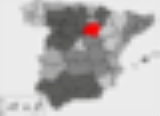
Provmap Soria
Numantia (Numancia in Spanish) is the name of an ancient Celtiberian
Celtiberian

Celtiberian may refer to:*the Celtiberians, a Celtic people of the Iberian Peninsula*the Celtiberian language, a Celtic languages...
 settlement, whose remains are located 7 km north of the city of Soria
Soria

Soria is a city in north-central Spain, the capital of the Soria in the autonomous communities of Spain of Castile and Le?n. The municipality had a population of 39,078 in 2008 - nearly 40% of the population of the province....
, on a hill known as Cerro de la Muela in the municipality of Garray.

In the year 153 B.C. occurred the first serious conflict with Rome: Numantia let in some fugitives from the city of Segeda
Segeda

Segeda is an ancient settlement, near today's Zaragoza in modern-day Spain. Originally it was a Celtiberians town, whose inhabitants gave it the name Sekeida....
, who belonged to another Celtiberian tribe called the Bellos. The leader of the Bellos, Carus of Segeda, managed to defeat a Roman army commanded by the consul
Consul

Consul was the highest elected office of the Roman Republic and an appointive office under the Roman Empire. The title was also used in other city states, and revived in modern states, notably French Republic before the Napoleon I of Franceic counter-revolution....
 Quintus Fulvius Nobilior
Quintus Fulvius Nobilior

Quintus Fulvius Nobilior was a Roman consul who obtained the consulship in 153 BC.His father Marcus Fulvius Nobilior and his brother Marcus Fulvius Nobilior were also consuls....
. The Romans, who brought a small number of war elephants, besieged Numantia unsuccessfully.

After 20 years of hostilities, in the year 133 BC the Roman Senate gave Scipio Aemilianus Africanus
Scipio Aemilianus Africanus

Publius Cornelius Scipio Aemilianus Africanus Numantinus , also known as Scipio Aemilianus or Scipio Africanus the Younger, was a leading general and politician of the ancient Roman Republic....
the task of destroying Numantia. He put siege to the city, erecting a fence of 9 km supported by towers, moats, impaling rods and so on. After 13 months of siege, the Numantians decided to burn the city and die free rather than live and be slaves.

Location

The nearest settlement to the ruins of Numantia is the village of Garray in the province of Soria
Soria (province)

Soria is a Province of central Spain, in the eastern part of the Autonomous communities of Spain of Castile-Leon.It is bordered by the provinces of La Rioja , Zaragoza , Guadalajara , Segovia , and Burgos ....
. Garray has grown up next to a bridge across the Duero. It is only a few miles from the small modern city of Soria
Soria

Soria is a city in north-central Spain, the capital of the Soria in the autonomous communities of Spain of Castile and Le?n. The municipality had a population of 39,078 in 2008 - nearly 40% of the population of the province....
.

Numantia is preserved as a national monument and is open to the public.

Early history of the site

Numantia was an Iron Age
Iron Age

In archaeology, the Iron Age was the stage in the development of any people in which tools and weapons whose main ingredient was iron were prominent....
 hill fort
Hill fort

A hill fort is type of fortification refuge or defended settlement, located to exploit a rise in elevation for defensive advantage. They are typically European and of the Bronze Age and Iron Ages....
 (in Roman terminology an "oppidum
Oppidum

Oppidum is a Latin word meaning the main settlement in any administrative area of ancient Rome. The word is derived from the earlier Latin ob-pedum, "enclosed space," possibly from the Proto-Indo-European language *ped?m-, "occupied space" or "footprint."...
"), which controlled a crossing of the Duero.

Pliny the Elder
Pliny the Elder

Gaius Plinius Secundus , better known as Pliny the Elder, was an ancient author, naturalist or natural philosopher and naval and military commander of some importance who wrote Natural History ....
 counts it as a city of the Pelendones,but other authors, like Strabo
Strabo

Strabo was a Ancient Greeks history, geography and philosophy....
 and Ptolemy
Ptolemy

Claudius Ptolemaeus , known in English as Ptolemy , was a Roman Greek mathematics, Greek astronomy, geographer and astrologer. He lived in History of Roman Egypt, and was probably born there in a town in the Thebaid called Ptolemais Hermiou; he died in Alexandria around 168 AD....
 place it among the Arevaci
Arevaci

The Arevaci were an ancient Celtiberians tribe who settled in the Geography of Spain#The Meseta Central and Associated Mountains of northern Hispania....
 people. The Arevaci were a Celtiberian
Celtiberians

The Celtiberians were a Celtic languages-speaking people of the Iberian Peninsula in the final centuries BCE. The group originated when Celts migrated from Gaul and integrated with the local Pre-Indo-European populations of Iberia, in particular the Iberians....
 tribe, formed by the mingling of Iberians and migrating Celts in the 6th century BC, who inhabited an area near Numantia and Uxama.

Before their defeat, the Numantians gained a number of victories. For example, in 137 BC, 20,000 Romans surrendered to the Celtiberians of Numantia (population between 4,000-8,000).

Final siege of Numantia

The final siege of Numantia began in the year 134 BC. Scipio Aemilianus, who was a Roman consul
Consul

Consul was the highest elected office of the Roman Republic and an appointive office under the Roman Empire. The title was also used in other city states, and revived in modern states, notably French Republic before the Napoleon I of Franceic counter-revolution....
 at that time, was in command of an army of 30,000 soldiers. His troops constructed a number of fortifications surrounding the city as they prepared for a long siege. Resistance was hopeless but the Numantians refused to surrender and famine quickly spread through the city. After eight months most of the inhabitants decided to commit suicide rather than become slaves. Only a few hundred of exhausted and famished inhabitants surrendered to the victorious Roman legions.

Later history

Rempire 03 Hispania Tarraconensis
After the destruction, there are remains of occupation in the 1st century BC, with a regular street plan but without great public buildings.

Its decadence starts in the 3rd century, but with Roman remains still from the 4th century. Later remains from the 6th century hint of a Visigoth occupation.

Excavation and conservation of Numantia

Numantia's exact location vanished from memory, and some theories placed it in Zamora
Zamora

Zamora may refer to...
, but in 1860 Eduardo Saavedra identified the correct location in Garray, Soria. In 1882 the ruins of Numantia were declared a national monument. In 1905 the German archaeologist Adolf Schulten
Adolf Schulten

Adolf Schulten was a Germany historian and archaeologist.Schulten was born in Elberfeld, Rhine Province, and received a Doctorate in Geology from the University of Bonn in 1892....
 began a series of excavations which located the Roman camps around the city. Regular excavations are still going on.

Displays related to Numantia


Many objects from the site are on display in a museum called the Museo Numantino in the city of Soria
Soria

Soria is a city in north-central Spain, the capital of the Soria in the autonomous communities of Spain of Castile and Le?n. The municipality had a population of 39,078 in 2008 - nearly 40% of the population of the province....
. This museum is also responsible for in situ
In situ

In situ is a Latin phrase meaning in the place. It is used in many different contexts....
 displays at Numantia.

Development threat to the historic landscape

The province of Soria is sparsely populated, and Numantia is mainly surrounded by agricultural land. However, the regional government of Castilla y Leon and the city of Soria have planned various construction projects which if completed would have an impact on the landscape surrounding the site of Numantia.

One of the projects is a "City of the Environment" on an ecologically important site near the river Duero. However, the most damaging proposal from a visual point of view is the plan to develop a new industrial zone (Polígono Industrial de Soria II). This industrial estate has been planned for El Cabezo, which is adjacent to Numantia and the Roman encampment (and would also affect part of the Romanesque
Romanesque

Romanesque can refer to:*Romanesque art, the art of Western Europe from approximately 1000 AD to the 13th century or later*Romanesque architecture, architecture of Europe which emerged in the late 10th century and lasted to the 13th century...
 site of Los Arcos de San Juan del Duero). There has been a legal appeal by the aristocratic Marichalar family against the expropriation of its land for this development.

The proposed developments in the vicinity of Numantia have met widespread opposition from a number of quarters, including the Instituto de España, the Real Academia de la Historia
Real Academia de la Historia

Real Academia de la Historia is a Spain institution that studies history "ancient and modern, political, civil, ecclesiastical, military, scientific, of letters and arts, that is to say, the different branches of life, of civilisation, and of the culture of the Spanish people"....
, the Catalan Institute of Classical Archaeology, the Spanish Section of the International Council on Monuments and Sites (ICOMOS) and a number of Ancient History Departments in Spain. In 2008 a petition organised to have Numantia declared a World Heritage Site
World Heritage Site

A UNESCO World Heritage Site is a site that is on the list maintained by the international World Heritage Programme administered by the UNESCO World Heritage Committee, composed of 21 Sovereign state which are elected by their General Assembly for a four-year term....
, in the hope that this would deter the local authorities from developing the area.

Symbolism

The siege of Numantia was recorded by several Roman historians who admired the sense of freedom of the ancient Iberians and acknowledged their fighting skills against the Roman legions. In Spanish culture
Spanish mythology

Spanish mythology would encompass all the sacred mythology of the cultures in the region of Spain. They include Galician mythology, Asturian mythology, Cantabrian mythology, Catalan mythology and Basque mythology....
, it has a meaning similar to that of Masada
Masada

Masada is the name for a site of ancient palaces and fortifications in the South District of Israel on top of an isolated rock plateau, or large mesa, on the eastern edge of the Judean Desert overlooking the Dead Sea....
 for Israelis. Miguel de Cervantes
Miguel de Cervantes

Miguel de Cervantes Saavedra was a Spanish novelist, poet, and playwright. His magnum opus, Don Quixote, considered the first modern novel by many, is a classic of Western literature and is regularly regarded among the best novels ever written....
 (author of Don Quixote
Don Quixote

, fully titled is an early novel written by Spain author Miguel de Cervantes. Cervantes created a fictional origin for the story based upon a manuscript by the invented Moors historian, Cide Hamete Benengeli....
) wrote a play about the siege, El cerco de Numancia, which stands today as his most well-known dramatic work. Antonio Machado
Antonio Machado

Antonio Cipriano Jos? Mar?a y Francisco de Santa Ana Machado y Ruiz, known as Antonio Machado was a Spain poet and one of the leading figures of the Spanish literary movement known as the Generation of '98....
 references the city in his poem Campos de Soria. The poem is an ode to the countryside and peoples of rural Castile
Castile (historical region)

A former Kingdom of Castile, Castile , gradually merged with its neighbors to become the Crown of Castile and later the Kingdom of Spain with the Crown of Aragon and the Crown of Navarre....
. More recently, Carlos Fuentes
Carlos Fuentes

Carlos Fuentes Mac?as is a Mexican writer and one of the best-known living novelists and essayists in the Spanish-speaking world. Fuentes has influenced contemporary Latin American literature, and his works have been widely translated into English and other languages....
 wrote a short story about the event, "The Two Numantias", in his collection The Orange Tree.

Several Spanish Navy ships have been named Numancia
Numancia

*Numantia – Spanish spelling of Celtiberian city of Numantia*Numancia de la Sagra – a town in Toledo, Spain.*Numancia, Aklan – a town in the Philippines....
 and a Sorian battalion was named batallón de numantinos. During the Spanish Civil War
Spanish Civil War

The Spanish Civil War was a major conflict in Spain that started after an attempted coup d'?tat by a group of Spanish Army generals, supported by the conservative Spanish Confederation of the Autonomous Right , Carlist groups and the fascistic Falange, against the government of the Second Spanish Republic, then under the leadership of pr...
, the Numancia regiment took the town of Azaña in Toledo. To erase the memory of the Republican president Manuel Azaña
Manuel Azaña

Dr. Manuel Aza?a D?az was a Spain politician, the second and last President of Spain of the Second Spanish Republic. He had previously served as Minister of War in the first government of the Republic , and as Prime Minister of Spain between June 1931 and September 1933, prior to becoming President ....
, they renamed it as Numancia de la Sagra
Numancia de la Sagra

Numancia de la Sagra is a municipality located in the Toledo , Castile-La Mancha, Spain. According to the 2006 census , the municipality has a population of 3713 inhabitants....
.

The Soria
Soria

Soria is a city in north-central Spain, the capital of the Soria in the autonomous communities of Spain of Castile and Le?n. The municipality had a population of 39,078 in 2008 - nearly 40% of the population of the province....
n football team is called CD Numancia
CD Numancia

Club Deportivo Numancia de Soria is a Spain sports club from Soria. The club is named after the ancient Celtiberians town of Numantia, near present-day Soria....
.

External links


  • James Grout:
accessed September 2008