All Topics  
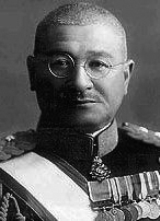
Nobuyuki Abe

 
Nobuyuki Abe

   Email Print
   Bookmark   Link


Nobuyuki Abe


was a general in the Imperial Japanese Army
Imperial Japanese Army

The Imperial Japanese Army , or literally Army of Empire of Greater Japan was the official ground based armed force of Imperial Japan from 1867 to 1945....
, Governor-General of Korea
Governor-General of Korea

The post of Governor-General of Korea served as the chief administrator of the Japanese government in Korea while it was held as the Japanese colony of Korea under Japanese rule from 1910 to 1945....
, and 36th Prime Minister of Japan
Prime Minister of Japan

The is the usual English-language term used for the head of government of Japan, although the literal translation of the Japanese name for the office is Prime Minister of the Cabinet....
 from 30 August 1939 to 16 January 1940.

was born into an ex-samurai
Samurai

is the term for the military nobility of Pre-industrial society Japan. According to translator William Scott Wilson: "In Chinese, the character ? was originally a verb meaning to wait upon or accompany a person in the upper ranks of society, and this is also true of the original term in Japanese, saburau....
 family in Kanazawa city
Kanazawa, Ishikawa

is the capital cities of Japan of Ishikawa Prefecture in Japan....
, Ishikawa Prefecture
Ishikawa Prefecture

is a Prefectures of Japan of Japan located in the Chubu region on Honshu island. The capital is Kanazawa, Ishikawa....
. His brother-in-law was Imperial Japanese Navy
Imperial Japanese Navy

The origins of the Imperial Japanese Navy trace back to early interactions with nations on the Asia, beginning in the early history of Japan#Feudal Japan and reaching a peak of activity during the 16th and 17th centuries at a time of cultural diffusion with European power during the Age of Discovery....
 admiral
Admiral

Admiral is the military rank, or part of the name of the ranks, of the highest naval officers. It is usually considered a full admiral and above Vice Admiral and below Admiral of the Fleet/Fleet Admiral....
 Shigeyoshi Inoue
Shigeyoshi Inoue

was an Naval ranks of the Japanese Empire during World War II in the Imperial Japanese Navy during World War II. He was commander of the Japanese Fourth Fleet and later served as Vice-Minister of the Navy....
.

Abe attended Tokyo No.1 Middle School (Tokyo Metropolitan Hibiya High School
Hibiya High School

is a Education in Japan founded in 1878 as the . It was well known in the 1950s and 1960s for the large proportion of graduates who gained admission to the prestigious University of Tokyo; though it suffered a decline in the 1970s, as of 2005 it was once again being referred to as the "best public high school in Japan"....
) followed by No.4 High School. While still a student, he volunteered for military service during the First Sino-Japanese War
First Sino-Japanese War

The First Sino-Japanese War was a war fought between Qing Dynasty China and Meiji period Imperial Japan over the control of Korea. The Sino-Japanese War would come to symbolize the degeneration and enfeeblement of the Qing Dynasty and demonstrate how successful modernization had been in Japan since the Meiji Restoration as compared with the...
.

After the war, Abe graduated from the Imperial Japanese Army Academy followed by the 19th class of the Army War College
Army War College (Japan)

The ; Short form: of the Empire of Japan was founded in 1882 in Minato, Tokyo, Tokyo to modernity and Westernization the Imperial Japanese Army. Much of the empire's elite including Prime Minister of Japan during the period of Japanese militarism were graduates of the college....
.


Discussion
Ask a question about 'Nobuyuki Abe'
Start a new discussion about 'Nobuyuki Abe'
Answer questions from other users
Full Discussion Forum


Encyclopedia


was a general in the Imperial Japanese Army
Imperial Japanese Army

The Imperial Japanese Army , or literally Army of Empire of Greater Japan was the official ground based armed force of Imperial Japan from 1867 to 1945....
, Governor-General of Korea
Governor-General of Korea

The post of Governor-General of Korea served as the chief administrator of the Japanese government in Korea while it was held as the Japanese colony of Korea under Japanese rule from 1910 to 1945....
, and 36th Prime Minister of Japan
Prime Minister of Japan

The is the usual English-language term used for the head of government of Japan, although the literal translation of the Japanese name for the office is Prime Minister of the Cabinet....
 from 30 August 1939 to 16 January 1940.

Early life and military career

Abe was born into an ex-samurai
Samurai

is the term for the military nobility of Pre-industrial society Japan. According to translator William Scott Wilson: "In Chinese, the character ? was originally a verb meaning to wait upon or accompany a person in the upper ranks of society, and this is also true of the original term in Japanese, saburau....
 family in Kanazawa city
Kanazawa, Ishikawa

is the capital cities of Japan of Ishikawa Prefecture in Japan....
, Ishikawa Prefecture
Ishikawa Prefecture

is a Prefectures of Japan of Japan located in the Chubu region on Honshu island. The capital is Kanazawa, Ishikawa....
. His brother-in-law was Imperial Japanese Navy
Imperial Japanese Navy

The origins of the Imperial Japanese Navy trace back to early interactions with nations on the Asia, beginning in the early history of Japan#Feudal Japan and reaching a peak of activity during the 16th and 17th centuries at a time of cultural diffusion with European power during the Age of Discovery....
 admiral
Admiral

Admiral is the military rank, or part of the name of the ranks, of the highest naval officers. It is usually considered a full admiral and above Vice Admiral and below Admiral of the Fleet/Fleet Admiral....
 Shigeyoshi Inoue
Shigeyoshi Inoue

was an Naval ranks of the Japanese Empire during World War II in the Imperial Japanese Navy during World War II. He was commander of the Japanese Fourth Fleet and later served as Vice-Minister of the Navy....
.

Abe attended Tokyo No.1 Middle School (Tokyo Metropolitan Hibiya High School
Hibiya High School

is a Education in Japan founded in 1878 as the . It was well known in the 1950s and 1960s for the large proportion of graduates who gained admission to the prestigious University of Tokyo; though it suffered a decline in the 1970s, as of 2005 it was once again being referred to as the "best public high school in Japan"....
) followed by No.4 High School. While still a student, he volunteered for military service during the First Sino-Japanese War
First Sino-Japanese War

The First Sino-Japanese War was a war fought between Qing Dynasty China and Meiji period Imperial Japan over the control of Korea. The Sino-Japanese War would come to symbolize the degeneration and enfeeblement of the Qing Dynasty and demonstrate how successful modernization had been in Japan since the Meiji Restoration as compared with the...
.

After the war, Abe graduated from the Imperial Japanese Army Academy followed by the 19th class of the Army War College
Army War College (Japan)

The ; Short form: of the Empire of Japan was founded in 1882 in Minato, Tokyo, Tokyo to modernity and Westernization the Imperial Japanese Army. Much of the empire's elite including Prime Minister of Japan during the period of Japanese militarism were graduates of the college....
. Ultranationalist General Araki Sadao was one of his classmates. Abe became commander of the 3rd Field Artillery Regiment from 1918-1921. In August 1918, his regiment was sent to Siberia during Japan's Siberian Intervention
Siberian Intervention

The of 1918?1922 was the dispatch of troops of the Entente powers to the Russian Primorsky Krai as part of a Allied intervention in the Russian Civil War to support White Russian forces against the Bolshevik Red Army during the Russian Civil War....
, but was never in combat.

Abe was appointed commander of the 4th Infantry Division
4th Division (Imperial Japanese Army)

The was an infantry division in the Imperial Japanese Army. Its call-sign was ....
 on 22 December 1930. He later served as instructor in the Army War College followed by chief of the Military Affairs Bureau and as Vice Minister of the Army
Ministry of War of Japan

The , more popularly known as the Ministry of War of Japan was the Cabinet -level ministry from 1872-1945 in charge with administration of the Imperial Japanese Army ....
.

In 1933, Abe was promoted to full general
General

A General officer is an Officer of high military rank. The term or equivalent is used by nearly every country in the world. General can be used as a generic term for all grades of general officer, or it can specifically refer to a single rank that is just called general....
 and became Commander in Chief of the Taiwan Army
Taiwan Army

Taiwan Army may refer to:* The Republic of China Army, the modern army of the Republic of China after 1949.* The Formosan Army of the Imperial Japanese Army, in existence during Taiwan's period as a Japanese colony from 1895 - 1945....
. In 1936, he was placed on the reserve list.

As Prime Minister

Abe Nobuyuki was not the obvious first choice as Prime Minister
Prime Minister of Japan

The is the usual English-language term used for the head of government of Japan, although the literal translation of the Japanese name for the office is Prime Minister of the Cabinet....
 after the collapse of the Hiranuma Kiichiro cabinet. From the civilian side, Konoe Fumimaro or Hirota Koki were regarded as front-runners; however the Army and the ultranationalists strongly supported General Ugaki Kazushige. After genro
Genro

was an unofficial designation given to certain retired elder Japanese statesmen, considered the "founding fathers" of modern Japan, who served as informal extraconstitutional advisors to the emperor, during the Meiji period and Taisho period periods in History of Japan....
 Saionji Kinmochi
Saionji Kinmochi

Prince was a Japanese politician, statesman and twice Prime Minister of Japan. His title does not signify the son of an emperor, but the highest rank of Japanese hereditary nobility; he was elevated from marquis to prince in 1920....
 declared his disinterest in any of the candidates, the Army was poised to have its way. However, Ugaki fell ill and was hospitalized. The interim War Minister General Abe Nobuyuki was a compromise. Abe had the advantage of belonging to neither the Toseiha
Toseiha

was a political faction in the Imperial Japanese Army, active in the 1920s and 1930s.Led by General Kazushige Ugaki, along with Hajime Sugiyama, Koiso Kuniaki, Yoshijiro Umezu, Tetsuzan Nagata and Hideki Tojo, the Toseiha was a grouping of officers united primarily by their opposition to the Kodoha faction led by General Araki Sad...
 nor the Kodoha political factions within the Army and was also supported as a relative political moderate by the Imperial Japanese Navy
Imperial Japanese Navy

The origins of the Imperial Japanese Navy trace back to early interactions with nations on the Asia, beginning in the early history of Japan#Feudal Japan and reaching a peak of activity during the 16th and 17th centuries at a time of cultural diffusion with European power during the Age of Discovery....
; on the other hand he was despised by many senior Army officers for his total lack of any combat experience.

Abe became Prime Minister on 30 August 1939. He concurrently held the portfolio of Foreign Minister
Minister for Foreign Affairs (Japan)

The of Japan is the Cabinet of Japan member responsible for Japanese foreign policy and the chief executive of the Ministry of Foreign Affairs .Since the end of the Occupied Japan, the position has been one of the most powerful in the Cabinet, as Japan's economic interests have long relied on external relations....
 during his term in office. During his short four month tenure, Abe sought to quickly end the Second Sino-Japanese War
Second Sino-Japanese War

The Second Sino-Japanese War was the largest Asian war in the twentieth century. From 1937 to 1941, it was fought between the Republic of China and the Empire of Japan....
, and to maintain Japan's neutrality
Neutral country

For other uses of Neutral and Neutrality, see NeutralA neutral country takes no side in a war between other parties. A neutralist policy aims at neutrality in case of an armed conflict that could involve the party in question....
 in the growing European conflict. He was also opposed to efforts by elements within the Army to form a political-military alliance with Nazi Germany
Nazi Germany

Nazi Germany and the Third Reich are the colloquial English names for Germany under the regime of Adolf Hitler and the Nazi Party , which established a Totalitarianism dictatorship that existed from 1933 to 1945....
 and Fascist Italy
Kingdom of Italy (1861–1946)

The Kingdom of Italy was a state forged in 1861 by the Italian unification under the influence of the Kingdom of Sardinia; it existed until 1946 when the Italians opted for a republican constitution....
.

Lacking in support from either the military or the political parties, Abe was replaced by Mitsumasa Yonai
Mitsumasa Yonai

was an admiral in the Imperial Japanese Navy, and politician. He was the 37th Prime Minister of Japan from January 16, 1940 to July 22, 1940....
 in January 1940.

Subsequent career

Three months later after his replacement as Prime Minister, the Army sent Abe sent as a special envoy to China
China

China is a Culture of China, an ancient civilization, and, depending on perspective, a national or multinational entity extending over a large area in East Asia....
 to advise the Japanese-supported regime of Wang Jingwei
Wang Jingwei

Wang Jingwei , alternate name Wang Zhaoming , was a Chinese politician. He was initially known as a member of the left wing of the Kuomintang , but he was staunchly anti-Communist, and his politics veered sharply to the right later in his career....
 in Nanjing
Nanjing

is the capital city of China's Jiangsu province of China, and a city with a prominent place in Chinese history and Chinese culture. Nanjing served as the capital of China during several historical periods and is listed as one of the Historical capitals of China....
, and to negotiate a treaty ensuring Japanese economic and military rights in northern China.

After his return to Japan, Abe joined the House of Peers
House of Peers

The was the upper house of the Diet of Japan as mandated under the Constitution of the Empire of Japan .Ito Hirobumi and the other Meiji period leaders deliberately modeled the chamber on the United Kingdom House of Lords, as a counterweight to the popularly elected House of Representatives of Japan ....
 in 1942, and accepted the largely ceremonial position as president of the Imperial Rule Assistance Political Association
Taisei Yokusankai

The was created by Prime Minister of Japan Fumimaro Konoe on 12 October 1940 to promote the goals of his Shintaisei movement. It evolved into a "militarist-socialist" political party which aimed at removing the sectionalism in the politics and economics in the Empire of Japan to create a totalitarianism single-party state, which would maximi...
. He was appointed the 10th (and last) Governor-General of Korea
Governor-General of Korea

The post of Governor-General of Korea served as the chief administrator of the Japanese government in Korea while it was held as the Japanese colony of Korea under Japanese rule from 1910 to 1945....
 in 1944 and 1945.

After World War II
World War II

World War II, or the Second World War , was a global military conflict which involved a Participants in World War II, including all of the great powers, organised into two opposing military alliances: the Allies of World War II and the Axis powers....
, Abe was purged from public office, and arrested by the American occupation government
Supreme Commander of the Allied Powers

Supreme Commander of the Allied Powers was the title held by General Douglas MacArthur during the Occupation of Japan following World War II. Although subsequently there were, and continue to exist, other Supreme Allied Commanders, the SCAP title per se has only ever been given to MacArthur....
. However, he was not charged with any war crimes and was soon released.

Books


External links