All Topics  
Municipal solid waste

 
Municipal Solid Waste

   Email Print
   Bookmark   Link


Municipal solid waste


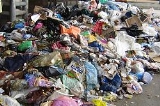
Municipal solid waste (MSW), also called urban solid waste, is a waste type that includes predominantly household waste (domestic waste) with sometimes the addition of commercial waste
Commercial waste

Commercial waste consists of waste from premises used wholly or mainly for the purposes of a trade or business or for the purpose of sport, recreation, education or entertainment but not including municipal waste; agricultural or industrial waste ....
s collected by a municipality
Municipality

A municipality is an administrative entity composed of a clearly defined territory and its population and commonly denotes a city, town, or village, or a small grouping of them....
 within a given area. They are in either solid or semisolid form and generally exclude industrial hazardous waste
Hazardous waste

Put simply, a hazardous waste is waste that poses substantial or potential threats to public health or the environment and generally exhibits one or more of these characteristics:...
s.


Discussion
Ask a question about 'Municipal solid waste'
Start a new discussion about 'Municipal solid waste'
Answer questions from other users
Full Discussion Forum


Recent Posts


Encyclopedia


Mixed Municipal Waste
Municipal solid waste (MSW), also called urban solid waste, is a waste type that includes predominantly household waste (domestic waste) with sometimes the addition of commercial waste
Commercial waste

Commercial waste consists of waste from premises used wholly or mainly for the purposes of a trade or business or for the purpose of sport, recreation, education or entertainment but not including municipal waste; agricultural or industrial waste ....
s collected by a municipality
Municipality

A municipality is an administrative entity composed of a clearly defined territory and its population and commonly denotes a city, town, or village, or a small grouping of them....
 within a given area. They are in either solid or semisolid form and generally exclude industrial hazardous waste
Hazardous waste

Put simply, a hazardous waste is waste that poses substantial or potential threats to public health or the environment and generally exhibits one or more of these characteristics:...
s. The term residual waste relates to waste left from household sources containing materials that have not been separated out or sent for reprocessing .

There are five broad categories of MSW:

  • Biodegradable waste
    Biodegradable waste

    Biodegradable waste is a type of waste, typically originating from plant or animal sources, which may be broken down by other living organisms. Waste that cannot be broken down by other living organisms may be called non-biodegradable....
    : food and kitchen waste
    Food waste

    Food waste is any form of waste composed of food materials, which can be active ingredients but also materials found in preparation or containment of foods....
    , green waste
    Green waste

    Green waste is biodegradable waste that can be comprised of garden or park waste, such as grass or flower cuttings and Hedge trimmings.Green waste is often collected in municipal curbside collection schemes or through private waste management contractor businesses and subject to independent audit....
    , paper
    Paper

    Paper is thin material mainly used for writing upon, printing upon or packaging. It is produced by pressing together moist fibers, typically cellulose pulp derived from wood, rags or grasses, and drying them into flexible sheets....
     (can also be recycled).
  • Recyclable
    Recycling

    Recycling involves processing used materials into new products in order to prevent waste of potentially useful materials, reduce the consumption of fresh raw materials, reduce energy usage, reduce air pollution and water pollution by reducing the need for "conventional" waste disposal, and lower greenhouse gas emissions as compared to virg...
     material: paper, glass
    Glass

    Glass generally refers to a Hardness, brittle, transparency amorphous solid, such as that used for windows, many Glass Bottles, or eyewear, including, but not limited to, soda-lime glass, borosilicate glass, acrylic glass, sugar glass, Muscovite , or aluminium oxynitride....
    , bottle
    Bottle

    A bottle is a container with a neck that is narrower than the body and a "mouth." Bottles are often made of glass, clay, plastic or other impervious materials, and typically used to store liquids such as water, milk, soft drinks, beer, wine, cooking oil, medicine, shampoo, ink and chemicals....
    s, can
    Tin can

    A tin can, also called a tin or a can, is an air-tight Packaging and labelling for the distribution or storage of goods, composed of thin metal, and requiring cutting or tearing of the metal as the means of opening....
    s, metal
    Metal

    In chemistry, a metal is a chemical element whose atoms readily lose electrons to form positive ions , and form metallic bonds between other metal atoms and ionic bonds between nonmetal atoms....
    s, certain plastic
    Plastic

    Plastic is the general common term for a wide range of synthetic or semisynthetic organic chemistry solid materials suitable for the manufacture of industrial products....
    s, etc.
  • Inert
    Inert

    In English, to be inert is to be in a state of doing little or nothing....
     waste: construction and demolition waste
    Construction and demolition waste

    Construction and demolition waste consists of unwanted material produced directly or incidentally by the construction or demolition industries....
    , dirt
    Soil

    Soil is the naturally occurring, unconsolidated or loose covering on the Earth's surface. Soil is composed of particles of broken rock that have been altered by chemical and environmental processes including weathering and erosion....
    , rock
    Rock (geology)

    In geology, rock is a naturally occurring solid aggregate of minerals and/or mineraloids.The Earth's outer solid layer, the lithosphere, is made of rock....
    s, debris.
  • Composite wastes: waste clothing
    Clothing

    A feature of all human societies, except perhaps the most primitive, is the wearing of clothing or clothes, especially in public. The primary purpose of clothing is functional, as a protection from the weather....
    , Tetra Pak
    Tetra Pak

    Tetra Pak is a multinational corporation food processing and packaging corporation of Sweden origin. It was founded in 1951 in Lund, Sweden, by Ruben Rausing....
    s, waste plastics such as toys.
  • Domestic hazardous waste
    Hazardous waste

    Put simply, a hazardous waste is waste that poses substantial or potential threats to public health or the environment and generally exhibits one or more of these characteristics:...
     (also called "household hazardous waste") & toxic waste
    Toxic waste

    Toxic waste is waste material that can cause death or injury to living creatures. It usually is the product of industry or commerce, but comes also from residential use, agriculture, the military, medical facilities, radioactive sources, and light industry, such as dry cleaning establishments....
    : medication
    Medication

    A pharmaceutical drug, also referred to as medicine or medicament, can be loosely defined as any substance intended for use in the diagnosis, cure, mitigation, treatment, or prevention of disease....
    , e-waste, paint
    Paint

    Paint is any liquid, liquifiable, or mastic composition which after application to a Substrate in a thin layer is converted to an opaque solid film....
    s, chemicals, light bulbs, fluorescent tubes, spray cans, fertilizer
    Fertilizer

    Fertilizers are chemical compounds given to plants to promote growth; they are usually applied either through the soil, for uptake by plant roots, or by foliar feeding, for uptake through leaves....
     and pesticide
    Pesticide

    A pesticide is a substance or mixture of substances used to kill a pest .A pesticide may be a chemical substance, biological agent , antimicrobial, disinfectant or device used against any pest ....
     containers, batteries
    Battery (electricity)

    In electronics, a battery or voltaic cell is a combination of one or more electrochemical cell Galvanic cells which store chemical energy that can be converted into electric potential energy, creating electricity....
    , shoe polish
    Shoe polish

    Shoe polish , usually a waxy paste or a cream , is a consumer product used to polishing, waterproofing, and restore the appearance of leather shoes or boots, thereby extending the footwear's life....
    .


The functional elements of Municipal Solid waste are as follows:
1) Waste generation:
Waste generation encompasses activities in which materials are identified as no longer being of value and are either thrown away or gathered together for disposal.

2) Waste handling and separation, storage and processing at the source:
Waste handling and separation involves the activities associated with management of waste until they are placed in storage container for collection. Handling also encompasses the movement of loaded containers to the point of collection. Separation of waste components is an important step in the handling and storage of solid waste at the source.

3) Collection:
The functional element of collection includes not only the gathering of solid waste and recyclable materials, but also the transport of these materials, after collection, to the location where the collection vehicle is emptied. This location may be a materials processing facility, a transfer station or a landfill disposal site.

4) Separation and processing and transformation of solid wastes:
The types of means and facilities that are now used for the recovery of waste materials that have been separated at the source include curbside collection, drop off and buy back centers. The separation and processing of wastes that have been separated at the source and the separation of commingled wastes usually occur at a materials recovery facility, transfer stations, combustion facilities and disposal sites.

5) Transfer and transport:
This element involves two steps:
i)the transfer of wastes from the smaller collection vehicle to the larger transport equipment
ii)the subsequent transport of the wastes, usually over long distances, to a processing or disposal site.

6) Disposal:
Today the disposal of wastes by landfilling or landspreading is the ultimate fate of all solid wastes, whether they are residential wastes collected and transported directly to a landfill site, residual materials from materials recovery facilities (MRFs), residue from the combustion of solid waste, compost or other substances from various solid waste processing facilities. A modern sanitary land is not a dump; it is an engineered facility used for disposing of solid wastes on land without creating nuisances or hazards to public health or safety, such as the breeding of rats and insects and the contamination of ground water.


See also

  • MSW/LFG
    MSW/LFG

    MSW/LFG stands for municipal solid waste and landfill gas. The United States Environmental Protection Agency has several standards required for MSW landfills to help ensure public and environmental safety....
     (municipal solid waste and landfill gas)