
All Topics  
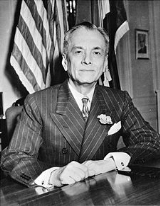
Manuel L. Quezon

 
Manuel L. Quezon

   Email Print
   Bookmark   Link


Manuel L. Quezon


Manuel Luis Quezon y Molina (August 19, 1878 in Baler
Baler, Aurora

Baler is a 3rd class Philippine municipality in the Philippine province of Aurora , Philippines. It is the capital municipality of Aurora. According to the 2000 census, it has a population of 29,923 people and 5.955 members per household....
, Tayabas, Philippines
Philippines

The Philippines, officially known as the Republic of the Philippines, is a country in Southeast Asia with Manila as its capital city. It comprises 7,107 islands in the western Pacific Ocean....
 – August 1, 1944 in Saranac Lake
Saranac Lake, New York

Saranac Lake is a village located in the state of New York, United States. As of the 2000 census, the population was 5,041. The village is named after Upper Saranac Lake, Middle Saranac Lake, and Lower Saranac Lakes, which are nearby....
, New York
New York

The State of New York is a U.S. state in the Mid-Atlantic States and Northeastern United States regions of the United States and is the nation's List of U.S....
, United States
United States

The United States of America is a Federal government constitutional republic comprising U.S. state and a federal district. The country is situated mostly in central North America, where its Contiguous United States and Washington, D.C., the Capital districts and territories, lie between the Pacific Ocean and Atlantic Oceans, Borders of the U...
) was the first Filipino
Filipino people

Filipino people refers to an ethnic group in the Philippines, a country in Southeast Asia. The name Filipino was derived from Las Islas Filipinas , the Spanish language name given to the Philippines in the 16th century, by Spanish explorer Ruy L?pez de Villalobos....
 president of the Commonwealth of the Philippines
Commonwealth of the Philippines

The Commonwealth of the Philippines was the political designation of the Philippines from 1934 to 1946 when the country was a Commonwealth with the United States....
 under U.S. occupation rule in the early period of the 20th century. He is also considered by most Filipinos to have been the second President
President of the Philippines

File:Flag President of Philippines.pngThe President of the Philippines is the head of state and government of the Philippines. The President of the Philippines in Filipino is referred to as Ang Pangulo or Pangulo ....
, after Emilio Aguinaldo
Emilio Aguinaldo

General Emilio Aguinaldo y Famy was a Philippines general, politician, and independence leader. He played an instrumental role in Philippine independence during the Philippine Revolution against Spain and the Philippine-American War that resisted United States occupation....
 (whose administration did not receive international recognition at the time and is not considered the first Philippine president by the United States
United States

The United States of America is a Federal government constitutional republic comprising U.S. state and a federal district. The country is situated mostly in central North America, where its Contiguous United States and Washington, D.C., the Capital districts and territories, lie between the Pacific Ocean and Atlantic Oceans, Borders of the U...
).


Discussion
Ask a question about 'Manuel L. Quezon'
Start a new discussion about 'Manuel L. Quezon'
Answer questions from other users
Full Discussion Forum


Recent Posts


Encyclopedia


Quezonus


Manuel Luis Quezon y Molina (August 19, 1878 in Baler
Baler, Aurora

Baler is a 3rd class Philippine municipality in the Philippine province of Aurora , Philippines. It is the capital municipality of Aurora. According to the 2000 census, it has a population of 29,923 people and 5.955 members per household....
, Tayabas, Philippines
Philippines

The Philippines, officially known as the Republic of the Philippines, is a country in Southeast Asia with Manila as its capital city. It comprises 7,107 islands in the western Pacific Ocean....
 – August 1, 1944 in Saranac Lake
Saranac Lake, New York

Saranac Lake is a village located in the state of New York, United States. As of the 2000 census, the population was 5,041. The village is named after Upper Saranac Lake, Middle Saranac Lake, and Lower Saranac Lakes, which are nearby....
, New York
New York

The State of New York is a U.S. state in the Mid-Atlantic States and Northeastern United States regions of the United States and is the nation's List of U.S....
, United States
United States

The United States of America is a Federal government constitutional republic comprising U.S. state and a federal district. The country is situated mostly in central North America, where its Contiguous United States and Washington, D.C., the Capital districts and territories, lie between the Pacific Ocean and Atlantic Oceans, Borders of the U...
) was the first Filipino
Filipino people

Filipino people refers to an ethnic group in the Philippines, a country in Southeast Asia. The name Filipino was derived from Las Islas Filipinas , the Spanish language name given to the Philippines in the 16th century, by Spanish explorer Ruy L?pez de Villalobos....
 president of the Commonwealth of the Philippines
Commonwealth of the Philippines

The Commonwealth of the Philippines was the political designation of the Philippines from 1934 to 1946 when the country was a Commonwealth with the United States....
 under U.S. occupation rule in the early period of the 20th century. He is also considered by most Filipinos to have been the second President
President of the Philippines

File:Flag President of Philippines.pngThe President of the Philippines is the head of state and government of the Philippines. The President of the Philippines in Filipino is referred to as Ang Pangulo or Pangulo ....
, after Emilio Aguinaldo
Emilio Aguinaldo

General Emilio Aguinaldo y Famy was a Philippines general, politician, and independence leader. He played an instrumental role in Philippine independence during the Philippine Revolution against Spain and the Philippine-American War that resisted United States occupation....
 (whose administration did not receive international recognition at the time and is not considered the first Philippine president by the United States
United States

The United States of America is a Federal government constitutional republic comprising U.S. state and a federal district. The country is situated mostly in central North America, where its Contiguous United States and Washington, D.C., the Capital districts and territories, lie between the Pacific Ocean and Atlantic Oceans, Borders of the U...
). He has the distinction of being the first Senate President elected to the presidency, the first president elected through a national election, and was also the first incumbent to secure re-election (for a partial second term, later extended, due to amendments to the 1935 Constitution). He is known as the "Father of the National Language
Filipino language

The Filipino language is the national language and an official language of the Philippines as designated in the 1987 Philippine Constitution. It is an Austronesian language that is the de facto standard language of Tagalog language....
".

Early life and career

Quezon, was born in Baler
Baler, Aurora

Baler is a 3rd class Philippine municipality in the Philippine province of Aurora , Philippines. It is the capital municipality of Aurora. According to the 2000 census, it has a population of 29,923 people and 5.955 members per household....
, Tayabas (now found at Aurora
Aurora province

Aurora is a Provinces of the Philippines of the Philippines located in the Central Luzon Regions of the Philippines. Its capital is Baler, Aurora and borders, clockwise from the south, the provinces of Quezon, Bulacan, Nueva Ecija, Nueva Vizcaya, Quirino, and Isabela province....
). His parents were Lucio Quezon and Maria Dolores Molina. While serving as aide-de-camp
Aide-de-camp

An aide-de-camp is a personal assistant, secretary, or adjutant to a person of high rank, usually a senior military officer or a head of state....
 to Emilio Aguinaldo (he had been a Lieutenant, then a Major, in the Bataan sector during the retreat and surrender in 1901), he fought with Filipino nationalists in the Philippine-American War
Philippine-American War

The Philippine?American War was an armed military conflict between the United States and the Philippines, which arose from the First Philippine Republic struggle against U.S....
.

He received his primary education from his mother and school teacher in their home town) and tutors (his father from Paco, Manila
Paco, Manila

Paco , is a Manila#Districts of Manila, Philippines. It is located south of Pasig River, and San Miguel, Manila, west of Santa Ana, Manila, southwest of Pandacan, Manila, north of Malate, Manila, northwest of San Andres, Manila, and east of Ermita, Manila....
, was a Sergeant in the Spanish Army
Spanish Army

The Spanish Army is one of oldest active armies in the world and a branch of the Spanish Armed Forces, in charge of land operations....
), and later boarded at the Colegio de San Juan de Letran
Colegio de San Juan de Letran

The Colegio de San Juan de Letran , was founded in 1620. Letran is a private Roman Catholic institution of higher learning located in Intramuros, Manila, Philippines....
 where he completed secondary school. After the war, he completed Law at the University of Santo Tomas
University of Santo Tomas

The Pontifical and Royal University of Santo Tomas, The Catholic University of the Philippines , is a private Roman Catholic university run by the Dominican Order in Manila....
 and passed the bar examinations in 1903, placing fourth. He worked for a time as a clerk and surveyor, entering government service as an appointed fiscal for Mindoro and later Tayabas. He became a councilor and was elected governor of Tayabas in 1906 as an independent. In 1907, he was elected to the first Philippine Assembly, where he served as majority floor leader and chairman of the committee on appropriations. From 1909-1916, he served as one of the Philippines' two resident commissioner
Resident Commissioner

Resident Commissioner is the title of several, quite different types of Commissioner in overseas possession or protectorate of the British Crown or of the U.S.A....
s to the U.S. House of Representatives, lobbying for the passage of the Philippine Autonomy Act or Jones Law.

Senate presidency and independence missions

He was elected senator in 1916 and became Senate President, serving continuously until 1935 (19 years). He headed the first Independence Mission to the U.S. Congress in 1919, and brought home the Tydings-McDuffie Independence Law in 1934.

While in the United States, he personally met Napoleon Hill
Napoleon Hill

Napoleon Hill was an United States author who was one of the earliest producers of the modern genre of personal success literature. His most famous work, Think and Grow Rich, is one of the best-selling books of all time....
 and was inspired to continue seeking the Independence of the Philippines.

Presidency

In 1935 Quezon won the Philippine's first national presidential election under the banner of the Nacionalista Party
Nacionalista Party

The Nacionalista Party is the oldest political party in the Philippines today and was responsible for leading the country throughout the majority of the 20th century since its founding in 1907....
. He obtained nearly 68% of the vote against his two main rivals, Emilio Aguinaldo and Bishop Gregorio Aglipay
Gregorio Aglipay

Gregorio Labayan Aglipay was the first Filipino Supreme Bishop of the Philippine Independent Church....
. Quezon was inaugurated in November, 1935. He is recognized as the second President of the Philippines
President of the Philippines

File:Flag President of Philippines.pngThe President of the Philippines is the head of state and government of the Philippines. The President of the Philippines in Filipino is referred to as Ang Pangulo or Pangulo ....
. However, in January 2008, Congressman Rodolfo Valencia of Oriental Mindoro
Oriental Mindoro

Oriental Mindoro is a Provinces of the Philippines of the Philippines located in the MIMAROPA Regions of the Philippines in Luzon. Its capital is Calapan City and occupies the eastern half of the island of Mindoro; Occidental Mindoro is the western half....
 filed a bill seeking instead to declare General Miguel Malvar
Miguel Malvar

Miguel Malvar y Carpio was a Filipino commander who served during the Philippine Revolution and subsequently during the Philippine?American War....
 as the second Philippine President, having directly succeeded Aguinaldo in 1901.

Quezon had originally been barred by the Philippine constitution from seeking re-election. However, in 1940, constitutional amendments were ratified allowing him to seek re-election for a fresh term ending in 1943. In the 1941 presidential elections
Philippine general election, 1941

Presidential, legislative and local elections were held on November 11, 1941 in the Philippines. Incumbent President Manuel L. Quezon won an unprecedented second partial term as President of the Philippines via a landslide....
, Quezon was re-elected over former Senator
Senate of the Philippines

The Senate of the Philippines is the upper chamber of the bicameral legislature of the Philippines, the Congress of the Philippines. The Philippine Senate is composed of 24 senators who are elected at-large....
 Juan Sumulong with nearly 82% of the vote.

In a notable humanitarian act, Quezon, in cooperation with United States High Commissioner Paul V. McNutt
Paul V. McNutt

Paul Vories McNutt was an United States politician who served as governor of Indiana, High Commissioner to the Philippines to the Philippines, administrator of the Federal Security Agency, chairman of the War Manpower Commission and United States Ambassador to the Philippines....
, facilitated the entry into the Philippines of Jew
Jew

A Jew is a member of the Jewish people, an ethnoreligious group that traces its ancestry to the Israelites or Hebrews of the Ancient Near East....
ish refugees fleeing fascist regimes in Europe. Quezon was also instrumental in promoting a project to resettle the refugees in Mindanao
Mindanao

Mindanao is the second largest and easternmost island in the Philippines. It is also one of the three island groups in the country, along with Luzon and Visayas....
.

Administration, cabinet, and Supreme Court appointments 1935-1941


President Quezon was given the power under the reorganization act, to appoint the first all-Filipino Supreme Court of the Philippines
Supreme Court of the Philippines

The Supreme Court of the Philippines is the country's highest judicial court, as well as the court of last resort. The court consists of 14 Associate Justice of the Supreme Court of the Philippines and 1 Chief Justice of the Philippines....
 in 1935. From 1901 to 1935, although a Filipino was always appointed chief justice, the majority of the members of the Supreme Court were Americans. Complete Filipinization was achieved only with the establishment of the Commonwealth of the Philippines in 1935. Claro M. Recto and Jose P. Laurel were among Quezon's first appointees to replace the American justices. The membership in the Supreme Court increased to 11: a chief justice and ten associate justices, who sat en banc or in two divisions of five members each.

  • Ramon Avanceña
    Ramon Avanceña

    Ramon Avance?a was a Chief Justice of the Philippines. He served from 1925-1941, when he resigned during the nearing of the Japanese Occupation....
     – 1935 (Chief Justice
    Chief Justice of the Philippines

    The Chief Justice of the Philippine Supreme Court presides over the Supreme Court of the Philippines and is the highest judicial officer of the Government of the Philippines of the Philippines....
    ) – 1935-1941
  • Jose Abad Santos
    José Abad Santos

    | name=Jose Abad Santos| image name=| order=5th| term start=December 24, 1941| term end= May 2, 1942| predecessor= Ramon Avance?a| successor= Jose Yulo...
     – 1935
  • Claro M. Recto
    Claro M. Recto

    Claro Mayo Recto was a Filipino people politician, jurist, poet and one of the foremost statesmen of his generation. He is remembered mainly for his nationalism, for "the impact of his patriotic convictions on modern political thought"....
     1935 – 1936
  • Jose P. Laurel
    Jose P. Laurel

    Jos? Paciano Laurel y Garc?a was the president of the Japanese-Sponsored Republic of the Philippines during World War II, from 1943 to 1945.Laurel was not subsequently officially recognized as a Philippine president until the administration of Diosdado Macapagal....
     – 1935
  • Jose Abad Santos
    José Abad Santos

    | name=Jose Abad Santos| image name=| order=5th| term start=December 24, 1941| term end= May 2, 1942| predecessor= Ramon Avance?a| successor= Jose Yulo...
     (Chief Justice
    Chief Justice of the Philippines

    The Chief Justice of the Philippine Supreme Court presides over the Supreme Court of the Philippines and is the highest judicial officer of the Government of the Philippines of the Philippines....
    ) – 1941-1942


OFFICENAMETERM
President
President of the Philippines

File:Flag President of Philippines.pngThe President of the Philippines is the head of state and government of the Philippines. The President of the Philippines in Filipino is referred to as Ang Pangulo or Pangulo ....
 
Manuel L. Quezon 1935–1941
Vice President
Vice President of the Philippines

The 'Vice President of the Philippines' is the second highest executive official of the Philippines government. The Vice President of the Philippines in Filipino is referred to as 'Ang Pangalawang Pangulo' or 'Pangalawang Pangulo' , for example Ang Pangalawang Pangulong Noli L....
 
Sergio Osmeña
Sergio Osmeña

Sergio Osme?a was the second President of the Philippines of the Commonwealth of the Philippines. He was Vice President under Manuel L. Quezon, and rose to the presidency upon Quezon's death in 1944....
 
1935–1941
Secretary of Public Instruction Sergio Osmeña
Sergio Osmeña

Sergio Osme?a was the second President of the Philippines of the Commonwealth of the Philippines. He was Vice President under Manuel L. Quezon, and rose to the presidency upon Quezon's death in 1944....
 
1935–1940
Jorge Bocobo 1940–1941
Secretary of Public Works and Communications Mariano Jesús Cuenco
Mariano Jesús Cuenco

Senator Mariano Jes?s Diosomito Cuenco Family of Cebu was born in Carmen, Cebu, Cebu Province on January 16, 1888 to Mariano Albao Cuenco and Remedios Lopez Diosomito....
 
 
Secretary of Justice Jose Yulo
Jose Yulo

Jose Yulo was the Chief Justice of the Philippines of the Japanese Occupation during World War II. He served from 1942-1945....
 
1935–1938
Jose Abad Santos
José Abad Santos

| name=Jose Abad Santos| image name=| order=5th| term start=December 24, 1941| term end= May 2, 1942| predecessor= Ramon Avance?a| successor= Jose Yulo...
 
1938–1941
Secretary of National Defense Teofilo Sison 1939–1941
Basilio Valdes December 23, 1941
Secretary of Finance Elpidio Quirino
Elpidio Quirino

Elpidio Rivera Quirino was a Philippines politician, and the sixth President of the Philippines....
 
1935–1936
Antonio de las Alas 1936–1938
Manuel Roxas
Manuel Roxas

Manuel Acu?a Roxas was the first president of the independent Republic of the Philippines. He served as president from the granting of independence in 1946 until his abrupt death in 1948....
 
1938–1941
Serafin Marabut 1941
Secretary of the Interior

The Secretary of the Interior may refer to:* The United States Secretary of the Interior* The Secretario de Gobernaci?n Secretary of the Interior ...
 
Elpidio Quirino
Elpidio Quirino

Elpidio Rivera Quirino was a Philippines politician, and the sixth President of the Philippines....
 
1935–1938
Rafael Alunan 1938–1940
Secretary of Agriculture and Commerce Benigno Aquino
Benigno Aquino, Sr.

Benigno Quiambao Aquino , or Benigno Aquino, Sr., was a Filipino people politician who served as Speaker of the Philippine House of Representatives of the Second Philippine Republic National Assembly from 1943 to 1944....
 
1935–1940
Rafael Alunan 1940–1941
Secretary of Labor Jose Avelino
José Avelino

Jos? Dira Avelino was a Filipino politician who served as Philippine Senate. He was a native of what was then the town of Calbayog City which later became a city during his time in 1948....
 
1935–1938
Sotero Baluyut 1938–1941
Secretary to the President Jorge B. Vargas
Jorge B. Vargas

Jorge B. Vargas was a lawyer and youth advocate born in Bago City, Negros Occidental, Philippines. He graduated valedictorian from Bacolod High School in 1909 and obtained a Bachelor of Arts degree in 1911 and a Bachelor of Law degree with honors in 1914, both from the University of the Philippines....
 
1935–1941
Auditor-General
Auditor-General

The Auditor-General is an office established by the Constitution of South Africa and is one of the Chapter nine institutions intended to support democracy....
 
Jaime Hernandez
Jaime Hernandez

Jaime Hernandez is the co-creator of the black & white independent comic book Love and Rockets ....
 
1935–1941
Commissioner of the Budget Serafin Marabut 1935–1941
Commissioner of Civil Service Jose Gil
José Gil

Jos? Gil is a Portuguese philosopher.In his youth he lived in Lisboa, Portugal but his experiences Ant?nio Salazar?s 1933-1974 dictatorship, made him decide to study in a free country, in Paris, France....
 
1935–1941
Resident Commissioner

Resident Commissioner is the title of several, quite different types of Commissioner in overseas possession or protectorate of the British Crown or of the U.S.A....
 
Quintin Paredes
Quintín Paredes

Quint?n B. Paredes was a Filipino people lawyer, politician, and statesman.He was born in Bangued, Abra, Philippines in 1884 to Juan Felix Paredes and Regine Babila....
 
1935–1938
Joaquin Elizalde 1938–1941


Government-in-exile


Quezon Roosevelt
After the Japan
Japan

Japan is an island country in East Asia. Located in the Pacific Ocean, it lies to the east of the Sea of Japan, People's Republic of China, North Korea, South Korea and Russia, stretching from the Sea of Okhotsk in the north to the East China Sea and Taiwan in the south....
ese invasion of the Philippines during World War II
World War II

World War II, or the Second World War , was a global military conflict which involved a Participants in World War II, including all of the great powers, organised into two opposing military alliances: the Allies of World War II and the Axis powers....
 he evacuated to Corregidor, then the Visayas and Mindanao, and upon the invitation of the US government, was further evacuated to Australia and then to the United States, where he established the Commonwealth government in exile
Government in exile

A government in exile is a political group that claims to be a country's legitimate government, but for various reasons is unable to exercise its legal power, and instead resides in a foreign country....
 with headquarters in Washington, D.C.. There, he served as a member of the Pacific War Council
Pacific War Council

The Pacific War Council was an inter-governmental body established in 1942 and intended to control the Allies of World War II war effort in the Pacific War of World War II....
, signed the declaration of the United Nations
United Nations

The United Nations is an international organization whose stated aims are to facilitate cooperation in international law, international security, economic development, Social change, human rights and achieving world peace....
 against the Axis Powers
Axis Powers

The Axis powers were those countries that were opposed to the Allies of World War II during World War II. The three major Axis powers - Nazi Germany, Kingdom of Italy , and Empire of Japan - were part of a military alliance on the signing of the Tripartite Pact in September 1940, which officially founded the Axis powers....
, and wrote his autobiography (Good Fight, 1946).

Quezon suffered from tuberculosis
Tuberculosis

Tuberculosis is a common and often deadly infectious disease caused by mycobacterium, mainly Mycobacterium tuberculosis . Tuberculosis usually attacks the lungs but can also affect the central nervous system, the lymphatic system, the circulatory system, the genitourinary system, the gastrointestinal system, bones, joints, and even the...
 and spent his last years in a "cure cottage"
Cure Cottages of Saranac Lake

Between 1873 and 1945, Saranac Lake, New York became a world renowned center for the treatment of tuberculosis, using a treatment that involved exposing patients to as much fresh air as possible under conditions of complete bed-rest....
 in Saranac Lake
Saranac Lake, New York

Saranac Lake is a village located in the state of New York, United States. As of the 2000 census, the population was 5,041. The village is named after Upper Saranac Lake, Middle Saranac Lake, and Lower Saranac Lakes, which are nearby....
, New York
New York

The State of New York is a U.S. state in the Mid-Atlantic States and Northeastern United States regions of the United States and is the nation's List of U.S....
, where he died on August 1, 1944. He was initially buried in Arlington National Cemetery
Arlington National Cemetery

Arlington National Cemetery, in Arlington, Virginia is a United States National Cemetery in the United States of America, established during the American Civil War on the grounds of Arlington House, The Robert E....
. His body was later carried by the USS Princeton
USS Princeton (CV-37)

USS Princeton was one of 24 s built during and shortly after World War II for the United States Navy. The ship was the fifth US Navy ship to bear the name, and was named for the Revolutionary War Battle of Princeton....
 and re-interred in Manila
Manila

The 'City of Manila' , or simply 'Manila', is the Capital of the Philippines and one of the 17 cities and municipalities that make up Metro Manila....
 at the Manila North Cemetery
Manila North Cemetery

The Manila North Cemetery , which measures 54 hectares, is considered the biggest and one of the oldest cemeteries in Metro Manila. Beside it are two other important cemeteries, namely the La Loma Cemetery and the Manila Chinese Cemetery....
 before being moved to Quezon City
Quezon City

Quezon City , is the former capital and the most populous city in the Philippines. Located on the island of Luzon, Quezon City is one of the Cities of the Philippines and Philippine municipality that make up Metro Manila, the National Capital Region....
 within the monument at the Quezon Memorial Circle
Quezon Memorial Circle

The Quezon Memorial Circle is a national park and shrine located in Quezon City, former capital of the Philippines . The park is an ellipse bounded by the Elliptical Road....
.

Quezon was married to his first cousin, Aurora Aragón Quezon, and had four children: María Aurora "Baby" Quezon (1919-1949), María Zeneida "Nini" Quezon-Avancena (1921-), Luisa Corazón Paz "Nenita" Quezon (1923-1923) and Manuel L. "Nonong" Quezon, Jr. (1926-1998). His grandson, Manuel L. "Manolo" Quezon III (1970-), a prominent writer and political pundit, was named after him.

In their column on the pronunciation of names, The Literary Digest
Literary Digest

The Literary Digest was an influential general interest weekly magazine published by Funk and Wagnalls. Founded by Isaac Kauffman Funk in 1890, it eventually merged with two similar weekly magazines, Public Opinion and Current Opinion....
 wrote "The President and his wife pronounce the name keh'-zon. The pronunciation keh-son', although widely heard in the Philippine Islands, is incorrect." (Charles Earle Funk, What's the Name, Please?, Funk & Wagnalls, 1936.)

War cabinet 1941-1944

The outbreak of World War II and the Japanese invasion resulted in periodic and drastic changes to the government structure. Executive Order 390, December 22, 1941 abolished the Department of the Interior and established a new line of succession. Executive Order 396, December 24, 1941 further reorganized and grouped the cabinet, with the functions of Secretary of Justice assigned to the Chief Justice of the Philippines.

OFFICENAMETERM
President
President of the Philippines

File:Flag President of Philippines.pngThe President of the Philippines is the head of state and government of the Philippines. The President of the Philippines in Filipino is referred to as Ang Pangulo or Pangulo ....
 
Manuel L. Quezon 1941–1944 (extended, 1943)
Vice President
Vice President of the Philippines

The 'Vice President of the Philippines' is the second highest executive official of the Philippines government. The Vice President of the Philippines in Filipino is referred to as 'Ang Pangalawang Pangulo' or 'Pangalawang Pangulo' , for example Ang Pangalawang Pangulong Noli L....
 
Sergio Osmeña
Sergio Osmeña

Sergio Osme?a was the second President of the Philippines of the Commonwealth of the Philippines. He was Vice President under Manuel L. Quezon, and rose to the presidency upon Quezon's death in 1944....
 
1941–1944 (extended, 1943)
Secretary of Justice and Finance Jose Abad Santos
José Abad Santos

| name=Jose Abad Santos| image name=| order=5th| term start=December 24, 1941| term end= May 2, 1942| predecessor= Ramon Avance?a| successor= Jose Yulo...
 
December 24, 1941– March 26, 1942
Secretary of Justice Jose Abad Santos
José Abad Santos

| name=Jose Abad Santos| image name=| order=5th| term start=December 24, 1941| term end= May 2, 1942| predecessor= Ramon Avance?a| successor= Jose Yulo...
 
March 26, 1941– May, 1942
Secretary of Finance, Agriculture, and Commerce Andres Soriano March 26, 1942– July 31, 1944
Secretary of National Defense, Public Works, Communications and Labor Basilio Valdes December 24, 1941–August 1, 1944
Secretary of Public Instruction, Health, and Public Welfare Sergio Osmeña
Sergio Osmeña

Sergio Osme?a was the second President of the Philippines of the Commonwealth of the Philippines. He was Vice President under Manuel L. Quezon, and rose to the presidency upon Quezon's death in 1944....
 
December 24, 1941– August 1, 1944
Secretary to the President Manuel Roxas
Manuel Roxas

Manuel Acu?a Roxas was the first president of the independent Republic of the Philippines. He served as president from the granting of independence in 1946 until his abrupt death in 1948....
 
December 24, 1941– May, 1942
Arturo Rotor May, 1942– August 1, 1944
Secretary to the Cabinet Manuel Nieto
Manuel Nieto

Jose Manuel Nieto was a soldier from the Presidio of San Diego who was assigned to the Mission San Gabriel at the time his land was granted by the Spanish Empire in 1784....
 
1May 19, 1944
Secretary without Portfolio Andres Soriano March 2-26, 1942
Treasurer of the Philippines Andres Soriano February 19, 1942–March 26, 1942
Manuel Roxas
Manuel Roxas

Manuel Acu?a Roxas was the first president of the independent Republic of the Philippines. He served as president from the granting of independence in 1946 until his abrupt death in 1948....
 
March 26, 1942– May 8, 1942
Auditor-General
Auditor-General

The Auditor-General is an office established by the Constitution of South Africa and is one of the Chapter nine institutions intended to support democracy....
 
Jaime Hernandez (Filipino) December 30, 1941– August 1, 1944
Resident Commissioner

Resident Commissioner is the title of several, quite different types of Commissioner in overseas possession or protectorate of the British Crown or of the U.S.A....
 
Joaquin Elizalde December 30, 1941– August 1, 1944 (given cabinet rank, May, 1942)
Secretary of Information and Public Relations Carlos P. Romulo
Carlos P. Rómulo

Carlos Pe?a R?mulo was a Filipino diplomat, politician, soldier, journalist and author. He was a reporter at 16, a newspaper editor by the age of 20, and a publisher at 32....
 
1943–1944


Sources:

The Sixth Annual Report of the United States High Commission to the Philippine Island to the President and Congress of the United States, Covering the Fiscal Year July 1, 1941 to June 30, 1942 Washington D.C. October 20, 1942

Executive Orders of the Commonwealth of the Philippines, Manila, Bureau of Printing 1945

Quotes


"My loyalty to my party ends where my loyalty to my country begins."

"Social Justice is far more beneficial when applied as a matter of sentiment, and not of law."

I would rather have a country run like hell by Filipinos than a country run like heaven by the Americans, because however bad a Filipino government might be, it can always be improved.”

"Pray for me so that I can return to the Philippines. I feel so weak that I'm afraid I cannot make it"

External links