
All Topics  
Lochner v. New York

 
Lochner V. New York

   Email Print
   Bookmark   Link


Lochner v. New York


Lochner v. New York, 198 U.S. 45
Case citation

Case citation is the system used in many countries to identify the decisions in past court cases, either in special series of books called Reporter s or law reports, or in a 'neutral' form which will identify a decision wherever it was reported....
 (1905), was a landmark United States Supreme Court
Supreme Court of the United States

The Supreme Court of the United States is the highest judicial body in the United States, and leads the federal United States federal courts. It consists of the Chief Justice of the United States and eight Associate Justice of the Supreme Court of the United States, who are nominated by the President of the United States and confirmed with th...
 case that held the "right to free contract" was implicit in the due process clause of the Fourteenth Amendment
Fourteenth Amendment to the United States Constitution

The Fourteenth Amendment to the United States Constitution is one of the post-American Civil War Reconstruction Amendments that was first intended to secure the rights of former Slavery in the United States....
. The case involved a New York
New York

The State of New York is a U.S. state in the Mid-Atlantic States and Northeastern United States regions of the United States and is the nation's List of U.S....
 law that limited the number of hours a baker
Baker

A baker is someone who primarily bakes and sells bread. Cakes and similar foods may also be produced, as the traditional boundaries between what is produced by a baker as opposed to a pastry chef have blurred in recent decades....
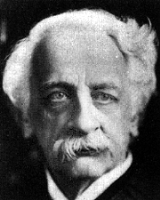
 could work each week. By a 5-4 margin, the Supreme Court rejected the argument that the law was necessary to protect the health of bakers, calling it an "unreasonable, unnecessary and arbitrary interference with the right and liberty of the individual to contract." Justice Rufus Peckham
Rufus Wheeler Peckham

Rufus Wheeler Peckham was an Associate Justice of the Supreme Court of the United States of the Supreme Court of the United States from 1895 until 1909....
 wrote for the majority, while Justices John Marshall Harlan
John Marshall Harlan

'John Marshall Harlan' was an American Supreme Court of the United States Associate Justice of the Supreme Court of the United States. He is most notable as the lone dissenter in the famous 1896 case of Plessy v....
 and Oliver Wendell Holmes, Jr.
Oliver Wendell Holmes, Jr.

Oliver Wendell Holmes, Jr. was an United States jurist who served on the Supreme Court of the United States from 1902 to 1932. Noted for his long service, his concise and pithy opinions, and his deference to the decisions of elected legislatures, he is one of the most widely cited United States Supreme Court justices in history, particularly...
 filed dissents.

Lochner was one of the most controversial decisions in the Supreme Court's history, starting what is now known as the Lochner era
Lochner era

The Lochner EraThe Lochner era is a period in :Category:Legal history of the United States from roughly 1890 to 1937 in which the United States Supreme Court tended to strike down economic regulations mandating certain working conditions or wages, or limiting working hours....
.


Discussion
Ask a question about 'Lochner v. New York'
Start a new discussion about 'Lochner v. New York'
Answer questions from other users
Full Discussion Forum


Encyclopedia


Lochner v. New York, 198 U.S. 45
Case citation

Case citation is the system used in many countries to identify the decisions in past court cases, either in special series of books called Reporter s or law reports, or in a 'neutral' form which will identify a decision wherever it was reported....
 (1905), was a landmark United States Supreme Court
Supreme Court of the United States

The Supreme Court of the United States is the highest judicial body in the United States, and leads the federal United States federal courts. It consists of the Chief Justice of the United States and eight Associate Justice of the Supreme Court of the United States, who are nominated by the President of the United States and confirmed with th...
 case that held the "right to free contract" was implicit in the due process clause of the Fourteenth Amendment
Fourteenth Amendment to the United States Constitution

The Fourteenth Amendment to the United States Constitution is one of the post-American Civil War Reconstruction Amendments that was first intended to secure the rights of former Slavery in the United States....
. The case involved a New York
New York

The State of New York is a U.S. state in the Mid-Atlantic States and Northeastern United States regions of the United States and is the nation's List of U.S....
 law that limited the number of hours a baker
Baker

A baker is someone who primarily bakes and sells bread. Cakes and similar foods may also be produced, as the traditional boundaries between what is produced by a baker as opposed to a pastry chef have blurred in recent decades....
 could work each week. By a 5-4 margin, the Supreme Court rejected the argument that the law was necessary to protect the health of bakers, calling it an "unreasonable, unnecessary and arbitrary interference with the right and liberty of the individual to contract." Justice Rufus Peckham
Rufus Wheeler Peckham

Rufus Wheeler Peckham was an Associate Justice of the Supreme Court of the United States of the Supreme Court of the United States from 1895 until 1909....
 wrote for the majority, while Justices John Marshall Harlan
John Marshall Harlan

'John Marshall Harlan' was an American Supreme Court of the United States Associate Justice of the Supreme Court of the United States. He is most notable as the lone dissenter in the famous 1896 case of Plessy v....
 and Oliver Wendell Holmes, Jr.
Oliver Wendell Holmes, Jr.

Oliver Wendell Holmes, Jr. was an United States jurist who served on the Supreme Court of the United States from 1902 to 1932. Noted for his long service, his concise and pithy opinions, and his deference to the decisions of elected legislatures, he is one of the most widely cited United States Supreme Court justices in history, particularly...
 filed dissents.

Lochner was one of the most controversial decisions in the Supreme Court's history, starting what is now known as the Lochner era
Lochner era

The Lochner EraThe Lochner era is a period in :Category:Legal history of the United States from roughly 1890 to 1937 in which the United States Supreme Court tended to strike down economic regulations mandating certain working conditions or wages, or limiting working hours....
. In the Lochner era, the Supreme Court invalidated scores of federal and state statutes that sought to regulate working conditions during the Progressive Era
Progressive Era

The Progressive Era in the United States was a period of reform which lasted from the 1890s to the 1920's.Responding to the changes brought about by industrialization,...
 and the Great Depression
Great Depression

File:International depression.pngThe Great Depression was a worldwide economic Recession starting in most places in 1929 and ending at different times in the 1930s or early 1940s for different countries....
. A typical criticism of the decision is that the Court discarded sound constitutional interpretation in favor of personal ideology, favoring property rights over the efforts of democratic majorities to enact economic regulations. This was reflected in Justice Holmes' dissent, in which he wrote that "[t]he Fourteenth Amendment does not enact Mr. Herbert Spencer
Herbert Spencer

Herbert Spencer was an England philosopher, prominent Classical liberalism political theorist, and sociological theorist of the Victorian era....
's Social Statics
Social Statics

Social Statics, or The Conditions essential to Happiness specified, and the First of them Developed is an 1851 book by the British economist Herbert Spencer....
." This was a reference to a book in which Spencer advocated a strict libertarian philosophy.

During the quarter-century that followed Lochner, the Supreme Court generally upheld economic regulations, but also issued several rulings invalidating such regulations. The Court also began to use the Due Process Clause of the Fourteenth Amendment to protect personal (as opposed to purely property) rights, including freedom of speech and the right to send one's child to private school (which was the beginning of a line of cases interpreting privacy rights). The Lochner era is considered to have ended with West Coast Hotel Co. v. Parrish
West Coast Hotel Co. v. Parrish

'West Coast Hotel Co. v. Parrish', , was a decision by the Supreme Court of the United States upholding the constitutionality of minimum wage legislation enacted by the State of Washington, overturning an earlier decision in Adkins v....
 (1937), in which the Supreme Court took a much broader view of the government's power to regulate economic activities.

Background of the case

In 1896, the New York Legislature
New York Legislature

The New York Legislature is the State legislature of the U.S. state of New York. It is a bicameral legislature, consisting of the lower house New York State Assembly and the upper house New York Senate....
 unanimously enacted the Bakeshop Act, a law that prohibited individuals from working in bakeries for more than ten hours per day or sixty hours per week. In 1899, Joseph Lochner, owner of Lochner's Home Bakery in Utica
Utica, New York

Utica is a city in the American state of New York, and the county seat of Oneida County, New York.The City of Utica is situated within the region referred to as the Mohawk Valley and the U.S....
, was fined $25 for overworking an employee. For a second offense in 1901, he drew a fine of $50 from the Oneida County Court.

Lochner chose to appeal his second conviction. However, the conviction was upheld by the Appellate Department of the New York Supreme Court
New York Supreme Court, Appellate Division

The New York Supreme Court, Appellate Division is the intermediate appellate court in New York State. It was created by the New York State Constitution of 1894 to succeed the General Term of the Supreme Court, effective January 1, 1896....
 in a 3-2 vote. Lochner appealed again to the New York Court of Appeals
New York Court of Appeals

The New York Court of Appeals is the supreme court in the U.S. state of New York. The Court of Appeals consists of seven judges: the Chief Judge and six associate judges which are appointed by the Governor to 14-year terms....
, where he lost by a 4-3 margin. After his defeat in the Court of Appeals (New York's highest court), Lochner took his case to the Supreme Court of the United States.

Lochner's appeal was based on the Fourteenth Amendment to the Constitution, which provides: "... nor shall any State deprive any person of life, liberty, or property, without due process of law." In a series of cases starting with Dred Scott v. Sandford
Dred Scott v. Sandford

Dred Scott v. Sandford, , was a decision by the United States Supreme Court that ruled that people of African descent Slavery in the United States and held as History of slavery in the United States, or their descendants?whether or not they were slaves?were not legal persons and could never be citizens of the United States, and that the U...
 (1857), the Supreme Court established that the due process clause (in both the 5th and 14th Amendments) is not merely a procedural guarantee, but also a "substantive" limitation on the type of control the government may exercise over individuals. Although this interpretation of the due process clause is a controversial one (see substantive due process
Due process

Due process is the principle that the government must respect all of the legal rights that are owed to a person according to the law of the land, instead of respecting merely some or most of those legal rights....
), it had become firmly embedded in American jurisprudence by the end of the nineteenth century. Lochner argued that the "right to free contract" was one of the rights encompassed by substantive due process.

The Supreme Court had accepted the argument that the due process clause protected the right to contract seven years earlier, in Allgeyer v. Louisiana (1897). However, the Court had acknowledged that the right was not absolute, but subject to the "police power" of the states. For example, Holden v. Hardy
Holden v. Hardy

Holden v. Hardy, Case citation , is a case in which the Supreme Court of the United States upheld a Utah state law limiting the number of work hours for miners and smelters as a legitimate exercise of the police power....
 (1898), the Supreme Court upheld a Utah
Utah

The State of Utah is a western United States U.S. state of the United States. It was the List of U.S. states by date of statehood admitted to the United States on January 4, 1896....
 law setting an eight-hour work day for miners
Mining

Mining is the extraction of value minerals or other geology materials from the earth, usually from an ore body, vein or seam. Materials recovered by mining include base metals, precious metals, iron, uranium, coal, diamonds, limestone, oil shale, Sodium chloride and potash....
. In Holden, Justice Henry Brown
Henry Billings Brown

'Henry Billings Brown' was an associate justice of the Supreme Court of the United States from January 5, 1891 to May 28, 1906. He is perhaps best known today as the author of the opinion for the Court in Plessy v....
 wrote that while "the police power cannot be put forward as an excuse for oppressive and unjust legislation, it may be lawfully resorted to for the purpose of preserving the public health, safety, or morals." The issue facing the Supreme Court in Lochner v. New York was whether the Bakeshop Act represented a reasonable exercise of the state's police power.

Lochner's case was argued by Henry Weismann (who had ironically been one of the foremost advocates of the Bakeshop Act when he was Secretary of the Journeymen Bakers' Union). In his brief
Brief (law)

A brief is a written law document used in various legal adversary systems that is presented to a court arguing why the party to the case should prevail....
, Weismann decried the idea that "the treasured freedom of the individual ... should be swept away under the guise of the police power of the State." He denied New York's argument that the Bakeshop Act was a necessary health measure, claiming that the "average bakery of the present day is well ventilated, comfortable both summer and winter, and always sweet smelling."

The Court's decision

Rufus Peckham
The Supreme Court, by a vote of 5-4, ruled that the law limiting bakers' working hours did not constitute a legitimate exercise of police powers. The opinion of the Court was delivered by Justice Rufus Peckham
Rufus Wheeler Peckham

Rufus Wheeler Peckham was an Associate Justice of the Supreme Court of the United States of the Supreme Court of the United States from 1895 until 1909....
. Peckham began by asserting that the Fourteenth Amendment protected an individual's "general right to make a contract in relation to his business." He acknowledged that the right was not absolute, referring disparagingly to the "somewhat vaguely termed police powers" of the state. At the same time, Peckham argued that the police power
Police power

Police power is the capacity of a state to regulate behaviours and enforce order within its territory, often framed in terms of public welfare, security, morality, and safety....
 was subject to certain limitations; otherwise, he claimed, the Fourteenth Amendment would be meaningless, and states would be able to pass any law using the police power as a pretext. He asserted that it was the court's duty to determine whether legislation is "a fair, reasonable and appropriate exercise of the police power of the State, or ... an unreasonable, unnecessary and arbitrary interference with the right of the individual ... to enter into those contracts in relation to labor which may seem to him appropriate."

The Attorney General of New York, Julius M. Mayer, had claimed in his brief that the government "has a right to safeguard a citizen against his own lack of knowledge." Peckham responded to this argument by writing that bakers "are in no sense wards of the State." He remarked that bakers "are ... able to assert their rights and care for themselves without the protecting arm of the State, interfering with their independence of judgment and of action."

Next, Peckham proceeded to disclaim the idea that long working hours posed a threat to the health of bakers. He addressed the argument with the following words: "To the common understanding, the trade of a baker has never been regarded as an unhealthy one." Although conceding the "possible existence of some small amount of unhealthiness," Justice Peckham contended that it was insufficient to justify interference from the state.

Hence, Peckham and his fellow Justices reached the conclusion that the New York law was not related "in any real and substantial degree to the health of the employees." Consequently, they held that the New York law was not a valid exercise of the state's police powers. Lochner's conviction was accordingly vacated.

Harlan's dissent

Justice John Marshall Harlan
John Marshall Harlan

'John Marshall Harlan' was an American Supreme Court of the United States Associate Justice of the Supreme Court of the United States. He is most notable as the lone dissenter in the famous 1896 case of Plessy v....
 delivered a dissenting opinion, which was joined by Justices White
Edward Douglass White

Edward Douglass White, Jr. , United States politician and jurist, was a United States Senate, associate justice of the Supreme Court of the United States and the ninth Chief Justice of the United States....
 and Day
William R. Day

William Rufus Day was an United States diplomat and jurist, who served for nineteen years as a Justice of the Supreme Court of the United States....
. Justice Harlan contended that the liberty to contract under the Due Process Clause of the Fourteenth Amendment is subject to regulation imposed by a State acting within the scope of its police powers. Justice Harlan offered the following rule for determining whether such statutes are unconstitutional: Justice Harlan asserted that the burden of proof should rest with the party seeking to have such a statute deemed unconstitutional.

Harlan contended that it was "plain that this statute was enacted in order to protect the physical wellbeing of those who work in bakery and confectionery establishments." Responding to the majority's assertion that the profession of a baker was not an unhealthy one, he quoted at length from academic studies describing the respiratory ailments and other risks that bakers faced. He argued that the Supreme Court should have deferred to the New York Legislature's judgment that long working hours threatened the health of bakery employees. According to Harlan, "If the end which the legislature seeks to accomplish be one to which its power extends, and if the means employed to that end, although not the wisest or best, are yet not plainly and palpably unauthorized by law, then the court cannot interfere."

Holmes' dissent

Another dissenting opinion was penned by Justice Oliver Wendell Holmes, Jr.
Oliver Wendell Holmes, Jr.

Oliver Wendell Holmes, Jr. was an United States jurist who served on the Supreme Court of the United States from 1902 to 1932. Noted for his long service, his concise and pithy opinions, and his deference to the decisions of elected legislatures, he is one of the most widely cited United States Supreme Court justices in history, particularly...
. Although only three paragraphs long, Holmes' dissent is well-remembered and often quoted. Holmes accused the majority of judicial activism
Judicial activism

Judicial activism may be either a descriptive or a normative term, but in common usage is primarily used in a way that is both normative and pejorative." As a descriptive term, it applies to the activities of judges who, in the course of carrying out their duties, go beyond the strictly judicial function and enter into the political policymak...
, pointedly claiming that the case was "decided upon an economic theory which a large part of the country does not entertain." He attacked the idea that the Fourteenth Amendment enshrined the liberty of contract, citing laws against Sunday trading
Sunday shopping

Sunday shopping refers to the ability of retailers to operate stores on Sunday, a day that Christian tradition typically recognizes as the Sabbath in Christianity, a "day of rest"....
 and usury
Usury

Usury originally meant the charging of interest on loans. This would have included charging a fee for the use of money, such as at a bureau de change....
 as "ancient examples" to the contrary. He added, "Some of these laws embody convictions or prejudices which judges are likely to share. Some may not. But a constitution is not intended to embody a particular economic theory."

Subsequent developments

Although not absolute in invalidating economic and labor regulations, the Supreme Court continued to take a narrow view of state police powers in the three decades that followed Lochner. For example, in Coppage v. Kansas
Coppage v. Kansas

Coppage v. Kansas, Case citation , was a Supreme Court of the United States case that held that employers could make contracts that forbid employees from joining Trade union....
 (1915), the Court struck down statutes forbidding "Yellow Dog contracts." Similarly, in Adkins v. Children's Hospital
Adkins v. Children's Hospital

Adkins v. Children's Hospital, , is a Supreme Court of the United States legal opinion holding that federal minimum wage legislation for women was an unconstitutional infringement of liberty of contract, as protected by the Fifth Amendment to the United States Constitution....
 (1923), the Supreme Court held that minimum wage
Minimum wage

A minimum wage is the lowest hourly, daily, or monthly wage that employers may legally pay to employees or workers. Equivalently, it is the lowest wage at which workers may sell their labor....
 laws violated the due process clause (although Chief Justice William Howard Taft
William Howard Taft

William Howard Taft was the List of Presidents of the United States President of the United States, the tenth Chief Justice of the United States, a leader of the progressive conservative wing of the History of the United States Republican Party in the early 20th century, a pioneer in international arbitration and staunch advocate of world pe...
 strongly dissented, suggesting that the Court instead should have overruled Lochner). The doctrine of substantive due process was coupled with a narrow interpretation of congressional power under the commerce clause
Commerce Clause

The Commerce Clause is an Enumerated powers listed in the United States Constitution . The clause states that Congress has the power to regulate commerce with foreign nations, among the states, and with the Indian tribes....
. Justices James McReynolds
James Clark McReynolds

James Clark McReynolds was an United States lawyer and judge who served both as United States Attorney General under President of the United States Woodrow Wilson and as an Associate Justice of the United States Supreme Court....
, George Sutherland
George Sutherland

George Sutherland was an England-born United States of America jurist and political figure. One of four appointments to the Supreme Court by President Warren G....
, Willis Van Devanter
Willis Van Devanter

Willis Van Devanter was an Associate Justice of the United States Supreme Court, January 3, 1911 to June 2, 1937.Born in Marion, Indiana, he graduated from the Cincinnati Law School in 1881....
, and Pierce Butler
Pierce Butler

Pierce Butler was a soldier, planter, and statesman, recognized as one of United States' Founding Fathers of the United States. He represented South Carolina in the Continental Congress and the United States Senate....
 emerged during the 1920s and 30s as the foremost defenders of traditional limitations on government power on the Supreme Court; they were collectively dubbed by partisans of the New Deal the "Four Horsemen of Reaction
Four Horsemen (Supreme Court)

The "Four Horsemen" was the nickname given to four conservative members of the United States Supreme Court during the 1932-1937 terms, who opposed the New Deal agenda of President of the United States Franklin Delano Roosevelt....
" as a result.

In 1934 the Supreme Court decided Nebbia v. New York
Nebbia v. New York

Nebbia v. New York, Case citation , was a case in which the Supreme Court of the United States determined whether the state of New York could regulate the price of milk for dairy farmers, dealers, and retailers....
 stating that there is no constitutionally protected fundamental right to freedom of contract. In 1937, the Supreme Court decided West Coast Hotel Co. v. Parrish
West Coast Hotel Co. v. Parrish

'West Coast Hotel Co. v. Parrish', , was a decision by the Supreme Court of the United States upholding the constitutionality of minimum wage legislation enacted by the State of Washington, overturning an earlier decision in Adkins v....
, which expressly overruled Adkins and implicitly signaled the end of the Lochner era. Although the Supreme Court did not explicitly overrule Lochner, it did agree to give more deference to the decisions of state legislatures. The Court sounded the death knell for economic substantive due process several years later in Williamson v. Lee Optical of Oklahoma (1955). In that case, a unanimous Supreme Court declared: "The day is gone when this Court uses the Due Process Clause of the Fourteenth Amendment to strike down state laws, regulatory of business and industrial conditions, because they may be unwise, improvident, or out of harmony with a particular school of thought."

In the post-Lochner era, the Supreme Court has applied a lower standard (rational basis test) in reviewing restrictions on economic liberty, but stricter standards in reviewing legislation impinging on personal liberties, especially privacy. A line of cases dating back to the 1923 opinion by Justice McReynolds in Meyer v. Nebraska
Meyer v. Nebraska

Meyer v. Nebraska, Case citation , was a Supreme Court of the United States case which held that a 1919 Nebraska law prohibiting the teaching of foreign languages to school children before high school unconstitutionally violated the Due Process clause of the Fourteenth Amendment to the United States Constitution....
 (citing Lochner as establishing limits on the police power) has established a privacy right under substantive due process. More recently, in Roe v. Wade
Roe v. Wade

Roe v. Wade, Case citation , is a Supreme Court of the United States case that resulted in a landmark decision regarding abortion. According to the Roe decision, most laws against abortion in the United States violated a United States Constitution to privacy under the Due Process Clause of the Fourteenth Amendment to the United Stat...
 (1973), the Supreme Court held that a woman had a privacy right to determine whether or not to have an abortion. In 1992, Planned Parenthood v. Casey
Planned Parenthood v. Casey

Planned Parenthood v. Casey, Case citation was a case decided by the Supreme Court of the United States in which the constitutionality of several Pennsylvania U.S....
 reaffirmed that right, though the Court no longer used the term "privacy" to describe it.

The Supreme Court's decision in Lochner v. New York has drawn the ire of some liberal and conservative legal scholars. For example, Robert Bork
Robert Bork

Robert Heron Bork is a conservative United States legal scholar who advocates the judicial philosophy of originalism. Bork formerly served as United States Solicitor General, acting United States Attorney General, and judge for the United States Court of Appeals for the District of Columbia Circuit....
 called the decision an "abomination". Similarly, Attorney General Edwin Meese
Edwin Meese

Edwin "Ed" Meese III served as the seventy-fifth United States Attorney General of the United States ....
 said that the Supreme Court "ignored the limitations of the Constitution and blatantly usurped legislative authority." However, the decision has attracted defenders, including the libertarian Cato Institute
Cato Institute

The Cato Institute is a libertarian think tank headquartered in Washington, D.C.The Institute's stated mission is "to broaden the parameters of Public policy debate to allow consideration of the traditional United States principles of limited government, individual liberty, free markets, and peace" by striving "to achieve greater involveme...
, and scholars Richard Epstein
Richard Epstein

Richard Allen Epstein is the James Parker Hall Distinguished Service Professor of Law, the Faculty Director for Curriculum, and the Director, Law and Economics Program at the University of Chicago Law School....
 and Randy Barnett
Randy Barnett

Randy E. Barnett is a lawyer, a law professor at Georgetown University Law Center, and a legal theorist in the United States. He writes about the Libertarian theories of law and contract theory, United States Constitution, and jurisprudence....
 who argue that Lochner was correct in its protection of individual economic liberty.

See also


External links