

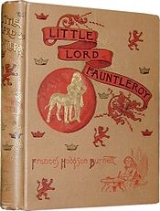
Little Lord Fauntleroy

Encyclopedia
Little Lord Fauntleroy is the first children's novel written by English playwright and author Frances Hodgson Burnett
. It was originally published as a serial in the St. Nicholas Magazine
between November 1885 and October 1886, then as a book by Scribner's
in 1886. The accompanying illustrations by Reginald Birch
set fashion trends and Little Lord Fauntleroy also set a precedent in copyright law when in 1888 its author won a lawsuit against E. V. Seebohm over the rights to theatrical adaptations of the work.
. The Earl despises America and was deeply disappointed with Captain Errol, his favorite son, for marrying an American. So he offers Mrs. Errol a house and income, yet refuses to meet or have anything to do with her, even after she declines the offer of the money.
However, the crusty Earl is impressed by the appearance and intelligence of his young American grandson, and charmed by his innocent nature. Cedric, a trusting child, believes his noble grandfather to be a great benefactor, and the Earl cannot bear to disappoint his loving grandson. Thus, the Earl acts as a benefactor to his tenants (as the local populace notices to their delight).
A pretender
to Cedric's inheritance appears, his mother claiming that he is the son of the Earl's eldest son, but the claim is investigated and disproved with the assistance of Cedric's loyal friends in New York, one of whom — a bootblack
called Dick — recognizes the mother as the missing wife of his brother Ben, and her son (the alleged heir) as his own nephew. The Earl is reconciled to his son's American widow after meeting with the other boy's mother, recognizing that, despite his preconceptions and prejudices, "Dearest" is a far superior woman to the alternative.
The Earl had intended to teach his grandson how to be an aristocrat; however, Cedric inadvertently teaches his grandfather that an aristocrat should practice compassion towards persons who are dependent on him. The Earl becomes the kind and good man Cedric always innocently believed him to be. Cedric's mother is invited by the Earl to live in the ancestral castle, and Cedric's old friend Mr. Hobbs, the New York City grocer, who came to England to help investigate the false claim, decides to stay to help look after Cedric
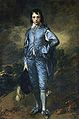 The Fauntleroy suit, so well-described by Burnett and realized in Reginald Birch's detailed pen-and-ink drawings, created a fad for formal dress for American middle-class children:
The Fauntleroy suit appeared in Europe as well, but nowhere was it as popular as America. The classic Fauntleroy suit was a velvet cut-away jacket and matching knee pants worn with a fancy blouse
with a large lace or ruffled collar. These suits appear right after the publication of Mrs. Burnett's story (1885) and were a major fashion until after the turn of the 20th century. Many boys who did not wear an actual Fauntleroy suit, wore suits with Fauntleroy elements such as a fancy blouse or floppy bow. Only a minority of boys wore ringlet curls with these suits, but the photographic record confirms that many boys did. It was most popular for boys about 3–8 years of age, but some older boys wore them as well. It has been speculated that the popularity of the style encouraged many mothers to breech their boys earlier than before and was a factor in the decline of the fashion of dressing small boys in dresses and other skirted garments. Clothing Burnett popularized was modeled on the costumes she tailored herself for her two sons, Vivian and Lionel.
of his time and Frances Hodgson Burnett was as celebrated for creating him as J.K. Rowling is for Potter." During the serialization in St. Nicholas magazine, readers looked forward to new installments. The fashions in the book became popular with velvet Lord Fauntleroy suits being sold, as well as other Fauntleroy merchandise such as velvet collars, playing cards, and chocolates. During a period when sentimental fiction was the norm, and in the United States the "rags to riches" story popular, Little Lord Fauntleroy was a hit.
Frances Hodgson Burnett
Frances Eliza Hodgson Burnett was an English playwright and author. She is best known for her children's stories, in particular The Secret Garden , A Little Princess, and Little Lord Fauntleroy.Born Frances Eliza Hodgson, she lived in Cheetham Hill, Manchester...
. It was originally published as a serial in the St. Nicholas Magazine
St. Nicholas Magazine
St. Nicholas Magazine was a popular children's magazine, founded by Scribner's in 1873. The first editor was Mary Mapes Dodge, who continued her association with the magazine until her death in 1905. Dodge published work by the country's best writers, including Louisa May Alcott, Francis Hodgson...
between November 1885 and October 1886, then as a book by Scribner's
Charles Scribner's Sons
Charles Scribner's Sons, or simply Scribner, is an American publisher based in New York City, known for publishing a number of American authors including Ernest Hemingway, F. Scott Fitzgerald, Kurt Vonnegut, Stephen King, Robert A. Heinlein, Thomas Wolfe, George Santayana, John Clellon...
in 1886. The accompanying illustrations by Reginald Birch
Reginald Bathurst Birch
Reginald Bathurst Birch was an English-American artist and illustrator. He was best known for his depiction of the titular hero of Frances Hodgson Burnett's 1886 novel Little Lord Fauntleroy, which started a craze in juvenile fashion...
set fashion trends and Little Lord Fauntleroy also set a precedent in copyright law when in 1888 its author won a lawsuit against E. V. Seebohm over the rights to theatrical adaptations of the work.
Plot
In a "shabby" "New York side street" in the mid-1880s, young American Cedric Errol lives with his mother (never named, known only as Mrs. Errol or "Dearest") in genteel poverty after his father, Captain Errol (whose first name was also Cedric), dies. They receive a visit from Havisham, an English lawyer with a message from young Cedric's grandfather, the Earl of Dorincourt. With the deaths of his father's elder brothers, Cedric is now Lord Fauntleroy and heir to the Earldom and a vast estate. The Earl wants Cedric to live with him and learn to be an English aristocratAristocracy (class)
The aristocracy are people considered to be in the highest social class in a society which has or once had a political system of Aristocracy. Aristocrats possess hereditary titles granted by a monarch, which once granted them feudal or legal privileges, or deriving, as in Ancient Greece and India,...
. The Earl despises America and was deeply disappointed with Captain Errol, his favorite son, for marrying an American. So he offers Mrs. Errol a house and income, yet refuses to meet or have anything to do with her, even after she declines the offer of the money.
However, the crusty Earl is impressed by the appearance and intelligence of his young American grandson, and charmed by his innocent nature. Cedric, a trusting child, believes his noble grandfather to be a great benefactor, and the Earl cannot bear to disappoint his loving grandson. Thus, the Earl acts as a benefactor to his tenants (as the local populace notices to their delight).
A pretender
Pretender
A pretender is one who claims entitlement to an unavailable position of honour or rank. Most often it refers to a former monarch, or descendant thereof, whose throne is occupied or claimed by a rival, or has been abolished....
to Cedric's inheritance appears, his mother claiming that he is the son of the Earl's eldest son, but the claim is investigated and disproved with the assistance of Cedric's loyal friends in New York, one of whom — a bootblack
Shoeshiner
Shoeshiner or boot polisher is a profession in which a person polishes shoes with shoe polish. They are often known as shoeshine boys because the job is traditionally that of a male child. In the leather fetish communities, they are often called bootblacks...
called Dick — recognizes the mother as the missing wife of his brother Ben, and her son (the alleged heir) as his own nephew. The Earl is reconciled to his son's American widow after meeting with the other boy's mother, recognizing that, despite his preconceptions and prejudices, "Dearest" is a far superior woman to the alternative.
The Earl had intended to teach his grandson how to be an aristocrat; however, Cedric inadvertently teaches his grandfather that an aristocrat should practice compassion towards persons who are dependent on him. The Earl becomes the kind and good man Cedric always innocently believed him to be. Cedric's mother is invited by the Earl to live in the ancestral castle, and Cedric's old friend Mr. Hobbs, the New York City grocer, who came to England to help investigate the false claim, decides to stay to help look after Cedric
Impact on fashion
- "What the Earl saw was a graceful, childish figure in a black velvet suit, with a lace collar, and with lovelocks waving about the handsome, manly little face, whose eyes met his with a look of innocent good-fellowship." (Little Lord Fauntleroy)
The Fauntleroy suit appeared in Europe as well, but nowhere was it as popular as America. The classic Fauntleroy suit was a velvet cut-away jacket and matching knee pants worn with a fancy blouse
Poet shirt
A poet shirt is a type of shirt made as a loose-fitting blouse with full bishop sleeves, usually decorated with large frills on the front and on the cuffs. Typically, it has a laced-up V-neck opening, designed to pull over the head, but can have a full-length opening fastened by buttons...
with a large lace or ruffled collar. These suits appear right after the publication of Mrs. Burnett's story (1885) and were a major fashion until after the turn of the 20th century. Many boys who did not wear an actual Fauntleroy suit, wore suits with Fauntleroy elements such as a fancy blouse or floppy bow. Only a minority of boys wore ringlet curls with these suits, but the photographic record confirms that many boys did. It was most popular for boys about 3–8 years of age, but some older boys wore them as well. It has been speculated that the popularity of the style encouraged many mothers to breech their boys earlier than before and was a factor in the decline of the fashion of dressing small boys in dresses and other skirted garments. Clothing Burnett popularized was modeled on the costumes she tailored herself for her two sons, Vivian and Lionel.
Reception
Polly Hovarth writes that Little Lord Fauntleroy "was the Harry PotterHarry Potter
Harry Potter is a series of seven fantasy novels written by the British author J. K. Rowling. The books chronicle the adventures of the adolescent wizard Harry Potter and his best friends Ron Weasley and Hermione Granger, all of whom are students at Hogwarts School of Witchcraft and Wizardry...
of his time and Frances Hodgson Burnett was as celebrated for creating him as J.K. Rowling is for Potter." During the serialization in St. Nicholas magazine, readers looked forward to new installments. The fashions in the book became popular with velvet Lord Fauntleroy suits being sold, as well as other Fauntleroy merchandise such as velvet collars, playing cards, and chocolates. During a period when sentimental fiction was the norm, and in the United States the "rags to riches" story popular, Little Lord Fauntleroy was a hit.
Film, TV or theatrical adaptations
There have been several movie versions of the book produced throughout the years:- Little Lord Fauntleroy (1914) one of the last films made in KinemacolorKinemacolorKinemacolor was the first successful color motion picture process, used commercially from 1908 to 1914. It was invented by George Albert Smith of Brighton, England in 1906. He was influenced by the work of William Norman Lascelles Davidson. It was launched by Charles Urban's Urban Trading Co. of...
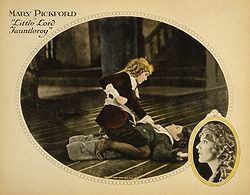
- Little Lord FauntleroyLittle Lord Fauntleroy (1921 film)Little Lord Fauntleroy is a 1921 American film directed by Alfred E. Green and Jack Pickford and starring Mary Pickford as both Cedric Errol and Widow Errol. The film is based on the novel Little Lord Fauntleroy by Frances Hodgson Burnett. A statue depicting Mary Pickford's role exists today...
, a 1921 film starring Mary PickfordMary PickfordMary Pickford was a Canadian-born motion picture actress, co-founder of the film studio United Artists and one of the original 36 founders of the Academy of Motion Picture Arts and Sciences...
. - Little Lord FauntleroyLittle Lord Fauntleroy (1936 film)Little Lord Fauntleroy is a 1936 drama film based on the 1886 novel of the same name by Frances Hodgson Burnett. The film stars Freddie Bartholomew, Dolores Costello, , and C. Aubrey Smith...
(1936), arguably the best-known adaptation, with a cast including Freddie BartholomewFreddie BartholomewFrederick Cecil Bartholomew , known for his acting work as Freddie Bartholomew, was an English-American child actor. One of the most famous child actors of all time, he became very popular in 1930s Hollywood films...
, Dolores CostelloDolores CostelloDolores Costello was an American film actress who achieved her greatest success during the era of silent movies. She was nicknamed "The Goddess of the Silent Screen"...
,
Sources
- Rutherford, L.M. (1994), "British Children's Writers 1880-1914", in Laura M. Zaldman, Dictionary of Literary Biography, Volume 141, Detroit: Gale Research Literature Resource Center