
|
|
|
|
Kandy
|
| |
|
| |
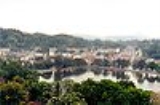
Kandy (maha nuvara, , in Sinhala, ????? ka??i, , in Tamil) is the English name for the city of Maha Nuvara (Senkadagalapura) in the centre of Sri Lanka. It is the capital of the Central Province and Kandy District. It lies in the midst of hills in the Kandy Valley which crosses an area of tropical plantations, mainly tea. Kandy is one of the most scenic cities in Sri Lanka. Kandy is of both an administrative and religious city.

Discussion
Ask a question about 'Kandy'
Start a new discussion about 'Kandy'
Answer questions from other users
|
Encyclopedia
Kandy (maha nuvara, , in Sinhala, ????? ka??i, , in Tamil) is the English name for the city of Maha Nuvara (Senkadagalapura) in the centre of Sri Lanka. It is the capital of the Central Province and Kandy District. It lies in the midst of hills in the Kandy Valley which crosses an area of tropical plantations, mainly tea. Kandy is one of the most scenic cities in Sri Lanka. Kandy is of both an administrative and religious city. It is the capital of the Central Province (which encompasses the districts of Kandy, Matale and Nuwara Eliya) and also of the administrative district of Kandy.
The Name
The name Kandy is derived from the Sinhalese kanda u?a pas ra?a. The Portuguese shortened this to "Candea", using the name for both the kingdom and its capital Senkadagalapura. In Sinhala, Kandy is called Maha Nuvara , meaning "Great City" or "Capital", although this is most often shortened to Nuvara.
History
Historical records suggest that Kandy was first established by the King Wickramabahu (1357-1374 CE) near the Watapuluwa area, north of the present city, and named Senkadagalapura at the time, although some scholars suggest the name Katubulu Nuwara may also have been used. The origin of the more popular name for the city, Senkadagala, could have been from a number of sources. These include naming after a brahmin named Senkanda who lived in a cave near the city, after a queen of King Wickramabahu named Senkanda or after a colored stone named Senkadagala.
In 1592 Kandy became the capital city of the last remaining independent kingdom in the island after the coastal regions had been conquered by the Portuguese. Several invasions by the Portuguese and the Dutch (16th, 17th and 18th century) and later by the British (most notably in 1803) were repelled. Portuguese invasions in the 16th century and 17th century were entirely unsuccessful.
The kingdom tolerated a Dutch presence on the coast until 1761, when King Kirti Sri attacked and overran most of the coast, leaving only the heavily fortified Negombo intact. When a Dutch retaliatory force returned to the island in 1763, Sri abandoned the coastline and withdrew into the interior. When the Dutch continued to the jungles the next year, they were constantly harassed by disease, heat, lack of provisions, and Kandyan sharpshooters, who hid in the jungle and inflicted heavy losses on the Dutch. The Dutch launched a better adapted force in January of 1765, replacing their troops' bayonets with machetes and using more practical uniforms and tactics suited to jungle warfare. Though initially successful in capturing the capital which was deserted, the Kandyans withdrew to the jungles once more, refusing to engage in open battle. The Dutch, worn down by constant attrition, came to terms in 1766.
The last ruling dynasty of Kandy were the Nayaks. Kandy stayed as a independent until March 2, 1815 when the treaty, the Kandyan Convention signed by the British and Radala the (Kandyan aristocrats) which recognized the King of England as the its King and became a British protectorate following an invasion that met no resistance that reached the city on February 10, 1815. The last king of the kingdom Sri Vikrama Rajasinha was captured and taken as a royal prisoner by the British to Vellore Fort in southern India along with all claimants to the throne.
As the capital, Kandy had become home to the relic of the tooth of the Buddha which symbolizes a 4th-century tradition that used to be linked to the Sinhalese monarchy, since the protector of the relic was the ruler of the land. Thus, the Royal Palace and the Temple of the Tooth were where placed in close proximity to each other.
During world war 2 the South East Asia Command of the allies was moved to Kandy in 1944 where it remained till the end of the war.
Today Kandy remains a important religious center of the Sinhalese and a place of pilgrimage for Buddhists, namely those belonging to the Theravada school. It is the second largest city of in the island.
See also History of Sri Lanka
Urban morphology
The city of Kandy lies at an altitude 465m above sea level. Its plan developed around two open spaces: an elongated square at the end of which are the administration buildings of the old capital, and an artificial lake that is quadrangular in form. A public garden adds to the openness of the city's spatial organization.
On the north shore of the lake, which is enclosed by a parapet of white stone dating to the beginning of the 19th century, are the city's official religious monuments, including the Royal Palace and the Temple of the Tooth, known as the Dalada Maligawa (da?ada maligava). Reconstructed in the 18th century, the Dalanda Maligawa is built on a base of granite that was inspired by the temples of Sri Lanka's former capital city, Anuradhapura. An array of materials (limestone, marble, sculpted wood, ivory, etc.) contribute to the richness of this temple. Throughout this small holy city, a number of recent Buddhist monasteries can be found.
Kandy has now grown out to encompass Peradeniya, home to the University of Peradeniya and the Botanical Gardens, Katugastota to the north, and east to Kundasale, Tennekumbura and Gurudeniya.
Demographics
Kandy is a Sinhala majority city; there are sizeable communities belonging to other ethnic groups, such as Moors and Tamils.
Source:
Culture
World Heritage Site Palace of the Tooth relic
The monumental ensemble of Kandy is an example of construction that associates the Royal Palace and the
The Temple of the Tooth (Palace of the tooth relic) is the place that houses the Relic of the tooth of the Buddha. Originally part of the Royal Palace complex of the Kandyan Kingdom, it is one of the holiest places of worship and pilgrimage for Buddhist around the world. It was last of a series of temples built in the places where the relic, the actual palladium of the Sinhalese monarchy, was brought following the various relocations of the capital city.
The Palace of the Tooth relic, the palace complex and the holy city of Kandy are associated with the history of the dissemination of Buddhism. The temple is the product of the last peregrination of the relic of the tooth of Buddha and the testimony of a religion which continues to be practiced today.
Royal Palace
The Royal Palace of Kandy is the last Royal Palace built in the island. Although only part of the original palace complex remain. The Temple of the Tooth was part of this comples, due to the ancient tradition that stated that the monarch is the protector of the relic though which the ruler of the land. It today houses the National Museum Kandy which holds an extensive collection of artifacts from both the Kandy Kingdom and the British colonial rule.
Lankatilaka Temple
The Lankatilaka Temple is considered to be one of the best preserved examples of traditional Sinhalese temple architecture. Built on a rock, the temple is reached by a long series of rock cut steps. An arched passage of the image house leads through a Mandapa (hall) into the inner sanctum which is richly decorated with beautiful floral designs. The two side walls and the ceiling are decorated with paintings. In the inner sanctum is a colossal seated image of the Buddha.
Gadaladeniya Temple
The Gadaladeniya Temple's design is of South Indian origin with a Devale attached to it, similar in character to the Natha Devale and the Gedige of Adahana Maluwa. The main shrine room has a seated Buddha statue and the remains of some paintings of the Gampola period.
Festivals
Kandy is very popular due to the annual pageant known as the Esala Perahera ('?s?l? ?per??h?r?) in which one of the inner caskets used for covering the tooth relic of Buddha is taken in a grand procession through the streets of the city. This casket is taken on a royal tusker. The procession includes traditional dancers and drummers, flag bearers of the provinces of the old Kandyan kingdom, the Nilames (lay custodians of temples ) wearing their traditional dresses, torch bearers and also the grandly attired elephant. This ceremony which is annually held in the months of July or August, attracts large crowds from all parts of the country and also many foreign tourists.
Parks and gardens
Royal Botanical garden
The Royal Botanical Garden, Peradeniya is situated about 5 km to the west of the city centre at Peradeniya and is visited by 1.2 million people per year. It is the largest botanical garden in the island.
Wales Park
The Wales Park is a small park that over looks the Kandy lake and most of the city. In the park is a Japanese field gun which had been captured by the British 14th Army in Burma during world war 2 and presented to the city of Kandy by Lord Mountbatten, Supreme Allied Commander South East Asia Theatre.
Education
Kandy is home to some of the islands finest public and private schools these include the Dharmaraja College, Trinity College, St Anthony's College, St Sylvester's College & Kingswood College.
The county's second oldest university, University of Peradeniya is at Peradeniya, a suburb of Kandy. The Sri Lanka Institute of Information Technology has a center in the the city.
Sport
Trekking
The Kandy district has large number of treks. Within the Kandy city the short walk of Asgiri Maha Viharaya via Bahirawakande hill is an interesting. Udawattakelle forest reserve in within the city limit, gives valuable walking in nature. The secret Walkers Forest upper Hantane trek is on the permission from Municipal Council of Kandy. The famous Western Shrines of Kandy Gadaladeniya, Lankathilake temples and Embakke shrine are connected by a very scenic walking trek. Other part of the west of Kandy, Portuguese War Route from Ihalakotte railway station to Aluthnuwara Devale at Dodanwala is passing forest reserves, Alagalle Mountain, tea estates and kandyan traditional villages. East of Kandy the Eastern temple Gangaramaya, Galmaduwa temples, Degaldoruwa temple is with much cultural values such as paintings.
Knuckles mountain range of Kandy and its forest trails are the most suitable for trekking in Sri Lanka. It has many nature trails cleared trough the forest by specially forest department. Also there are many footpaths of cardamom planters, toddy tappers, tea plantation workers, farmers and villages. It is located in the Kandy and Matale Districts of central province, one of South Asia’s premier sites of mountain tropical forest habitats and lies within the biodiversity hotspot that extends from the Western Ghats of India into Southwest Sri Lanka.
Short walks such as Last King Sri Wikrama Rajasinhe (1798-1815) hideout place, Mini Worlds Ends are also withing Knuckles range. From Knuckles to East Rathna water fall trek, south of Kandy large reservoirs such as Victoria Randenigala and Rantabe sanctuary, the most panoramic rice field view Lamasuriyagama treks are fantastic. srilankatrekking.com adventure team help you to trekking from kandy.
Culinary
Kandy has a modest range of restaurants, as well as an abundance of confectionaries. A range of cuisines is available including Chinese, European, Sri Lankan, Indian and some multinational fast food outlets.
Transport
Kandy has an public transport system based on primary on buses. The bus service is operated both by private and government own Sri Lanka Transport Board (SLTB).
Roads :
- A1 highway (Kandy road) connects Colombo with Kandy.
- A9 highway connects Jaffan with Kandy.
Rail:
Maps
See also
External links
- for trekking from Kandy to Knuckles range or anywhere
|
| |
|
|