

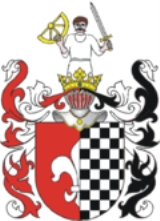
Ignacy Wyssogota Zakrzewski

Encyclopedia
Ignacy Wyssogota Zakrzewski (1745–1802) was a notable Polish
nobleman
and politician during the last years of the Polish-Lithuanian Commonwealth
, shortly before the Partitions of Poland
.
Ignacy was deputy of Poznań
for the Great Sejm
and one of the co-authors of the reforms of treasury passed by the Sejm
during the Constitution of May 3rd. In 1791 he co-founded the Society of Friends of the Constitution and was among the most notable supporters of the reforms passed by that act, along with Hugo Kołłątaj and Ignacy Potocki. In 1792 he became the president of Warsaw
, but was overthrown by the confederation of Targowica. After the outbreak of the Kościuszko's Uprising and the Warsaw Uprising
of 1794 he again held that post. Simultaneously, he held a number of important government posts during the war with Russia, among them he headed the Provisional Temporary Council
and the Supreme National Council
. After that part of Poland, along with Warsaw, was finally annexed in the effect of the Third Partition
, he was arrested by the Russians and imprisoned in St. Petersburg. Liberated in 1796, he returned to Poland and spent the remainder of his life in a small manor in Żelechów
. He died February 15, 1802.
Poland
Poland , officially the Republic of Poland , is a country in Central Europe bordered by Germany to the west; the Czech Republic and Slovakia to the south; Ukraine, Belarus and Lithuania to the east; and the Baltic Sea and Kaliningrad Oblast, a Russian exclave, to the north...
nobleman
Szlachta
The szlachta was a legally privileged noble class with origins in the Kingdom of Poland. It gained considerable institutional privileges during the 1333-1370 reign of Casimir the Great. In 1413, following a series of tentative personal unions between the Grand Duchy of Lithuania and the Kingdom of...
and politician during the last years of the Polish-Lithuanian Commonwealth
Polish-Lithuanian Commonwealth
The Polish–Lithuanian Commonwealth was a dualistic state of Poland and Lithuania ruled by a common monarch. It was the largest and one of the most populous countries of 16th- and 17th‑century Europe with some and a multi-ethnic population of 11 million at its peak in the early 17th century...
, shortly before the Partitions of Poland
Partitions of Poland
The Partitions of Poland or Partitions of the Polish–Lithuanian Commonwealth took place in the second half of the 18th century and ended the existence of the Polish–Lithuanian Commonwealth, resulting in the elimination of sovereign Poland for 123 years...
.
Ignacy was deputy of Poznań
Poznan
Poznań is a city on the Warta river in west-central Poland, with a population of 556,022 in June 2009. It is among the oldest cities in Poland, and was one of the most important centres in the early Polish state, whose first rulers were buried at Poznań's cathedral. It is sometimes claimed to be...
for the Great Sejm
Great Sejm
The Great Sejm, also known as the Four-Year Sejm was a Sejm of the Polish-Lithuanian Commonwealth that was held in Warsaw, beginning in 1788...
and one of the co-authors of the reforms of treasury passed by the Sejm
Sejm
The Sejm is the lower house of the Polish parliament. The Sejm is made up of 460 deputies, or Poseł in Polish . It is elected by universal ballot and is presided over by a speaker called the Marshal of the Sejm ....
during the Constitution of May 3rd. In 1791 he co-founded the Society of Friends of the Constitution and was among the most notable supporters of the reforms passed by that act, along with Hugo Kołłątaj and Ignacy Potocki. In 1792 he became the president of Warsaw
President of Warsaw
The Mayor of Warsaw, or more properly the President of Warsaw is the head of the capital of Poland....
, but was overthrown by the confederation of Targowica. After the outbreak of the Kościuszko's Uprising and the Warsaw Uprising
Warsaw Uprising (1794)
The Warsaw Uprising of 1794 was an armed Polish insurrection by the city's populace early in the Kościuszko Uprising. Supported by the Polish Army, it aimed to throw off Russian control of the Polish capital city...
of 1794 he again held that post. Simultaneously, he held a number of important government posts during the war with Russia, among them he headed the Provisional Temporary Council
Provisional Temporary Council
The Provisional Council of the Duchy of Masovia was a government ad interim of Warsaw and the Masovian Voivodeship, liberated in the Warsaw Insurrection during the Kościuszko Uprising...
and the Supreme National Council
Supreme National Council
Supreme National Council was the central civil government of Poland loyal to the Kościuszko Insurrection. Created by Kościuszko on 10 May 1794 in Połaniec camp, it had 8 councillors and 32 deputies....
. After that part of Poland, along with Warsaw, was finally annexed in the effect of the Third Partition
Partitions of Poland
The Partitions of Poland or Partitions of the Polish–Lithuanian Commonwealth took place in the second half of the 18th century and ended the existence of the Polish–Lithuanian Commonwealth, resulting in the elimination of sovereign Poland for 123 years...
, he was arrested by the Russians and imprisoned in St. Petersburg. Liberated in 1796, he returned to Poland and spent the remainder of his life in a small manor in Żelechów
Zelechów
Żelechów is a town in east Poland in Masovian Voivodeship in Garwolin County. It is the seat of Gmina Żelechów. Żelechów is 85 km from Warsaw and 85 km far from Lublin. More than 4000 people live in the town...
. He died February 15, 1802.