
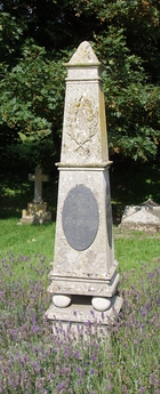
Ian Lancaster Fleming (28 May 1908 – 12 August 1964) was a British author, journalist and Naval Intelligence Officer.
Fleming is best known for creating the fictional British spy
James BondJames Bond, code name 007, is a fictional character created in 1953 by writer Ian Fleming, who featured him in twelve novels and two short story collections. There have been a six other authors who wrote authorised Bond novels or novelizations after Fleming's death in 1964: Kingsley Amis,...
and for a series of twelve novels and nine short stories about the character, one of the biggest-selling series of fictional books of all-time, having sold over 100 million copies worldwide. Fleming also wrote the children's story
Chitty Chitty Bang Bang and two works of non-fiction. Whilst working in British Naval Intelligence during the Second World War, Fleming is reputed to have been the designer of
Operation MincemeatOperation Mincemeat was a successful British deception plan during World War II. As part of the widespread deception plan Operation Barclay to cover the intended invasion of Italy from North Africa, Mincemeat helped to convince the German high command that the Allies planned to invade Greece and...
and
Operation GoldeneyeOperation Goldeneye was an Allied plan during World War II, that monitored Spain after the Spanish Civil War. The goal was to ensure that Britain would still be able to communicate with Gibraltar in the event Spain joined the Axis Powers. Additionally, it was a plan for the defence of Gibraltar had...
, the former of which was successfully carried out.
In 2008,
The TimesThe Times is a British daily national newspaper, first published in London in 1785 under the title The Daily Universal Register . The Times and its sister paper The Sunday Times are published by Times Newspapers Limited, a subsidiary since 1981 of News International...
ranked Fleming fourteenth on its list of "The 50 greatest
British writersBritish Literature refers to literature associated with the United Kingdom, Isle of Man and Channel Islands. By far the largest part of British literature is written in the English language, but there are bodies of written works in Latin, Welsh, Scottish Gaelic, Scots, Cornish, Manx, Jèrriais,...
since 1945".
Birth and connections
Ian Fleming was born in
MayfairMayfair is an area of central London, within the City of Westminster.-History:Mayfair is named after the annual fortnight-long May Fair that took place on the site that is Shepherd Market today...
, a wealthy district of London. His father was
Valentine FlemingMajor Valentine Fleming, DSO was a British Conservative Member of Parliament who was killed in World War I.-Early years:...
, a British Member of Parliament and his mother was Evelyn St. Croix Rose. Fleming's elder brother Peter became a travel writer. He also had two younger brothers, Michael and Richard Fleming (1910–1977) and an illegitimate younger maternal half-sister, cellist
Amaryllis FlemingAmaryllis Marie-Louise Fleming was a British cello performer and teacher.- Early life and education :...
. Fleming was a grandson of the Scottish financier Robert Fleming, who founded the Scottish American Investment Trust and the merchant bank
Robert Fleming and CoRobert Fleming & Co. was an asset manager and merchant bank founded in Dundee, Scotland, in 1873. In 1909 the firm moved its headquarters to London. It was sold to Chase Manhattan Bank for over $7 billion in 2000....
(since 2000, part of JP Morgan Chase).
Fleming was a brother of
Philip FlemingPhilip Fleming was a British merchant banker and rower who competed in the 1912 Summer Olympics.Fleming was born at Newport-on-Tay, Fife, Scotland, the son of Robert Fleming a merchant banker. He was educated at Eton College and Magdalen College, Oxford. Fleming made one appearance for Oxford in...
, a step-cousin of
Christopher LeeSir Christopher Frank Carandini Lee, CBE, CStJ is an English actor and musician. Lee initially portrayed villains and became famous for his role as Count Dracula in a string of Hammer Horror films...
, the actor, and his brother Peter married actress
Celia JohnsonDame Celia Elizabeth Johnson DBE was an English actress.She began her stage acting career in 1928, and subsequently achieved success in West End and Broadway productions. She also appeared in several films, including the romantic drama Brief Encounter , for which she received a nomination for the...
; their daughter
Lucy FlemingLucy Fleming is a British actress.She is the daughter of the actress Celia Johnson and writer Peter Fleming, as well as the niece of James Bond author Ian Fleming...
is also an actress. Fleming's nephews
RoryRory David Fleming , is the son of Robert Fleming and his wife, Victoria Margaret Aykroyd. He is distantly related to the Queen of the United Kingdom, being the great X4 grandson of William IV...
and
Matthew FlemingMatthew Valentine Fleming is a former cricketer who represented Kent and England.Born out of his time, his background was Eton and the Royal Greenjackets, his approach was cavalier. His first 2 scoring shots in first class cricket were sixes.He played 11 One Day Internationals but no Test matches...
played cricket for England, and great-nephew is composer Alan Fleming-Baird.
Education
Fleming was educated at three independent schools: first at
Durnford SchoolDurnford School was a notoriously spartan and uncomfortable preparatory school which opened in 1894 on the Isle of Purbeck in Dorset. The school occupied Durnford House, in High Street in the village of Langton Matravers near Swanage...
, a
preparatory schoolIn English language usage in the former British Empire, the present-day Commonwealth, a preparatory school is an independent school preparing children up to the age of eleven or thirteen for entry into fee-paying, secondary independent schools, some of which are known as public schools...
on the
Isle of PurbeckThe Isle of Purbeck, not a true island but a peninsula, is in the county of Dorset, England. It is bordered by the English Channel to the south and east, where steep cliffs fall to the sea; and by the marshy lands of the River Frome and Poole Harbour to the north. Its western boundary is less well...
in Dorset, near to the estate of the Bond family, who could trace their ancestry back to an Elizabethan spy called John Bond and whose motto was
Non Sufficit Orbis – The World Is Not Enough. He then attended two independent schools in
BerkshireBerkshire is a historic county in the South of England. It is also often referred to as the Royal County of Berkshire because of the presence of the royal residence of Windsor Castle in the county; this usage, which dates to the 19th century at least, was recognised by the Queen in 1957, and...
: first,
Sunningdale SchoolSunningdale School is a family-run boys' preparatory independent school of around 100 pupils, situated in Sunningdale in Berkshire, close to London, England.-Introduction:...
near Ascot, and then
Eton CollegeEton College, often referred to simply as Eton, is a British independent school for boys aged 13 to 18. It was founded in 1440 by King Henry VI as "The King's College of Our Lady of Eton besides Wyndsor"....
at Eton, Berkshire, and the
Royal Military AcademyThe Royal Military Academy Sandhurst , commonly known simply as Sandhurst, is a British Army officer initial training centre located in Sandhurst, Berkshire, England...
at Sandhurst, on the border between Berkshire and Surrey. He was
Victor LudorumVictor Ludorum is Latin for "the winner of the games." It is usually a trophy presented to the most successful team, club, or competitor at a sports event. It is common at rowing regattas and was traditional at some British public school sports days...
at Eton for two years running, only the second person ever to accomplish this. After leaving Eton, however, he found life at Sandhurst difficult and after an early departure from the Royal Military Academy, his mother sent him to study languages on the continent. He first attended a small private school in the town of
Kitzbühel-Demographic evolution:-Personalities:*Karl Wilhelm von Dalla Torre , entomologist and botanist*Alfons Walde , expressionist painter and architect*Peter Aufschnaiter , mountaineer and geographer...
, Austria, run by the
AdlerianPertaining to the theory and practice of Alfred Adler , whose school of psychoanalysis is called Individual Psychology . Central to the Adlerian approach is to see the personality as a whole and not as the mere net result of component forces. Thus the term individual psychology...
disciple Ernan Forbes Dennis and his American wife, the novelist
Phyllis BottomePhyllis Forbes Dennis was a British novelist and short story writer who wrote under her birth name, Phyllis Bottome . She was born in Rochester, Kent to an American clergyman, Rev...
. This was in order to improve his German and prepare him for examinations for entry into the Foreign Office. From Kitzbühel he went to Munich University, and, finally, to the
University of GenevaThe University of Geneva is a public research university located in Geneva, Switzerland.It was founded in 1559 by John Calvin, as a theological seminary and law school. It remained focused on theology until the 17th century, when it became a center for Enlightenment scholarship. In 1873, it...
to improve his French; however, he was unsuccessful in his application to join the Foreign Office and worked as a sub-editor and journalist for the
ReutersReuters is a news agency headquartered in New York City. Until 2008 the Reuters news agency formed part of a British independent company, Reuters Group plc, which was also a provider of financial market data...
news service, spending part of 1933 in Moscow. He then worked as a stockbroker with Rowe and Pitman, in Bishopsgate, London.
World War II
In 1939, on the eve of World War II, Rear Admiral
John Henry GodfreyAdmiral John Henry Godfrey CB was an officer of the Royal Navy and Royal Indian Navy, specializing in navigation....
,
Director of Naval IntelligenceThe Naval Intelligence Division was the intelligence arm of the British Admiralty before the establishment of a unified Defence Staff in 1965. It dealt with matters concerning British naval plans, with the collection of naval intelligence...
of the
Royal NavyThe Royal Navy is the naval warfare service branch of the British Armed Forces. Founded in the 16th century, it is the oldest service branch and is known as the Senior Service...
, recruited Fleming, then a reserve
subalternA subaltern is a chiefly British military term for a junior officer. Literally meaning "subordinate," subaltern is used to describe commissioned officers below the rank of captain and generally comprises the various grades of lieutenant. In the British Army the senior subaltern rank was...
in the
Black WatchThe Black Watch, 3rd Battalion, Royal Regiment of Scotland is an infantry battalion of the Royal Regiment of Scotland. The unit's traditional colours were retired in 2011 in a ceremony led by Queen Elizabeth II....
, as his personal assistant. Fleming was commissioned first as a lieutenant in the Royal Naval Volunteer Reserve and later as
Lieutenant CommanderLieutenant Commander is a commissioned officer rank in many navies. The rank is superior to a lieutenant and subordinate to a commander...
, then
CommanderCommander is a naval rank which is also sometimes used as a military title depending on the individual customs of a given military service. Commander is also used as a rank or title in some organizations outside of the armed forces, particularly in police and law enforcement.-Commander as a naval...
. His codename was 17F.
In 1940, Fleming and Rear Admiral Godfrey contacted Kenneth Mason, Professor of Geography at Oxford University, about the preparation of reports on the geography of countries involved in military operations. These reports were the precursors of the
Naval Intelligence Division Geographical Handbook SeriesThe British Naval Intelligence Division Geographical Handbook Series was produced between 1941 and 1946. At 31 titles, encompassing 58 volumes, this is the largest single body of geographical writing ever published. The books were written to provide information for the Allied war effort. They...
produced between 1941 and 1946.
Fleming instigated a plan named
Operation RuthlessOperation Ruthless was the name of a deception operation devised by Ian Fleming in the British Admiralty during World War II, in an attempt to gain access to German Naval Enigma codebooks.-Background:...
to obtain details of the Enigma codes used by the German Navy by crashing a captured German aircraft into the
English ChannelThe English Channel , often referred to simply as the Channel, is an arm of the Atlantic Ocean that separates southern England from northern France, and joins the North Sea to the Atlantic. It is about long and varies in width from at its widest to in the Strait of Dover...
, where the British crew, dressed in
LuftwaffeLuftwaffe is a generic German term for an air force. It is also the official name for two of the four historic German air forces, the Wehrmacht air arm founded in 1935 and disbanded in 1946; and the current Bundeswehr air arm founded in 1956....
uniforms, might be rescued by a German patrol boat. The "survivors" could then kill the German crew and hijack the ship, thus obtaining the required information. Much to the annoyance of
Alan TuringAlan Mathison Turing, OBE, FRS , was an English mathematician, logician, cryptanalyst, and computer scientist. He was highly influential in the development of computer science, providing a formalisation of the concepts of "algorithm" and "computation" with the Turing machine, which played a...
and
Peter TwinnPeter Frank George Twinn was a British mathematician, World War II codebreaker and entomologist.-Education and codebreaking:...
at
Bletchley ParkBletchley Park is an estate located in the town of Bletchley, in Buckinghamshire, England, which currently houses the National Museum of Computing...
, the mission was never carried out. Fleming's niece
Lucy FlemingLucy Fleming is a British actress.She is the daughter of the actress Celia Johnson and writer Peter Fleming, as well as the niece of James Bond author Ian Fleming...
, on a BBC Radio Four programme entitled "The Bond Correspondence" broadcast on 24 May 2008, stated that the reason given was that an official at the
Royal Air ForceThe Royal Air Force is the aerial warfare service branch of the British Armed Forces. Formed on 1 April 1918, it is the oldest independent air force in the world...
pointed out that if they were to drop a downed
HeinkelHeinkel Flugzeugwerke was a German aircraft manufacturing company founded by and named after Ernst Heinkel. It is noted for producing bomber aircraft for the Luftwaffe in World War II and for important contributions to high-speed flight.-History:...
bomber in the English Channel, it would probably sink rather quickly. However, the plan necessitated that the bomber was to sink so as to avoid its identification by the Germans – the "survivors" were to take to a rubber dinghy to await rescue.
Fleming also conceived a plan to use the British occultist
Aleister CrowleyAleister Crowley , born Edward Alexander Crowley, and also known as both Frater Perdurabo and The Great Beast, was an influential English occultist, astrologer, mystic and ceremonial magician, responsible for founding the religious philosophy of Thelema. He was also successful in various other...
to trick
Rudolf HessRudolf Walter Richard Hess was a prominent Nazi politician who was Adolf Hitler's deputy in the Nazi Party during the 1930s and early 1940s...
into attempting to contact a fake cell of anti-Churchill Englishmen in Britain, but this plan was not used because soon afterwards Rudolf Hess flew to Scotland in an attempt to broker peace behind Hitler's back. Anthony Masters, in his book
The Man Who Was M: The Life of Charles Henry Maxwell Knight asserts that Fleming himself conceived the plan that lured Hess into flying to Scotland in May 1941, to negotiate Anglo–German peace with Churchill, and which resulted in Hess's capture. This claim has no other source, however.
Operation GoldeneyeOperation Goldeneye was an Allied plan during World War II, that monitored Spain after the Spanish Civil War. The goal was to ensure that Britain would still be able to communicate with Gibraltar in the event Spain joined the Axis Powers. Additionally, it was a plan for the defence of Gibraltar had...
was also one of Fleming's conceptions, a plan to maintain communication with
GibraltarGibraltar is a British overseas territory located on the southern end of the Iberian Peninsula at the entrance of the Mediterranean. A peninsula with an area of , it has a northern border with Andalusia, Spain. The Rock of Gibraltar is the major landmark of the region...
and help in its defence in the unlikely event that Spain joined the
Axis PowersThe Axis powers , also known as the Axis alliance, Axis nations, Axis countries, or just the Axis, was an alignment of great powers during the mid-20th century that fought World War II against the Allies. It began in 1936 with treaties of friendship between Germany and Italy and between Germany and...
and assisted Germany in invasion. Fleming is also credited with the idea for
Operation MincemeatOperation Mincemeat was a successful British deception plan during World War II. As part of the widespread deception plan Operation Barclay to cover the intended invasion of Italy from North Africa, Mincemeat helped to convince the German high command that the Allies planned to invade Greece and...
, a highly successful deception by the Allies, before the invasion of Sicily in 1943.
30 Assault Unit
In 1944, Fleming was given control of a specialist unit of commandos, known as 30 Commando, or 30 Assault Unit (30AU: not to be confused with the
Auxiliary UnitsThe Auxiliary Units or GHQ Auxiliary Units were specially trained, highly secret units created by the United Kingdom government during the Second World War, with the aim of resisting the expected occupation of the United Kingdom by Nazi Germany, after a planned invasion codenamed Operation Sea Lion...
in which his elder brother had served). He was not their field commander but their planner. As an intelligence officer at the
Naval Intelligence DivisionThe Naval Intelligence Division was the intelligence arm of the British Admiralty before the establishment of a unified Defence Staff in 1965. It dealt with matters concerning British naval plans, with the collection of naval intelligence...
(NID), he had an idea of what information and equipment the enemy had that might be of interest to the Allies and where it was likely to be located. He detailed the "scalps" he required and his "Red Indians", as he called them, were then sent off to acquire them.
30 Assault Unit consisted of teams of trained commandos that specialised in targeting enemy headquarters, to secure documentation and items of equipment with an intelligence value; items that the ordinary Allied soldier, or commando, might ignore or destroy. Each team would attach itself to whatever main force could get them closest to their intended targets. They were adept in lock picking, safe cracking, unarmed combat and general techniques and skills for collecting intelligence. The unit contained some of the most enterprising men in the commandos.
In the final stages of the war, the teams were trained and equipped to fight their own way into a headquarters building and secure whatever items they required, before the enemy could remove or destroy them before leaving. They relied upon surprise, toughness and ruthless efficiency. Prior to
D-DayD-Day is a term often used in military parlance to denote the day on which a combat attack or operation is to be initiated. "D-Day" often represents a variable, designating the day upon which some significant event will occur or has occurred; see Military designation of days and hours for similar...
, most of the operations were in the Mediterranean. However, because of their successes in Sicily and Italy, 30AU (based at the Marine Hotel, Littlehampton, West Sussex) became greatly trusted by naval intelligence. Having shown the scope of its achievements and its potential to deliver even more, with the right support and direction, the unit was greatly enlarged and given the job of acquiring specific items and documents. Fleming was the man who would issue these specific objectives.
Fleming visited 30AU in the field during and after
Operation OverlordOperation Overlord was the code name for the Battle of Normandy, the operation that launched the invasion of German-occupied western Europe during World War II by Allied forces. The operation commenced on 6 June 1944 with the Normandy landings...
, especially following an attack on Cherbourg. He was concerned that the unit had been incorrectly used as a regular commando force, rather than as an intelligence-gathering unit. This wasted the men's specialist skills, risked their safety on operations that did not justify the use of such skilled operatives and threatened the vital gathering of intelligence. Following this, the management of these units was revised. The film
Age of HeroesAge of Heroes is an action-thriller film directed by Adrian Vitoria. The film is based on the real-life events of the formation of Ian Fleming's 30 Commando unit during World War II The film was released in the United Kingdom in 2011.-Plot:...
is based on the exploits of 30 Commando.
T-Force
Following the success of 30 Assault Unit, it was decided to establish a "Target Force", which became known as
T-ForceT-Force was an elite British Army force which operated during the final stages of World War II. Originally used to secure and exploit targets that could provide valuable intelligence of scientific and military value, they were later tasked with seizing Nazi German scientists and businessmen in the...
. Fleming sat on the committee that selected the targets for this unit, helping to create what were known as the "Black Books" which were issued to the officers of this unit. The infantry component of
T-ForceT-Force was an elite British Army force which operated during the final stages of World War II. Originally used to secure and exploit targets that could provide valuable intelligence of scientific and military value, they were later tasked with seizing Nazi German scientists and businessmen in the...
was in part made up of the 5th Battalion of the King's Regiment, which supported the British 2nd Army. It was responsible for securing targets of interest to the British military. These included nuclear laboratories, gas research centres and individual rocket scientists. The unit's most notable coup was during the advance on the German port of
KielKiel is the capital and most populous city in the northern German state of Schleswig-Holstein, with a population of 238,049 .Kiel is approximately north of Hamburg. Due to its geographic location in the north of Germany, the southeast of the Jutland peninsula, and the southwestern shore of the...
, where it captured the research centre for German engines used for the
V-2 rocketThe V-2 rocket , technical name Aggregat-4 , was a ballistic missile that was developed at the beginning of the Second World War in Germany, specifically targeted at London and later Antwerp. The liquid-propellant rocket was the world's first long-range combat-ballistic missile and first known...
,
Messerschmitt Me 163The Messerschmitt Me 163 Komet, designed by Alexander Lippisch, was a German rocket-powered fighter aircraft. It is the only rocket-powered fighter aircraft ever to have been operational. Its design was revolutionary, and the Me 163 was capable of performance unrivaled at the time. Messerschmitt...
fighters and high speed U Boats.
Ian Fleming was to use elements of this activity in his 1955
James BondJames Bond, code name 007, is a fictional character created in 1953 by writer Ian Fleming, who featured him in twelve novels and two short story collections. There have been a six other authors who wrote authorised Bond novels or novelizations after Fleming's death in 1964: Kingsley Amis,...
novel
Moonraker. The story of T-Force and Fleming's connection to its work remained unknown until it was revealed in
Sean LongdenSean Longden is an author and historian who specialises in previously untold stories from World War II , mostly sourced from interviews with veterans...
's book
T-Force, the Race for Nazi War Secrets, 1945, published in 2009.
Fleming’s Literary Cell
Ian FlemingIan Lancaster Fleming was a British author, journalist and Naval Intelligence Officer.Fleming is best known for creating the fictional British spy James Bond and for a series of twelve novels and nine short stories about the character, one of the biggest-selling series of fictional books of...
, while not being a spy himself, did become familiar with the usage of the
cell-Science and technology:*Cell , the functional basic unit of life*Cell , a term used in an electronic circuit design schematics*Cell , a three-dimensional element, part of a higher-dimensional object*Cell , a scientific journal...
while studying in Naval Intelligence. The cell Fleming created is a list of contacts and other supporters in various positions ranging from the city, the Intelligence world, the world of
JournalismJournalism is the practice of investigation and reporting of events, issues and trends to a broad audience in a timely fashion. Though there are many variations of journalism, the ideal is to inform the intended audience. Along with covering organizations and institutions such as government and...
, and in the Foreign Office. Their identities were shrouded in secrecy. It was this private cell of Fleming’s that landed him in a bit of trouble during the war as Admiral Godfrey wished to put this cell of Fleming’s to use in assisting Naval Intelligence. However, Fleming followed the code of journalists by refusing to reveal his sources by instead protecting his extensive network of friends that made up his cell.
A friend of Fleming’s from the days of Naval Intelligence, poet and novelist
William PlomerWilliam Charles Franklyn Plomer CBE was a South African author, known as a novelist, poet and literary editor. He was educated mostly in the United Kingdom...
, was one of the members of Fleming’s Literary Cell. It was through Plomer that Fleming met his first publisher,
Jonathan CapeJonathan Cape was a London-based publisher founded in 1919 as "Page & Co" by Herbert Jonathan Cape , formerly a manager at Duckworth who had worked his way up from a position of bookshop errand boy. Cape brought with him the rights to cheap editions of the popular author Elinor Glyn and sales of...
, a man who also published Fleming’s brother Peter’s books. This literary cell of Fleming’s now possessed Plomer as Fleming’s literary advisor and Cape as his publisher, and others were soon to follow.
Writing career
Fleming's intelligence work in the Naval Intelligence Division provided the background for his spy novels. In 1953, his first novel was published,
Casino RoyaleCasino Royale is Ian Fleming's first James Bond novel. It paved the way for a further eleven novels by Fleming himself, in addition to two short story collections, followed by many "continuation" Bond novels by other authors....
, in which the British Intelligence agent James Bond, also famously known by his code number, 007, was introduced to the world. A number of real-life inspirations have been suggested for James Bond. See
Inspirations for James BondA number of real-life inspirations have been suggested for James Bond, the sophisticated fictional character and British spy created by Ian Fleming. Although the Bond stories were often fantasy-driven, they did incorporate some real places, incidents and, occasionally, organisations such as...
for a complete list. Amongst them are Sir William Stephenson and what Fleming had learned from him. Sir William Stephenson had set up
Camp XCamp X was the unofficial name of a Second World War paramilitary and commando training installation, on the northwestern shore of Lake Ontario between Whitby and Oshawa in Ontario, Canada...
, a Second World War paramilitary and commando training installation in Ontario, Canada, which Fleming may or may not have attended. Other possible influences upon Fleming's characterisation of James Bond are the naval officer
Patrick Dalzel-JobPatrick Dalzel-Job , was a distinguished British Naval Intelligence Officer and Commando of World War II. He was also an accomplished linguist, author, mariner, navigator, parachutist, diver and skier....
and Fleming's brother Peter.
In Fleming's novel
Casino Royale, James Bond appears with the beautiful heroine Vesper Lynd, who was modelled on
SOEThe Special Operations Executive was a World War II organisation of the United Kingdom. It was officially formed by Prime Minister Winston Churchill and Minister of Economic Warfare Hugh Dalton on 22 July 1940, to conduct guerrilla warfare against the Axis powers and to instruct and aid local...
agent
Krystyna SkarbekKrystyna Skarbek, GM, OBE, Croix de guerre was a Polish Special Operations Executive agent. She became celebrated especially for her daring exploits in intelligence and irregular-warfare missions in Nazi-occupied Poland and France....
. Some ideas for his characters and the locations in which Bond operates came from his time at
Boodle'sBoodle's is a London gentlemen's club, founded in 1762, at 49-51 Pall Mall, London by Lord Shelburne the future Marquess of Lansdowne and Prime Minister of the United Kingdom, and the club came to be known after the name of its head waiter Edward Boodle....
. Bond's fictional spymaster, M, is a member of the
Blades ClubBlades is a fictional, private club located in Park Street, Mayfair in central London in Ian Fleming's James Bond novels. Described as the most exclusive club in all of London, it allows gambling, mainly high-stakes card games, but is more celebrated for its gourmet catering...
, at which Bond is an occasional guest. This club was partially modelled on Boodle's. The name of Bond's arch enemy,
Ernst Stavro BlofeldErnst Stavro Blofeld is a fictional character and a supervillain from the James Bond series of novels and films, who was created by Ian Fleming and Kevin McClory. An evil genius with aspirations of world domination, he is the archenemy of the British Secret Service agent James Bond and is arguably...
, was based on a fellow member's name.
The name
James Bond itself came from a famed ornithologist
James BondJames Bond was a leading American ornithologist whose name was appropriated by writer Ian Fleming for his fictional spy, James Bond.-Biography:...
, the son of the Bond family who allowed Fleming the use of their estate in Jamaica to write (perhaps also by an Elizabethan Bond from Fleming's earlier years). The Bonds were wealthy manufacturers whose estate outside Philadelphia eventually became the grounds of Gwynedd Mercy College. Fleming reputedly used the name after seeing James Bond's 1936 book
Birds of the West Indies.
Initially, Fleming's Bond novels were not best-sellers in North America. But when President
John F. KennedyJohn Fitzgerald "Jack" Kennedy , often referred to by his initials JFK, was the 35th President of the United States, serving from 1961 until his assassination in 1963....
included
From Russia With Love on a list of his favourite books, sales quickly jumped.
In the late 1950s, the financial success of Fleming's James Bond series allowed him to retire to
GoldeneyeGoldeneye was the name given by Ian Fleming to his estate in Oracabessa, Jamaica. He purchased the land next door to Golden Clouds estate and built his house on the edge of a cliff, overlooking a private beach. The original house was a modest structure consisting of three bedrooms and a swimming...
, his estate in
Saint Mary Parish, JamaicaSaint Mary is a parish located in the northeast section of Jamaica. With a population of 115,000 it is one of Jamaica's smallest parishes, located in the county of Middlesex. Its chief town and capital is Port Maria, located on the coast. It is also the birthplace of established dancehall reggae...
. The name of the house and estate where he wrote his novels has many possible sources. Ian Fleming himself cited
Operation GoldeneyeOperation Goldeneye was an Allied plan during World War II, that monitored Spain after the Spanish Civil War. The goal was to ensure that Britain would still be able to communicate with Gibraltar in the event Spain joined the Axis Powers. Additionally, it was a plan for the defence of Gibraltar had...
, a plan to hinder the Nazis should the Germans enter Spain during World War II. He also cited the 1941 novel,
Reflections in a Golden EyeReflections in a Golden Eye is a 1941 novel by American author Carson McCullers.It first appeared in Harper's Bazaar in 1940, serialized in the October–November issues. The book was published by Houghton Mifflin on February 14, 1941, to mostly poor reviews...
by
Carson McCullersCarson McCullers was an American writer. She wrote novels, short stories, and two plays, as well as essays and some poetry. Her first novel The Heart Is a Lonely Hunter explores the spiritual isolation of misfits and outcasts of the South...
. The location of the property may also have been a factor: Oracabessa, from the Spanish for "golden head". There is also a Spanish tomb on the property with a carving that looks like an eye on one side. It is likely that most or all of these factors played a part in the name Fleming chose for his Jamaican home. In an interview published in
PlayboyPlayboy is an American men's magazine that features photographs of nude women as well as journalism and fiction. It was founded in Chicago in 1953 by Hugh Hefner and his associates, and funded in part by a $1,000 loan from Hefner's mother. The magazine has grown into Playboy Enterprises, Inc., with...
magazine in December 1964, Fleming states, "I had happened to be reading
Reflections in a Golden Eye by Carson McCullers, and I'd been involved in an operation called Goldeneye during the war: the defence of Gibraltar, supposing that the Spaniards had decided to attack it; and I was deeply involved in the planning of countermeasures which would have been taken in that event. Anyway, I called my place Goldeneye." The estate, which was a few miles away from that of Fleming's friend Noel Coward, is now the centrepiece of a resort of the same name.
The Spy Who Loved Me, published in 1962, departed stylistically from Fleming's previous novels in the Bond series as it was written in the
first personFirst-person point of view is a narrative mode where a story is narrated by one character at a time, speaking for and about themselves. First-person narrative may be singular, plural or multiple as well as being an authoritative, reliable or deceptive "voice" and represents point of view in the...
(previous novels were written with a mixture of third person narrative and free indirect discourse), from the perspective of the (fictional) protagonist, Vivienne Michel, whom Fleming credits as co-author. It is the story of her life, up to the moment when James Bond rescues her.
Besides writing twelve novels and nine short stories featuring James Bond, Fleming also had a hand in creating another spy series,
The Man from U.N.C.L.E.The Man from U.N.C.L.E. is an American television series that was broadcast on NBC from September 22, 1964, to January 15, 1968. It follows the exploits of two secret agents, played by Robert Vaughn and David McCallum, who work for a fictitious secret international espionage and law-enforcement...
, and he wrote the children's novel
Chitty Chitty Bang Bang. Fleming also wrote a guide to some of the world's most exciting cities of the 1950s,
Thrilling CitiesThrilling Cities is the title of a collection of non-fiction travel articles by James Bond creator Ian Fleming. The book was published in Great Britain in 1963, followed by an American edition in 1964....
(originally a round-the-world series for
The Sunday TimesThe Times is a British daily national newspaper, first published in London in 1785 under the title The Daily Universal Register . The Times and its sister paper The Sunday Times are published by Times Newspapers Limited, a subsidiary since 1981 of News International...
newspaper, London), and a study of international crime,
The Diamond SmugglersThe Diamond Smugglers is a non-fiction work by Ian Fleming that was first published in 1957 in the United Kingdom and in 1958 in the United States....
. Fleming wrote an account of events during the
Istanbul PogromThe Istanbul riots , were mob attacks directed primarily at Istanbul's Greek minority on 6–7 September 1955. The riots were orchestrated by the Turkish government under Adnan Menderes. The events were triggered by the false news that the Turkish consulate in Thessaloniki, north Greece—the...
s, which many Greek and some Turkish scholars attributed to secret orchestrations by Britain: "The Great Riot of Istanbul" was published in
The Sunday Times on 11 September 1955.
In 1961, Fleming sold the film rights to his already-published as well as future James Bond novels and short stories to
Harry SaltzmanHarry Saltzman was a Canadian theatre and film producer best known for his mega-gamble which resulted in his co-producing the James Bond film series with Albert R...
, who, with
Albert R. "Cubby" BroccoliAlbert Romolo Broccoli, CBE , nicknamed "Cubby", was an American film producer, who made more than 40 motion pictures throughout his career, most of them in the United Kingdom, and often filmed at Pinewood Studios. Co-founder of Danjaq, LLC and EON Productions, Broccoli is most notable as the...
, co-produced the film version of
Dr. No, which was released in 1962. For the cast, Fleming suggested friend and neighbour
Noël CowardSir Noël Peirce Coward was an English playwright, composer, director, actor and singer, known for his wit, flamboyance, and what Time magazine called "a sense of personal style, a combination of cheek and chic, pose and poise".Born in Teddington, a suburb of London, Coward attended a dance academy...
as the villain Dr. Julius No and
David NivenJames David Graham Niven , known as David Niven, was a British actor and novelist, best known for his roles as Phileas Fogg in Around the World in 80 Days and Sir Charles Lytton, a.k.a. "the Phantom", in The Pink Panther...
as James Bond. Both were rejected in favour of
Sean ConnerySir Thomas Sean Connery , better known as Sean Connery, is a Scottish actor and producer who has won an Academy Award, two BAFTA Awards and three Golden Globes Sir Thomas Sean Connery (born 25 August 1930), better known as Sean Connery, is a Scottish actor and producer who has won an Academy...
, who was both Broccoli and Saltzman's choice (although Niven would later play 'James Bond' in the 1967 parody
Casino RoyaleCasino Royale is a 1967 comedy spy film originally produced by Columbia Pictures starring an ensemble cast of directors and actors. It is set as a satire of the James Bond film series and the spy genre, and is loosely based on Ian Fleming's first James Bond novel.The film stars David Niven as the...
). Fleming at first disapproved of Connery taking the lead role. He had also previously suggested his cousin,
Christopher LeeSir Christopher Frank Carandini Lee, CBE, CStJ is an English actor and musician. Lee initially portrayed villains and became famous for his role as Count Dracula in a string of Hammer Horror films...
for the part, or as Dr No. Although Lee was selected for neither role, in 1974 he portrayed the assassin
Francisco ScaramangaFrancisco Scaramanga is a fictional character and the main antagonist in the James Bond film and novel The Man with the Golden Gun. The film was so named because it described Scaramanga's possession of a golden gun....
, the villain of
The Man with the Golden GunThe Man with the Golden Gun is the ninth spy film in the James Bond series and the second to star Roger Moore as the fictional MI6 agent James Bond...
.
Dr No was followed by
From Russia with LoveFrom Russia with Love is the second in the James Bond spy film series, and the second to star Sean Connery as the fictional MI6 agent James Bond. Released in 1963, the film was produced by Albert R. Broccoli and Harry Saltzman, and directed by Terence Young. It is based on the 1957 novel of the...
(1963), with twice the budget of its predecessor. This second James Bond film was to be the last that Ian Fleming saw. Having visited the set, he had come to approve of the casting and even wrote a Scottish lineage for Bond into his later works, in deference to Connery's portrayal. A close inspection of a film sequence in
From Russia with Love involving the Orient Express appears to show Fleming himself alongside the track, caught on camera during his visit to the shoot in Europe. The third Bond film,
GoldfingerGoldfinger is the third spy film in the James Bond series and the third to star Sean Connery as the fictional MI6 agent James Bond. Released in 1964, it is based on the novel of the same name by Ian Fleming. The film also stars Honor Blackman as Bond girl Pussy Galore and Gert Fröbe as the title...
(1964), was in production at the time of the author's death and he had again visited the set at
Pinewood StudiosPinewood Studios is a major British film studio situated in Iver Heath, Buckinghamshire, approximately west of central London. The studios have played host to many productions over the years from huge blockbuster films to television shows to commercials to pop promos.The purchase of Shepperton...
and worked with the producers.
Dr No was far more of a success than even Saltzman or Broccoli had expected. It was an instant worldwide sensation that sparked a spy craze in film and television that lasted through the 1960s and beyond. The film series continued, as planned, with ever-increasing budgets and profits, and continues to do so into the twenty-first century, with token references to Fleming and his writing.
Later life and death
Ian Fleming was a bibliophile and collected a library of books that had, in his opinion, "started something" and therefore were significant to the history of western civilization. He concentrated on science and technology, had a copy of Charles Darwin's
On the Origin of Species but also owned other significant works ranging from Adolf Hitler's
Mein KampfMein Kampf is a book written by Nazi leader Adolf Hitler. It combines elements of autobiography with an exposition of Hitler's political ideology. Volume 1 of Mein Kampf was published in 1925 and Volume 2 in 1926...
to
Scouting for BoysScouting for Boys: A Handbook for Instruction in Good Citizenship is the first book on the Scout Movement, published in 1908. It was written and illustrated by Robert Baden-Powell, its founder...
. He was a major lender to the 1963 exhibition
Printing and the Mind of ManPrinting and the Mind of Man is a book first published in 1967 and based on an exhibition in 1963.PMM, as it is usually abbreviated, is regarded as a standard bibliographical reference, and offers a survey of the impact of printed books on the development of western civilization.The book developed...
. Fleming served on the board of
The Book Collector journal, and owned the small publishing firm
Queen Anne PressThe Queen Anne Press is a small private press. It was created in 1951 by Lord Kemsley, proprietor of the Sunday Times, to publish the works of comtemporary authors. In 1952, as a wedding present to his then Foreign Editor, Kemsley made Ian Fleming its managing director. The press concentrated on...
. Some 600 books from Fleming's collection are held (2010) in the
Lilly LibraryThe Lilly Library, located on the campus of Indiana University in Bloomington, Indiana, is a large rare book and manuscript library in the United States.-History:...
at Indiana University Bloomington, Indiana.
Fleming was a member of
Boodle'sBoodle's is a London gentlemen's club, founded in 1762, at 49-51 Pall Mall, London by Lord Shelburne the future Marquess of Lansdowne and Prime Minister of the United Kingdom, and the club came to be known after the name of its head waiter Edward Boodle....
, the gentleman's club in
St. James's StreetSt James's Street is one of the principal streets in the central London district of St James's. It runs from Piccadilly downhill to St James's Palace and Pall Mall...
, London, England, from 1944 until his death. He married Anne Charteris, granddaughter of the 11th
Earl of WemyssEarl of Wemyss and Earl of March are two titles in the Peerage of Scotland, created in 1633 and 1697 respectively, that have been held by a joint holder since 1826. The Scottish Wemyss family had possessed the lands of Wemyss in Fife since the 12th century. In 1625 John Wemyss was created a...
and former second wife of the second Viscount Rothermere and widow of the third Baron O'Neill, in Jamaica in 1952. The ceremony was witnessed by his friend, the playwright
Noel CowardSir Noël Peirce Coward was an English playwright, composer, director, actor and singer, known for his wit, flamboyance, and what Time magazine called "a sense of personal style, a combination of cheek and chic, pose and poise".Born in Teddington, a suburb of London, Coward attended a dance academy...
. This made Fleming a brother in law of the Scottish novelist
Hugo CharterisHugo Francis Guy Charteris, MC was a Scottish novelist and screenwriter. Charteris wrote nine novels, seventeen television screenplays and numerous children's books and short stories.-Biography:...
.
In March 1960, Fleming met
John F. KennedyJohn Fitzgerald "Jack" Kennedy , often referred to by his initials JFK, was the 35th President of the United States, serving from 1961 until his assassination in 1963....
through mutual friend Marion Oates Leiter, who had invited both to dinner. Leiter had introduced Kennedy to Fleming's books during his recovery from an operation in 1955. After dinner, Fleming related his ideas on discrediting
Fidel CastroFidel Alejandro Castro Ruz is a Cuban revolutionary and politician, having held the position of Prime Minister of Cuba from 1959 to 1976, and then President from 1976 to 2008. He also served as the First Secretary of the Communist Party of Cuba from the party's foundation in 1961 until 2011...
; these were reported to
Central Intelligence AgencyThe Central Intelligence Agency is a civilian intelligence agency of the United States government. It is an executive agency and reports directly to the Director of National Intelligence, responsible for providing national security intelligence assessment to senior United States policymakers...
chief
Allen Welsh DullesAllen Welsh Dulles was an American diplomat, lawyer, banker, and public official who became the first civilian and the longest-serving Director of Central Intelligence and a member of the Warren Commission...
who gave them serious consideration.
Fleming was a heavy
smokerTobacco smoking is the practice where tobacco is burned and the resulting smoke is inhaled. The practice may have begun as early as 5000–3000 BCE. Tobacco was introduced to Eurasia in the late 16th century where it followed common trade routes...
and heavy
drinkerAn alcoholic beverage is a drink containing ethanol, commonly known as alcohol. Alcoholic beverages are divided into three general classes: beers, wines, and spirits. They are legally consumed in most countries, and over 100 countries have laws regulating their production, sale, and consumption...
and suffered from
heart diseaseHeart disease, cardiac disease or cardiopathy is an umbrella term for a variety of diseases affecting the heart. , it is the leading cause of death in the United States, England, Canada and Wales, accounting for 25.4% of the total deaths in the United States.-Types:-Coronary heart disease:Coronary...
. In 1961 he suffered a heart attack. Three years later, at 56, he had another heart attack and died in the early morning of 12 August 1964 – on his son Caspar's 12th birthday – in
CanterburyCanterbury is a historic English cathedral city, which lies at the heart of the City of Canterbury, a district of Kent in South East England. It lies on the River Stour....
, Kent, England. He was buried in the churchyard of
SevenhamptonSevenhampton is a small village in the ceremonial county of Wiltshire, England, to the north-east of Swindon. It lies at the bottom of a valley, with fairly steep climbs out of the village in both directions....
village, near
SwindonSwindon is a large town within the borough of Swindon and ceremonial county of Wiltshire, in South West England. It is midway between Bristol, west and Reading, east. London is east...
. Fleming's son Caspar (1952–1975) committed suicide with a drug overdose and was buried with his father. Fleming's widow, Anne Geraldine Mary Fleming (1913–1981), was also buried with her husband after she died.
Legacy
After Fleming's death, his literary executors periodically hired other authors to continue the James Bond novels. These were
Kingsley AmisSir Kingsley William Amis, CBE was an English novelist, poet, critic, and teacher. He wrote more than 20 novels, six volumes of poetry, a memoir, various short stories, radio and television scripts, along with works of social and literary criticism...
(who wrote as "
Robert MarkhamRobert Markham is a pseudonym created by Glidrose Publications in the mid-1960s. By 1967, Glidrose, the publishers of the James Bond novel series created by Ian Fleming, had exhausted all available material written by Fleming before his death in 1964...
"), John Gardner, and
Raymond BensonRaymond Benson is an American author best known for being the official author of the adult James Bond novels from 1997 to 2003. Benson was born in Midland, Texas and graduated from Permian High School in Odessa in 1973...
. In observance of what would have been Fleming's 100th birthday in 2008,
Ian Fleming PublicationsIan Fleming Publications is the production company formerly known as both Glidrose Productions Limited and Glidrose Publications Limited, named after its founders John Gliddon and Norman Rose...
commissioned
Sebastian Faulks-Early life:Faulks was born on 20 April 1953 in Donnington, Berkshire to Peter Faulks and Pamela . Edward Faulks, Baron Faulks, is his older brother. He was educated at Elstree School, Reading and went on to Wellington College, Berkshire...
to write a new Bond novel entitled
Devil May CareDevil May Care is the thirty-sixth original James Bond novel. Written by Sebastian Faulks , it was published on 28 May 2008, the 100th anniversary of the birth of Ian Fleming, creator of Bond.-Background:...
. This book, released in May 2008, is credited to "Sebastian Faulks, writing as Ian Fleming".
In May 2010, American thriller author
Jeffery DeaverJeffery Deaver is an American mystery/crime writer. He has a bachelor of journalism degree from the University of Missouri and a law degree from Fordham University and originally started working as a journalist. He later practiced law before embarking on a successful career as a best-selling...
was chosen to write the next James Bond novel, entitled
Carte BlancheCarte Blanche is a James Bond novel written by Jeffery Deaver. Commissioned by Ian Fleming Publications, it was published in the United Kingdom by Hodder & Stoughton on 26 May 2011 and was released in the United States by Simon & Schuster on 14 June 2011...
, published in May 2011.
In 2011, Fleming became the first English-language writer to have an international airport named in their honour. Ian Fleming International Airport, near
OracabessaOracabessa is a small town in St Mary, Jamaica east of Ocho Rios. Its population was 4,108 in 2009.Lit in the afternoons by an apricot light that may have inspired its Spanish name Oracabeza, or "Golden Head", it is a friendly town with a covered produce market and a few shops and bars...
, Jamaica was officially opened on 12 January 2011 by Jamaican Prime Minister
Bruce GoldingOrette Bruce Golding MP served as Prime Minister of Jamaica from 11 September 2007 to 23 October 2011. He is a member of the Jamaica Labour Party.-Biography:...
and Fleming's niece,
Lucy FlemingLucy Fleming is a British actress.She is the daughter of the actress Celia Johnson and writer Peter Fleming, as well as the niece of James Bond author Ian Fleming...
.
James Bond books
| Nr |
Name |
Year |
Order of film release |
Note |
| 1. |
Casino Royale Casino Royale is Ian Fleming's first James Bond novel. It paved the way for a further eleven novels by Fleming himself, in addition to two short story collections, followed by many "continuation" Bond novels by other authors.... |
1953 |
21 (or 5 if the Columbia Pictures spoof is considered, or 1 if the 1954 TV version is considered) |
(1) |
| 2. |
Live and Let Die Live and Let Die is the second novel in Ian Fleming's James Bond series, first published in the UK by Jonathan Cape on 5 April 1954, where the initial print run of 7,500 copies quickly sold out. As with Fleming's first novel, Casino Royale, Live and Let Die was broadly well received by the critics... |
1954 |
08 |
|
| 3. |
Moonraker |
1955 |
11 |
(2) |
| 4. |
Diamonds Are ForeverDiamonds Are Forever is the fourth of Ian Fleming's James Bond series of novels. It was first published by Jonathan Cape in the UK on 26 March 1956 and the first print run of 12,500 copies sold out quickly... |
1956 |
07 |
|
| 5. |
From Russia, with Love |
1957 |
02 |
|
| 6. |
Dr. No |
1958 |
01 |
|
| 7. |
Goldfinger |
1959 |
03 |
|
| 8. |
For Your Eyes Only |
1960 |
12 , 14-A View to a Kill, 22-Quantum of Solace (Title Only) |
(3,8) |
| 9. |
Thunderball |
1961 |
04 |
(4) |
| 10. |
|
1962 |
10 (Title Only) |
(5) |
| 11. |
On Her Majesty's Secret Service |
1963 |
06 |
|
| 12. |
You Only Live Twice |
1964 |
05 |
|
| 13. |
|
1965 |
09 |
(6) |
| 14. |
Octopussy and The Living DaylightsOctopussy and The Living Daylights is the fourteenth and final James Bond book written by Ian Fleming in the Bond series... |
1966 |
13 & 15 |
(7,8) |
Notes
(1) First US paperback edition of
Casino Royale was retitled
You Asked for It.
(2) First US paperback edition of
Moonraker was retitled
Too Hot to Handle.
(3) Short story collection: (i) "From a View to a Kill," (ii) "For Your Eyes Only," (iii) "Risico," (iv) "Quantum of Solace", and (v) "The Hildebrand Rarity."
(4) Subject of a legal battle which led to the book's storyline also being credited to
Kevin McCloryKevin O'Donovan McClory was an Irish screenwriter, producer, and director. McClory was best known for the 1983 James Bond film Never Say Never Again, which was the result of a long legal battle between McClory and Ian Fleming over the writing credits and later the film rights to...
and
Jack WhittinghamJack Whittingham was a British playwright, film critic, and screenwriter. He was educated at Charterhouse and Christ Church, Oxford....
; see the controversy over
Thunderball
(5) Fleming gives co-author credit to "Vivienne Michel", the fictional heroine of the book; Fleming refused to allow a paperback edition to be published in the UK, but one was eventually published after his death. His agreement with Albert R. Broccoli and Harry Saltzman only allowed the use of the title for a film.
(6) For years, it has been alleged that others may have completed this novel as Fleming died before revising the manuscript. Many Fleming biographers dispute this; see the controversy over
The Man With The Golden Gun.
(7) Posthumously compiled short story collection. Originally published with two stories: (i) "Octopussy" and (ii) "The Living Daylights". The 1967 paperback edition's title was shortened to
Octopussy and a third story, "The Property of a Lady", increased its page count. In the 1990s, the collection's longer, original title was restored, and with the 2002 edition, the story, "007 in New York" (originally published in some editions of
Thrilling Cities (see below) was added.
(8) In 2008, a collection entitled "Quantum of Solace" was released including the contents of "For Your Eyes Only" and "Octopussy and The Living Daylights" (all stories from the 2002 edition).
Non-fiction
- The Diamond Smugglers
The Diamond Smugglers is a non-fiction work by Ian Fleming that was first published in 1957 in the United Kingdom and in 1958 in the United States....
(1957)
- Thrilling Cities
Thrilling Cities is the title of a collection of non-fiction travel articles by James Bond creator Ian Fleming. The book was published in Great Britain in 1963, followed by an American edition in 1964....
(1963; the American editions contain the short story "007 in New York")
Unfinished or unpublished works
- Fleming kept a scrapbook containing notes and ideas for future James Bond stories. It included fragments of possible short stories or novels featuring Bond that were never published. Excerpts from some of these can be found in The Life of Ian Fleming by John Pearson
John Pearson is a writer best associated with James Bond creator Ian Fleming.Pearson was Fleming's assistant at the London Sunday Times and would go on to write the first biography of Ian Fleming, 1966's The Life of Ian Fleming....
.
- The author Geoffrey Jenkins
-Early life:Jenkins was born Pretoria. At the age of 17 he wrote and had published A Century of History which received a special eulogy from General Jan Smuts at the centenary of Potchefstroom....
worked with Fleming on a James Bond story idea between 1957 and 1964. After Fleming's death, Jenkins was commissioned by Bond publishers Glidrose ProductionsIan Fleming Publications is the production company formerly known as both Glidrose Productions Limited and Glidrose Publications Limited, named after its founders John Gliddon and Norman Rose...
to write a Bond novel, Per Fine OuncePer Fine Ounce is the title of an unpublished novel by Geoffrey Jenkins featuring Ian Fleming's James Bond. It was completed circa 1966 and is considered a "lost" novel by fans of James Bond because it was actually commissioned by Glidrose Productions, the official publishers of James Bond...
, into a novel, but it was never published.
- In 1960, Fleming was commissioned by the Kuwait Oil Company to write a book on the country and its oil industry. The typescript is entitled State of Excitement: Impressions of Kuwait but it was never published due to disapproval by the Kuwait
The State of Kuwait is a sovereign Arab state situated in the north-east of the Arabian Peninsula in Western Asia. It is bordered by Saudi Arabia to the south at Khafji, and Iraq to the north at Basra. It lies on the north-western shore of the Persian Gulf. The name Kuwait is derived from the...
i Government. According to Fleming: "The Oil Company expressed approval of the book but felt it their duty to submit the typescript to members of the Kuwait Government for their approval. The SheikhNot to be confused with sikhSheikh — also spelled Sheik or Shaikh, or transliterated as Shaykh — is an honorific in the Arabic language that literally means "elder" and carries the meaning "leader and/or governor"...
s concerned found unpalatable certain mild comments and criticisms and particularly the passages referring to the adventurous past of the country which now wishes to be 'civilised' in every respect and forget its romantic origins."
Biographical films
- Goldeneye: The Secret Life of Ian Fleming, 1989. A TV film starring Charles Dance
Walter Charles Dance, OBE is an English actor, screenwriter and director. Dance typically plays assertive bureaucrats or villains. His most famous roles are Guy Perron in The Jewel in the Crown , Dr Clemens, the doctor of penitentiary Fury 161, who becomes Ellen Ripley's confidante in Alien 3 ,...
as Fleming. The film focuses on Fleming's life during World War II, his love life and the writing of James Bond.
- Spymaker: The Secret Life of Ian Fleming
Spymaker: The Secret Life of Ian Fleming is a 1990 TV biographical film of the life of Ian Fleming, creator of the popular James Bond spy character, retracing his playboy youth, his expulsion from various colleges, his experiences as a newspaper writer and his tour of duty for the British...
, 1990. A TV film starring Jason ConneryJason Joseph Connery is an English actor.-Early life:Connery grew up in London. He attended Millfield School, a co-educational independent school in Somerset, England, and later at the independent Gordonstoun School in Scotland. He was later accepted into the Bristol Old Vic Theatre School...
(son of SeanSir Thomas Sean Connery , better known as Sean Connery, is a Scottish actor and producer who has won an Academy Award, two BAFTA Awards and three Golden Globes Sir Thomas Sean Connery (born 25 August 1930), better known as Sean Connery, is a Scottish actor and producer who has won an Academy...
) as the writer in a dramatisation of his career in British intelligence.
- Ian Fleming: Bondmaker
Ian Fleming: Bondmaker is a 2005 BBC Television docudrama telling the life story of the British author Ian Fleming....
, 2005. A TV documentary/drama by Wall to Wall first broadcast on BBCThe British Broadcasting Corporation is a British public service broadcaster. Its headquarters is at Broadcasting House in the City of Westminster, London. It is the largest broadcaster in the world, with about 23,000 staff...
in August 2005. Laurence Olivier Theatre Award-winning British actor Ben DanielsBen Daniels is an English actor. A graduate of the London Academy of Music and Dramatic Art , he has taken on roles in numerous productions...
portrays Ian Fleming.
- Ian Fleming: Where Bond Began
Ian Fleming: Where Bond Began was a 2008 documentary presented by Joanna Lumley which explored the life of the author Ian Fleming and the origin of his character James Bond. It was first broadcast on BBC One at 6:10pm on Sunday 19 October 2008 and was commissioned to celebrate the 100th anniversary...
, 2008. TV documentary about the life of Ian Fleming, broadcast 20 October 2008 by the BBC. Presented by former Bond girl, Joanna Lumley.
See also
- Age of Heroes
Age of Heroes is an action-thriller film directed by Adrian Vitoria. The film is based on the real-life events of the formation of Ian Fleming's 30 Commando unit during World War II The film was released in the United Kingdom in 2011.-Plot:...
- Trout memo
The Trout Memo, written in 1939, is a document comparing deception of an enemy in wartime with fly fishing. Issued under the name of Admiral John Godfrey, Britain's director of naval intelligence, it was probably written by Ian Fleming....
External links
- Ian Fleming Official website of Ian Fleming & Ian Fleming Publications Limited.
- Curtis Brown Literary Agency Official representatives for James Bond novels and future James Bond literary works.
- Ian Fleming Centenary Celebrating the centenary of Fleming's birth.
- 007 MAGAZINE – From 1979–2005 a printed magazine, now an online publication featuring many articles and features relating to Ian Fleming and his works.
- Penguin Group UK's Ian Fleming webpage
- Ian Fleming bibliography of James Bond first editions
- Ian Lancaster Fleming biography
- 30 Commando Assault Unit – Ian Fleming's 'Red Indians' – Literary James Bond's wartime unit
- "James Bond's TLS": a collection of articles, reviews and commentaries – on and by Ian Fleming – in the Times Literary Supplement
- Voice Recording of Ian Fleming interviewing Raymond Chandler for BBC Radio, July 1958
- CBC Digital Archives – The man with the golden pen Ian Fleming interview
- Ian Fleming at Camp-X – Fact or Fiction?
- The Ian Fleming Collection of 19th–20th Century Source Material Concerning Western Civilization together with the Originals of the James Bond-007 Tales Lilly Library
The Lilly Library, located on the campus of Indiana University in Bloomington, Indiana, is a large rare book and manuscript library in the United States.-History:...
. Bloomington: Indiana, 1971
- Ian Fleming collections at the Lilly Library
The Lilly Library, located on the campus of Indiana University in Bloomington, Indiana, is a large rare book and manuscript library in the United States.-History:...
, Indiana University, Bloomington
- Ian Fleming International Airport
Related information