
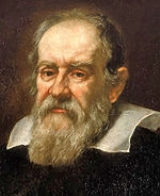
AstronomyAstronomy is a natural science that deals with the study of celestial objects and phenomena that originate outside the atmosphere of Earth...
is the oldest of the
natural scienceThe natural sciences are branches of science that seek to elucidate the rules that govern the natural world by using empirical and scientific methods...
s, dating back to
antiquityAncient history is the study of the written past from the beginning of recorded human history to the Early Middle Ages. The span of recorded history is roughly 5,000 years, with Cuneiform script, the oldest discovered form of coherent writing, from the protoliterate period around the 30th century BC...
, with its origins in the
religiousReligion is a collection of cultural systems, belief systems, and worldviews that establishes symbols that relate humanity to spirituality and, sometimes, to moral values. Many religions have narratives, symbols, traditions and sacred histories that are intended to give meaning to life or to...
, mythological, and astrological practices of pre-history: vestiges of these are still found in
astrologyAstrology consists of a number of belief systems which hold that there is a relationship between astronomical phenomena and events in the human world...
, a discipline long interwoven with public and governmental astronomy, and not completely disentangled from it until a few centuries ago in the
Western WorldThe Western world, also known as the West and the Occident , is a term referring to the countries of Western Europe , the countries of the Americas, as well all countries of Northern and Central Europe, Australia and New Zealand...
(see
astrology and astronomyAstrology and astronomy were archaically one and the same discipline , and were only gradually recognized as separate in Western 17th century philosophy ....
). In some cultures astronomical data was used for astrological prognostication.
Ancient astronomers were able to differentiate between stars and planets, as stars remain relatively fixed over the centuries while planets will move an appreciable amount during a comparatively short time.
Early history
Early
cultureCulture is a term that has many different inter-related meanings. For example, in 1952, Alfred Kroeber and Clyde Kluckhohn compiled a list of 164 definitions of "culture" in Culture: A Critical Review of Concepts and Definitions...
s identified celestial objects with
godThe term mythology can refer either to the study of myths, or to a body or collection of myths. As examples, comparative mythology is the study of connections between myths from different cultures, whereas Greek mythology is the body of myths from ancient Greece...
s and spirits. They related these objects (and their movements) to phenomena such as
rainRain is liquid precipitation, as opposed to non-liquid kinds of precipitation such as snow, hail and sleet. Rain requires the presence of a thick layer of the atmosphere to have temperatures above the melting point of water near and above the Earth's surface...
,
droughtA drought is an extended period of months or years when a region notes a deficiency in its water supply. Generally, this occurs when a region receives consistently below average precipitation. It can have a substantial impact on the ecosystem and agriculture of the affected region...
,
seasonA season is a division of the year, marked by changes in weather, ecology, and hours of daylight.Seasons result from the yearly revolution of the Earth around the Sun and the tilt of the Earth's axis relative to the plane of revolution...
s, and
tideTides are the rise and fall of sea levels caused by the combined effects of the gravitational forces exerted by the moon and the sun and the rotation of the Earth....
s. It is generally believed that the first "professional" astronomers were
priestA priest is a person authorized to perform the sacred rites of a religion, especially as a mediatory agent between humans and deities. They also have the authority or power to administer religious rites; in particular, rites of sacrifice to, and propitiation of, a deity or deities...
s, and that their understanding of the "
heavenHeaven, the Heavens or Seven Heavens, is a common religious cosmological or metaphysical term for the physical or transcendent place from which heavenly beings originate, are enthroned or inhabit...
s" was seen as "
divineDivinity and divine are broadly applied but loosely defined terms, used variously within different faiths and belief systems — and even by different individuals within a given faith — to refer to some transcendent or transcendental power or deity, or its attributes or manifestations in...
", hence astronomy's ancient connection to what is now called astrology. Ancient structures with possibly astronomical alignments (such as
StonehengeStonehenge is a prehistoric monument located in the English county of Wiltshire, about west of Amesbury and north of Salisbury. One of the most famous sites in the world, Stonehenge is composed of a circular setting of large standing stones set within earthworks...
) probably fulfilled both astronomical and
religiousReligion is a collection of cultural systems, belief systems, and worldviews that establishes symbols that relate humanity to spirituality and, sometimes, to moral values. Many religions have narratives, symbols, traditions and sacred histories that are intended to give meaning to life or to...
functions.
CalendarA calendar is a system of organizing days for social, religious, commercial, or administrative purposes. This is done by giving names to periods of time, typically days, weeks, months, and years. The name given to each day is known as a date. Periods in a calendar are usually, though not...
s of the world have usually been set by the Sun and Moon (measuring the
dayA day is a unit of time, commonly defined as an interval equal to 24 hours. It also can mean that portion of the full day during which a location is illuminated by the light of the sun...
,
monthA month is a unit of time, used with calendars, which was first used and invented in Mesopotamia, as a natural period related to the motion of the Moon; month and Moon are cognates. The traditional concept arose with the cycle of moon phases; such months are synodic months and last approximately...
and
yearA year is the orbital period of the Earth moving around the Sun. For an observer on Earth, this corresponds to the period it takes the Sun to complete one course throughout the zodiac along the ecliptic....
), and were of importance to
agriculturalAgriculture is the cultivation of animals, plants, fungi and other life forms for food, fiber, and other products used to sustain life. Agriculture was the key implement in the rise of sedentary human civilization, whereby farming of domesticated species created food surpluses that nurtured the...
societies, in which the harvest depended on planting at the correct time of year. The most common
modern calendarThe Gregorian calendar, also known as the Western calendar, or Christian calendar, is the internationally accepted civil calendar. It was introduced by Pope Gregory XIII, after whom the calendar was named, by a decree signed on 24 February 1582, a papal bull known by its opening words Inter...
is based on the
Roman calendarThe Roman calendar changed its form several times in the time between the founding of Rome and the fall of the Roman Empire. This article generally discusses the early Roman or pre-Julian calendars...
, which divided the year into twelve months of alternating thirty and thirty-one days apiece. In
46 BCYear 46 BC was the last year of the pre-Julian Roman calendar. At the time, it was known as the Year of the Consulship of Caesar and Lepidus . The denomination 46 BC for this year has been used since the early medieval period, when the Anno Domini calendar era became the prevalent method in Europe...
Julius CaesarGaius Julius Caesar was a Roman general and statesman and a distinguished writer of Latin prose. He played a critical role in the gradual transformation of the Roman Republic into the Roman Empire....
instigated
calendar reformThe Julian calendar began in 45 BC as a reform of the Roman calendar by Julius Caesar. It was chosen after consultation with the astronomer Sosigenes of Alexandria and was probably designed to approximate the tropical year .The Julian calendar has a regular year of 365 days divided into 12 months...
and adopted a calendar based upon the
365 1/4 day year lengthA leap year is a year containing one extra day in order to keep the calendar year synchronized with the astronomical or seasonal year...
originally proposed by 4th century BC Greek astronomer
CallippusCallippus or Calippus was a Greek astronomer and mathematician.Callippus was born at Cyzicus, and studied under Eudoxus of Cnidus at the Academy of Plato. He also worked with Aristotle at the Lyceum, which means that he was active in Athens prior to Aristotle's death in 322...
.
Mesopotamia
The origins of
WesternWestern culture, sometimes equated with Western civilization or European civilization, refers to cultures of European origin and is used very broadly to refer to a heritage of social norms, ethical values, traditional customs, religious beliefs, political systems, and specific artifacts and...
astronomy can be found in
MesopotamiaMesopotamia is a toponym for the area of the Tigris–Euphrates river system, largely corresponding to modern-day Iraq, northeastern Syria, southeastern Turkey and southwestern Iran.Widely considered to be the cradle of civilization, Bronze Age Mesopotamia included Sumer and the...
, the "land between the rivers"
TigrisThe Tigris River is the eastern member of the two great rivers that define Mesopotamia, the other being the Euphrates. The river flows south from the mountains of southeastern Turkey through Iraq.-Geography:...
and
EuphratesThe Euphrates is the longest and one of the most historically important rivers of Western Asia. Together with the Tigris, it is one of the two defining rivers of Mesopotamia...
, where the ancient kingdoms of
SumerSumer was a civilization and historical region in southern Mesopotamia, modern Iraq during the Chalcolithic and Early Bronze Age....
,
AssyriaAssyria was a Semitic Akkadian kingdom, extant as a nation state from the mid–23rd century BC to 608 BC centred on the Upper Tigris river, in northern Mesopotamia , that came to rule regional empires a number of times through history. It was named for its original capital, the ancient city of Assur...
, and
BabyloniaBabylonia was an ancient cultural region in central-southern Mesopotamia , with Babylon as its capital. Babylonia emerged as a major power when Hammurabi Babylonia was an ancient cultural region in central-southern Mesopotamia (present-day Iraq), with Babylon as its capital. Babylonia emerged as...
were located. A form of writing known as
cuneiformCuneiform can refer to:*Cuneiform script, an ancient writing system originating in Mesopotamia in the 4th millennium BC*Cuneiform , three bones in the human foot*Cuneiform Records, a music record label...
emerged among the Sumerians around 3500–3000 BC. Our knowledge of Sumerian astronomy is indirect, via the earliest Babylonian star catalogues dating from about 1200 BC. The fact that many star names appear in Sumerian suggests a continuity reaching into the Early Bronze Age. Astral theology, which gave planetary gods an important role in Mesopotamian mythology and
religionMesopotamian religion refers to the religious beliefs and practices followed by the Sumerian and Akkadian peoples living in Mesopotamia that dominated the region for a period of 4200 years from the fourth millennium BC to approximately the 3rd century AD...
, began with the Sumerians. They also used a
sexagesimal (base 60) place-value number system, which simplified the task of recording very large and very small numbers. The modern practice of dividing a circle into 360
degreesA degree , usually denoted by ° , is a measurement of plane angle, representing 1⁄360 of a full rotation; one degree is equivalent to π/180 radians...
, of 60 minutes each, began with the Sumerians. For more information, see the articles on
Babylonian numeralsBabylonian numerals were written in cuneiform, using a wedge-tipped reed stylus to make a mark on a soft clay tablet which would be exposed in the sun to harden to create a permanent record....
and
mathematicsBabylonian mathematics refers to any mathematics of the people of Mesopotamia, from the days of the early Sumerians to the fall of Babylon in 539 BC. Babylonian mathematical texts are plentiful and well edited...
.
Classical sources frequently use the term Chaldeans for the astronomers of Mesopotamia, who were, in reality, priest-scribes specializing in
astrologyAstrology consists of a number of belief systems which hold that there is a relationship between astronomical phenomena and events in the human world...
and other forms of
divinationDivination is the attempt to gain insight into a question or situation by way of an occultic standardized process or ritual...
.
The first evidence of recognition that astronomical phenomena are periodic and of the application of mathematics to their prediction is Babylonian. Tablets dating back to the
Old Babylonian periodThe chronology of the first dynasty of Babylonia is debated as there is a Babylonian King List A and a Babylonian King List B. In this chronology, the regnal years of List A are used due to their wide usage...
document the application of mathematics to the variation in the length of daylight over a solar year. Centuries of Babylonian observations of celestial phenomena are recorded in the series of
cuneiformCuneiform can refer to:*Cuneiform script, an ancient writing system originating in Mesopotamia in the 4th millennium BC*Cuneiform , three bones in the human foot*Cuneiform Records, a music record label...
tablets known as the
Enūma Anu EnlilEnuma Anu Enlil is a major series of 68 or 70 tablets dealing with Babylonian astrology...
. The oldest significant astronomical text that we possess is Tablet 63 of the
Enūma Anu Enlil, the Venus tablet of
Ammi-saduqaAmmi-Saduqa was a king of the First Dynasty of Babylon. Some 21 year-names survive for his reign, including the first 17...
, which lists the first and last visible risings of Venus over a period of about 21 years and is the earliest evidence that the phenomena of a planet were recognized as periodic. The
MUL.APINMUL.APIN is the conventional title given to a Babylonian compendium that deals with many diverse aspects of Babylonian astronomy and astrology....
, contains catalogues of stars and constellations as well as schemes for predicting
heliacal risingThe heliacal rising of a star occurs when it first becomes visible above the eastern horizon for a brief moment just before sunrise, after a period of time when it had not been visible....
s and the settings of the planets, lengths of daylight measured by a water-clock,
gnomonThe gnomon is the part of a sundial that casts the shadow. Gnomon is an ancient Greek word meaning "indicator", "one who discerns," or "that which reveals."It has come to be used for a variety of purposes in mathematics and other fields....
, shadows, and
intercalationIntercalation is the insertion of a leap day, week or month into some calendar years to make the calendar follow the seasons or moon phases. Lunisolar calendars may require intercalations of both days and months.- Solar calendars :...
s. The Babylonian GU text arranges stars in 'strings' that lie along declination circles and thus measure right-ascensions or time-intervals, and also employs the stars of the zenith, which are also separated by given right-ascensional differences.
A significant increase in the quality and frequency of Babylonian observations appeared during the reign of
NabonassarNabonassar founded a kingdom in Babylon in 747 BC. This is now considered as the start of the Neo-Babylonian Dynasty. At the time the Assyrian Empire was in disarray through civil war and the ascendancy of other kingdoms such as Urartu...
(747–733 BC). The systematic records of ominous phenomena in astronomical diaries that began at this time allowed for the discovery of a repeating 18-year cycle of lunar eclipses, for example. The Greek astronomer
PtolemyClaudius Ptolemy , was a Roman citizen of Egypt who wrote in Greek. He was a mathematician, astronomer, geographer, astrologer, and poet of a single epigram in the Greek Anthology. He lived in Egypt under Roman rule, and is believed to have been born in the town of Ptolemais Hermiou in the...
later used Nabonassar's reign to fix the beginning of an era, since he felt that the earliest usable observations began at this time.
The last stages in the development of Babylonian astronomy took place during the time of the
Seleucid EmpireThe Seleucid Empire was a Greek-Macedonian state that was created out of the eastern conquests of Alexander the Great. At the height of its power, it included central Anatolia, the Levant, Mesopotamia, Persia, today's Turkmenistan, Pamir and parts of Pakistan.The Seleucid Empire was a major centre...
(323–60 BC). In the third century BC, astronomers began to use "goal-year texts" to predict the motions of the planets. These texts compiled records of past observations to find repeating occurrences of ominous phenomena for each planet. About the same time, or shortly afterwards, astronomers created mathematical models that allowed them to predict these phenomena directly, without consulting past records. A notable Babylonian astronomer from this time was
Seleucus of SeleuciaSeleucus of Seleucia was a Hellenistic astronomer and philosopher. Coming from Seleucia on the Tigris, the capital of the Seleucid empire, or, alternatively, Seleukia on the Red Sea, he is best known as a proponent of heliocentrism and for his theory of the origin of tides.- Heliocentric theory...
, who was a supporter of the
heliocentric modelHeliocentrism, or heliocentricism, is the astronomical model in which the Earth and planets revolve around a stationary Sun at the center of the universe. The word comes from the Greek . Historically, heliocentrism was opposed to geocentrism, which placed the Earth at the center...
.
Babylonian astronomy was the basis for much of what was done in
Greek and Hellenistic astronomyGreek astronomy is astronomy written in the Greek language in classical antiquity. Greek astronomy is understood to include the ancient Greek, Hellenistic, Greco-Roman, and Late Antiquity eras. It is not limited geographically to Greece or to ethnic Greeks, as the Greek language had become the...
, in classical Indian astronomy, in Sassanian Iran, in Byzantium, in Syria, in
Islamic astronomyIslamic astronomy or Arabic astronomy comprises the astronomical developments made in the Islamic world, particularly during the Islamic Golden Age , and mostly written in the Arabic language. These developments mostly took place in the Middle East, Central Asia, Al-Andalus, and North Africa, and...
, in Central Asia, and in Western Europe.
Egypt
The precise orientation of the
Egyptian pyramidsThe Egyptian pyramids are ancient pyramid-shaped masonry structures located in Egypt.There are 138 pyramids discovered in Egypt as of 2008. Most were built as tombs for the country's Pharaohs and their consorts during the Old and Middle Kingdom periods.The earliest known Egyptian pyramids are found...
affords a lasting demonstration of the high degree of technical skill in watching the heavens attained in the
3rd millennium BCThe 3rd millennium BC spans the Early to Middle Bronze Age.It represents a period of time in which imperialism, or the desire to conquer, grew to prominence, in the city states of the Middle East, but also throughout Eurasia, with Indo-European expansion to Anatolia, Europe and Central Asia. The...
. It has been shown the Pyramids were aligned towards the
pole starThe term "Pole Star" usually refers to Polaris, which is the current northern pole star, also known as the North Star.In general, however, a pole star is a visible star, especially a prominent one, that is approximately aligned with the Earth's axis of rotation; that is, a star whose apparent...
, which, because of the
precession of the equinoxesIn astronomy, axial precession is a gravity-induced, slow and continuous change in the orientation of an astronomical body's rotational axis. In particular, it refers to the gradual shift in the orientation of Earth's axis of rotation, which, like a wobbling top, traces out a pair of cones joined...
, was at that time
ThubanThuban also known by its Bayer designation Alpha Draconis is a star in the constellation of Draco. A relatively inconspicuous star in the night sky of the Northern Hemisphere, it is historically significant as having been the north pole star in ancient times...
, a faint star in the constellation of
DracoDraco is a constellation in the far northern sky. Its name is Latin for dragon. Draco is circumpolar for many observers in the northern hemisphere...
. Evaluation of the site of the temple of Amun-Re at
KarnakThe Karnak Temple Complex—usually called Karnak—comprises a vast mix of decayed temples, chapels, pylons, and other buildings, notably the Great Temple of Amun and a massive structure begun by Pharaoh Ramses II . Sacred Lake is part of the site as well. It is located near Luxor, some...
, taking into account the change over time of the obliquity of the ecliptic, has shown that the Great Temple was aligned on the rising of the midwinter sun. The length of the corridor down which sunlight would travel would have limited illumination at other times of the year.
Astronomy played a considerable part in religious matters for fixing the dates of festivals and determining the hours of the
nightNight or nighttime is the period of time when the sun is below the horizon. This occurs after dusk. The opposite of night is day...
. The titles of several temple books are preserved recording the movements and phases of the
sunThe Sun is the star at the center of the Solar System. It is almost perfectly spherical and consists of hot plasma interwoven with magnetic fields...
,
moonThe Moon is Earth's only known natural satellite,There are a number of near-Earth asteroids including 3753 Cruithne that are co-orbital with Earth: their orbits bring them close to Earth for periods of time but then alter in the long term . These are quasi-satellites and not true moons. For more...
and
starA star is a massive, luminous sphere of plasma held together by gravity. At the end of its lifetime, a star can also contain a proportion of degenerate matter. The nearest star to Earth is the Sun, which is the source of most of the energy on Earth...
s. The rising of
SiriusSirius is the brightest star in the night sky. With a visual apparent magnitude of −1.46, it is almost twice as bright as Canopus, the next brightest star. The name "Sirius" is derived from the Ancient Greek: Seirios . The star has the Bayer designation Alpha Canis Majoris...
(
EgyptianEgyptian is the oldest known indigenous language of Egypt and a branch of the Afroasiatic language family. Written records of the Egyptian language have been dated from about 3400 BC, making it one of the oldest recorded languages known. Egyptian was spoken until the late 17th century AD in the...
: Sopdet,
GreekAncient Greek is the stage of the Greek language in the periods spanning the times c. 9th–6th centuries BC, , c. 5th–4th centuries BC , and the c. 3rd century BC – 6th century AD of ancient Greece and the ancient world; being predated in the 2nd millennium BC by Mycenaean Greek...
: Sothis) at the beginning of the inundation was a particularly important point to fix in the yearly calendar.
Writing in the Roman era,
Clement of AlexandriaTitus Flavius Clemens , known as Clement of Alexandria , was a Christian theologian and the head of the noted Catechetical School of Alexandria. Clement is best remembered as the teacher of Origen...
gives some idea of the importance of astronomical observations to the sacred rites:
And after the Singer advances the Astrologer (ὡροσκόπος), with a horologium (ὡρολόγιον) in his hand, and a palm (φοίνιξ), the symbols of astrologyEgyptian astrology may refer to:* Ancient Egyptian astronomy* Astrology in Hellenistic Egypt...
. He must know by heart the Hermetic astrological books, which are four in number. Of these, one is about the arrangement of the fixed stars that are visible; one on the positions of the sun and moon and five planets; one on the conjunctions and phases of the sun and moon; and one concerns their risings.
The Astrologer's instruments (
horologium and
palm) are a plumb line and sighting instrument. They have been identified with two inscribed objects in the
Berlin MuseumThe Egyptian Museum of Berlin is home to one of the world's most important collections of Ancient Egyptian artifacts.The collection is part of the Neues Museum.-History:...
; a short handle from which a plumb line was hung, and a palm branch with a sight-slit in the broader end. The latter was held close to the eye, the former in the other hand, perhaps at arms length. The "Hermetic" books which Clement refers to are the Egyptian theological texts, which probably have nothing to do with Hellenistic Hermetism.
From the tables of stars on the ceiling of the tombs of Rameses VI and Rameses IX it seems that for fixing the hours of the night a man seated on the ground faced the Astrologer in such a position that the line of observation of the
pole starThe term "Pole Star" usually refers to Polaris, which is the current northern pole star, also known as the North Star.In general, however, a pole star is a visible star, especially a prominent one, that is approximately aligned with the Earth's axis of rotation; that is, a star whose apparent...
passed over the middle of his head. On the different days of the year each hour was determined by a fixed star
culminatingIn astronomy, the culmination of a planet, star, constellation, etc. is the altitude reached when the object transits over an observer's meridian....
or nearly culminating in it, and the position of these stars at the time is given in the tables as in the centre, on the left eye, on the right shoulder, etc. According to the texts, in founding or rebuilding temples the
northNorth is a noun, adjective, or adverb indicating direction or geography.North is one of the four cardinal directions or compass points. It is the opposite of south and is perpendicular to east and west.By convention, the top side of a map is north....
axis was determined by the same apparatus, and we may conclude that it was the usual one for astronomical observations. In careful hands it might give results of a high degree of accuracy.
Greece and Hellenistic world
The Ancient Greeks developed astronomy, which they treated as a branch of mathematics, to a highly sophisticated level. The first geometrical, three-dimensional models to explain the apparent motion of the planets were developed in the 4th century BC by
Eudoxus of CnidusEudoxus of Cnidus was a Greek astronomer, mathematician, scholar and student of Plato. Since all his own works are lost, our knowledge of him is obtained from secondary sources, such as Aratus's poem on astronomy...
and Callippus of Cyzicus . Their models were based on nested homocentric spheres centered upon the Earth. Their younger contemporary
Heraclides PonticusHeraclides Ponticus , also known as Herakleides and Heraklides of Pontus, was a Greek philosopher and astronomer who lived and died at Heraclea Pontica, now Karadeniz Ereğli, Turkey. He is best remembered for proposing that the earth rotates on its axis, from west to east, once every 24 hours...
proposed that the Earth rotates around its axis.
A different approach to celestial phenomena was taken by natural philosophers such as
PlatoPlato , was a Classical Greek philosopher, mathematician, student of Socrates, writer of philosophical dialogues, and founder of the Academy in Athens, the first institution of higher learning in the Western world. Along with his mentor, Socrates, and his student, Aristotle, Plato helped to lay the...
and
AristotleAristotle was a Greek philosopher and polymath, a student of Plato and teacher of Alexander the Great. His writings cover many subjects, including physics, metaphysics, poetry, theater, music, logic, rhetoric, linguistics, politics, government, ethics, biology, and zoology...
. They were less concerned with developing mathematical predictive models than with developing an explanation of the reasons for the motions of the Cosmos. In his
Timaeus Plato described the universe as a spherical body divided into circles carrying the planets and governed according to harmonic intervals by a world soul. Aristotle, drawing on the mathematical model of Eudoxus, proposed that the universe was made of a complex system of concentric
spheresThe celestial spheres, or celestial orbs, were the fundamental entities of the cosmological models developed by Plato, Eudoxus, Aristotle, Ptolemy, Copernicus and others...
, whose circular motions combined to carry the planets around the earth. This basic cosmological model prevailed, in various forms, until the 16th century AD.
Greek geometrical astronomy developed away from the model of concentric spheres to employ more complex models in which an eccentric circle would carry around a smaller circle, called an epicycle which in turn carried around a planet. The first such model is attributed to
Apollonius of PergaApollonius of Perga [Pergaeus] was a Greek geometer and astronomer noted for his writings on conic sections. His innovative methodology and terminology, especially in the field of conics, influenced many later scholars including Ptolemy, Francesco Maurolico, Isaac Newton, and René Descartes...
and further developments in it were carried out in the 2nd century BC by
Hipparchus of NiceaHipparchus, the common Latinization of the Greek Hipparkhos, can mean:* Hipparchus, the ancient Greek astronomer** Hipparchic cycle, an astronomical cycle he created** Hipparchus , a lunar crater named in his honour...
. Hipparchus made a number of other contributions, including the first measurement of
precessionPrecession is a change in the orientation of the rotation axis of a rotating body. It can be defined as a change in direction of the rotation axis in which the second Euler angle is constant...
and the compilation of the first star catalog in which he proposed our modern system of
apparent magnitudeThe apparent magnitude of a celestial body is a measure of its brightness as seen by an observer on Earth, adjusted to the value it would have in the absence of the atmosphere...
s.
The study of astronomy by the ancient Greeks was not limited to Greece itself but was further developed in the 3rd and 2nd centuries BC, in the Hellenistic states and in particular in Alexandria. However, the work was still done by ethnic Greeks. In the 3rd century BC
Aristarchus of SamosAristarchus, or more correctly Aristarchos , was a Greek astronomer and mathematician, born on the island of Samos, in Greece. He presented the first known heliocentric model of the solar system, placing the Sun, not the Earth, at the center of the known universe...
was the first to suggest a heliocentric system, although only fragmentary descriptions of his idea survive.
EratosthenesEratosthenes of Cyrene was a Greek mathematician, poet, athlete, geographer, astronomer, and music theorist.He was the first person to use the word "geography" and invented the discipline of geography as we understand it...
, using the angles of shadows created at widely separated regions, estimated the circumference of the
EarthEarth is the third planet from the Sun, and the densest and fifth-largest of the eight planets in the Solar System. It is also the largest of the Solar System's four terrestrial planets...
with great accuracy.
The
Antikythera mechanismThe Antikythera mechanism is an ancient mechanical computer designed to calculate astronomical positions. It was recovered in 1900–1901 from the Antikythera wreck. Its significance and complexity were not understood until decades later. Its time of construction is now estimated between 150 and 100...
, an
ancient GreekAncient Greece is a civilization belonging to a period of Greek history that lasted from the Archaic period of the 8th to 6th centuries BC to the end of antiquity. Immediately following this period was the beginning of the Early Middle Ages and the Byzantine era. Included in Ancient Greece is the...
astronomical observational device for calculating the movements of the Sun and the Moon, possibly the planets, dates from about 150-100 BC, and was the first ancestor of an astronomical
computerA computer is a programmable machine designed to sequentially and automatically carry out a sequence of arithmetic or logical operations. The particular sequence of operations can be changed readily, allowing the computer to solve more than one kind of problem...
. It was discovered in an ancient shipwreck off the Greek island of
AntikytheraAntikythera or Anticythera is a Greek island lying on the edge of the Aegean Sea, between Crete and Peloponnese. Since the 2011 local government reform it is part of the municipality of Kythira island....
, between Kythera and
CreteCrete is the largest and most populous of the Greek islands, the fifth largest island in the Mediterranean Sea, and one of the thirteen administrative regions of Greece. It forms a significant part of the economy and cultural heritage of Greece while retaining its own local cultural traits...
. The device became famous for its use of a differential gear, previously believed to have been invented in the 16th century AD, and the miniaturization and complexity of its parts, comparable to a clock made in the 18th century. The original mechanism is displayed in the Bronze collection of the
National Archaeological Museum of AthensThe National Archaeological Museum in Athens houses some of the most important artifacts from a variety of archaeological locations around Greece from prehistory to late antiquity. It is considered one of the great museums in the world and contains the richest collection of artifacts from Greek...
, accompanied by a replica.
Depending on the historian's viewpoint, the acme or corruption of physical Greek astronomy is seen with
Ptolemy of AlexandriaClaudius Ptolemy , was a Roman citizen of Egypt who wrote in Greek. He was a mathematician, astronomer, geographer, astrologer, and poet of a single epigram in the Greek Anthology. He lived in Egypt under Roman rule, and is believed to have been born in the town of Ptolemais Hermiou in the...
, who wrote the classic comprehensive presentation of geocentric astronomy, the
Megale Syntaxis (Great Synthesis), better known by its Arabic title
AlmagestThe Almagest is a 2nd-century mathematical and astronomical treatise on the apparent motions of the stars and planetary paths. Written in Greek by Claudius Ptolemy, a Roman era scholar of Egypt,...
, which had a lasting effect on astronomy up to the
RenaissanceThe Renaissance was a cultural movement that spanned roughly the 14th to the 17th century, beginning in Italy in the Late Middle Ages and later spreading to the rest of Europe. The term is also used more loosely to refer to the historical era, but since the changes of the Renaissance were not...
. In his
Planetary Hypotheses Ptolemy ventured into the realm of cosmology, developing a physical model of his geometric system, in a universe many times smaller than the more realistic conception of
Aristarchus of SamosAristarchus, or more correctly Aristarchos , was a Greek astronomer and mathematician, born on the island of Samos, in Greece. He presented the first known heliocentric model of the solar system, placing the Sun, not the Earth, at the center of the known universe...
four centuries earlier.
India
Ancient Indian astrology is based upon
siderealSidereal and tropical are astronomical terms used to describe two different definitions of a "year". They are also used as terms for two systems of ecliptic coordinates used in astrology....
calculation. The sidereal astronomy is based upon the
starA star is a massive, luminous sphere of plasma held together by gravity. At the end of its lifetime, a star can also contain a proportion of degenerate matter. The nearest star to Earth is the Sun, which is the source of most of the energy on Earth...
s and the sidereal period is the time that it takes the object to make one full
orbitIn physics, an orbit is the gravitationally curved path of an object around a point in space, for example the orbit of a planet around the center of a star system, such as the Solar System...
around the
SunThe Sun is the star at the center of the Solar System. It is almost perfectly spherical and consists of hot plasma interwoven with magnetic fields...
, relative to the
starA star is a massive, luminous sphere of plasma held together by gravity. At the end of its lifetime, a star can also contain a proportion of degenerate matter. The nearest star to Earth is the Sun, which is the source of most of the energy on Earth...
s. It can be traced to the final centuries BC with the
Vedanga JyotishaThe ' is an Indian text on Jyotisha, redacted by Lagadha .The text is foundational to the Vedanga discipline of Jyotisha. It is dated to the final centuries BCE...
attributed to Lagadha, one of the circum-Vedic texts, which describes rules for tracking the motions of the Sun and the Moon for the purposes of ritual. After astronomy was influenced by Hellenistic astronomy (adopting the zodiacal signs or
rāśis). Identical numerical computations for lunar cycles have been found to be used in India and in early Babylonian texts.
AryabhataAryabhata was the first in the line of great mathematician-astronomers from the classical age of Indian mathematics and Indian astronomy...
(476–550), in his magnum opus
AryabhatiyaĀryabhaṭīya or Āryabhaṭīyaṃ, a Sanskrit astronomical treatise, is the magnum opus and only extant work of the 5th century Indian mathematician, Āryabhaṭa.- Structure and style:...
(499), propounded a computational system based on a planetary model in which the Earth was taken to be spinning on its axis and the periods of the planets were given with respect to the Sun. He accurately calculated many astronomical constants, such as the periods of the planets, times of the
solarAs seen from the Earth, a solar eclipse occurs when the Moon passes between the Sun and the Earth, and the Moon fully or partially blocks the Sun as viewed from a location on Earth. This can happen only during a new moon, when the Sun and the Moon are in conjunction as seen from Earth. At least...
and
lunarA lunar eclipse occurs when the Moon passes behind the Earth so that the Earth blocks the Sun's rays from striking the Moon. This can occur only when the Sun, Earth, and Moon are aligned exactly, or very closely so, with the Earth in the middle. Hence, a lunar eclipse can only occur the night of a...
eclipseAn eclipse is an astronomical event that occurs when an astronomical object is temporarily obscured, either by passing into the shadow of another body or by having another body pass between it and the viewer...
s, and the instantaneous motion of the Moon. Early followers of Aryabhata's model included
VarahamihiraVarāhamihira , also called Varaha or Mihira, was an Indian astronomer, mathematician, and astrologer who lived in Ujjain...
,
BrahmaguptaBrahmagupta was an Indian mathematician and astronomer who wrote many important works on mathematics and astronomy. His best known work is the Brāhmasphuṭasiddhānta , written in 628 in Bhinmal...
, and Bhaskara II.
Astronomy was advanced during the
Sunga EmpireThe Sunga Empire or Shunga Empire was a royal Indian dynasty from Magadha that controlled vast areas of the Indian Subcontinent from around 185 to 73 BCE. The dynasty was established by Pusyamitra Sunga, after the fall of the Maurya Empire...
and many
star catalogueA star catalogue, or star catalog, is an astronomical catalogue that lists stars. In astronomy, many stars are referred to simply by catalogue numbers. There are a great many different star catalogues which have been produced for different purposes over the years, and this article covers only some...
s were produced during this time. The Sunga period is known as the "Golden age of astronomy in India".
Calculations of the motions and places of various planets, their rising and setting, conjunctions, and the calculation of eclipses.
Bhāskara II (1114–1185) was the head of the astronomical observatory at Ujjain, continuing the mathematical tradition of Brahmagupta. He wrote the
Siddhantasiromani which consists of two parts:
Goladhyaya (sphere) and
Grahaganita (mathematics of the planets). He also calculated the time taken for the Earth to orbit the sun to 9 decimal places. The Buddhist University of
NalandaNālandā is the name of an ancient center of higher learning in Bihar, India.The site of Nalanda is located in the Indian state of Bihar, about 55 miles south east of Patna, and was a Buddhist center of learning from the fifth or sixth century CE to 1197 CE. It has been called "one of the...
at the time offered formal courses in astronomical studies.
Other important astronomers from India include
Madhava of SangamagramaMādhava of Sañgamāgrama was a prominent Kerala mathematician-astronomer from the town of Irińńālakkuţa near Cochin, Kerala, India. He is considered the founder of the Kerala School of Astronomy and Mathematics...
,
Nilakantha SomayajiKelallur Nilakantha Somayaji was a major mathematician and astronomer of the Kerala school of astronomy and mathematics. One of his most influential works was the comprehensive astronomical treatise Tantrasamgraha completed in 1501...
and
JyeshtadevaJyeṣṭhadeva was an astronomer-mathematician of the Kerala school of astronomy and mathematics founded by Sangamagrama Madhava . He is best known as the author of Yuktibhāṣā,...
, who were members of the Kerala school of astronomy and mathematics from the 14th century to the 16th century. Nilakantha Somayaji, in his
Aryabhatiyabhasya, a commentary on Aryabhata's
Aryabhatiya, developed his own computational system for a partially
heliocentricHeliocentrism, or heliocentricism, is the astronomical model in which the Earth and planets revolve around a stationary Sun at the center of the universe. The word comes from the Greek . Historically, heliocentrism was opposed to geocentrism, which placed the Earth at the center...
planetary model, in which Mercury, Venus,
MarsMars is the fourth planet from the Sun in the Solar System. The planet is named after the Roman god of war, Mars. It is often described as the "Red Planet", as the iron oxide prevalent on its surface gives it a reddish appearance...
,
JupiterJupiter is the fifth planet from the Sun and the largest planet within the Solar System. It is a gas giant with mass one-thousandth that of the Sun but is two and a half times the mass of all the other planets in our Solar System combined. Jupiter is classified as a gas giant along with Saturn,...
and
SaturnSaturn is the sixth planet from the Sun and the second largest planet in the Solar System, after Jupiter. Saturn is named after the Roman god Saturn, equated to the Greek Cronus , the Babylonian Ninurta and the Hindu Shani. Saturn's astronomical symbol represents the Roman god's sickle.Saturn,...
orbit the
SunThe Sun is the star at the center of the Solar System. It is almost perfectly spherical and consists of hot plasma interwoven with magnetic fields...
, which in turn orbits the
EarthEarth is the third planet from the Sun, and the densest and fifth-largest of the eight planets in the Solar System. It is also the largest of the Solar System's four terrestrial planets...
, similar to the
Tychonic systemThe Tychonic system was a model of the solar system published by Tycho Brahe in the late 16th century which combined what he saw as the mathematical benefits of the Copernican system with the philosophical and "physical" benefits of the Ptolemaic system...
later proposed by
Tycho BraheTycho Brahe , born Tyge Ottesen Brahe, was a Danish nobleman known for his accurate and comprehensive astronomical and planetary observations...
in the late 16th century. Nilakantha's system, however, was mathematically more effient than the Tychonic system, due to correctly taking into account the equation of the centre and
latitudinalIn geography, the latitude of a location on the Earth is the angular distance of that location south or north of the Equator. The latitude is an angle, and is usually measured in degrees . The equator has a latitude of 0°, the North pole has a latitude of 90° north , and the South pole has a...
motion of Mercury and Venus. Most astronomers of the Kerala school of astronomy and mathematics who followed him accepted his planetary model.
China
The astronomy of
East AsiaEast Asia or Eastern Asia is a subregion of Asia that can be defined in either geographical or cultural terms...
began in
ChinaChinese civilization may refer to:* China for more general discussion of the country.* Chinese culture* Greater China, the transnational community of ethnic Chinese.* History of China* Sinosphere, the area historically affected by Chinese culture...
.
Solar termA solar term is any of 24 points in traditional East Asian lunisolar calendars that matches a particular astronomical event or signifies some natural phenomenon. The points are spaced 15° apart along the ecliptic and are used by lunisolar calendars to stay synchronized with the seasons. Solar terms...
was completed in
Warring States PeriodThe Warring States Period , also known as the Era of Warring States, or the Warring Kingdoms period, covers the Iron Age period from about 475 BC to the reunification of China under the Qin Dynasty in 221 BC...
. The knowledge of Chinese astronomy was introduced into East Asia.
Astronomy in China has a long history. Detailed records of astronomical observations were kept from about the 6th century BC, until the introduction of Western astronomy and the telescope in the 17th century. Chinese astronomers were able to precisely predict comets and eclipses.
Much of early Chinese astronomy was for the purpose of timekeeping. The Chinese used a lunisolar calendar, but because the cycles of the Sun and the Moon are different, astronomers often prepared new calendars and made observations for that purpose.
Astrological divination was also an important part of astronomy. Astronomers took careful note of "guest stars" which suddenly appeared among the
fixed starThe fixed stars are celestial objects that do not seem to move in relation to the other stars of the night sky. Hence, a fixed star is any star except for the Sun. A nebula or other starlike object may also be called a fixed star. People in many cultures have imagined that the stars form pictures...
s. They were the first to record a supernova, in the Astrological Annals of the Houhanshu in 185 A.D. Also, the supernova that created the
Crab NebulaThe Crab Nebula is a supernova remnant and pulsar wind nebula in the constellation of Taurus...
in 1054 is an example of a "guest star" observed by Chinese astronomers, although it was not recorded by their European contemporaries. Ancient astronomical records of phenomena like supernovae and comets are sometimes used in modern astronomical studies.
The world's first
star catalogueA star catalogue, or star catalog, is an astronomical catalogue that lists stars. In astronomy, many stars are referred to simply by catalogue numbers. There are a great many different star catalogues which have been produced for different purposes over the years, and this article covers only some...
was made by
Gan DeGan De was a Chinese astronomer/astrologer born in the State of Qi also known as the Lord Gan . Along with Shi Shen, he is believed to be the first in history known by name to compile a star catalogue, preceded by the anonymous authors of the early Babylonian star catalogues and followed by the...
, a Chinese astronomer, in 4th century BC.
Mesoamerica
MayaThe Maya is a Mesoamerican civilization, noted for the only known fully developed written language of the pre-Columbian Americas, as well as for its art, architecture, and mathematical and astronomical systems. Initially established during the Pre-Classic period The Maya is a Mesoamerican...
astronomical
codicesMaya codices are folding books stemming from the pre-Columbian Maya civilization, written in Maya hieroglyphic script on Mesoamerican bark cloth, made from the inner bark of certain trees, the main being the wild fig tree or Amate . Paper, generally known by the Nahuatl word amatl, was named by...
include detailed tables for calculating phases of the Moon, the recurrence of eclipses, and the appearance and disappearance of
VenusVenus is the second planet from the Sun, orbiting it every 224.7 Earth days. The planet is named after Venus, the Roman goddess of love and beauty. After the Moon, it is the brightest natural object in the night sky, reaching an apparent magnitude of −4.6, bright enough to cast shadows...
as morning and evening star. The Maya based their
calendricsThe Maya calendar is a system of calendars and almanacs used in the Maya civilization of pre-Columbian Mesoamerica, and in many modern Maya communities in highland Guatemala. and in Chiapas....
in the carefully calculated cycles of the
PleiadesIn astronomy, the Pleiades, or Seven Sisters , is an open star cluster containing middle-aged hot B-type stars located in the constellation of Taurus. It is among the nearest star clusters to Earth and is the cluster most obvious to the naked eye in the night sky...
, the
SunThe Sun is the star at the center of the Solar System. It is almost perfectly spherical and consists of hot plasma interwoven with magnetic fields...
, the
MoonThe Moon is Earth's only known natural satellite,There are a number of near-Earth asteroids including 3753 Cruithne that are co-orbital with Earth: their orbits bring them close to Earth for periods of time but then alter in the long term . These are quasi-satellites and not true moons. For more...
,
VenusVenus is the second planet from the Sun, orbiting it every 224.7 Earth days. The planet is named after Venus, the Roman goddess of love and beauty. After the Moon, it is the brightest natural object in the night sky, reaching an apparent magnitude of −4.6, bright enough to cast shadows...
,
JupiterJupiter is the fifth planet from the Sun and the largest planet within the Solar System. It is a gas giant with mass one-thousandth that of the Sun but is two and a half times the mass of all the other planets in our Solar System combined. Jupiter is classified as a gas giant along with Saturn,...
,
SaturnSaturn is the sixth planet from the Sun and the second largest planet in the Solar System, after Jupiter. Saturn is named after the Roman god Saturn, equated to the Greek Cronus , the Babylonian Ninurta and the Hindu Shani. Saturn's astronomical symbol represents the Roman god's sickle.Saturn,...
,
MarsMars is the fourth planet from the Sun in the Solar System. The planet is named after the Roman god of war, Mars. It is often described as the "Red Planet", as the iron oxide prevalent on its surface gives it a reddish appearance...
, and also they had a precise description of the eclipses as depicted in the
Dresden CodexThe Dresden Codex, also known as the Codex Dresdensis, is a pre-Columbian Maya book of the eleventh or twelfth century of the Yucatecan Maya in Chichén Itzá. The Maya codex is believed to be a copy of an original text of some three or four hundred years earlier...
, as well as the ecliptic or zodiac, and the
Milky WayThe Milky Way is the galaxy that contains the Solar System. This name derives from its appearance as a dim un-resolved "milky" glowing band arching across the night sky...
was crucial in their Cosmology. A number of important Maya structures are believed to have been oriented toward the extreme risings and settings of Venus. To the ancient Maya, Venus was the patron of war and many recorded battles are believed to have been timed to the motions of this planet.
MarsMars is the fourth planet from the Sun in the Solar System. The planet is named after the Roman god of war, Mars. It is often described as the "Red Planet", as the iron oxide prevalent on its surface gives it a reddish appearance...
is also mentioned in preserved astronomical codices and early
mythologyMayan mythology is part of Mesoamerican mythology and comprises all of the Mayan tales in which personified forces of nature, deities, and the heroes interacting with these play the main roles...
.
Although the
Maya calendarThe Maya calendar is a system of calendars and almanacs used in the Maya civilization of pre-Columbian Mesoamerica, and in many modern Maya communities in highland Guatemala. and in Chiapas....
was not tied to the Sun,
John TeepleJohn Edgar Teeple was a chemical engineer who received the Perkin Medal in 1927 for his work on potash during World War I. He was also an American researcher and contributor to the field of Mesoamerican studies during the first half of the 20th century...
has proposed that the Maya calculated the
solar yearA tropical year , for general purposes, is the length of time that the Sun takes to return to the same position in the cycle of seasons, as seen from Earth; for example, the time from vernal equinox to vernal equinox, or from summer solstice to summer solstice...
to somewhat greater accuracy than the
Gregorian calendarThe Gregorian calendar, also known as the Western calendar, or Christian calendar, is the internationally accepted civil calendar. It was introduced by Pope Gregory XIII, after whom the calendar was named, by a decree signed on 24 February 1582, a papal bull known by its opening words Inter...
. Both astronomy and an intricate numerological scheme for the measurement of time were vitally important components of Maya religion.
Islamic astronomy
The Arabic world under
IslamIslam . The most common are and . : Arabic pronunciation varies regionally. The first vowel ranges from ~~. The second vowel ranges from ~~~...
had become highly cultured, and many important works of knowledge from
Greek astronomyGreek astronomy is astronomy written in the Greek language in classical antiquity. Greek astronomy is understood to include the ancient Greek, Hellenistic, Greco-Roman, and Late Antiquity eras. It is not limited geographically to Greece or to ethnic Greeks, as the Greek language had become the...
and Indian astronomy were translated into Arabic, used and stored in libraries throughout the area. An important contribution by Islamic astronomers was their emphasis on
observational scienceAn observational science is a science where it is not possible to construct controlled experiments in the area under study. For example, in astronomy, it is not possible to create or manipulate stars or galaxies in order to observe what happens...
and
observational astronomyObservational astronomy is a division of the astronomical science that is concerned with getting data, in contrast with theoretical astrophysics which is mainly concerned with finding out the measurable implications of physical models...
This led to the emergence of the first astronomical
observatoriesAn observatory is a location used for observing terrestrial or celestial events. Astronomy, climatology/meteorology, geology, oceanography and volcanology are examples of disciplines for which observatories have been constructed...
in the
Muslim worldThe term Muslim world has several meanings. In a religious sense, it refers to those who adhere to the teachings of Islam, referred to as Muslims. In a cultural sense, it refers to Islamic civilization, inclusive of non-Muslims living in that civilization...
by the early 9th century.
ZijZīj is the generic name applied to Islamic astronomical books that tabulate parameters used for astronomical calculations of the positions of the Sun, Moon, stars, and planets. The name is derived from the Middle Persian term zih or zīg, meaning cord...
star catalogues were produced at these observatories.
The late 9th century
PersianThe Persian people are part of the Iranian peoples who speak the modern Persian language and closely akin Iranian dialects and languages. The origin of the ethnic Iranian/Persian peoples are traced to the Ancient Iranian peoples, who were part of the ancient Indo-Iranians and themselves part of...
astronomer Ahmad ibn Muhammad ibn Kathīr al-Farghānī wrote extensively on the motion of celestial bodies. His work was translated into Latin during the Latin translations of the 12th century. In the 9th century,
Ja'far ibn Muhammad Abu Ma'shar al-BalkhiAbū Maʿshar, Jaʿfar ibn Muḥammad al-Balkhī , was a Persian astrologer, astronomer, and Islamic philosopher, thought to be the greatest astrologer of the Abbasid court in Baghdad...
(Albumasar) developed a planetary model which has been interpreted as a
heliocentric modelHeliocentrism, or heliocentricism, is the astronomical model in which the Earth and planets revolve around a stationary Sun at the center of the universe. The word comes from the Greek . Historically, heliocentrism was opposed to geocentrism, which placed the Earth at the center...
. This is due to his
orbital revolutionsCelestial mechanics is the branch of astronomy that deals with the motions of celestial objects. The field applies principles of physics, historically classical mechanics, to astronomical objects such as stars and planets to produce ephemeris data. Orbital mechanics is a subfield which focuses on...
of the planets being given as heliocentric revolutions rather than
geocentricIn astronomy, the geocentric model , is the superseded theory that the Earth is the center of the universe, and that all other objects orbit around it. This geocentric model served as the predominant cosmological system in many ancient civilizations such as ancient Greece...
revolutions, and the only known planetary theory in which this occurs is in the heliocentric theory. His work on planetary theory has not survived, but his astronomical data was later recorded by al-Hashimi and Biruni.
In the 10th century, Abd al-Rahman al-Sufi (Azophi) carried out observations on the
starA star is a massive, luminous sphere of plasma held together by gravity. At the end of its lifetime, a star can also contain a proportion of degenerate matter. The nearest star to Earth is the Sun, which is the source of most of the energy on Earth...
s and described their positions,
magnitudeThe apparent magnitude of a celestial body is a measure of its brightness as seen by an observer on Earth, adjusted to the value it would have in the absence of the atmosphere...
s, brightness, and colour and drawings for each constellation in his
Book of Fixed StarsThe Book of Fixed Stars is an astronomical text written by Abd al-Rahman al-Sufi around 964. The book was written in Arabic, although the author himself was Persian...
. He also gave the first descriptions and pictures of "A Little Cloud" now known as the
Andromeda GalaxyThe Andromeda Galaxy is a spiral galaxy approximately 2.5 million light-years from Earth in the constellation Andromeda. It is also known as Messier 31, M31, or NGC 224, and is often referred to as the Great Andromeda Nebula in older texts. Andromeda is the nearest spiral galaxy to the...
. He mentions it as lying before the mouth of a Big Fish, an Arabic
constellationIn modern astronomy, a constellation is an internationally defined area of the celestial sphere. These areas are grouped around asterisms, patterns formed by prominent stars within apparent proximity to one another on Earth's night sky....
. This "cloud" was apparently commonly known to the
IsfahanIsfahan , historically also rendered in English as Ispahan, Sepahan or Hispahan, is the capital of Isfahan Province in Iran, located about 340 km south of Tehran. It has a population of 1,583,609, Iran's third largest city after Tehran and Mashhad...
astronomers, very probably before
905Year 905 was a common year starting on Tuesday of the Julian calendar.- Africa :* The Abbasid Caliphate re-establishes control of Egypt from the Tulunids.- Asia :...
AD. The first recorded mention of the
Large Magellanic CloudThe Large Magellanic Cloud is a nearby irregular galaxy, and is a satellite of the Milky Way. At a distance of slightly less than 50 kiloparsecs , the LMC is the third closest galaxy to the Milky Way, with the Sagittarius Dwarf Spheroidal and Canis Major Dwarf Galaxy lying closer to the center...
was also given by al-Sufi. In 1006,
Ali ibn RidwanAbu'l Hasan Ali ibn Ridwan Al-Misri was an Egyptian Muslim physician, astrologer and astronomer, born in Giza.He was a commentator on ancient Greek medicine, and in particular on Galen; his commentary on Galen's Ars Parva was translated by Gerardo Cremonese...
observed
SN 1006SN 1006 was a supernova, widely seen on Earth beginning in the year 1006 AD; Earth was about 7,200 light-years away from the supernova. It was the brightest apparent magnitude stellar event in recorded history reaching an estimated -7.5 visual magnitude...
, the brightest
supernovaA supernova is a stellar explosion that is more energetic than a nova. It is pronounced with the plural supernovae or supernovas. Supernovae are extremely luminous and cause a burst of radiation that often briefly outshines an entire galaxy, before fading from view over several weeks or months...
in recorded history, and left a detailed description of the temporary star.
In the late 10th century, a huge observatory was built near
TehranTehran , sometimes spelled Teheran, is the capital of Iran and Tehran Province. With an estimated population of 8,429,807; it is also Iran's largest urban area and city, one of the largest cities in Western Asia, and is the world's 19th largest city.In the 20th century, Tehran was subject to...
,
IranIran , officially the Islamic Republic of Iran , is a country in Southern and Western Asia. The name "Iran" has been in use natively since the Sassanian era and came into use internationally in 1935, before which the country was known to the Western world as Persia...
, by the astronomer Abu-Mahmud al-Khujandi who observed a series of
meridianThis article is about the astronomical concept. For other uses of the word, see Meridian.In the sky, a meridian is an imaginary great circle on the celestial sphere. It passes through the north point on the horizon, through the celestial pole, up to the zenith, through the south point on the...
transitsThe term transit or astronomical transit has three meanings in astronomy:* A transit is the astronomical event that occurs when one celestial body appears to move across the face of another celestial body, hiding a small part of it, as seen by an observer at some particular vantage point...
of the Sun, which allowed him to calculate the
obliquity of the eclipticIn astronomy, axial tilt is the angle between an object's rotational axis, and a line perpendicular to its orbital plane...
, also known as the tilt of the Earth's axis relative to the Sun. In 11th-century Persia,
Omar KhayyámOmar Khayyám was aPersian polymath: philosopher, mathematician, astronomer and poet. He also wrote treatises on mechanics, geography, mineralogy, music, climatology and theology....
compiled many tables and performed a reformation of the
calendarA calendar is a system of organizing days for social, religious, commercial, or administrative purposes. This is done by giving names to periods of time, typically days, weeks, months, and years. The name given to each day is known as a date. Periods in a calendar are usually, though not...
that was more accurate than the
JulianThe Julian calendar began in 45 BC as a reform of the Roman calendar by Julius Caesar. It was chosen after consultation with the astronomer Sosigenes of Alexandria and was probably designed to approximate the tropical year .The Julian calendar has a regular year of 365 days divided into 12 months...
and came close to the
GregorianThe Gregorian calendar, also known as the Western calendar, or Christian calendar, is the internationally accepted civil calendar. It was introduced by Pope Gregory XIII, after whom the calendar was named, by a decree signed on 24 February 1582, a papal bull known by its opening words Inter...
.
In the early 11th century, Ibn al-Haytham (Alhazen) wrote the
Maqala fi daw al-qamar (
On the Light of the Moon) some time before 1021. This was the earliest attempt at applying the
experimental methodScientific method refers to a body of techniques for investigating phenomena, acquiring new knowledge, or correcting and integrating previous knowledge. To be termed scientific, a method of inquiry must be based on gathering empirical and measurable evidence subject to specific principles of...
to astronomy and
astrophysicsAstrophysics is the branch of astronomy that deals with the physics of the universe, including the physical properties of celestial objects, as well as their interactions and behavior...
, and thus the first successful at combining mathematical astronomy with "
physicsPhysics is a natural science that involves the study of matter and its motion through spacetime, along with related concepts such as energy and force. More broadly, it is the general analysis of nature, conducted in order to understand how the universe behaves.Physics is one of the oldest academic...
" (which then referred to
natural philosophyNatural philosophy or the philosophy of nature , is a term applied to the study of nature and the physical universe that was dominant before the development of modern science...
) for several of his astronomical hypotheses. He disproved the universally held opinion that the
moonThe Moon is Earth's only known natural satellite,There are a number of near-Earth asteroids including 3753 Cruithne that are co-orbital with Earth: their orbits bring them close to Earth for periods of time but then alter in the long term . These are quasi-satellites and not true moons. For more...
reflects
sunlightSunlight, in the broad sense, is the total frequency spectrum of electromagnetic radiation given off by the Sun. On Earth, sunlight is filtered through the Earth's atmosphere, and solar radiation is obvious as daylight when the Sun is above the horizon.When the direct solar radiation is not blocked...
like a
mirrorA mirror is an object that reflects light or sound in a way that preserves much of its original quality prior to its contact with the mirror. Some mirrors also filter out some wavelengths, while preserving other wavelengths in the reflection...
and correctly concluded that it "emits light from those portions of its surface which the
sunThe Sun is the star at the center of the Solar System. It is almost perfectly spherical and consists of hot plasma interwoven with magnetic fields...
's light strikes." In order to prove that "light is emitted from every point of the moon's illuminated surface," he built an "ingenious
experimentAn experiment is a methodical procedure carried out with the goal of verifying, falsifying, or establishing the validity of a hypothesis. Experiments vary greatly in their goal and scale, but always rely on repeatable procedure and logical analysis of the results...
al device." Ibn al-Haytham had "formulated a clear conception of the relationship between an ideal mathematical model and the complex of observable phenomena; in particular, he was the first to make a systematic use of the method of varying the experimental conditions in a constant and uniform manner, in an experiment showing that the
intensityBrightness is an attribute of visual perception in which a source appears to be radiating or reflecting light. In other words, brightness is the perception elicited by the luminance of a visual target...
of the light-spot formed by the projection of the
moonlightMoonlight is the light that reaches Earth from the Moon. This light does not originate from the Moon, but from sunlight. The Moon does not, however, reflect sunlight like a mirror, but it reflects light from those portions of its surface which the Sun's light strikes. See diffuse reflection.In...
through two small
apertureIn optics, an aperture is a hole or an opening through which light travels. More specifically, the aperture of an optical system is the opening that determines the cone angle of a bundle of rays that come to a focus in the image plane. The aperture determines how collimated the admitted rays are,...
s onto a screen diminishes constantly as one of the apertures is gradually blocked up."
Other Muslim advances in astronomy included the collection and correction of previous astronomical data, resolving significant problems in the
Ptolemaic modelIn astronomy, the geocentric model , is the superseded theory that the Earth is the center of the universe, and that all other objects orbit around it. This geocentric model served as the predominant cosmological system in many ancient civilizations such as ancient Greece...
, the development of the universal latitude-independent
astrolabeAn astrolabe is an elaborate inclinometer, historically used by astronomers, navigators, and astrologers. Its many uses include locating and predicting the positions of the Sun, Moon, planets, and stars, determining local time given local latitude and longitude, surveying, triangulation, and to...
by
Arzachel', Al-Zarqali, Ibn Zarqala , Latinized as Arzachel, was an instrument maker and one of the leading theoretical and practical astronomers of his time. Although his name is conventionally given as al-Zarqālī, it is probable that the correct form was al-Zarqālluh. He lived in Toledo in Castile,...
, the invention of numerous other astronomical instruments, the beginning of
astrophysicsAstrophysics is the branch of astronomy that deals with the physics of the universe, including the physical properties of celestial objects, as well as their interactions and behavior...
and
celestial mechanicsCelestial mechanics is the branch of astronomy that deals with the motions of celestial objects. The field applies principles of physics, historically classical mechanics, to astronomical objects such as stars and planets to produce ephemeris data. Orbital mechanics is a subfield which focuses on...
after Ja'far Muhammad ibn Mūsā ibn Shākir theorized that the
heavenly bodiesAstronomical objects or celestial objects are naturally occurring physical entities, associations or structures that current science has demonstrated to exist in the observable universe. The term astronomical object is sometimes used interchangeably with astronomical body...
and
celestial sphereIn astronomy and navigation, the celestial sphere is an imaginary sphere of arbitrarily large radius, concentric with the Earth and rotating upon the same axis. All objects in the sky can be thought of as projected upon the celestial sphere. Projected upward from Earth's equator and poles are the...
s were subject to the same
physical lawA physical law or scientific law is "a theoretical principle deduced from particular facts, applicable to a defined group or class of phenomena, and expressible by the statement that a particular phenomenon always occurs if certain conditions be present." Physical laws are typically conclusions...
s as
EarthEarth is the third planet from the Sun, and the densest and fifth-largest of the eight planets in the Solar System. It is also the largest of the Solar System's four terrestrial planets...
,
the first elaborate
experimentAn experiment is a methodical procedure carried out with the goal of verifying, falsifying, or establishing the validity of a hypothesis. Experiments vary greatly in their goal and scale, but always rely on repeatable procedure and logical analysis of the results...
s related to astronomical phenomena,
the introduction of exacting
empiricalThe word empirical denotes information gained by means of observation or experimentation. Empirical data are data produced by an experiment or observation....
observations and
experimentAn experiment is a methodical procedure carried out with the goal of verifying, falsifying, or establishing the validity of a hypothesis. Experiments vary greatly in their goal and scale, but always rely on repeatable procedure and logical analysis of the results...
al techniques, and the introduction of empirical testing by
Ibn al-ShatirAla Al-Din Abu'l-Hasan Ali Ibn Ibrahim Ibn al-Shatir was an Arab Muslim astronomer, mathematician, engineer and inventor who worked as muwaqqit at the Umayyad Mosque in Damascus, Syria.-Astronomy:...
, who produced the first model of
lunarThe Moon is Earth's only known natural satellite,There are a number of near-Earth asteroids including 3753 Cruithne that are co-orbital with Earth: their orbits bring them close to Earth for periods of time but then alter in the long term . These are quasi-satellites and not true moons. For more...
motion which matched physical observations.
In the 12th century,
Fakhr al-Din al-RaziAbu Abdullah Muhammad ibn Umar ibn al-Husayn al-Taymi al-Bakri al-Tabaristani Fakhr al-Din al-Razi , most commonly known as Fakhruddin Razi was a well-known Persian Sunni Muslim theologian and philosopher....
criticized the idea of the
Earth's centralityIn astronomy, the geocentric model , is the superseded theory that the Earth is the center of the universe, and that all other objects orbit around it. This geocentric model served as the predominant cosmological system in many ancient civilizations such as ancient Greece...
within the
universeThe Universe is commonly defined as the totality of everything that exists, including all matter and energy, the planets, stars, galaxies, and the contents of intergalactic space. Definitions and usage vary and similar terms include the cosmos, the world and nature...
, and instead argued that there are more than "a thousand thousand
worldWorld is a common name for the whole of human civilization, specifically human experience, history, or the human condition in general, worldwide, i.e. anywhere on Earth....
s (
alfa alfi 'awalim) beyond this world such that each one of those worlds be bigger and more massive than this world as well as having the like of what this world has." The first empirical
observationObservation is either an activity of a living being, such as a human, consisting of receiving knowledge of the outside world through the senses, or the recording of data using scientific instruments. The term may also refer to any data collected during this activity...
al evidence of the Earth's rotation was given by
Nasīr al-Dīn al-TūsīKhawaja Muḥammad ibn Muḥammad ibn Ḥasan Ṭūsī , better known as Naṣīr al-Dīn al-Ṭūsī , was a Persian polymath and prolific writer: an astronomer, biologist, chemist, mathematician, philosopher, physician, physicist, scientist, theologian and Marja Taqleed...
in the 13th century and by Ali Qushji in the 15th century, followed by
Al-BirjandiAbd Ali ibn Muhammad ibn Husayn Birjandi was a prominent 16th century Persian astronomer, mathematician and physicist who lived in Birjand, Iran.- His works :...
who developed an early hypothesis on "circular
inertiaInertia is the resistance of any physical object to a change in its state of motion or rest, or the tendency of an object to resist any change in its motion. It is proportional to an object's mass. The principle of inertia is one of the fundamental principles of classical physics which are used to...
" by the early 16th century.
Natural philosophyNatural philosophy or the philosophy of nature , is a term applied to the study of nature and the physical universe that was dominant before the development of modern science...
(particularly
Aristotelian physicsAristotelian Physics the natural sciences, are described in the works of the Greek philosopher Aristotle . In the Physics, Aristotle established general principles of change that govern all natural bodies; both living and inanimate, celestial and terrestrial—including all motion, change in respect...
) was separated from astronomy by Ibn al-Haytham (Alhazen) in the 11th century, by Ibn al-Shatir in the 14th century, and Qushji in the 15th century, leading to the development of an independent
astronomical physicsAstrophysics is the branch of astronomy that deals with the physics of the universe, including the physical properties of celestial objects, as well as their interactions and behavior...
.
It is known that the
Copernican heliocentric modelCopernican heliocentrism is the name given to the astronomical model developed by Nicolaus Copernicus and published in 1543. It positioned the Sun near the center of the Universe, motionless, with Earth and the other planets rotating around it in circular paths modified by epicycles and at uniform...
in
Nicolaus CopernicusNicolaus Copernicus was a Renaissance astronomer and the first person to formulate a comprehensive heliocentric cosmology which displaced the Earth from the center of the universe....
'
De revolutionibus employed geometrical constructions that had been developed previously by the
Maragheh schoolMaragheh observatory is an astronomical observatory which was established in 1259 CE by Nasir al-Din al-Tusi, an Iranian scientist and astronomer...
, and that his arguments for the Earth's rotation were similar to those of Nasīr al-Dīn al-Tūsī and Ali al-Qushji. Some have referred to the achievements of the Maragha school as a "Maragha Revolution", "Maragha School Revolution", or "Scientific Revolution before the Renaissance".
Medieval Western Europe
After the significant contributions of Greek scholars to the development of astronomy, it entered a relatively static era in Western Europe from the Roman era through the Twelfth century. This lack of progress has led some astronomers to assert that nothing happened in Western European astronomy during the Middle Ages. Recent investigations, however, have revealed a more complex picture of the study and teaching of astronomy in the period from the Fourth to the Sixteenth centuries.
Western EuropeWestern Europe is a loose term for the collection of countries in the western most region of the European continents, though this definition is context-dependent and carries cultural and political connotations. One definition describes Western Europe as a geographic entity—the region lying in the...
entered the Middle Ages with great difficulties that affected the continent's intellectual production. The advanced astronomical treatises of
classical antiquityClassical antiquity is a broad term for a long period of cultural history centered on the Mediterranean Sea, comprising the interlocking civilizations of ancient Greece and ancient Rome, collectively known as the Greco-Roman world...
were written in
GreekGreek is an independent branch of the Indo-European family of languages. Native to the southern Balkans, it has the longest documented history of any Indo-European language, spanning 34 centuries of written records. Its writing system has been the Greek alphabet for the majority of its history;...
, and with the decline of knowledge of that language, only simplified summaries and practical texts were available for study. The most influential writers to pass on this ancient tradition in
LatinLatin is an Italic language originally spoken in Latium and Ancient Rome. It, along with most European languages, is a descendant of the ancient Proto-Indo-European language. Although it is considered a dead language, a number of scholars and members of the Christian clergy speak it fluently, and...
were Macrobius,
PlinyGaius Plinius Secundus , better known as Pliny the Elder, was a Roman author, naturalist, and natural philosopher, as well as naval and army commander of the early Roman Empire, and personal friend of the emperor Vespasian...
,
Martianus CapellaMartianus Minneus Felix Capella was a pagan writer of Late Antiquity, one of the earliest developers of the system of the seven liberal arts that structured early medieval education...
, and
CalcidiusCalcidius was a 4th century Christian who translated the first part of Plato's Timaeus from Greek into Latin around the year 321 and provided with it an extensive commentary. This was done for Bishop Hosius of Córdoba...
. In the Sixth Century Bishop
Gregory of ToursSaint Gregory of Tours was a Gallo-Roman historian and Bishop of Tours, which made him a leading prelate of Gaul. He was born Georgius Florentius, later adding the name Gregorius in honour of his maternal great-grandfather...
noted that he had learned his astronomy from reading Martianus Capella, and went on to employ this rudimentary astronomy to describe a method by which monks could determine the time of prayer at night by watching the stars.
In the Seventh Century the English monk Bede of Jarrow published an influential text,
On the Reckoning of TimeThe Reckoning of Time is an Anglo-Saxon era treatise written in Latin by the Northumbrian monk Bede in 725. The treatise includes an introduction to the traditional ancient and medieval view of the cosmos, including an explanation of how the spherical earth influenced the changing length of...
, providing churchmen with the practical astronomical knowledge needed to compute the proper date of
EasterEaster is the central feast in the Christian liturgical year. According to the Canonical gospels, Jesus rose from the dead on the third day after his crucifixion. His resurrection is celebrated on Easter Day or Easter Sunday...
using a procedure called
computusComputus is the calculation of the date of Easter in the Christian calendar. The name has been used for this procedure since the early Middle Ages, as it was one of the most important computations of the age....
. This text remained an important element of the education of Clergy from the Seventh Century until well after the rise of the Universities in the
Twelfth CenturyThe Renaissance of the 12th century was a period of many changes at the outset of the High Middle Ages. It included social, political and economic transformations, and an intellectual revitalization of Western Europe with strong philosophical and scientific roots...
.
The range of surviving ancient Roman writings on astronomy and the teachings of Bede and his followers began to be studied in earnest during the
revival of learningIn the history of ideas the Carolingian Renaissance stands out as a period of intellectual and cultural revival in Europe occurring from the late eighth century, in the generation of Alcuin, to the 9th century, and the generation of Heiric of Auxerre, with the peak of the activities coordinated...
sponsored by the emperor
CharlemagneCharlemagne was King of the Franks from 768 and Emperor of the Romans from 800 to his death in 814. He expanded the Frankish kingdom into an empire that incorporated much of Western and Central Europe. During his reign, he conquered Italy and was crowned by Pope Leo III on 25 December 800...
. By the Ninth Century rudimentary techniques for calculating the position of the planets were circulating in Western Europe; medieval scholars recognized their technical flaws, but texts describing these techniques continued to be copied, reflecting an interest in the motions of the planets and in their astrological significance.
Building on this astronomical background, in the Tenth Century European scholars such as Gerbert of Aurillac began to travel to the Spain and Sicily to seek out learning which they had heard existed in the Arabic-speaking world. There they first encountered various practical astronomical techniques concerning the calendar and timekeeping, most notably those dealing with the
astrolabeAn astrolabe is an elaborate inclinometer, historically used by astronomers, navigators, and astrologers. Its many uses include locating and predicting the positions of the Sun, Moon, planets, and stars, determining local time given local latitude and longitude, surveying, triangulation, and to...
. Soon scholars such as
Hermann of ReichenauHermann of Reichenau , also called Hermannus Contractus or Hermannus Augiensis or Herman the Cripple, was an 11th century scholar, composer, music theorist, mathematician, and astronomer. He composed the Marian prayer Alma Redemptoris Mater...
were writing texts in Latin on the uses and construction of the astrolabe and others, such as
Walcher of MalvernWalcher of Malvern, also known as Walcher of Lorraine or Doctor Walcher, was the second Prior of Malvern and a noted astrologer-astronomer and mathematician....
, were using the astrolabe to observe the time of eclipses in order to test the validity of computistical tables.
By the Twelfth century, scholars were traveling to Spain and Sicily to seek out more advanced astronomical and astrological texts, which they translated into Latin from Arabic and Greek to further enrich the astronomical knowledge of Western Europe. The arrival of these new texts coincided with the rise of the universities in medieval Europe, in which they soon found a home. Reflecting the introduction of astronomy into the universities,
John of SacroboscoJohannes de Sacrobosco or Sacro Bosco was a scholar, monk, and astronomer who taught at the University of Paris and wrote the authoritative mediaeval astronomy text Tractatus de Sphaera.-Origins:Although described as English, his birthplace is unknown because Sacrobosco is...
wrote a series of influential introductory astronomy textbooks: the
SphereDe sphaera mundi is a medieval introduction to the basic elements of astronomy written by Johannes de Sacrobosco c. 1230...
, a Computus, a text on the
QuadrantA quadrant is an instrument that is used to measure angles up to 90°. It was originally proposed by Ptolemy as a better kind of astrolabe. Several different variations of the instrument were later produced by medieval Muslim astronomers.-Types of quadrants:...
, and another on Calculation.
In the 14th century, Nicole Oresme, later bishop of Liseux, showed that neither the scriptural texts nor the physical arguments advanced against the movement of the Earth were demonstrative and adduced the argument of simplicity for the theory that the earth moves, and
not the heavens. However, he concluded "everyone maintains, and I think myself, that the heavens do move and not the earth: For God hath established the world which shall not be moved." In the 15th century, cardinal
Nicholas of CusaNicholas of Kues , also referred to as Nicolaus Cusanus and Nicholas of Cusa, was a cardinal of the Catholic Church from Germany , a philosopher, theologian, jurist, mathematician, and an astronomer. He is widely considered one of the great geniuses and polymaths of the 15th century...
suggested in some of his scientific writings that the Earth revolved around the Sun, and that each star is itself a distant sun. He was not, however, describing a scientifically verifiable theory of the universe.
Renaissance Period
The
renaissanceThe Renaissance was a cultural movement that spanned roughly the 14th to the 17th century, beginning in Italy in the Late Middle Ages and later spreading to the rest of Europe. The term is also used more loosely to refer to the historical era, but since the changes of the Renaissance were not...
came to astronomy with the work of
Nicolaus CopernicusNicolaus Copernicus was a Renaissance astronomer and the first person to formulate a comprehensive heliocentric cosmology which displaced the Earth from the center of the universe....
, who proposed a heliocentric system, in which the planets revolved around the Sun and not the Earth. His
De revolutionibus provided a full mathematical discussion of his system, using the geometrical techniques that had been traditional in astronomy since before the time of
PtolemyClaudius Ptolemy , was a Roman citizen of Egypt who wrote in Greek. He was a mathematician, astronomer, geographer, astrologer, and poet of a single epigram in the Greek Anthology. He lived in Egypt under Roman rule, and is believed to have been born in the town of Ptolemais Hermiou in the...
. His work was later defended, expanded upon and modified by
Galileo GalileiGalileo Galilei , was an Italian physicist, mathematician, astronomer, and philosopher who played a major role in the Scientific Revolution. His achievements include improvements to the telescope and consequent astronomical observations and support for Copernicanism...
and
Johannes KeplerJohannes Kepler was a German mathematician, astronomer and astrologer. A key figure in the 17th century scientific revolution, he is best known for his eponymous laws of planetary motion, codified by later astronomers, based on his works Astronomia nova, Harmonices Mundi, and Epitome of Copernican...
.
Galileo was among the first to use a
telescopeA refracting or refractor telescope is a type of optical telescope that uses a lens as its objective to form an image . The refracting telescope design was originally used in spy glasses and astronomical telescopes but is also used for long focus camera lenses...
to observe the sky and after constructing a 20x refractor telescope he discovered the four largest moons of
JupiterJupiter is the fifth planet from the Sun and the largest planet within the Solar System. It is a gas giant with mass one-thousandth that of the Sun but is two and a half times the mass of all the other planets in our Solar System combined. Jupiter is classified as a gas giant along with Saturn,...
in 1610. This was the first observation of satellites orbiting another planet. He also found that our Moon had
cratersIn the broadest sense, the term impact crater can be applied to any depression, natural or manmade, resulting from the high velocity impact of a projectile with a larger body...
and observed (and correctly explained) sunspots. Galileo noted that Venus exhibited a full set of
phasesThe phases of the planet Venus are the different variations of lighting seen on the planet's surface, similar to lunar phases. The first recorded observations of them were telescopic observations by Galileo Galilei in 1610...
resembling
lunar phaseA lunar phase or phase of the moon is the appearance of the illuminated portion of the Moon as seen by an observer, usually on Earth. The lunar phases change cyclically as the Moon orbits the Earth, according to the changing relative positions of the Earth, Moon, and Sun...
s. Galileo argued that these observations supported the Copernican system and were, to some extent, incompatible with the favored model of the Earth at the center of the universe.
Uniting physics and astronomy
Although the motions of celestial bodies had been qualitatively explained in physical terms since Aristotle introduced celestial movers in his
MetaphysicsMetaphysics is one of the principal works of Aristotle and the first major work of the branch of philosophy with the same name. The principal subject is "being qua being", or being understood as being. It examines what can be asserted about anything that exists just because of its existence and...
and a fifth element in his
On the HeavensOn the Heavens is Aristotle's chief cosmological treatise: it contains his astronomical theory and his ideas on the concrete workings of the terrestrial world...
,
Johannes KeplerJohannes Kepler was a German mathematician, astronomer and astrologer. A key figure in the 17th century scientific revolution, he is best known for his eponymous laws of planetary motion, codified by later astronomers, based on his works Astronomia nova, Harmonices Mundi, and Epitome of Copernican...
was the first to attempt to derive mathematical predictions of celestial motions from assumed physical causes. Combining his physical insights with the unprecedentedly accurate naked-eye observations made by
Tycho BraheTycho Brahe , born Tyge Ottesen Brahe, was a Danish nobleman known for his accurate and comprehensive astronomical and planetary observations...
, Kepler discovered the three
laws of planetary motionIn astronomy, Kepler's laws give a description of the motion of planets around the Sun.Kepler's laws are:#The orbit of every planet is an ellipse with the Sun at one of the two foci....
that now carry his name.
Isaac NewtonSir Isaac Newton PRS was an English physicist, mathematician, astronomer, natural philosopher, alchemist, and theologian, who has been "considered by many to be the greatest and most influential scientist who ever lived."...
developed further ties between physics and astronomy through his law of universal gravitation. Realising that the same force that attracted objects to the surface of the Earth held the moon in orbit around the Earth, Newton was able to explain – in one theoretical framework – all known gravitational phenomena. In his
Philosophiae Naturalis Principia MathematicaPhilosophiæ Naturalis Principia Mathematica, Latin for "Mathematical Principles of Natural Philosophy", often referred to as simply the Principia, is a work in three books by Sir Isaac Newton, first published 5 July 1687. Newton also published two further editions, in 1713 and 1726...
, he derived
Kepler's lawsIn astronomy, Kepler's laws give a description of the motion of planets around the Sun.Kepler's laws are:#The orbit of every planet is an ellipse with the Sun at one of the two foci....
from
first principlesIn philosophy, a first principle is a basic, foundational proposition or assumption that cannot be deduced from any other proposition or assumption. In mathematics, first principles are referred to as axioms or postulates...
. Newton's theoretical developments lay many of the foundations of
modern physicsThe term modern physics refers to the post-Newtonian conception of physics. The term implies that classical descriptions of phenomena are lacking, and that an accurate, "modern", description of reality requires theories to incorporate elements of quantum mechanics or Einsteinian relativity, or both...
.
Colonial American Astronomy
Colonial American AstronomyColonial American Astronomy can be traced to the time when the English began colonizing in the New World during the sixteenth century. They brought with them their interest in astronomy. At first, astronomical thought in America was based on Aristotelian philosophy, but interest in the new...
can be traced to the time when the English began colonizing in the New World during the sixteenth century. They brought with them their interest in
astronomyAstronomy is a natural science that deals with the study of celestial objects and phenomena that originate outside the atmosphere of Earth...
. At first, astronomical thought in America was based on Aristotelian philosophy, but interest in the new astronomy began to appear in Almanacs as early as 1659. Colonial astronomers applied the
scientific methodScientific method refers to a body of techniques for investigating phenomena, acquiring new knowledge, or correcting and integrating previous knowledge. To be termed scientific, a method of inquiry must be based on gathering empirical and measurable evidence subject to specific principles of...
to their own work and despite their limited resources, they instigated momentum for further astronomical research in what would later become the
United StatesThe United States of America is a federal constitutional republic comprising fifty states and a federal district...
.
Modern astronomy
In the 19th century it was discovered that, when decomposing the light from the Sun, a multitude of
spectral lineA spectral line is a dark or bright line in an otherwise uniform and continuous spectrum, resulting from a deficiency or excess of photons in a narrow frequency range, compared with the nearby frequencies.- Types of line spectra :...
s were observed (regions where there was less or no light). Experiments with hot gases showed that the same lines could be observed in the spectra of gases, specific lines corresponding to unique elements. It was proved that the
chemical elementA chemical element is a pure chemical substance consisting of one type of atom distinguished by its atomic number, which is the number of protons in its nucleus. Familiar examples of elements include carbon, oxygen, aluminum, iron, copper, gold, mercury, and lead.As of November 2011, 118 elements...
s found in the Sun (chiefly
hydrogenHydrogen is the chemical element with atomic number 1. It is represented by the symbol H. With an average atomic weight of , hydrogen is the lightest and most abundant chemical element, constituting roughly 75% of the Universe's chemical elemental mass. Stars in the main sequence are mainly...
and
heliumHelium is the chemical element with atomic number 2 and an atomic weight of 4.002602, which is represented by the symbol He. It is a colorless, odorless, tasteless, non-toxic, inert, monatomic gas that heads the noble gas group in the periodic table...
) were also found on Earth.
During the 20th century spectrometry (the study of these lines) advanced, especially because of the advent of quantum physics, that was necessary to understand the observations.
Although in previous centuries noted astronomers were exclusively male, at the turn of the 20th century women began to play a role in the great discoveries. In this period prior to modern computers, women at the
United States Naval ObservatoryThe United States Naval Observatory is one of the oldest scientific agencies in the United States, with a primary mission to produce Positioning, Navigation, and Timing for the U.S. Navy and the U.S. Department of Defense...
(USNO),
Harvard UniversityHarvard University is a private Ivy League university located in Cambridge, Massachusetts, United States, established in 1636 by the Massachusetts legislature. Harvard is the oldest institution of higher learning in the United States and the first corporation chartered in the country...
, and other astronomy research institutions began to be hired as human "computers," who performed the tedious calculations while scientists performed research requiring more background knowledge.
http://maia.usno.navy.mil/women_history/history.html A number of discoveries in this period were originally noted by the women "computers" and reported to their supervisors. For example, at the Harvard Observatory
Henrietta Swan LeavittHenrietta Swan Leavitt was an American astronomer. A graduate of Radcliffe College, Leavitt went to work in 1893 at the Harvard College Observatory in a menial capacity as a "computer", assigned to count images on photographic plates...
discovered the
cepheid variableA Cepheid is a member of a class of very luminous variable stars. The strong direct relationship between a Cepheid variable's luminosity and pulsation period, secures for Cepheids their status as important standard candles for establishing the Galactic and extragalactic distance scales.Cepheid...
star period-luminosity relation which she further developed into the first method of measuring distance outside of our solar system.
Annie Jump CannonAnnie Jump Cannon was an American astronomer whose cataloging work was instrumental in the development of contemporary stellar classification. With Edward C...
, also at Harvard, organized the stellar
spectral typesIn astronomy, stellar classification is a classification of stars based on their spectral characteristics. The spectral class of a star is a designated class of a star describing the ionization of its chromosphere, what atomic excitations are most prominent in the light, giving an objective measure...
according to stellar temperature. In 1847,
Maria MitchellMaria Mitchell was an American astronomer, who in 1847, by using a telescope, discovered a comet which as a result became known as the "Miss Mitchell's Comet". She won a gold medal prize for her discovery which was presented to her by King Frederick VII of Denmark. The medal said “Not in vain do...
discovered a comet using a telescope. According to Lewis D. Eigen, Cannon alone, "in only 4 years discovered and catalogued more stars than all the men in history put together."
(See
http://www.astrosociety.org/education/resources/womenast_bib.html for more women astronomers.) Most of these women received little or no recognition during their lives due to their lower professional standing in the field of astronomy. Although their discoveries and methods are taught in classrooms around the world, few students of astronomy can attribute the works to their authors or have any idea that there were active female astronomers at the end of the 19th century.
Cosmology and the expansion of the universe
Most of our current knowledge was gained during the 20th century. With the help of the use of
photographyPhotography is the art, science and practice of creating durable images by recording light or other electromagnetic radiation, either electronically by means of an image sensor or chemically by means of a light-sensitive material such as photographic film...
, fainter objects were observed. Our sun was found to be part of a
galaxyA galaxy is a massive, gravitationally bound system that consists of stars and stellar remnants, an interstellar medium of gas and dust, and an important but poorly understood component tentatively dubbed dark matter. The word galaxy is derived from the Greek galaxias , literally "milky", a...
made up of more than 10
10 stars (10 billion stars). The existence of other galaxies, one of the matters of
the great debateIn astronomy, the Great Debate, also called the Shapley–Curtis Debate, was an influential debate between the astronomers Harlow Shapley and Heber Curtis which concerned the nature of spiral nebulae and the size of the universe...
, was settled by
Edwin HubbleEdwin Powell Hubble was an American astronomer who profoundly changed the understanding of the universe by confirming the existence of galaxies other than the Milky Way - our own galaxy...
, who identified the
Andromeda nebulaThe Andromeda Galaxy is a spiral galaxy approximately 2.5 million light-years from Earth in the constellation Andromeda. It is also known as Messier 31, M31, or NGC 224, and is often referred to as the Great Andromeda Nebula in older texts. Andromeda is the nearest spiral galaxy to the...
as a different galaxy, and many others at large distances and receding, moving away from our galaxy.
Physical cosmologyPhysical cosmology, as a branch of astronomy, is the study of the largest-scale structures and dynamics of the universe and is concerned with fundamental questions about its formation and evolution. For most of human history, it was a branch of metaphysics and religion...
, a discipline that has a large intersection with astronomy, made huge advances during the 20th century, with the model of the hot
big bangThe Big Bang theory is the prevailing cosmological model that explains the early development of the Universe. According to the Big Bang theory, the Universe was once in an extremely hot and dense state which expanded rapidly. This rapid expansion caused the young Universe to cool and resulted in...
heavily supported by the evidence provided by astronomy and physics, such as the
redshiftIn physics , redshift happens when light seen coming from an object is proportionally increased in wavelength, or shifted to the red end of the spectrum...
s of very distant galaxies and radio sources, the
cosmic microwave background radiationIn cosmology, cosmic microwave background radiation is thermal radiation filling the observable universe almost uniformly....
,
Hubble's lawHubble's law is the name for the astronomical observation in physical cosmology that: all objects observed in deep space are found to have a doppler shift observable relative velocity to Earth, and to each other; and that this doppler-shift-measured velocity, of various galaxies receding from...
and
cosmological abundances of elementsIn physical cosmology, Big Bang nucleosynthesis refers to the production of nuclei other than those of H-1 during the early phases of the universe...
.
New windows into the Cosmos open
In the 19th century, scientists began discovering forms of light which were invisible to the naked eye:
X-RayX-radiation is a form of electromagnetic radiation. X-rays have a wavelength in the range of 0.01 to 10 nanometers, corresponding to frequencies in the range 30 petahertz to 30 exahertz and energies in the range 120 eV to 120 keV. They are shorter in wavelength than UV rays and longer than gamma...
s,
gamma rayGamma radiation, also known as gamma rays or hyphenated as gamma-rays and denoted as γ, is electromagnetic radiation of high frequency . Gamma rays are usually naturally produced on Earth by decay of high energy states in atomic nuclei...
s,
radio waveRadio Wave may refer to:*Radio frequency*Radio Wave 96.5, a radio station in Blackpool, UK...
s,
microwaveMicrowaves, a subset of radio waves, have wavelengths ranging from as long as one meter to as short as one millimeter, or equivalently, with frequencies between 300 MHz and 300 GHz. This broad definition includes both UHF and EHF , and various sources use different boundaries...
s, ultraviolet radiation, and infrared radiation. This had a major impact on astronomy, spawning the fields of
infrared astronomyInfrared astronomy is the branch of astronomy and astrophysics that studies astronomical objects visible in infrared radiation. The wavelength of infrared light ranges from 0.75 to 300 micrometers...
,
radio astronomyRadio astronomy is a subfield of astronomy that studies celestial objects at radio frequencies. The initial detection of radio waves from an astronomical object was made in the 1930s, when Karl Jansky observed radiation coming from the Milky Way. Subsequent observations have identified a number of...
,
x-ray astronomyX-ray astronomy is an observational branch of astronomy which deals with the study of X-ray observation and detection from astronomical objects. X-radiation is absorbed by the Earth's atmosphere, so instruments to detect X-rays must be taken to high altitude by balloons, sounding rockets, and...
and finally
gamma-ray astronomyGamma-ray astronomy is the astronomical study of the cosmos with gamma rays. Gamma-rays are the most energetic form of "light" that travel across the universe, and gamma-rays thus have the smallest wavelength of any wave in the electromagnetic spectrum.Gamma-rays are created by celestial events...
. With the advent of
spectroscopySpectroscopy is the study of the interaction between matter and radiated energy. Historically, spectroscopy originated through the study of visible light dispersed according to its wavelength, e.g., by a prism. Later the concept was expanded greatly to comprise any interaction with radiative...
it was proven that other stars were similar to our own sun, but with a range of
temperatureTemperature is a physical property of matter that quantitatively expresses the common notions of hot and cold. Objects of low temperature are cold, while various degrees of higher temperatures are referred to as warm or hot...
s,
massMass can be defined as a quantitive measure of the resistance an object has to change in its velocity.In physics, mass commonly refers to any of the following three properties of matter, which have been shown experimentally to be equivalent:...
es and sizes. The existence of our
galaxyA galaxy is a massive, gravitationally bound system that consists of stars and stellar remnants, an interstellar medium of gas and dust, and an important but poorly understood component tentatively dubbed dark matter. The word galaxy is derived from the Greek galaxias , literally "milky", a...
, the
Milky WayThe Milky Way is the galaxy that contains the Solar System. This name derives from its appearance as a dim un-resolved "milky" glowing band arching across the night sky...
, as a separate group of stars was only proven in the 20th century, along with the existence of "external" galaxies, and soon after, the expansion of the
universeThe Universe is commonly defined as the totality of everything that exists, including all matter and energy, the planets, stars, galaxies, and the contents of intergalactic space. Definitions and usage vary and similar terms include the cosmos, the world and nature...
seen in the recession of most galaxies from us.
See also
- Archaeoastronomy
Archaeoastronomy is the study of how people in the past "have understood the phenomena in the sky how they used phenomena in the sky and what role the sky played in their cultures." Clive Ruggles argues it is misleading to consider archaeoastronomy to be the study of ancient astronomy, as modern...
- History of astrology
Astrology, the belief in a connection between the cosmos and terrestrial matters has played an important part in human history.Regional branches of astrology include Western astrology, Indian astrology, and Chinese or East Asian astrology.-Early origins:...
- History of Mars observation
The history of Mars observation dates back to the era of the ancient Egyptian astronomers. Detailed records regarding the position of the planet Mars were made by Babylonian astronomers who developed arithmetic techniques to predict the future position of the planet...
- History of supernova observation
The known history of supernova observation goes back to 185 CE, when supernova SN 185 appeared, the oldest appearance of a supernova recorded by humankind...
- List of astronomical instrument makers
- List of Russian astronomers and astrophysicists
- List of astronomical observatories
- History of telescopes
The earliest known working telescopes appeared in 1608 and are credited to Hans Lippershey. Among many others who claimed to have made the discovery were Zacharias Janssen, a spectacle-maker in Middelburg, and Jacob Metius of Alkmaar. The design of these early refracting telescopes consisted of a...
- Hebrew astronomy
Hebrew astronomy refers to any astronomy written in Hebrew or by Hebrew speakers, or translated into Hebrew. It also includes an unusual type of literature from the Middle Ages: works written in Arabic but transcribed in the Hebrew alphabet...
- Patronage in Astronomy
thumb|[[Book frontispiece|Frontispiece]] of the [[Rudolphine Tables]] Patronage in Astronomy is an approach which one can use to examine the history of astronomy from a cultural standpoint...
Historians of astronomy
- Scholars Past. Willy Hartner, Otto Neugebauer, B. L. van der Waerden
- Scholars Present. Stephen G. Brush, Stephen J. Dick, Owen Gingerich
Dr. Owen Jay Gingerich is a former Research Professor of Astronomy and of the History of Science at Harvard University, and a senior astronomer emeritus at the Smithsonian Astrophysical Observatory...
, Bruce Stephenson, Michael Hoskin, Alexander R. Jones, Curtis A. Wilson
- Astronomer-historians. J. B. J. Delambre, J. L. E. Dreyer, Donald Osterbrock, Carl Sagan
Carl Edward Sagan was an American astronomer, astrophysicist, cosmologist, author, science popularizer and science communicator in astronomy and natural sciences. He published more than 600 scientific papers and articles and was author, co-author or editor of more than 20 books...
, F. Richard StephensonProfessor F. Richard Stephenson is an Emeritus Professor at the Physics department and East Asian Studies department at the University of Durham. His research concentrates on historical aspects of astronomy, for example analysing ancient astronomical records. He has an asteroid named after him...
Refereed Journals
External links