

Hayashi Gaho

Encyclopedia
, also known as Hayashi Shunsai, was a Japanese Neo-Confucian
scholar, teacher and administrator in the system of higher education maintained by the Tokugawa bakufu
during the Edo period
. He was a member of the Hayashi clan
of Confucian scholars.
Following in the footsteps of his father, Hayashi Razan
, Gahō (formerly Harukatsu) would devote a lifetime to expressing and disseminating the official neo-Confucian doctrine of the Tokugawa shogunate. Like his distinguished father, Gahō's teaching and scholarly written work emphasized Neo-Confucianist virtues and order.
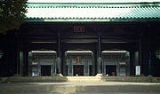
of what would become Edo’s Confucian Academy, the Shōhei-kō (afterwards known as the Yushima Seidō
). This institution stood at the apex of the country-wide educational and training system which was created and maintained by the Tokugawa shogunate
. Gahō's hereditary title was Daigaku-no-kami
, which, in the context of the Tokugawa shogunate hierarchy, effectively translates as "head of the state university.
In the elevated context his father engendered, Gahō worked on editing a chronicle of Japanese emperors compiled in conformance with his father's principles. Nihon Ōdai Ichiran
grew into a seven-volume text which was completed in 1650. Gahō himself was accepted as a noteworthy scholar in that period; but the potent Shōhei-kō and Hayashi family links to the work’s circulation are part of the explanation for this work's 18th and 19th century popularity. Contemporary readers must have found some degree of usefulness in this summary drawn from historical records.
The narrative of Nihon Ōdai Ichiran stops around 1600, most likely in deference to the sensibilities of the Tokugawa regime. Gahō's text did not continue up through his present day; rather, he terminated the chronicles just before the last pre-Tokugawa ruler. Gahō modestly observed that "in a book intended for the shogun's eyes, it is incumbent upon one to be circumspect." This book was published in the mid-17th century and it was reissued in 1803, "perhaps because it was a necessary reference work for officials."
Gahō would become his father's successor as advisor to the shogun. He was, in his lifetime, the Tokugawa shogunate's chief scholar. After Razan's death, Gahō finished work his father had begun, including a number of other works designed to help readers learn from Japan's history. In 1665, Gahō published an anthology of historical poems (Honchō Ichinin Isshū). In 1670, the Hayashi family's scholarly reputation was burnished when Gahō published the 310 volumes of .
Together with his brother, Hayashi Dokkōsai (formerly Morikatsu), Gahō compiled, edited and posthumously published selections from their father's body of writings: Razan Sensei Isshū (Master Razan's Poems), reissued in 1921
Gahō's son, Hayashi Hōkō
(formerly Nobuatsu), would eventuially inherit the position as head of the Shōhei-kō or Yushima Seidō, as well as the honorific Daigaku-no kami; and his progeny would continue the Hayashi traditions.
In January 1858, it would be the hereditary Daigaku-no-kami descendant of Hayashi Razan and Hayashi Gahō who would head the bakufu delegation which sought advice from the emperor in deciding how to deal with newly assertive foreign powers. This would have been the first time the Emperor's counsel was actively sought since the establishment of the Tokugawa shogunate. The most easily identified consequence of this transitional overture would be the increased numbers of messengers which were constantly streaming back and forth between Tokyo and Kyoto during the next decade. There is no small irony in the fact that this 19th century scholar/bureaucrat would find himself at a crucial nexus of managing political change—moving arguably "by the book" through uncharted waters with well-settled theories as the only guide.
Neo-Confucianism
Neo-Confucianism is an ethical and metaphysical Chinese philosophy influenced by Confucianism, that was primarily developed during the Song Dynasty and Ming Dynasty, but which can be traced back to Han Yu and Li Ao in the Tang Dynasty....
scholar, teacher and administrator in the system of higher education maintained by the Tokugawa bakufu
Tokugawa shogunate
The Tokugawa shogunate, also known as the and the , was a feudal regime of Japan established by Tokugawa Ieyasu and ruled by the shoguns of the Tokugawa family. This period is known as the Edo period and gets its name from the capital city, Edo, which is now called Tokyo, after the name was...
during the Edo period
Edo period
The , or , is a division of Japanese history which was ruled by the shoguns of the Tokugawa family, running from 1603 to 1868. The political entity of this period was the Tokugawa shogunate....
. He was a member of the Hayashi clan
Hayashi clan (Confucian scholars)
The ' was a Japanese samurai clan which served as important advisors to the Tokugawa shoguns. Among members of the clan to enjoy powerful positions in the shogunate was its founder Hayashi Razan, who passed on his post as hereditary rector of the neo-Confucianist Shōhei-kō school to his son,...
of Confucian scholars.
Following in the footsteps of his father, Hayashi Razan
Hayashi Razan
, also known as Hayashi Dōshun, was a Japanese Neo-Confucian philosopher, serving as a tutor and an advisor to the first four shoguns of the Tokugawa bakufu. He is also attributed with first listing the Three Views of Japan. Razan was the founder of the Hayashi clan of Confucian scholars.Razan was...
, Gahō (formerly Harukatsu) would devote a lifetime to expressing and disseminating the official neo-Confucian doctrine of the Tokugawa shogunate. Like his distinguished father, Gahō's teaching and scholarly written work emphasized Neo-Confucianist virtues and order.
Academician
Gahō became the unofficial rectorRector
The word rector has a number of different meanings; it is widely used to refer to an academic, religious or political administrator...
of what would become Edo’s Confucian Academy, the Shōhei-kō (afterwards known as the Yushima Seidō
Yushima Seido
, located in the Yushima neighbourhood of Bunkyō, Tokyo, Japan, was constructed as a Confucian temple in the Genroku era of the Edo period .-Tokugawa bureaucrat training center:...
). This institution stood at the apex of the country-wide educational and training system which was created and maintained by the Tokugawa shogunate
Tokugawa shogunate
The Tokugawa shogunate, also known as the and the , was a feudal regime of Japan established by Tokugawa Ieyasu and ruled by the shoguns of the Tokugawa family. This period is known as the Edo period and gets its name from the capital city, Edo, which is now called Tokyo, after the name was...
. Gahō's hereditary title was Daigaku-no-kami
Daigaku-no-kami
was a Japanese Imperial court position and the title of the chief education expert in the rigid court hierarchy. The Imperial Daigaku-no kami predates the Heian period; and the court position continued up through the early Meiji period...
, which, in the context of the Tokugawa shogunate hierarchy, effectively translates as "head of the state university.
In the elevated context his father engendered, Gahō worked on editing a chronicle of Japanese emperors compiled in conformance with his father's principles. Nihon Ōdai Ichiran
Nihon Odai Ichiran
is a 17th century chronicle of the serial reigns of Japanese emperors with brief notes about some of the noteworthy events or other happenings.According to the 1871 edition of the American Cyclopaedia, the translation of Nihon Ōdai Ichiran in 1834 was one of very few books about Japan; and it was...
grew into a seven-volume text which was completed in 1650. Gahō himself was accepted as a noteworthy scholar in that period; but the potent Shōhei-kō and Hayashi family links to the work’s circulation are part of the explanation for this work's 18th and 19th century popularity. Contemporary readers must have found some degree of usefulness in this summary drawn from historical records.
The narrative of Nihon Ōdai Ichiran stops around 1600, most likely in deference to the sensibilities of the Tokugawa regime. Gahō's text did not continue up through his present day; rather, he terminated the chronicles just before the last pre-Tokugawa ruler. Gahō modestly observed that "in a book intended for the shogun's eyes, it is incumbent upon one to be circumspect." This book was published in the mid-17th century and it was reissued in 1803, "perhaps because it was a necessary reference work for officials."
Gahō would become his father's successor as advisor to the shogun. He was, in his lifetime, the Tokugawa shogunate's chief scholar. After Razan's death, Gahō finished work his father had begun, including a number of other works designed to help readers learn from Japan's history. In 1665, Gahō published an anthology of historical poems (Honchō Ichinin Isshū). In 1670, the Hayashi family's scholarly reputation was burnished when Gahō published the 310 volumes of .
Together with his brother, Hayashi Dokkōsai (formerly Morikatsu), Gahō compiled, edited and posthumously published selections from their father's body of writings:
Gahō's son, Hayashi Hōkō
Hayashi Hōkō
, also known as Hayashi Nobutatsu, was a Japanese Neo-Confucian scholar, teacher and administrator in the system of higher education maintained by the Tokugawa bakufu during the Edo period...
(formerly Nobuatsu), would eventuially inherit the position as head of the Shōhei-kō or Yushima Seidō, as well as the honorific Daigaku-no kami; and his progeny would continue the Hayashi traditions.
In January 1858, it would be the hereditary Daigaku-no-kami descendant of Hayashi Razan and Hayashi Gahō who would head the bakufu delegation which sought advice from the emperor in deciding how to deal with newly assertive foreign powers. This would have been the first time the Emperor's counsel was actively sought since the establishment of the Tokugawa shogunate. The most easily identified consequence of this transitional overture would be the increased numbers of messengers which were constantly streaming back and forth between Tokyo and Kyoto during the next decade. There is no small irony in the fact that this 19th century scholar/bureaucrat would find himself at a crucial nexus of managing political change—moving arguably "by the book" through uncharted waters with well-settled theories as the only guide.
Selected works
- Kan'ei shoka keizu-den (with Hayashi Razan), a genealogy of warrior families.
- Honchō tsugan (with Haayshi Razan), a history of Japan.
- Kokushi jitsuroki.
- Nihon Ōdai ichiran.
- Kan'ei keizu (1643).