All Topics  
Gunpei Yokoi

 
Gunpei Yokoi

   Email Print
   Bookmark   Link


Gunpei Yokoi


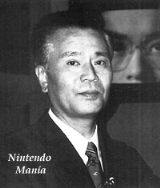
Gunpei Yokoi, also spelled (September 10 1941–October 4 1997), was a long-time Nintendo
Nintendo

is a global company located in Kyoto, Japan founded on September 23, 1889 by Fusajiro Yamauchi to produce handmade hanafuda cards. By 1963, the company had tried several small niche businesses, such as a cab company and a love hotel....
 employee, creator of the Game Boy
Game Boy

The is an 8-bit handheld game console developed and manufactured by Nintendo. It was released in Japan on , in North America in August , and in Europe in ....
, and producer of the long-running Metroid series.

ei Yokoi began working at Nintendo
Nintendo

is a global company located in Kyoto, Japan founded on September 23, 1889 by Fusajiro Yamauchi to produce handmade hanafuda cards. By 1963, the company had tried several small niche businesses, such as a cab company and a love hotel....
 in 1965, after graduating college with a degree in electronics from Doshisha University
Doshisha University

, or is a private university in Kyoto, Japan. It has 24,000 students on three campuses, in faculties of theology, letters, law, commerce, economics, policy, and engineering....
.


Discussion
Ask a question about 'Gunpei Yokoi'
Start a new discussion about 'Gunpei Yokoi'
Answer questions from other users
Full Discussion Forum


Encyclopedia


Gunpei Yokoi, also spelled (September 10 1941–October 4 1997), was a long-time Nintendo
Nintendo

is a global company located in Kyoto, Japan founded on September 23, 1889 by Fusajiro Yamauchi to produce handmade hanafuda cards. By 1963, the company had tried several small niche businesses, such as a cab company and a love hotel....
 employee, creator of the Game Boy
Game Boy

The is an 8-bit handheld game console developed and manufactured by Nintendo. It was released in Japan on , in North America in August , and in Europe in ....
, and producer of the long-running Metroid series.

Nintendo


Toys

Nintendo Love Tester
Gunpei Yokoi began working at Nintendo
Nintendo

is a global company located in Kyoto, Japan founded on September 23, 1889 by Fusajiro Yamauchi to produce handmade hanafuda cards. By 1963, the company had tried several small niche businesses, such as a cab company and a love hotel....
 in 1965, after graduating college with a degree in electronics from Doshisha University
Doshisha University

, or is a private university in Kyoto, Japan. It has 24,000 students on three campuses, in faculties of theology, letters, law, commerce, economics, policy, and engineering....
. Yokoi started out working on the assembly line for the Hanafuda
Hanafuda

are playing cards of Japanese origin , used to play a number of games. The name literally translates as 'flower cards'....
 cards as a maintenance engineer.

In 1970, Hiroshi Yamauchi
Hiroshi Yamauchi

is a Japanese people businessman. He was the third president of Nintendo, beginning in 1949 until stepping down on May 31, 2002. Yamauchi is credited with transforming Nintendo from a small hanafuda card-making company in Japan to a multi-billion dollar video game company, as it currently is....
, president of Nintendo at the time, came to a hanafuda factory Yokoi was working at and took notice of a toy, an extending arm
Arm

In anatomy, an arm is one of the upper limbs of an animal. The term arm can also be used for analogous structures, such as one of the paired upper limbs of a four-legged animal, or the cephalopod arm....
, which Yokoi made for his own amusement during spare time as the company's janitor and machine maintenance man. Yamauchi ordered Yokoi to develop it as a proper product for the Christmas rush. The Ultra Hand
Ultra Hand

The Ultra Hand was a toy created by Gunpei Yokoi, the former Nintendo worker in 1967. It was created before Nintendo, a now famous video game and video game console making company, was in the video game industry....
 was a huge success, selling approximately 1.2 million units. Yokoi was soon moved from maintenance duty to product development. Yokoi went on to develop many other toys during Nintendo's toy era, including the Ten Billion Barrel
Nintendo tumbler puzzle

The Nintendo tumbler puzzle, also known as the Ten Billion Barrel in English language and originally in Japanese language, is a mathematical puzzle in the style of Rubik's Cube....
 puzzle, a miniature remote-controlled vacuum cleaner called the Chiritory, a baseball throwing machine called the Ultra Machine, and a Love Tester
Love tester

The love tester is a novelty device that rates the subject's romanticism. It measures the moisture on the skin surface of the subject's hands and rates them accordingly....
. Another invention of his, in collaboration with Masayuki Uemura
Masayuki Uemura

is a Japanese game hardware designer. Due to the bombings in Japan in that era, his family was forced to move to Kyoto. Having little money, he was forced to make his own toys....
 from Sharp
Sharp Corporation

is a Japanese electronics manufacturer, founded in 1912.It takes its name from one of its founder's first inventions, the Ever-Sharp mechanical pencil, which was invented by Tokuji Hayakawa in 1915....
, was the Nintendo Beam Gun Games, the precursor to the NES Zapper
NES Zapper

The NES Zapper, also known as the Beam Gun in Japan, is an electronic light gun accessory for the Nintendo Entertainment System and the Japanese Famicom....
.

Game & Watch

Nintendo Ultramachine
When Nintendo eventually began selling video games, Yamauchi asked Yokoi to come up with products in this field. After viewing a bored business-man playing with a calculator on a bullet-train, Yokoi invented a prototype.The initial result was Nintendo's popular Game & Watch
Game & Watch

File:Nintendo Game and watch Marios cement factory 1983.jpgThe were handheld electronic games made by Nintendo and created by its game designer Gunpei Yokoi from to ....
 series of handhelds. Game & Watch games were individual handheld games which featured an LCD-display. Some consider the small handhelds to be a prototype of the Game Boy
Game Boy

The is an 8-bit handheld game console developed and manufactured by Nintendo. It was released in Japan on , in North America in August , and in Europe in ....
, which would be released later and prove to be Yokoi's greatest work. These games also featured a "control-cross," which many video game enthusiasts today know as the D-pad
D-pad

A D-pad is a flat, usually thumb-operated directional control found on nearly all modern video game console gamepads, game controllers and on the remote control units of some television and DVD players, with one button on each point....
, a controller part that consists of four buttons grouped in a + shape which correspond to the directions up, down, left, and right. In most games this is used to control the direction of certain objects.

The Game & Watch series saw 59 titles between 1980 and 1991. Many popular arcade games were translated into Game & Watch titles, including Donkey Kong
Donkey Kong (video game)

is an arcade game developed by Nintendo, released in . It is an early example of the Platform game genre, as the gameplay focuses on maneuvering the main character across a series of platforms while dodging obstacles....
 and Mario Bros.
Mario Bros.

is an arcade game published and developed by Nintendo in 1983. It was developed by Shigeru Miyamoto, the creator of the Mario . It is a follow-up to Donkey Kong and stars Mario, a plumber who was previously named "Jumpman"....
, which Yokoi helped to create alongside Shigeru Miyamoto
Shigeru Miyamoto

is a Japanese people video game designer. He created the Mario , Donkey Kong , The Legend of Zelda , F-Zero , Pikmin and Nintendogs franchises for Nintendo game consoles, and mostly works on games as a Game producer....
. Many of these Game & Watch titles were put onto large compilations for the Game Boy series of handhelds, and included classic as well as reinvented versions of Ball, Flagman, Oil Panic and Fire among other titles. These are known as the Game & Watch Gallery
Game & Watch Gallery series

The Game & Watch Gallery series is composed of collections of some of Nintendo's original Game & Watch titles in two styles: original and remade with characters from the Super Mario Bros. series....
 series.

Research & Development 1

Nintendo began assigning its chief engineers to head their own divisions as the electronic industry boomed in the late seventies. Yokoi was appointed to the general manager of the Research and Development 1 (R&D1)
Nintendo Research & Development 1

Nintendo Research and Development 1 was Nintendo's oldest development team. Its creation coincided with Nintendo's entry into the video games industry, and the original R&D1 was headed by Gunpei Yokoi....
 group. R&D1 consisted of 55 designers, programmers, and engineers. It was with this group that Yokoi came up with many new ideas for Nintendo as it entered into the video games market.

Before Miyamoto got his own R&D department in 1984, Gunpei Yokoi helped to produce many of his famous arcade games, such as Donkey Kong
Donkey Kong (video game)

is an arcade game developed by Nintendo, released in . It is an early example of the Platform game genre, as the gameplay focuses on maneuvering the main character across a series of platforms while dodging obstacles....
, Donkey Kong Jr., and the original Mario Bros.
Mario Bros.

is an arcade game published and developed by Nintendo in 1983. It was developed by Shigeru Miyamoto, the creator of the Mario . It is a follow-up to Donkey Kong and stars Mario, a plumber who was previously named "Jumpman"....
. In 1985, Yokoi and his R&D department were responsible for Kid Icarus
Kid Icarus

is a platform game video game developed by Nintendo R&D1 and published by Nintendo for the Famicom Disk System in 1986 and the Nintendo Entertainment System in 1987....
, as well as the first title in one of Nintendo's longest running series, Metroid
Metroid

Metroid is an action-adventure game video game and the first entry in the Metroid . Developed by Nintendo Research & Development 1 and published by Nintendo, the game was released in Japan in August 1986, in North America in August 1987, and in Europe in January 1988....
. Later in 1986, a part of Yokoi's R&D1 group branched off to form Intelligent Systems
Intelligent Systems

is a Japan First-Party video game developer and internal team of Nintendo.Intelligent Systems came into being when members of Nintendo's Nintendo Research & Development 1 division headed by Gunpei Yokoi splintered off into its own development team....
, and Yokoi later produced Battle Clash
Battle Clash

Battle Clash is an anime-influenced, 8-megabit video game software for the Super NES which makes use of the bazooka-shaped Super NES Super Scope light gun....
, Panel de Pon
Panel de Pon

is a computer puzzle game video game developed by Intelligent Systems and published by Nintendo for the Super Nintendo Entertainment System video game console....
 (scored by Masaya Kuzume), and Fire Emblem: Seisen no Keifu (scored by Yuka Tsujiyoko
Yuka Tsujiyoko

Yuka Tsujiyoko is a Japanese people video game music composer for Nintendo. She is the music composer for the Fire Emblem video game franchise, which was not released outside Japan until 2003, and several other Intelligent Systems developed games....
) alongside them. Yokoi was also responsible for hiring the man who would later become legendary for designing the Famicom/NES and Super Famicom/SNES- Masayuki Uemura
Masayuki Uemura

is a Japanese game hardware designer. Due to the bombings in Japan in that era, his family was forced to move to Kyoto. Having little money, he was forced to make his own toys....
.

R&D1 was also responsible for the Robotic Operating Buddy (R.O.B.
R.O.B.

R.O.B. was an accessory for the Nintendo Entertainment System. It was released in July 1985 in Japan as the Famicom Robot and later that year as R.O.B....
) accessory for the Nintendo Entertainment System
Nintendo Entertainment System

The Nintendo Entertainment System is an 8-bit video game console that was released by Nintendo in North America, Europe and Australia in . In most of Asia, including Japan , the Philippines, China, Vietnam and Singapore, it was released as the ....
.

The remaining members of R&D1 remained with Yokoi, and they began developing what became one of Nintendo's most profitable products, the Game Boy.

Game Boy

Gameboy
Yokoi's perhaps most notable work in the hardware area was the Game Boy
Game Boy

The is an 8-bit handheld game console developed and manufactured by Nintendo. It was released in Japan on , in North America in August , and in Europe in ....
 handheld, released in 1989. The Game Boy is a small handheld which appeared to be the successor to the Game & Watch
Game & Watch

File:Nintendo Game and watch Marios cement factory 1983.jpgThe were handheld electronic games made by Nintendo and created by its game designer Gunpei Yokoi from to ....
 games. However, the Game Boy played numerous games through cartridge-based gameplay, and presented games on a monochromatic screen (essentially black and green). In short, it had all the portability of the Game & Watch titles but with the cartridge interchanging capabilities of the Famicom
Nintendo Entertainment System

The Nintendo Entertainment System is an 8-bit video game console that was released by Nintendo in North America, Europe and Australia in . In most of Asia, including Japan , the Philippines, China, Vietnam and Singapore, it was released as the ....
. During its Game & Watch days, Nintendo had marketed the handhelds at an affordable price, while keeping a standard of high quality.

One of the Game Boy's lasting strategies was to provide the user with an affordable product with a decent battery life. Even though higher-ups at Nintendo wanted a full-color screen version of the Game Boy (because other competitors like the Game Gear, TurboExpress
TurboExpress

The TurboExpress or PC Engine GT in Japan was a portable version of the TurboGrafx-16/PC Engine, released by NEC in 1990 for $249.99 ....
 and Atari Lynx were full-color handhelds), Yokoi refused to release a color version until technology permitted a color handheld that would last a significant period under the power of a few batteries. Yokoi's persistence saw the Game Boy, with a larger game library and longer battery life, dominate the handheld market, while the color screen Game Gear, TurboExpress and Atari Lynx failed due to high battery consumption, expensive purchase price and less games.

Yokoi and Nintendo even played a joke on fans who demanded a color Game Boy by revealing a line of Game Boys which had been painted various colors on the outside. The screen was still monochromatic; the change was merely cosmetic. In 1996, the Game Boy Pocket
Game Boy line

The line is a line of Battery -powered handheld game consoles sold by Nintendo. It is one of the world's List of best-selling game consoles lines with nearly 200 million units sold worldwide, as of November 17, 2006....
 updated the monochrome screen with a true black-and-white one and slimmer profile.

Finally, in 1998, the Game Boy Color
Game Boy Color

The is Nintendo's successor to the Game Boy and was released on October 21, 1998 in Japan and in November 19, 1998 in North America and November 23, 1998 in Europe....
 was released, a full-color version of the Game Boy. Keeping with the late Yokoi's standards, the Game Boy Color required two AA (compared to four AA for the original) batteries and had approximately the same battery consumption rate.

Many games for the Game Boy were developed by Yokoi and R&D1. The team had been assigned to develop exclusively for the Game Boy. Some of these include the Super Mario Land
Super Mario Land

is a platform game video game developed by Nintendo for the Game Boy handheld game console. It debuted in Japan on April 21, 1989, in the United States in August of 1989, and in Europe on September 28, 1990....
 series, Metroid II: Return of Samus
Metroid II: Return of Samus

Metroid II: Return of Samus is an action-adventure video game, the second game in the Metroid , and the only one on the Nintendo Game Boy. The sixth installment in the series' overall story, the game was designed by Nintendo Research & Development 1 , developed by Intelligent Systems, and published by Nintendo in North America and Japan i...
, and the puzzle game Dr. Mario
Dr. Mario

Dr. Mario may refer to:*Dr. Mario , a series of video games released for Nintendo systems**Dr. Mario , the first game in the series**Dr. Mario 64 ...
.

Virtual Boy

Gunpei Yokoi had become one of Nintendo's most respected members with his developing of the Game Boy alongside his other achievements. However, he lost some status when he developed the Virtual Boy
Virtual Boy

Nintendo's was the first handheld game console capable of displaying "true 3D computer graphics graphics" out of the box. Most video games are forced to use Depth perception#Monocular cues to achieve the illusion of three dimensions on a two-dimensional screen, but the Virtual Boy was able to create a more accurate illusion of depth through th...
, a home console which presented games in red and black. While the Virtual Boy did present a level of 3D
3D computer graphics

3D computer graphics are graphics that use a Cartesian coordinate system#Three-dimensional coordinate system representation of geometric data that is stored in the computer for the purposes of performing calculations and rendering 2D images....
, the red presented by the machine often irritated many players' eyes, and the machine itself was also fairly uncomfortable to use. The system also had a very small library. As a result, the Virtual Boy performed poorly in both Japan
Japan

Japan is an island country in East Asia. Located in the Pacific Ocean, it lies to the east of the Sea of Japan, People's Republic of China, North Korea, South Korea and Russia, stretching from the Sea of Okhotsk in the north to the East China Sea and Taiwan in the south....
 and North America
North America

North America is the northern continent of the Americas, situated in the Earth's northern hemisphere and almost totally in the western hemisphere....
 and was subsequently never released in Europe
Europe

Europe is, conventionally, one of the world's seven continents. Comprising the westernmost peninsula of Eurasia, Europe is generally divided from Asia to its east by the water divide of the Ural Mountains, the Ural , the Caspian Sea, and by the Caucasus Mountains to the southeast....
. Yokoi was crushed by the Virtual Boy's failure, and the disaster had many at Nintendo questioning Yokoi's capabilities. According to an episode of Icons on the G4 TV channel
G4 (TV channel)

G4 is an United States Cable television, Satellite television, and FiOS television channel originally geared toward male viewers aged 12–28, devoted to the world of video games and technology....
, Yokoi was treated as an outcast before handing in his resignation on August 15, 1996, only days after the Game Boy Pocket was released.

After Nintendo

Gunpei

Koto Laboratory

Soon after he left Nintendo, Yokoi began the company Koto Laboratory in Kyoto. There he began development of the WonderSwan
WonderSwan

is a handheld game console released in Japan by Bandai on March 4, 1999. It was developed by the late Gunpei Yokoi's company Koto and Bandai. The WonderSwan was made to compete with the Neo Geo Pocket Color and the market leader Nintendo's Game Boy Color ....
, a handheld developed in partnership between Koto and Bandai
Bandai

is a Japanese toy making company, as well as the producer of a large number of plastic model kits. It is the world's third largest producer of toys. Some ex-Bandai group companies produce anime and tokusatsu programs....
. Yokoi never saw the final product of the WonderSwan, which was released in 1999, two years after his death.

Death

On October 4 1997, Yokoi was involved in a car accident
Car accident

A car accident is a road traffic incident that usually involves one road vehicle collision with another vehicle or other road user, animal, or a stationary roadside object, and may result in injury, property damage, and possibly death....
. He was riding in a car driven by Etsuo Kiso, a businessman from Nintendo
Nintendo

is a global company located in Kyoto, Japan founded on September 23, 1889 by Fusajiro Yamauchi to produce handmade hanafuda cards. By 1963, the company had tried several small niche businesses, such as a cab company and a love hotel....
. After a minor car accident involving a truck, Kiso and Yokoi pulled over to examine the damage of the two automobiles. While examining, a passing car sideswiped them. Yokoi was grievously injured and pronounced dead two hours later. He was 56. Kiso suffered two badly broken bones and severe whiplash
Whiplash (medicine)

Whiplash and whiplash-associated disorders represent a range of injury to the neck caused by or related to a sudden distortion of the neck.Whiplash is commonly associated with car accident, usually when the vehicle has been hit in the rear however the injury can be sustained in many other ways, including falls from bicycles or horses or h...
.

Awards and recognition

  • Yokoi posthumously received the Lifetime Achievement Award at the Game Developers Choice Awards
    Game Developers Choice Awards

    The Game Developers Choice Awards are annually presented by the Game Developers Conference for outstanding video game development and video game....
     ceremony on March 6, 2003.
  • G4
    G4 (TV channel)

    G4 is an United States Cable television, Satellite television, and FiOS television channel originally geared toward male viewers aged 12–28, devoted to the world of video games and technology....
     ran an episode of Game Makers with the Game Boy as the topic. Much of the episode talks about Yokoi, his position prior to the Game Boy, and his death.


Games designed


Game designer

  • 1980 – Game & Watch
    Game & Watch

    File:Nintendo Game and watch Marios cement factory 1983.jpgThe were handheld electronic games made by Nintendo and created by its game designer Gunpei Yokoi from to ....
  • 1981 – Donkey Kong
    Donkey Kong

    is a fictional character ape who first appeared in Nintendo's popular 1981 in video gaming video game of the Donkey Kong ....
     (helped)
  • 1983 – Mario Bros (helped)
  • 1985 – R.O.B.
    R.O.B.

    R.O.B. was an accessory for the Nintendo Entertainment System. It was released in July 1985 in Japan as the Famicom Robot and later that year as R.O.B....


Game producer

  • 1986 – Metroid
    Metroid

    Metroid is an action-adventure game video game and the first entry in the Metroid . Developed by Nintendo Research & Development 1 and published by Nintendo, the game was released in Japan in August 1986, in North America in August 1987, and in Europe in January 1988....
  • 1986 – Kid Icarus
    Kid Icarus

    is a platform game video game developed by Nintendo R&D1 and published by Nintendo for the Famicom Disk System in 1986 and the Nintendo Entertainment System in 1987....
  • 1988 – Famicom Tantei Club: Kieta Kokeisha
    Famicom Tantei Club: Kieta Kokeisha

    is a text-based adventure game developed and published by Nintendo for the Famicom Disk System on April 27, 1988 and June 14, 1988. The game was ported to the Game Boy Advance in the Famicom Mini series as a single cartridge in 2004, and became available on the Virtual Console in 2007 for 600 Wii points....
  • 1989 – Famicom Tantei Club Part II: Ushiro ni Tatsu Shojo
  • 1990 – Fire Emblem: Ankoku Ryu to Hikari no Ken
  • 1990 – Dr. Mario
  • 1991 – Metroid II: Return of Samus
    Metroid II: Return of Samus

    Metroid II: Return of Samus is an action-adventure video game, the second game in the Metroid , and the only one on the Nintendo Game Boy. The sixth installment in the series' overall story, the game was designed by Nintendo Research & Development 1 , developed by Intelligent Systems, and published by Nintendo in North America and Japan i...
  • 1992 – Fire Emblem Gaiden
    Fire Emblem Gaiden

    is the second installment in the Fire Emblem Tactical role-playing game series developed by Intelligent Systems and published by Nintendo. The game was released on March 14, 1992 in Japan....
  • 1992 – Yoshi's Cookie
    Yoshi's Cookie

    is a computer puzzle game made for the Nintendo Entertainment System, Game Boy, Super Nintendo Entertainment System, and the Virtual Console.Yoshi's Cookie is also a backdrop for Puzzle Mode in Tetris DS and a battle stage in Mario Kart: Double Dash!! ....
  • 1994 – Fire Emblem: Monsho no Nazo
    Fire Emblem: Monsho no Nazo

    is a Japanese tactical role-playing game developed by Intelligent Systems and published by Nintendo. It is the first Fire Emblem title for the Nintendo Super Famicom....
  • 1995 – Panel de Pon
    Panel de Pon

    is a computer puzzle game video game developed by Intelligent Systems and published by Nintendo for the Super Nintendo Entertainment System video game console....
  • 1995 – Kirby's Block Ball
    Kirby's Block Ball

    Kirby's Block Ball is a Breakout-style Game Boy game developed by HAL Laboratory....
  • 1996 – Fire Emblem: Seisen no Keifu


General manager

  • 1994 – Super Metroid
    Super Metroid

    Super Metroid, also known as Metroid 3, is an Action game-Platform game video game and the third game in the Metroid . It was developed by Nintendo Research & Development 1 and Intelligent Systems and published by Nintendo for the Super Nintendo Entertainment System video game console....


Involvement in the Metroid series

Yokoi was the producer of Nintendo's Metroid series, the first game of which was released in 1986, combining the side-scrolling aspects of Super Mario Bros.
Super Mario Bros.

is a Platform game video game developed by Nintendo in late 1985 and published for the Nintendo Entertainment System as a sequel to the 1983 game Mario Bros.....
 and item collecting and non-linearity of The Legend of Zelda
The Legend of Zelda

is a video game designed by Shigeru Miyamoto and developed and published by Nintendo. Set in the fantasy land of Universe of The Legend of Zelda#Hyrule, the plot centers on a boy named Link , the playable protagonist, who aims to rescue Princess Zelda from the primary antagonist, Ganon, by collecting eight fragments of the Universe of The Legend o...
. The third game in the Metroid series, Super Metroid
Super Metroid

Super Metroid, also known as Metroid 3, is an Action game-Platform game video game and the third game in the Metroid . It was developed by Nintendo Research & Development 1 and Intelligent Systems and published by Nintendo for the Super Nintendo Entertainment System video game console....
, was released in 1994, and was the last he worked on before his death in 1997. The first Metroid games after Yokoi's death, Metroid Fusion
Metroid Fusion

Metroid Fusion is an Action-adventure game video game published by Nintendo for the Game Boy Advance. It was released in North America and Europe in November 2002, and in Japan in February 2003....
 and Metroid Prime
Metroid Prime

title = Metroid Prime| image = | caption = North American box art| developer = Retro Studios| publisher = Nintendo| composer = Kenji Yamamoto , Kouichi Kyuma...
, were released simultaneously on 15 November 2002. Metroid Fusion, developed by Nintendo
Nintendo

is a global company located in Kyoto, Japan founded on September 23, 1889 by Fusajiro Yamauchi to produce handmade hanafuda cards. By 1963, the company had tried several small niche businesses, such as a cab company and a love hotel....
, is similar in appearance and gameplay to Super Metroid, while Metroid Prime, developed by Retro Studios
Retro Studios

Retro Studios is an United States video game developer based in Austin, Texas, USA. It was founded in 1998 by Jeff Spangenberg as a second-party developer to Japan-based video game company Nintendo....
, is the first 3D, first-person
First person (video games)

In video games, first person refers to a perspective rendered from the viewpoint of the player character. In many cases, this may be the viewpoint from the cockpit of a vehicle....
 Metroid game.

Lateral Thinking of Withered Technology

Yokoi articulated his philosophy of in the book, , which consists of a collection of interviews. Withered technology in this context refers to a mature technology which is cheap and well understood. Lateral thinking
Lateral thinking

Lateral thinking is a term coined by Edward de Bono, a Maltese people psychologist, physician and writer. It first appeared in the title of his book New Think: The Use of Lateral Thinking, published in 1967....
 refers to finding radical new ways of using such technology. Yokoi held that toys and games do not necessarily require cutting edge technology; novel and fun gameplay
Gameplay

Gameplay includes all player experiences during the interaction with game systems, especially formal games. Proper use is coupled with reference to "what the player does"....
 are more important. In the interview he suggested that expensive cutting edge technology can get in the way of developing a new product.

Game & Watch was developed based on this philosophy. At the time of its development, Sharp
Sharp Corporation

is a Japanese electronics manufacturer, founded in 1912.It takes its name from one of its founder's first inventions, the Ever-Sharp mechanical pencil, which was invented by Tokuji Hayakawa in 1915....
 and Casio
Casio

is a multinational electronic devices manufacturing corporation founded in 1946, with its headquarters in Shibuya, Tokyo, Tokyo, Japan. Casio is best known for its calculators, sound reproduction equipment, Personal digital assistants, cameras, musical instruments, and watches....
 were fiercely competing in the digital calculator
Calculator

A calculator is a device for performing mathematical calculations, distinguished from a computer by having a limited problem solving ability and an interface optimized for interactive calculation rather than programming....
 market. For this reason, there was glut of liquid crystal display
Liquid crystal display

A liquid crystal display is an Electro-optic modulator shaped into a thin, flat panel made up of any number of color or monochrome pixels filled with liquid crystals and arrayed in front of a Light#Light sources or reflector....
s and semiconductor
Semiconductor

A semiconductor is a material that has electrical conductivity between those of a Electrical conductor and an electrical insulation; it can vary over that wide range either permanently or dynamically....
s. The "lateral thinking" was to find an original and fun use for this cheap and abundant technology. The Game Boy, NES, and SNES were all developed under a similar philosophy. However, this strategy has not always been successful. When video game consoles entered the 4th and 5th generation, Sony and later Microsoft adopted a strategy of embracing cutting edge technology and selling their console at a loss, which was compensated by the licensing fee from sales of games. Nintendo's failure to adopt compact disc technology instead of cartridges for the Nintendo 64
Nintendo 64

The , often abbreviated as N64, is Nintendo's third home video game console for the international market. Named for its 64-bit CPU, it was released on June 23, 1996 in Japan, September 29, 1996 in North America, March 1, 1997 in Europe and Australia, September 1, 1997 in France and December 10, 1997 in Brazil....
 was cited as the main reason rival PlayStation gained the upper hand in the 5th generation console market. On the other hand, in the handheld market, Yokoi's refusal to adopt a color display for the Game Boy in favor of long battery life is cited as the main reason it prevailed against Sega's Game Gear and the Atari Lynx.

Satoru Iwata, the current CEO of Nintendo claim that this philosophy is still part of Nintendo as it has been passed on to the disciples of Yokoi, such as Miyamoto and it continues to show itself in Nintendo's current use of technology with the Nintendo DS
Nintendo DS

The is a dual-screen handheld game console developed and manufactured by Nintendo. It was released in 2004 in video gaming in Canada, the United States, and Japan....
 handheld system and the newest home gaming console, the Wii
Wii

The Wii is a home video game console released by Nintendo. As a History of video game consoles console, the Wii primarily competes with Microsoft's Xbox 360 and Sony's PlayStation 3....
. The Wii's internal technology is mostly the same as the previous game system, the GameCube
Nintendo GameCube

The , is Nintendo's fourth home video game console and is part of the History of video game consoles . It is the successor to the Nintendo 64 and predecessor to Nintendo's Wii....
, and is far behind the computational powers and multimedia versatility of other competing video game consoles in the seventh generation; still being the only one to focus primarily on motion-based controls. The DS uses ARM processors
ARM architecture

The ARM architecture is a 32-bit RISC central processing unit architecture developed by ARM Limited that is widely used in embedded system designs....
 at relatively low clock speeds and has far less computational power compared to Sony's competing PSP
PlayStation Portable

The PlayStation Portable is a handheld game console manufactured and marketed by Sony Computer Entertainment. Development of the console was first announced during History of E3#During the Rise of Online Gaming , and it was unveiled on May 11, 2004 at a Sony press conference before E3 2004....
, yet has many features of modern technology built in (such as 802.11b, compatibility with Game Boy Advance games and touchscreen functionality).

External links

  • profile at MobyGames
    MobyGames

    MobyGames is a website devoted to cataloging Video game, both past and present. The site contains an extensive database of video game information....