
Home      Discussion      Topics      Dictionary      Almanac
Signup       Login
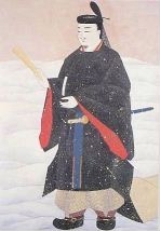
Fujiwara no Michinaga

Fujiwara no Michinaga

Overview
represents the highpoint of the Fujiwara regents' control over the government of Japan.
Discussion
Ask a question about 'Fujiwara no Michinaga'
Start a new discussion about 'Fujiwara no Michinaga'
Answer questions from other users
Full Discussion Forum
 
Unanswered Questions
Encyclopedia
represents the highpoint of the Fujiwara regents' control over the government of Japan.

Early life


He was the fourth or fifth son of Fujiwara no Kaneie
Fujiwara no Kaneie
was a Japanese statesman, courtier and politician during the Heian period.-Career:Kaneie served as a minister during the reigns of Emperor En'yū, Emperor Kazan and Emperor Go-Ichijō....

 by his wife Tokihime, daughter of Fujiwara no Nakamasa. There were two regents and two imperial consorts among his brothers and sisters by the same mother.

As the youngest son of his father, he was not remarkable in the court until his two brothers died. He started his career in the court when he was 15 years old.
  • 986 (Kanna
    Kanna
    Kanna may refer to:*Sceletium tortuosum, a Southern African succulent used by indigenous people of the area and currently world-wide for its psychoactive qualities....

     2
    ): Sakyō no Daibu (左京大夫)
  • 986 (Eien
    Eien
    was a after Kanna and before Eiso. This period spanned the years from April 987 through August 988. The reigning emperor was .-Change of era:* January 2, 987 : The new era name was created to mark an event or a number of events...

     2, 29th day of the 1st month
    ) : Gon-no-Chūnagon
    Chunagon
    was a counselor of the second rank in the Imperial court of Japan. The role dates from the 7th century.The role was eliminated from the Imperial hierarchy in 701, but it was re-established in 705...

     (権中納言)
  • 991 (Shōryaku
    Shoryaku
    was a after Eiso and before Chōtoku. This period spanned the years from November 990 through February 995. The reigning emperor was .-Change of era:* 990 : The new era name was created to mark an event or a number of events...

     2, 7th day of the 9th month
    ): Gon-no-Dainagon
    Dainagon
    was a counselor of the first rank in the Imperial court of Japan. The role dates from the 7th century.This advisory position remained a part of the Imperial court from the 8th century until the Meiji period in the 19th century....

     (権大納言)


In 995 during the reign of Emperor Ichijō
Emperor Ichijo
was the 66th emperor of Japan, according to the traditional order of succession.Ichijō's reign spanned the years from 986 to 1011.-Traditional narrative:Before he ascended to the Chrysanthemum Throne, his personal name was Kanehito-shinnō....

, his two elder brothers Michitaka
Fujiwara no Michitaka
, the first son of Kaneie, was a Kugyō of the Heian period. He served as regent for the Emperor Ichijō, and later as Kampaku...

 and Michikane died of disease. He struggled with Fujiwara no Korechika
Fujiwara no Korechika
, the second son of Michitaka, was a kugyo of the Heian period. His mother was Takashina no Takako, also known as Kō-no-Naishi . His sister Teishi was married to Emperor Ichijō, and Korechika aspired to become the regent for his young brother-in-law after his father's death...

, the elder son of Michitaka, for political power. With support of Senshi, his sister and mother of Ichijō, Michinaga succeeded in gaining power as well the support of majority of the court. He was appointed Nairan, the secretary of the emperor and reviewer who reviewed all the documents before the emperor himself read them.
  • 995 (Chōtoku
    Chotoku
    was a after Eiso and before Chōhō. This period spanned the years from February 995 through January 999. The reigning emperor was .-Change of era:* 995 : The new era name was created to mark an event or a number of events...

     1, 11th day of the 5th month
    ): Nairan
    Nairan
    In the ancient Japanese government, Nairan was the inspection of documents submitted to the Tennō , or the position held by those who performed the inspection....

     (内覧)

Career


Michinaga exerted de facto
De facto
De facto is a Latin expression that means "concerning fact." In law, it often means "in practice but not necessarily ordained by law" or "in practice or actuality, but not officially established." It is commonly used in contrast to de jure when referring to matters of law, governance, or...

 reign over Japan in the early 11th century. This can be seen from the fact that he was father to four (non-reigning) empresses, uncle to two emperors and grandfather to another three.
  • 995 (Chōtoku 1, 19th day of the 6th month): Udaijin
    Udaijin
    Udaijin , most commonly translated as the "Minister of the Right", was a government position in Japan in the late Nara and Heian periods. The position was consolidated in the Taihō Code of 702. The Asuka Kiyomihara Code of 689 marks the initial appearance of the Udaijin in the context of a central...

     (右大臣)
  • 996 (Chōtoku 2, 20th day of the 7th month): Sadaijin
    Sadaijin
    , most commonly translated as "Minister of the Left", was a government position in Japan in the late Nara and Heian periods. The position was consolidated in the Taihō Code of 702. The Asuka Kiyomihara Code of 689 marks the initial appearance of the Sadaijin in the context of a central...

     (左大臣)


Though Ichijō already had an empress, a daughter of Michitaka, he claimed there were two types of empresshood and therefore it was legal for an emperor to have two empresses at the same time. Michinaga's ambitions led him to make his own daughter, Shōshi
Empress Shōshi
or Empress Shōshi , , also known as , the eldest daughter of Fujiwara no Michinaga, was Empress of Japan from c. 1000 to c. 1011...

, a second empress of Ichijō. In 1000 Shōshi was announced as a Chūgū empress and the existing empress Teishi was given the title of Kōgō empress. It was the first time an emperor had two empresses. A power struggle between Korechika and Michinaga continued until Teishi's unexpected death in 1001, which sealed Michinaga's power since Shōshi became the only empress after Teishi's death.

In 1006, Michinaga invited Murasaki Shikibu
Murasaki Shikibu
Murasaki Shikibu was a Japanese novelist, poet and lady-in-waiting at the Imperial court during the Heian period. She is best known as the author of The Tale of Genji, written in Japanese between about 1000 and 1012...

 to become Empress Shōshi’s companion and tutor.)

Shōshi was the mother of two princes who became emperors: Emperor Go-Ichijō
Emperor Go-Ichijo
was the 68th emperor of Japan, according to the traditional order of succession.Go-Ichijō's reign spanned the years from 1016 through 1036.This 11th century sovereign was named after Emperor Ichijō and go- , translates literally as "later;" and thus, he is sometimes called the "Later Emperor Ichijō"...

 and Emperor Go-Suzaku
Emperor Go-Suzaku
was the 69th emperor of Japan, according to the traditional order of succession.Go-Suzaku's reign spanned the years from 1036 through 1045.This 11th-century sovereign was named after the 10th-century Emperor Suzaku and go- , translates literally as "later;" and thus, he is sometimes called the...

. Michinaga's other daughters, Kenshi and Ishi, followed similar fates to Shōshi and further ensured Michinaga's power over the court.
  • 1011 (Kankō
    Kanko
    was a after Chōhō and before Chōwa. This period spanned the years from July 1004 through December 1012. The reigning emperors were and .-Change of Era:* 1004 : The era namewas changed to mark an event or series of events...

     8, 13th day of the 6th month
    ): In the 25th year of Emperor Ichijō's reign (一条天皇25年), the emperor abdicated; and the succession (‘‘senso’’) was received by his cousin. Shortly thereafter, Emperor Sanjō is said to have acceded to the throne (‘‘sokui’’).


After Ichijō retired because of illness, Emperor Sanjō
Emperor Sanjo
was the 67th emperor of Japan, according to the traditional order of succession.Sanjō's reign spanned the years from 1011 through 1016.-Traditional narrative:...

 ascended the throne. Though Sanjō was a nephew of Michinaga (the mother of Sanjō was another sister of Michinaga; she had died already in Sanjō's childhood and he was relatively less influenced by his maternal line).
  • 1011 (Kankō 8): Michinaga is Sesshō
  • 1011 (Kankō 8, 23rd day of the 8th month): Fujiwara Michinaga is granted the extraordinary privilege of travelling to and from the court by ox-drawn cart.


Michinaga and Sanjō's opinions often varied. Michinaga pressured Sanjō to retire and finally Sanjō did so in 1016 under a condition made upon Sanjō's succession. Sanjō's elder son was appointed as Go-Ichijō's successor.
  • 1011 (Kankō 8): Prince Atsunari, the second son of former-Emperor Ichijo, is proclaimed Crown Prince. Sanjō's eldest son, Prince Atsuakira, had been the officially designated heir, but pressure from Michinaga forced the young prince to abandon his position.


Michinaga's political power and influence led to the crown prince's resignation by his will. Michinaga was pleased by this decision and gave his daughter (either Kenshi or Ishi) to this prince as a wife, ensuring that the prince would not be an obstacle in the future.
  • 1012 (Chōwa
    Chowa
    was a after Kankō and before Kannin. This period spanned the years from December 1012 through April 1017. The reigning emperors were and .-Change of era:* 1012 : The era name was changed to mark Emperor Sanjō's accession in the previous year...

     1, 8th month
    ): Emperor Sanjō marries a daughter of Sesshō and later Kampaku Fujiwara no Michinaga.


During the initial years of Go-Ichijō's reign, Fujiwara no Michinaga actually ruled from his position as sesshō (regent
Regent
A regent, from the Latin regens "one who reigns", is a person selected to act as head of state because the ruler is a minor, not present, or debilitated. Currently there are only two ruling Regencies in the world, sovereign Liechtenstein and the Malaysian constitutive state of Terengganu...

). Although Michinaga never formally took on the title of kampaku regent, he exercised great power and influence.
  • 1013 (Chōwa 2, 9th month): Sanjō visits the home of Michinaga.
  • 1013 (Chōwa 3, 5th month): Sanjō visited the home of Michinaga where he enjoyed himself with horse riding and archery.
  • 1015 (Chōwa 4, 10th month): Michinaga's 50th birthday is celebrated.
  • 1016 (Chōwa 5, 29th day of the 1st month): Michinaga is Sesshō
    Sessho and Kampaku
    In Japan, was a title given to a regent who was named to assist either a child emperor before his coming of age, or an empress. The was theoretically a sort of chief advisor for the emperor, but was the title of both first secretary and regent who assists an adult emperor. During the Heian era,...

     for Emperor Go-Ichijō
    Emperor Go-Ichijo
    was the 68th emperor of Japan, according to the traditional order of succession.Go-Ichijō's reign spanned the years from 1016 through 1036.This 11th century sovereign was named after Emperor Ichijō and go- , translates literally as "later;" and thus, he is sometimes called the "Later Emperor Ichijō"...

  • 1017 (Chōwa 6, 16th day of the 3rd month): retired from Sesshō

  • 1017 (Kannin
    Kannin
    was a after Chōwa and before Jian. This period spanned the years from April 1017 through February 1021. The reigning emperor was .-Change of era:* 1017 : The era name was changed to mark an event or series of events...

     1, 8th month
    ): Prince Atsuakira, the eldest son of Emperor Sanjo, had been named Crown Prince, but after he is struck by a skin disease and under intense pressure from Michinaga; he withdraws from this role and his younger brother, Prince Atsunaga, is named Crown Prince in his place.
  • 1017 (Kannin 1, 9th month): Michinaga made a pilgrimage to the Iwashimizu Shrine
    Iwashimizu Shrine
    The is a Shinto shrine in the city of Yawata in Kyoto Prefecture, Japan. -History:The shrine's Heian period connections with the Kyoto and the Imperial family date from its founding in 859 when construction on its earliest structures commenced...

     accompanied by many courtiers. The travelers divided themselves amongst 15 boats for a floating trip down the Yotogawa River. One of the vessels overturned, and more than 30 people lost their lives.
  • 1017 (Kannin 1, 4th day of the 12th month): Michinaga was elevated to the office of Daijō Daijin.
  • 1018 (Kannin 2, 9th day of the 2nd month): retires from Daijō Daijin
  • 1019 (Kannin 3, 21st day of the 3rd month): Becomes a priest.

Later years


Michinaga exercised such powers even after he formally retired from public life in 1019. He continued to direct the affairs of his son and successor, Fujiwara no Yorimichi
Fujiwara no Yorimichi
' , son of Michinaga, was a Japanese Court noble. He succeeded his father to the position of Sesshō in 1017, and then went on to become Kampaku from 1020 until 1068...

.

Michinaga is popularly known as the Mido Kampaku, implying that he had usurped the full power of a kampaku without necessarily calling himself that, though he retained the title sesshō regent in a short term from 1016 till 1017. In 1017, he gave this office to his heir Yorimichi. Soon afterwards, a series of emperors started to retire to a monastery
Monastery
Monastery denotes the building, or complex of buildings, that houses a room reserved for prayer as well as the domestic quarters and workplace of monastics, whether monks or nuns, and whether living in community or alone .Monasteries may vary greatly in size – a small dwelling accommodating only...

 early in life, and put their young sons on the throne to run the country from behind the scenes. As it turned out, this tactic briefly allowed the emperors to wrestle power back from the Fujiwara clan, only to see it fall to the Taira warrior clan instead.

Death

  • January 3, 1028 (Manju
    Manju (era)
    was a after Jian and before Chōgen. This period spanned the years from July 1024 through July 1028. The reigning emperor was .-Change of era:* 1024 : The new era name was created to mark an event or series of events...

     4, 4th day of the 12th month
    ): Michinaga died at the age of 62.

Legacy


Michinaga left a diary
Diary
A diary is a record with discrete entries arranged by date reporting on what has happened over the course of a day or other period. A personal diary may include a person's experiences, and/or thoughts or feelings, including comment on current events outside the writer's direct experience. Someone...

, Mido Kanpakuki (御堂関白記), that is one of our prime sources of information about Heian
Heian period
The is the last division of classical Japanese history, running from 794 to 1185. The period is named after the capital city of Heian-kyō, or modern Kyōto. It is the period in Japanese history when Buddhism, Taoism and other Chinese influences were at their height...

-era court life at its height.

Self-evaluation


"This world, I think,
Is indeed my world.
Like the full moon I shine,
Uncovered by any cloud"


This poem is known as Mochizuki no Uta (望月の歌) (Full Moon Poem). In 1018, his daughter Ishi became Empress (Chūgū) of Emperor Go-Ichijō, Kenshi became Empress Dowager (Kōtaigō), and Shōshi was Grand Empress Dowager (Tai-Kōtaigō). Three of his daughters became Empresses. Furthermore both Emperor Go-Ichijō and Crown Prince Atsunaga were his grandsons. This poem was composed at the party to celebrate his daughter's accession. He expressed his delight to win power in this poem.

Genealogy


He was married to Minamoto no Rinshi/Michiko (源倫子), daughter of Sadaijin
Sadaijin
, most commonly translated as "Minister of the Left", was a government position in Japan in the late Nara and Heian periods. The position was consolidated in the Taihō Code of 702. The Asuka Kiyomihara Code of 689 marks the initial appearance of the Sadaijin in the context of a central...

 Minamoto no Masanobu
Minamoto no Masanobu
' , third son of Imperial Prince Atsumi , a kugyo of the Heian period. His mother was a daughter of Fujiwara no Tokihira. He became Sadaijin in 978. His daughter Rinshi was married to Fujiwara no Michinaga, when Michinaga was in far lower position...

. They had six children.
  • Shōshi
    Empress Shōshi
    or Empress Shōshi , , also known as , the eldest daughter of Fujiwara no Michinaga, was Empress of Japan from c. 1000 to c. 1011...

     (彰子) (Jōtōmon-in, 上東門院) (988-1074) - consort of Emperor Ichijō
    Emperor Ichijo
    was the 66th emperor of Japan, according to the traditional order of succession.Ichijō's reign spanned the years from 986 to 1011.-Traditional narrative:Before he ascended to the Chrysanthemum Throne, his personal name was Kanehito-shinnō....

  • Yorimichi
    Fujiwara no Yorimichi
    ' , son of Michinaga, was a Japanese Court noble. He succeeded his father to the position of Sesshō in 1017, and then went on to become Kampaku from 1020 until 1068...

     (頼通) (992-1074) - regent for Emperor Go-Ichijō
    Emperor Go-Ichijo
    was the 68th emperor of Japan, according to the traditional order of succession.Go-Ichijō's reign spanned the years from 1016 through 1036.This 11th century sovereign was named after Emperor Ichijō and go- , translates literally as "later;" and thus, he is sometimes called the "Later Emperor Ichijō"...

    , Emperor Go-Suzaku, and Emperor Go-Reizei
  • Kenshi (妍子) (994-1027) - consort of Emperor Sanjō
    Emperor Sanjo
    was the 67th emperor of Japan, according to the traditional order of succession.Sanjō's reign spanned the years from 1011 through 1016.-Traditional narrative:...

  • Norimichi
    Fujiwara no Norimichi
    , fifth son of Michinaga, was a kugyo of the Heian period. His mother was Minamoto no Rinshi , daughter of Minamoto no Masanobu. Regent Yorimichi, Empress Shōshi , Empress Kenshi were his brother and sisters from the same mother...

     (教通) (996-1075) - regent for Emperor Go-Sanjō
    Emperor Go-Sanjo
    was the 71st emperor of Japan, according to the traditional order of succession.Go-Sanjō's reign spanned the years from 1068 through 1073.This 11th century sovereign was named after Emperor Sanjō and go- , translates literally as "later;" and thus, he is sometimes called the "Later Emperor Sanjō"...

     and Emperor Shirakawa
    Emperor Shirakawa
    was the 72nd emperor of Japan, according to the traditional order of succession.Shirakawa's reign lasted from 1073 to 1087.-Genealogy:Before his ascension to the Chrysanthemum Throne, his personal name was Sadahito-shinnō ....

  • Ishi (威子) (999-1036) - consort of Emperor Go-Ichijō
    Emperor Go-Ichijo
    was the 68th emperor of Japan, according to the traditional order of succession.Go-Ichijō's reign spanned the years from 1016 through 1036.This 11th century sovereign was named after Emperor Ichijō and go- , translates literally as "later;" and thus, he is sometimes called the "Later Emperor Ichijō"...

  • Kishi (嬉子) (1007-1025) - consort of Crown Prince Atsunaga (later Emperor Go-Suzaku
    Emperor Go-Suzaku
    was the 69th emperor of Japan, according to the traditional order of succession.Go-Suzaku's reign spanned the years from 1036 through 1045.This 11th-century sovereign was named after the 10th-century Emperor Suzaku and go- , translates literally as "later;" and thus, he is sometimes called the...

    )


He was also married to Minamoto no Meishi (源明子), daughter of Sadaijin
Sadaijin
, most commonly translated as "Minister of the Left", was a government position in Japan in the late Nara and Heian periods. The position was consolidated in the Taihō Code of 702. The Asuka Kiyomihara Code of 689 marks the initial appearance of the Sadaijin in the context of a central...

 Minamoto no Takaakira. They had six children.
  • Yorimune (頼宗) (993-1065) - Udaijin
    Udaijin
    Udaijin , most commonly translated as the "Minister of the Right", was a government position in Japan in the late Nara and Heian periods. The position was consolidated in the Taihō Code of 702. The Asuka Kiyomihara Code of 689 marks the initial appearance of the Udaijin in the context of a central...

  • Akinobu (顕信) (994-1027) - He became a priest at the age of 19.
  • Yoshinobu (能信) (995-1065) - Gon-no-Dainagon
    Dainagon
    was a counselor of the first rank in the Imperial court of Japan. The role dates from the 7th century.This advisory position remained a part of the Imperial court from the 8th century until the Meiji period in the 19th century....

  • Kanshi (寛子) (999-1025) - consort of Imperial Prince Atsuakira (Ko-Ichijō-in)
  • Sonshi (尊子) (1003?-1087?) - married to Minamoto no Morofusa
  • Nagaie (長家) (1005-1064) - Gon-no-Dainagon
    Dainagon
    was a counselor of the first rank in the Imperial court of Japan. The role dates from the 7th century.This advisory position remained a part of the Imperial court from the 8th century until the Meiji period in the 19th century....


Michinaga had one daughter from unknown woman.
  • Seishi (盛子) (?-?) - married to Emperor Sanjō
    Emperor Sanjo
    was the 67th emperor of Japan, according to the traditional order of succession.Sanjō's reign spanned the years from 1011 through 1016.-Traditional narrative:...


External links