
Home      Discussion      Topics      Dictionary      Almanac
Signup       Login
Flag of South Africa

Flag of South Africa

Overview
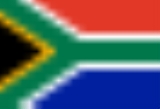
The current flag of the Republic of South Africa
South Africa
The Republic of South Africa is a country in southern Africa. Located at the southern tip of Africa, it is divided into nine provinces, with of coastline on the Atlantic and Indian oceans...

was adopted on 27 April 1994, at the beginning of the 1994 general election
South African general election, 1994
The South African general election of 1994 was an election held in South Africa to mark the end of apartheid, therefore also the first held with universal adult suffrage. The election was conducted under the direction of the Independent Electoral Commission .Millions queued in lines over a three...

, to replace the flag that had been used since 1928. The new national flag
National flag
A national flag is a flag that symbolizes a country. The flag is flown by the government, but usually can also be flown by citizens of the country.Both public and private buildings such as schools and courthouses may fly the national flag...

, designed by State Herald
Bureau of Heraldry (South Africa)
The Bureau of Heraldry is the South African heraldic authority, established in Pretoria on 1 June 1963. It is headed by a National Herald and its functions are to register arms, badges, flags and seals , to keep a public register, to issue registration certificates and, since 1980, to advise the...

 Frederick Brownell
Frederick Brownell
Frederick Gordon Brownell OMSS SM MMM JCD is a South African herald, vexillologist, and genealogist.He joined the Bureau of Heraldry as Assistant State Herald in 1977, and was promoted to State Herald in 1982. He retired in 2002....

, was chosen to represent the new democracy.
Discussion
Ask a question about 'Flag of South Africa'
Start a new discussion about 'Flag of South Africa'
Answer questions from other users
Full Discussion Forum
 
Quotations

"As South Africans daily work to build a better society, they are surrounded in many forms and countless manifestations by a flag which recognises and celebrates the unity and diversity of the country's people.

"Few would have imagined, almost a decade ago, that this collection of colourful shapes could become such a potent symbol of unity and progress. But then fewer still would have thought that a country torn apart by decades of racial oppression could transform itself into a beacon of democracy and hope." -- Nelson Mandela Category:Themes

Encyclopedia
The current flag of the Republic of South Africa
South Africa
The Republic of South Africa is a country in southern Africa. Located at the southern tip of Africa, it is divided into nine provinces, with of coastline on the Atlantic and Indian oceans...

was adopted on 27 April 1994, at the beginning of the 1994 general election
South African general election, 1994
The South African general election of 1994 was an election held in South Africa to mark the end of apartheid, therefore also the first held with universal adult suffrage. The election was conducted under the direction of the Independent Electoral Commission .Millions queued in lines over a three...

, to replace the flag that had been used since 1928. The new national flag
National flag
A national flag is a flag that symbolizes a country. The flag is flown by the government, but usually can also be flown by citizens of the country.Both public and private buildings such as schools and courthouses may fly the national flag...

, designed by State Herald
Bureau of Heraldry (South Africa)
The Bureau of Heraldry is the South African heraldic authority, established in Pretoria on 1 June 1963. It is headed by a National Herald and its functions are to register arms, badges, flags and seals , to keep a public register, to issue registration certificates and, since 1980, to advise the...

 Frederick Brownell
Frederick Brownell
Frederick Gordon Brownell OMSS SM MMM JCD is a South African herald, vexillologist, and genealogist.He joined the Bureau of Heraldry as Assistant State Herald in 1977, and was promoted to State Herald in 1982. He retired in 2002....

, was chosen to represent the new democracy.

The flag has horizontal bands of red
Red
Red is any of a number of similar colors evoked by light consisting predominantly of the longest wavelengths of light discernible by the human eye, in the wavelength range of roughly 630–740 nm. Longer wavelengths than this are called infrared , and cannot be seen by the naked eye...

 (on the top) and blue
Blue
Blue is a colour, the perception of which is evoked by light having a spectrum dominated by energy with a wavelength of roughly 440–490 nm. It is considered one of the additive primary colours. On the HSV Colour Wheel, the complement of blue is yellow; that is, a colour corresponding to an equal...

 (on the bottom), of equal width, separated by a central green
Green
Green is a color, the perception of which is evoked by light having a spectrum dominated by energy with a wavelength of roughly 520–570 nanometres. In the subtractive color system, it is not a primary color, but is created out of a mixture of yellow and blue, or yellow and cyan; it is considered...

 band which splits into a horizontal "Y" shape, the arms of which end at the corners of the hoist side (and follow the flag's diagonals). The Y embraces a black
Black
Black is the color of objects that do not emit or reflect light in any part of the visible spectrum; they absorb all such frequencies of light...

 isosceles triangle from which the arms are separated by narrow yellow
Yellow
Yellow is the color evoked by light that stimulates both the L and M cone cells of the retina about equally, with no significant stimulation of the S cone cells. Light with a wavelength of 570–590 nm is yellow, as is light with a suitable mixture of red and green...

 bands; the red and blue bands are separated from the green band and its arms by narrow white
White
White is a color, the perception of which is evoked by light that stimulates all three types of color sensitive cone cells in the human eye in nearly equal amounts and with high brightness compared to the surroundings. A white visual stimulation will be void of hue and grayness.White light can be...

 stripes. The stripes at the fly end are in the 5:1:3:1:5 ratio.

In blazon
Blazon
In heraldry and heraldic vexillology, a blazon is a formal description of a coat of arms, flag or similar emblem, from which the reader can reconstruct the appropriate image...

s (a vexillological
Vexillology
Vexillology is the scholarly study of flags. The word is a synthesis of the Latin word vexillum, meaning 'flag', and the Greek suffix -logy, meaning 'study'. The vexillum was a particular type of flag used by Roman legions during the classical era; its name is a diminutive form of the word velum...

 description using flag terminology
Flag terminology
Flag terminology is a jargon used in vexillology, the study of flags, to describe precisely the parts, patterns, and other attributes of flags and their display.-Description of standard flag parts and terms:...

), the South African flag is described as "per pall
Pall (heraldry)
A pall is a Y-shaped heraldic charge. An example of a pall placed horizontally is the green portion of the Flag of South Africa....

 fess
Fess
In heraldry, a fess or fesse is a charge on a coat of arms that takes the form of a band running horizontally across the centre of the shield. Writers disagree in how much of the shield's surface is to be covered by a fess or other ordinary, ranging from one-fifth to one-third...

wise gules
Gules
In heraldry, gules is the tincture with the colour red, and belongs to the class of dark tinctures called "colours". In engraving, it is sometimes depicted as a region of vertical lines or else marked with gu. as an abbreviation....

, sable
Sable (heraldry)
In heraldry, sable is the tincture black, and belongs to the class of dark tinctures, called "colours". In engravings and line drawings, it is sometimes depicted as a region of crossed horizontal and vertical lines or else marked with sa. as an abbreviation.The name derives from the black fur of...

 and azure
Azure
In heraldry, azure is the tincture with the colour blue, and belongs to the class of tinctures called "colours". In engraving, it is sometimes depicted as a region of horizontal lines or else marked with either az. or b. as an abbreviation....

, a fesswise pall vert
Vert
The colour green is commonly found in modern flags and coat of arms, and to a lesser extent also in the classical heraldry of the Late Middle Ages and the Early Modern period....

 fimbriated
Fimbriation
In heraldry and vexillology, fimbriation refers to small stripes of colour placed around common charges or ordinaries, usually in order for them to stand out from the background, but perhaps just because the designer felt it looked better, or for a more technical reason to avoid what would...

 argent
Argent
In heraldry, argent is the tincture of silver, and belongs to the class of light tinctures, called "metals". It is very frequently depicted as white and usually considered interchangeable with it...

, Or
Or (heraldry)
In heraldry, Or is the tincture of gold and, together with argent , belongs to the class of light tinctures called "metals". In engravings and line drawings, it may be represented using a field of evenly spaced dots...

 and argent."

Design and symbolism


According to official South African government information, the South African flag is "a synopsis of principal elements of the country's flag history." Although different people may attribute personal symbolism to the individual colours or colour combinations, "no universal symbolism should be attached to any of the colours." The only symbolism in the flag is the V or Y shape, which can be interpreted as "the convergence of diverse elements within South African society, taking the road ahead in unity".

From time to time explanations of the meanings or symbolism of the flag's colours are published in various media, including official government publications and speeches by government officials.

Three of the colours — black, green and yellow — are found in the flag of the African National Congress
African National Congress
The African National Congress is South Africa's governing Africanist political party, supported by its tripartite alliance with the Congress of South African Trade Unions and the South African Communist Party , since the establishment of non-racial democracy in April 1994. It defines itself as a...

. The other three — red, white and blue — are used in the modern flag of the Netherlands
Flag of the Netherlands
The flag of the Netherlands is a horizontal tricolour of red, white, and blue. Since 1937, the flag has officially been the national flag of the Netherlands and of the Kingdom of the Netherlands.-Description:...

 and the flag of the United Kingdom
Flag of the United Kingdom
The United Kingdom of Great Britain and Northern Ireland uses as its national flag the royal banner known as the Union Flag or, popularly, Union Jack. The current design of the Union Flag dates from the union of Ireland and Great Britain in 1801...

; the colours white and blue were also found in the old flag of South Africa
South Africa
The Republic of South Africa is a country in southern Africa. Located at the southern tip of Africa, it is divided into nine provinces, with of coastline on the Atlantic and Indian oceans...

.
Former South African President F.W. de Klerk, who proclaimed the new flag on 20 April 1994, stated in his autobiography, The Last Trek: a New Beginning, that chilli red was chosen instead of plain red (which Anglo-African
Anglo-African
Anglo-Africans are primarily White African people of largely British descent who live or come from Sub-Saharan Africa and are Anglophone. A large majority live in South Africa...

s would have preferred) or orange
Orange (colour)
The colour orange occurs between red and yellow in the visible spectrum at a wavelength of about 585–620 nm, and has a hue of 30° in HSV colour space. It is numerically halfway between red and yellow in a gamma-compressed RGB colour space, the expression of which is the RGB colour wheel. The...

 (as Afrikaners would have preferred).

Colour

Colour Textile colour Pantone
Pantone
Pantone Inc. is a corporation headquartered in Carlstadt, New Jersey, USA. The company is best known for its Pantone Matching System , a proprietary color space...

 equivalent
RGB  RGB Sample
Green CKS 42 c Spectrum green 3415 c #007C59
Black CKS 401 c Blue black #000000
White CKS 701 c National flag white #FFFFFF
Gold CKS 724 c Gold yellow 1235 c #FCB514
Red CKS 750 c Chilli red 179 c #E23D28
Blue CKS 762 c National flag blue Reflex blue c #0C1C8C

Red Ensign


After the Anglo-Boer War
Second Boer War
The Second Boer War was fought from 11 October 1899 until 31 May 1902 between the British Empire and the Afrikaans-speaking Dutch settlers of two independent Boer republics, the South African Republic and the Orange Free State...

 from 1899 to 1902 and the formation of the Union of South Africa
Union of South Africa
The Union of South Africa is the historic predecessor to the present-day Republic of South Africa. It came into being on 31 May 1910 with the unification of the previously separate colonies of the Cape, Natal, Transvaal and the Orange Free State...

 in 1910, the British
United Kingdom
The United Kingdom of Great Britain and Northern IrelandIn the United Kingdom and Dependencies, other languages have been officially recognised as legitimate autochthonous languages under the European Charter for Regional or Minority Languages...

 Union Flag
Union Flag
The Union Flag, also known as the Union Jack, is the flag of the United Kingdom. It retains an official or semi-official status in some Commonwealth Realms; for example, it is known as the Royal Union Flag in Canada. It is also used as an official flag in some of the smaller British overseas...

 was the national flag in South Africa.

As was the case throughout the British Empire
British Empire
The British Empire comprised the dominions, colonies, protectorates, mandates and other territories ruled or administered by the United Kingdom. It originated with the overseas colonies and trading posts established by England in the late 16th and early 17th centuries. At its height, it was the...

, the Red
Red Ensign
The Red Ensign or "Red Duster" is a flag that originated in the early 17th century as a British ensign flown by the Royal Navy and later specifically by British merchantmen. The precise date of its first appearance is not known, but surviving receipts indicate that the Navy was paying to have such...

 and Blue Ensign
Blue Ensign
The Blue Ensign is a flag, one of several British ensigns, used by certain organisations or territories associated with the United Kingdom. It is used either plain, or defaced with a badge or other emblem....

 were the official flags for merchant and government vessels at sea, and the British Admiralty authorised them to be defaced with the shield of the South African coat of arms. These ensigns were not intended to be used as the Union's national flag, although they were used by some people as such.

1928-94 flag


It was only after the first post-Union Afrikaner
Afrikaner
Afrikaners are an ethnic group in Southern Africa descended from almost equal numbers of Dutch, French and German settlers whose native tongue is Afrikaans: a Germanic language which derives primarily from 17th century Dutch, and a variety of other languages.-Related ethno-linguistic groups:The...

 government took office in 1925 that a bill was introduced in Parliament
Parliament of South Africa
The Parliament of South Africa is South Africa's legislature and under the country's current Constitution is composed of the National Assembly and the National Council of Provinces....

 to introduce a national flag for the Union. This provoked violent controversy that lasted for three years, as the British thought that the Afrikaner
Afrikaner
Afrikaners are an ethnic group in Southern Africa descended from almost equal numbers of Dutch, French and German settlers whose native tongue is Afrikaans: a Germanic language which derives primarily from 17th century Dutch, and a variety of other languages.-Related ethno-linguistic groups:The...

s wanted to remove the imperial symbols. Natal Province even threatened to secede from the Union.

Finally, a compromise was reached that resulted in the adoption of a separate flag for the Union in late 1927 and the design was first hoisted on 31 May 1928. The design was based on the so-called Van Riebeeck flag or Prinsevlag ("Prince's Flag" in Afrikaans
Afrikaans
Afrikaans is a West Germanic language, spoken natively in South Africa and Namibia. It is a daughter language of Dutch, originating in its 17th century dialects, collectively referred to as Cape Dutch .Afrikaans is a daughter language of Dutch; see , , , , , .Afrikaans was historically called Cape...

) that was originally the Dutch flag
Flag of the Netherlands
The flag of the Netherlands is a horizontal tricolour of red, white, and blue. Since 1937, the flag has officially been the national flag of the Netherlands and of the Kingdom of the Netherlands.-Description:...

; it consisted of orange, white, and blue horizontal stripes. A version of this flag had been used as the flag of the Dutch East India Company
Dutch East India Company
The Dutch East India Company was a chartered company established in 1602, when the States-General of the Netherlands granted it a 21-year monopoly to carry out colonial activities in Asia...

 at the Cape (with the VOC logo in the centre) from 1652 until 1795. The South African addition to the design was three smaller flags centred in the white stripe. The smaller flags were the Union Flag
Union Flag
The Union Flag, also known as the Union Jack, is the flag of the United Kingdom. It retains an official or semi-official status in some Commonwealth Realms; for example, it is known as the Royal Union Flag in Canada. It is also used as an official flag in some of the smaller British overseas...

(mirrored) towards the hoist, the flag of the Orange Free State
Flag of the Orange Free State
The flag of the Orange Free State was designed in 1856 and adopted officially on 23 February 1857 on the third anniversary of the republic....

(mirrored) hanging vertically in the middle and the Transvaal Vierkleur
Flag of Transvaal
The Flag of Transvaal was the flag of the former Transvaal province of South Africa. It was previously the flag of the historic Transvaal Republic, officially called the Zuid Afrikaanse Republiek or in English translation, the South African Republic, from 1857 to 1874, 1875-1877, and 1881-1902.The...

towards the fly.

The choice of the Prinsevlag as the basis upon which to design the South African flag had more to do with compromise than Afrikaner political desires, as the Prinsevlag was believed to be the first flag hoisted on South African soil and was politically neutral, as it was no longer the national flag of any nation. A further element of this compromise was that the Union Flag would continue to fly alongside the new South African national flag over official buildings. This state of duality continued until 1957 when the Union Flag lost its official status per an Act of Parliament
Act of Parliament
An Act of Parliament is a statute enacted as primary legislation by a national or sub-national parliament. In the Republic of Ireland the term Act of the Oireachtas is used, and in the United States the term Act of Congress is used.In Commonwealth countries, the term is used both in a narrow...

. The Red Ensign remained the merchant flag until 1 January 1960.

Following a referendum the country became a republic
Republic
A republic is a form of government in which the people, or some significant portion of them, have supreme control over the government and where offices of state are elected or chosen by elected people. In modern times, a common simplified definition of a republic is a government where the head of...

 on 31 May 1961, but the design of the flag remained unchanged. However there was intense pressure to change the flag, particularly from Afrikaners who resented the fact that the Union Flag was a part of the flag.

1994 flag


The present South African national flag was first flown on 27 April 1994. However, the flag was first commissioned as an interim flag only, and was decided upon at the very last minute, barely making it onto the nation's flagpoles in time for the election.

The choice of a new flag was part of the negotiation process set in motion when Nelson Mandela
Nelson Mandela
Nelson Rolihlahla Mandela served as President of South Africa from 1994 to 1999, and was the first South African president to be elected in a fully representative democratic election. Before his presidency, Mandela was an anti-apartheid activist, and the leader of Umkhonto we Sizwe, the armed wing...

 was released from prison in 1990. When a nationwide public competition was held in 1993, the National Symbols Commission received more than 7,000 designs. Six designs were drawn up and presented to the public and the Negotiating Council, but none elicited enthusiastic support. A number of design studios were contacted to submit further proposals, but they were again without success. Parliament
Parliament of South Africa
The Parliament of South Africa is South Africa's legislature and under the country's current Constitution is composed of the National Assembly and the National Council of Provinces....

 went into recess
Recess (motion)
In parliamentary procedure, "recess" refers to legislative bodies—such as parliaments, assemblies, juries—that are released to reassemble at a later time. The members may leave the meeting room, but are expected to remain nearby. A recess may be simply to allow a break or it may be...

 at the end of 1993 without a suitable candidate for the new national flag.

None of the flag designs submitted by the public was supported by the committee charged to select the final design. An interim flag was designed by State Herald
Bureau of Heraldry (South Africa)
The Bureau of Heraldry is the South African heraldic authority, established in Pretoria on 1 June 1963. It is headed by a National Herald and its functions are to register arms, badges, flags and seals , to keep a public register, to issue registration certificates and, since 1980, to advise the...

 Frederick Brownell
Frederick Brownell
Frederick Gordon Brownell OMSS SM MMM JCD is a South African herald, vexillologist, and genealogist.He joined the Bureau of Heraldry as Assistant State Herald in 1977, and was promoted to State Herald in 1982. He retired in 2002....

 for the 27 April elections, the nation's first fully inclusive elections, and for Nelson Mandela
Nelson Mandela
Nelson Rolihlahla Mandela served as President of South Africa from 1994 to 1999, and was the first South African president to be elected in a fully representative democratic election. Before his presidency, Mandela was an anti-apartheid activist, and the leader of Umkhonto we Sizwe, the armed wing...

's 10 May inauguration. Although the flag had mixed reception, the interim version was made the final, national flag in the South African Constitution
Constitution of South Africa
The Constitution of South Africa is the supreme law of the country of South Africa. It provides the legal foundation for the existence of the republic, sets out the rights and duties of its citizens, and defines the structure of the government. The current constitution, the country's fifth, was...

. The new flag is seen as an enduring symbol of the modern South African state.

In February 1994, Cyril Ramaphosa
Cyril Ramaphosa
Matamela Cyril Ramaphosa is a South African lawyer, trade union leader, activist, politician and businessman. He was born in Soweto, Gauteng province...

 and Roelf Meyer
Roelf Meyer
Roelof Petrus Meyer, born in Port Elizabeth on 16 July 1947 as the son of a farmer, is a South African politician and businessman.After completing school in Ficksburg, he studied law at the University of the Free State and finished with B Comm and LLB degrees. At the university, he was president...

, chief negotiators of the African National Congress
African National Congress
The African National Congress is South Africa's governing Africanist political party, supported by its tripartite alliance with the Congress of South African Trade Unions and the South African Communist Party , since the establishment of non-racial democracy in April 1994. It defines itself as a...

 and the National Party
National Party (South Africa)
The National Party is a former political party in South Africa. Founded in 1914, it was the governing party of the country from 4 June 1948 until 9 May 1994. Members of the National Party were sometimes known as Nationalists or Nats. Its policies included apartheid, the establishment of a...

 government of the day respectively, were given the task of resolving the flag issue. A final design was adopted on 15 March 1994, derived from a design developed by Frederick Brownell
Frederick Brownell
Frederick Gordon Brownell OMSS SM MMM JCD is a South African herald, vexillologist, and genealogist.He joined the Bureau of Heraldry as Assistant State Herald in 1977, and was promoted to State Herald in 1982. He retired in 2002....

, who had also designed the Flag of Namibia
Flag of Namibia
The flag of Namibia was adopted on March 21, 1990 upon independence from South Africa.The main colours were taken from the flag of the South West Africa People's Organization , the most important liberation movement in Namibia...

. The proclamation of the new national flag was only published on 20 April 1994, a mere seven days before the flag was to be inaugurated, sparking a frantic last-minute flurry for flag manufacturers. As stated in South Africa's post-apartheid interim constitution, the flag was to be introduced on an interim probationary period of five years, after which there would be discussion about whether or not to change the national flag in the final draft of the constitution
Constitution of South Africa
The Constitution of South Africa is the supreme law of the country of South Africa. It provides the legal foundation for the existence of the republic, sets out the rights and duties of its citizens, and defines the structure of the government. The current constitution, the country's fifth, was...

. However, the flag was very well received and was included in the final draft without much debate.

Proper display of the flag


The South African government published rules for proper display of the flag at designated flag stations, in Government Notice 510 of 8 June 2001 (Gazette number 22356). These rules apply only to official flag stations and not to the general public.

The Southern African Vexillological Association (SAVA), a non-official association for the study of flags, published their own guide for proper display of the flag in 2002. This guide has no official authority but was drawn up with global vexillological principles in mind.

Heraldic description


An addendum to the Transitional Executive Council agenda (April 1994) described the flag in heraldic terms as follows:

The National flag shall be rectangular in the proportion of two in the width to three to the length; per pall from the hoist, the upper band red (chilli) and lower band blue, with a black triangle at the hoist; over the partition lines a green pall one fifth the width of the flag, fimbriated white against the red and blue, and gold against the black triangle at the hoist, and the width of the pall and its fimbriations is one third the width of the flag.

Schedule One of the Constitution of South Africa (1996) replaced the heraldic definition and described the flag in plain English as follows:

The national flag is rectangular; it is one and a half times as long as it is wide.
  1. It is black, gold, green, white, chilli red and blue.
  2. It has a green Y-shaped band that is one fifth as wide as the flag. The centre lines of the band start in the top and bottom corners next to the flag post, converge in the centre of the flag, and continue horizontally to the middle of the free edge.
  3. The green band is edged, above and below in white, and towards the flag post end, in gold. Each edging is one fifteenth as wide as the flag.
  4. The triangle next to the flag post is black.
  5. The upper horizontal band is chilli red and the lower horizontal band is blue. These bands are each one third as wide as the flag.

See also


  • National anthem of South Africa
    National anthem of South Africa
    Since 1997, the South African national anthem has been a hybrid song combining new English lyrics with extracts of the hymn "Nkosi Sikelel' iAfrika" and the former anthem "Die Stem van Suid-Afrika" . The fact that it shifts and ends in a different key, a feature it shares with the Italian national...

  • List of South African flags

Printed matter

  • Saker, Henry. The South African Flag Controversy. Oxford University Press, Cape Town. 1980. ISBN 0-19-570172-0.
  • Pama, C. Die Vlae van Suid-Afrika. Tafelberg Publishers, Cape Town, 1984
  • SAVA Journal SJ: 4/95: The History of Flags of South Africa before 1900

See also

  • Coat of arms of South Africa
    Coat of arms of South Africa
    The present coat of arms of South Africa was introducedon Freedom Day April 27, 2000. It replaced the earlier national arms, which had been in use since 1910. The motto ǃke e: ǀxarra ǁke is written in the Khoisan language of the ǀXam people and translates literally to "diverse people unite"...

  • List of South African flags
  • National anthem of South Africa
    National anthem of South Africa
    Since 1997, the South African national anthem has been a hybrid song combining new English lyrics with extracts of the hymn "Nkosi Sikelel' iAfrika" and the former anthem "Die Stem van Suid-Afrika" . The fact that it shifts and ends in a different key, a feature it shares with the Italian national...

  • National flower of South Africa
    National flower of South Africa
    The giant or king protea is widely distributed in the south-western and southern areas of the Western Cape, from the Cedarberg up to just east of Grahamstown. South Africa's national flower is the largest of the proteas, which make up an important part of the Cape Floral Region, a major global...

  • National symbols of South Africa
    National symbols of South Africa
    Since unification in 1910, South Africa has used a range of national symbols to identify the country: coats of arms, official seals, flags, national anthems, and floral, bird, animal, and other emblems.-Coats of arms:...


External links