
All Topics  
Eggshell


   Email Print
   Bookmark   Link


Eggshell


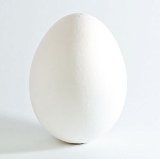
An eggshell is the outer covering of a hard-shelled egg
Egg (biology)

In most birds and reptiles, an egg is the zygote, resulting from fertilization of the ovum. To enable incubation the egg is usually kept within a favourable temperature range as it nourishes and protects the growing embryo....
 term and of some forms of eggs with soft outer coats.

The generalized eggshell structure, which varies widely among species, is a protein
Protein

Proteins are organic compounds made of amino acids arranged in a linear chain and joined together by peptide bonds between the carboxyl and amino groups of adjacent amino acid Residue ....
 matrix lined with mineral crystals, usually of a calcium
Calcium

Calcium is the chemical element with the symbol Ca and atomic number 20. It has an atomic mass of 40.078 amu. Calcium is a soft grey alkaline earth metal, and is the fifth most abundant element by mass in the earth's Crust ....
 compound such as calcium carbonate
Calcium carbonate

Calcium carbonate is a chemical compound with the chemical formula CalciumCarbonOxygen3. It is a common substance found as Rock in all parts of the world, and is the main component of seashells, snails, and eggshells....
. It is calcium build-up and is not made of cells. Harder eggs are more mineralized than softer eggs.

Diversity
Insect eggs
Insect
Insect

Insects are the biggest class of arthropods and the only ones with wings. They are the most diverse group of animals on the planet. They are most diverse at the equator and their diversity declines toward the poles....
s and other arthropod
Arthropod

Arthropods are animals belonging to the Scientific classification Arthropoda , and include the insects, arachnids, crustaceans, and others....
s lay a variety of styles and shapes of eggs.


Discussion
Ask a question about 'Eggshell'
Start a new discussion about 'Eggshell'
Answer questions from other users
Full Discussion Forum


Recent Posts


Encyclopedia


An eggshell is the outer covering of a hard-shelled egg
Egg (biology)

In most birds and reptiles, an egg is the zygote, resulting from fertilization of the ovum. To enable incubation the egg is usually kept within a favourable temperature range as it nourishes and protects the growing embryo....
 term and of some forms of eggs with soft outer coats.

The generalized eggshell structure, which varies widely among species, is a protein
Protein

Proteins are organic compounds made of amino acids arranged in a linear chain and joined together by peptide bonds between the carboxyl and amino groups of adjacent amino acid Residue ....
 matrix lined with mineral crystals, usually of a calcium
Calcium

Calcium is the chemical element with the symbol Ca and atomic number 20. It has an atomic mass of 40.078 amu. Calcium is a soft grey alkaline earth metal, and is the fifth most abundant element by mass in the earth's Crust ....
 compound such as calcium carbonate
Calcium carbonate

Calcium carbonate is a chemical compound with the chemical formula CalciumCarbonOxygen3. It is a common substance found as Rock in all parts of the world, and is the main component of seashells, snails, and eggshells....
. It is calcium build-up and is not made of cells. Harder eggs are more mineralized than softer eggs.

Diversity


Insect eggs


Insect
Insect

Insects are the biggest class of arthropods and the only ones with wings. They are the most diverse group of animals on the planet. They are most diverse at the equator and their diversity declines toward the poles....
s and other arthropod
Arthropod

Arthropods are animals belonging to the Scientific classification Arthropoda , and include the insects, arachnids, crustaceans, and others....
s lay a variety of styles and shapes of eggs. Some have gelatinous or skin-like coverings, others have hard eggshells. Softer shells are mostly protein. It may be fibrous or quite liquid. Some arthropod eggs do not actually have shells, rather, their outer covering is actually the outermost extraembryonic membrane, the chorion, which serves to protect inner layers. The chorion itself can be a complex structure, and it may have different layers within it. It may have an outermost layer called an exochorion. Eggs which must survive in dry conditions usually have hard eggshells, made mostly of dehydrated or mineralized proteins with pore systems to allow respiration
Respiration (physiology)

In animal physiology, respiration is the transport of Oxygen from the outside air to the cells within Tissue s and the transport of carbon dioxide in the opposite direction....
. Arthropod eggs can have extensive ornamentation on their outer surfaces.

Fish, amphibian and reptile eggs


Fish
Fish

A fish is any marine biology vertebrate animal that is typically ectothermic , covered with scale , and equipped with two sets of paired fins and several unpaired fins....
 and amphibian
Amphibian

Amphibians , such as frogs, toads, salamanders, newts and caecilians, are cold-blooded animals that metamorphose from a juvenile, water-breathing form to an adult, air-breathing form....
s generally lay eggs which are surrounded by the extraembryonic membranes but do not develop a shell, hard or soft, around these membranes. Some fish and amphibian eggs have thick, leathery coats, especially if they must withstand physical force or desiccation.

While many reptile
Reptile

Reptiles, or members of the class Reptilia, are air-breathing, cold-blooded vertebrates that have skin covered in scale as opposed to hair or feathers....
s lay eggs with flexible, calcified, eggshells, there are some that lay hard eggs. Eggs laid by snakes generally have leathery shells which often adhere to one another. Depending on the species, turtles and tortoises lay hard or soft eggs. Several species lay eggs which are nearly indistinguishable from bird eggs. Hatching reptiles, like most birds, have egg-teeth
Egg tooth

In some egg -laying animals, the egg tooth is a small, sharp, cranial protuberance used by offspring to break or tear through the egg's surface during hatching....
 with which they slit or peck an opening into the shell to help them emerge.

Bird eggs


Bird
Bird

Birds are wing, Bipedalismal, endothermic , vertebrate animals that lay egg . There are around 10,000 living species, making them the most numerous tetrapod vertebrates....
s are known for their hard-shelled eggs after cooling. The eggshell is approximately 95% calcium carbonate
Calcium carbonate

Calcium carbonate is a chemical compound with the chemical formula CalciumCarbonOxygen3. It is a common substance found as Rock in all parts of the world, and is the main component of seashells, snails, and eggshells....
 crystals, which are stabilized by a protein matrix. Without the protein, the crystal structure would be too brittle to keep its form. The standard bird eggshell is a semipermeable membrane
Semipermeable membrane

A semipermeable membrane, also termed a selectively-permeable membrane, a partially-permeable membrane or a differentially-permeable membrane, is a membrane that will allow certain molecules or ions to pass through it by diffusion and occasionally specialized "facilitated diffusion." The rate of passage depends on the press...
 filled with thousands of pores and covered on its outer surface with a cuticle
Cuticle

In biology, a cuticle or cuticula is any of a variety of tough but flexible, non-mineral outer coverings of an organism, or part of an organism, that provide protection....
 (called the bloom if it is around a chicken egg), which helps the egg retain its water and keep out bacteria
Bacteria

The Bacteria are a large group of unicellular microorganisms. Typically a few micrometres in length, bacteria have a wide range of shapes, ranging from spheres to rods and spirals....
. As an egg develops within a bird's reproductive system, the shell is laid down as a liquid mineral layer around the already-formed extraembryonic membranes. This takes place in a part of the bird's oviduct
Oviduct

In oviparous animals , the passage from the ovary to the outside of the body is known as the oviduct. The eggs travel along the oviduct. These eggs will either be fertilized by sperm to become a zygote, or will degenerate in the body....
 which is called the uterus and serves a very different purpose from the uterus of a mammal
Mammal

Mammals are a class of vertebrate animals whose name is derived from their distinctive feature, mammary glands, with which they feed their young....
. The shell is laid down by shell glands. In an average laying hen
Chicken

The chicken is a Domestication fowl. Recent evidence suggests that domestication of the chicken was under way in Vietnam over 10,000 years ago....
, the process of shell formation takes around 20 hours. Pigment
Pigment

A pigment is a material that changes the color of light it Reflection as the result of selective color absorption. This physical process differs from fluorescence, phosphorescence, and other forms of luminescence, in which the material itself emits light....
ation is added to the shell, coloring it any of a variety of colors and patterns depending on species. The waxy cuticle is deposited on the shell in the vagina of the bird's oviduct. The chick has an egg-tooth
Egg tooth

In some egg -laying animals, the egg tooth is a small, sharp, cranial protuberance used by offspring to break or tear through the egg's surface during hatching....
 which it uses to start a hole in the hard eggshell to allow it to hatch.

Mammal eggs


Monotreme
Monotreme

Monotremes are mammals that lay eggs instead of giving birth to live young like Marsupialias and Placentalia .They are conventionally treated as comprising a single order Monotremata, though a recent classification proposes to divide them into the orders Platypoda and Tachyglossa ....
s, egg-laying mammals, lay soft-shelled eggs similar to those of reptiles. The shell is deposited on the egg in layers within the uterus. The egg can take up fluids and grow in size during this process, and the final, most rigid layer is not added until the egg is full-size.

See also


  • Eggshell skull
    Eggshell skull

    The eggshell skull rule is a legal doctrine used in both tort law and criminal law that holds an individual liable for all consequences resulting from his or her activities leading to an injury to another person, even if the victim suffers an unusually high level of damage ....
     rule, in tort
    Tort

    Tort law is the name given to a body of law that addresses, and provides remedies for, civil wrongs not arising out of contractual obligations. A person who suffers legal damages may be able to use tort law to receive compensation from someone who is liability, or "liable," for those injuries....
     law
  • walk on eggshells