
Home      Discussion      Topics      Dictionary      Almanac
Signup       Login
Edvard Grieg

Edvard Grieg

Overview

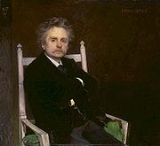
Edvard Hagerup Grieg (June 15, 1843 – September 4, 1907) was a Norwegian
Norway
Norway , officially the Kingdom of Norway, is a country in Northern Europe occupying the western portion of the Scandinavian Peninsula, as well as Jan Mayen and the Arctic archipelago of Svalbard under the Spitsbergen Treaty...

 composer
Composer
A composer is a person who creates music, usually by musical notation, for interpretation and performance. The level of distinction between composers and other musicians varies, which affects issues such as copyright and the deference given to individual interpretations of a particular piece of...

 and pianist
Pianist
A pianist is a musician who plays the piano. A professional pianist can perform solo pieces, play with an ensemble or orchestra, or accompany one or more singers, solo instrumentalists, or other performers....

 who composed in the Romantic period. He is best known for his Piano Concerto in A minor
Piano Concerto (Grieg)
The Piano Concerto in A minor, Op. 16 by Edvard Grieg was the only concerto Grieg completed. It is one of his most popular works and among the most popular of all piano concerti.-Structure :The concerto is in three movements:...

, for his incidental music to Henrik Ibsen
Henrik Ibsen
Henrik Johan Ibsen was a major 19th-century Norwegian playwright, theatre director, and poet. He is often referred to as the "father of modern drama" and is one of the founders of Modernism in the theatre. His plays were considered scandalous to many of his era, when Victorian values of family...

's play Peer Gynt
Peer Gynt
Peer Gynt is a five-act play in verse by the Norwegian dramatist Henrik Ibsen, loosely based on the fairy tale Per Gynt. Interpreted in its day as a satire on the Norwegian personality, Peer Gynt is the story of a life based on avoidance. A first edition of 1,250 copies was published on 14...

(which includes Morning Mood
Morning Mood
Morning Mood is a composition belonging to Edvard Grieg's Peer Gynt Suite No. 1, op. 46. Used often in television commercials and motion pictures, the piece depicts the rising of the sun. Next to In the Hall of the Mountain King, Morning Mood is one of Grieg's best known works.-External links:* *...

and In the Hall of the Mountain King
In the Hall of the Mountain King
In the Hall of the Mountain King is a piece of orchestral music, Opus 23, composed by Edvard Grieg for Henrik Ibsen's play Peer Gynt, which premiered in Oslo on February 24, 1876. In the Hall of the Mountain King is a piece of orchestral music, Opus 23, composed by Edvard Grieg for Henrik...

), and for his collection of piano
Piano
The piano is a musical instrument which is played by means of a keyboard. Widely used in Western music for solo performances, ensemble use, chamber music, and accompaniment, the piano is also very popular as an aid to composing and rehearsal...

 miniatures Lyric Pieces
Lyric Pieces
Lyric Pieces is a collection of 66 short pieces for solo piano written by Edvard Grieg. They were published in 10 volumes, from 1867 to 1901...

.

Grieg was born in Bergen
Bergen
Bergen is the second largest city in Norway, with a population of 253,600 as of July 2009. Bergen is the administrative centre of Hordaland county. Greater Bergen or Bergen Economic Region, as defined by Statistics Norway, had a population of 385,450 as of January 2009.Bergen is located in the...

, Norway
Norway
Norway , officially the Kingdom of Norway, is a country in Northern Europe occupying the western portion of the Scandinavian Peninsula, as well as Jan Mayen and the Arctic archipelago of Svalbard under the Spitsbergen Treaty...

 on 15 June 1843. The original family name was spelled Greig
Greig (name)
Greig is a surname and given name. The surname Grieg is of Scottish origin and is derived from a a shortened form of the personal name Gregory. The given name Grieg is of English and Scottish origin. The name is also derived from a short form of the personal name Gregory or Gregor...

, originally from Scotland.
Discussion
Ask a question about 'Edvard Grieg'
Start a new discussion about 'Edvard Grieg'
Answer questions from other users
Full Discussion Forum
 
Unanswered Questions
Encyclopedia

Edvard Hagerup Grieg (June 15, 1843 – September 4, 1907) was a Norwegian
Norway
Norway , officially the Kingdom of Norway, is a country in Northern Europe occupying the western portion of the Scandinavian Peninsula, as well as Jan Mayen and the Arctic archipelago of Svalbard under the Spitsbergen Treaty...

 composer
Composer
A composer is a person who creates music, usually by musical notation, for interpretation and performance. The level of distinction between composers and other musicians varies, which affects issues such as copyright and the deference given to individual interpretations of a particular piece of...

 and pianist
Pianist
A pianist is a musician who plays the piano. A professional pianist can perform solo pieces, play with an ensemble or orchestra, or accompany one or more singers, solo instrumentalists, or other performers....

 who composed in the Romantic period. He is best known for his Piano Concerto in A minor
Piano Concerto (Grieg)
The Piano Concerto in A minor, Op. 16 by Edvard Grieg was the only concerto Grieg completed. It is one of his most popular works and among the most popular of all piano concerti.-Structure :The concerto is in three movements:...

, for his incidental music to Henrik Ibsen
Henrik Ibsen
Henrik Johan Ibsen was a major 19th-century Norwegian playwright, theatre director, and poet. He is often referred to as the "father of modern drama" and is one of the founders of Modernism in the theatre. His plays were considered scandalous to many of his era, when Victorian values of family...

's play Peer Gynt
Peer Gynt
Peer Gynt is a five-act play in verse by the Norwegian dramatist Henrik Ibsen, loosely based on the fairy tale Per Gynt. Interpreted in its day as a satire on the Norwegian personality, Peer Gynt is the story of a life based on avoidance. A first edition of 1,250 copies was published on 14...

(which includes Morning Mood
Morning Mood
Morning Mood is a composition belonging to Edvard Grieg's Peer Gynt Suite No. 1, op. 46. Used often in television commercials and motion pictures, the piece depicts the rising of the sun. Next to In the Hall of the Mountain King, Morning Mood is one of Grieg's best known works.-External links:* *...

and In the Hall of the Mountain King
In the Hall of the Mountain King
In the Hall of the Mountain King is a piece of orchestral music, Opus 23, composed by Edvard Grieg for Henrik Ibsen's play Peer Gynt, which premiered in Oslo on February 24, 1876. In the Hall of the Mountain King is a piece of orchestral music, Opus 23, composed by Edvard Grieg for Henrik...

), and for his collection of piano
Piano
The piano is a musical instrument which is played by means of a keyboard. Widely used in Western music for solo performances, ensemble use, chamber music, and accompaniment, the piano is also very popular as an aid to composing and rehearsal...

 miniatures Lyric Pieces
Lyric Pieces
Lyric Pieces is a collection of 66 short pieces for solo piano written by Edvard Grieg. They were published in 10 volumes, from 1867 to 1901...

.

Biography


Grieg was born in Bergen
Bergen
Bergen is the second largest city in Norway, with a population of 253,600 as of July 2009. Bergen is the administrative centre of Hordaland county. Greater Bergen or Bergen Economic Region, as defined by Statistics Norway, had a population of 385,450 as of January 2009.Bergen is located in the...

, Norway
Norway
Norway , officially the Kingdom of Norway, is a country in Northern Europe occupying the western portion of the Scandinavian Peninsula, as well as Jan Mayen and the Arctic archipelago of Svalbard under the Spitsbergen Treaty...

 on 15 June 1843. The original family name was spelled Greig
Greig (name)
Greig is a surname and given name. The surname Grieg is of Scottish origin and is derived from a a shortened form of the personal name Gregory. The given name Grieg is of English and Scottish origin. The name is also derived from a short form of the personal name Gregory or Gregor...

, originally from Scotland. After the Battle of Culloden
Battle of Culloden
The Battle of Culloden was the final clash between the French-supported Jacobites and the Hanoverian British Government in the 1745 Jacobite Rising. Culloden dealt the Jacobite cause—to restore the House of Stuart to the throne of the Kingdom of Great Britain—a decisive defeat...

 in 1746, his great-grandfather traveled widely, settling in Norway around 1770, and establishing business interests in Bergen. Grieg was raised in a musical home. His mother, Gesine B. Hagerup, became his first piano
Piano
The piano is a musical instrument which is played by means of a keyboard. Widely used in Western music for solo performances, ensemble use, chamber music, and accompaniment, the piano is also very popular as an aid to composing and rehearsal...

 teacher, who taught him to play from the age of 6. He studied in several schools including Tank's School, and often brought in examples of his music to class.

In the summer of 1858, Grieg met the eminent Norwegian violin
Violin
The violin is a bowed string instrument with four strings usually tuned in perfect fifths. It is the smallest and highest-pitched member of the violin family of string instruments, which also includes the viola and cello....

ist Ole Bull
Ole Bull
Ole Bornemann Bull was a Norwegian violinist.-Early life:Bull was born in Bergen. His father, Johan Storm Bull, wished for him to become a minister, but he desired a musical career. At the age of four or five, he could play all of the songs he had heard his mother play on the violin...

, who was a friend of the family, and whose brother was married to Grieg's aunt. Bull noticed the 15-year-old boy's talent and persuaded his parents to send him to further develop his talents at the Leipzig Conservatory, then directed by Ignaz Moscheles
Ignaz Moscheles
Ignaz Moscheles was a Bohemian composer and piano virtuoso, whose career after his early years was based initially in London, and later at Leipzig, where he succeeded his friend and sometime pupil Felix Mendelssohn as head of the Conservatoire.-Sources:Much of what we know about Moscheles's life...

.

Grieg enrolled in the conservatory, concentrating on the piano, and enjoyed the numerous concerts and recitals given in Leipzig
Leipzig
Leipzig is, with a population of 515,459, the largest city in the federal state of Saxony, Germany.-Origins:Leipzig's name is derived from the Slavic word Lipsk, which means "settlement where the lime trees stand"....

. He disliked the discipline of the conservatory course of study, yet he still achieved very good grades in most areas, an exception being the organ
Organ (music)
The organ is a keyboard instrument of one or more divisions, each played with its own keyboard operated either with the hands or with the feet...

, which was mandatory for piano students. In the spring of 1860, he survived a life-threatening lung disease
Respiratory disease
Respiratory Disease is the term for diseases of the respiratory system. These include diseases of the lung, pleural cavity, bronchial tubes, trachea, upper respiratory tract and of the nerves and muscles of breathing. Respiratory diseases range from mild and self-limiting such as the common cold to...

. The following year he made his debut as a concert pianist, in Karlshamn
Karlshamn
Karlshamn is a locality and the seat of Karlshamn Municipality in Blekinge County, Sweden with 18,768 inhabitants in 2005.Karlshamn received a Royal Charter and city privileges in 1664, when King Charles X Gustav realized the strategic location near the Baltic Sea and the rivalling Danish troops...

, Sweden
Sweden
Sweden , officially the Kingdom of Sweden , is a Nordic country on the Scandinavian Peninsula in Northern Europe...

. In 1862, he finished his studies in Leipzig, and held his first concert in his home town of Bergen, where his programme included Beethoven
Ludwig van Beethoven
Ludwig van Beethoven was a German composer and pianist. He was a crucial figure in the transitional period between the Classical and Romantic eras in Western classical music, and remains one of the most acclaimed and influential composers of all time.Born in Bonn, of the Electorate of Cologne and...

's Pathétique
Piano Sonata No. 8 (Beethoven)
Ludwig van Beethoven's Piano Sonata No. 8 in C minor, Op. 13, commonly known as Sonata Pathétique, was written in 1798 when the composer was 28 years old, and was published in 1799. Beethoven dedicated the work to his friend Prince Karl von Lichnowsky...

sonata. (Grieg's own recording of his Piano Sonata
Piano Sonata (Grieg)
Edvard Grieg's Piano Sonata in E minor, Op. 7 was written in 1865 when Grieg was only 22 years old. The sonata was published a year later and revised in 1887. The work was Grieg's only piano sonata and was dedicated to Danish composer Niels Wilhelm Gade. A 1903 recording exists of Grieg performing...

, made late in his life, shows he was an excellent pianist).

In 1863, Grieg went to Copenhagen
Copenhagen
Copenhagen ; ) is the capital and largest city of Denmark, with an urban area with a population of 1,167,569 and a metropolitan area with a population of 1,875,179...

, Denmark
Denmark
Denmark is a Scandinavian country in Northern Europe and the senior member of the Kingdom of Denmark. It is the southernmost of the Nordic countries; southwest of Sweden and south of Norway, and it is bordered to the south by Germany. Denmark borders both the Baltic and the North Sea...

, and stayed there for three years. He met the Danish composers J. P. E. Hartmann
Johan Peter Emilius Hartmann
Johan Peter Emilius Hartmann was a Danish composer.-Biography:Hartmann came from a musical family of German descent. Although he received his music lessons initially from his father, he taught himself as much as possible...

 and Niels Gade. He also met his fellow Norwegian composer Rikard Nordraak
Rikard Nordraak
Rikard Nordraak was a Norwegian composer, born in Christiania . He is best known for having composed the Norwegian national anthem....

 (composer of the Norwegian national anthem
Ja, vi elsker dette landet
is the national anthem of Norway. It is commonly referred to as just "Ja, vi elsker" . The lyrics were written by Bjørnstjerne Bjørnson between 1859 and 1868, and the melody was written by his cousin Rikard Nordraak in 1864. It was first performed publicly on 17 May 1864 in connection with the 50th...

), who became a good friend and source of great inspiration. Nordraak died in 1866, and Grieg composed a funeral march
Sørgemarsj over Rikard Nordraak
Edvard Grieg composed a funeral march, or Sørgemarsj, in memory of Rikard Nordraak, a fellow Norwegian composer who died at the age of 23. Grieg deeply respected his fellow musician and took no delay in producing the work...

 in his honor. Grieg had close ties with the Bergen Philharmonic Orchestra
Bergen Philharmonic Orchestra
The Bergen Philharmonic Orchestra is one of the world's oldest orchestral institutions. It performs some 110 concerts a year, and is based at the 1,500-seat Grieg Hall in Bergen, Norway.-History:...

 (Harmonien), and later became Music Director of the orchestra from 1880–1882.

On 11 June 1867, Grieg married his first cousin (a daughter of Edvard Hagerup
Edvard Hagerup
Edvard Hagerup was a Norwegian solicitor and politician. He was born in Kristiansand, the son of a bishop Eiler Hagerup b. 1718 and Edvardine Magdalene Margarethe Christie b. 1755....

), Nina Hagerup
Nina Grieg
Nina Grieg, born Hagerup was a Danish-Norwegian lyric soprano. She was the first cousin of composer Edvard Grieg and they married June 11 1867 in Copenhagen....

. The next year their only child, Alexandra, was born. The following summer, Grieg wrote his Piano Concerto in A minor while on holiday in Denmark. Edmund Neupert
Edmund Neupert
Edmund Neupert was a Norwegian pianist and composer.He was a teacher at the Stern'sches Konservatorium in Berlin from 1866-1868. He then moved to Copenhagen, where he held a position at the town's conservatory for two years...

 gave the concerto its premiere performance on 3 April 1869 in the Casino Theater in Copenhagen. Grieg himself was unable to be there due to commitments conducting in Christiania (as Oslo
Oslo
is the capital and largest city in Norway. Founded around 1048 by King Harald III of Norway, the town was largely destroyed by a fire in 1624. The Danish–Norwegian king Christian IV rebuilt the city as Christiania . Oslo, then an alternative name, became official again in 1925...

 was then named).

In 1868, Franz Liszt
Franz Liszt
Franz Liszt was a Hungarian composer, virtuoso pianist and teacher....

, who had not yet met Grieg, wrote a testimonial for him to the Norwegian Ministry of Education, which led to Grieg obtaining a travel grant. The two men met in Rome
Rome
Rome is the capital of Italy and the country's largest and most populated municipality , with over 2.7 million residents in , while the population of the urban area is estimated by Eurostat to be 3.46 million. The metropolitan area of Rome is estimated by OECD to have a population of 3.7 million...

 in 1870. On Grieg's first visit, they went over Grieg's Violin Sonata No. 1, which pleased Liszt greatly. On his second visit, in April, Grieg brought with him the manuscript of his Piano Concerto, which Liszt proceeded to sightread (including the orchestral arrangement). Liszt's rendition greatly impressed his audience, although Grieg gently pointed out to him that he played the first movement too quickly. Liszt also gave Grieg some advice on orchestration
Orchestration
Orchestration is the study or practice of writing music for an orchestra or of adapting for orchestra music composed for another medium...

, (for example, to give the melody of the second theme in the first movement to a solo trumpet).

In the summer of 1869, Grieg's daughter Alexandra became ill (cerebrospinal meningitis
Meningitis
Meningitis is inflammation of the protective membranes covering the brain and spinal cord, known collectively as the meninges. The inflammation may be caused by infection with viruses, bacteria, or other microorganisms, and less commonly by certain drugs...

) and died, at the age of 13 months.

In 1876, Grieg composed incidental music
Incidental music
Incidental music is music in a play, television program, radio program, video game, film or some other form not primarily musical. The term is less frequently applied to film music, with such music being referred to instead as the "film score" or "soundtrack."...

 for the premiere of Henrik Ibsen
Henrik Ibsen
Henrik Johan Ibsen was a major 19th-century Norwegian playwright, theatre director, and poet. He is often referred to as the "father of modern drama" and is one of the founders of Modernism in the theatre. His plays were considered scandalous to many of his era, when Victorian values of family...

's play Peer Gynt
Peer Gynt
Peer Gynt is a five-act play in verse by the Norwegian dramatist Henrik Ibsen, loosely based on the fairy tale Per Gynt. Interpreted in its day as a satire on the Norwegian personality, Peer Gynt is the story of a life based on avoidance. A first edition of 1,250 copies was published on 14...

, at the request of the author. Many of the pieces from this work became very popular in the orchestral suites or piano and piano-duet arrangements.

In 1888, Grieg met Tchaikovsky
Pyotr Ilyich Tchaikovsky
Pyotr Ilyich TchaikovskyThe subject's names are also transliterated Piotr, Petr, or Peter; Ilitsch, Ilich, Il'ich or Illyich; and Tschaikowski, Tschaikowsky, Chajkovskij and Chaikovsky...

 in Leipzig
Leipzig
Leipzig is, with a population of 515,459, the largest city in the federal state of Saxony, Germany.-Origins:Leipzig's name is derived from the Slavic word Lipsk, which means "settlement where the lime trees stand"....

. Grieg was later struck by the sadness in Tchaikovsky. Tchaikovsky thought very highly of Grieg's music, praising its beauty, originality and warmth.

Grieg's later life brought him fame. The Norwegian government awarded him a pension.

In the spring 1903, Grieg made nine 78-rpm gramophone record
Gramophone record
A gramophone record, commonly known as phonograph record, vinyl record, or simply record, is an analog sound storage medium consisting of a flat disc with an inscribed modulated spiral groove usually starting near the periphery and ending near the centre of the disc...

ings of his piano music in Paris; all of these historic discs have been reissued on both LPs and CDs and, despite limited fidelity, show his artistry as a pianist. Grieg also made live-recording player piano
Player piano
A player piano is a self-playing piano, containing a pneumatic or electro-mechanical mechanism that operates the piano action via pre-programmed music perforated paper, or in rare instances, metallic rolls...

 music rolls for the Welte-Mignon
Welte-Mignon
M. Welte & Sons, Freiburg and New York was a manufacturer of orchestrions, organs and reproducing pianos.From 1832 until 1932, the firm produced mechanical musical Instruments of the highest quality...

 reproducing system, all of which survive today and can be heard.

In 1906, he met the composer and pianist Percy Grainger
Percy Grainger
George Percy Grainger was an Australian-born composer, and pianist, who worked under the stage name of Percy Aldridge Grainger.-Early life and career :Percy Grainger was born in Brighton, a suburb of Melbourne, Victoria...

 in London. Grainger was a great admirer of Grieg's music and a strong empathy was quickly established. In a 1907 interview Grieg stated: “I have written Norwegian Peasant Dances that no one in my countrymen can play and here comes this Australian who plays them as they ought to be played! He is a genius that we Scandinavians cannot do other than love.”

Edvard Grieg died in the autumn of 1907, aged 64, after a long period of illness. His final words were "Well, if it must be so". The funeral drew between 30,000 and 40,000 people out on the streets of his home town to honor him. Following his wish, his own funeral march for Rikard Nordraak was played in an orchestration by his friend Johan Halvorsen
Johan Halvorsen
Johan Halvorsen was a Norwegian composer, conductor and violinist.Born in Drammen, Norway he was an accomplished violinist from a very early age and became a prominent figure in Norwegian musical life...

, who had married Grieg's niece. In addition, the famous funeral march by Frédéric Chopin
Frédéric Chopin
Frédéric François Chopin was a Polish composer and virtuoso pianist. He was one of the great masters of Romantic music....

 was played. He and his wife's ashes are entombed in a mountain crypt near his house, Troldhaugen
Troldhaugen
Troldhaugen was the home of Norwegian composer Edvard Grieg, located in his hometown, Bergen. He and his wife's ashes rest inside a mountain tomb near the house. The house itself and its surroundings are now a Grieg museum....

.

Music


Grieg is renowned as a nationalist composer, drawing inspiration from Norwegian folk music. Early works include a symphony
Symphony
A symphony is an extended musical composition, scored almost always for orchestra. "Symphony" does not necessarily imply a specific form though most are composed according to the sonata principle...

 (which he later suppressed) and a piano sonata
Piano sonata
A piano sonata is a sonata written for unaccompanied piano. Piano sonatas are usually written in three or four movements, although piano sonatas have been written with one movement , two movements , five or even more movements...

. He also wrote three sonatas for violin and piano
Sonatas for Violin and Piano (Grieg)
The three Sonatas for violin and piano by Edvard Grieg were written between 1865 and 1887.*Violin Sonata No. 1 in F major, Op. 8 was written in Copenhagen in 1865.*Violin Sonata No. 2 in G major, Op. 13 was written in Oslo in 1867....

 and a cello sonata
Cello Sonata (Grieg)
Edvard Grieg composed the Cello Sonata in A minor, Op. 36, his largest chamber work, in 1883 marking a return to composition following a period when the composer had been pre-occupied with his conducting duties at the Bergen Symphony Orchestra as well as illness. Grieg dedicated the piece to his...

. His many short pieces for piano — often based on Norwegian folk tunes and dances — led some to call him the Chopin
Frédéric Chopin
Frédéric François Chopin was a Polish composer and virtuoso pianist. He was one of the great masters of Romantic music....

 of the north.
The Piano Concerto
Piano Concerto (Grieg)
The Piano Concerto in A minor, Op. 16 by Edvard Grieg was the only concerto Grieg completed. It is one of his most popular works and among the most popular of all piano concerti.-Structure :The concerto is in three movements:...

 is his most popular work. Its champions have included the pianist and composer Percy Grainger
Percy Grainger
George Percy Grainger was an Australian-born composer, and pianist, who worked under the stage name of Percy Aldridge Grainger.-Early life and career :Percy Grainger was born in Brighton, a suburb of Melbourne, Victoria...

, a personal friend of Grieg who played the concerto frequently during his long career. An arrangement of part of the work made an iconic television comedy appearance in the 1971 Morecambe and Wise Show, conducted by André Previn
André Previn
André George Previn KBE is a German-born American pianist, conductor, and composer...

.

Some of the Lyric Pieces
Lyric Pieces
Lyric Pieces is a collection of 66 short pieces for solo piano written by Edvard Grieg. They were published in 10 volumes, from 1867 to 1901...

(for piano) are also well-known, as is the incidental music
Incidental music
Incidental music is music in a play, television program, radio program, video game, film or some other form not primarily musical. The term is less frequently applied to film music, with such music being referred to instead as the "film score" or "soundtrack."...

 to Henrik Ibsen
Henrik Ibsen
Henrik Johan Ibsen was a major 19th-century Norwegian playwright, theatre director, and poet. He is often referred to as the "father of modern drama" and is one of the founders of Modernism in the theatre. His plays were considered scandalous to many of his era, when Victorian values of family...

's play Peer Gynt
Peer Gynt
Peer Gynt is a five-act play in verse by the Norwegian dramatist Henrik Ibsen, loosely based on the fairy tale Per Gynt. Interpreted in its day as a satire on the Norwegian personality, Peer Gynt is the story of a life based on avoidance. A first edition of 1,250 copies was published on 14...

, a play that Grieg found to be an arduous work to score properly. In a 1874 letter to his friend Frants Beyer, Grieg expressed his unhappiness with what is now considered one of his most popular compositions from Peer Gynt, In the Hall of the Mountain King
In the Hall of the Mountain King
In the Hall of the Mountain King is a piece of orchestral music, Opus 23, composed by Edvard Grieg for Henrik Ibsen's play Peer Gynt, which premiered in Oslo on February 24, 1876. In the Hall of the Mountain King is a piece of orchestral music, Opus 23, composed by Edvard Grieg for Henrik...

: "I have also written something for the scene in the hall of the mountain King - something that I literally can't bear listening to because it absolutely reeks of cow-pies, exaggerated Norwegian nationalism, and trollish self-satisfaction! But I have a hunch that the irony will be discernible."

Grieg's popular Holberg Suite
Holberg Suite
Holberg Suite, Op. 40 more properly "From Holberg's Time", , subtitled "Suite in olden style" , is a suite of five movements based on eighteenth century dance forms, written by Edvard Grieg in 1884 to celebrate the 200th anniversary of the birth of Danish-Norwegian playwright Ludvig Holberg.It is an...

was originally written for the piano, and later arranged by the composer for string
String instrument
A string instrument is a musical instrument that produces sound by means of vibrating strings. In the Hornbostel-Sachs scheme of musical instrument classification, used in organology, they are called chordophones. The most common string instruments in the string family are guitar, violin, viola,...

 orchestra
Orchestra
An orchestra is an instrumental ensemble, usually fairly large with string, brass, woodwind sections, and possibly a percussion section as well. The term orchestra derives from the name for the area in front of an ancient Greek stage reserved for the Greek chorus...

.

Grieg wrote songs, in which he set lyrics by poets Heinrich Heine
Heinrich Heine
Christian Johann Heinrich Heine was a journalist, essayist, literary critic, and one of the most significant German romantic poets. He is remembered chiefly for selections of his lyric poetry, many of which were set to music in the form of lieder by German composers most notably by Robert Schumann...

, Johann Wolfgang von Goethe
Johann Wolfgang von Goethe
Johann Wolfgang von Goethe was a German writer and polymath. Goethe's works span the fields of poetry, drama, literature, theology, philosophy, humanism and science. Goethe's magnum opus, lauded as one of the peaks of world literature, is the two-part drama Faust...

, Henrik Ibsen
Henrik Ibsen
Henrik Johan Ibsen was a major 19th-century Norwegian playwright, theatre director, and poet. He is often referred to as the "father of modern drama" and is one of the founders of Modernism in the theatre. His plays were considered scandalous to many of his era, when Victorian values of family...

, Hans Christian Andersen
Hans Christian Andersen
Hans Christian Andersen was a Danish author and poet noted for his children's stories. These include "The Steadfast Tin Soldier", "The Snow Queen", "The Little Mermaid", "Thumbelina", "The Little Match Girl", and the "The Ugly Duckling".During his lifetime he was acclaimed for having delighted...

, Rudyard Kipling
Rudyard Kipling
Rudyard Kipling was a British author and poet. Born in Bombay, British India, he is best known for his works of fiction The Jungle Book , Kim , many short stories, including The Man Who Would Be King ; and his poems, including...

 and others.

Russian composer Nikolai Myaskovsky
Nikolai Myaskovsky
Nikolai Yakovlevich Myaskovsky was a Russian composer...

 used a theme by Grieg for the variations with which he closed his Third String Quartet.

Worklist (exc.)


  • Piano Sonata in E Minor
    Piano Sonata (Grieg)
    Edvard Grieg's Piano Sonata in E minor, Op. 7 was written in 1865 when Grieg was only 22 years old. The sonata was published a year later and revised in 1887. The work was Grieg's only piano sonata and was dedicated to Danish composer Niels Wilhelm Gade. A 1903 recording exists of Grieg performing...

    , Op. 7
  • Violin Sonata No. 1 in F Major
    Sonatas for Violin and Piano (Grieg)
    The three Sonatas for violin and piano by Edvard Grieg were written between 1865 and 1887.*Violin Sonata No. 1 in F major, Op. 8 was written in Copenhagen in 1865.*Violin Sonata No. 2 in G major, Op. 13 was written in Oslo in 1867....

    , Op. 8
  • Concert Overture
    Overture
    Overture in music is the instrumental introduction to a dramatic, choral or, occasionally, instrumental composition...

     In Autumn
    In Autumn (Grieg)
    In Autumn, Op. 11 is a concert overture written by Edvard Grieg in 1865.-History:On a visit to Copenhagen, Grieg showed his overture to Gade, who told Grieg: "This is trash, Grieg; go home and write something better." After this, Grieg arranged this overture for piano duet and sent it in to Swedish...

    , Op. 11
  • Violin Sonata No. 2 in G Major
    Sonatas for Violin and Piano (Grieg)
    The three Sonatas for violin and piano by Edvard Grieg were written between 1865 and 1887.*Violin Sonata No. 1 in F major, Op. 8 was written in Copenhagen in 1865.*Violin Sonata No. 2 in G major, Op. 13 was written in Oslo in 1867....

    , Op. 13
  • Piano Concerto in A Minor
    Piano Concerto (Grieg)
    The Piano Concerto in A minor, Op. 16 by Edvard Grieg was the only concerto Grieg completed. It is one of his most popular works and among the most popular of all piano concerti.-Structure :The concerto is in three movements:...

    , Op. 16
  • Incidental music
    Incidental music
    Incidental music is music in a play, television program, radio program, video game, film or some other form not primarily musical. The term is less frequently applied to film music, with such music being referred to instead as the "film score" or "soundtrack."...

     to Bjørnstjerne Bjørnson
    Bjørnstjerne Bjørnson
    Bjørnstjerne Martinius Bjørnson was a Norwegian writer and the 1903 Nobel Prize in Literature laureate. Bjørnson is considered as one of "The Great Four" Norwegian writers; the others being Henrik Ibsen, Jonas Lie, and Alexander Kielland...

    's play Sigurd Jorsalfar
    Sigurd Jorsalfar (Grieg)
    Sigurd Jorsalfar is an orchestral suite by Edvard Grieg, celebrating King Sigurd I of Norway compiled in 1872 from incidental music to a play by Bjørnstjerne Bjørnson; it was revised by the composer in 1892. The incidental music was first performed in Christiania on Apr. 10th, 1872. The suite was...

    , Op. 22
  • Incidental music
    Incidental music
    Incidental music is music in a play, television program, radio program, video game, film or some other form not primarily musical. The term is less frequently applied to film music, with such music being referred to instead as the "film score" or "soundtrack."...

     to Henrik Ibsen
    Henrik Ibsen
    Henrik Johan Ibsen was a major 19th-century Norwegian playwright, theatre director, and poet. He is often referred to as the "father of modern drama" and is one of the founders of Modernism in the theatre. His plays were considered scandalous to many of his era, when Victorian values of family...

    's play Peer Gynt
    Peer Gynt
    Peer Gynt is a five-act play in verse by the Norwegian dramatist Henrik Ibsen, loosely based on the fairy tale Per Gynt. Interpreted in its day as a satire on the Norwegian personality, Peer Gynt is the story of a life based on avoidance. A first edition of 1,250 copies was published on 14...

    , Op. 23
  • Ballade in the Form of Variations
    Ballade in the Form of Variations
    Ballade in the Form of Variations on a Norwegian Folk Song in G minor, Op. 24, is a large scale work by Edvard Grieg. It is in the form of theme and variations, the theme being the Norwegian folk song Mountain Song. A performance usually lasts over 20 minutes.The theme is first introduced in 3/4...

     on a Norwegian Folk Song
    in G minor, Op. 24
  • String Quartet
    String quartet
    A string quartet is a musical ensemble of four string instruments — usually two violins, a viola and cello — or a piece written to be performed by such a group...

     in G minor
    , Op. 27
  • Album for Male Chorus, Op. 30
  • Two Elegiac Melodies for Strings, Op. 34
  • Four Norwegian Dances for piano four hands, Op. 35 (later orchestrated)
  • Cello Sonata in A Minor
    Cello Sonata (Grieg)
    Edvard Grieg composed the Cello Sonata in A minor, Op. 36, his largest chamber work, in 1883 marking a return to composition following a period when the composer had been pre-occupied with his conducting duties at the Bergen Symphony Orchestra as well as illness. Grieg dedicated the piece to his...

    , Op. 36
  • Holberg Suite
    Holberg Suite
    Holberg Suite, Op. 40 more properly "From Holberg's Time", , subtitled "Suite in olden style" , is a suite of five movements based on eighteenth century dance forms, written by Edvard Grieg in 1884 to celebrate the 200th anniversary of the birth of Danish-Norwegian playwright Ludvig Holberg.It is an...

    for piano, later arr. for string orchestra, Op. 40
  • Violin Sonata No. 3 in C Minor
    Sonatas for Violin and Piano (Grieg)
    The three Sonatas for violin and piano by Edvard Grieg were written between 1865 and 1887.*Violin Sonata No. 1 in F major, Op. 8 was written in Copenhagen in 1865.*Violin Sonata No. 2 in G major, Op. 13 was written in Oslo in 1867....

    , Op. 45
  • Peer Gynt Suite No. 1, Op. 46
  • Lyric Suite for Orchestra, Op. 54 (orchestration of four Lyric Pieces
    Lyric Pieces
    Lyric Pieces is a collection of 66 short pieces for solo piano written by Edvard Grieg. They were published in 10 volumes, from 1867 to 1901...

    )
  • Peer Gynt Suite No. 2, Op. 55
  • Suite from Sigurd Jorsalfar, Op. 56
  • Four Symphonic Dances
    Symphonic Dances (Grieg)
    The four Symphonic Dances of the Norwegian composer Edvard Grieg, form the collection notated as Op. 64. They were written c. 1896 and draw their inspiration from the earlier folk works collected by Ludvig Lindeman....

    for piano, later arr. for orchestra, Op. 64
  • Haugtussa Song Cyclus after Arne Garborg
    Arne Garborg
    Arne Garborg, born Aadne Eivindsson Garborg was a Norwegian writer.Garborg championed the use of Landsmål , as a literary language; he translated the Odyssey into it...

    , Op. 67
  • Slåtter (Peasant Dances) for piano, Op. 72
  • Sixty-six Lyric Pieces
    Lyric Pieces
    Lyric Pieces is a collection of 66 short pieces for solo piano written by Edvard Grieg. They were published in 10 volumes, from 1867 to 1901...

    for piano in ten books, Opp. 12, 38, 43, 47, 54, 57, 62, 65, 68 and 71, including: Arietta, To the Spring, Little Bird, Butterfly, Notturno, Wedding Day at Troldhaugen, At Your Feet, March of the Dwarfs, Poème érotique and Gone.

English

  • Edvard Grieg in England by Lionel Carley (The Boydell Press 2006) ISBN 1843832070
  • Grieg: Music, Landscape and Norwegian Cultural Identity by Daniel Grimley (The Boydell Press 2006) ISBN 1843832100
  • Songs of Edvard Grieg by Beryl Foster (The Boydell Press new edition 2007) ISBN 1843833433
  • Edvard Grieg by Henry Theophilius Finck (Bastian Books new edition 2008) ISBN 9780554963266

Norwegian

  • Benestad, Finn/Schjelderup-Ebbe, Dag (2007): Edvard Grieg – mennesket og kunstneren. H. Aschehoug & Co. (W. Nygaard), Oslo. ISBN 9788203234590
  • Bredal, Dag/Strøm-Olsen, Terje (1992): Edvard Grieg – Musikken er en kampplass. Aventura Forlag A/S, Oslo. ISBN 82-588-0890-7
  • Johansen, David Monrad
    David Monrad Johansen
    David Monrad Johansen was a Norwegian composer.He was born in Vefsn, Nordland, but grew up by Mosjøen, where he received his first piano lessons...

     (1956): Edvard Grieg. Gyldendal Norsk Forlag, Oslo.

External links


Recordings by Edvard Grieg


Music scores