
All Topics  
Earthworm


   Email Print
   Bookmark   Link


Earthworm


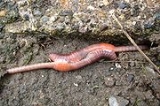
Earthworm is the common name for the largest members of Oligochaeta
Oligochaeta

Oligochaeta is a scientific classification in the biological phylum Annelida and includes various earthworms. Specifically, it contains the terrestrial megadrile earthworms , and freshwater or semi-terrestrial microdrile forms including the Tubificidaes, pot worms and ice worms , Lumbriculus variegatus and several interstitial marine worms...
 (which is either a class or subclass depending on the author) in the phylum Annelid
Annelid

The annelids, collectively called Annelida , are a large Scientific classification of animals comprising the segmented worms, with about 15,000 modern species including the well-known earthworms and leeches....
a. The earthworm is the most known worm in America, and other countries. In classical systems they were placed in the order Opisthopora, on the basis of the male pores opening posterior to the female pores, even though the internal male segments are anterior to the female.


Discussion
Ask a question about 'Earthworm'
Start a new discussion about 'Earthworm'
Answer questions from other users
Full Discussion Forum


Recent Posts


Encyclopedia


Earthworm is the common name for the largest members of Oligochaeta
Oligochaeta

Oligochaeta is a scientific classification in the biological phylum Annelida and includes various earthworms. Specifically, it contains the terrestrial megadrile earthworms , and freshwater or semi-terrestrial microdrile forms including the Tubificidaes, pot worms and ice worms , Lumbriculus variegatus and several interstitial marine worms...
 (which is either a class or subclass depending on the author) in the phylum Annelid
Annelid

The annelids, collectively called Annelida , are a large Scientific classification of animals comprising the segmented worms, with about 15,000 modern species including the well-known earthworms and leeches....
a. The earthworm is the most known worm in America, and other countries. In classical systems they were placed in the order Opisthopora, on the basis of the male pores opening posterior to the female pores, even though the internal male segments are anterior to the female. Theoretical cladistic
Cladistics

Cladistics is the hierarchical classification of species based on evolutionary ancestry. Cladistics is distinguished from other taxonomic systems because it focuses on evolution rather than similarities between species, and because it places heavy emphasis on objective, quantitative analysis....
 studies have placed them instead in the suborder Lumbricina of the order Haplotaxida, but this may again soon change. Folk names for the earthworm include "dew-worm", "rainworm", "night crawler" and "angleworm" (due to its use as fishing bait).

Earthworms are also called megadriles (or big worms), as opposed to the microdriles (or small worms) in the families Tubificidae
Tubificidae

The Naididae are a family of clitellate oligochaete worms like the sludge worm, Tubifex tubifex. They are key components of the benthic communities of many freshwater and ocean ecosystems....
, Lumbriculidae
Lumbriculidae

The Lumbriculidae are a family of microdrile oligochaetes common in fresh-water environments, including streams, lakes, marshes, wells and ground-water....
, and Enchytraeidae
Enchytraeidae

The Enchytraeidae are a microdrile oligochaeta family and include both terrestrial species known as potworms that live in highly organic environments and iceworms such as Mesenchytraeus solifugus that live in ice fields....
, among others. The megadriles are characterized by having a multilayered clitellum
Clitellum

In earthworms and some other annelids, the "clitellum" is a thickened glandular section of the body wall that secretes a viscid sac in which the eggs are deposited....
 (which is much more obvious than the single-layered one of the microdriles), a vascular system with true capillaries, and male pores behind the female pores.

Anatomy

The basic body plan of an earthworm is a tube, the digestive system, within a tube, the muscular slimy, moist outer body. The body is annular, formed of segments that are most specialized in the anterior. Earthworms have a simple circulatory system. They have two main blood vessels that extend through the length of their body: a ventral
Anatomical terms of location

Standard anatomical terms of location are employed in sciences dealing with the anatomy of animals to avoid ambiguities which might otherwise arise....
 blood vessel which leads the blood to the posterior
Anatomical terms of location

Standard anatomical terms of location are employed in sciences dealing with the anatomy of animals to avoid ambiguities which might otherwise arise....
 end, and a dorsal blood vessel which leads to the anterior end. The dorsal vessel is contractile and pumps blood forward, where it is pumped into the ventral vessel by a series of "hearts" (aortic arches) which vary in number in the different taxa. A typical lumbricid
Lumbricidae

The Lumbricidae is a family of earthworms which includes most of the earthworm species well-known to Europeans. About 33 lumbricid species have become naturalized around the world , but the bulk of the species are in Holarctic: from Canada and the United States and throughout Eurasia to Japan ....
 will have 5 hearts. The blood is distributed from the ventral vessel into capillaries on the body wall and other organs and into a vascular sinus in the gut wall, where gases and nutrients are exchanged. This arrangement may be complicated in the various groups by suboesophageal, supraoesophageal, parietal and neural vessels, but the basic arrangement holds in all earthworms. These single celled earthworms eat in a unique way: their mouth cavity connects directly into the digestive tract without any intermediate processes. Most earthworms are decomposers feeding on undecayed leaf and other plant matter, others are more geophagous
Geophagy

Geophagy is the practice of eating earthy or soil-like substances such as clay, and chalk, in order to obtain essential nutrients such as sulfur and phosphorus from the soil....
.


Reproduction

Mating Earthworms
Earthworms are hermaphrodite
Hermaphrodite

A hermaphrodite is an organism having both male and female reproductive organs. In many species, hermaphroditism is a common part of the life-cycle, enabling a form of sexual reproduction in which partners are not separated into distinct male and female types of individual....
s: They have 2 pairs of testes, surrounded by 2 pairs of testes sacs. There are 2 pairs of seminal vesicles which produce, store and release the sperm via the male pores, and ovaries and ovipores that release eggs via female pores. However, most also have one or more pairs of spermatheca
Spermatheca

The spermatheca is an organ of the female reproductive tract in insects, some molluscs, oligochaeta worms and certain other invertebrates and vertebrates....
e (depending on the species) that are internal sacs which receive and store sperm from the other worm in copulation. Some species use external spermatophore
Spermatophore

A spermatophore is a capsule or mass created by males of various animal species, containing spermatozoa and transferred in entirety to the female's ovipore during copulation....
s for transfer instead.

The male reproductive organs consist of two pairs of testes, present ventro-laterally in the 10th and 11th segments. Each testis is made up of 4 to 8 processes containing spermatogonia. Each testis is enclosed in a pair of testes sacs which are filled with fluid. It is bilobed in the front and on the posterior side provided with a pair of ciliated spermaducal funnels, one on either side. Two pairs of seminal vesicles are present in the 11th and 12th segments which collect the sperm fluid. The testes sac of the tenth segment opens in the seminal vesicle of the 11th segment and testis sac of the 11th segment opens into the seminal vesicle of the 12th segment.

The sperm mother cells of the testes when shed offreach the seminal vesicle where they mature into sperms and then again passed into testes. Sperms from the testes are passed into the spermiducal funnels which lead into vas deferens. A pair of vasa deferentia on either side of nerve cord runs from the 12th segment to prostate region and opens out together with the prostate duct in the 18th segment as male genital aperture. The prostate is a large irregular gland present from the 16th to 20th or the 17th to 21st segments on either side, and it produces the prostate fluid. In the 17th and 19th segments each is found a pair of rounded, white fluffy masses, the accossory glands. These glands are present on ventro-lateral bodywall, one on either side of the nerve cord. They open to the exterior by a number of ducts in two pairs of genital pappillae, situated externally on either side of the mid-ventral line. The female reproductive organs consist of a pair of ovaries, a pair of oviducts and four pairs of spermathecae.The ovaries are a pair of small, whitish, lobed structures, attached to the hinder face of the septum of the 12/13 segment, one on each side of the nerve cord.Each ovary has mature ova towards distal end and immature towards septal side.Each oviducal funnel leads into oviduct which opens outside in the 14th segment in the form of a common oviducal aperture.The four pairs of spermathecae are found on either side of the nerve cord in the 6th, 7th, 8th and 9th segments.Each spermathecae has two parts, a sac like structure, ampulla and a short diverticulum.The diverticulum stores the sperms while ampulla provides a nourishing fluid to them.These spermathecae open outside the bodyby four pairs of apertures one on either ventro-lateral sides of each segmental joint, i.e a pair in the 5-6, 6-7, 7-8, 8-9th segments.The mature ova shed from the ovaries, pass through the oviducal funnels into the oviduct and finally to the exterior through the female genital pore. Copulation and reproduction are separate processes in earthworms. The mating pair overlap front ends ventrally and each exchanges sperm with the other. The clitellum becomes very reddish to pinkish in color. The cocoon, or egg case, is secreted by the clitellum
Clitellum

In earthworms and some other annelids, the "clitellum" is a thickened glandular section of the body wall that secretes a viscid sac in which the eggs are deposited....
 band which is near the front of the worm, but behind the spermathecae. Some time after copulation, long after the worms have separated, the clitellum secretes the cocoon which forms a ring around the worm. The worm then backs out of the ring, and as it does so, injects its own eggs and the other worm's sperm into it. As the worm slips out, the ends of the cocoon seal to form a vaguely lemon-shaped incubator (cocoon) in which the embryonic worms develop. They emerge as small, but fully formed earthworms, except for a lack of the sex structures, which develop later in about 60 to 90 days. They attain full size in about one year. Several common earthworm species are mostly parthenogenetic
Parthenogenesis

Parthenogenesis is an asexual form of reproduction found in females where growth and development of embryos or seeds occurs without fertilization by a male....
, that is, with asexual reproduction resulting in clones.

Regeneration

Earthworms have the facility to regenerate lost segments, but this ability varies between species and depends on the extent of the damage. Stephenson (1930) devoted a chapter of his monograph to this topic, while G.E. Gates spent 20 years studying regeneration in a variety of species, but “because little interest was shown”, Gates (1972) only published a few of his findings that, nevertheless, show it is theoretically possible to grow two whole worms from a bisected specimen in certain species. Gates’s reports included:
  • Eisenia fetida
    Eisenia fetida

    Eisenia fetida, known under various common names, including redworms, brandling worms, "tiger worms" and red wiggler worms, is a species of earthworm adapted to the environment of decaying organic material....
     (Savigny, 1826) with head regeneration, in an anterior direction, possible at each intersegmental level back to and including 23/24, while tails were regenerated at any levels behind 20/21 .
  • Lumbricus terrestris Linneus, 1758 replacing anterior segments from as far back as 13/14 and 16/17 but tail regeneration was never found.
  • Perionyx excavatus Perrier, 1872 readily regenerated lost parts of the body, in an anterior direction from as far back as 17/18, and in a posterior direction as far forward as 20/21.
  • Lampito mauritii Kinberg, 1867 with regeneration in anterior direction at all levels back to 25/26 and tail regeneration from 30/31; head regeneration was sometimes believed to be caused by internal amputation resulting from Sarcophaga sp. larval infestation.
  • Criodrilus lacuum Hoffmeister, 1845 also has prodigious regenerative capacity with ‘head’ regeneration from as far back as 40/41.


An unidentified Tasmanian earthworm shown growing a second head is reported here: .

Behavior


Rainstorms


Earthworms are seen on the surface after large rain storms flood the soil because, despite needing a moist environment to allow the diffusion of gases across their skin membrane, where the soil becomes saturated they begin to drown. To protect themselves they escape to the surface, but if the ground is un-naturally hard they may after become stranded and die from exposure. This is why they are seen in places like driveways after a storm. However, this theory is not applicable to certain earthworm species that can survive immersion for several days in oxygenated water.

An alternative theory concerning this behaviour is that as some species (notably Lumbricus terrestris
Lumbricus terrestris

Lumbricus terrestris is a large reddish worm native to Europe, but now also widely distributed elsewhere around the world , due to human introductions....
) come to the surface to mate they may become stranded. However, as this behaviour is limited to only a few species and L. terrestris is rarely, if ever, one of those found stranded on impermeable surfaces, this theory does not seem a very likely explanation.

Another theory is that the worms may be using the moist conditions on the surface to travel more quickly than they can underground, thus colonizing new areas more quickly. Since the relative humidity is higher during and after rain, they do not become dehydrated. This is a dangerous activity in the daytime, since earthworms die quickly when exposed to direct sunlight with its strong UV content, and are more vulnerable to predators such as birds.

A further theory is that, as there are many other organisms in the ground as well, and their respiration increases carbon dioxide
Carbon dioxide

Carbon dioxide is a chemical compound composed of two oxygen atoms covalent bond to a single carbon atom. It is a gas at standard temperature and pressure and exists in Earth's atmosphere in this state....
, this gas may dissolve into the rainwater to form carbonic acid
Carbonic acid

Carbonic acid has the Molecular formula H2CO3. It is also a name sometimes given to solutions of carbon dioxide in water , which contain small amounts of H2CO3....
. As the soil becomes too acidic for the worms, they seek a more neutral environment on the surface. Earthworms chew soil and defecate in it which fertilizes the soil for plants. The chewing helps make hard soil softer. Earthworms are commonly used by gardeners for these reasons.

Locomotion and importance to soil

Earthworms travel underground by the means of waves of muscular contractions which alternately shorten and lengthen the body. The shortened part is anchored to the surrounding soil by tiny claw-like bristles (seta
Seta

Seta is a biology term derived from the Latin word for "bristle". It refers to a number of different bristle- or hair-like structures on living organisms....
e) set along its segmented length. (In all the body segments except the first, last and clitellum, there is a ring of S- shaped setae, embedded in the epidermal pit of each segment,perichaetine) The whole burrowing process is aided by the secretion of lubricating mucus. Worms can make gurgling noises underground when disturbed as a result of the worm moving through its lubricated tunnels. They also work as biological "pistons' forcing air through the tunnels as they move. Thus earthworm activity aerates and mixes the soil, and is constructive to mineralization and nutrient uptake by vegetation. Certain species of earthworm come to the surface and graze on the higher concentrations of organic matter present there, mixing it with the mineral soil. Because a high level of organic matter mixing is associated with soil fertility, an abundance of earthworms is beneficial to the organic gardener. In fact as long ago as 1881 Charles Darwin
Charles Darwin

Charles Robert Darwin Royal Society was an English people natural history who realised and presented compelling evidence that all species of life have evolution over time from common descent, through the process he called natural selection....
 wrote: It may be doubted whether there are many other animals which have played so important a part in the history of the world, as have these lowly organized creatures

Benefits

The major benefits of earthworm activities to soil fertility can be summarized as:
  • Biological. In many soils, earthworms play a major role in converting large pieces of organic matter (e.g. dead leaves) into rich humus
    Humus

    Humus is degraded organic material in soil, which causes some soil layers to be dark brown or black.In soil science, humus refers to any organic matter that has reached a point of stability, where it will break down no further and might, if conditions do not change, remain essentially as it is for centuries, if not millennia....
    , and thus improving soil fertility. This is achieved by the worm's actions of pulling down below any organic matter deposited on the dried dirt, such as leaf fall or manure, either for food or when it needs to plug its burrow. Once in the burrow, the worm will shred the leaf and partially digest it, then mingle it with the earth by saturating it with intestinal secretions. Worm casts (see below) can contain 40% more humus than the top 9" of soil in which the worm is living.
  • Chemical. As well as dead organic matter, the earthworm also ingests any other soil particles that are small enough—including stones up to 1/20 of an inch (1.25mm) across—into its gizzard wherein minute fragments of grit grind everything into a fine paste which is then digested in the stomach. When the worm excretes this in the form of casts which are deposited on the surface or deeper in the soil, minerals and plant nutrients are made available in an accessible form. Investigations in the US
    United States

    The United States of America is a Federal government constitutional republic comprising U.S. state and a federal district. The country is situated mostly in central North America, where its Contiguous United States and Washington, D.C., the Capital districts and territories, lie between the Pacific Ocean and Atlantic Oceans, Borders of the U...
     show that fresh earthworm casts are 5 times richer in available nitrogen
    Nitrogen

    Nitrogen is a chemical element that has the symbol N and atomic number 7 and atomic mass 14.00674?. Elemental nitrogen is a colorless, odorless, tasteless and mostly inert diatomic gas at standard conditions, constituting 78% by volume of Earth's atmosphere....
    , 7 times richer in available phosphate
    Phosphate

    A phosphate, an inorganic chemical, is a Salt of phosphoric acid. Inorganic phosphates are mining to obtain phosphorus for use in agriculture and industry....
    s and 11 times richer in available potash
    Potash

    Potash is the common name given to potassium carbonate and various mined and manufactured salts that contain the element potassium in water-soluble form....
     than the surrounding upper 6 inches (150 mm) of soil. In conditions where there is plenty of available humus, the weight of casts produced may be greater than 4.5 kg (10 lb) per worm per year, in itself an indicator of why it pays the gardener or farmer to keep worm populations high.
  • Physical. By its burrowing actions, the earthworm is of great value in keeping the soil structure open, creating a multitude of channels which allow the processes of both aeration and drainage to occur. Permaculture
    Permaculture

    Permaculture is an approach to designing human settlements and perennial agriculture systems that mimic the relationships found in the natural Ecology....
     co-founder Bill Mollison
    Bill Mollison

    Bruce Charles 'Bill' Mollison is a researcher, author, scientist, teacher, naturalist and has been called the 'father of permaculture', an integrated system of design co-developed with David Holmgren that encompasses not only agriculture, horticulture, architecture and ecology but also economic systems, land access strategies and legal syste...
     points out that by sliding in their tunnels, earthworms "act as an innumerable army of pistons pumping air in and out of the soils on a 24 hour cycle (more rapidly at night)" . Thus the earthworm not only creates passages for air and water to traverse, but is itself a vital component in the living biosystem that is healthy soil. Earthworms continue to move through the soil due to the excretion of mucus into the soil that acts as a lubricant for easier movement of the worm.
See Bioturbation
Bioturbation

In oceanography and limnology, bioturbation is the displacement and mixing of sediment particles by benthos fauna or flora . The mediators of bioturbation are typically annelid worms , bivalves , gastropods, holothurians, or any other Fauna #Infauna or Fauna #Epifauna organisms....
. The earthworm's existence cannot be taken for granted. Dr. W. E. Shewell Cooper
Shewell Cooper

Dr. Wilfred Edward Shewell-Cooper was a United Kingdom organic gardener and pioneer of no dig gardening. He was the author of Soil, Humus and Health , The Royal Gardeners , Grow your own food supply , The ABC of Vegetable Gardening and many other books on gardening....
 observed "tremendous numerical differences between adjacent gardens" (Soil, Humus And Health), and worm populations are affected by a host of environmental factors, many of which can be influenced by good management practices on the part of the gardener or farmer.

Darwin estimated that arable land
Arable land

In geography, arable land is an agriculture term, meaning land that can be used for growing agriculture. Arable land is currently being lost at the rate of over 200,000 km? per year....
 contains up to 53,000 worms per acre (13/m²), but more recent research from Rothamsted Experimental Station
Rothamsted Experimental Station

The Rothamsted Experimental Station, one of the oldest agricultural experiment station in the world, is located at Harpenden in Hertfordshire, England....
 has produced figures suggesting that even poor soil may support 250,000/acre (62/m²), whilst rich fertile farmland may have up to 1,750,000/acre (432/m²), meaning that the weight of earthworms beneath the farmer's soil could be greater than that of his livestock upon its surface. One thing is certain however: rich, fertile soil that is cared for organically and well-fed and husbanded by its steward will reap its reward in a healthy worm population, whilst denuded, overworked, and eroded land will almost certainly contain fewer, scrawny, undernourished specimens.

Earthworms as invasive species

From a total of around 6,000 species, only about 120 species are widely distributed around the world, these are the peregrine or cosmopolitan earthworms.

North America

A total of approximately 182 earthworm taxa in 12 families are reported from America north of Mexico, i.e., USA & Canada, of which 60 (ca. 33%) are exotic/introduced. Only two genera of Lumbricid
Lumbricidae

The Lumbricidae is a family of earthworms which includes most of the earthworm species well-known to Europeans. About 33 lumbricid species have become naturalized around the world , but the bulk of the species are in Holarctic: from Canada and the United States and throughout Eurasia to Japan ....
 earthworms are indigenous to North America while introduced genera have spread to areas where earthworms did not formerly exist, especially in the north where forest development relies on a large amount of undecayed leaf matter. When worms decompose that leaf layer, the ecology may shift making the habitat unsurvivable for certain species of trees, ferns and wildflowers. Currently there is no economically feasible method for controlling invasive earthworms in forests. Earthworms normally spread slowly, but can be quickly introduced by human activities such as construction earthmoving, or by fishermen releasing bait, or by plantings from other areas.

Australia

Australia
Australia

Australia, officially the Commonwealth of Australia, is a country in the southern hemisphere comprising the Australia of the world's smallest continent, the major island of Tasmania, and numerous list of islands of Australia in the Indian Ocean and Pacific Oceans....
 has 650 known species of native earthworm that survive in both rich and in nutrient-poor conditions where they may be sensitive to changes in the environment. Introduced species are commonly found in agricultural environments along with persistent natives. Most of the 75 or so exotics have been accidentally introduced into Australia. The total species numbers are predicted to exceed 2,000.

Special habitats

While, as the name earthworm suggests, the main habitat of earthworms is in soil, the situation is more complicated than that. The brandling worm Eisenia fetida
Eisenia fetida

Eisenia fetida, known under various common names, including redworms, brandling worms, "tiger worms" and red wiggler worms, is a species of earthworm adapted to the environment of decaying organic material....
 lives in decaying plant matter and manure. Arctiostrotus vancouverensis from Vancouver Island
Vancouver Island

Vancouver Island is a large island in British Columbia, Canada, one of several North American regions named after George Vancouver, the British Royal Navy officer who explored the Pacific Ocean coast of North America between 1791 and 1794....
 and the Olympic Peninsula
Olympic Peninsula

The Olympic Peninsula is the large arm of land in western Washington state that lies across Puget Sound from Seattle, Washington. It is bounded on the west by the Pacific Ocean, the north by the Strait of Juan de Fuca, and the east by Puget Sound and the Hood Canal....
 is generally found in decaying conifer logs or in extremely acidic humus. Aporrectodea limicola and Sparganophilus
Sparganophilus

Sparganophilus, the only genus in the family Sparganophilidae, is a group of long slender limicolous earthworms native to North America. There are an unknown number of species, most of them undescribed, throughout the continent and into Central America....
 and several others are found in mud in streams. Some species are arboreal. Even in the soil species, there are special habitats, such as soils derived from serpentine
Serpentine

The serpentine group describes a group of common rock-forming hydroxy magnesium iron Silicate minerals#Phyllosilicates minerals; they may contain minor amounts of other elements including chromium, manganese, cobalt and nickel....
 which have an earthworm fauna of their own.

Ecology

Earthworms are classified into three main ecophysiological categories: (1) leaf litter/compost dwelling worms (epigeic) e.g. Eisenia fetida; (2) topsoil or subsoil dwelling worms (endogeics); and (3) worms that construct permanent deep burrows through which they visit the surface to obtain plant material for food, such as leaves (anecic), e.g. Lumbricus terrestris. Earthworm populations depend on both physical and chemical properties of the soil, such as soil temperature, moisture, pH, salts, aeration and texture, as well as available food, and the ability of the species to reproduce and disperse. One of the most important environmental factors is pH
PH

pH is a measure of the Acid or Base of a solution. It is defined as the cologarithm of the Activity of dissolved hydrogen ions . Hydrogen ion activity coefficients cannot be measured experimentally, so they are based on theoretical calculations....
, but earthworms vary in their preferences. Most earthworms favor neutral to slightly acidic soil. However, Lumbricus terrestris are still present in a pH of 5.4 and Dendrobaena octaedra at a pH of 4.3 and some Megascolecidae
Megascolecidae

Megascolecidae is a large Family of earthworms which has native representatives in Australia, New Zealand, Southeast and East Asia, and North America....
 are present in extremely acid humic soils. Soil pH may also influence the numbers of worms that go into diapause
Diapause

Diapause is a physiological state of dormancy with very specific triggering and releasing conditions. It is used as a means to survive predictable, unfavourable environmental conditions, such as temperature extremes, drought or reduced food availability....
. The more acid the soil, the sooner worms go into diapause, and remain in diapause the longest time at a pH of 6.4.

Earthworms form the base of many food chains. They are preyed upon by many species of bird
Bird

Birds are wing, Bipedalismal, endothermic , vertebrate animals that lay egg . There are around 10,000 living species, making them the most numerous tetrapod vertebrates....
s, e.g. starling
Starling

Starlings are found around the World, from Europe, Asia and Africa, to northern Australia and the islands of the tropical Pacific. Several European and Asian species have been introduced to these areas as well as North America, Hawaii and New Zealand, where they generally compete for habitat with native birds and are considered to be invasive spec...
s, thrushes
Thrush (bird)

The Thrushes, family Turdidae, are a group of passerine birds that occur mainly but not exclusively in the Old World....
, gull
Gull

Gulls are Aves in the family Laridae. They are most closely related to the terns and only distantly related to auks, and skimmers, and more distantly to the waders....
s, crow
Crow

The true crows are large passerine birds that form the genus Corvus in the family Corvidae. Ranging in size from the relatively small dove-sized jackdaws to the Common Raven of the Holarctic region and Thick-billed Raven of the highlands of Ethiopia, the 40 or so members of this genus occur on all temperate continents and several offsh...
s, and both European Robin
European Robin

The European Robin , or, in Anglophone Europe, simply Robin, is a small insectivorous passerine bird that was formerly classed as a member of the Thrush family , but is now considered to be an Old World flycatcher ....
s and American Robin
American Robin

The American Robin, Turdus migratorius, is a bird migration songbird of the true thrush family. It is named after the European Robin because of the male's bright red breast, though the two species are not closely related....
s. Some snakes feed on them and mammals such as bears, foxes, hedgehog
Hedgehog

A hedgehog is any of the spiny mammals of the subfamily Erinaceinae and the Order Erinaceomorpha. There are 16 species of hedgehog in five genus, found through parts of Europe, Asia, Africa, and New Zealand....
s and moles
Mole (animal)

Moles are the majority of the members of the mammal family Talpidae in the order Soricomorpha. Although most moles burrow, some species are aquatic or semi-aquatic....
 eat many earthworms as well. Earthworms are also eaten by many invertebrates such as ground beetle
Ground beetle

Ground beetles or carabids are collective terms for the beetle family Carabidae. This is a large family, with more than 40,000 species worldwide, approximately 2,000 of which are found in North America and 2,700 in Europe....
s and other beetle
Beetle

Beetles are the group of insects with the largest number of known species. They are placed in the order Coleoptera , which contains more described species than in any other order in the animal, constituting about 25% of all known life-forms....
s, snail
Snail

The word snail is a common name for almost all members of the molluscan class Gastropoda that have coiled animal shells in the adult stage. When the word snail is used in a general sense, it includes sea snails, land snails and freshwater snails....
s, slug
Slug

Slug is a common non-scientific word, which is often applied to any gastropod Mollusca whatsoever that has a very reduced shell, a small internal shell, or no shell at all....
s. Earthworms have many internal parasites including Protozoa
Protozoa

Protozoan are microorganisms classified as unicellular eukaryotes. While there is no exact definition of the term "protozoan", most scientists use the word to refer to a unicellular heterotrophic protist, such as an amoeba or a ciliate....
, Platyhelminthes, Nematode
Nematode

The "roundworms" or "nematodes" are the most diverse phylum of body cavity, and one of the most diverse of all animals. Nematode species are very difficult to distinguish; over 80,000 have been described, of which over 15,000 are parasite....
s. They are found in many parts of earthworms' bodies such as blood, seminal vesicles, coelom
Coelom

The coelom is a fluid filled cavity formed within the mesoderm. Coeloms developed in triploblasts but were subsequently lost in several lineages....
, intestine
Intestine

In anatomy, the intestine is the segment of the Gastrointestinal tract extending from the stomach to the anus and, in humans and other mammals, consists of two segments, the small intestine and the large intestine....
, or in the cocoon
Cocoon

A Pupa#Cocoon is a pupal casing made by moths, caterpillars and other insect larvae.Cocoon may also refer to:*Apache Cocoon, web development software...
s.

The application of chemical fertilizers, sprays and dusts can have a disastrous effect on earthworm populations. Nitrogenous fertilizers tend to create acid conditions
Soil pH

The pH is a measure of the acidity or alkalinity of a solution. An acid solution has a pH value less than 7. While a basic solution always has a pH larger than 7, an alkaline solution does not necessarily have a pH larger than 7....
, which are fatal to the worms, and often dead specimens are to be found on the surface following the application of substances like DDT
DDT

DDT is one of the best known synthetic pesticides. It is a chemical with a long, unique, and controversial history.First synthesized in 1874, DDT's insecticidal properties were not discovered until 1939....
, lime sulphur and lead arsenate. In Australia
Australia

Australia, officially the Commonwealth of Australia, is a country in the southern hemisphere comprising the Australia of the world's smallest continent, the major island of Tasmania, and numerous list of islands of Australia in the Indian Ocean and Pacific Oceans....
, the use of superphosphate
Superphosphate

Superphosphate is a fertilizer produced by the action of concentrated sulfuric acid on powdered phosphate rock....
 on pasture
Pasture

Pasture is land with herbaceous vegetation cover used for grazing of ungulate livestock as part of a farm or ranch. Prior to the advent of factory farming, pasture was the primary source of food for grazing animals such as cattle and horses....
s almost completely wiped out the giant Gippsland earthworm.

Therefore, the most reliable way to maintain or increase the levels of worm population in the soil is to avoid the application of artificial chemicals. Adding organic matter, preferably as a surface mulch, on a regular basis will provide them with their food and nutrient requirements, and also creates the optimum conditions of heat (cooler in summer and warmer in winter) and moisture to stimulate their activity.

A recent threat to earthworm populations in the UK
United Kingdom

The United Kingdom of Great Britain and Northern Ireland, commonly known as the United Kingdom , the UK or Britain,is a sovereign state located off the northwestern coast of continental Europe....
 is the New Zealand Flatworm
New Zealand flatworm

The New Zealand flatworm is a large flatworm native to New Zealand. It can vary from 5 mm in length when hatched to approximately 17 cm in mature adults....
 (Artiposthia triangulata), which feeds upon the earthworm, but in the UK has no natural predator itself. At present sightings of the New Zealand flatworm have been mainly localised, but this is no reason for complacency as it has spread extensively since its introduction in 1960 through contaminated soil and plant pots. Any sightings of the flatworm should be reported to the Scottish Crop Research Institute
Scottish Crop Research Institute

The Scottish Crop Research Institute, known as SCRI, is Scotland?s leading crop research institute.SCRI is situated in Invergowrie on the north bank of the River Tay, in an agricultural area to the west of Dundee....
, which is monitoring its spread.

Economic impact

Various species of worms are used in vermiculture, the practice of feeding organic waste to earthworms to decompose (digest) it, a form of compost
Compost

Compost , sometimes known as brown manure, is the end result of controlled aerobic decomposition of organic matter known as composting. It is used in landscaping, horticulture and agriculture as a soil conditioner and fertilizer to add vital humus or humic acids....
ing by the use of worms. These are usually Eisenia fetida
Eisenia fetida

Eisenia fetida, known under various common names, including redworms, brandling worms, "tiger worms" and red wiggler worms, is a species of earthworm adapted to the environment of decaying organic material....
 (or its close relative Eisenia andrei
Eisenia andrei

Eisenia andrei is a close relative of the 'brandling' or 'tiger' worm, Eisenia fetida. Like its sibling species, it is epigeic, i.e. it prefers to live in compost or leaf litter rather than mineral soils....
) or the Brandling worm, also known as the Tiger worm or Red Wiggler, and are distinct from soil-dwelling earthworms.

Earthworms are sold all over the world. The earthworm market is sizable. According to Doug Collicut (see "Nightcrawler" link below), "In 1980, 370 million worms were exported from Canada, with a Canadian export value of $13 million and an American retail value of $54 million."

Earthworms are also sold as food for human consumption. Noke
Noke (worms)

Noke is a culinary term used by the Maori of New Zealand to refer to earthworms, some types of native worms are local delicacies. According to Maori legend, the trickster Maui once transformed himself into a Noke Worm in order to crawl into the womb of the underworld goddess and gain everlasting life....
 is a culinary term used by the Maori
Maori

The Maori are the indigenous people Polynesian people of Aotearoa . The group probably arrived in south-western Polynesia in several waves at some time before 1300....
 of New Zealand
New Zealand

New Zealand is an island country in the south-western Pacific Ocean comprising two main landmasses , and numerous Islands of New Zealand, most notably Stewart Island/Rakiura and the Chatham Islands....
 to refer to earthworms which are considered delicacies.

A report on biodiversity published by the Irish Government in May 2008 estimated the activities of the earthworm to be worth a minimum of €723 millon per annum to Irish agriculture.

Taxonomy and main geographic origins of earthworms

Main families :
  • Lumbricidae
    Lumbricidae

    The Lumbricidae is a family of earthworms which includes most of the earthworm species well-known to Europeans. About 33 lumbricid species have become naturalized around the world , but the bulk of the species are in Holarctic: from Canada and the United States and throughout Eurasia to Japan ....
     : Temperate Northern Hemisphere from Vancouver Island, Canada to Japan, mostly Eurasia.
  • Hormogastridae : Europe.
  • Sparganophilidae : North America.
  • Almidae
    Almidae

    The animal family Almidae includes about six genera of Oligochaeta.A notable peculiarity of some species in this family is a tendency to extensions of the body wall in the vicinity of or including the male pores....
     : Africa, South America.
  • Ocnerodrilidae : Central and South America, Africa.
  • Acanthodrilidae
    Acanthodrilidae

    Acanthodrilidae is an ancient and widely distributed family of earthworms which has native representatives in Australia, New Zealand, South Africa, South America and North America....
     : Africa, midland and southeastern North America, Central and South America, Australia and Oceania.
  • Octochaetidae : Central/South America, western Africa, India, New Zealand, Australia.
  • Exxidae : Central America/Caribbean.
  • Megascolecidae
    Megascolecidae

    Megascolecidae is a large Family of earthworms which has native representatives in Australia, New Zealand, Southeast and East Asia, and North America....
     : South East Asia, Australasia and Oceania, northwestern North America.
  • Glossoscolecidae
    Glossoscolecidae

    Glossoscolecidae is a large family of earthworms which has native representatives in South and Central America.Main genera:* Andiodrilus* Andiorrhinus...
     : Central and northern South America.
  • Eudrilidae
    Eudrilidae

    Eudrilid earthworms are African earthworms with one species, Eudrilus eugeniae , widely distributed around the warmer parts of the world and cultured as the "African Night Crawler"....
     : Tropical Africa.


Further reading

Edwards, Clive A. (Ed.) Earthworm Ecology. Boca Raton: CRC Press, 2004. Second revised edition. ISBN 084931819X

Lee, Keneth E. Earthworms: Their Ecology and Relationships with Soils and Land Use. Academic Press. Sydney, 1985. ISBN 0-12-440860-5

Stewart, Amy. The Earth Moved: On the Remarkable Achievements of Earthworms. Chapel Hill, N.C.: Algonquin Books, 2004. ISBN 1-56512-337-9

See also

  • Drilosphere
    Drilosphere

    The drilosphere is the part of the soil influenced by earthworm secretions and castings. Specifically, it is the fraction of soil which has gone through the digestive tract of earthworms; or the lining of an earthworm burrow....
  • Lumbricidae
    Lumbricidae

    The Lumbricidae is a family of earthworms which includes most of the earthworm species well-known to Europeans. About 33 lumbricid species have become naturalized around the world , but the bulk of the species are in Holarctic: from Canada and the United States and throughout Eurasia to Japan ....
  • Megascolecidae
    Megascolecidae

    Megascolecidae is a large Family of earthworms which has native representatives in Australia, New Zealand, Southeast and East Asia, and North America....
  • Sparganophilidae
  • Soil life
    Soil life

    Soil life or soil biota is a collective term for all the organisms living within the soil....
  • Gilbert White
    Gilbert White

    Gilbert White was a pioneering natural history and Ornithology.White was born in his grandfather's vicarage at Selborne in Hampshire. He was educated by a private tutor in Basingstoke before going to Oriel College, Oxford....
  • Noke
    Noke (worms)

    Noke is a culinary term used by the Maori of New Zealand to refer to earthworms, some types of native worms are local delicacies. According to Maori legend, the trickster Maui once transformed himself into a Noke Worm in order to crawl into the womb of the underworld goddess and gain everlasting life....
  • Terra preta
    Terra preta

    Terra preta refers to expanses of very dark, fertile anthropogenic soils found in the Amazon Basin. It owes its name to its very high charcoal content....
     and its reference to peregrine earthworm Pontoscolex corethrurus
  • Worm charming
    Worm charming

    Worm charming, worm grunting, and worm fiddling are methods of attracting earthworms from the ground. The activity is usually performed to collect fishing lure for fishing but can also take the form of a competitive sport....


External links

  • A great informational website and magazine
  • Good for Composting and Fishing
  • Canadian worm awareness and appreciation site, with detailed worm anatomy.
  • Minnesota DNR information on the negative impacts of earthworms
  • hosted by the