
All Topics  
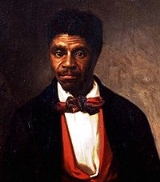
Dred Scott v. Sandford

 
Dred Scott V. Sandford

   Email Print
   Bookmark   Link


Dred Scott v. Sandford


Dred Scott v. Sandford, , was a decision by the United States Supreme Court that ruled that people of African descent imported into the United States and held as slaves
History of slavery in the United States

Slavery in the United States began soon after British colonization of the Americas first settled Colony of Virginia in 1607 and lasted as a legal institution until the passage of the Thirteenth Amendment to the United States Constitution in 1865....
, or their descendants—whether or not they were slaves—were not legal persons and could never be citizens of the United States
United States

The United States of America is a Federal government constitutional republic comprising U.S. state and a federal district. The country is situated mostly in central North America, where its Contiguous United States and Washington, D.C., the Capital districts and territories, lie between the Pacific Ocean and Atlantic Oceans, Borders of the U...
, and that the United States Congress
United States Congress

The United States Congress is the Bicameralism legislature of the Federal government of the United States of the United States of America, consisting of two houses, the United States Senate and the United States House of Representatives....
 had no authority to prohibit slavery
Slavery

Slavery is a form of forced labor where a person is compelled to Labor for another . Slaves are held against their will from the time of their capture, purchase, or birth, and are deprived of the right to leave, to refuse to work, or to receive Remuneration in return for their labor....
 in federal territories
Historic regions of the United States

These are historic regions of the United States, meaning regions that were legal entities in the past, or which the average modern American would no longer immediately recognize as a regional description....
. The Court also ruled that slaves could not sue
Standing (law)

In the common law, and under many statutes, standing or locus standi is the ability of a party to demonstrate to the court sufficient connection to and harm from the law or action challenged to support that party's participation in the case....
 in court, and that slaves—as chattel or private property—could not be taken away from their owners without due process.


Discussion
Ask a question about 'Dred Scott v. Sandford'
Start a new discussion about 'Dred Scott v. Sandford'
Answer questions from other users
Full Discussion Forum


Recent Posts


Encyclopedia


Dred Scott v. Sandford, , was a decision by the United States Supreme Court that ruled that people of African descent imported into the United States and held as slaves
History of slavery in the United States

Slavery in the United States began soon after British colonization of the Americas first settled Colony of Virginia in 1607 and lasted as a legal institution until the passage of the Thirteenth Amendment to the United States Constitution in 1865....
, or their descendants—whether or not they were slaves—were not legal persons and could never be citizens of the United States
United States

The United States of America is a Federal government constitutional republic comprising U.S. state and a federal district. The country is situated mostly in central North America, where its Contiguous United States and Washington, D.C., the Capital districts and territories, lie between the Pacific Ocean and Atlantic Oceans, Borders of the U...
, and that the United States Congress
United States Congress

The United States Congress is the Bicameralism legislature of the Federal government of the United States of the United States of America, consisting of two houses, the United States Senate and the United States House of Representatives....
 had no authority to prohibit slavery
Slavery

Slavery is a form of forced labor where a person is compelled to Labor for another . Slaves are held against their will from the time of their capture, purchase, or birth, and are deprived of the right to leave, to refuse to work, or to receive Remuneration in return for their labor....
 in federal territories
Historic regions of the United States

These are historic regions of the United States, meaning regions that were legal entities in the past, or which the average modern American would no longer immediately recognize as a regional description....
. The Court also ruled that slaves could not sue
Standing (law)

In the common law, and under many statutes, standing or locus standi is the ability of a party to demonstrate to the court sufficient connection to and harm from the law or action challenged to support that party's participation in the case....
 in court, and that slaves—as chattel or private property—could not be taken away from their owners without due process. The Court in the Dred Scott decision sided with border ruffians in the Bleeding Kansas
Bleeding Kansas

Bleeding Kansas, sometimes referred to in history of Kansas as Bloody Kansas or the Border War, was a series of violent events, involving Free-Stater s and pro-slavery "Border Ruffian" elements, that took place in the Kansas Territory and the western frontier towns of the U.S....
 dispute who were afraid a free Kansas
Kansas

The State of Kansas is a Midwestern U.S. state in the Central United States of the United States of America, an area often referred to as the United States "Heartland"....
 would be a haven for runaway slaves from Missouri
Missouri

Missouri is a U.S. state in the Midwestern United States of the United States bordered by Iowa, Illinois, Kentucky, Tennessee, Arkansas, Oklahoma, Kansas and Nebraska....
. The Supreme Court's decision was written by Chief Justice
Chief Justice of the United States

The Chief Justice of the United States is the head of the United States federal courts and the chief judge of the Supreme Court of the United States....
 Roger B. Taney
Roger B. Taney

Roger Brooke Taney was the twelfth United States Attorney General. He also was the fifth Chief Justice of the United States, holding that office from 1836 until his death in 1864, and was the first Roman Catholic to hold that office....
. Dred Scott was indirectly overruled in the Slaughter-House Cases, which noted that Dred Scott's holding was superseded by the passage of the Thirteenth Amendment to the United States Constitution
Thirteenth Amendment to the United States Constitution

The Thirteenth Amendment to the United States Constitution officially abolished and continues to prohibit slavery and involuntary servitude, except as punishment for a crime....
 in 1865, which abolished slavery, and the Fourteenth Amendment
Fourteenth Amendment to the United States Constitution

The Fourteenth Amendment to the United States Constitution is one of the post-American Civil War Reconstruction Amendments that was first intended to secure the rights of former Slavery in the United States....
 in 1868, which guaranteed full rights and citizenship regardless of race. Though it is sometimes said that Dred Scott was never officially overruled, the Slaughter-House Cases did note that the post-Civil War Fourteenth Amendment
Fourteenth Amendment to the United States Constitution

The Fourteenth Amendment to the United States Constitution is one of the post-American Civil War Reconstruction Amendments that was first intended to secure the rights of former Slavery in the United States....
 (and thus enacted after the Dred Scott case) had overruled it, although the Court was merely noting the fact that Dred Scott had already been overruled by the amendment; it was not the Court that overruled Dred Scott, but Congress and the states:
The first observation we have to make on this clause is, that it puts at rest both the questions which we stated to have been the subject of differences of opinion. It declares that persons may be citizens of the United States without regard to their citizenship of a particular State, and it overturns the Dred Scott decision by making all persons born within the United States and subject to its jurisdiction citizens of the United States.


Background

Dredscott
Dred Scott
Dred Scott

Dred Scott , was a Slavery in the United States who sued unsuccessfully for his Freedom in the infamous Dred Scott v. Sandford case of 1857....
 traveled with his owner, Dr. John Emerson, who was in the army and was often transferred. Scott's extended stay with his master in Illinois
Illinois

The State of Illinois is a U.S. state of the United States, the 21st to be admitted to the United States. Illinois is the most populous and demographically diverse Midwestern United States state and the fifth most populous state in the nation....
, a free state, gave him the legal standing to make a claim for freedom, as did his extended stay at Fort Snelling, Wisconsin Territory
Wisconsin Territory

Wisconsin Territory became an organized territory of the United States by an act of Congress of the United States passed on April 20, 1836, which took effect on July 3, 1836....
 (now Minnesota
Minnesota

Minnesota is a U.S. state in the Midwestern United States of the United States. The twelfth largest state by area in the U.S., it is the twenty-first most populous, with just over five million residents....
), where slavery was also prohibited. In October 1837, Emerson was moved to St. Louis, Missouri
St. Louis, Missouri

St. Louis is an independent city in the U.S. state of Missouri, located near the confluence of the Mississippi River and the Missouri River. St....
, but left Scott and Scott's wife behind in the Wisconsin Territory for several months, hiring them out. Hiring out Scott constituted slavery, which was illegal under the Missouri Compromise
Missouri Compromise

The Missouri Compromise was an agreement passed in 1820 between the slave state and free state factions in the United States Congress, involving primarily the regulation of slavery in the Historic regions of the United States....
, the Wisconsin Enabling Act, and the Northwest Ordinance
Northwest Ordinance

The Northwest Ordinance was an act of the Congress of the Confederation of the United States. The Ordinance unanimously passed on July 13, 1787....
.

In November 1837, Emerson was transferred to Fort Jessup, Louisiana
Louisiana

The State of Louisiana is a U.S. state located in the U.S. Southern States of the United States of America. Its capital is Baton Rouge and largest city is New Orleans....
. The following February, he married Irene Marie Sanford and finally sent for Scott and his wife from Minnesota
Minnesota

Minnesota is a U.S. state in the Midwestern United States of the United States. The twelfth largest state by area in the U.S., it is the twenty-first most populous, with just over five million residents....
. The Scotts followed Emerson and his family, first to St. Louis and then to Fort Snelling, where they remained until May 1840. During the trip, in what were waters bordering free territories, Eliza Scott, the first child of Dred Scott, was born. In May 1840, Emerson was sent to fight in the Seminole War in Florida
Florida

Florida is a U.S. state located in the Southeastern United States of the United States, bordering Alabama to the northwest and Georgia to the northeast....
 and left his wife and slaves behind in St. Louis. After his return, he moved to the free territory of Iowa
Iowa

The State of Iowa is a U.S. state in the Midwestern region of the United States of America, an area often referred to as the "American Heartland." It is bordered by Minnesota to the north, Wisconsin and Illinois to the east, Nebraska and South Dakota to the west, and Missouri to the south....
, but left Scott and his wife behind in St. Louis, again hiring them out. In December 1843, Emerson died unexpectedly at the age of forty. Scott and his family worked as hired slaves for the next three years, with Irene Emerson taking in the rent. In February 1846, Scott tried to purchase his freedom from Irene Emerson, but she refused.

In April 1846, he sued for his freedom, arguing that since he had been in both a free state and a free territory he had become legally free, and could not have later reverted to being a slave.

Case


Missouri court history

In the first case that he brought, Scott lost on a technicality: Scott could not prove to the court that he was not a slave. A judge ordered a second trial in December 1847; Irene Emerson appealed the order for a second trial to the Supreme Court of Missouri
Supreme Court of Missouri

The Supreme Court of Missouri is the highest court in the state of Missouri. It was established in 1820, and is located in Jefferson City, Missouri, Missouri....
, which ruled against her in June 1848. A new trial did not begin until January 1850, and the jury ruled Scott and his family were legally free. Emerson again appealed to the Supreme Court of Missouri.

At this point, Emerson turned the responsibility of the case over to her brother, John F. A. Sanford of New York
New York

The State of New York is a U.S. state in the Mid-Atlantic States and Northeastern United States regions of the United States and is the nation's List of U.S....
, who acted on her behalf. The Missouri Supreme Court reversed the lower court's decision, holding that Scott was still a slave. This decision was inconsistent with the Court's own precedents. Missouri courts had consistently ruled that slaves taken into free states were automatically free. Missouri Chief Justice Hamilton Rowan Gamble
Hamilton Rowan Gamble

Hamilton Rowan Gamble was the chief justice of the Missouri Supreme Court who issued a dissenting opinion in the Dred Scott Decision. He also served as the provisional Governor of Missouri during the American Civil War after Union Army captured the state capital at Jefferson City, Missouri, and deposed the elected governor....
, who owned slaves, wrote a dissenting opinion.

The Missouri cases were argued at the St. Louis State and Federal Courthouse (now called the Old Courthouse), part of the Jefferson National Expansion Memorial
Jefferson National Expansion Memorial

The Jefferson National Expansion Memorial is located in St. Louis, Missouri, near the starting point of the Lewis and Clark Expedition. It was designated as a National Memorial by Executive order 7523, on December 21, 1935, and is maintained by the National Park Service ....
.

Correspondence with President Buchanan


After that November vote, the President-elect James Buchanan
James Buchanan

James Buchanan, Jr. was the List of Presidents of the United States President of the United States and the last to be born in the 18th century....
 wrote to Justice John Catron
John Catron

John Catron was an United States of America jurist who served as a United States Supreme Court justice from 1837 to 1865.Little is known of Catron's early life, but he served in the War of 1812 under Andrew Jackson....
, asking whether the case would be decided before his inauguration in March 1857. Buchanan hoped the decision would quell unrest in the country over the slavery issue by issuing a decision that put the future of slavery beyond the realm of political debate.

Buchanan later successfully pressured Justice Grier, a Northerner, to join the Southern majority to prevent the appearance that the decision was made along sectional lines. By present-day standards, any such correspondence would be considered improper ex parte
Ex parte

Ex parte is a Latin law term meaning "from one party" .An ex parte decision is one decided by a judge without requiring all of the parties to the controversy to be present....
 contact with a court; but even under the more lenient standards of that century, political pressure applied on a member of a sitting court would have been seen as improper.

Decision

The ruling was handed down on March 6, 1857. Chief Justice Taney delivered the opinion of the Court, with each of the concurring and dissenting justices filing separate opinions. In total, six justices agreed with the ruling; Samuel Nelson
Samuel Nelson

Samuel Nelson was an United States Lawyer and an Associate Justice of the United States Supreme Court of the Supreme Court of the United States....
 concurred with the ruling but not its reasoning, and Benjamin R. Curtis and John McLean
John McLean

John McLean was an United States jurist and politician who served in the United States Congress, as U.S. Postmaster General, and as a justice on the Ohio Supreme Court and U.S....
 dissented. The court misspelled Sanford's name in the decision.

The Court first had to decide whether it had jurisdiction. Article III, Section 2, Clause 1 of the U.S. Constitution provides that "the judicial Power shall extend... to Controversies... between Citizens of different States..." The Court first held that Scott was not a "citizen of a state" within the meaning of the United States Constitution, as that term was understood at the time the Constitution was adopted, and therefore not able to bring suit in federal court. Furthermore, whether a person is a citizen of a state, for Article III purposes, was strictly a federal question. This meant that although any state could confer state citizenship
Citizenship

Citizenship refers to a person's membership in a political community such as a country or city. It has different legal definitions in different countries....
 on an individual for purposes of state law, no state could confer state citizenship on an individual for purposes of Article III. In other words, the federal courts did not have to look to whom a state conferred citizenship when interpreting the words "citizen of... a state" in the federal Constitution. Rather, it was the federal courts who were to determine who was a citizen of a state for Article III purposes.

Thus, whether Missouri recognized Scott as a citizen was irrelevant. Taney summed up,

"Consequently, no State, since the adoption of the Constitution, can by naturalizing an alien invest him with the rights and privileges secured to a citizen of a State under the Federal Government, although, so far as the State alone was concerned, he would undoubtedly be entitled to the rights of a citizen, and clothed with all the rights and immunities which the Constitution and laws of the State attached to that character."


This meant that

"no State can, by any act or law of its own, passed since the adoption of the Constitution, introduce a new member into the political community created by the Constitution of the United States."


The only relevant question, therefore, was whether, at the time the Constitution was ratified, Scott could have been considered a citizen of any state within the meaning of Article III. According to the Court, the drafters of the Constitution had viewed all African-Americans as

"beings of an inferior order, and altogether unfit to associate with the white race, either in social or political relations, and so far inferior that they had no rights which the white man was bound to respect."


The Court also presented an argument describing the feared results of granting Mr. Scott's petition:

"It would give to persons of the negro race, ...the right to enter every other State whenever they pleased, ...the full liberty of speech in public and in private upon all subjects upon which its own citizens might speak; to hold public meetings upon political affairs, and to keep and carry arms wherever they went."


Scott was not a citizen of Missouri, and the federal courts therefore lacked jurisdiction to hear the dispute.

Despite the conclusion that the Court lacked jurisdiction, however, it went on to hold that Scott was not a free man, even though he had resided for a time in Minnesota
Minnesota

Minnesota is a U.S. state in the Midwestern United States of the United States. The twelfth largest state by area in the U.S., it is the twenty-first most populous, with just over five million residents....
, because the provisions of the Missouri Compromise
Missouri Compromise

The Missouri Compromise was an agreement passed in 1820 between the slave state and free state factions in the United States Congress, involving primarily the regulation of slavery in the Historic regions of the United States....
 declaring it to be free territory were beyond Congress's power to enact. The Court rested its decision on the grounds that Congress's power to acquire territories and create governments within those territories was limited, and that the Fifth Amendment
Fifth Amendment to the United States Constitution

The Fifth Amendment of the United States Constitution, which is part of the United States Bill of Rights, protects against abuse of government authority in a legal procedure....
 barred any law that would deprive a slaveholder of his property, such as his slaves, because he had brought them into a free territory. The Court went on to state — although the issue was not before the Court — that the territorial legislatures had no power to ban slavery.

This was only the second time that the Supreme Court had found an act of Congress to be unconstitutional. (The first time was 54 years earlier in Marbury v. Madison
Marbury v. Madison

Marbury v. Madison, is a landmark case in United States law. It formed thebasis for the exercise of judicial review in the United States under Article Three of the United States Constitution of the United States Constitution....
). Curtis, in dissent, attacked that part of the Court's decision as obiter dicta, on the ground that once the Court determined that it did not have jurisdiction to hear Scott's case its only recourse was to dismiss the action, not to pass judgment on the merits of his claims. The dissents by Curtis and McLean also attacked the Court's overturning of the Missouri Compromise
Missouri Compromise

The Missouri Compromise was an agreement passed in 1820 between the slave state and free state factions in the United States Congress, involving primarily the regulation of slavery in the Historic regions of the United States....
 on its merits, noting both that it was not necessary to decide the question, and also that none of the Framers of the Constitution
Founding Fathers of the United States

The Founding Fathers of the United States were the political leaders who signed the United States Declaration of Independence or otherwise participated in the American Revolution as leaders of the Patriot s, or who participated in drafting the United States Constitution eleven years later....
 had ever objected on constitutional grounds to the United States Congress' adoption of the antislavery provisions of the Northwest Ordinance
Northwest Ordinance

The Northwest Ordinance was an act of the Congress of the Confederation of the United States. The Ordinance unanimously passed on July 13, 1787....
 passed by the Continental Congress, or the subsequent acts that barred slavery north of 36°30'. Nor, these justices argued, was there any Constitutional basis for the claim that African-Americans could not be citizens. At the time of the ratification of the Constitution, black men could vote in ten of the thirteen states. This made them citizens not only of their states but of the United States. However, it should be noted that at the time of the decision, five of the ten States that allowed black men to vote had either restricted this right in some way or completely withheld it.

Consequences

The decision was a culmination of what many at that time considered a push to expand slavery. The expansion of the territories and resulting admission of new states meant that the longstanding Missouri Compromise
Missouri Compromise

The Missouri Compromise was an agreement passed in 1820 between the slave state and free state factions in the United States Congress, involving primarily the regulation of slavery in the Historic regions of the United States....
 would cause the loss of political power in the North as many of the new states would be admitted as slave states. Thus, Democratic party politicians sought repeal of the Missouri Compromise and were finally successful in 1854 with the passage of the Kansas-Nebraska Act
Kansas-Nebraska Act

The Kansas-Nebraska Act of 1854 created the territories of Kansas Territory and Nebraska Territory, opened new lands, repealed the Missouri Compromise of 1820, and allowed settlers in those territories to determine if they would allow slavery within their boundaries....
, which naturally ended the "compromise." This act permitted each newly admitted state south of the 40th parallel to decide whether to be a slave state or free state. Now, with Dred Scott, the Supreme Court under Taney sought to permit the unhindered expansion of slavery into the territories.

Before the final decision, John Sanford was deemed insane, and was incarcerated.

Although Taney believed that the decision would settle the slavery question once and for all, it produced the opposite result. It strengthened the opposition to slavery in the North, divided the Democratic Party on sectional lines, encouraged secessionist elements among Southern supporters of slavery to make even bolder demands, and strengthened the Republican Party
Republican Party (United States)

The Republican Party is one of the two major party contemporary political parties in the United States, along with the Democratic Party . It is often called the Grand Old Party or the GOP....
.

Reaction

The reaction to the decision from opponents of slavery was fierce. The Albany, New York, Evening Journal combined two themes in denouncing the decision as both an offense to the principles of liberty on which the nation was founded and a victory for slave states over the free states:

"The three hundred and forty-seven thousand five hundred and twenty-five Slaveholders in the Republic, accomplished day before yesterday a great success — as shallow men estimate success. They converted the Supreme Court of Law and Equity of the United States of America into a propagandist of human Slavery. Fatal day for a judiciary made reputable throughout the world, and reliable to all in this nation, by the learning and the virtues of Jay
John Jay

John Jay was an United States politician, statesman, Patriot , diplomat, a Founding Fathers of the United States, President of the Continental Congress from 1778 to 1779 and, from 1789 to 1795, the first Chief Justice of the United States....
, Rutledge
John Rutledge

John Rutledge was an American statesman and judge. He was the first Governor of South Carolina following the signing of the United States Declaration of Independence....
, Ellsworth
Oliver Ellsworth

Oliver Ellsworth , an United States lawyer and politician, was a revolutionary against Kingdom of Great Britain rule, a drafter of the United States Constitution, and third Chief Justice of the United States....
, Marshall
John Marshall

John Marshall was an American statesman and jurist who shaped American constitutional law and made the Supreme Court a center of power. Marshall was Chief Justice of the United States, serving from February 4, 1801, until his death in 1835....
 and Story
Joseph Story

'Joseph Story' was an United States lawyer and jurist who served on the Supreme Court of the United States from 1811 to 1845. He is most remembered today for his opinions in Martin v....
!"

"The conspiracy is nearly completed. The Legislation of the Republic is in the hands of this handful of Slaveholders. The United States Senate assures it to them. The Executive power of the Government is theirs. Buchanan
James Buchanan

James Buchanan, Jr. was the List of Presidents of the United States President of the United States and the last to be born in the 18th century....
 took the oath of fealty to them on the steps of the Capitol last Wednesday. The body which gives the supreme law of the land, has just acceded to their demands, and dared to declare that under the charter of the Nation, men of African descent are not citizens of the United States and can not be — that the Ordinance of 1787 was void — that human Slavery is not a local thing, but pursues its victims to free soil, clings to them wherever they go, and returns with them — that the American Congress has no power to prevent the enslavement of men in the National Territories — that the inhabitants themselves of the Territories have no power to exclude human bondage from their midst — and that men of color can not be suitors for justice in the Courts of the United States!"


That editorial ended on a martial note:

"...All who love Republican institutions and who hate Aristocracy, compact yourselves together for the struggle which threatens your liberty and will test your manhood!"


Many abolitionists and some supporters of slavery believed that Taney was prepared to rule, as soon as the issue was presented in a subsequent case, that the states had no power to prohibit slavery within their borders and that state laws providing for the emancipation of slaves brought into their territory or forbidding the institution of slavery were likewise unconstitutional. Abraham Lincoln
Abraham Lincoln

Abraham Lincoln was the List of Presidents of the United States President of the United States. He successfully led the country through its greatest internal crisis, the American Civil War, preserving the Union and ending slavery....
 stressed this danger during his famous "House Divided" speech
Lincoln's House Divided Speech

The House Divided Speech was an address given by Abraham Lincoln on 16 June 1858, in Springfield, Illinois, upon accepting the Illinois Republican Party 's nomination as that state's United States senator....
  at Springfield, Illinois, on June 16, 1858:

"Put this and that together, and we have another nice little niche, which we may, ere long, see filled with another Supreme Court decision, declaring that the Constitution of the United States does not permit a State to exclude slavery from its limits. ...We shall lie down pleasantly dreaming that the people of Missouri are on the verge of making their State free, and we shall awake to the reality instead, that the Supreme Court has made Illinois a slave State."


That fear of the "next" Dred Scott decision shocked many in the North who had been content to accept slavery as long as it was confined within its present borders.

It also put the Northern Democrats, such as Stephen A. Douglas
Stephen A. Douglas

Stephen Arnold Douglas was an United States politician from the western state of Illinois, and was the History of the United States Democratic Party nominee for President of the United States in United States presidential election, 1860....
, in a difficult position. The Northern wing of the Democratic Party had supported the Kansas–Nebraska Act of 1854 under the banner of "popular sovereignty
Popular sovereignty

Popular sovereignty or the sovereignty of the people is the belief that the legitimacy of the state is created by the will or Consent of the governed, who are the source of all political power....
," arguing that even if Congress did not bar the expansion of slavery into those territories, the residents of those territories could prohibit it by territorial legislation. The Dred Scott decision squarely stated that they could not — even though, strictly speaking, that issue was not before the Court.

Douglas attempted to overcome that obstacle, without challenging the Court's decision directly, by his Freeport Doctrine
Freeport Doctrine

The Freeport Doctrine was articulated by Stephen A. Douglas at the second of the Lincoln-Douglas debates on August 27, 1858, in Freeport, Illinois....
. Douglas insisted that, even if a territory could not bar slavery outright, the institution could not take root without local police regulations to protect it.

While this doctrine may have allayed Northern Democrats' fears, it was wholly unacceptable to Southern Democrats, who reached a different conclusion from the same premise. As they argued, if hostile territorial governments could obstruct their right to bring their slaves into a territory by refusing to protect that right, then Congress must intervene to pass a federal slave code for all the territories. They often coupled this with threats to secede if Congress did not comply.

At the same time, Democrats characterized Republicans as lawless rebels, provoking disunion by their unwillingness to accept the Supreme Court's decision as the law of the land. Many Northern opponents of slavery had offered a legalistic argument for refusing to recognize the Dred Scott decision as binding. As they noted, the Court's decision began with the proposition that the federal courts did not have jurisdiction to hear Scott's case because he was not a citizen of the State of Missouri. Therefore, so the opponents argued, the remainder of the decision concerning the Missouri Compromise was unnecessary (i.e., beyond the Court's power to decide) and invalid (i.e., obiter dictum
Obiter dictum

An obiter dictum , Latin for a statement "said by the way", is a remark or observation made by a judge that, although included in the body of the court's opinion, does not form a necessary part of the court's decision....
). Douglas attacked this position in the Lincoln–Douglas debates:

"Mr. Lincoln goes for a warfare upon the Supreme Court of the United States, because of their judicial decision in the Dred Scott case. I yield obedience to the decisions in that court—to the final determination of the highest judicial tribunal known to our constitution."


Southern supporters of slavery went further, claiming that the decision was essential to the preservation of the union. As the Richmond
Richmond, Virginia

Richmond is the Capital of the Commonwealth of Virginia, in the United States. Like all Virginia municipalities incorporated as cities, it is an independent city and not part of any county....
 Enquirer
stated:

"Thus has a politico-legal question, involving others of deep import, been decided emphatically in favor of the advocates and supporters of the Constitution and the Union, the equality of the States and the rights of the South, in contradistinction to and in repudiation of the diabolical doctrines inculcated by factionists and fanatics; and that too by a tribunal of jurists, as learned, impartial and unprejudiced as perhaps the world has ever seen. A prize, for which the athletes of the nation have often wrestled in the halls of Congress, has been awarded at last, by the proper umpire, to those who have justly won it. The "nation" has achieved a triumph, "sectionalism" has been rebuked, and abolitionism has been staggered and stunned. Another supporting pillar has been added to our institutions; the assailants of the South and enemies of the Union have been driven from their "point d'appui"; a patriotic principle has been pronounced; a great, national, conservative, union saving sentiment has been proclaimed."


But while some supporters of slavery treated the decision as a vindication of their rights within the union, others treated it as merely a step to spreading slavery throughout the nation, as the Republicans claimed. Convinced that any restrictions on their right to own slaves and to take them anywhere they chose were unlawful, they boasted that the coming decade would see slave auctions on Boston Common. These Southern radicals were ready to split the Democratic Party and — as events showed — the nation on that principle.

Frederick Douglass
Frederick Douglass

Frederick Douglass was an American Abolitionism, History of women's suffrage in the United States, editing, orator, author, statesman and Reform movement....
, a prominent African-American abolitionist who thought the decision unconstitutional and the Chief Justice's reasoning inapposite to the founders' vision, recognized that political conflict could not be avoided. "The highest authority has spoken. The voice of the Supreme Court has gone out over the troubled waves of the National Conscience. But my hopes were never brighter than now. I have no fear that the National Conscience will be put to sleep by such an open, glaring, and scandalous issue of lies."

Scott's fate

The sons of Peter Blow, Scott's first owner, purchased emancipation for Scott and his family on May 26 1857. Scott died eighteen months later of tuberculosis
Tuberculosis

Tuberculosis is a common and often deadly infectious disease caused by mycobacterium, mainly Mycobacterium tuberculosis . Tuberculosis usually attacks the lungs but can also affect the central nervous system, the lymphatic system, the circulatory system, the genitourinary system, the gastrointestinal system, bones, joints, and even the...
 on November 7, 1858.

Later references


Justice John Marshall Harlan
John Marshall Harlan

'John Marshall Harlan' was an American Supreme Court of the United States Associate Justice of the Supreme Court of the United States. He is most notable as the lone dissenter in the famous 1896 case of Plessy v....
 was the lone dissenting vote in the 1896 Supreme Court Plessy v. Ferguson
Plessy v. Ferguson

Plessy v. Ferguson, Case citation , is a landmark Supreme Court of the United States decision in the case law of the United States, upholding the constitutionality of racial segregation even in public accommodations , under the doctrine of "separate but equal"....
 which legalized racial segregation and created the concept of “separate but equal.” In his dissent Harlan wrote that the majority’s opinion would “prove to be quite as pernicious as the decision made by this tribunal in the Dred Scott case.”

It was noted by William Rehnquist
William Rehnquist

William Hubbs Rehnquist was an Law of the United States, United States federal courts, and a Politics of the United States who served as an Associate Justice on the Supreme Court of the United States and later as the Chief Justice of the United States....
 that the decision in Scott, written and championed by Taney
Roger B. Taney

Roger Brooke Taney was the twelfth United States Attorney General. He also was the fifth Chief Justice of the United States, holding that office from 1836 until his death in 1864, and was the first Roman Catholic to hold that office....
, destroyed Taney's reputation and made him bitterly hated. Taney had hoped that his decision would put an end to the vicious fighting over slavery, by settling the question once and for all. Instead, it became one of the many causes of the American Civil War
American Civil War

The American Civil War , also known as the War Between the States and several Naming the American Civil War, was a civil war in the United States....
.

Charles Evans Hughes

Charles Evans Hughes Sr. was a lawyer and United States Republican Party politician from the State of New York. He served as Governor of New York , United States Secretary of State , Associate Justice of the Supreme Court of the United States and Chief Justice of the United States ....
, writing on the history of the Supreme Court in 1927 before his appointment as Chief Justice, described the Dred Scott case as a "self-inflicted wound" from which it took the Court at least a generation to recover.

In Planned Parenthood v. Casey
Planned Parenthood v. Casey

Planned Parenthood v. Casey, Case citation was a case decided by the Supreme Court of the United States in which the constitutionality of several Pennsylvania U.S....
 (1992)—which upheld Roe
Roe v. Wade

Roe v. Wade, Case citation , is a Supreme Court of the United States case that resulted in a landmark decision regarding abortion. According to the Roe decision, most laws against abortion in the United States violated a United States Constitution to privacy under the Due Process Clause of the Fourteenth Amendment to the United Stat...
's central holding that abortion is constitutionally protected—Justice Scalia
Antonin Scalia

is an United States jurist and the second most senior Associate Justice of the Supreme Court of the United States of the Supreme Court of the United States, appointed by Republican Party President Ronald Reagan....
, joined by three other justices who wanted to reverse Roe, made this comparison to Dred Scott:
[D]red Scott...rested upon the concept of "substantive due process" that the Court praises and employs today. Indeed, Dred Scott was very possibly the first application of substantive due process in the Supreme Court, the original precedent for...Roe v. Wade.


See also


Further reading


External links

  • Encyclopædia Britannica. 2006. Encyclopædia Britannica Online. 17 December 2006. www.yowebsite.com
  • article by Gregory J. Wallance