
All Topics  
Domestic AC power plugs and sockets

 
Domestic AC Power Plugs and Sockets

   Email Print
   Bookmark   Link


Domestic AC power plugs and sockets


AC power plugs and sockets are devices for removably connecting electrically-operated devices to the commercial power supply
Mains electricity

Mains is the general-purpose alternating current electric power supply. The term is not often used in the United States and Canada. In the US, mains power is referred to by a variety of formal and informal names, including household power, household electricity, domestic power, wall power, line power, AC p...
.

An electric plug is a male
Gender of connectors and fasteners

In electrical and machine trades and manufacturing, each of a pair of mating Electrical connector or fasteners is conventionally assigned the designation male or female....
 electrical connector
Electrical connector

An electrical connector is a Electrical conductor for joining electrical circuits together. The connection may be temporary, as for portable equipment, or may require a tool for assembly and removal, or may be a permanent electrical joint between two wires or devices....
 with contact prongs to connect mechanically and electrically to slots in the matching female socket.

Wall sockets, (sometimes also known as power points, power sockets, electric receptacles, or electrical outlets) are female electrical connectors that have slots or holes which accept and deliver current to the prongs of inserted plugs.


Discussion
Ask a question about 'Domestic AC power plugs and sockets'
Start a new discussion about 'Domestic AC power plugs and sockets'
Answer questions from other users
Full Discussion Forum


Encyclopedia


AC power plugs and sockets are devices for removably connecting electrically-operated devices to the commercial power supply
Mains electricity

Mains is the general-purpose alternating current electric power supply. The term is not often used in the United States and Canada. In the US, mains power is referred to by a variety of formal and informal names, including household power, household electricity, domestic power, wall power, line power, AC p...
.

An electric plug is a male
Gender of connectors and fasteners

In electrical and machine trades and manufacturing, each of a pair of mating Electrical connector or fasteners is conventionally assigned the designation male or female....
 electrical connector
Electrical connector

An electrical connector is a Electrical conductor for joining electrical circuits together. The connection may be temporary, as for portable equipment, or may require a tool for assembly and removal, or may be a permanent electrical joint between two wires or devices....
 with contact prongs to connect mechanically and electrically to slots in the matching female socket.

Wall sockets, (sometimes also known as power points, power sockets, electric receptacles, or electrical outlets) are female electrical connectors that have slots or holes which accept and deliver current to the prongs of inserted plugs. Sockets are designed to accept only matching plugs and reject all others. To reduce the risk of injury or death by electric shock
Electric shock

An electric shock can occur upon contact of a human's body with any source of voltage high enough to cause sufficient Electric current through the muscles or hair....
, some plug and socket systems incorporate various safety features and design aspects.

Terminology


There are substantial differences between American
American English

PhonologyIn many ways, compared to English language in England, North American English is conservative in its phonology. Some distinctive accents can be found on the East Coast of the United States , partly because these areas were in contact with England, and imitated prestigious varieties of English English at a time when those varieties we...
 and British
British English

British English or UK English is the broad term used to distinguish the forms of the English language used in the United Kingdom from forms used elsewhere....
 nomenclature
Nomenclature

Nomenclature can refer to a system of names or terms, or the rules used for forming the names, as used by an individual or community, especially those used in a particular science or art....
 related to power plugs and sockets.

British EnglishAmerican EnglishMeaning
mains powerline powerThe primary electrical power supply wires entering a building, connected to the Main fuses or breakers.
domestic power Single-phase 230V power as used in a single-family residence
earth connectionground or grounding connectionSafety connection to the earth or ground
live connectionhot or live connectionPhase ("active") connection
neutral connectionneutral or cold connectionreturn connection
flex/mains lead, mains wire/wiringline cord/power cordFlexible electric cable from plug to appliance
pin, plugprong, plugMale part of an electrical connector


In the United States
United States

The United States of America is a Federal government constitutional republic comprising U.S. state and a federal district. The country is situated mostly in central North America, where its Contiguous United States and Washington, D.C., the Capital districts and territories, lie between the Pacific Ocean and Atlantic Oceans, Borders of the U...
, the live contact may be called live or hot. The neutral contact may be called cold, neutral, return, the grounded conductor, or (in the National Electrical Code
National Electrical Code (US)

The National Electrical Code , or NFPA 70, is a United States standard for the safe installation of electrical wiring and equipment. It is part of the National Fire Codes series published by the National Fire Protection Association ....
), the identified conductor. The earth contact is called ground or the grounding conductor.

In the United Kingdom
United Kingdom

The United Kingdom of Great Britain and Northern Ireland, commonly known as the United Kingdom , the UK or Britain,is a sovereign state located off the northwestern coast of continental Europe....
 the word "line" is occasionally used to denote the live terminal or wire. In electrical engineering, the line voltage is that between the live conductors of the three-phase distribution system, while the phase voltage is that between live and neutral.

Live conductors are called phases when there is more than a single phase in use. Pins are also known as prongs, contacts,blades, or terminals.

In Australia
Australia

Australia, officially the Commonwealth of Australia, is a country in the southern hemisphere comprising the Australia of the world's smallest continent, the major island of Tasmania, and numerous list of islands of Australia in the Indian Ocean and Pacific Oceans....
, the live contact is called active.

The three contacts


Each receptacle has two or three wired contacts. The contacts may be steel
Steel

Steel is an alloy consisting mostly of iron, with a carbon content between 0.2% and 2.14% by weight , depending on grade. Carbon is the most cost-effective alloying material for iron, but various other alloying elements are used such as manganese, chromium, vanadium, and tungsten....
 or brass
Brass

Brass is any alloy of copper and zinc; the proportions of zinc and copper can be varied to create a range of brasses with varying properties. In comparison, bronze is principally an alloy of copper and tin....
, and may be plated
Electroplating

Electroplating is a plating process that uses electrical direct current to redox cations of a desired material from a solution and coat a electrical conductivity object with a thin layer of the material, such as a metal....
 with zinc
Zinc

Zinc is a metallic chemical element with the symbol Zn and atomic number 30. It is a first-row transition metal of the group 12 element of the periodic table....
, tin
Tin

Tin is a chemical element with the symbol Sn and atomic number 50. Tin is obtained chiefly from the mineral cassiterite, where it occurs as an oxide, SnO2....
, or nickel
Nickel

Nickel is a chemical element, with the chemical symbol Ni and atomic number 28. It is a silvery-white lustrous metal with a slight golden tinge....
.

  • The live wire (also known as phase, line, hot or active contact), carries alternating current
    Alternating current

    In alternating current the movement of electric charge periodically reverses direction. An electric charge would for instance move forward, then backward, then forward, then backward, over and over again....
     from the source to the load.
  • The neutral wire or "return" completes the circuit back to the power source. With alternating current
    Alternating current

    In alternating current the movement of electric charge periodically reverses direction. An electric charge would for instance move forward, then backward, then forward, then backward, over and over again....
     there is electrically no difference between the live and neutral, since current flows in both directions. It is so named because the neutral is connected to grounding rods, which serve to dissipate static electricity
    Static electricity

    Static electricity refers to the buildup of electric charge on the surface of objects. The static charges remains on an object until they either bleed off to ground or are quickly neutralized by a discharge....
     charge buildups that can shock users of the electrical devices, and so is at neutral voltage potential relative to the ground upon which the user stands. The neutral is generally safe to touch, but the hot is not — a person's body is capacitively coupled
    Capacitive coupling

    In electronics, capacitive coupling is the transfer of energy within an electrical network by means of the capacitance between circuit nodes. This coupling can be an intentional or accidental effect....
     to the earth ground, even without direct skin to ground contact.
  • The earth wire
    Ground (electricity)

    In electrical engineering, ground or earth may be the reference point in an electrical circuit from which other voltages are measured, or a common return path for electric current, or a direct physical connection to the Earth....
     (also known as ground, safety ground, or safety earth), if present, is intended to carry electric current only when the connected equipment develops an insulation fault. It serves as a secondary safety neutral to provide a direct-shorting path to blow fuses
    Fuse (electrical)

    In electronics and electrical engineering a fuse is a type of overcurrent protection device. Its essential component is a metal wire or strip that melts when too much current flows, which breaks the electrical network in which it is connected, thus protecting the circuit's other components from damage due to excessive current....
     or trip circuit breaker
    Circuit breaker

    A circuit breaker is an automatically-operated Electricity switch designed to protect an Electrical network from damage caused by Overcurrent or short circuit....
    s, and is generally connected to metal cases and other parts of the equipment which may come into contact with humans. Electromagnetic interference
    Electromagnetic interference

    Electromagnetic interference is an unwanted disturbance that affects an electrical circuit due to either electromagnetic conduction or electromagnetic radiation emitted from an external source....
     filters and surge protector
    Surge protector

    A surge protector is an appliance designed to protect Electricity from voltage spikes. A surge protector attempts to regulate the voltage supplied to an electric device by either blocking or by shorting to Ground voltages above a safe threshold....
    s dispose of unwanted electric charges via the earth wire.


Polarisation

Polarised plugs and sockets are those designed to connect only in one orientation, so the hot and neutral conductors of the outlet are connected (respectively) to the hot and neutral poles of the appliance. Polarisation is maintained by the shape, size, and/or position of plug pins and socket holes to ensure that a plug fits only one way into a socket. This is so switches interrupt the live (hot) wire. If the neutral wire were interrupted instead, the device would still be deactivated but its internal wiring would still be live. This is a shock hazard; if the energised parts are touched, current travels to earth through the body. Devices that especially present this hazard include toaster
Toaster

A toaster is a small electric kitchen appliance designed to toast multiple types of bread products. A typical modern two-slice toaster draws anywhere between 600 and 1200 Watt and makes toast in 1 to 3 minutes....
s and other appliances with exposed heating element
Heating element

A heating element converts electricity into heat through the process of Joule heating. Electric current through the element encounters electrical resistance, resulting in heating of the element....
s, which with reversed polarity can remain live even when they are cool to the touch, and screw-in
Edison screw

The Edison screw fitting is a system of light bulb connectors, developed by Thomas Edison in 1909 under the Mazda trademark. The designation Exx refers to the diameter in millimeters, e.g....
 light bulbs — with reversed polarity, exposed portions of the socket shell remain energised even though the lamp is switched off.

Interchange of the live and neutral wires in the wiring behind the walls or in the hookup of sockets defeats the safety purpose of polarised sockets and plugs; a circuit tester
Receptacle tester

A receptacle tester or outlet tester is a device used to verify that an Domestic AC power plugs and sockets is wired properly. The tester itself is small device which looks like the "plug in" end of a power cord, with several lights on it rather than an attached cord....
 can be used to detect swapped wires.

Unpolarised plugs and sockets are those which can connect either way around, so live and neutral wires are connected at random. Unpolarised plug/socket systems such as the Europlug
Europlug

The Europlug is a flat, two-pole domestic alternating current domestic AC power plugs and sockets that is generally supplied moulded on the end of an appliance's flex or a power cord, designed for voltages up to 250 V and Current up to 2.5 A....
 are in some cases promulgated together with device construction requirements to avoid the shock hazards created by interchange of live and neutral connections. For example, double insulation, a particular IP protection rating, and/or double switching
Double switching

Double switching is the practice of using a multipole switch to close or open both the positive and negative sides of a Direct current electrical circuit, or both the hot and neutral sides of an Alternating current circuit....
.

History


Early history

When electricity
Electricity

Electricity is a general term that encompasses a variety of phenomena resulting from the presence and flow of electric charge. These include many easily recognizable phenomena such as lightning and static electricity, but in addition, less familiar concepts such as the electromagnetic field and electromagnetic induction....
 was first introduced into the household, it was primarily used for lighting. At that time, many electricity companies operated a split-tariff system where the cost of electricity for lighting was lower than that for other purposes. This led to portable appliances (such as vacuum cleaners, electric fans, and hair driers) being connected to the light fitting.

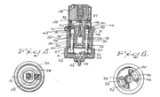
Us Patent 774250
However, as electricity became a common method of lighting houses and operating labour-saving appliances, a means of connection to the electric system other than using a light socket was needed. The original two blade electrical plug and socket were invented by Harvey Hubbell
Harvey Hubbell

Harvey Hubbell II , was a U.S. inventor, entrepreneur and industrialist. His best known inventions are the Domestic AC power plugs and sockets, and the pull-chain light socket....
 and patent
Patent

A patent is a set of exclusive rights granted by a state to an inventor or his assignee for a term of patent in exchange for a disclosure of an invention....
ed in 1904. He left one socket hole bigger than the other, so that people would not electrocute themselves by putting a plug upside down into a socket. Other manufacturers adopted the Hubbell pattern and by 1915 they were widespread, although in the 1920s and even later, household and light commercial equipment was still powered through cables connected with Edison screw-base adapters to lampholders.

The three-prong plug was invented by Philip F. Labre, while he was attending the Milwaukee School of Engineering
Milwaukee School of Engineering

The Milwaukee School of Engineering is a private university located in downtown Milwaukee, Wisconsin, Wisconsin. MSOE is best known for its applications-oriented curriculum, close association with business and industry, and extremely high placement rate ....
 (MSOE). It is said that his landlady had a cat which would knock over her fan when it came in the window. When she plugged the fan back in, she would get an electric shock
Electric shock

An electric shock can occur upon contact of a human's body with any source of voltage high enough to cause sufficient Electric current through the muscles or hair....
. Labre figured out that if the plug were grounded, the electricity would go to earth through the plug rather than his landlady. He applied for and was issued a patent for grounding receptacle and plug on June 5, 1928. As the need for safer installations became apparent, earthed three-contact systems were made mandatory in most industrial countries.

Proliferation of standards


During the first fifty years of commercial use of electric power, standards developed rapidly based on growing experience. Technical, safety, and economic factors influenced the development of all wiring devices and numerous varieties were invented. Gradually the desire for trade eliminated some standards that had been used only in a few countries. Former colonies may retain the standards of the colonising country, occasionally — as with the UK and a number of its former colonies — after the colonising country has changed its standard. Sometimes offshore industrial plants or overseas military bases use the wiring practices of their controlling country instead of the surrounding region. Hotels and airports may maintain receptacles of foreign standards for the convenience of travellers. Some countries have multiple voltages, frequencies and plug designs in use, which can create inconvenience and safety hazards.

Design for safety

Design features and aspects of plugs and sockets have evolved to reduce the risk of electric shock
Electric shock

An electric shock can occur upon contact of a human's body with any source of voltage high enough to cause sufficient Electric current through the muscles or hair....
 and equipment damage. Depending on the plug/socket system, safety measures may include pin and slot configuration to permit only the correct insertion of plug into socket, earth pins longer than power pins so the device becomes earthed before power is connected, insulated pin shanks to reduce or eliminate live-contact exposure when a plug is partially inserted in a socket, socket slot shutters that open only for the correct plug, inbuilt fuses, and inbuilt switches.

Consolidation of standards


In recent years many countries have settled on one of a few de facto standards, which became formalised as official national standards, although there remain older installations of obsolete wiring in most countries. Some buildings have wiring that has been in use for almost a century and which pre-dates all modern standards.

There has been some movement towards consolidation of standards for international interoperability. For example, the CEE 7/7 plug (see below) has been adopted in several European countries and is compatible with both Type E and Type F sockets, while the unpolarised Europlug
Europlug

The Europlug is a flat, two-pole domestic alternating current domestic AC power plugs and sockets that is generally supplied moulded on the end of an appliance's flex or a power cord, designed for voltages up to 250 V and Current up to 2.5 A....
 is compatible with an even greater proportion of European and other socket types. IEC 60906-1
IEC 60906-1

IEC 60906-1 is the international standard 230 V Domestic AC power plugs and sockets. It was intended to become the common mains plug and socket standard, to be used one day everywhere in Europe and other regions with 230 V mains....
 has been proposed as a common standard for all 230V plugs an sockets worldwide but has only been adopted in Brazil to date.

Pc Flex With Cee 7 7 Plug
Many manufacturers of electrical devices like personal computer
Personal computer

A personal computer is any general-purpose computer whose original sales price, size, and capabilities make it useful for individuals, and which is intended to be operated directly by an end user, with no intervening computer operator....
s have adopted the practice of putting a single world-standard IEC connector
IEC connector

IEC connector is the common name for the set of thirteen line sockets and thirteen panel plugs defined by International Electrotechnical Commission specification IEC 60320 ....
 on the device, and supplying for each country a power cord
Power cord

For a musical note played on an electric guitar see Power chordA power cord, line cord, or mains cable is a cord or cable that temporarily connects an Small appliance to the distribution circuits of an electrical power source via a wall socket or extension cord....
 equipped with a standard IEC connector on one end and a national power plug at the other. The device itself is designed to adapt to a wide range of voltage and frequency standards. This has the practical benefit of reducing the amount of testing required for approval, and reduces the number of different product variations that must be produced to serve world markets.

World maps

There are two basic standards for voltage and frequency in the world. One is the North American standard of 110-120 volts at a frequency
Utility frequency

The utility frequency or mains frequency is the frequency at which alternating current is transmitted from a power plant to the end user....
 of 60 Hz
Hz

Hz or hz may mean:*Herero language *Hertz, unit of frequency*Hamilton Zoo, New Zealand...
, which uses plugs A and B, and the other is the European standard of 220-240 volts at 50 Hz, which uses plugs C through M. The differences arose for historical reasons as discussed in the article Mains electricity
Mains electricity

Mains is the general-purpose alternating current electric power supply. The term is not often used in the United States and Canada. In the US, mains power is referred to by a variety of formal and informal names, including household power, household electricity, domestic power, wall power, line power, AC p...
.

Countries on other continents have adopted one of these two voltage standards, although some countries use variations or a mixture of standards. The outline maps show the different plug types, voltages and frequencies used around the world, color-coded for easy reference.

Types in present use

Electrical plugs and their sockets differ by country in shape, size and type of connectors. The type used in each country is set by national standards legislation. In this article each type is designated by a letter designation from a U.S. government publication , plus a short comment in parentheses giving its country of origin and number of contacts. Subsections then detail the subtypes of each type as used in different parts of the world.

IEC Classes
Appliance classes

In the electrical appliance manufacturing industry, the following IEC protection classes are used to differentiate between the protective-earth connection requirements of devices....
 are assigned to electrical devices depending on whether or not they are earthed (grounded) and the degree of insulation they incorporate. Class I, for example, refers to earthed (grounded) equipment, while class II refers to unearthed (ungrounded) equipment protected by double insulation.

Special purpose sockets may be found in industrial, commercial or institutional buildings. These may be merely labeled or coloured, or may have different arrangements of pins or keying provisions. Some special-purpose systems are incompatible with general-purpose lighting and appliances. Examples of systems using special purpose sockets include:
  • "clean" ground for use with computer systems,
  • emergency power supply,
  • uninterruptible power supply, for critical or life-support equipment,
  • isolated power for medical instruments,
  • "balanced" or "technical" power used in audio and video production studios,
  • theatrical lighting


Depending on the nature of the system, special-purpose sockets may just identify a reserved use of a system (for example, computer power) or may be physically incompatible with utility sockets to prevent use of unintended equipment which could create electrical noise or other problems for the intended equipment on the line.

Type A


NEMA 1-15 (North American 15A/125V ungrounded) This plug and socket, with two flat parallel non-coplanar blades and slots, is used in most of North America
North America

North America is the northern continent of the Americas, situated in the Earth's northern hemisphere and almost totally in the western hemisphere....
 and on the east coast of South America
South America

South America is the southern continent of the Americas, situated entirely in the Western Hemisphere and mostly in the Southern Hemisphere, with a relatively small portion in the Northern Hemisphere....
 on devices not requiring a ground connection, such as lamps and "double-insulated" small appliances. It has been adopted by 38 countries outside North America, and is standardised in the U.S. by the National Electrical Manufacturers Association
National Electrical Manufacturers Association

The National Electrical Manufacturers Association or NEMA is a United States-based association, which was created on September 1, 1926, when the Associated Manufacturers of Electrical Supplies and the Electric Power Club merged....
. NEMA 1-15 sockets have been prohibited in new construction in the United States and Canada since 1962, but remain in many older homes and are still sold for replacement. Type A plugs are still very common because they are compatible with type B sockets.

Initially, the plug's prongs and the socket's slots were the same height, so the plug could be inserted into the socket either way around. Modern plugs and sockets are polarised by means of a neutral blade/slot wider than the live blade/slot, so the plug can be inserted only the right way. Polarised type A plugs will not fit in unpolarised type A sockets, because both slots are narrow, but both unpolarised and polarised type A plugs will fit in polarised type A sockets and in type B sockets. Some devices that do not distinguish between neutral and live, such as sealed electronic power supplies, are still produced with unpolarised type A pins (both narrow).

Outletplug
JIS C 8303, Class II (Japanese 15A/100V ungrounded) The Japan
Japan

Japan is an island country in East Asia. Located in the Pacific Ocean, it lies to the east of the Sea of Japan, People's Republic of China, North Korea, South Korea and Russia, stretching from the Sea of Okhotsk in the north to the East China Sea and Taiwan in the south....
ese plug and socket are identical to NEMA 1-15. However, the Japanese system incorporates stricter dimensional requirements for the plug housing, different marking requirements, and mandatory testing and approval by MITI
Ministry of International Trade and Industry

The Ministry of International Trade and Industry was one of the most powerful agencies in the Japanese government. At the height of its influence, it effectively ran much of Japanese industrial policy, funding research and directing investment....
 or JIS.

Some older Japanese outlets and multiplug adapters are unpolarised — the slots in the sockets are the same size — and will accept only unpolarised plugs. Japanese plugs generally fit into most North American outlets without trouble, but polarised North American plugs may require adapters or replacement non-polarized plugs to connect to older Japanese outlets.

In Japan voltage is supplied at only 100 volts, and the frequency in eastern Japan is 50 rather than 60 Hz, so even those North American devices which can be plugged into Japanese sockets will probably not function correctly unless they come with inbuilt transformers.

Type B


NEMA 5-15 (North American 15A/125V grounded)

The type B plug has two flat parallel blades like type A, but has a round or U-shaped earthing prong (American standard NEMA 5-15/Canadian
Canada

Canada is a country occupying most of northern North America, extending from the Atlantic Ocean in the east to the Pacific Ocean in the west and northward into the Arctic Ocean....
 standard CSA 22.2, _ 42). It is rated for 15 amperes at 125 volts. The ground pin is longer than the live and neutral blades, so the device is grounded before the power is connected. Sometimes both current blades on type B plugs are narrow since the ground pin enforces polarity.

The 5-15 socket is standard in all of North America (Canada, the United States and Mexico). It is also used in Central America, the Caribbean, northern South America (Colombia, Ecuador, Venezuela and part of Brazil), Japan, Taiwan and Saudi Arabia
Saudi Arabia

The Kingdom of Saudi Arabia, KSA , is an Arab country and the largest country of the Arabian Peninsula. It is bordered by Jordan on the northwest, Iraq on the north and northeast, Kuwait, Qatar, Bahrain, and the United Arab Emirates on the east, Oman on the southeast, and Yemen on the south....
. Looking directly at a type B outlet with the ground at the bottom, the neutral slot is on the left, and the live slot is on the right. They may be installed with the ground at the top or on either side.

In some parts of the United States, tamper-resistant outlets are now required in new construction. These prevent contact by objects like keys or paper clips inserted into the receptacle.
Electrical Outlet With Label
In the theater
Stage lighting

Modern stage lighting is a flexible tool in the production of theatre, dance, opera and other performance arts. Several different types of stage lighting instruments are used in the pursuit of the various principles or goals of lighting....
, this connector is sometimes known as PBG for "Parallel Blade with Ground", Edison or Hubbell, the name of a common manufacturer.

NEMA 5-20 (North American 20A/125V grounded)

In new residential construction since about 1992, a 20-amp receptacle with a T-slot for the neutral blade allows either 15-ampere parallel blade plugs or 20-ampere plugs to be used.

JIS C 8303, Class I (Japanese 15A/100V grounded) Japan also uses a Type B plug similar to the North American one. However it is less common than its Type A equivalent.

Type C

C Plug
(Not to be confused with the 3-blade C13 and C14 IEC connector
IEC connector

IEC connector is the common name for the set of thirteen line sockets and thirteen panel plugs defined by International Electrotechnical Commission specification IEC 60320 ....
s)
CEE 7/16 (Europlug 2.5A/250V unearthed) This two-prong plug is popularly known as the Europlug
Europlug

The Europlug is a flat, two-pole domestic alternating current domestic AC power plugs and sockets that is generally supplied moulded on the end of an appliance's flex or a power cord, designed for voltages up to 250 V and Current up to 2.5 A....
. The plug is non-earthed and has two round pins, which usually converge slightly towards their free ends. It can be inserted into any socket that accepts 4 mm round contacts spaced apart. It is described in CEE 7/16 and is also defined in Italian
Italy

Italy , officially the Italian Republic , is a country located on the Italian Peninsula in Southern Europe and on the two largest islands in the Mediterranean Sea, Sicily and Sardinia....
 standard CEI 23-5 and Russia
Russia

Russia , or the Russian Federation , is a list of countries spanning more than one continent country extending over much of northern Eurasia....
n standard GOST 7396
GOST 7396

GOST 7396 is a series of Soviet and later Russian standards that specify basic dimensions and safety requirements for power plugs and sockets used in Russia and other Post-Soviet states....
.

The Europlug is used in Class II applications throughout continental Europe (Austria, Belgium, Bosnia and Herzegovina, Bulgaria, Croatia, the Czech Republic, Denmark, Estonia, Finland, France, Germany, Greece, Greenland, Hungary, Iceland, Italy, Latvia, Lithuania, Macedonia, the Netherlands, Norway, Poland, Portugal, Romania, Serbia, Slovakia, Slovenia, Spain, Sweden, Switzerland, Turkey and Ukraine). It is also used in the Middle East, most of Africa, South America (Argentina, Brazil, Chile, Uruguay, Peru, and Bolivia), Asia (Bangladesh, Indonesia and Pakistan) as well as the former Soviet republics, and many developing nations. It is also used alongside the BS 1363 in many nations, particularly former British colonies.

This plug is intended for use with devices that require 2.5 amps or less. Because it is unpolarised, it can be inserted in either direction into the socket, so live and neutral are connected at random.

The separation and length of the pins allow its safe insertion in most CEE 7/17, Type E (French), Type H (Israeli), CEE 7/4 (Schuko), CEE 7/7, Type J (Swiss), Type K (Danish) and Type L (Italian) outlets.


Cee 7 17 Plug
CEE 7/17 (German/French 16A/250V unearthed) This plug also has two round pins but the pins are in diameter like types E and F and the plug has a round plastic or rubber base that stops it being inserted into small sockets intended for the Europlug. Instead, it fits only into large round sockets intended for types E and F. The base has holes in it to accommodate both side contacts and socket earth pins. It is used for large appliances, and in South Korea for all domestic non-earthed appliances. It is also defined in Italian standard CEI 23-5.


Ukshaversocket   Cropped
BS 4573 (UK shaver) In the British Isles
British Isles

The British Isles are a group of islands off the northwest coast of continental Europe that include Great Britain and Ireland, and numerous smaller islands....
, there is what appears to be a larger version of the type C plug for use with shavers (electric razor
Razor

A razor is a bladed tool primarily used in the shaving off of unwanted body hair....
s) in bath or shower rooms. In fact it was not derived from the type C plug at all, but was a legacy from the obsolete 2 pin 5 amp plug used in Britain in the 1920s and 1930s but still prevalent, especially in bathrooms, as late as the 1960s. It has diameter pins apart, and the sockets for this plug are often designed to accept unearthed CEE 7/16, US and/or Australian plugs as well. Sockets are often able to supply either 230V or 115V. In wet zones, they must contain an isolation transformer
Isolation transformer

An isolation transformer is a transformer, often with symmetrical windings, which is used to coupling two circuits. An isolation transformer allows an alternating current signal or power to be taken from one device and fed into another without electrically connecting the two circuits....
 compliant with BS 3535.


Stopcontact Modified
Variations in sockets Some Type C sockets can only take pins or have plastic barriers in place to prevent Schuko
Schuko

"Schuko" is the colloquial name for a system of domestic AC power plugs and sockets that is defined as "CEE 7/4" or known unofficially as "Type F" ....
 or French plugs from entering. However, many can take pins and have enough room for a round-body Schuko or French plug to be inserted, with an unsafe result.


Type D


BS 546 (5A/250V earthed)
D Plug
India
India

India, officially the Republic of India , is a country in South Asia. It is the List of countries and outlying territories by total area country by geographical area, the List of countries by population country, and the most populous liberal democracy in the world....
 and Pakistan
Pakistan

Pakistan , officially the Islamic Republic of Pakistan, is a country located in South Asia and borders Central Asia and the Middle East. It has a 1,046 kilometre coastline along the Arabian Sea and Gulf of Oman in the south, and is bordered by Afghanistan and Iran in the west, India in the east and People's Republic of China in th...
 have standardised on a plug which was originally defined in British standard BS 546
BS 546

BS 546 is an old British Standard for domestic AC power plugs and sockets. These are also known as type D and type M in US documentation. When viewed in photographs with no indication of scale the different ratings look similar, but where a photograph shows more than one type the difference in size is obvious....
. It has three large round pins in a triangular pattern. The BS 546 standard is also used in parts of the Middle East (Kuwait, Qatar) and parts of Asia and South East Asia that were electrified by the British. This type was also previously used in South Africa
South Africa

The Republic of South Africa, also known by Official names of South Africa, is a country located at the southern tip of the continent of Africa....
, but has been phased out in favour of the 15A version there. Similarly, in Ghana
Ghana

The Republic of Ghana is a country in West Africa. It borders C?te d'Ivoire to the west, Burkina Faso to the north, Togo to the east, and the Gulf of Guinea to the south....
, Kenya
Kenya

The Republic of Kenya is a country in East Africa. It is bordered by Ethiopia to the north, Somalia to the northeast, Tanzania to the south, Uganda to the west, and Sudan to the northwest, with the Indian Ocean running along the southeast border....
, and Nigeria
Nigeria

Nigeria, officially the Federal Republic of Nigeria, is a federation constitutional republic comprising States of Nigeria and one Federal Capital Territory, Nigeria....
, the plug has been mostly replaced by the British 3-pin (Type G). This 5A plug, along with its 2A cousin, is sometimes used in the UK for centrally switched domestic lighting circuits, in order to distinguish them from normal power circuits.

BS 546 (15A/250V earthed)
M Plug
This plug is sometimes referred to as type M, but it is in fact merely the 15A version of the plug above, though its pins are much larger at . Live and neutral are spaced apart, and earth is away from each of them. Although the 5A version is standard in India
India

India, officially the Republic of India , is a country in South Asia. It is the List of countries and outlying territories by total area country by geographical area, the List of countries by population country, and the most populous liberal democracy in the world....
, Pakistan
Pakistan

Pakistan , officially the Islamic Republic of Pakistan, is a country located in South Asia and borders Central Asia and the Middle East. It has a 1,046 kilometre coastline along the Arabian Sea and Gulf of Oman in the south, and is bordered by Afghanistan and Iran in the west, India in the east and People's Republic of China in th...
, Sri Lanka
Sri Lanka

Sri Lanka, officially the Democratic Socialist Republic of Sri Lanka is an island country in South Asia, located about off the southern coast of India....
, Nepal
Nepal

Nepal , officially the Federal Democratic Republic of Nepal, is a landlocked country in South Asia and is the world's youngest republic. It is bordered to the north by the People's Republic of China, and to the south, east, and west by India....
, and Namibia
Namibia

Namibia, officially the Republic of Namibia, is a country in southern Africa on the Atlantic Ocean coast. It shares borders with Angola and Zambia to the north, Botswana to the east, and South Africa to the south....
, the 15A version is also used in these countries for larger appliances. Some countries like South Africa
South Africa

The Republic of South Africa, also known by Official names of South Africa, is a country located at the southern tip of the continent of Africa....
 use it as the main domestic plug and socket type, where sockets always have an on–off switch built into them. The Type M was almost universally used in the UK and Ireland for indoor dimmable theatre and architectural lighting installations, but there is now a widespread move to using CEE 16A industrial sockets in new installations. It was also often used for non-dimmed but centrally controlled sockets within such installations. The main reason for doing this is that fused plugs, while convenient for domestic wiring (as they allow 32A socket circuits to be used safely), are not convenient if the plugs and sockets are in hard-to-access locations (like lighting bars) or if using chains of extension cords since it is hard to figure out which fuse has blown. Both of these situations are common in theatre wiring. This plug is also widely used in Israel
Israel

Israel officially the State of Israel , is a country in the Middle East located on the eastern shore of the Mediterranean Sea. It borders Lebanon in the north, Syria in the northeast, Jordan in the east, and Egypt on the southwest, and contains geographically diverse features within its relatively small area....
, Singapore
Singapore

Singapore , officially the Republic of Singapore, is an island country microstate located at the southern tip of the Malay Peninsula. It lies 137 kilometres north of the equator, south of the Malaysian state of Johor and north of Indonesia's Riau Islands....
, and Malaysia
Malaysia

Malaysia is a federation that consists of States of Malaysia in Southeast Asia with a total landmass of . The capital city is Kuala Lumpur, while Putrajaya is the seat of the federal government....
 for air conditioners
Air conditioning

An air conditioner is an appliance, system, or Mechanism designed to extract heat from an area via a refrigeration cycle. In construction, a complete system of heating, Ventilation , and air conditioning is referred to as "HVAC." Its purpose, in a building or an automobile, is to provide comfort during either hot or cold...
 and clothes dryer
Clothes dryer

A clothes dryer or tumble dryer is a household appliance that is used to remove the moisture from a load of clothing and other textiles, generally shortly after they are cleaned in a washing machine....
s.


Type E


Pure French Power Plug

French type E France
France

France , officially the French Republic , is a country whose Metropolitan France is located in Western Europe and that also comprises various Overseas departments and territories of France....
, Belgium
Belgium

* A small German-speaking Community of Belgium exists in eastern Wallonia. Belgium's linguistic diversity and related political and cultural conflicts are reflected in the history of Belgium and a complex Communities and regions of Belgium....
, Poland
Poland

Poland , officially the Republic of Poland , is a country in Central Europe. Poland is bordered by Germany to the west; the Czech Republic and Slovakia to the south; Ukraine, Belarus and Lithuania to the east; and the Baltic Sea and Kaliningrad Oblast, a Russian Enclave and exclave, to the north....
, Czech Republic
Czech Republic

The Czech Republic , is a landlocked country in Central Europe. The country borders Poland to the northeast, Germany to the west, Austria to the south and Slovakia to the east....
, Slovakia
Slovakia

Slovakia . It was amended in September 1998 to allow direct election of the president and again in February 2001 due to EU admission requirements....
 (after 1 July 2008 also Denmark) and some other countries have standardised on a socket which is not compatible with the CEE 7/4 socket (type F) standard in Germany
Germany

Germany , officially the Federal Republic of Germany , is a country in Central Europe. It is bordered to the north by the North Sea, Denmark, and the Baltic Sea; to the east by Poland and the Czech Republic; to the south by Austria and Switzerland; and to the west by France, Luxembourg, Belgium, and the Netherlands....
 and other continental European countries. The reason for incompatibility is that earthing in the E socket is done by a round male pin permanently mounted in the socket. Sockets are installed with the earth pin upwards. The plugs and sockets are not marked with 'L' and 'N'. Wiring of line and neutral varies. In Belgium they are connected at random, no standard is observed. In France the de facto standard appears to be live on the right, neutral on left when looking at the socket. In the Czech republic and Slovakia, the live wire must be connected to the left hole in the socket. The plug itself is round with two round pins measuring , spaced 19 mm apart and a hole for the socket's earth pin. It will accept Europlug(type C) and CEE 7/17 plugs.

As with the German plug below this plug will fit some other types of socket either easily or with force. However, there is no earth connection with such sockets. Also in some cases forcing the plug may damage the socket.


Type F

CEE 7/4 (German "Schuko" 16A/250V earthed)
Schuko Plug and Socket
The type F plug, defined in CEE 7/4 and commonly called a "Schuko
Schuko

"Schuko" is the colloquial name for a system of domestic AC power plugs and sockets that is defined as "CEE 7/4" or known unofficially as "Type F" ....
 plug", is like type E except that it has two earthing clips on the sides of the plug instead of a female earth contact. The Schuko connection system is symmetrical and unpolarised, allowing live and neutral to be reversed. The socket also accepts Europlugs and CEE 7/17 plugs. It supplies up to 16Amperes. It is used in Germany, Iceland, Latvia, Finland, Chile, the Netherlands, Norway, Portugal, Spain and Sweden.

"Schuko" is an abbreviation for the German
German language

German is a West Germanic languages, thus related to and classified alongside English language and Dutch language. It is one of the world's world language and the most widely spoken mother tongue in the European Union....
 word Schutzkontakt, which means "Protective (that is, earthed) contact".

Although Schuko sockets are unpolarised by design, a de facto standard in most countries is to wire them like the French sockets with live on left and neutral on right, but it is not always observed.

Gost 7396 (Russian 10A/250V earthed)

Russia
Russia

Russia , or the Russian Federation , is a list of countries spanning more than one continent country extending over much of northern Eurasia....
n Standard Gost 7396 defines a plug and receptacle similar to the Schuko, but with smaller pins of diameter, rated at 10 amps. A Gost 7396 will fit a Schuko receptacle, but the reverse is not possible since the Schuko and CEE 7/17 plugs pins are too large. This socket also accepts Europlugs.

After reunification, the former East Germany adopted the same DIN and VDE standards as West Germany. Most Eastern European countries used the Schuko standard, but exported appliances with the Soviet standard plug.

Type E / F hybrid

Cee 7 7
CEE 7/7 (French/German 16A/250V earthed)

In order to bridge the differences between sockets E and F, the CEE 7/7 plug was developed. It is polarised to prevent the live and neutral connections from being reversed when used with a type E outlet, but allows polarity reversal when inserted into a type F socket. The plug is rated at 16A. It has earthing clips on both sides to connect with the CEE 7/4 socket and a female contact to accept the earthing pin of the type E socket. It's also used in Spain and Portugal. Nowadays, when appliances are sold with type E/F plugs attached, the plugs are CEE 7/7 and non-rewirable. This means that the plugs are now identical between countries like France and Germany, but the sockets are different.

Type G

BS 1363 (British 13A/230-240V 50 Hz earthed and fused)
G Plug
The British Standards
British Standards

British Standards are produced by BSI British Standards, a division of BSI Group that is incorporated under a Royal Charter and is formally designated as the Standards organization#National Standards Bodies for the UK....
 1363 plug. This design is used not only in the UK and Ireland, but also in Sri Lanka
Sri Lanka

Sri Lanka, officially the Democratic Socialist Republic of Sri Lanka is an island country in South Asia, located about off the southern coast of India....
, Bahrain
Bahrain

The Kingdom of Bahrain, in , , literally Kingdom of the Two Seas).Bahrain is an Arabic island country in the Persian Gulf ruled by the Al Khalifa regime....
, UAE, Qatar
Qatar

Qatar , officially the State of Qatar , is an Arab emirate in Southwest Asia, occupying the small Qatar Peninsula on the northeasterly coast of the larger Arabian Peninsula....
, Yemen
Yemen

Yemen , officially the Republic of Yemen is an Arab country located on the Arabian Peninsula in Southwest Asia. Yemen has an estimated population of more than 23 million people and is bordered by Saudi Arabia to the North, the Red Sea to the West, the Arabian Sea and Gulf of Aden to the South, and Oman to the east....
, Oman
Oman

Oman , officially the Sultanate of Oman , is an Arab country in southwest Asia on the southeast coast of the Arabian Peninsula. It borders the United Arab Emirates on the northwest, Saudi Arabia on the west and Yemen on the southwest....
, Cyprus
Cyprus

Cyprus , officially the Republic of Cyprus , is an island country situated in the eastern Mediterranean Sea, east of Greece, west of Lebanon, Syria, and Israel, south of Turkey and north of Egypt....
, Malta
Malta

Malta , officially the Republic of Malta , is a densely populated developed country European microstates microstate in the European Union....
, Gibraltar
Gibraltar

Gibraltar is a British overseas territory located near the southernmost tip of the Iberian Peninsula overlooking the Strait of Gibraltar. The territory shares a border with Spain to the north....
, Botswana
Botswana

The Republic of Botswana , is a landlocked country in Southern Africa. Citizens of Botswana are called "Batswana" , regardless of ethnicity. Formerly a British protectorate of Bechuanaland Protectorate, Botswana adopted its new name after becoming independent within the Commonwealth of Nations on 30 September 1966....
, Ghana
Ghana

The Republic of Ghana is a country in West Africa. It borders C?te d'Ivoire to the west, Burkina Faso to the north, Togo to the east, and the Gulf of Guinea to the south....
, Hong Kong
Hong Kong

Hong Kong , officially the Hong Kong Special Administrative Region, is a territory located in Southern China in East Asia, bordering the province of Guangdong to the north and facing the South China Sea to the east, west and south....
, Macau
Macau

The Macau Special Administrative Region, , commonly known as Macau or Macao , is one of the two special administrative region of the People's Republic of China, the other being Hong Kong....
, Brunei
Brunei

Brunei Darussalam, officially the State of Brunei, Abode of Peace , is a country located on the north coast of the island of Borneo, in Southeast Asia....
, Malaysia
Malaysia

Malaysia is a federation that consists of States of Malaysia in Southeast Asia with a total landmass of . The capital city is Kuala Lumpur, while Putrajaya is the seat of the federal government....
, Singapore
Singapore

Singapore , officially the Republic of Singapore, is an island country microstate located at the southern tip of the Malay Peninsula. It lies 137 kilometres north of the equator, south of the Malaysian state of Johor and north of Indonesia's Riau Islands....
, Indonesia
Indonesia

The Republic of Indonesia , is a transcontinental country in Southeast Asia and Oceania. Comprising Islands of Indonesia, it is the world's largest Archipelago state....
, Kenya
Kenya

The Republic of Kenya is a country in East Africa. It is bordered by Ethiopia to the north, Somalia to the northeast, Tanzania to the south, Uganda to the west, and Sudan to the northwest, with the Indian Ocean running along the southeast border....
, Uganda
Uganda

The Republic of Uganda is a landlocked country in East Africa. It is bordered on the east by Kenya, on the north by Sudan, on the west by the Democratic Republic of the Congo, on the southwest by Rwanda, and on the south by Tanzania....
, Nigeria
Nigeria

Nigeria, officially the Federal Republic of Nigeria, is a federation constitutional republic comprising States of Nigeria and one Federal Capital Territory, Nigeria....
, Mauritius
Mauritius

Mauritius , officially the Republic of Mauritius, , is an island nation off the coast of the African continent in the southwest Indian Ocean, about 900 kilometres east of Madagascar....
, Iraq
Iraq

Iraq , officially the Republic of Iraq , is a country in Western Asia spanning most of the northwestern end of the Zagros Mountains, the eastern part of the Syrian Desert and the northern part of the Arabian Desert....
, Tanzania
Tanzania

Tanzania , officially the United Republic of Tanzania , is a country in East Africa that is bordered by Kenya and Uganda on the north, Rwanda, Burundi and the Democratic Republic of the Congo on the west, and Zambia, Malawi and Mozambique on the south....
 and Zimbabwe
Zimbabwe

Zimbabwe , is a landlocked country located in the southern part of the continent of Africa, between the Zambezi and Limpopo River rivers. It is bordered by South Africa to the south, Botswana to the southwest, Zambia to the northwest and Mozambique to the east....
. BS 1363 is also standard in several of the former British Caribbean colonies such as Belize
Belize

Belize , formerly British Honduras, is a country in Central America. Once part of the Maya civilization, and very briefly the Spanish Empire, it was most recently affiliated with the British Empire, prior to gaining its independence in 1981....
, Dominica
Dominica

The Commonwealth of Dominica, commonly known as Dominica, is an island nation in the Caribbean Sea. To the north/northwest lies Guadeloupe, to the southeast Martinique....
, St. Lucia, Saint Vincent and the Grenadines
Saint Vincent and the Grenadines

Saint Vincent and the Grenadines is an island nation in the Lesser Antilles island arc of the Caribbean Sea. Its territory consists of the main island of Saint Vincent and the northern two-thirds of the Grenadines....
 and Grenada
Grenada

Grenada is an island nation that includes the southern Grenadines in the southeastern Caribbean Sea. Grenada is located northwest of Trinidad and Tobago, northeast of Venezuela, and southwest of Saint Vincent and the Grenadines....
. It is also used in Saudi Arabia
Saudi Arabia

The Kingdom of Saudi Arabia, KSA , is an Arab country and the largest country of the Arabian Peninsula. It is bordered by Jordan on the northwest, Iraq on the north and northeast, Kuwait, Qatar, Bahrain, and the United Arab Emirates on the east, Oman on the southeast, and Yemen on the south....
 in 230V installations although 110V installations using the NEMA connector are more common.

This plug, commonly known as a "13-amp plug", is a large plug that has three rectangular prongs forming a triangle. Live and neutral are , long, and spaced apart. of insulation at the trailing ends of the prongs prevents accidental contact with a bare connector while the plug is partially inserted. The earth prong is approximately and long.

The plug has a fuse inside. The fuse is required to protect the cord, as British wiring standards allow very high-current ring main circuits to the socket. Accepted practice is to choose the smallest standard fuse (3, 5, or 13A) that will allow the appliance to function. Using a 13 A fuse on an appliance with thin cord is considered bad practice. The fuse is long, conforming to standard BS 1362.

UK wiring regulations (BS 7671
BS 7671

British Standard BS 7671 "Requirements for electrical installations" is the national standard in the United Kingdom for low voltage electrical installations....
) require sockets in homes to have shutters over the live and neutral connections to prevent the insertion of objects other than electric plugs. These are opened by the insertion of the longer earth prong. The shutters also help prevent the use of plugs made to other standards. On plugs for Class II appliances that do not require an earth, the pin is often plastic
Plastic

Plastic is the general common term for a wide range of synthetic or semisynthetic organic chemistry solid materials suitable for the manufacture of industrial products....
 and serves only to open the shutters and to enforce the correct orientation of live and neutral. It is generally possible to open the shutters with a screwdriver blade to insert a Type C Plug (but not the BS 4573 UK shaver) or other plug types, but this can be dangerous for such plugs will not have a fuse and will often not fit properly.

BS 1363 plugs and sockets started appearing in 1946 and BS 1363 was first published in 1947. By the end of the 1950s, it had replaced the earlier type D BS 546
BS 546

BS 546 is an old British Standard for domestic AC power plugs and sockets. These are also known as type D and type M in US documentation. When viewed in photographs with no indication of scale the different ratings look similar, but where a photograph shows more than one type the difference in size is obvious....
 in new installations, and by the end of the 1960s, most earlier type D installations had been rewired to BS 1363 standards. Outlets usually include switches on them for convenience.

Type H

Israeli Type H Plugs and Socket
SI 32 (Israeli 16A/250V earthed) This plug, defined in SI 32 (IS16A-R), is unique to Israel
Israel

Israel officially the State of Israel , is a country in the Middle East located on the eastern shore of the Mediterranean Sea. It borders Lebanon in the north, Syria in the northeast, Jordan in the east, and Egypt on the southwest, and contains geographically diverse features within its relatively small area....
 and is incompatible with all other sockets. It has three flat pins to form a Y-shape. Hot and neutral are spaced apart. The Type H plug is rated at 16A but in practice the thin flat pins can cause the plug to overheat when connecting large appliances. In 1989, the standard was revised to use three round pins in the same locations. Sockets made since 1989 accept both flat and round pins for compatibility with both old and new plugs. This also allows the Type H socket to accommodate the type C plugs used in Israel for non-earthed appliances. Older sockets, from about the 1970s, have both flat and round holes for live and neutral in order to accept both Type C and Type H plugs. As of 2008, type H sockets which accept only old-style type H plugs are very rare in Israel.

This plug is also used in the areas controlled by the Palestinian National Authority
Palestinian National Authority

The Palestinian National Authority is the administrative organization established to government parts of the Palestinian territories of the West Bank and Gaza Strip....
 in the West Bank
West Bank

The West Bank is the eastern Part of the Palestinian territories on the west bank of the River Jordan in the Middle East. To the west, north, and south the West Bank shares borders with the state of Israel....
 and all of the Gaza Strip
Gaza Strip

The Gaza Strip is a coastal strip of land along the Mediterranean Sea. It borders Egypt on the south-west and Israel on the south, east and north....
.

Type I

Australian Dual Switched Power Point
AS 3112 (Australian 10A/240V) This plug, used in Australia
Australia

Australia, officially the Commonwealth of Australia, is a country in the southern hemisphere comprising the Australia of the world's smallest continent, the major island of Tasmania, and numerous list of islands of Australia in the Indian Ocean and Pacific Oceans....
, New Zealand
New Zealand

New Zealand is an island country in the south-western Pacific Ocean comprising two main landmasses , and numerous Islands of New Zealand, most notably Stewart Island/Rakiura and the Chatham Islands....
, Fiji
Fiji

Fiji , officially the Republic of the Fiji Islands , is an island nation in the South Pacific Ocean east of Vanuatu, west of Tonga and south of Tuvalu....
 and Papua New Guinea
Papua New Guinea

Papua New Guinea , officially the Independent State of Papua New Guinea, is a country in Oceania, occupying the eastern half of the island of New Guinea and numerous offshore islands ....
, has an earthing pin, and two flat current-carrying pins forming an upside down V-shape. The flat blades measure and are set at 30° to the vertical at a nominal pitch of . Australian wall sockets almost always have switches on them for extra safety, as in the UK. An unearthed version of this plug with two angled power pins but no earthing pin is used with small double-insulated appliances, but the power (wall) outlets always have three pins, including an earth pin.

There are several AS/NZS 3112 plug variants, including one with a wider earth pin used for devices drawing up to 15 amps; sockets supporting this pin will also accept 10A plugs. There is also a 20A variant, with all three pins oversized, and 25 and 32A variants, with the 20A larger pins and the earthing pin forming an inverted "L" for the 25A and a horizontal "U" for the 32A. These sockets accept plugs of equal or of a lower current capacity, but not of higher capacity. For example, a 10A plug will fit all sockets but a 20A plug will fit only 20, 25 and 32A outlets).

Australia's standard plug/socket system was originally codified as standard C112 (floated provisionally in 1937, and adopted as a formal standard in 1938), which was superseded by AS 3112
AS 3112

AS 3112 is an Australian standard for mains power plug. It is also known as a Type I plug....
 in 1990. As of 2005, the latest major update is AS/NZS 3112:2004, which mandated insulated pins by 2005. However, equipment and cords made before 2003 can still be used.

Ccc (china Compulsory Certification) Mark
CPCS-CCC (Chinese 10A/250V)

Although the pins on the Chinese plug are longer, the Australian plug can be used with mainland Chinese
People's Republic of China

The People's Republic of China , commonly known as China, is the largest country in East Asia and the List of countries by population in the world with over 1.3 billion people, approximately a fifth of the world's population....
 socket. The standard for Chinese plugs and sockets is set out in GB 2099.1–1996 and GB 1002–1996. As part of China's commitment for entry into the WTO, the new CPCS (Compulsory Product Certification System) has been introduced, and compliant Chinese plugs have been awarded the CCC
CCC

CCC may refer to:...
 (China Compulsory Certification) Mark by this system. The plug is three wire, earthed, rated at 10A, 250V and used for Class 1 applications.

In China, the sockets are installed upside-down relative to the Australian one.

China also uses American/Japanese "Type A" sockets and plugs for Class-II appliances. However, the voltage across the pins of a Chinese socket will always be 220, no matter what the plug type.

IRAM 2073 (Argentinian 10A/250V) The Argentinian
Argentina

Argentina, officially the Argentine Republic , is a country in South America, constituted as a federation of 23 provinces and an autonomous city....
 plug is a three-wire earthed plug rated at 10A, 250V defined by IRAM
Instituto Argentino de Normalización y Certificación

The Argentine Normalization and Certification Institute is the International Organization for Standardization member body for Argentina.It was founded on May 2, 1935 under the name of Instituto Argentino de Racionalizaci?n de Materiales, and is since then known as IRAM, even though its name was changed in 1996....
 and used in Class 1 applications in Argentina and Uruguay
Uruguay

Uruguay is a country located in the southeastern part of South America. It is home to 3.46 million people, of whom 1.7 million live in the capital Montevideo and its metropolitan area....
.

This plug is similar in appearance to the Australian and Chinese plugs. The pin length is same as the Chinese version. The most important difference from the Australian plug is that the Argentinian plug is wired with the live and neutral contacts reversed.

Type J

SEV 1011 (Swiss 10A/250V) Switzerland
Switzerland

Switzerland is a landlocked Swiss Alps country of roughly 7.7 million people in Western Europe with an area of 41,285 km?. Switzerland is a federal republic consisting of 26 states called Cantons of Switzerland....
 has its own standard which is described in SEV 1011. (ASE1011/1959 SW10A-R) This plug is similar to the type C Europlug (CEE 7/16), except that it has an offset earth pin and the pin shanks are not insulated, so plugs partially inserted into non-recessed sockets present a shock
Electric shock

An electric shock can occur upon contact of a human's body with any source of voltage high enough to cause sufficient Electric current through the muscles or hair....
 hazard. Swiss sockets accept Swiss plugs or Europlugs (CEE 7/16). There is also a non-earthed two-pin variant with the same pin shape, size, and spacing as the SEV 1011's live and neutral pins, but with a more flattened hexagonal form. It fits into round and hexagonal Swiss sockets and CEE 7/16 sockets, and is rated for up to 10A.

A less-common variant has 3 square pins and is rated for 16 amps. Above 16 amps, equipment must either be hardwired to the electrical supply system with appropriate branch circuit protection, or connected to the mains with an appropriate high power industrial connector.

Type K

K Plug
Section 107-2-D1 (Danish 10A/250V earthed)

This Danish
Denmark

Denmark is a Scandinavian country in northern Europe and the senior member of the Kingdom of Denmark. It is the southernmost of the Nordic countries....
 standard plug is described in the Danish Plug Equipment Section 107-2-D1 Standard sheet (SRAF1962/DB 16/87 DN10A-R). The plug is similar to the French type E except that it has an earthing pin instead of an earthing hole (and vice versa on the socket). This makes the Danish socket more unobtrusive than the French socket which is a cavity into the wall to protect the earthing pin from mechanical damage (and to protect from touching the live pins).

The Danish socket will also accept the type C CEE 7/16 Europlug or type E/F CEE 7/17 Schuko-French hybrid plug. Type F CEE 7/4 (Schuko), type E/F CEE 7/7 (Schuko-French hybrid), and earthed type E French plugs will also fit into the socket but should not be used for appliances that need earth contact. The current rating on both plugs is 10A.

A variation (standard DK 2-5a) of the Danish plug is for use only on surge protected computer outlets. It fits into the corresponding computer socket and the normal type K socket, but normal type K plugs deliberately don't fit into the special computer socket. The plug is often used in companies, but rarely in private homes.

There is a variation for hospital equipment with a rectangular left pin, it is used for life support equipment.

Traditionally all Danish sockets were equipped with a switch to prevent touching live pins when connecting/disconnecting the plug. Today, sockets without switch are allowed, but then it is a requirement that the sockets have a cavity to prevent touching the live pins. However, the shape of the plugs generally makes it difficult to touch the pins when connecting/disconnecting.

Since the early 1990s grounded outlets have been required in all new electric installations in Denmark. Older outlets need not be grounded, but all outlets, including old installations, must be protected by ground-fault interrupters
Residual-current device

A residual current device , similar to that of a residual current circuit breaker , is an electrical wiring device that disconnects a circuit whenever it detects that the electric current is not balanced between the energized conductor and the return Ground and neutral conductor....
 (HFI in Danish) by 1 July 2008.

As of 1 July 2008, wall outlets for type E (French 2-pin, female earth) are permitted for installations in Denmark . This was done because no electrical equipment sold to private users is equipped with a type K plug, and to break the monopoly of Lauritz Knudsen — the only company making type K sockets and plugs.

Sockets for the Schuko F type will not be permitted. The reason is that a large number of currently used Danish plugs will jam when inserted into a Schuko socket. This may cause damage to the socket. It may also result in a bad connection of the pins, with resultant risk of overheating and fire. Broken type F sockets are often seen in German hotels visited by Danes. Many international travel adapter sets sold outside Denmark match type C CEE 7/16 (Europlug) and type E/F CEE 7/7 (Schuko-French hybrid) plugs which can readily be used in Denmark.

Type L

L Plug
CEI 23-16/VII (Italian 10A/250V and 16A/250V) The Italian
Italy

Italy , officially the Italian Republic , is a country located on the Italian Peninsula in Southern Europe and on the two largest islands in the Mediterranean Sea, Sicily and Sardinia....
 earthed plug/socket standard, CEI 23-16/VII, includes two models rated at 10A and 16A that differ in contact diameter and spacing (see below for details). Both are symmetrical, allowing the live and neutral contacts to be inserted in either direction.

The double standard was initially adopted because in Italy, up to the second half of the twentieth century, the electric power used for lamps (Luce = lighting) and the one used for all other appliances (Forza = electromotive force
Electromotive force

Electromotive force is a term used to characterize electrical devices, such as voltaic cells, Thermoelectric effects, electrical generators and transformers, and even resistors....
; or Uso Promiscuo = general purpose) were sold at different fares, charged with different taxes, accounted with separated electricity meters, and sent on different wire lines that ended with different sockets. Even though the two electric lines (and respective fares) were definitively unified during the summer of 1974 many houses kept twin wires and twin electricity meters for years thereafter. The two gauges for plugs and sockets thus became a de facto standard
De facto standard

A de facto standard is a custom, convention, product, or system that has achieved a dominant position by public acceptance or market forces . De facto is a Latin phrase meaning "concerning the fact" or "in practice", and is used in opposition to de jure ....
 which is still in use today and has been standardized with CEI 23-16/VII. Older installations often have sockets that are limited to either the 10A or the 16A style plug, requiring the use of an adapter if the other gauge needs to be connected.

CEE 7/16 (type C) unearthed Europlugs are also in common use; they are standardized in Italy as CEI 23-5 and fit most of the appliances with low current requirement and double insulation.

Appliances with CEE 7/7 Schuko-French plugs are often sold in Italy too; however not every socket will accept them since the pins of the CEE 7/7 Schuko-French plugs are thicker than the Italian ones. Adapters are cheap and commonly used to connect CEE 7/7 plugs to CEI 23-16/VII sockets, though the power rating may be mismatched (16A to 10A) and may lead to potentially unsafe connection in some cases.

CEI 23-16/VII (Italian 10A/250V) The 10 ampere style extends CEE 7/16 by adding a central earthing pin of the same gauge. Thus, CEI 23-16-VII 10A sockets can accept CEE 7/16 Europlugs. This is the plug shown in the first picture.

CEI 23-16/VII (Italian 16A/250V) The 16 ampere style looks like a magnified version of the 10A style, identical in shape. However, the pins are 5 millimetre
Millimetre

The millimetre is a Units of measurement of length in the metric system, equal to one thousandth of a metre, which is the current International System of Units SI base unit of length....
s thick (being 4 mm thick in 10A type), 8 mm apart (while 5.5 mm apart in 10A type) and 7 mm longer. The packaging of these plugs in Italy may claim they are a "North European" type. In the past they were also referred to as per la forza motrice (for electromotive force, see above) or sometimes industriale (industrial), although the latter has never been a correct definition as factories used preminently three-phase current and specialized connectors.

Twin-gauge or multi-type sockets Given that the plug with which appliances are fitted and sold varies, in modern installations in Italy (and in other countries where type L plugs are used) it is likely to find sockets that can accept more than one standard. The simpler type has a central round hole and two 8-shaped holes above and below. This design allows the connection of both styles of type L plugs (CEI 23-16/VII 10A and 16A) and the type C CEE 7/16 Europlug. The advantage of this socket style is its small, compact face. VIMAR brand claims to have patented this socket first in 1975 with their Bpresa
Trademark symbol

The trademark symbol, designated by ? , is a symbol used in the United States to provide notice that the preceding mark is a trademark. This symbol is typically used for trademarks not yet registered with the U.S....
 model; however soon other brands started selling similar products mostly naming them with the generic term presa bipasso (twin-gauge socket) that is now of common use.

A second, quite common type looks like a type F socket, but adds a central grounding hole. This design can accept CEE 7/7 (type E/F) plugs, in addition to type C and type L 10A plugs. Some of these sockets may also have 8-shaped holes to accept type L 16A plugs as well. Its drawback is that it’s twice as large as a normal type L socket.

Other types may push compatibility even further. The VIMAR-brand universale (all purpose) socket, for example, accepts CEE 7/7 (type E/F) plugs, type C plugs, both 10A and 16A type L plugs, and American/Japanese type A plugs as well.

Other countries Outside of Italy, type L CEI 23-16/VII (Italian 10A/250V) plug is found in Syria
Syria

Syria , officially the Syrian Arab Republic , is an Arab-majority country in Southwest Asia, bordering Lebanon and the Mediterranean Sea to the west, Israel to the southwest, Jordan to the south, Iraq to the east, and Turkey to the north....
, Libya
Libya

Libya , officially the Great Socialist People's Libyan Arab Jamahiriya , is a country located in North Africa. Bordering the Mediterranean Sea to the north, Libya lies between Egypt to the east, Sudan to the southeast, Chad and Niger to the south, and Algeria and Tunisia to the west....
, Ethiopia
Ethiopia

Ethiopia , officially the Federal Democratic Republic of Ethiopia, is a landlocked country situated in the Horn of Africa. Ethiopia is bordered by Eritrea to the north, Sudan to the west, Kenya to the south, Somalia to the east and Djibouti to the northeast....
, Chile
Chile

Chile, officially the Republic of Chile , is a country in South America occupying a long and narrow coastal strip wedged between the Andes mountains and the Pacific Ocean....
, Argentina
Argentina

Argentina, officially the Argentine Republic , is a country in South America, constituted as a federation of 23 provinces and an autonomous city....
, Uruguay
Uruguay

Uruguay is a country located in the southeastern part of South America. It is home to 3.46 million people, of whom 1.7 million live in the capital Montevideo and its metropolitan area....
, various countries in North Africa
North Africa

North Africa or Northern Africa is the northernmost region of the African continent, separated by the Sahara from Sub-Saharan Africa.Geopolitically, the United Nations subregion of Northern Africa includes the following seven countries or territories:...
, and occasionally in older buildings in Spain
Spain

Spain or the Kingdom of Spain , is a country located in Southern Europe on the Iberian Peninsula.The Spanish constitution does not establish any official denomination of the country, even though Espa?a , Estado espa?ol and Naci?n espa?ola are used interchangeably....
.

In Chile, domestic electrical installations will have several type L 10A plugs and just a few type L 16A plugs, the latter meant for higher consumption appliances, like a washing machine, a dishwasher or air conditioning; each set of plugs are connected to separate fuses. In some cases, Schuko plugs are used as high consumption outlets instead of type L 16A plugs.

Type M

BS 546 (South African 15A/250V) Type M is sometimes used to describe the 15A version of the old British type D, used in South Africa
South Africa

The Republic of South Africa, also known by Official names of South Africa, is a country located at the southern tip of the continent of Africa....
 and elsewhere.

Proposed common standard

IEC 60906-1 (Brazilian 16A/250V) In 1986, the International Electrotechnical Commission published IEC 60906-1
IEC 60906-1

IEC 60906-1 is the international standard 230 V Domestic AC power plugs and sockets. It was intended to become the common mains plug and socket standard, to be used one day everywhere in Europe and other regions with 230 V mains....
, the specification for a plug that looks similar but is not identical to the Swiss (Type J) plug. This plug was intended to become one day the common standard for all of Europe and other regions with 230V mains, but the effort to adopt it as a European Union standard was put on hold in the mid 1990s. Brazil
Brazil

Brazil , officially the Federative Republic of Brazil , is a country in South America. It is the List of countries and outlying territories by total area country by geographical area, occupying nearly half of South America, the List of countries by population country, and the fourth most populous democracy in the world....
, which uses a mix of Europlug and NEMA plugs, later adopted it as national standard NBR 14136 in 2001. It has been planned for gradual adoption starting in 2007 and ending in 2010 (end-user stores and resellers can sell equipments without adoption deadlines, but importers will not be allowed to bring unconforming devices, nor manufacturers will be able to sell them locally).

Multi-standard sockets

Thai Plug
Sockets that take a variety of normally-incompatible plug types can be found in developing countries where electrical standards are either lacking or unenforced. These sockets may accept both 120V and 240V plugs, so there is no safeguard against devices being damaged by the wrong voltage. Sometimes these sockets have one or more earth holes to allow 3-pin plugs, but the earth contact may not actually be connected to earth and in any event will not necessarily mate with the plug's earth contact, as in the case of Schuko or French plugs with female earth contacts. Great care must be taken to avoid incompatible voltage and earthing connections when using such outlets. Devices designed to adapt automatically to whatever voltage and frequency is supplied, and which don't require earthing, are generally safe to use with these sockets.

Adapters

Type M Travel Adaptor
To facilitate travellers' use of personal electric devices, adaptors are available to permit the interconnection of normally-incompatible plugs and sockets. Such adaptors overcome only the physical incompatibilities between plugs and sockets built to different standards; often a voltage converter
Voltage converter

A voltage converter changes the voltage of an electrical power source and is usually combined with other components to create a power supply. The term "voltage converter" is sometimes used as a generic term for a power supply....
 is required for electrical compatibility.

Obsolete types


Old Spanish sockets


Older buildings in Spain may have sockets that take a particular type of plug that has two flat contacts and a round earth pin, somewhat similar to the ones found on American plugs.

The live and neutral measure , and are apart. All three pins are long, and the earth pin is a cylinder of diameter.

While the plug resembles an American connector, the two flat contacts are much wider apart than on a standard American plug, which will therefore not fit in these sockets.

No appliances are sold with these plugs. Adapters are necessary.


UK electric clock connector

Uk Clock Connector 3 Pin Open
Fused plugs and sockets of various proprietary and non-interchangeable types are found in older public buildings in the UK, where they are used to feed AC electric wall clocks. They are smaller than conventional socket outlets, commonly being made to fit BESA
Besa

Besa may refer to:* Banco Espirito Santo Angola* Besa machine gun- a Czech machine gun design developed by Birmingham Small Arms Company.* Be?a - village in Michalovce District in Slovakia...
 junction boxes, and are often of very low profile. Early types were available fused in both poles, later types fused in the live only and provided an earth pin. Most are equipped with a retaining screw or clip to prevent accidental disconnection. The prevalence of battery powered quartz
Quartz clock

A quartz clock is a clock that uses an electronic oscillator that is regulated by a quartz crystal to keep time. This crystal oscillator creates a signal with very precise frequency, so that quartz clocks are at least an order of magnitude more accurate than good mechanical clocks....
 controlled wall clocks has meant that this connector is rarely seen in new installations.

American "Type I"


The American electrical supply manufacturers Hubbell, Eagle, and possibly others made outlets and plugs that would match Type I plugs and sockets exactly. Type I connectors are used in Australia
Australia

Australia, officially the Commonwealth of Australia, is a country in the southern hemisphere comprising the Australia of the world's smallest continent, the major island of Tasmania, and numerous list of islands of Australia in the Indian Ocean and Pacific Oceans....
 for 240V service. These American outlets date back to the 1930s, antedating the American 3 prong Type B sockets and plugs. They were meant for appliances that needed earthing, 120V at 15 amps, and to be used in laundry room
Laundry room

A laundry room is a room where clothes are washed. In a modern home, a laundry room would be equipped with an automatic washing machine and clothes dryer,and often a large basin, called a laundry tub, for hand-washing delicate articles of clothing such as sweaters, and an ironing board....
s for washing machine
Washing machine

A washing machine, or washer, is a machine designed to clean laundry, such as clothing, towels and Bed sheets. The term is mostly applied only to machines that use water as the primary cleaning solution, as opposed to dry cleaning or even ultrasonic cleaners....
s and gas dryers
Clothes dryer

A clothes dryer or tumble dryer is a household appliance that is used to remove the moisture from a load of clothing and other textiles, generally shortly after they are cleaned in a washing machine....
 (to power the motor). These did not become popular because American type A 2-prong plugs would not fit.

U.S. perpendicular outlet

Another obsolete outlet, made by Bryant, 125V 15A and 250V 10A rating. A NEMA
National Electrical Manufacturers Association

The National Electrical Manufacturers Association or NEMA is a United States-based association, which was created on September 1, 1926, when the Associated Manufacturers of Electrical Supplies and the Electric Power Club merged....
 5-20 125V 20A or 6-20 250V 20A plug with a missing ground pin would fit this outlet, but a NEMA 2-20 plug is slightly too big to fit.

The upper slots as seen in the illustration connect to silver-coloured wiring screws on the upper side, and the lower slots connect to brass-coloured wiring screws on the lower side.

In Australia, the same or similar T-configuration sockets are used for DC power outlets
DC connector

A DC connector is an electrical connector for supplying direct current power. DC connectors are poorly standardization, compared to domestic AC power plugs and sockets....
, such as in Stand-alone Power Systems (SAPS) or on boats. For this use, the horizontal slot is on top and is positive.

U.S. Combination duplex outlet


The black parallel and tandem outlet shown here is extremely old. The brand name looks to be "Nurpolian", and also says "250V 10A", though it was normally supplied with 120V. It accepts normal parallel NEMA
National Electrical Manufacturers Association

The National Electrical Manufacturers Association or NEMA is a United States-based association, which was created on September 1, 1926, when the Associated Manufacturers of Electrical Supplies and the Electric Power Club merged....
 1-15 plugs and also tandem NEMA 2-15 plugs. Both plugs are fed internally by the same supply.

A newer and fairly common version of this is the T-slot outlet. The locations of the tandem and the parallel slots were combined to create T-shaped slots. This version also accepts normal parallel NEMA 1-15 plugs and also tandem NEMA 2-15 plugs, and a NEMA 5-20 (125V, 20A) or 6-20 (250V, 20A) plug with a missing earth pin would fit this outlet. These went out of production sometime in the late '50s or early '60s.


U.K. Dorman & Smith (D&S)

The D&S plugs and sockets were rated at 13 Amps and were possibly the earliest of the three competing sockets for use on ring main circuits. They were never popular in private houses but were widely deployed in prefabricated houses and council housing
Council house

The council house is a form of public housing in the United Kingdom. Council houses were built and operated by local Municipality to supply uncrowded, well built homes on secure tenancies at affordable rents to the local population....
. The BBC also used them. D&S supplied the sockets to local authorities at very low cost, with the intention of making money out of the sales of plugs typically priced at 4 times the price of a type G plug. It is not known exactly when D&S ceased manufacturing the plugs and sockets but some local authorities continued to use them in new installations until the late 1950s. Many D&S sockets were still in use until the early 1980s, although the difficulty in obtaining plugs for them after around 1970 often forced their users to replace them with type G sockets. This generally violated local authority regulations on alterations to council housing. The D&S plug suffered from a serious design fault: the live pin was a fuse which screwed into the plug body and tended to come unscrewed on its own in use. A fuse that worked loose could end up protruding from the socket, electrically live and posing a shock hazard, when the plug was removed.

U.K. Wylex Plug

The Wylex plugs and sockets were produced by Wylex Electrical Supplies Ltd. as a competitor to the type G and D&S sockets for use on ring main circuits. The plugs were available in both 5A and 13A versions, differing only by the widths of the live and neutral pins, and contained an internal fuse of the same rating as the plug. A plug had a central round earth pin and two flat pins, one on each side of the earth pin, for live and neutral. The two flat pins were slightly offset above and below the line cutting through the horizontal diameter of the earth pin. Wall sockets were rated at 13 Amps and took both 5A and 13A plugs. Many 13A plugs had a socket on the back which took a 5A plug, but would not take another 13A plug because the slots for the live and neutral pins were narrower than those of the wall sockets, resulting in a stacked arrangement. Wylex sockets were used in council housing and public sector buildings, and for a short while in private housing. They were particularly popular in the Manchester
Manchester

Manchester is a city and metropolitan borough of Greater Manchester, England. Manchester was granted City status in the United Kingdom in 1853....
 area although they were installed throughout England, mainly in schools, university accomodation, and government laboratories. Wylex plugs and sockets continued to be manufactured for several years after type G sockets became standard and were commonly used by banks and in computer rooms during the 1960s and 70s for uninterruptible power supplies
Uninterruptible power supply

An uninterruptible power supply , also known as a battery back-up, provides emergency power and, depending on the topology, line regulation as well to connected equipment by supplying power from a separate source when utility power is not available....
 or "clean" filtered mains supplies. It is not known exactly when Wylex ceased manufacturing the plugs and sockets, but plugs were still being sold in electrical shops in the Manchester area during the early 1980s.

Lampholder plug

A lampholder plug fits into the Bayonet cap or Edison screw
Edison screw

The Edison screw fitting is a system of light bulb connectors, developed by Thomas Edison in 1909 under the Mazda trademark. The designation Exx refers to the diameter in millimeters, e.g....
 socket of a lampholder in place of a light bulb and enables an electrical appliance to be powered from a wall or ceiling light fitting. They were commonly used during the 1920s to 1960s when wall sockets were scarce or nonexistent in many houses. Lampholder plugs were rarely fused.

Conventional practice in the U.K. is to protect lighting circuits with a 5A fuse or circuit breaker, which makes it very easy to overload a lampholder and cause it to overheat by using a lampholder plug. Wiring regulations in the U.K. and some other countries no longer approve lampholder plugs because of the risks of overheating and fire.

In Italy, bypass lampholder plugs with Edison screw mount were in broad use until light wire cables were separated from general purpose wire cables (see type L paragraph for details) and some areas of the house (cellars, etc.) were commonly not provided with sockets.

Unusual types


NEMA 2-15 and 2-20

These non-earthed plugs with two flat parallel prongs are variants of the 1-15 but are intended to deliver 240 volts instead of 120. The 2-15 has coplanar current prongs (rotated 90° from ordinary American plugs), and is used for 240V service at 15 amperes, while the 2-20 has the two current prongs rotated 90° relative to each other (one vertical, one horizontal) and is used for 240V service at 20 amperes. NEMA 2 plugs and sockets are rare because they have been prohibited for household use in the United States and Canada for several decades. They are potentially hazardous since they have no ground or neutral, and in some cases plugs can be inserted into incorrect-voltage sockets. Prior to the adoption of the NEMA standard, a plug nearly identical to the 2-20 was used for 120V at 20A. A 2-20 plug would fit into 5-20 and 6-20 sockets, which supply different voltages.

U.K. Walsall Gauge plug


Unlike the standard BS 1363 plugs found in the U.K., the earth pin is on a horizontal axis and the live and neutral pins on a vertical axis. This style of plug/socket was used by the BBC, and is still in use on parts of the London Underground
London Underground

The London Underground is a metro system serving a large part of Greater London and neighbouring areas of Essex, Hertfordshire and Buckinghamshire in the UK....
 for low voltage power supply.

Italian Bticino brand Magic security connector

This style of connector, produced by Italian brand Bticino, appeared in the 1960s and was intended as an alternative to the Europlug or type L connectors then in use. The socket is an almost rectangular receptacle, with one or more lateral key pins and indents to prevent inverting the plug (it is polarised), or connecting plugs and sockets with different ampere ratings. At least four models were produced: three single-phase general purpose connectors rated respectively 10A, 16A and 20A; plus a three-phase industrial connector rated 10A; all of them have different key-pin positioning so plugs and sockets cannot be mismatched. The socket is closed by a safety lid (bearing the word ‘’Magic’’ on it) which can be opened only with an even pressure on its surface, thus preventing the insertion of objects (except the plug itself) inside the socket. The contacts are blades positioned on both sides of the plug; the plug is energized only when it is inserted fully into the socket.

The obvious drawback of the system is that it is not compatible with europlugs. As household appliances were never sold fitted with these security plugs, once this system is adopted all standard plugs must be cut off and replaced with the appropriate security connector. However, the Magic security system had some success at first because its safety features appealed to customers; standard connectors of the day were considered not safe enough. The decline of the system occurred when safety lids similar to the Magic type were developed (VIMAR Sicury
Trademark symbol

The trademark symbol, designated by ? , is a symbol used in the United States to provide notice that the preceding mark is a trademark. This symbol is typically used for trademarks not yet registered with the U.S....
) and then applied to standard type L sockets by third brands and by Bticino itself.

In Italy, the system was never definitively abandoned and, though rarely seen today, is still marked as available in Bticino’s products catalogue.

In Chile, Magic connectors are commonly used for computer/laboratory power networks.

See also

  • DC connector
    DC connector

    A DC connector is an electrical connector for supplying direct current power. DC connectors are poorly standardization, compared to domestic AC power plugs and sockets....
  • Double insulated
  • IEC connector
    IEC connector

    IEC connector is the common name for the set of thirteen line sockets and thirteen panel plugs defined by International Electrotechnical Commission specification IEC 60320 ....
  • Electricity
    Electricity

    Electricity is a general term that encompasses a variety of phenomena resulting from the presence and flow of electric charge. These include many easily recognizable phenomena such as lightning and static electricity, but in addition, less familiar concepts such as the electromagnetic field and electromagnetic induction....
  • Electric power
    Electric power

    Electric power is defined as the rate at which electrical energy is transferred by an electric circuit. The SI unit of power is the watt .When electric current flows in a circuit, it can transfer energy to do mechanical work or work ....
  • Extension cable
  • Ground and neutral
    Ground and neutral

    Since the neutral point of an electrical power system is often connected to earth ground , ground and neutral are closely related. Under certain conditions, a Electrical conduction used to connect to a system neutral is also used for grounding of equipment and structures....
  • Industrial and multiphase power plugs and sockets
    Industrial and multiphase power plugs and sockets

    Industrial and multiphase plugs and sockets provide a connection to the electrical mains rated at higher voltages and currents than household plugs and sockets....
  • List of countries with mains power plugs, voltages and frequencies
    List of countries with mains power plugs, voltages and frequencies

    Wall socketsThe lettering system used here is from a U.S. government document, which defines the letter names and gives a list of what plug types are used where....
  • Polyphase system
    Polyphase system

    A polyphase system is a means of Power distribution alternating current electric power. Polyphase systems have three or more energized electrical conductors carrying alternating currents with a phase between the voltage waves in each conductor....
  • Power connector
    Power connector

    A power connector is an electrical connector designed to carry a significant amount of electric power, usually as Direct current or low-frequency Alternating current....
  • Power cord
    Power cord

    For a musical note played on an electric guitar see Power chordA power cord, line cord, or mains cable is a cord or cable that temporarily connects an Small appliance to the distribution circuits of an electrical power source via a wall socket or extension cord....
  • Power strip
    Power strip

    A power strip is a strip of sockets that attaches to the end of a flexible cable and allows multiple devices to be plugged in. As such it can be considered a type of trailing socket though that term is more often used for single and double cable mounted sockets....
  • Single-phase electric power
    Single-phase electric power

    In electrical engineering, single-phase electric power refers to the distribution of alternating current electric power using a system in which all the voltages of the supply vary in unison....
  • Split-phase electric power
  • Two-phase electric power (compare to split-phase)
  • Three-phase electric power
    Three-phase electric power

    Three-phase electric power is a common method of Alternating-current electric power electric power electric power transmission. It is a type of polyphase system, and is the most common method used by electric power distribution grids worldwide to distribute power....
  • Telephone plug
    Telephone plug

    A telephone plug is a type of plug used to connect a telephone to the telephone wiring in a home or business, and in turn to a local loop network....
    s
  • Wall wart
    Wall wart

    Wall wart is a slang term for certain types of power supply - typically those that are embedded in an over-sized AC power plugs and sockets. Other names include power brick, plug pack, plug-in adapter, adapter block, domestic mains adapter, power adapter, or Power supply#AC adapter....


External links

  • Pictures and dimensions of various plug types