
All Topics  
Dalit

 
Dalit

   Email Print
   Bookmark   Link


Dalit


Dalit is a self-designation for a South Asian group of people traditionally regarded as untouchables (outcastes) or of low caste
Caste system in India

The 'Indian caste system' describes the social stratification and social restrictions in the Indian subcontinent, in which social classes are defined by thousands of endogamy hereditary groups, often termed as jatis or castes....
. Dalits are a mixed population of numerous caste groups all over South Asia and speak various languages. It is impossible to differentiate between Dalits and the various other caste groups on the basis of phenotypes or genetics. The caste system is a social construct among South Asian people and has no genetic basis.

While the caste system has been formally abolished under the Indian constitution, there is still discrimination and prejudice against Dalits in South Asia.


Discussion
Ask a question about 'Dalit'
Start a new discussion about 'Dalit'
Answer questions from other users
Full Discussion Forum


Encyclopedia


Dalit is a self-designation for a South Asian group of people traditionally regarded as untouchables (outcastes) or of low caste
Caste system in India

The 'Indian caste system' describes the social stratification and social restrictions in the Indian subcontinent, in which social classes are defined by thousands of endogamy hereditary groups, often termed as jatis or castes....
. Dalits are a mixed population of numerous caste groups all over South Asia and speak various languages. It is impossible to differentiate between Dalits and the various other caste groups on the basis of phenotypes or genetics. The caste system is a social construct among South Asian people and has no genetic basis.

While the caste system has been formally abolished under the Indian constitution, there is still discrimination and prejudice against Dalits in South Asia. Since independence, significant steps have been taken to provide opportunities in jobs and education. Other governments in South Asia such as Nepal and Bangladesh have also implemented policies to improve the living standards of their Dalit population. In the 21st century, Dalits have begun to assert political control in populous northern states of India such as Uttar Pradesh
Uttar Pradesh

Uttar Pradesh , [often referred to as U.P.] is a States and territories of India located in the northern part of India. With a population of over 190 million people,...
.

Etymology

The word 'Dalits' comes from the Hindi
Hindi

Standard Hindi, also known as High Hindi, Nagari Hindi or Literary Hindi is a Standard language register of Hindi. It is one of the 22 official languages of India, and is used, along with English language, for administration of the central government....
 root dal and means 'held under check', 'suppressed' or 'crushed' — or, in a looser sense, 'oppressed'. The usage of the term "Dalit" seems to have originated from the Arya Samaj
Arya Samaj

Arya Samaj is a Hindu reform movement founded in India by Swami Dayananda in 1875. He was a sannyasa who believed in the infallible Moral absolutism of the Vedas....
 and their dalitoddhara ("improvement of the downtrodden") program. The Arya Samaj began the All India Shraddhanand Dalitodwar Sabha to improve the lot of Dalits.

The term was used in the 1930s as a Hindi and Marathi
Marathi language

Marathi is an Indo-Aryan languages spoken by the Marathi people of western India. It is the official language of the state of Maharashtra. There are 90 million fluent speakers worldwide....
 translation of "depressed classes", a term the British used for what are now called the scheduled castes. In 1930 there was a newspaper published for the depressed classes in Pune
Pune

Pune ,Pune is the administrative capital of Pune district and the 7th Metro city of India.Pune is known to have existed as a town since 937 AD....
 called "Dalit Bandu" (friends of dalits). The word was also used by B. R. Ambedkar
B. R. Ambedkar

Bhimrao Ramji Ambedkar , also known as Babasaheb, was an Indian nationalist, jurist, Dalit political leader and a Buddhist revivalist. He was also the chief architect of the Indian Constitution....
 in his Marathi speeches. The so-called Dalit Panthers revived the term in their 1973 manifesto and expounded its referents to include the scheduled tribes, Neo-Buddhists, working people, landless and poor peasant women and all those being exploited politically, economically and in the name of religion. Thus the term 'Dalit' is a broad definition, encompassing all those considered to be either similarly placed.

The terms 'Scheduled castes and scheduled tribes' (SC/ST) are also used in the Indian legal system. However, in 2008 the National Commission for Scheduled Castes asked the Government to end the use of 'Dalit', calling it 'unconstitutional' and to replace it with the term 'Scheduled Caste' instead. After the order, the Chhattisgarh
Chhattisgarh

Chhattisgarh , a States and territories of India in central India, formed when the sixteen Chhattisgarhi-speaking southeastern districts of Madhya Pradesh gained statehood on November 1, 2000....
 government ended the official use of the word. The term Harijan
Harijan

Harijan was a term coined by Mahatma Gandhi for Dalits, which is now considered patronizing. The term can also be attributed to Dalits of Pakistan called the haris, who are a group of mud-hut builders....
 was coined by Mahatma Gandhi
Mahatma Gandhi

Mohandas Karamchand Gandhi was a major political and spiritual leader of India and the Indian independence movement. He was the pioneer of satyagraha?resistance to tyranny through mass civil disobedience, firmly founded upon ahimsa or total non-violence?which led India to Indian independence movement and inspired movements for civi...
, which means "Children of God" — Hari
Hari

In Hinduism, Hari is another name of and , and appears as the 650th name in the Vishnu sahasranama of Mahabharata. In Sanskrit "Hari" sometimes refers to a colour, yellow, or fawn-coloured/khaki ....
 is another name for the deity Vishnu
Vishnu

Vishnu , , is the Supreme God in Vaishnavite tradition of Hinduism. Smarta followers of Adi Shankara, among others, venerate Vishnu as one of panchadeva, and his supreme status is declared in the Hindu sacred texts like Yajurveda, the Rigveda and the Bhagavad Gita....
. The usage of term 'Harijan' is objected to by Dalit activists as patronizing. In Tamil Nadu
Tamil Nadu

Tamil Nadu is one of the 28 States and territories of India of India. Its capital and largest city is Chennai . Tamil Nadu lies in the southern most part of the Indian Peninsula and is bordered by Puducherry , Kerala, Karnataka and Andhra Pradesh....
 state the word 'Adi Dravida
Adi Dravida

Adi Dravida is term used by the state of Tamil Nadu in India to denote Dalit s. It means Original natives or indigenous people of Dravida land ....
' is used, whereas in Karnataka
Karnataka

Karnataka is a States and territories of India in the southern part of India. It was Unification of Karnataka on November 1, 1956, with the passing of the States Reorganisation Act....
 it is 'Adi Karnataka' and in Andhra Pradesh
Andhra Pradesh

Andhra Pradesh , abbreviated A.P.,is a state situated on eastern coast of India. It is India's List of states of India by area and List of states of India by population....
 it is 'Adi Andhra'. It means the aboriginal inhabitant of the land.

Sub-groups

Dalits in North India include Domba
Domba

The Domba or Dom are an ethnic group or social group, or groups, scattered across India. They are usually segregated from the mainstream community as outcastes....
s, Chandala
Chandala

Chandala or Chandal is an opprobrious term, reserved for a despised group of peoples in India by people of India in the Sanskritic literature....
s,
leather-workers (called Chamar
Chamar

Chamar is a prominent occupational caste in India and Nepal. Chamar is a Dalit sub-caste mainly found in the northern states, such as Punjab , Haryana, Himachal Pradesh, Uttar Pradesh, Bihar and in Nepal at least north to the Himalayas....
), carcass handlers (called Mahar
Mahar

The Mahars are an important social group within the Indian state of Maharashtra state and surrounding states. A grouping of related endogamous castes, the Mahar are the largest scheduled caste group in Maharashtra....
), poor farmers and landless labourers, night soil
Night soil

Night soil is a euphemism for human feces. "Night soil" is produced as a result of a waste management system in areas without community infrastructure such as a sewage system, or individual septic tank....
 scavengers (called Bhangi
Bhangi

Bhangi is an Indian caste even though they are outside of traditional Jati also treated as Untouchables. Bhangis are traditionally restricted to the two job functions of cleaning latrines and handling dead bodies ....
), street handcrafting people, folk artists, street cleaners, sweepers (Chura
Chura

Chura is a caste in India whose traditional occupation is sweeping....
) and washermen (Dhobi
Dhobi

A dhobi is a washerman in Pakistan and India....
). In South India the Parayas, Pulayas, Mala
Mala (caste)

Mala or Malla is a social group or caste mostly from Andhra Pradesh state of India. Along with Madigas they form the largest segment of what is considered to be the Dalit castes of Andhra....
s, Madiga
Madiga

Madiga is a social group or caste mostly from Andhra Pradesh and neigbhours. Along with Mala s they form the largest segment of what is considered to be the Dalit castes of Andhra....
s
are notable Dalit groups amongst many others.

Social status of Dalits

Most of the Dalits are bonded workers
Debt bondage

Debt bondage, debt slavery, bonded labor or peonage are all terms used to describe an institution where workers are held as unfree labour....
 and many work in slave-like conditions to pay off debts that were incurred generations ago. The majority of Dalits live in segregation
Segregation

Segregation or segregate may refer to:*Geographical segregation*Mendelian inheritance#Law of Segregation*Particle segregation*Racial segregation...
 and experience violence, murder
Murder

Murder as defined in common law countries, is the unlawful killing of another human being with intent , and generally this state of mind distinguishes murder from other forms of unlawful homicide....
, rape
Rape

Rape, also referred to as sexual assault, is an assault by a person involving sexual intercourse with or sexual penetration of another person without that person's consent....
 and other atrocities
Persecution of Dalits

The Dalits in India are often either landless labourers or small land holders. There are sometimes clashes involving more powerful and often more numerous land owing communities and the Dalits....
 to the scale of 110,000 registered cases a year, according to 2005 statistics. Common belief is that these numbers do not approach the real total of crimes committed against Dalits. Many crimes go unreported, and few registered cases ever get to trial.

Many Dalits who have converted to other religions in the past few centuries continue to retain their Dalit heritage. In the 1991 census, Dalits numbered just over 130 million and constituted more than 16% of India
India

India, officially the Republic of India , is a country in South Asia. It is the List of countries and outlying territories by total area country by geographical area, the List of countries by population country, and the most populous liberal democracy in the world....
's population. Discrimination
Discrimination

Discrimination toward or against a person or group is the treatment or consideration based on class or category rather than individual merit. It is usually associated with prejudice....
 against Dalits is not limited to the Hindu community.

Some Dalits have successfully integrated into urban Indian society, where caste origins are less obvious and less important in public life. In rural India, caste origins are more readily apparent and Dalits remain excluded from local religious life, though some qualitative evidence suggests that its severity is in fact fast diminishing. Dalits and similar groups are also found in Nepal
Nepal

Nepal , officially the Federal Democratic Republic of Nepal, is a landlocked country in South Asia and is the world's youngest republic. It is bordered to the north by the People's Republic of China, and to the south, east, and west by India....
, Pakistan
Pakistan

Pakistan , officially the Islamic Republic of Pakistan, is a country located in South Asia and borders Central Asia and the Middle East. It has a 1,046 kilometre coastline along the Arabian Sea and Gulf of Oman in the south, and is bordered by Afghanistan and Iran in the west, India in the east and People's Republic of China in th...
, Sri Lanka
Sri Lanka

Sri Lanka, officially the Democratic Socialist Republic of Sri Lanka is an island country in South Asia, located about off the southern coast of India....
 and Bangladesh
Bangladesh

, officially the People's Republic of Bangladesh is a country in South Asia. It is bordered by India on all sides except for a small border with Burma to the far southeast and by the Bay of Bengal to the south....
. In addition, the Burakumin
Burakumin

, are a Japanese people social minority group. The burakumin are one of the main demographics of Japan, along with the Ainu people of Hokkaido, the Ryukyuans of Okinawa and the Zainichi Korean and Han Chinese descent....
 of Japan, Baekjeong
Baekjeong

The baekjeong were an ?untouchable? outcaste group of Korea, often compared with the burakumin of Japan and the dalits of India and Nepal....
 of Korea and Midgan
Midgan

The Midgan or Midgaan is a Somali clan.The Madhibaan are an indigenous people living mainly in Somalia but are found all over the Horn of Africa including Djibouti and Ethiopia....
 of Somalia
Somalia

Somalia , officially the Republic of Somalia and formerly known as the Somali Democratic Republic, is a country located in the Horn of Africa....
 are similar in status to Dalits.

Genetics

One study done found some association between caste status and Y-chromosomal genetic markers seeming to indicate a more European lineage of the higher castes; however, many recent studies indicate no racial and genetic differences between upper and lower castes. Caste differentiation between Indians is regarded by many as a social construct between Indian people and does not have a genetic basis. Genetic testing further indicates that as a whole, Indian genetic groups do not show a great affinity to any non South-Asian groups .

Dalits and religion

Sachar Committee
Sachar Committee

The Rajinder Sachar Committee, appointed by the Prime Minister Manmohan Singh of India was a high level committee for preparation of a report on the social, economic and educational status of the Muslim community of India....
 report of 2006 revealed that scheduled castes and tribes of India are not limited to the religion of Hinduism. The 61st Round Survey of the NSSO
NSSO

NSSO may refer to:* National Sample Survey Organisation* National Security Space Office...
 found that almost nine-tenth of the Buddhists and one-third of the Sikhs in India belonged to the notified scheduled castes of the Constitution while one-third of the Christians belonged to the notified scheduled tribes of the Constitution.
Religion Scheduled Caste Scheduled Tribe
Buddhism
Buddhism

Buddhism is a family of beliefs and practices considered by most to be a religionand is based on the teachings attributed to Siddhartha Gautama, commonly known as "The Buddha" , who was born in what is today Nepal....
 
89.50% 7.40%
Christianity
Christianity

Christianity is a Monotheistic religion #Christian view religion centered on the life and teachings of Jesus as New Testament view on Jesus' life....
 
9.00% 32.80%
Sikhism
Sikhism

Sikhism , founded on the teachings of Guru Nanak and ten successive Sikh Gurus in fifteenth century Punjab region, is the Major religious groups organized religion in the world....
 
30.70% 0.90%
Hinduism 22.20% 9.10%
Zoroastrianism
Zoroastrianism

Zoroastrianism is the religion and philosophy based on the teachings ascribed to the prophet Zoroaster, after whom the religion is named. The term Zoroastrianism is in general usage, essentially synonymous with Mazdaism, i.e., the worship of Ahura Mazda, exalted by Zoroaster as the supreme divine authority....
 
- 15.90%
Jainism
Jainism

Jainism is one of the oldest Indian religions that originated in India. Jains believe that every soul is divine and has the potential to achieve God-consciousness....
 
- 2.60%
Islam
Islam

Islam is a Monotheism, Abrahamic religion originating with the teachings of the Prophets of Islam Muhammad, a 7th century Arab religious and political figure....
 
0.80% 0.50%


Hinduism

The large majority of the Dalits in India are Hindus, although some in Maharashtra
Maharashtra

Maharashtra is a States and territories of India located on the western coast of India. Maharashtra is a part of Western India. It is India's List of states of India by area and List of states of India by population....
 and other states have converted to Buddhism
Buddhism

Buddhism is a family of beliefs and practices considered by most to be a religionand is based on the teachings attributed to Siddhartha Gautama, commonly known as "The Buddha" , who was born in what is today Nepal....
, often called Neo-Buddhism. Dalits in Pakistan known as Haris are Hindus, whereas as in Sri Lanka they can be Buddhist (See Rodiya
Rodiya

Rodi or Rodiya are one of the widely reported untouchable social group or caste amongst the Sinhalese people of Sri Lanka. Their status was very similar to all the Dalit castes of India with segregated communities, ritualized begging, eating off the refuse of upper castes and refusal for the women and men to cover their upper bodies....
) or Hindus.

Historical attitudes
The term, Chandala
Chandala

Chandala or Chandal is an opprobrious term, reserved for a despised group of peoples in India by people of India in the Sanskritic literature....
 can be seen used in the Manu Smriti
Manu Smriti

, also known as 'Manava-Dharmasastra' , is the most important and earliest metrical work of the Dharmasastra textual tradition of Hinduism....
 (codes of caste segregation) to the Mahabharata
Mahabharata

The is one of the two major Sanskrit Indian epic poetrys of History of India, the other being the '. The epic is part of the Hindu itihasa , and forms an important part of Hindu mythology....
 the religious epic. In later time it was also used as a synonym for Domba
Domba

The Domba or Dom are an ethnic group or social group, or groups, scattered across India. They are usually segregated from the mainstream community as outcastes....
 indicating both terms were interchangeable and did not represent one ethnic or tribal group. Instead, it was a general opprobrious term. In the early Vedic literature several of the names of castes that are spoken of in the Smritis as Antyajas occur. We have Carmanna
Chamar

Chamar is a prominent occupational caste in India and Nepal. Chamar is a Dalit sub-caste mainly found in the northern states, such as Punjab , Haryana, Himachal Pradesh, Uttar Pradesh, Bihar and in Nepal at least north to the Himalayas....
 (a tanner of hides) in the Rig Veda (VIII.8,38) the Chandala and Paulkasa occur in Vajasaneyi Samhita. Vepa or Vapta (barber) in the Rig Veda. Vidalakara or Bidalakar occurs in the Vajasaneyi Samhita. Vasahpalpuli (washer woman) corresponding to the Rajakas of the Smritis in Vajasaneyi Samhita. Fa Hien, a Chinese Buddhist pilgrim who recorded his visit to India in the early 4th century
4th century

As a means of recording the passage of time, the 4th century was that century which lasted from 301 to 400....
 C.E., noted that Chandalas were segregated from the mainstream society as untouchables. Traditionally, Dalits were considered to be beyond the pale of Varna or caste system. They were originally considered as Panchama or the fifth group beyond the four fold division of Indian people. They were not allowed to let their shadows fall upon a non-Dalit caste member and they were required to sweep the ground where they walk to remove the 'contamination' of their footfalls. Dalits were forbidden to worship in temples or draw water from the same wells as caste Hindus, and they usually lived in segregated neighborhoods outside the main village

Some upper-caste Hindu
Hinduism

'Hinduism' is the predominant religion of the Indian subcontinent. Hinduism is often referred to as , a Sanskrit phrase meaning "the eternal dharma", by its practitioners....
s did warm to Dalits and Hindu priests demoted to low-caste ranks. An example of the latter was Dnyaneshwar
Dnyaneshwar

Sant J?aneshwar / Sant Dnyaneshwar was a 13th century marathi saint, poet, philosopher and a yogi of Nath tradition. His works Bhavartha deepika teeka , and Amrutanubhav are considered to be milestones in marathi literature....
, who was excommunicated into Dalit status in the 13th century but continued to compose the Dnyaneshwari
Dnyaneshwari

The Dnyaaneshwari is the commentary on Bhagavad Gita written by Marathi people saint and poet Dnyaneshwar during the 13th century at age 16....
, a commentary on the Bhagavad Gita
Bhagavad Gita

The Bhagavad Gita is an important Sanskrit Hindu scripture. It is revered as a sacred scripture of Hinduism, and considered as one of the most important religious classics of the world....
. Eknath
Eknath

Eknath was a prominent Marathi religious poet in the Hindu tradition in India.Eknath was born and lived most of his life in Paithan in Maharashtra, India.He was a Kulkarni of that Village....
, another excommunicated Brahmin
Brahmin

Brahmin is the class of educators, law makers, scholars and preachers of Dharma in Hinduism. It is said to occupy the highest position among the varna in Hinduism of Hinduism....
, fought for the rights of untouchables during the Bhakti period. Historical examples of Dalit priests include Chokhamela
Chokhamela

Chokhamela was a saint in Maharashtra, India in the 14th century. He belonged to the caste considered Dalit in India in that era. He was born at Mehuna raja, a village in Deulgaon Raja Taluka of Buldhana district....
 in the 14th century
14th century

As a means of recording the passage of time, the 14th century was the century which lasted from 1301 to 1400....
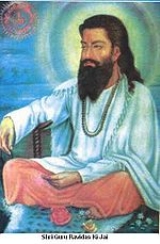
, who was India's first recorded Dalit poet and Raidas
Raidas

Sat Guru Ravidas Ji was an Indian Hindu religious leader and founder Satguru of the "Ravidasi" beliefs, revered by most Hindus as a Sant, sect as a Guru, by Radhasoami organization as a Sant Mat and as a Bhagat by Sikhs....
, born into a family of cobblers. The 15th century saint Sri Ramananda Raya
Sri Ramananda Raya

Sri Ramananda Ray was the Viceroy of the Rajamahendri,Godavari Province of Kalinga-Utkala Empire under the Emperor Gajapati Sri Prataparudra Dev.He was born in early 14th century at Cuttack in an noted Oriya Kayastha/Karana family....
 also accepted all castes, including untouchables, into his fold. Most of these saints subscribed to the Bhakti movements in Hinduism
Hinduism

'Hinduism' is the predominant religion of the Indian subcontinent. Hinduism is often referred to as , a Sanskrit phrase meaning "the eternal dharma", by its practitioners....
 during the medieval period that rejected casteism. Nandanar
Nandanar

Nandanar was a Nayanar saint born in South India who became a great devotee of Lord Shiva.Nandanar was born in a village called Adhanur in a poor family....
, a low-caste Hindu cleric, also rejected casteism and accepted Dalits. Due to isolation from the rest of the Hindu society, many Dalits continue to debate whether they are 'Hindu' or 'non-Hindu'. Traditionally, Hindu Dalits have been barred from many activities that were seen as central to Vedic
Vedic

Vedic may refer to:* the Vedic, White Star Liner* the Vedas, the oldest preserved Indo-Aryan texts** Vedic Sanskrit, the language of these texts...
 religion and Hindu practices of orthodox sects. Among Hindus each community has followed its own variation of Hinduism
Hinduism

'Hinduism' is the predominant religion of the Indian subcontinent. Hinduism is often referred to as , a Sanskrit phrase meaning "the eternal dharma", by its practitioners....
, and the wide variety of practices and beliefs observed in Hinduism makes any clear assessment difficult.

Reform Movements
The earliest known historical people to have rejected the caste system was Gautama Buddha
Gautama Buddha

Siddhartha Gautama was a Spirituality teacher in the northern region of the Indian subcontinent who founded Buddhism. He is generally seen by Buddhists as the Supreme Buddhahood of our age....
 and Mahavira
Mahavira

Mahavira is the name most commonly used to refer to the Indian sage Vardhamana who established what are today considered to be the central tenets of Jainism....
. Their teachings eventually became independent religions called Buddhism
Buddhism

Buddhism is a family of beliefs and practices considered by most to be a religionand is based on the teachings attributed to Siddhartha Gautama, commonly known as "The Buddha" , who was born in what is today Nepal....
 and Jainism
Jainism

Jainism is one of the oldest Indian religions that originated in India. Jains believe that every soul is divine and has the potential to achieve God-consciousness....
. The earliest known reformation within Hinduism
Hinduism

'Hinduism' is the predominant religion of the Indian subcontinent. Hinduism is often referred to as , a Sanskrit phrase meaning "the eternal dharma", by its practitioners....
 happened during the medieval period when the Bhakti movements actively encouraged the participation and inclusion of Dalits. In the 19th Century, the Brahmo Samaj
Brahmo Samaj

Brahmo Samaj is the societal component of Brahmoism. "It is without doubt the most influential socio-religious movement in the evolution of Modern India." It was conceived as reformation of the prevailing Bengal of the time and began the Bengal Renaissance of the 19th century pioneering all religious, social and educational advance of the H...
, Arya Samaj
Arya Samaj

Arya Samaj is a Hindu reform movement founded in India by Swami Dayananda in 1875. He was a sannyasa who believed in the infallible Moral absolutism of the Vedas....
 and the Ramakrishna Mission
Ramakrishna Mission

Ramakrishna Math and Ramakrishna Mission are twin organizations which form the core of a worldwide spiritual movement known as Ramakrishna Movement or Vedanta Movement....
 actively participated in the emancipation of Dalits. While there always have been segregated places for Dalits to worship, the first "upper-caste" temple to openly welcome Dalits into their fold was the Laxminarayan Temple in Wardha
Wardha

Wardha is a city and a municipal council in Wardha district in the Indian States and territories of India of Maharashtra. Wardha gets its name from the Wardha River which flows at the North, West and South boundaries of district....
 in the year 1928. It was followed by the Temple Entry Proclamation
Temple Entry Proclamation

The Temple Entry Proclamation issued by Maharaja Shri Chithira Thirunal Balarama Varma and his Dewan Sir C. P. Ramaswami Iyer in 1936 abolished the ban on low-caste people or avarnas from entering Hindu Temples in the state of Travancore ...
 issued by the last King of Travancore
Chithira Thirunal Balarama Varma

Sree Chithira Thirunal was the last ruling Maharaja of the princely state of Travancore in India....
 in the Indian state of Kerala
Kerala

Kerala is a Indian Union States and territories of India located in the southwestern part of India. With an Arabian Sea coastline on the west, it is bordered on the north by Karnataka and by Tamil Nadu on the south and east....
 in 1936.

The Sikh
Sikhism

Sikhism , founded on the teachings of Guru Nanak and ten successive Sikh Gurus in fifteenth century Punjab region, is the Major religious groups organized religion in the world....
 reformist Satnami movement was founded by Guru Ghasidas
Guru Ghasidas

Satguru Charann First the feet of Satguru is worshipped. First we worship the feet and Charann Khadaau [Chandan wooden shoes of Satguru] and the dust particle of feet of Satguru Ghasidas....
, born a Dalit. Other notable Sikh Gurus such as Guru Ravidas were also Dalits. Other reformers, such as Jyotirao Phule, Ayyankali
Ayyankali

Ayyankali was a leader of the Indian lower caste Dalit s known as the Untouchables. He pioneered many reforms to improve the lifes of the Dalits....
 of Kerala and Iyothee Thass
Iyothee Thass

Iyothee Thass or Pandit C. Ayodhya Dasa was a practitioner of Siddha medicine who is regarded as a pioneer of the Self-respect Movement....
 of Tamil Nadu worked for emancipation of Dalits. The 1930s saw key struggle between Mahatma Gandhi
Mahatma Gandhi

Mohandas Karamchand Gandhi was a major political and spiritual leader of India and the Indian independence movement. He was the pioneer of satyagraha?resistance to tyranny through mass civil disobedience, firmly founded upon ahimsa or total non-violence?which led India to Indian independence movement and inspired movements for civi...
 and B. R. Ambedkar
B. R. Ambedkar

Bhimrao Ramji Ambedkar , also known as Babasaheb, was an Indian nationalist, jurist, Dalit political leader and a Buddhist revivalist. He was also the chief architect of the Indian Constitution....
 over whether Dalits would have separate or joint electorates. Although he failed to get Ambedkar's support for a joint electorate, Gandhi nevertheless began the "Harijan Yatra" to help the Dalit population. Palwankar Baloo
Palwankar Baloo

Babaji Palwankar Baloo, , commonly known as Palwankar Baloo, was an Indian cricketer. He bowling left-arm orthodox spin with great accuracy and the ability to turn the cricket ball both ways....
, a Dalit politician and a cricketer, joined the Hindu Mahasabha in the fight for independence.

Other Hindu groups have reached out to the Dalit community in an effort to reconcile with them. On August 2006, Dalit activist Namdeo Dhasal
Namdeo Dhasal

Namdeo Laxman Dhasal is a Marathi language writer and Dalit activist. He was awarded Padma Shri for his contribution to literature in 1999 and in 2004, Sahitya Akademi awarded him with its 'Golden Jubilee Life Time Achievement Award'....
 engaged in dialogue with the Rashtriya Swayamsevak Sangh
Rashtriya Swayamsevak Sangh

The Rashtriya Swayamsevak Sangh , also known as the Sangh or the RSS, is a Hindu nationalist organization in India. It was founded in 1925 by Dr....
 in an attempt to "bury the hatchet". Hindu temples are increasingly receptive to Dalit priests, a function formerly reserved for Brahmins. Suryavanshi Das, for example, is the Dalit priest of a notable temple in Bihar
Bihar

Bihar is a States and territories of India in East India. Bihar is the 12th largest state in terms of geographical size 38,202 square mile and 3rd largest by population....
.. Anecdotal evidence suggests that discrimination against Hindu Dalits is on a slow but steady decline . For instance, an informal study by Dalit writer Chandrabhan Prasad
Chandrabhan Prasad

Chandra Bhan Prasad is a Dalit writer and is the first Dalit to have a regular column in an Indian English newspaper.Prasad started writing a weekly column titled Dalit Diary in 1999 for The Pioneer, an English daily with a limited circulation in Delhi and Lucknow....
 and reported in the New York Times states: "In rural Azamgarh
Azamgarh

Azamgarh , is a town and the district headquarters of the district of Azamgarh. A district is an equivalent to a county of the United States.Like most towns in northern parts of India, Azamgarh is situated on the banks of a river--in this case on the Tons River....
 District [in the state of Uttar Pradesh
Uttar Pradesh

Uttar Pradesh , [often referred to as U.P.] is a States and territories of India located in the northern part of India. With a population of over 190 million people,...
], for instance, nearly all Dalit households said their bridegrooms now rode in cars to their weddings, compared with 27 percent in 1990. In the past, Dalits would not have been allowed to ride even horses to meet their brides; that was considered an upper-caste privilege."

Many Hindu Dalits have achieved affluence in society, although vast millions still remain poor. In particular, some Dalit intellectuals such as Chandrabhan Prasad
Chandrabhan Prasad

Chandra Bhan Prasad is a Dalit writer and is the first Dalit to have a regular column in an Indian English newspaper.Prasad started writing a weekly column titled Dalit Diary in 1999 for The Pioneer, an English daily with a limited circulation in Delhi and Lucknow....
 have argued that the living standards of many Dalits have improved since the economic liberalization in 1991 and have supported their claims through large qualitative surveys . Recent episodes of Caste-related violence in India
Caste-related violence in India

Indian caste system-related violence and hate crimes in India have occurred despite the gradual reduction of casteism in the country.According to a report by Human Rights Watch, "Dalits and indigenous peoples continue to face discrimination, exclusion, and acts of communal violence....
 have adversely affected the Dalit community. In urban India, discrimination against Dalits in the public sphere is greatly reduced, but rural Dalits are struggling to elevate themselves . Government organizations and NGO's work to emancipate them from discrimination, and many Hindu organizations have spoken in their favor . Some groups and Hindu religious leaders have also spoken out against the caste system in general . However, the fight for temple entry rights for Dalits is far from finished and continues to cause controversy . Brahmins like Subramania Bharati also passed Brahminhood onto a Dalit, while in Shivaji's Maratha Empire
Maratha Empire

The Maratha Empire or the Maratha Confederacy was a Hindu state located in present-day India. It existed from 1674 to 1818. At its peak, the empire's territories covered much of South Asia....
 there were Dalit Hindu warriors (the Mahar Regiment
Mahar Regiment

The Mahar Regiment is an Infantry Regiment of the Indian Army. Although it was originally intended to be a regiment consisting of troops from the Mahars and other Backward Caste communities in Maharashtra, the Mahar Regiment is one of the only regiments in the Indian Army that is composed of troops from all communities and regions of India....
) and a Scindia Dalit Kingdom
Scindia

Scindia, anglicized from Shinde, and also spelled as Sindhia, Sindia, is a Maratha family in India which included rulers of the Gwalior State in the 18th and 19th centuries, collaborators of the colonial British government during the 19th and the 20th centuries until India became independent, and politicians in independent...
. In modern times there are several Bharatiya Janata Party
Bharatiya Janata Party

The Bharatiya Janata Party , founded in 1980, is a major political party of India. Designed to represent the country's Hinduism and Centre-right in nature, the party advocates Conservatism social policies, self reliance, robust economic growth, foreign policy driven by a nationalist agenda, and strong national defense....
 leaders like Ramachandra Veerappa and Dr. Suraj Bhan. (See List of Dalits
List of Dalits

Following is a List of Dalits.*Sant Anayar Nayanar, cowherder *Sant Atipattar Nayanar, fisherman*Sant Banka Mahar, Mahar*Sant Bhagu, a devotee of Krishna...
)

More recently, Dalits in Nepal are now being accepted into priesthood (traditionally reserved for Brahmins. The Dalit priestly order is called "Pandaram"

Islam

Muslim society in India can also be separated into several caste-like groups. In contradiction to the teachings of Islam, descendants of indigenous lower-caste converts are discriminated against by "noble", or "ashraf", Muslims who can trace their descent to Arab
Arab

An Arab is a person who Identity as such on linguistic or cultural grounds. The plural form, Arabs , refers to the Ethnocultural group at large....
, Iranian
Iranian peoples

The Iranian peoples are an ethnic and linguistic branch of Indo-European peoples, living mainly in Iranian plateau and beyond in central-, southern-, and southwestern Asia and southeastern Europe....
, or Central-Asian
Central Asia

Central Asia is a region of Asia from the Caspian Sea in the west to central China in the east, and from southern Russia in the north to northern India in the south....
 ancestors. There are several groups in India working to emancipate them from upper-caste Muslim discrimination.

The Dalit Muslims are referred to by the Ashraf and Ajlaf Muslims as Arzal or "ritually degraded". They were first recorded in the 1901 census as those “with whom no other Muhammadan would associate, and who are forbidden to enter the mosque or to use the public burial ground”. They are relegated to "menial" professions such as scavenging and carrying night soil
Night soil

Night soil is a euphemism for human feces. "Night soil" is produced as a result of a waste management system in areas without community infrastructure such as a sewage system, or individual septic tank....
.

Ambedkar wrote about the Dalit Muslims and was extremely critical of their mistreatment by upper-caste Muslims, writing: "Within these groups there are castes with social precedence of exactly the same nature as one finds among the Hindus."

Sikhism

Dalits form a class among the Sikhs who stratify their society according to traditional casteism. Kanshi Ram
Kanshi Ram

Kanshi Ram was an Indian politician of Dalit Ravidasia Sikh background. He founded the Bahujan Samaj Party , a political party with the stated goal of serving the traditionally lower castes of Indian society ....
 himself was of Sikh background although converted because he found that Sikh society did not respect Dalits and so became a neo-Buddhist. The most recent controversy was at the Talhan village Gurudwara near Jalandhar where there was a dispute between Jat
Jat

The Jats are found in India and Pakistan. The Jats in India live mainly in Haryana, Punjab, Rajasthan and U.P. The majority of Jats in India live in Haryana ....
 Sikhs and Ravidasia Sikhs. The Different Sikh Dalits are Ravidasia Sikh and Mazhabi
Mazhabi

The Mazhabi is a member of the Rangretta clans of mainly Panjab, kashmir and Rajastan. However scattered populations of clans can be found in Assam, Bombay and Patna....
 Sikh. Although Sikhism does not recognize the Caste System, many families, especially the ones with immediate cultural ties to India, generally do not marry among different castes.

There are sects such as the Adi-Dharmis who have now abandoned Sikh Temples and the 5 Ks. They are like the Ravidasis and regard Ravidas as their guru. They are also clean shaven as opposed to the mainstream Sikhs. Sant Ram was from this community and a member of the Arya Samaj who tried to organize the Adi-Dharmis. Other Sikh groups include Jhiwars, Bazigars, Rai Sikh (many of whom are Ravidasias.) Just as with Hindu Dalits, there has been violence against Sikh Dalits.

Christianity

Across India, many Christian communities still follow the caste system. Sometimes the social stratification remains unchanged and in some cases such as among Goan Christians
Goans

Goan is the demonym used to describe the people of the India of Goa. "Goanese" is an incorrect usage for the same, and is considered offensive by some....
, the stratification varies as compared to the Hindu system. Conversion to Christianity does not necessarily free Dalits from the bondage of the caste system.

A 1992 study of Catholic
Catholic

Catholic is an adjective derived from the Greek language adjective , meaning "whole" or "complete". In the context of Christianity ecclesiology, it has a rich history and several usages....
s in Tamil Nadu
Tamil Nadu

Tamil Nadu is one of the 28 States and territories of India of India. Its capital and largest city is Chennai . Tamil Nadu lies in the southern most part of the Indian Peninsula and is bordered by Puducherry , Kerala, Karnataka and Andhra Pradesh....
 found some Dalit Christians faced segregated churches, cemeteries, services and even processions. Despite Christian teachings these Dalit also faced economic and social hardships due to discrimination by upper-caste priests and nuns. Other sources support these conclusions, including Christian advocacy groups for Dalits. A Christian Dalit activist with the pen name
Pen name

A pen name, nom de plume, or literary double, is a pseudonym adopted by an author. A pen name may be used to make the author's name more distinctive, to disguise his or her gender, to distance an author from some or all of his or her works, to protect the author from retribution for his or her writings, or for any of a number of...
 Bama Faustina has written books providing a firsthand account of discrimination by upper-caste nuns and priests in South India
South India

South India is the area encompassing India's states of Andhra Pradesh, Karnataka, Kerala and Tamil Nadu as well as the Union territories of India of Lakshadweep and Pondicherry, occupying 19.31% of area....
.

Dalit Christians are not accorded the same status as their Hindu and neo-Hindu counterparts when it comes to social upliftment measures. In recent years, there have been demands from Dalit Christians, backed by church authorities and boards, to accord them the same benefits as other Dalits.

Buddhism


In Maharashtra
Maharashtra

Maharashtra is a States and territories of India located on the western coast of India. Maharashtra is a part of Western India. It is India's List of states of India by area and List of states of India by population....
, Uttar Pradesh
Uttar Pradesh

Uttar Pradesh , [often referred to as U.P.] is a States and territories of India located in the northern part of India. With a population of over 190 million people,...
, Tamil Nadu
Tamil Nadu

Tamil Nadu is one of the 28 States and territories of India of India. Its capital and largest city is Chennai . Tamil Nadu lies in the southern most part of the Indian Peninsula and is bordered by Puducherry , Kerala, Karnataka and Andhra Pradesh....
 and a few other regions, Dalits have come under the influence of the neo-Buddhist movement initiated by Ambedkar. Some of them have come under the influence of the Neo-Buddhist and Christian Missionaries and have converted away from Hinduism into religions such as Christianity
Christianity

Christianity is a Monotheistic religion #Christian view religion centered on the life and teachings of Jesus as New Testament view on Jesus' life....
 and Buddhism
Buddhism

Buddhism is a family of beliefs and practices considered by most to be a religionand is based on the teachings attributed to Siddhartha Gautama, commonly known as "The Buddha" , who was born in what is today Nepal....
 in what they have been told is an "attempt to eliminate the prejudice they face".

BJP Scheduled Caste Morcha president Bangaru Laxman
Bangaru Laxman

Bangaru Laxman was minister of state for railways in Government of India from 1999 to 2000. Later he became President of Bharatiya Janata Party but resigned soon after Tehelka case ....
 (Organiser, 6-8-1995) accused Congress leader Sitaram Kesri, who had bracketed the Dalits with the minorities as "sufferers of Hindu oppression", of thereby showing "disrespect to [Dalit] saints like Ravidas, Satyakam Jabali, Sadhna Kasai, Banka Mahar, Dhanna Chamar and others who protected Hindus against foreign onslaughts."

In the officially Hindu country of Nepal
Nepal

Nepal , officially the Federal Democratic Republic of Nepal, is a landlocked country in South Asia and is the world's youngest republic. It is bordered to the north by the People's Republic of China, and to the south, east, and west by India....
, some Dalits and others are turning to Buddhism
Buddhism

Buddhism is a family of beliefs and practices considered by most to be a religionand is based on the teachings attributed to Siddhartha Gautama, commonly known as "The Buddha" , who was born in what is today Nepal....
 from Vedic
Vedic

Vedic may refer to:* the Vedic, White Star Liner* the Vedas, the oldest preserved Indo-Aryan texts** Vedic Sanskrit, the language of these texts...
 Hinduism. Reasons cited are to embrace non-violence and as a response to the caste system, which has led to a substantial increase in Buddhists in the population while the number of those professing Hinduism has decreased from 88% in 1961 to 80% at present.

The Prevention of Atrocities Act


The Prevention of Atrocities Act
Scheduled Caste and Scheduled Tribe (Prevention of Atrocities) Act, 1989

The Scheduled Castes and Tribes Act, 1989 was enacted by the Government of India, in order to prevent atrocities against Scheduled castes and scheduled tribes....
 (POA) is a tacit acknowledgement by the Indian government that caste relations are defined by violence, both incidental and systemic. In 1989, the Government of India passed the Prevention of Atrocities Act (POA), which clarified specific crimes against Scheduled Castes and Scheduled Tribes (the Dalits) as “atrocities,” and created strategies and punishments to counter these acts. The purpose of The Act was to curb and punish violence against Dalits. Firstly, it clarified what the atrocities
Persecution of Dalits

The Dalits in India are often either landless labourers or small land holders. There are sometimes clashes involving more powerful and often more numerous land owing communities and the Dalits....
 were: both particular incidents of harm and humiliation, such as the forced consumption of noxious substances, and systemic violence still faced by many Dalits, especially in rural areas. Such systemic violence includes forced labor, denial of access to water and other public amenities, and sexual abuse of Dalit women. Secondly, the Act created Special Courts to try cases registered under the POA. Thirdly, the Act called on states with high levels of caste violence (said to be “atrocity-prone”) to appoint qualified officers to monitor and maintain law and order. The POA gave legal redress to Dalits, but only two states have created separate Special Courts in accordance with the law. In practice the Act has suffered from a near-complete failure in implementation. Policemen have displayed a consistent unwillingness to register offenses under the act. This reluctance stems partially from ignorance and also from peer protection. According to a 1999 study, nearly a quarter of those government officials charged with enforcing the Act are unaware of its existence.

Dalits and contemporary Indian politics

While the Indian Constitution has duly made special provisions for the social and economic uplift of the Dalits, comprising the so-called scheduled castes and tribes in order to enable them to achieve upward social mobility, these concessions are limited to only those Dalits who remain Hindu. There is a demand among the Dalits who have converted to other religions that the statutory benefits should be extended to them as well, to "overcome" and bring closure to historical injustices.

Another major politically charged issue with the rise of Hindutva's
Hindutva

Hindutva is the term used to describe movements advocating Hindu nationalism.In India, an umbrella organization called the Sangh Parivar champions the concept of Hindutva....
 (Hindu nationalism) role in Indian politics is that of religious conversion. This political movement alleges that conversions of Dalits are due not to any social or theological motivation but to allurements like education and jobs. Critics argue that the inverse is true due to laws banning conversion, and the limiting of social relief for these backward sections of Indian society being revoked for those who convert. Bangaru Laxman
Bangaru Laxman

Bangaru Laxman was minister of state for railways in Government of India from 1999 to 2000. Later he became President of Bharatiya Janata Party but resigned soon after Tehelka case ....
, a Dalit politician, was a prominent member of the Hindutva
Hindutva

Hindutva is the term used to describe movements advocating Hindu nationalism.In India, an umbrella organization called the Sangh Parivar champions the concept of Hindutva....
 movement.

Another political issue is over the affirmative-action measures taken by the government towards the upliftment of Dalits through quotas in government jobs and university admissions. About 8% of the seats in the National and State Parliaments are reserved for Scheduled Caste and Tribe candidates, a measure sought by B. R. Ambedkar
B. R. Ambedkar

Bhimrao Ramji Ambedkar , also known as Babasaheb, was an Indian nationalist, jurist, Dalit political leader and a Buddhist revivalist. He was also the chief architect of the Indian Constitution....
 and other Dalit activists in order to ensure that Dalits would obtain a proportionate political voice.

Anti-Dalit prejudices exist in fringe groups, such as the extremist far-right militia Ranvir Sena
Ranvir Sena

Ranvir Sena was an upper-caste militant outfit of Bihar, India. It used to carry out actions against supposed naxalite, Dalits and their supporters in rural areas....
, largely run by upper-caste landlords in backward areas of the Indian state of Bihar
Bihar

Bihar is a States and territories of India in East India. Bihar is the 12th largest state in terms of geographical size 38,202 square mile and 3rd largest by population....
. They oppose equal treatment of Dalits and have resorted to violent means to suppress the Dalits. The Ranvir Sena is considered a terrorist organization.

In 2008, Mayawati, a Dalit from the Bahujan Samaj Party
Bahujan Samaj Party

The Bahujan Samaj Party is a national political party in India with socialist leanings. It was formed to chiefly represent Bahujans , who are thought by some to be at the bottom of the Indian caste system, and claims to be inspired by the philosophy of Ambedkar....
, was elected as the Chief Minister of India's biggest state Uttar Pradesh
Uttar Pradesh

Uttar Pradesh , [often referred to as U.P.] is a States and territories of India located in the northern part of India. With a population of over 190 million people,...
. Her victory was the outcome of her efforts to expand her political base beyond Dalits, embracing in particular the Brahmins of Uttar Pradesh . Mayawati, together with her political mentor Kanshi Ram
Kanshi Ram

Kanshi Ram was an Indian politician of Dalit Ravidasia Sikh background. He founded the Bahujan Samaj Party , a political party with the stated goal of serving the traditionally lower castes of Indian society ....
, saw that the interests of the average Dalit (most of whom are landless agricultural laborers) were more in conflict with the middle castes such as the Yadav
Yadav

Yadav or Yadava is an Indian caste system that claims descent from Yadu. Yadavas have been mentioned as one of the panchjanya tribes in ancient Vedic Sanskrit texts....
 caste, who owned most of the agricultural land in Uttar Pradesh, than with the predominantly city-dwelling upper castes . Her success in welding the Dalits and the upper castes has led to her being projected as a potential future Prime Minister of India
Prime Minister of India

The Prime Minister of India is the head of government of the India, and head of the Council of Ministers of the Republic of India, appointed by the President of India to assist the latter in the administration of the affairs of the Executive in India....
.

Dalit literature

Dalit literature forms an important, yet distinct part of Indian literature
Indian literature

Indian literature refers to the literature produced on the Indian subcontinent until 1947 and in the Republic of India thereafter. The Republic of India has 22 officially recognized Languages of India....
. One of the first Dalit writers was Madara Chennaiah, an 11th-century cobbler-saint who lived in the reign of Western Chalukyas
Western Chalukyas

The Western Chalukya Empire ruled most of the Deccan Plateau, South India, between the 10th and 12th centuries. This dynasty is sometimes called the Kalyani Chalukya after its regal capital at Kalyani, today's Basavakalyan in Karnataka and alternatively the Later Chalukya from its theoretical relationship to the sixth century Chal...
 and who is also regarded by some scholars as the "father of Vachana poetry". Later poets of Kannada literature
Kannada literature

Kannada literature is the Text corpus of written forms of the Kannada language, a member of the Dravidian language Language family spoken mainly in the Indian state of Karnataka and written in the Kannada script....
 such as Basavanna (1160), who was also the prime minister of southern Kalachuri
Kalachuri

Kalachuri is this the name used by two kingdoms who had a succession of dynasties from the 10th-12th centuries, one ruling over areas in Central India and were called Chedi Kingdom or Haihaya and the other southern Kalachuri who ruled over parts of Karnataka....
 for King Bijjala II
Bijjala II

Bijjala II 1130 - 1167 CE was the most famous of the southern Kalachuri kings and ruled initially as a feudatory of Chalukya Vikramaditya VI. He ruled as the Mahamandalesvara or chief and ruled over Karhada 4,000 and Tardavadi 1,000, designations given to...
 (1130 - 1167 CE), held him in high regard. Another poet who finds mention is Dohara Kakkaiah, a Dalit by birth, six of whose confessional poems survive.

Modern Dalit literature

In the modern era, Dalit literature received its first impetus with the advent of leaders like Mahatma Phule and Ambedkar in Maharashtra
Maharashtra

Maharashtra is a States and territories of India located on the western coast of India. Maharashtra is a part of Western India. It is India's List of states of India by area and List of states of India by population....
, who brought forth the issues of Dalits through their works and writings; this started a new trend in Dalit writing and inspired many Dalits to come forth with writings in Marathi, Hindi, Tamil
Tamil language

Tamil is a Dravidian language spoken predominantly by Tamil people of the Indian subcontinent. It has Official language in India, Sri Lanka and Singapore....
 and Punjabi
Punjabi language

'Punjabi' , , is an Indo-Aryan language spoken by inhabitants of the historical Punjab region and their diasporas. Speakers include adherents of the religions of Islam, Sikhism and Hinduism....
.

By the 1960s, Dalit literature saw a fresh crop of new writers like Baburao Bagul, Bandhu Madhav and Shankarao Kharat, though its formal form came into being with the Little magazine movement
Little magazine movement

The Little Magazine Movement is a literary movement of Literary magazines also known as Little magazines. It originated in the fifties and the sixties in many Indian languages like Tamil language, Marathi, Hindi language, Malayalam and Gujarati language, as it did in the west, in the early part of the 19th century ....
. Dalit Voice
Dalit Voice

Dalit Voice is a political magazine published in Bangalore, India that claims to express the views of the Dalit movement. The current full title is "Dalit Voice: the voice of the persecuted nationalities denied human rights" and it appears fortnightly in both internet and print formats....
, a political magazine which started publishing in 1981, was another force in the rise of Dalit literature in India. In Sri Lanka
Sri Lanka

Sri Lanka, officially the Democratic Socialist Republic of Sri Lanka is an island country in South Asia, located about off the southern coast of India....
, Dalit writers like Dominic Jeeva
Dominic Jeeva

Dominic Jeeva is a prominent minority Sri Lanka Tamils author and literary figure from Sri Lanka. He is also a member of the marginalized Dalit caste....
 gained mainstream popularity in the late 1960.

See also

  • Annabhau Sathe
    Annabhau Sathe

    Lok Shahir Annabhau Sathe was a well-known social reformer and Indian writer from Maharashtra....
  • Caste-related violence in India
    Caste-related violence in India

    Indian caste system-related violence and hate crimes in India have occurred despite the gradual reduction of casteism in the country.According to a report by Human Rights Watch, "Dalits and indigenous peoples continue to face discrimination, exclusion, and acts of communal violence....
  • 2006 Dalit protests in Maharashtra
    2006 Dalit protests in Maharashtra

    In November-December 2006, the desecration of a B. R. Ambedkar statue in Kanpur triggered off violent protests by Dalits in Maharashtra, India....
  • Dalit Freedom Network
    Dalit Freedom Network

    Dalit Freedom Network is an Evangelicals Christian organization whose official mission is to "empower the Dalits in their quest for social freedom and human dignity by networking human, financial, and informational resources." Founded by Dr....
  • Persecution of Dalits
    Persecution of Dalits

    The Dalits in India are often either landless labourers or small land holders. There are sometimes clashes involving more powerful and often more numerous land owing communities and the Dalits....


Further reading

  • Untouchable!: Voices of the Dalit Liberation Movement, by Barbara R. Joshi, Zed Books, 1986. ISBN 0862324602, 9780862324605.
  • An Anthology Of Dalit Literature, by Mulk Raj Anand. 1992, Gyan Books. ISBN 8121204194, ISBN 9788121204194.
  • Dalits and the Democratic Revolution - Dr. Ambedkar and the Dalit Movement in Colonial India, by Gail Omvedt. 1994, Sage Publications. ISBN 8170363683.
  • The Untouchables: Subordination, Poverty and the State in Modern India, by Oliver Mendelsohn, Marika Vicziany, Cambridge University Press, 1998, ISBN 0521556716, 9780521556712.
  • Dalit Identity and Politics, by Ranabira Samaddara, Ghanshyam Shah, Sage Publications, 2001. ISBN 0761995080, 9780761995081.
  • Journeys to Freedom: Dalit Narratives, by Fernando Franco, Jyotsna Macwan, Suguna Ramanathan. Popular Prakashan, 2004. ISBN 8185604657, 9788185604657.
  • Towards an Aesthetic of Dalit Literature, by Sharankumar Limbale. 2004, Orient Longman. ISBN 8125026568.
  • From Untouchable to Dalit - Essays on the Ambedkar Movement, by Eleanor Zilliot. 2005, Manohar. ISBN 8173041431.
  • Dalit Politics and Literature, by Pradeep K. Sharma. Shipra Publications, 2006. ISBN 8175412712, 9788175412712.
  • Dalit Visions: The Anti-caste Movement and the Construction of an Indian Identity, by Gail Omvedt. Orient Longman, 2006. ISBN 8125028951, 9788125028956.
  • Dalits in Modern India - Vision and Values, by S M Michael. 2007, Sage Publications. ISBN 9780761935711.
  • Dalit Literature : A Critical Exploration, by Amar Nath Prasad & M.B. Gaijan. 2007. ISBN 8176258172.


External links

Resource websites
Articles