
In Depth
See Also

Complex number

In mathematics Mathematics

Mathematics is the discipline that deals with concepts such as quantity [i], structure [i], space [i] a ... 

, a complex number is a number of the form where a and b are real numbers, and i is the imaginary unit, with the property i 2 = −1. The real number a is called the real part of the complex number, and the real number b is the imaginary part. When the imaginary part b is 0, the complex number is just the real number a. For example, 3 + 2i is a complex number, with real part 3 and imaginary part 2 . Complex numbers can be added, subtracted, multiplied, and divided like real numbers, but they have additional elegant properties.

Discussions

  Discussion Features

   Ask a question about 'Complex number'

   Start a new discussion about 'Complex number'

   Answer questions about 'Complex number'

   'Complex number' discussion forum

Timeline

1722   Abraham De Moivre Abraham de Moivre

Abraham de Moivre was a French [i] mathematician [i] famous for de Moivre's formula [i], whi ... 

 states De Moivre's theorem connecting trigonometric function Trigonometric function

In mathematics [i], the trigonometric functions are function [i]s of an angle [i]; they are im ... 

s and complex numbers


Encyclopedia

In mathematics Mathematics

Mathematics is the discipline that deals with concepts such as quantity [i], structure [i], space [i] a ... 

, a complex number is a number of the form


where a and b are real numbers, and i is the imaginary unit, with the property i 2 = −1. The real number a is called the real part of the complex number, and the real number b is the imaginary part. When the imaginary part b is 0, the complex number is just the real number a.

For example, 3 + 2i is a complex number, with real part 3 and imaginary part 2 .

Complex numbers can be added, subtracted, multiplied, and divided like real numbers, but they have additional elegant properties. For example, real numbers alone do not provide a solution for every polynomial Polynomial

In mathematics [i], a polynomial is an expression [i] in which a finite number of constants ... 

 algebraic equation with real coefficients, while complex numbers do .

In some fields , complex numbers are written as a + bj.

Definitions


Equality


Two complex numbers are equal if and only if their real parts are equal and their imaginary parts are equal. That is, if and only if and

Notation and operations

The set Set

In mathematics [i], a set can be thought of as any collection [i] of distinct things considered as a who ... 

 of all complex numbers is usually denoted by C, or in blackboard bold Blackboard bold

Blackboard bold is a typeface [i] style often used for certain symbols in mathematics [i] an ... 

 by . The real numbers, R, may be regarded as "lying in" C by considering every real number as a complex: .

Complex numbers are added, subtracted, and multiplied by formally applying the associative Associativity

In mathematics [i], associativity is a property that a binary operation [i] can have. ... 

, commutative and distributive laws of algebra, together with the equation i 2 = −1:

Division of complex numbers can also be defined . Thus, the set of complex numbers forms a field which, in contrast to the real numbers, is algebraically closed.

In mathematics, the adjective "complex" means that the field of complex numbers is the underlying number field considered, for example complex analysis, complex matrix, complex polynomial Polynomial

In mathematics [i], a polynomial is an expression [i] in which a finite number of constants ... 

 and complex Lie algebra Lie algebra

In mathematics [i], a Lie algebra is an algebraic structure whose main use is in studying geometric obje ... 

.

The complex number field

Formally, the complex numbers can be defined as ordered pairs of real numbers together with the operations:

So defined, the complex numbers form a field, the complex number field, denoted by C.

Since a complex number a + bi is uniquely specified by an ordered pair of real numbers, the complex numbers are in one-to-one Injective function

In mathematics [i], an injective function is a function [i] which associates distinct argument ... 

 correspondence with points on a plane, called the complex plane Complex plane

In mathematics [i], the complex plane is a geometric space of the complex numbers [i] as set up by the ' ... 

.

We identify the real number a with the complex number , and in this way the field of real numbers R becomes a subfield of C. The imaginary unit i is the complex number .

In C, we have:
  • additive identity :
  • multiplicative identity :
  • additive inverse of :
  • multiplicative inverse  of non-zero :


C can also be defined as the topological closure of the algebraic numbers or as the algebraic closure of R, both of which are described below.

The complex plane


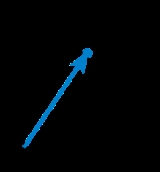
A complex number can be viewed as a point or a position vector on a two-dimensional Cartesian coordinate system Cartesian coordinate system

In mathematics [i], the Cartesian coordinate system is used to uniquely determine each point [i]... 

 called the complex plane Complex plane

In mathematics [i], the complex plane is a geometric space of the complex numbers [i] as set up by the ' ... 

or Argand diagram .

The Cartesian coordinates of the complex number are the real part x and the imaginary part y, while the polar coordinates Polar coordinate system

In mathematics, the polar coordinate system is a two-dimensional [i] coordinate system [i] in which points [i] ... 

 are r = |z|, called the absolute value or modulus Absolute value

In mathematics [i], the absolute value of a real number [i] is its numerical value without regard to it ... 

, and f = arg, called the complex argument of z . Together with Euler's formula Euler's formula

Euler's formula, named after Leonhard Euler [i], is a mathematical [i] formula in complex analysis [i]... 

 we have

The notation cis f is sometimes used for cos f + i sin f.

The complex argument of 0 is not defined by the equations above. There are two possible approaches for this case. The first is to consider arg an undefined form, just like 0/0. The other is to choose some fixed value and to define arg to have that value. For this approach, a conventional choice is to set arg = 0.

Note that for a non-zero complex number the complex argument is unique modulo 2p, that is, if any two values of the complex argument exactly differ by an integer multiple of 2p, they are considered equivalent.

By simple trigonometric identities List of trigonometric identities

In mathematics [i], trigonometric identities are equalities involving trigonometric function [i]s that a ... 

,
we see that

and that

Now the addition of two complex numbers is just the vector addition of two vectors, and the multiplication with a fixed complex number can be seen as a simultaneous rotation and stretching.

Multiplication with i corresponds to a counter clockwise rotation by 90 degrees . The geometric content of the equation i2 = −1 is that a sequence of two 90 degree rotations results in a 180 degree rotation. Even the fact · = +1 from arithmetic can be understood geometrically as the combination of two 180 degree turns.

Absolute value, conjugation and distance

The absolute value of a complex number z = r eif is defined as |z| = r. Algebraically, if z = a + ib, then

One can check readily that the absolute value has three important properties:

if and only if 

for all complex numbers z and w. It then follows, for example, that and . By defining the distance function d = |zw| we turn the complex numbers into a metric space and we can therefore talk about limits and continuity. The addition, subtraction, multiplication and division of complex numbers are then continuous operations. Unless anything else is said, this is always the metric being used on the complex numbers.

The complex conjugate of the complex number z = a + ib is defined to be a - ib, written as or . As seen in the figure, is the "reflection" of z about the real axis. The following can be checked:


  if and only if z is real


  if z is non-zero.


The latter formula is the method of choice to compute the inverse of a complex number if it is given in rectangular coordinates.

That conjugation commutes with all the algebraic operations is rooted in the ambiguity in choice of i . It is important to note, however, that the function is not differentiable .

Complex fractions

Given a complex number which is to be divided by another complex number whose magnitude is non-zero, there are two ways to do this; in either case it is the same as multiplying the first by the multiplicative inverse of the second. The first way has already been implied: to convert both complex numbers into exponential form, from which their quotient is easy to derive. The second way is to express the division as a fraction, then to multiply both numerator and denominator by the complex conjugate of the denominator. This causes the denominator to simplify into a real number:

Matrix representation of complex numbers

While usually not useful, alternative representations of complex fields can give some insight into their nature. One particularly elegant representation interprets every complex number as 2×2 matrix with real entries which stretches and rotates the points of the plane. Every such matrix has the form

with real numbers a and b. The sum and product of two such matrices is again of this form. Every non-zero such matrix is invertible, and its inverse is again of this form. Therefore, the matrices of this form are a field. In fact, this is exactly the field of complex numbers. Every such matrix can be written as

which suggests that we should identify the real number 1 with the matrix

and the imaginary unit i with

a counter-clockwise rotation by 90 degrees. Note that the square of this latter matrix is indeed equal to −1.

The absolute value of a complex number expressed as a matrix is equal to the square root Square root

In mathematics [i], a square root of a number x is a number whose square [i] is x. ... 

 of the determinant of that matrix. If the matrix is viewed as a transformation of a plane, then the transformation rotates points through an angle equal to the argument of the complex number and scales by a factor equal to the complex number's absolute value. The conjugate of the complex number z corresponds to the transformation which rotates through the same angle as z but in the opposite direction, and scales in the same manner as z; this can be described by the transpose of the matrix corresponding to z.

If the matrix elements are themselves complex numbers, then the resulting algebra is that of the quaternions Quaternion

In mathematics [i], quaternions are a non-commutative [i] extension of complex number [i]s. ... 

. In this way, the matrix representation can be seen as a way of expressing the Cayley-Dickson construction of algebras.

Geometric interpretation of the operations on complex numbers

Consider a plane. One point is the origin, 0. Another point is the unity, 1.


Addition

The sum of two points A and B is the point X = A+B such that the triangle Triangle

A triangle is one of the basic shape [i]s of geometry [i]: a polygon [i] with three vertices [i] ... 

s with vertices 0, A, B and X, B, A are similar.


Multiplication

The product of two points A and B is the point X = AB such that the triangles with vertices 0, 1, A, and 0, B, X are similar.


Conjugation

The complex conjugate of a point A is a point X = A* such that the triangles with vertices 0, 1, A and 0, 1, X are mirror image of each other.

Some properties


Real vector space

C is a two-dimensional real vector space.
Unlike the reals, complex numbers cannot be ordered in any way that is compatible with its arithmetic operations: C cannot be turned into an ordered field.

R-linear maps C ? C have the general form
with complex coefficients a and b. Only the first term is C-linear; also only the first term is holomorphic; the second term is real-differentiable, but does not satisfy the Cauchy-Riemann equations.

The function
corresponds to rotations combined with scaling, while the function
corresponds to reflections combined with scaling.

Solutions of polynomial equations

A root of the polynomial Polynomial

In mathematics [i], a polynomial is an expression [i] in which a finite number of constants ... 

 p is a complex number z such
that p = 0.
A most striking result is that all polynomials of
degree n with real or complex coefficients have exactly n
complex roots . This is known as the fundamental theorem of algebra, and shows that the complex numbers are an algebraically closed field.

Indeed, the complex number field is the algebraic closure of the real number field, and Cauchy Augustin Louis Cauchy

Augustin Louis Cauchy was a French [i] mathematician [i]. ... 

 constructed complex numbers in this way. It can be identified as the quotient ring of the polynomial Polynomial

In mathematics [i], a polynomial is an expression [i] in which a finite number of constants ... 

 ring R[X] by the ideal generated by the polynomial X2 + 1:
This is indeed a field because X2 + 1 is irreducible, hence generating a maximal ideal, in R[X]. The image of X in this quotient ring becomes the imaginary unit i.

Algebraic characterization

The field C is characterized by the following three facts:
  • its characteristic is 0
  • its transcendence degree over the prime field is the cardinality of the continuum
  • it is algebraically closed


Consequently, C contains many proper subfields which are isomorphic to C. Another consequence of this characterization is that the Galois group of C over the rational numbers is enormous, with cardinality equal to that of the power set of the continuum.

Characterization as a topological field

As noted above, the algebraic characterization of C fails to capture some of its most important properties. These properties, which underpin the foundations of complex analysis, arise from the topology Topology

Topology is a branch of mathematics [i] concerned with spatial properties preserved under bicontinuous ... 

 of C. The following properties characterize C as a topological field:
  • C is a field.
  • C contains a subset P of nonzero elements satisfying:
    • P is closed under addition, multiplication and taking inverses.
    • If x and y are distinct elements of P, then either x-y or y-x is in P
    • If S is any nonempty subset of P, then S+P=x+P for some x in C.
  • C has a nontrivial involutive automorphism x->x*, fixing P and such that xx* is in P for any nonzero x in C.


Given these properties, one can then define a topology on C by taking the setsas a base, where x ranges over C, and p ranges over P.

To see that these properties characterize C as a topological field, one notes that P ? ? -P is an ordered Dedekind-complete field and thus can be identified with the real numbers R by a unique field isomorphism. The last property is easily seen to imply that the Galois group over the real numbers is of order two, completing the characterization.

Pontryagin Lev Semenovich Pontryagin

Lev Semenovich Pontryagin was a Soviet [i] Russia [i]n mathematician [i]. ... 

 has shown that the only connected Connected space

In topology [i] and related branches of mathematics [i], a connected space is a topological space [i] wh ... 

 locally compact topological fields are R and C. This gives another characterization of C as a topological field, since C can be distinguished from R by noting the nonzero complex numbers are connected Connected space

In topology [i] and related branches of mathematics [i], a connected space is a topological space [i] wh ... 

 whereas the nonzero real numbers are not.

Complex analysis


The study of functions of a complex variable is known as complex analysis and has enormous practical use in applied mathematics as well as in other branches of mathematics. Often, the most natural proofs for statements in real analysis or even number theory employ techniques from complex analysis . Unlike real functions which are commonly represented as two dimensional graphs, complex functions have four dimensional graphs
and may usefully be illustrated by color coding a three dimensional graph to suggest four dimensions, or by animating the complex function's dynamic transformation of the complex plane.

Applications

The words "real" and "imaginary" were meaningful when complex numbers were used mainly as an aid in manipulating "real" numbers, with only the "real" part directly describing the world. Later applications, and especially the discovery of quantum mechanics, showed that nature has no preference for "real" numbers and its most real descriptions often require complex numbers, the "imaginary" part being just as physical as the "real" part.

Control theory

In control theory Control theory

In engineering [i] and mathematics [i], control theory deals with the behavior of dynamical system [i]s. ... 

, systems are often transformed from the time domain to the frequency domain using the Laplace transform Laplace transform

In mathematics [i], the Laplace transform is a powerful technique for analyzing linear time-invariant [i] ... 

. The system's poles and zeros are then analyzed in the complex plane. The root locus, Nyquist plot, and Nichols plot techniques all make use of the complex plane.

In the root locus method, it is especially important whether the poles and zeros are in the left or right half planes, i.e. have real part greater than or less than zero. If a system has poles that are
  • in the right half plane, it will be unstable Instability

    Instability in systems is generally characterized by some of the outputs [i] or internal states [i] grow ... 

    ,
  • all in the left half plane, it will be stable,
  • on the imaginary axis, it will have marginal stability.

If a system has zeros in the right half plane, it is a nonminimum phase Minimum phase

In control theory [i] and signal processing [i], a linear, time-invariant [i] system is m ... 

 system.

Signal analysis

Complex numbers are used in signal analysis and other fields as a convenient description for periodically varying signals. The absolute value |z| is interpreted as the amplitude Amplitude

[i] measure of a [[wave]... 

 and the argument arg as the phase of a sine wave Sine wave

[i], [[signal processing]... 

 of given frequency Frequency

[i] of the number of times that a repeated event occurs per unit of [[time]... 

.

If Fourier analysis is employed to write a given real-valued signal as a sum of periodic functions, these periodic functions are often written as complex valued functions of the form
where ? represents the angular frequency Angular frequency

*Radian [i]
  • Pulsation [i]

... 

 and the complex number z encodes the phase and amplitude as explained above.

In electrical engineering Electrical engineering

Electrical engineering is a professional engineering [i] discipline that deals with the study and appli ... 

, the Fourier transform is used to analyze varying voltage Voltage

Voltage is the difference of electrical potential [i] between two points of an electrical network [i] ... 

s and currents Current

Current may refer to:
  • Current affairs [i]

... 

. The treatment of resistor Resistor

|- align = "center"
|
|width = "25"|
... 

s, capacitor Capacitor

A capacitor is an electric [i]al device that can store energy [i] in the electric field [i] between a pair of ... 

s, and inductor Inductor

An inductor is a passive [i] electrical device employed in electrical circuits [i] ... 

s can then be unified by introducing imaginary, frequency-dependent resistances for the latter two and combining all three in a single complex number called the impedance. This use is also extended into digital signal processing and digital image processing, which utilize digital versions of Fourier analysis to transmit, compress, restore, and otherwise process digital audio Sound

Sound is a disturbance of mechanical energy [i] that propagates through matter [i] as a wave [i]. ... 

 signals, still images, and video Video

Video is the technology of capturing, recording, processing, transmitting, and reconstructing moving pictures [i]... 

 signals.

Frequency domain electromagnetism

Maxwell's equations are written in terms of real vector function's of space and time. When fourier transformed to functions of space and frequency the fields become complex, as in signal analysis. The majority of electromagnetic calculations are done in the frequency domain.
Sign convention
In such calculations, engineers tend to use to describe a plane wave, for compatibility with signal analysis, while physicists tend to use for compatibility with quantum mechanics and other scattering calculations. It is therefore sometimes said that j = –i.

Improper integrals

In applied fields, the use of complex analysis is often used to compute certain real-valued improper integral Improper integral

In calculus [i], an improper integral is the limit [i] of a definite integral [i], as an endpoint ... 

s, by means of complex-valued functions. Several methods exist to do this, see methods of contour integration Methods of contour integration

In complex analysis [i], the evaluation of integral [i]s of real [i]-valued functions along interv ... 

.

Quantum mechanics

The complex number field is also of utmost importance in quantum mechanics Quantum mechanics

Quantum mechanics is a first quantized [i] quantum theory [i] that supersedes classical mechanics [i] ... 


since the underlying theory is built on Hilbert spaces over C. The more limited original formulations of Schrödinger Erwin Schrödinger

Erwin Rudolf Josef Alexander Schrdinger , an Austria [i]n physicist [i], achieved fame for his contribut ... 

 and Heisenberg Werner Heisenberg

Werner Karl Heisenberg was a celebrated German [i] physicist [i] and Nobel laureate [i] ... 

 are also in terms of complex numbers.

Relativity

In special Special relativity

The special theory of relativity was proposed in 1905 [i] by Albert Einstein [i] in his article "On the Electrodynamics of Moving Bodies [i] ... 

 and general relativity General relativity

General relativity is the geometrical [i] theory [i] of gravitation [i] published by Albert Einstein [i] ... 

, some formulae for the metric on spacetime become simpler if one takes the time variable to be imaginary.

Applied mathematics

In differential equations Differential equation

In mathematics [i], a differential equation is an equation [i] in which the derivative [i]s of a function [i]... 

, it is common to
first find all complex roots r of the characteristic equation of a
linear differential equation and then attempt to solve the system
in terms of base functions of the form f = ert.

Fluid dynamics

In fluid dynamics, complex functions are used to describe potential flow in 2d.

Fractals

Certain fractal Fractal

In colloquial usage, a fractal is a shape that is recursively constructed or self-similar [i],... 

s are plotted in the complex plane e.g. Mandelbrot set Mandelbrot set

The Mandelbrot set is a fractal [i] that has become popular far outside of mathematics both for its aest ... 

 and Julia set Julia set

In complex dynamics [i], the Julia set of a holomorphic function [i] informally consists of those poin ... 

.

History

The earliest fleeting reference to square root Square root

In mathematics [i], a square root of a number x is a number whose square [i] is x. ... 

s of negative numbers perhaps occurred in the work of the Greek Greece

Greece
Greece lies at the juncture of Europe [i], Asia [i], and Africa [i]. ... 

 mathematician and inventor Heron of Alexandria Hero of Alexandria

Hero of Alexandria was a Greek [i] engineer and geometer in Alexandria [i], Hellenistic Egypt [i] ... 

 in the 1st century 1st century

The 1st century was that century [i] which lasted from 1 [i] to 100 [i] according the Gregorian calenda ... 

 CE, when he considered the volume of an impossible frustum Frustum

A frustum is the portion of a solid [i] – normally a cone [i] or pyramid [i]&nbs ... 

 of a pyramid Pyramid

Pyramids are among the largest man-made constructions as well as one of the great Wonders of the ancient world... 

 , though negative numbers were not conceived in the Hellenistic world Hellenistic civilization

The term Hellenistic was established by the German [i] historian [i] Johann Gustav Droysen [i] ... 

.

Complex numbers became more prominent in the 16th century 16th century

As a means of recording the passage of time [i], the 16th century was that century [i] which lasted from ... 

, when closed formulas for the roots of cubic Cube

A cube is a three-dimensional [i] Platonic solid [i] composed of six square [i] ... 

 and quartic polynomial Polynomial

In mathematics [i], a polynomial is an expression [i] in which a finite number of constants ... 

s were discovered by Italian mathematicians . It was soon realized that these formulas, even if one was only interested in real solutions, sometimes required the manipulation of square roots of negative numbers. For example, Tartaglia's cubic formula gives the following solution to the equation :

At first glance this looks like nonsense. However formal calculations with complex numbers show that the equation has solutions −i, and . Substituting these in turn for into the cubic formula and simplifying, one gets 0, 1 and −1 as the solutions of

This was doubly unsettling since not even negative numbers were considered to be on firm ground at the time. The term "imaginary" for these quantities was coined by René Descartes René Descartes

Ren Descartes
, also known as Cartesius, was a noted French philosopher [i], mathematician [i]... 

 in 1637 and was meant to be derogatory . A further source of confusion was that the equation seemed to be capriciously inconsistent with the algebraic identity , which is valid for positive real numbers a and b, and which was also used in complex number calculations with one of a, b positive and the other negative. The incorrect use of this identity in the case when both a and b are negative even bedeviled Euler Leonhard Euler

Leonhard Euler was a Swiss [i] mathematician [i] and physicist [i]. ... 

. This difficulty eventually led to the convention of using the special symbol i in place of to guard against this mistake.

The 18th century 18th century

As a means of recording the passage of time [i], the 18th century refers to the century [i] that las ... 

 saw the labors of Abraham de Moivre Abraham de Moivre

Abraham de Moivre was a French [i] mathematician [i] famous for de Moivre's formula [i], whi ... 

 and Leonhard Euler Leonhard Euler

Leonhard Euler was a Swiss [i] mathematician [i] and physicist [i]. ... 

. To De Moivre is due the well-known formula which bears his name, de Moivre's formula:

and to Euler Euler's formula Euler's formula

Euler's formula, named after Leonhard Euler [i], is a mathematical [i] formula in complex analysis [i]... 

 of complex analysis:

The existence of complex numbers was not completely accepted until the geometrical interpretation had been described by Caspar Wessel in 1799; it was rediscovered several years later and popularized by Carl Friedrich Gauss Carl Friedrich Gauss

Carl Friedrich Gauss was a German [i] mathematician [i] and scientist [i] of profound genius [i] ... 

, and as a result the theory of complex numbers received a notable expansion. The idea of the graphic representation of complex numbers had appeared, however, as early as 1685, in Wallis's John Wallis

John Wallis was an English [i] mathematician [i] who is given partial credit for the development ... 

 De Algebra tractatus.

Wessel's memoir appeared in the Proceedings of the Copenhagen Academy for 1799, and is exceedingly clear and complete, even in comparison with modern works. He also considers the sphere, and gives a quaternion Quaternion

In mathematics [i], quaternions are a non-commutative [i] extension of complex number [i]s. ... 

 theory from which he develops a complete spherical trigonometry. In 1804 the Abbé Buée independently came upon the same idea which Wallis had suggested, that should represent a unit line, and its negative, perpendicular to the real axis. Buée's paper was not published until 1806, in which year Jean-Robert Argand also issued a pamphlet on the same subject. It is to Argand's essay that the scientific foundation for the graphic representation of complex numbers is now generally referred. Nevertheless, in 1831 Gauss found the theory quite unknown, and in 1832 published his chief memoir on the subject, thus bringing it prominently before the mathematical world. Mention should also be made of an excellent little treatise by Mourey , in which the foundations for the theory of directional numbers are scientifically laid. The general acceptance of the theory is not a little due to the labors of Augustin Louis Cauchy and Niels Henrik Abel Niels Henrik Abel

Niels Henrik Abel , Norwegian [i] mathematician [i], was born in Nedstrand [i], near Finny [i] wh ... 

, and especially the latter, who was the first to boldly use complex numbers with a success that is well known.

The common terms used in the theory are chiefly due to the founders. Argand called the direction factor, and the modulus; Cauchy called the reduced form ; Gauss used i for , introduced the term complex number for , and called the norm.

The expression direction coefficient, often used for , is due to Hankel , and absolute value, for modulus, is due to Weierstrass.

Following Cauchy and Gauss have come a number of contributors of high rank, of whom the following may be especially mentioned: Kummer , Leopold Kronecker , Scheffler , Bellavitis , Peacock , and De Morgan . Möbius must also be mentioned for his numerous memoirs on the geometric applications of complex numbers, and Dirichlet Johann Peter Gustav Lejeune Dirichlet

Johann Peter Gustav Lejeune Dirichlet was a German [i] mathematician [i] credited with the moder ... 

 for the expansion of the theory to include primes, congruences, reciprocity, etc., as in the case of real numbers.

A complex ring or field is a set of complex numbers which is closed under addition, subtraction, and multiplication. Gauss Carl Friedrich Gauss

Carl Friedrich Gauss was a German [i] mathematician [i] and scientist [i] of profound genius [i] ... 

 studied complex numbers of the form , where a and b are integral, or rational . His student, Ferdinand Eisenstein Ferdinand Eisenstein

Ferdinand Gotthold Max Eisenstein was a German [i] mathematician [i].
... 

, studied the type , where is a complex root of . Other such classes of complex numbers are derived from the roots of unity  for higher values of . This generalization is largely due to Kummer, who also invented ideal numbers, which were expressed as geometrical entities by Felix Klein in 1893. The general theory of fields was created by Évariste Galois, who studied the fields generated by the roots of any polynomial equation

The late writers on the general theory include Weierstrass Karl Weierstrass

Karl Theodor Wilhelm Weierstrass was a German [i] mathematician [i] who is often cit ... 

, Schwarz, Richard Dedekind Richard Dedekind

Julius Wilhelm Richard Dedekind was a German [i] mathematician [i] who did importan ... 

, Otto Hölder, Berloty, Henri Poincaré Henri Poincaré

Jules Henri Poincar , generally known as Henri Poincar, was one of France [i]'s greatest mathematician [i]... 

, Eduard Study, and Alexander MacFarlane Alexander Macfarlane

Alexander Macfarlane was a Nova Scotia [i] lawyer and political figure.... 

.

The formally correct definition using pairs of real numbers was given in the 19th century 19th century

The 19th century lasted from 1801 [i] through 1900 [i] in the Gregorian calendar [i].
... 

.

See also

  • Circular motion#Using complex numbers
  • Complex geometry
  • De Moivre's formula
  • Euler's identity Euler's identity

    In mathematical analysis [i], Euler's identity, named after Leonhard Euler [i], is the equation

... 


  • Hypercomplex number
  • Leonhard Euler Leonhard Euler

    Leonhard Euler was a Swiss [i] mathematician [i] and physicist [i]. ... 

  • Local field
  • Mandelbrot set Mandelbrot set

    The Mandelbrot set is a fractal [i] that has become popular far outside of mathematics both for its aest ... 

  • Quaternion Quaternion

    In mathematics [i], quaternions are a non-commutative [i] extension of complex number [i]s. ... 

  • Riemann sphere Riemann sphere

    In mathematics [i], the Riemann sphere, named after Bernhard Riemann [i], is the unique way of viewing ... 

  • Split-complex number
  • Imaginary number/Imaginary unit

Further reading

  • An Imaginary Tale: The Story of , by Paul J. Nahin; Princeton University Press; ISBN 0-691-02795-1 . A gentle introduction to the history of complex numbers and the beginnings of complex analysis.
  • Numbers, by H.-D. Ebbinghaus, H. Hermes, F. Hirzebruch, M. Koecher, K. Mainzer, J. Neukirch, A. Prestel, R. Remmert; Springer; ISBN 0-387-97497-0 . An advanced perspective on the historical development of the concept of number.
  • The Road to Reality: A Complete Guide to the Laws of the Universe, by Roger Penrose Roger Penrose

    Sir Roger Penrose, OM [i], FRS [i] is an English [i] mathematical physicist [i] ... 

    ; Alfred A. Knopf, 2005; ISBN 0-679-45443-8. Chapters 4-7 in particular deal extensively with complex numbers.

References


External links

  • from cut-the-knot
  • .