
All Topics  
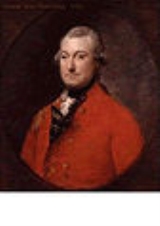
Charles Cornwallis, 1st Marquess Cornwallis

 
Charles Cornwallis, 1st Marquess Cornwallis

   Email Print
   Bookmark   Link


Charles Cornwallis, 1st Marquess Cornwallis


Charles Cornwallis, 1st Marquess Cornwallis, KG (31 December 1738 - 5 October 1805) was a British
Kingdom of Great Britain

The Kingdom of Great Britain, also known as the United Kingdom of Great Britain, was a country in North-West Europe, in existence from 1707 to 1801....
 army officer and colonial administrator. In the United States
United States

The United States of America is a Federal government constitutional republic comprising U.S. state and a federal district. The country is situated mostly in central North America, where its Contiguous United States and Washington, D.C., the Capital districts and territories, lie between the Pacific Ocean and Atlantic Oceans, Borders of the U...
 and Britain, he is best remembered as one of the leading generals in the American War of Independence. His 1781 surrender to a combined American-French force at the Siege of Yorktown
Siege of Yorktown

The Siege of Yorktown or Battle of Yorktown in 1781 was a decisive victory by combined assault of American Continental Army led by General George Washington and France in the American Revolutionary War led by General Jean-Baptiste Donatien de Vimeur, comte de Rochambeau over a British Army commanded by General Charles Cornwallis, 1st Ma...
 is oftenly incorrectly considered the end of the war; in fact, it continued for a further two years.


Discussion
Ask a question about 'Charles Cornwallis, 1st Marquess Cornwallis'
Start a new discussion about 'Charles Cornwallis, 1st Marquess Cornwallis'
Answer questions from other users
Full Discussion Forum


Recent Posts


Encyclopedia


Charles Cornwallis, 1st Marquess Cornwallis, KG (31 December 1738 - 5 October 1805) was a British
Kingdom of Great Britain

The Kingdom of Great Britain, also known as the United Kingdom of Great Britain, was a country in North-West Europe, in existence from 1707 to 1801....
 army officer and colonial administrator. In the United States
United States

The United States of America is a Federal government constitutional republic comprising U.S. state and a federal district. The country is situated mostly in central North America, where its Contiguous United States and Washington, D.C., the Capital districts and territories, lie between the Pacific Ocean and Atlantic Oceans, Borders of the U...
 and Britain, he is best remembered as one of the leading generals in the American War of Independence. His 1781 surrender to a combined American-French force at the Siege of Yorktown
Siege of Yorktown

The Siege of Yorktown or Battle of Yorktown in 1781 was a decisive victory by combined assault of American Continental Army led by General George Washington and France in the American Revolutionary War led by General Jean-Baptiste Donatien de Vimeur, comte de Rochambeau over a British Army commanded by General Charles Cornwallis, 1st Ma...
 is oftenly incorrectly considered the end of the war; in fact, it continued for a further two years. Despite this defeat, he retained the confidence of successive British governments and continued to enjoy an active career. In India
India

India, officially the Republic of India , is a country in South Asia. It is the List of countries and outlying territories by total area country by geographical area, the List of countries by population country, and the most populous liberal democracy in the world....
, where he served two terms as governor general, he is remembered for promulgating the Permanent Settlement
Permanent Settlement

The Permanent Settlement ? also known as the Cornwallis Code or Permanent Settlement of Bengal ? was an agreement between the British East India Company and Bengali landlords, with far-reaching consequences for both agricultural methods and productivity in the entire British Empire and the political realities of the Indian countr...
. As Lord Lieutenant of Ireland, he argued for Catholic emancipation
Catholic Emancipation

Catholic Emancipation or Catholic Relief, was a process in Great Britain and Ireland in the late 18th century and early 19th century which involved reducing and removing many of the restrictions on Roman Catholics which had been introduced by the Act of Uniformity, the Test Acts and the Penal Laws....
.

Early life

Cornwallis was the eldest son of Charles Cornwallis, 5th [Baron Cornwallis] (later 1st Earl Cornwallis) (March 29, 1700 – June 23, 1762, in the Howells
Howells

Howells may refer to:...
, near Bristol
Bristol

Bristol is a City status in the United Kingdom, unitary authority area and Ceremonial counties of England in South West England, west of London, and east of Cardiff....
) and was born at Grosvenor Square
Grosvenor Square

Grosvenor Square is a large garden square in the exclusive Mayfair district of London, England. It is the centrepiece of the Mayfair property of the Duke of Westminster, and takes its name from their surname, "Grosvenor"....
 in London
London

London is the capital of both England and the United Kingdom, and the most populous municipality in the European Union. An important settlement for two millennia, History of London goes back to its founding by the Roman Empire....
, England
England

native_name =|conventional_long_name = England|common_name = England|image_flag = Flag of England.svg|image_coat = England COA.svg|symbol_type = Royal Coat of Arms...
, even though his family's estates were in Kent
Kent

Kent is a Counties of England in southeast England, and is one of the home counties. It borders East Sussex, Surrey and Greater London and has a defined boundary with Essex in the middle of the River Thames estuary....
.

The Cornwallis family was established at Brome Hall, near Eye, in Suffolk, in the course of the 14th century, and members of it occasionally represented the county in the House of Commons
British House of Commons

The House of Commons is the lower house of the Parliament of the United Kingdom, which also comprises the British monarchy and the House of Lords ....
 during the next three hundred years. Frederick Cornwallis, created a Baronet
Baronet

A baronet or the rare female equivalent, a baronetess , is the holder of a hereditary title awarded by the British Crown known as a baronetcy....
 in 1627, fought for King Charles I
Charles I of England

Charles I was List of English monarchs, List of monarchs of Scotland and King of Ireland from 27 March 1625 until his capital punishment on 30 January 1649....
, and followed King Charles II
Charles II of England

Charles II was the Monarchy of Kingdom of England, Kingdom of Scotland, and Kingdom of Ireland.His father Charles I of England Regicide#The regicide of Charles I of England at Palace of Whitehall on 30 January 1649, at the climax of the English Civil War....
 into exile. He was made Baron Cornwallis, of Eye in the County of Suffolk, in 1661, and his descendants by fortunate marriages increased the importance of the family.

He was extremely well-connected. His mother, Elizabeth Townshend (died December 1, 1785), was the daughter of the 2nd Viscount Townshend
Charles Townshend, 2nd Viscount Townshend

Charles Townshend, 2nd Viscount Townshend , was a British British Whig Party statesman. He served for a decade as Secretary of State, directing British foreign policy....
 and a niece of the Prime Minister
Prime minister

A prime minister is the most senior minister of Cabinet in the Executive branch of government in a parliamentary system. The position is usually held by, but need not always be held by, a politician....
, Sir Robert Walpole
Robert Walpole

Robert Walpole, 1st Earl of Orford, Order of the Garter, Order of the Bath, Privy Council of Great Britain , known before 1742 as Sir Robert Walpole, was a Kingdom of Great Britain statesman who is generally regarded as having been the first Prime Minister of the United Kingdom....
. His father was created Earl Cornwallis, Viscount Cornwallis and Viscount Brome in 1753, at which point he was styled Viscount Brome. His brother was Admiral Sir William Cornwallis
William Cornwallis

Admiral Sir William Cornwallis, Order of the Bath was a Royal Navy officer who fought in the Napoleonic Wars. He was the brother of Charles Cornwallis, 1st Marquess Cornwallis, the Marquess Cornwallis, governor-general of India....
. An uncle, Frederick
Frederick Cornwallis

Frederick Cornwallis was Archbishop of Canterbury, and the twin brother of Edward Cornwallis.The seventh son of Charles Cornwallis, 4th Baron Cornwallis, he was educated at Eton College and graduated from Christ's College, Cambridge....
, was Archbishop of Canterbury
Archbishop of Canterbury

The Archbishop of Canterbury is the chief bishop and principal leader of the Church of England, the symbolic head of the worldwide Anglican Communion and the Diocesan Bishop of the Diocese of Canterbury, the Episcopal see that churches must be in communion with in order to be a part of the Anglican Communion....
 and another uncle, Edward
Edward Cornwallis

Edward Cornwallis was a Kingdom of Great Britain military officer, and the twin brother of Frederick Cornwallis.He was the sixth son of Charles, fourth Baron Cornwallis, and Lady Charlotte Butler, daughter of the Earl of Arran....
, was a leading colonist in Canada.

Early military career

Cornwallis was educated at Eton College
Eton College

Eton College, also known as Eton, is a world-famous British independent school for boys, founded in 1440 by Henry VI of England. It was founded as the King's College of Our Lady of Eton beside Windsor....
 — where he received an injury to his eye by an accidental blow, while playing hockey
Field hockey

Field hockey is a team sport in which a team of players attempt to score Goal by hitting, pushing or flicking the ball with hockey sticks into the opposing team's goal....
, from Shute Barrington
Shute Barrington

Shute Barrington was an English churchman, Bishop of Llandaff in Wales, as well as Bishop of Salisbury and Bishop of Durham in England....
, later Bishop of Durham
Bishop of Durham

The Bishop of Durham is the Church of England bishop responsible for the diocese of Diocese of Durham in the province of York. The Diocese is one of the oldest in the country and its bishop is a member of the House of Lords....
 — and Clare College, Cambridge
Clare College, Cambridge

Clare College is a college of the University of Cambridge, the second oldest surviving college after Peterhouse, Cambridge.Clare is famous for its chapel choir and for its gardens, which form part of what is known as the Backs, the back of the colleges that overlook the River Cam....
. He obtained his first commission as Ensign
Ensign (rank)

Ensign is a junior rank of Officer #Commissioned officers in the militaries of some countries, normally in the infantry or navy. As the junior officer in an infantry regiment was traditionally the carrier of the ensign, the rank itself acquired the name....
 in the 1st Foot Guards
Grenadier Guards

The Grenadier Guards is the most senior regiment of the Guards Division of the British Army, and, as such, is the most senior regiment of infantry....
, on December 8, 1757. His military education then commenced, and after travelling on the continent with a Prussian
Prussia

Prussia was, most recently, a historic state originating out of the Duchy of Prussia and the Margraviate of Brandenburg. This state had for centuries substantial influence on Germany and European history....
 officer, Captain de Roguin, he studied at the military academy of Turin
Turín

Tur?n is a municipality in the Ahuachap?n Department Departments of El Salvador of El Salvador....
. He also became a Member of Parliament
Member of Parliament

A Member of Parliament, or MP, is a representative of the voters to a parliament. In many countries the term applies specifically to members of the lower house, as upper houses often have a unique title, such as senate, and thus also have unique titles for its members, such as senators....
 in January 1760, entering the House of Commons
British House of Commons

The House of Commons is the lower house of the Parliament of the United Kingdom, which also comprises the British monarchy and the House of Lords ....
 for the village of Wye
Wye

Wye is an historic village in Kent, England, located some from Canterbury, and is also the main village in the civil parish of Wye with Hinxhill....
 in Kent. He succeeded his father as 2nd Earl Cornwallis in 1762, which saw him elevated to the House of Lords
House of Lords

The House of Lords is the second house of the Parliament of the United Kingdom and is also commonly referred to as "the Lords". The Parliament comprises the British monarchy, the British House of Commons , and the Lords....
.

Throughout the Seven Years' War
Seven Years' War

The Seven Years' War lasted between 1756?1763 and involved all of the major European powers of the period. The war pitted Kingdom of Prussia and Kingdom of Great Britain and a coalition of smaller German states against an alliance consisting of Archduchy of Austria, Early Modern France, Russian Empire, Kingdom of Sweden, and Electorate of Sa...
, Lord Cornwallis served four terms in different posts in Germany
Germany

Germany , officially the Federal Republic of Germany , is a country in Central Europe. It is bordered to the north by the North Sea, Denmark, and the Baltic Sea; to the east by Poland and the Czech Republic; to the south by Austria and Switzerland; and to the west by France, Luxembourg, Belgium, and the Netherlands....
, interspersed with trips home. In 1758, he served as a staff officer to Lord Granby
John Manners, Marquess of Granby

General John Manners, Marquess of Granby Privy Council of Great Britain, , Kingdom of Great Britain soldier, was the eldest son of the John Manners, 3rd Duke of Rutland....
. A year later, he participated at the Battle of Minden
Battle of Minden

In the Battle of Minden, a Kingdom of Prussia-Electorate of Hanover-Kingdom of Great Britain army under Prince Ferdinand, Duke of Brunswick-L?neburg defeated a ancien regime army under the Louis Georges ?rasme de Contades on 1 August 1759 during the Seven Years' War....
, one of the major battles of the war. After the battle, he purchased a captaincy in the 85th Regiment of Foot
85th Regiment of Foot

Three regiments of the British Army have been numbered the 85th Regiment of Foot:*85th Regiment of Foot , raised in 1759*85th Regiment of Foot , raised in 1779...
. In 1761, he served with the 11th Foot and was promoted to Brevet
Brevet (military)

In the U.K. and U.S. military, brevet referred to a warrant authorizing a commissioned officer to hold a higher Military rank temporarily, but usually without receiving the pay of that higher rank....
 Lieutenant-Colonel. He led his regiment in the Battle of Villinghausen
Battle of Villinghausen

The Battle of Villinghausen was fought on 15 and 16 July 1761 between a large French army and a combined Kingdom of Prussia-Electorate of Hanover-Kingdom of Great Britain force led by Duke Ferdinand of Brunswick....
 on July 15-July 16 1761, and was noted for his gallantry. Following the Peace of Paris he returned to Britain, where he became a political protege of the leading Whig magnate, and future Prime Minister, Lord Rockingham
Charles Watson-Wentworth, 2nd Marquess of Rockingham

Charles Watson-Wentworth, 2nd Marquess of Rockingham, Order of the Garter, Privy Council of the United Kingdom , styled The Hon. Charles Watson-Wentworth before 1733, Viscount Higham between 1733 and 1746, Earl of Malton between 1746 and 1750 and The Earl Malton in 1750, was a Kingdom of Great Britain British Whig Par...
.

He became colonel of the 33rd Regiment of Foot
33rd Regiment of Foot

The 33rd Regiment of Foot was an infantry regiment of the British Army. In 1881 it was amalgamated with another regiment to become the Duke of Wellington's Regiment....
 in 1766. The same year he voted along with five other peers against the Stamp Act
Stamp Act 1765

The Stamp Act of 1765 was a tax imposed by the Parliament of Great Britain on the colonies of British America. The act required that many printed materials in the colonies carry a tax stamp....
, out of sympathy with the American colonists. He maintained a strong degree of support for the colonists during the crisis in the lead up to the American War of Independence.

American War of Independence

After the opening skirmishes of the war took place around Boston, Cornwallis put his previous misgivings aside and sought active service. His participation in the American War of Independence began with his service as second in command to Henry Clinton. Cornwallis, along with several other senior officers, was promoted shortly before leaving for the conflict. Clinton's forces arrived in North America in May 1776 at Cape Fear, North Carolina. These forces then shifted south and participated in the first siege of Charleston
Siege of Charleston

}|-||}The Siege of Charleston was one of the major battles which took place towards the end of the American Revolutionary War, after the Kingdom of Great Britain began to shift their strategic focus towards the Southern Colonies....
 in June 1776. They were unable to make a breakthrough and eventually withdrew.

New York campaign

After the failure of this siege, Clinton and Cornwallis transported his troops north to serve under William Howe
William Howe, 5th Viscount Howe

William Howe, 5th Viscount Howe, Order of the Bath, Privy Council of Great Britain was a United Kingdom General who was Commander-in-Chief of British forces during the American Revolutionary War, one of the three Howe brothers....
 in the campaign for New York City. During this campaign, Cornwallis, who continued to serve under Clinton, fought with distinction in the Battle of Long Island
Battle of Long Island

}|-||-||}The Battle of Long Island, also known as the Battle of Brooklyn or the Battle of Brooklyn Heights, fought on August 27, 1776, was the first major battle in the American Revolutionary War following the United States Declaration of Independence, the largest battle of the entire conflict, and the first battle in which...
, participated in the Battle of White Plains
Battle of White Plains

}|-||}The Battle of White Plains was a battle in the New York and New Jersey campaign of the American Revolutionary War fought on October 28, 1776, in the area surrounding White Plains, New York, New York....
, and played a supporting role in capture of Fort Washington
Fort Washington (New York)

Fort Washington was a fortified position near the north end of Manhattan Island and was located at the highest point on the island. The Fort Washington Site is listed on the U.S....
. At the end of the campaign, Cornwallis was then given an independent command in which he captured Fort Lee
Fort Lee, New Jersey

Fort Lee is a Borough in Bergen County, New Jersey, New Jersey, United States. As of the United States 2000 Census, the borough population was 35,461....
 and pursued George Washington's forces as far as New Brunswick
New Brunswick, New Jersey

New Brunswick, also known as "the Healthcare City" or "Hub City", is a city and the county seat of Middlesex County, New Jersey, New Jersey, USA....
 in New Jersey
New Jersey

New Jersey is a state in the Mid-Atlantic States and Northeastern United States regions of the United States. It is bordered on the north by New York, on the east by the Hudson River and the Atlantic Ocean, on the southwest by Delaware, and on the west by Pennsylvania....
.

Trenton and Princeton

After the New York City campaign and the subsequent occupation of New Jersey by the British army, Cornwallis prepared to leave for England as the army moved into winter quarters. However, as Cornwallis was preparing to embark in December 1776, Washington launched his surprise attack on Trenton
Battle of Trenton

}|-||}The Battle of Trenton took place on December 26, 1776, during the American Revolutionary War after General George Washington's Washington's crossing of the Delaware River north of Trenton, New Jersey....
. In response, Cornwallis's leave was canceled and he was ordered to take command of the forces stationed in the Trenton area. Since Clinton was in England at this time, Cornwallis served directly under Howe.

In response to Washington's initiative, Cornwallis gathered together garrisons scattered across New Jersey and moved them to Trenton. On January 2, 1777, he confronted Washington's army, which was positioned near Assunpink Creek
Assunpink Creek

Assunpink Creek is a tributary of the Delaware River in western New Jersey in the United States.Assunpink Creek is born in rural Monmouth County, New Jersey, about a mile north of Clarksburg, New Jersey....
. In the resulting Second Battle of Trenton
Second Battle of Trenton

}|-||}The Battle of the Assunpink Creek also known as The Second Battle of Trenton was an American victory that took place on January 2, 1777, during the American Revolutionary War....
, Cornwallis unsuccessfully attacked Washington's position late in the afternoon. Cornwallis prepared his troops to continue the assault of Washington's position the next day. During the night, however, Washington's forces escaped to attack the British outpost at Princeton
Battle of Princeton

}|-||}The Battle of Princeton was a battle in which George Washington's revolutionary forces defeated Great Britain forces near Princeton, New Jersey, New Jersey....
. While the credit for the success of the Continental army's disengagement from Cornwallis is due to Washington's use of deception, including maintaining blazing campfires and keeping up sounds of camp activity, Cornwallis contributed by failing to send out patrols to monitor the Continental Army's activities.

After the battle of Princeton, Washington's forces moved north toward Morristown
Morristown, New Jersey

Morristown is a Town in Morris County, New Jersey, New Jersey, United States. As of the United States 2000 Census, the town population was 18,544....
 and the British Forces took up winter quarters in garrisons centered on New Brunswick and Perth Amboy. During the winter, Cornwallis participated in raids during the forage war
Forage War

The Forage War was a partisan war consisting of numerous small skirmishes that took place in New Jersey during the American Revolutionary War in 1777, following the battles of Battle of Trenton and Battle of Princeton....
 in an attempt to deny the Continental forces access to supplies. In early Spring, Cornwallis led a successful attack on Benjamin Lincoln
Benjamin Lincoln

Benjamin Lincoln was an United States army officer. He served as a Major general in the Continental Army during the American Revolutionary War....
's garrison at Bound Brook
Battle of Bound Brook

The Battle of Bound Brook, one of the battles in the New York and New Jersey campaign during the American Revolutionary War, occurred on April 13, 1777, and resulted in a defeat for the Continental Army, who were routed by about 4,000 troops under Kingdom of Great Britain command....
 on April 12, 1777. However, these engagements had no long-term impact as Howe had decided to withdraw his forces back towards New York City.

Philadelphia campaign

While serving directly under Howe, Cornwallis also participated as a field commander in the Philadelphia campaign of 1777. Howe intended to launch an offensive against Philadelphia, hoping to end the war at a stroke. Cornwallis was given command of the army's light infantry. At the Battle of Brandywine
Battle of Brandywine

}|-||}The Battle of Brandywine was a battle of the Philadelphia campaign of the American Revolutionary War fought on September 11, 1777, in the area surrounding Chadds Ford Township, Pennsylvania, Pennsylvania....
 on 11 September 1777, Cornwallis was responsible for the flanking movement that ultimately forced the American forces from their position. Cornwallis also played an important role in the Battle of Germantown
Battle of Germantown

}|-||}The Battle of Germantown, a battle in the Philadelphia campaign of the American Revolutionary War, was fought on October 4, 1777 at Germantown, Philadelphia, Pennsylvania, Pennsylvania....
 on October 4 and the capture of Fort Mercer
Fort Mercer

Fort Mercer was one of two forts constructed in 1777 on the Delaware River during the American Revolutionary War, by the Continental Army, under the command of George Washington, to block the approach to Philadelphia, Pennsylvania: Fort Mifflin, on the Pennsylvania side, and Fort Mercer, on the New Jersey side....
 in New Jersey on 20 November. With the army in winter quarters in Philadelphia, Cornwallis took his long-delayed leave to England carrying home important information.

Cornwallis returned to Philadelphia to serve as second-in-command to Henry Clinton, who had replaced William Howe. After the surrender of another British army at Saratoga
Battle of Saratoga

The Battles of Saratoga in September and October 1777 were decisive Continental Army victories in the American Revolutionary War, resulting in the surrender of an entire British army of over 6,000 men invading New York from Canada....
 and the entry of France into the war, the British regarded the occupation of the city as a drain of valuable troops and resources needed elsewhere. Cornwallis commanded the rearguard during the overland withdrawal from Philadelphia to New York City and played an important role in the Battle of Monmouth
Battle of Monmouth

}|-||}The Battle of Monmouth was an American Revolutionary War battle fought on June 28, 1778 in New Jersey. The main Continental Army under George Washington attacked the rear of the British Army's column led by Henry Clinton as they left Freehold Court-House ....
 on June 28, 1778. After a surprise attack on the British rearguard, Cornwallis launched a counter-attack which checked the enemy advance. In November, 1778, Cornwallis once more returned to England to be with his ailing wife, Jemima, who died in February 1779.

Southern theater

Cornwallis returned to America in July, 1779, where he was to play a central role as British commander in the Southern Campaign. At the end of 1779, Clinton and Cornwallis transported the bulk of their forces south and initiated the second siege of Charleston
Siege of Charleston

}|-||}The Siege of Charleston was one of the major battles which took place towards the end of the American Revolutionary War, after the Kingdom of Great Britain began to shift their strategic focus towards the Southern Colonies....
 during the spring of 1780, which resulted in the surrender of the Continental forces under Benjamin Lincoln. After the siege of Charleston and the destruction of Abraham Buford
Abraham Buford

Abraham Buford was a Continental Army officer during the American Revolutionary War, best known as the commanding officer of the men killed in the "Waxhaw Massacre"....
's Virginia regiments at Waxhaw
Waxhaw massacre

}|-||-||}The Battle of Waxhaws is the name of a battle that took place during the American Revolution on May 29, 1780, in Lancaster, South Carolina, between a Patriot force led by Abraham Buford and a mainly Loyalist force led by Banastre Tarleton....
, Clinton returned to New York, leaving Cornwallis in command in the south.

Cornwallis was faced with the task of seeking an outright victory over the enemy, something General Howe had failed to do in the north in spite of winning several battles. The forces he was given to accomplish this were limited by the necessity of keeping a large British force in New York
New York City

The City of New York is the List of United States cities by population in the United States, while the New York metropolitan area ranks among the List of urban areas by population....
 under Clinton to shadow Washington. Cornwallis was told by his superiors to utilize the support of American loyalists, who were believed to be numerous in the southern colonies. Personally, Cornwallis favored a bolder and more aggressive approach than either Clinton or Howe had. He also expanded on an existing British policy of recruiting black slaves, who overwhelmingly favored the Loyalist cause, as scouts, laborers and soldiers.

In August 1780 Cornwallis' forces met a larger enemy army under the command of Horatio Gates
Horatio Gates

Horatio Lloyd Gates was a United Kingdom soldier turned United States general during the American Revolutionary War. He took credit for the American victory at the Battle of Saratoga and was blamed for the defeat at the Battle of Camden....
 and decisively defeated them at the Battle of Camden
Battle of Camden

}|-||}The Battle of Camden was a major victory for the British in the Southern theater of the American Revolutionary War of the American Revolutionary War....
. This served to effectively clear South Carolina
South Carolina

South Carolina is a U.S. state in the Southern United States of the United States. It borders Georgia to the south and North Carolina to the north....
 of enemy forces, and had a severely demoralizing effect upon them. The victory added to his reputation, through the rout of the American rebels had as much to do with the failings of Gates, as the skill of Cornwallis. As the opposition to him melted away, Cornwallis began to advance north into North Carolina
North Carolina

North Carolina is a U.S. state located on the Atlantic Seaboard in the southeastern United States. The state borders South Carolina and Georgia to the south, Tennessee to the west and Virginia to the north....
. There he clashed with the rebuilt Continental army under General Greene at Guilford. Cornwallis won a Pyrrhic victory, with a bayonet charge against a numerically superior enemy.

Cornwallis moved his forces to Wilmington
Wilmington, North Carolina

Wilmington is a city in and the county seat of New Hanover County, North Carolina, North Carolina, United States. The population was 75,838 at the United States Census, 2000....
 on the coast. They could ill afford such losses in battle, particularly with disease also taking a heavy toll on his small army. In spite of this he had been largely successful, driving the regular enemy forces out of the Carolinas, leaving only irregular partisan troops such as Francis Marion
Francis Marion

Francis Marion is considered one of the fathers of modern guerrilla warfare, and is credited in the lineage of the United States Army Rangers....
's, who conducted a limited but violent guerrilla war. Cornwallis then decided to launch an invasion of Virginia
Virginia

The Commonwealth of Virginia is an United States U.S. state on the East Coast of the United States of the Southern United States. The state is known as the "Old Dominion" and sometimes as "Mother of Presidents", because it is the birthplace of Lists of United States Presidents by place of birth#By state....
, while Greene's forces moved southwards into the Carolina's.

Virginia campaign

On arrival in Virginia, Cornwallis took command of the existing British forces in the region, which had been commanded by Major General
Major General

Major General or Major-General is a military rank used in many countries. It is derived from the older rank of Sergeant Major General. A Major General is a high-ranking officer, normally subordinate to the rank of Lieutenant General and senior to the ranks of Brigadier and Brigadier General....
 William Phillips
William Phillips

There have been a number of people named William Phillips:*William Phillips , artilleryman and general officer in the British Army who served as a major-general in the American Revolutionary War...
. Phillips, a good personal friend of Cornwallis, died two days before Cornwallis reached his position at Petersburg
Petersburg, Virginia

Petersburg is an independent city in Virginia, United States located on the Appomattox River and 23 miles south of Richmond, Virginia. The population was 33,740 as of the United States Census 2000....
. Having marched without informing Clinton of his movements, (communications between the two British commanders was by sea and extremely slow, sometimes up to three weeks) he sent word of his northward march and engaged in destroying American supplies in the Chesapeake
Chesapeake Bay

The Chesapeake Bay is the largest estuary in the United States. It lies off the Atlantic Ocean, surrounded by Maryland and Virginia. The Chesapeake Bay's drainage basin covers in the District of Columbia and parts of six states: New York, Pennsylvania, Delaware, Maryland, Virginia, and West Virginia....
 region.

In March 1781, in response to the threat of Cornwallis, General Washington had dispatched Marquis de Lafayette to defend Virginia. The young Frenchman had 3,200 men at his command, but British troops in the state now totaled 7,200. Lafayette skirmished with Cornwallis, avoiding a decisive battle while gathering reinforcements. It was during this period that Cornwallis received orders from Clinton to choose a position on the Virginia Peninsula
Virginia Peninsula

The Virginia Peninsula is a peninsula in southeast Virginia, bounded by the York River , James River , Hampton Roads and Chesapeake Bay.Hampton Roads is the common name for the metropolitan area that surrounds the body of water of the same name....
 - referred to in contemporary letters as the "Williamsburg Neck" - and construct a fortified naval post to shelter ships of the line
Ship of the line

A ship-of-the-line was a type of naval warship constructed from the 17th century through the mid-19th century, to take part in the Naval tactics in the Age of Sail known as the line of battle, in which two columns of opposing warships would maneuver to bring the greatest weight of broadside guns to bear....
. In complying with this order, Cornwallis put himself in a position where it would be easy to become trapped. With the arrival of the French fleet under the Comte de Grasse
François Joseph Paul de Grasse

Fran?ois-Joseph Paul, marquis de Grasse Tilly, comte de Grasse...
 and General George Washington
George Washington

George Washington was the leader of the Continental Army in the American Revolutionary War and served as the List of Presidents of the United States President of the United States of the United States of Americas ....
's combined French-American army, Cornwallis found himself cut off. After the Royal Navy
Royal Navy

The Royal Navy of the United Kingdom is the oldest of the British Armed Forces . From the mid-18th century until well into the 20th century, it was the most powerful navy in the world, playing a key part in establishing the British Empire as the dominant world power from 1815 until the early 1940s....
 fleet under Admiral Thomas Graves
Thomas Graves, 1st Baron Graves

Thomas Graves, 1st Baron Graves Order of the Bath , was a United Kingdom Admiral and colonial official .Graves was the second son of Rear-Admiral Thomas Graves of Thanckes in Cornwall ....
 was defeated by the French at the Battle of the Chesapeake
Battle of the Chesapeake

}|-||-||}The Battle of the Chesapeake, also known as the Battle of the Virginia Capes or simply the Battle of the Capes, was a crucial naval battle in the American Revolutionary War which took place near the mouth of Chesapeake Bay on September 5, 1781, between a Kingdom of Great Britain fleet led by Rear-Admiral Thomas Gra...
, and the French siege train arrived from Newport, Rhode Island
Newport, Rhode Island

Newport is a city on Aquidneck Island in Newport County, Rhode Island, Rhode Island, United States, about 30 miles south of Providence, Rhode Island....
, his position became untenable. He surrendered to General Washington and the French commander the Comte de Rochambeau
Jean-Baptiste Donatien de Vimeur, comte de Rochambeau

Jean-Baptiste Donatien de Vimeur, Comte de Rochambeau was a France French nobility, soldier, and a Marshal of France who participated in the American Revolutionary War....
 on October 19, 1781.

Return to Britain

In 1782 Cornwallis was exchanged for Henry Laurens
Henry Laurens

Henry Laurens was an United States merchant and rice planter from South Carolina who became a political leader during the American Revolutionary War....
, who had been held in London and was considered a prisoner of equal rank. He returned to Britain with Benedict Arnold
Benedict Arnold

Benedict Arnold V was a General officer during the American Revolutionary War who originally fought for the American Continental Army, but switched sides to the British Empire....
, and they were cheered when they landed in England on 21 January 1782. His tactics in America, especially during his Southern Command (1780–81), were excessively criticized by his political enemies in London. However Cornwallis retained the confidence of King George III and the British Government - enabling him to continue his career.

His surrender had not marked the end of the war, through it had been the last major fighting in the American theater. In spite of the ongoing conflict, Cornwallis was not immediately considered for another command, and the war was brought to an end in 1783 by the Treaty of Paris
Treaty of Paris (1783)

The Treaty of Paris, signed on September 3, 1783, ratified by the Congress of the Confederation on January 14, 1784 and by the King of Great Britain on April 9, 1784 , formally ended the American Revolutionary War between the Kingdom of Great Britain and United States, which had rebelled against British rule starting in 1775....
.

Governor-general of India

In 1786 Cornwallis was appointed Governor-General
Governor-General of India

The Governor-General of India was the head of the British Raj in India, and later, after Indian Independence Act 1947, the representative of the List of Indian monarchs#Kings of India and Pakistan....
 and commander in chief in India. He instituted land reforms and reorganized the British army and administration. He was increasingly aligned with the government of William Pitt
William Pitt the Younger

William Pitt, the Younger was a Kingdom of Great Britain politician of the late eighteenth century and early nineteenth century. He became the youngest Prime Minister of the United Kingdom in 1783 at the age of 24....
, writing home about his relief at King George III's recovery from illness, which had prevented the radical opposition led by Charles James Fox
Charles James Fox

Charles James Fox was a prominent Kingdom of Great Britain British Whig Party statesman whose parliamentary career spanned thirty-eight years of the late eighteenth century and early nineteenth century and who was particularly noted for being the arch-rival of William Pitt the Younger....
 from taking power.

Third Mysore War

In 1792 he defeated Tippu Sultan, the powerful sultan of Mysore
Mysore

Mysore ; renamed to Mysuru|??????) is the second largest city in the state of Karnataka, India. It is the headquarters of the Mysore district and the Mysore division and lies about southwest of Bangalore, the capital of Karnataka....
 by capturing his capital Srirangapatnam, which concluded the Third Anglo-Mysore War
Third Anglo-Mysore War

The Third Anglo-Mysore War was a war in South India between the Kingdom of Mysore and the English East India Company. It was the third of four Anglo-Mysore Wars....
 and paved the way towards British dominance in Southern India.

Cornwallis was created Marquess Cornwallis in 1792. He returned to England the following year, and was suceeded by Sir John Shore. His time in India did much to restore his reputation which had been tarnished at Yorktown.

Lord Lieutenant of Ireland

Cornwallis was made Lord Lieutenant of Ireland
Lord Lieutenant of Ireland

The Lord Lieutenant of Ireland , also known as the Judiciar in the early mediaeval period and as the Lord Deputy of Ireland as late as the 17th century, was the King's representative and head of the Irish executive during the Lordship of Ireland , the Kingdom of Ireland and the United Kingdom of Great Britain and Ireland ....
 in June 1798, after the outbreak of the Irish Rebellion of 1798
Irish Rebellion of 1798

The Irish Rebellion of 1798 , or 1798 rebellion as it is known locally, was an uprising in 1798, lasting several months, against United Kingdom and its subject Kingdom of Ireland....
 between republican United Irishmen and the British Government. His appointment was greeted unfavourably by the Irish elite, who preferred his predecessor Lord Camden
John Pratt, 1st Marquess Camden

John Jeffreys Pratt, 2nd Earl and 1st Marquess Camden, Order of the Garter, Privy Council of the United Kingdom , British politician, was the only son of the Charles Pratt, 1st Earl Camden....
, and suspected he had liberal sympathies with the predominantly Catholic rebels. However, he struck up a good working relationship with Lord Castelreagh
Robert Stewart, Viscount Castlereagh

Robert Stewart, 2nd Marquess of Londonderry, Order of the Garter, Royal Guelphic Order, Privy Council of the United Kingdom , generally known as Lord Castlereagh or by his courtesy title of Viscount Castlereagh, which he held until 1821, was an Anglo-Irish politics who represented the United Kingdom of Great Britain and Ireland a...
, the Chief Secretary for Ireland.

In his combined role as both Viceroy and Commander-in-Chief Cornwallis oversaw the defeat of both the Irish rebels and a French invasion force led by General Humbert that landed in Connaught in August 1798. Panicked by the landing, and the British defeat at the Battle of Castlebar
Battle of Castlebar

The Battle of Castlebar occurred on 27 August during the Irish Rebellion of 1798 when a combined force of 2,000 France troops and Ireland rebels routed a force of 6,000 British army in what would later became known as the Races of Castlebar....
, thousands of reinforcements were despatched to Ireland swelling his forces to 60,000.

He was also responsible for ordering the Military Road
R115 road

The R115 road is a regional road in Republic of Ireland. It follows the Military Road for its entire length. The R115 is long; the full length of the Military Road is ....
 in Wicklow
County Wicklow

County Wicklow is a Counties of Ireland on the east coast of Republic of Ireland, immediately south of Dublin. The county is bordered by the Irish Sea and the counties of County Carlow, County Kildare, County Wexford, as well as two parts of what was County Dublin, County of Dun Laoghaire-Rathdown and County of South Dublin....
 built, to root out rebels to the south of Dublin
Dublin

Dublin is both the largest city and capital of Republic of Ireland. It is located near the midpoint of Ireland's east coast, at the mouth of the River Liffey and at the centre of the Dublin Region....
. It was part of a lengthy operation in mopping up the last areas of resistance, which lasted until Cornwallis' departure in 1801.

Treaty of Amiens

Charlescornwallis
On 25 March 1802, he signed the Treaty of Amiens
Treaty of Amiens

The Treaty of Amiens temporarily ended the hostilities between France and the United Kingdom of Great Britain and Ireland during the French Revolutionary Wars....
 with Napoleon. He and General
General

A General officer is an Officer of high military rank. The term or equivalent is used by nearly every country in the world. General can be used as a generic term for all grades of general officer, or it can specifically refer to a single rank that is just called general....
 Charles O'Hara
Charles O'Hara

General Charles O'Hara was a United Kingdom military officer who served in the Seven Years War, American War of Independence and French Revolutionary War....
 (his second in command from Charleston to Yorktown) have the rare distinction of dealing with both Washington and Napoleon. The end of the War of the Second Coalition
War of the Second Coalition

The "Second Coalition" was the second attempt by other European power s to contain or eliminate French Revolution French First Republic. While Napoleon Bonaparte was leading an expedition to Egypt, a number of France's enemies formed a new alliance and attempted to roll back his previous conquests....
, financial pressure, and the resignation of William Pitt
William Pitt the Younger

William Pitt, the Younger was a Kingdom of Great Britain politician of the late eighteenth century and early nineteenth century. He became the youngest Prime Minister of the United Kingdom in 1783 at the age of 24....
 on 16 February 1801, made the temporary peace possible. Henry Addington succeeded him, and appointed Cornwallis Minister Plenipotentiary. The British negotiators in Paris, were led by Robert Jenkinson, Lord Liverpool. Despite their efforts, the peace soon broke down, and war recommenced.

Death

He was reappointed governor-general of India in 1805, but on October 5, shortly after arriving, died of a fever at Gauspur in Ghazipur
Ghazipur

Ghazipur or Ghazipur City is a city and a municipal board in Ghazipur district in the state of Uttar Pradesh, India. It is the administrative headquarters of Ghazipur District....
, that time under Varanasi
Varanasi

Varanasi , also commonly known as Benares or Banaras and Kashi , is a city situated on the left bank of the River Ganges River in the Indian state of Uttar Pradesh, regarded as holy by Hinduism, Buddhists and Jains, and is one of the List of oldest continuously inhabited cities....
 kingdom. There Cornwallis is buried overlooking the Ganges River
Ganges River

The 'Ganges' is one of the major rivers of the Indian subcontinent, flowing east through the Gangetic Plain of northern India into Bangladesh....
, where his memorial continues to be maintained by the Government of India, in city of Ghazipur.

Legacy

Today Cornwallis is remembered primarily as the British
Kingdom of Great Britain

The Kingdom of Great Britain, also known as the United Kingdom of Great Britain, was a country in North-West Europe, in existence from 1707 to 1801....
 commander who surrendered at Yorktown. Because of the enormous impact the siege—and its result—had on American history he is still fairly well-known in the United States
United States

The United States of America is a Federal government constitutional republic comprising U.S. state and a federal district. The country is situated mostly in central North America, where its Contiguous United States and Washington, D.C., the Capital districts and territories, lie between the Pacific Ocean and Atlantic Oceans, Borders of the U...
 - and is often referenced in popular culture
Popular culture

Popular culture is the totality of Distinction memes, ideas, Perspective s and Attitude s that are deemed preferred per an informal consensus within the mainstream of a given culture....
. In the 2000 film The Patriot
The Patriot (2000 film)

The Patriot is a 2000 epic film war film directed by Roland Emmerich, written by Robert Rodat, and starring Mel Gibson and Heath Ledger. It was produced by the Mutual Film Company and Centropolis Entertainment, and was distributed by Columbia Pictures....
 about the events leading up to Yorktown
Yorktown

Yorktown may refer to:...
, Cornwallis was portrayed by English actor Tom Wilkinson
Tom Wilkinson

Thomas Jeffrey "Tom" Wilkinson, Order of the British Empire is a two-time Academy Award-nominated, Golden Globe-, BAFTA Award-, Emmy Award- and Screen Actors Guild Award-winning English people actor....
.

In Ireland
Ireland

Ireland is the List of islands by area in Europe, and the twentieth-largest island in the world. It lies to the north-west of continental Europe and is surrounded by hundreds of islands and islet....
 due to the execution of prisoners of war in Ballinalee
Ballinalee

Ballinalee, formerly St Johnstown , is a village in northern County Longford, in the province of Leinster, Ireland. It is situated on the River Camlin, and falls within the parish of Clonbroney....
 after the Battle of Ballinamuck
Battle of Ballinamuck

The Battle of Ballinamuck marked the defeat of the main force of the French incursion during the Irish Rebellion of 1798....
, he achieved local notoriety that lasts to this day. In the village, in the north Leinster county of Longford
Longford

Longford is the county town of County Longford in the Midlands of Ireland. According to the 2006 census, the town has a population of around 13,000....
, the site of the executions is known as Bullys Acre. In India he is known for his victory against Tipu Sultan in Mysore war and promulgation of revenue and judicial acts. He is also known in India for his brutality and cunning.

Fort Cornwallis
Fort Cornwallis

Fort Cornwallis is an old star-shaped fort located on the northeastern coast of Penang, Malaysia. It is named after the late 18th century Governor-General of Bengal, India....
, founded in 1786 in George Town
George Town, Penang

Georgetown is the capital city of the state of Penang in Malaysia. Named after United Kingdom's George III of the United Kingdom, the city is located on the north-east corner of Penang Island and has about 220,000 inhabitants, or about 400,000 including the suburbs....
, Prince of Wales Island
Penang

Penang is a States of Malaysia in Malaysia, located on the northwest coast of Peninsular Malaysia by the Strait of Malacca. Penang is the second smallest state in Malaysia after Perlis, and the eighth most populous....
 (now the Malaysia
Malaysia

Malaysia is a federation that consists of States of Malaysia in Southeast Asia with a total landmass of . The capital city is Kuala Lumpur, while Putrajaya is the seat of the federal government....
n state of Penang
Penang

Penang is a States of Malaysia in Malaysia, located on the northwest coast of Peninsular Malaysia by the Strait of Malacca. Penang is the second smallest state in Malaysia after Perlis, and the eighth most populous....
), is named after General Cornwallis.

He also has a building named after him at the University of Kent, Canterbury.

A large statue of Cornwallis can be seen in St. Paul's Cathedral, London.

Bibliography


Primary documents/sources

  • , United Kingdom: Cornwallis Papers, Ref: 30/11/1-66
  • The Correspondence of Charles, First Marquis Cornwallis, Vol. 1, 1859, ed. Ross.


Secondary sources

  • Adams, R: "A View of Cornwallis's Surrender at Yorktown", American Historical Review, Vol. 37, No. 1 (Oct., 1931), pp. 25-49,
  • Bicheno, H: Rebels and Redcoats: The American Revolutionary War, London, 2003
  • Buchanan, J: The Road to Guilford Courthouse: The American Revolution and the Carolinas, New York, 1997
  • Clement, R: "The World Turned Upside down At the Surrender of Yorktown", Journal of American Folklore, Vol. 92, No. 363 (Jan. - Mar., 1979), pp. 66-67
  • Ferling, J: The World Turned Upside Down: The American Victory in the War of Independence, London, 1988
  • Harvey, R: A Few Bloody Noses: The American War of Independence, London, 2001
  • Harvey, R: War of Wars: The Epic Struggle Between Britain and France 1789-1815, London, 2007
  • Hibbert, C: Rebels and Redcoats: The American Revolution Through British Eyes, London, 2001
  • Hibbert, C: King George III: A Personal History,
  • Mackesy, P: The War for America, London, 1964
  • Pakenham, H: The Year of Liberty: The Great Irish Rebellion of 1798, London 1969
  • Peckham, H:The War for Independence, A Military History, Chicago, 1967
  • Weintraub, S: Iron Tears, Rebellion in America 1775-1783, London, 2005
  • Wickwire, F: Cornwallis, The American Adventure, Boston, 1970


External links


hi |-