
|
|
|
|
Botulinum toxin
|
| |
|
| |
Botulinum toxin is a medication and a neurotoxic protein produced by the bacterium Clostridium botulinum. It is the most toxic protein known with an LD50 of roughly 0.005-0.05 µg/kg. Despite this, it is used in minute doses in some parts of the world, to treat muscle spasms. It is sold commercially under the brand names Botox, Dysport, Myobloc, Neurobloc and Xeomin for this purpose.

Discussion
Ask a question about 'Botulinum toxin'
Start a new discussion about 'Botulinum toxin'
Answer questions from other users
|
Encyclopedia
Botulinum toxin is a medication and a neurotoxic protein produced by the bacterium Clostridium botulinum. It is the most toxic protein known with an LD50 of roughly 0.005-0.05 µg/kg. Despite this, it is used in minute doses in some parts of the world, to treat muscle spasms. It is sold commercially under the brand names Botox, Dysport, Myobloc, Neurobloc and Xeomin for this purpose. BOTOX™ Cosmetic and Vistabel are available for cosmetic treatment. The terms Botox (Cosmetic), Vistabel, Dysport, Myobloc, Neurobloc and Xeomin are trade names and are not used generically to describe the neurotoxins produced by C. botulinum.
History
Between 1817 and 1822, the German physician and poet Justinus Kerner described botulinum toxin, using the terms "sausage poison" and or "fatty poison", as this bacterium often caused poisoning by growing in improperly handled or prepared meat products. It was Kerner who first conceived a possible therapeutic use of botulinium toxin. In 1870, Müller coined the name botulism, from Latin botulus = "sausage". In 1897, Emile van Ermengem identified the bacterium Clostridium botulinum to be the producer of botulinum toxin.In 1928 Snipe and Hermann Sommer for the first time purified the toxin. In 1949, Burgen's group discovered that botulinium toxin blocks neuromuscular transmission. In the late 1960s Allan Scott and Edward Schantz were the first to work on a standardized botulinum toxin preparation for therapeutic purposes.
Other bacteria that produce botulinum toxin, are Clostridium butyricum, C.baratii and C.argentinense.
Botulinum toxin is neutralized at temperatures greater than 60 °C. (140°F)
By 1973, Alan B Scott, MD, of Smith-Kettlewell Institute used botulinium toxin type A (BTX-A) in monkey experiments, and, in 1980, he officially used BTX-A for the first time in humans to treat strabismus. In December 1989, BTX-A (BOTOX) was approved by the US Food and Drug Administration (FDA) for the treatment of strabismus, blepharospasm, and hemifacial spasm in patients over 12 years old. The cosmetic effect of BTX-A was initially described by ophthalmologist Jean Carruthers and dermatologist Alastair Carruthers, a husband-and-wife team working in Vancouver, Canada at the same time as Kate Coleman, an Irish ophthalmologist working in the Blackrock clinic in Dublin, although the effect had been observed by a number of independent groups (Brin, and the Columbia University group). On April 15, 2002, the FDA announced the approval of botulinum toxin type A (BOTOX Cosmetic) to temporarily improve the appearance of moderate-to-severe frown lines between the eyebrows (glabellar lines). BTX-A has also been approved for the treatment of excessive underarm sweating. The acceptance of BTX-A use for the treatment of spasticity and muscle pain disorders is growing, with approvals pending in many European countries and studies on headaches (including migraine), prostatic symptoms, asthma, obesity and many other possible indications are ongoing.
Botox is manufactured by Allergan Inc (U.S.) for both therapeutic as well as cosmetic use. The formulation is best stored at cold temperature of 2-8 degrees Celsius. Dysport is a therapeutic formulation of the type A toxin developed and manufactured in Ireland and which is licenced for the treatment of focal dystonias and certain cosmetic uses in many territories world wide. Neuronox is a new type A toxin manufactured by Medy-Tox Inc (South Korea).
Botulinium Toxin Type B (BTX-B) received FDA approval for treatment of cervical dystonia on December 21, 2000. Trade names for BTX-B are Myobloc in the United States, and Neurobloc in the European Union.
Chemical overview & lethality
There are seven serologically distinct toxin types, designated A through G; 3 subtypes of A have been described. The toxin is a two-chain polypeptide with a 100-kDa heavy chain joined by a disulfide bond to a 50-kDa light chain. This light chain is an enzyme (a protease) that attacks one of the fusion proteins (SNAP-25, syntaxin or synaptobrevin) at a neuromuscular junction, preventing vesicles from anchoring to the membrane to release acetylcholine. By inhibiting acetylcholine release, the toxin interferes with nerve impulses and causes flaccid (sagging) paralysis of muscles in botulism as opposite to the spastic paralysis seen in tetanus.
It is the most acutely toxic substance known, with a median lethal dose of about 1 ng/kg (intravenously).
Food-borne botulism usually results from ingestion of food that has become contaminated with spores (such as a perforated can) in an anaerobic environment, allowing the spores to germinate and grow. The growing (vegetative) bacteria produce toxin. It is the ingestion of preformed toxin that causes botulism, not ingestion of the spores or vegetative organism.
Proper refrigeration at temperatures below 3 °C (38 °F) prevents the growth of Clostridium botulinum. Clostridium botulinum is also susceptible to high salt and low ph levels.
Infant (intestinal) and wound botulism both result from infection with spores which subsequently germinate, resulting in production of toxin and the symptoms of botulism.
Toxin itself is rapidly destroyed by heat, such as in thorough cooking. However, the spores which produce the toxin are heat-tolerant and will survive boiling at 100 degrees Celsius for an extended period of time.
Medical uses Researchers discovered in the 1950s that injecting overactive muscles with minute quantities of botulinum toxin type A decreased muscle activity by blocking the release of acetylcholine at the neuromuscular junction, thereby rendering the muscle unable to contract for a period of 3 to 4 months.
Alan Scott, a San Francisco ophthalmologist, first applied tiny doses of the toxin in a medicinal sense to treat 'crossed eyes' (strabismus) and 'uncontrollable blinking' (blepharospasm), but needed a partner to gain regulatory approval to market his discovery as a drug. Allergan, Inc., a pharmaceutical company that focused on prescription eye therapies and contact lens products, bought the rights to the drug in 1988 and received FDA approval in 1989. Allergan renamed the drug Botox.
Cosmetically desirable effects of Botox were first discovered by Vancouver-based cosmetic surgeons Drs. Alastair and Jean Carruthers The discovery occurred when the husband-and-wife team observed the softening of patients' frown lines following treatment for eye muscle disorders, leading to clinical trials and subsequent FDA approval for cosmetic use in April 2002.
As of 2007, Botox injection is the most common cosmetic operation, with 4.6 million procedures in the United States, according to the American Society of Plastic Surgeons. Qualifications for Botox injectors vary by county, state and country. Botox Cosmetic providers include dermatologists, plastic surgeons, cosmetic physicians, nurses practitioners, nurses, physician assistants, and medical spas.
Botulinum toxin Despite Botulinum toxin being one of the most lethal naturally occurring substances known to science, it is still widely used for cosmetic purposes in a purified and isolated form.
Besides its cosmetic application, Botox is used in the treatment of
- Cervical dystonia (spasmodic torticollis) (a neuromuscular disorder involving the head and neck)
- Blepharospasm (excessive blinking)
- Severe primary axillary hyperhidrosis (excessive sweating)
- Achalasia (failure of the lower oesophageal sphincter to relax)
- Local intradermal injection of BTX-A is helpful in chronic focal painful neuropathies. The analgesic effects are not dependent on changes in muscle tone.
- Migraine and other headache disorders, although the evidence is conflicting in this indication
Other uses of botulinum toxin type A that are widely known but not specifically approved by FDA include treatment of:
Treatment and prevention of chronic headache and chronic musculoskeletal pain are emerging uses for botulinum toxin type A. In addition, there is evidence that Botox may aid in weight loss by increasing the gastric emptying time.
Links to deaths
In September 2005, a paper published in the Journal of American Academy of Dermatology reported from the FDA saying that use of Botox has resulted in 28 deaths between 1989 and 2003, though none were attributed to cosmetic use.
On February 8, 2008, the FDA announced that Botox has "been linked in some cases to adverse reactions, including respiratory failure and death, following treatment of a variety of conditions using a wide range of doses," due to its ability to spread to areas distant to the site of the injection.
In January 2009, the Canadian government warned that botox can have the adverse effect of spreading to other parts of the body which could cause muscle weakness, swallowing difficulties, pneumonia, speech disorders and breathing problems.
Several cases of death have been linked to the use of fake Botox.
Side effects
Side effects can be predicted from the mode of action (muscle paralysis) and chemical structure (protein) of the molecule, resulting broadly speaking in two major areas of side effects: paralysis of the wrong muscle group and allergic reaction. Bruising at the site of injection is a side effect not of the toxin, but rather the mode of administration. In cosmetic use, this means that the client will complain of inappropriate facial expression such as drooping eyelid, uneven smile, loss of ability to close the eye. This will wear off in around 6 weeks. Bruising is prevented by the clinician applying pressure to the injection site, but may still occur, and will last around 7 - 10 days. When injecting the masseter muscle of the jaw, loss of muscle function will result in a loss or reduction of power to chew solid foods. All cosmetic treatments are of limited duration, and can be as short a period as six weeks, but usually one sees with an effective period of between 3 and 8 months. At the extremely low doses used medicinally, botulinum toxin has a very low degree of toxicity.
Reported adverse events from cosmetic use includes headaches, focal facial paralysis, muscle weakness, dysphagia, flu-like syndromes, and allergic reactions.
There has been a petition by Public Citizen to the FDA requesting regulatory action concerning the possible spread of botulinum toxin (Botox, Myobloc) from the site of injection to other parts of the body (HRG Publication #1834):
Biochemical mechanism of toxicity
]
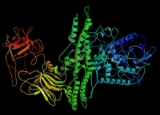
The heavy chain of the toxin is particularly important for targeting the toxin to specific types of axon terminals. The toxin must get inside the axon terminals in order to cause paralysis. Following the attachment of the toxin heavy chain to proteins on the surface of axon terminals, the toxin can be taken into neurons by endocytosis. The light chain is able to leave endocytotic vesicles and reach the cytoplasm. The light chain of the toxin has protease activity. The type A toxin proteolytically degrades the SNAP-25 protein, a type of SNARE protein. The SNAP-25 protein is required for the release of neurotransmitters from the axon endings. Botulinum toxin specifically cleaves these SNAREs, and so prevents neuro-secretory vesicles from docking/fusing with the nerve synapse plasma membrane and releasing their neurotransmitters.
Though it affects the nervous system, common nerve agent treatments (namely the injection of atropine and 2-pam-chloride) will increase mortality by enhancing botulin toxin's mechanism of toxicity. Attacks involving botulinum toxin are distinguishable from those involving nerve agent in that NBC detection equipment (such as M-8 paper or the ICAM) will not indicate a "positive" when a sample of the agent is tested. Furthermore, botulism symptoms develop relatively slowly, over several days compared to nerve agent effects, which can be instantaneous.
Documented outbreaks Bon Vivant incident
On July 2, 1971, the U.S. Food and Drug Administration (FDA) released a public warning after learning that a New York man had died and his wife had become seriously ill due to botulism after eating a can of Bon Vivant vichyssoise soup. The company began a recall of the 6,444 cans of vichyssoise soup made in the same batch as the can known to be contaminated. The FDA discovered that the company’s processing practices raised questions not only about these lots of the vichyssoise, but also about all other products packed by the company. The effectiveness check of the recall had revealed a number of swollen or otherwise suspect cans among Bon Vivant’s other products, so FDA extended the recall to include all Bon Vivant products. The FDA shut down the company’s Newark, New Jersey plant on July 7, 1971. Only five cans of Bon Vivant soup were found to be contaminated with the botulin toxin, all in the initial batch of vichyssoise recalled and part of the first 324 cans tested. The ordeal destroyed public confidence in the company’s products and the Bon Vivant name. Bon Vivant filed for bankruptcy within a month of the announcement of the recall.
Treatment of botulinum poisoning
The case fatality rate for botulinum poisoning between 1950 and 1996 was 15.5%, down from approximately 60% over the previous 50 years. Death is generally secondary to respiratory failure due to paralysis of the respiratory muscles, so treatment consists of antitoxin administration and artificial ventilation until the neurotoxins are excreted or metabolised. If initiated on time, these treatments are quite effective. Occasionally, functional recovery may take several weeks to months.
There are two primary Botulinum Antitoxins available for treatment of botulism.
- Trivalent (A,B,E) Botulinum Antitoxin is derived from equine sources utilizing whole antibodies (Fab & Fc portions). This antitoxin is available from the local health department via the CDC in the USA.
- The second antitoxin is Heptavalent (A,B,C,D,E,F,G) Botulinum Antitoxin which is derived from "despeciated" equine IgG antibodies which have had the Fc portion cleaved off leaving the F(ab')2 portions. This is a less immunogenic antitoxin that is effective against all known strains of botulism where not contraindicated. This is available from the US Army. On June 1, 2006 the US Department of Health and Human Services awarded a $363 million contract with Cangene Corporation for 200,000 doses of Heptavalent Botulinum Antitoxin over five years for delivery into the Strategic National Stockpile beginning in 2007..
See also
External links
- from the U.S. Food and Drug Administration
-
-
-
-
-
|
| |
|
|