
Home      Discussion      Topics      Dictionary      Almanac
Signup       Login
Blue supergiant

Blue supergiant

Overview

Discussion
Ask a question about 'Blue supergiant'
Start a new discussion about 'Blue supergiant'
Answer questions from other users
Full Discussion Forum
 
Unanswered Questions
Encyclopedia


Blue supergiants are supergiant
Supergiant
Supergiants are among the most massive stars. They occupy the top region of the Hertzsprung-Russell diagram. In the Yerkes spectral classification, supergiants are class Ia or Ib . They typically have bolometric absolute magnitudes between -5 and -12...

 star
Star
A star is a massive, luminous sphere of plasma held together by gravity. At the end of its lifetime, a star can also contain a proportion of degenerate matter. The nearest star to Earth is the Sun, which is the source of most of the energy on Earth...

s (luminosity class I) of spectral type O or B.

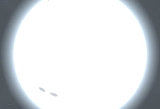
They are extremely hot and bright, with surface temperatures of 30,000-50,000 K. They typically have 10 to 50 solar masses on the Hertzsprung-Russell diagram, and can have radii up to about 25 solar radii. These rare and enigmatic stars are amongst the hottest and brightest in the known Universe
Universe
The Universe is commonly defined as the totality of everything that exists, including all matter and energy, the planets, stars, galaxies, and the contents of intergalactic space. Definitions and usage vary and similar terms include the cosmos, the world and nature...

. Blue supergiants are commonly much smaller than their red counterparts.

Because of their extreme masses they have relatively short lifespans and are mainly observed in young cosmic structures such as open clusters, the arms of spiral galaxies, and in irregular galaxies. They are rarely observed in spiral galaxy cores, elliptical galaxies, or globular clusters, most of which are believed to be composed of older stars.

The best known example is Rigel
Rigel
Rigel is the brightest star in the constellation Orion and the sixth brightest star in the sky, with visual magnitude 0.18...

, the brightest star in the constellation of Orion
Orion (constellation)
Orion, often referred to as The Hunter, is a prominent constellation located on the celestial equator and visible throughout the world. It is one of the most conspicuous, and most recognizable constellations in the night sky...

. Its mass is about 20 times that of the Sun, and its luminosity
Luminosity
Luminosity is a measurement of brightness.-In photometry and color imaging:In photometry, luminosity is sometimes incorrectly used to refer to luminance, which is the density of luminous intensity in a given direction. The SI unit for luminance is candela per square metre.The luminosity function...

 is more than 60,000 times greater. Despite their rarity and their short lives they are heavily represented among the stars visible to the naked eye; their inherent brightness trumps their scarcity.

Blue supergiants represent a slower burning phase in the death of a massive star. Due to core nuclear reactions being slightly slower, the star contracts and since very similar energy is coming from a much smaller area (photosphere) then the star's surface becomes much hotter. Red supergiant
Red supergiant
Red supergiants are supergiant stars of spectral type K or M. They are the largest stars in the universe in terms of volume, although they are not the most massive...

s can become blue supergiants if their nuclear reactions slow for whatever reason and the reverse can also occur imploding into Pulsars.

While the stellar wind from a red supergiant is dense and slow, the wind from a blue supergiant is fast but sparse. When a red supergiant becomes a blue supergiant, by contracting, the faster wind it produces impacts the already emitted slow wind and causes the outflowing material to condense into a thin shell. Almost all blue supergiants observable have this shell of material surrounding them, suggesting that they all once were red supergiants.

As the star evolves, it may swing back and forth between red supergiant (slow, dense wind) and blue supergiant (fast, sparse wind) several times and give concentric faint shells around itself. In between during the transition, the star can be yellow or white in color, becoming a yellow supergiant
Yellow supergiant
A yellow supergiant is a supergiant star of spectral type F or G. These stars usually have masses between 15 and 20 solar masses. These stars, like any other supergiant,...

 such as the star Polaris
Polaris
Polaris |Alpha]] Ursae Minoris, commonly North Star or Pole Star, also Lodestar) is the brightest star in the constellation Ursa Minor. It is very close to the north celestial pole, making it the current northern pole star....

, the North Star. Eventually the star is likely fated to go supernova
Supernova
A supernova is a stellar explosion that is more energetic than a nova. It is pronounced with the plural supernovae or supernovas. Supernovae are extremely luminous and cause a burst of radiation that often briefly outshines an entire galaxy, before fading from view over several weeks or months...

 although a very small number of stars in the 8-12 solar mass range will form supergiants but will proceed to become a very rare oxygen-neon white dwarf
White dwarf
A white dwarf, also called a degenerate dwarf, is a small star composed mostly of electron-degenerate matter. They are very dense; a white dwarf's mass is comparable to that of the Sun and its volume is comparable to that of the Earth. Its faint luminosity comes from the emission of stored...

. It is not well understood how or why these special white dwarf stars form from a star which should, by right, end up a small supernova. It is theorised, though not quantitatively, that significant mass-loss occurs during the star's supergiant phase and places it below the threshold for supernova. A blue supergiant or a red supergiant, and also sometimes, rarely, a yellow supergiant, can all go supernova as the process of a supernova is not related to the state of the star's envelope but to processes within its stellar core.

Since stars spend more time being red supergiants, we observe more red supergiants and most supernovae progenitors are red supergiants. It was assumed all supernovae were from red supergiants until Supernova 1987A forced revision as the progenitor was a B3 blue supergiant.