
All Topics  
Biopolymer


   Email Print
   Bookmark   Link


Biopolymer


Biopolymers are a class of polymer
Polymer

A polymer is a large molecule composed of repeating structural units typically connected by covalent chemical bonds. While polymer in popular usage suggests plastic, the term actually refers to a large class of natural and synthetic materials with a variety of properties....
s produced by living organisms. Starch
Starch

File:Amylose2.svgFile:Amylopektin Sessel.svgStarch or amylum is a polysaccharide carbohydrate consisting of a large number of glucose units joined together by glycosidic bonds....
, protein
Protein

Proteins are organic compounds made of amino acids arranged in a linear chain and joined together by peptide bonds between the carboxyl and amino groups of adjacent amino acid Residue ....
s and peptide
Peptide

Peptides are short polymers formed from the linking, in a defined order, of a-amino acids. The link between one amino acid residue and the next is known as an amide chemical bond or a peptide bond....
s,and DNA
DNA

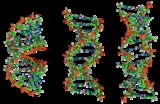
Deoxyribonucleic acid is a nucleic acid that contains the genetics instructions used in the development and functioning of all known living organisms and some viruses....
 and RNA
RNA

Ribonucleic acid is a type of molecule that consists of a long chain of nucleotide units. Each nucleotide consists of a nucleobase, a ribose sugar, and a phosphate....
 are all examples of biopolymers, in which the monomer
Monomer

A monomer is a small molecule that may become Chemistry chemical bonding to other monomers to form a polymer....
ic units, respectively, are sugar
Sugar

Sugar is a class of edible crystalline substances, mainly sucrose, lactose, and fructose. Human taste buds interpret its flavor as sweet. Sugar as a basic food carbohydrate primarily comes from sugar cane and from sugar beet, but also appears in fruit, honey, sorghum, sugar maple , and in many other sources....
s, amino acid
Amino acid

In chemistry, an amino acid is a molecule containing both amine and carboxyl functional groups. These molecules are particularly important in biochemistry, where this term refers to alpha-amino acids with the general formula H2NCHRCOOH, where R is an organic substituent....
s, and nucleotide
Nucleotide

Nucleotides are molecules that comprise the structural units of RNA and DNA. Additionally, nucleotides play central roles in metabolism. In that capacity, they serve as sources of chemical energy , participate in cell signaling , and are incorporated into important cofactors of enzymatic reactions ....
s.

jor but defining difference between polymers and biopolymers can be found in their structures. Polymers, including biopolymers, are made of repetitive units called monomer
Monomer

A monomer is a small molecule that may become Chemistry chemical bonding to other monomers to form a polymer....
s.


Discussion
Ask a question about 'Biopolymer'
Start a new discussion about 'Biopolymer'
Answer questions from other users
Full Discussion Forum


Encyclopedia


Biopolymers are a class of polymer
Polymer

A polymer is a large molecule composed of repeating structural units typically connected by covalent chemical bonds. While polymer in popular usage suggests plastic, the term actually refers to a large class of natural and synthetic materials with a variety of properties....
s produced by living organisms. Starch
Starch

File:Amylose2.svgFile:Amylopektin Sessel.svgStarch or amylum is a polysaccharide carbohydrate consisting of a large number of glucose units joined together by glycosidic bonds....
, protein
Protein

Proteins are organic compounds made of amino acids arranged in a linear chain and joined together by peptide bonds between the carboxyl and amino groups of adjacent amino acid Residue ....
s and peptide
Peptide

Peptides are short polymers formed from the linking, in a defined order, of a-amino acids. The link between one amino acid residue and the next is known as an amide chemical bond or a peptide bond....
s,and DNA
DNA

Deoxyribonucleic acid is a nucleic acid that contains the genetics instructions used in the development and functioning of all known living organisms and some viruses....
 and RNA
RNA

Ribonucleic acid is a type of molecule that consists of a long chain of nucleotide units. Each nucleotide consists of a nucleobase, a ribose sugar, and a phosphate....
 are all examples of biopolymers, in which the monomer
Monomer

A monomer is a small molecule that may become Chemistry chemical bonding to other monomers to form a polymer....
ic units, respectively, are sugar
Sugar

Sugar is a class of edible crystalline substances, mainly sucrose, lactose, and fructose. Human taste buds interpret its flavor as sweet. Sugar as a basic food carbohydrate primarily comes from sugar cane and from sugar beet, but also appears in fruit, honey, sorghum, sugar maple , and in many other sources....
s, amino acid
Amino acid

In chemistry, an amino acid is a molecule containing both amine and carboxyl functional groups. These molecules are particularly important in biochemistry, where this term refers to alpha-amino acids with the general formula H2NCHRCOOH, where R is an organic substituent....
s, and nucleotide
Nucleotide

Nucleotides are molecules that comprise the structural units of RNA and DNA. Additionally, nucleotides play central roles in metabolism. In that capacity, they serve as sources of chemical energy , participate in cell signaling , and are incorporated into important cofactors of enzymatic reactions ....
s.

Biopolymers versus polymers

A major but defining difference between polymers and biopolymers can be found in their structures. Polymers, including biopolymers, are made of repetitive units called monomer
Monomer

A monomer is a small molecule that may become Chemistry chemical bonding to other monomers to form a polymer....
s. Biopolymers often have a well defined structure, though this is not a defining characteristic (example:ligno-cellulose): The exact chemical composition and the sequence in which these units are arranged is called the primary structure
Primary structure

In biochemistry, the primary structure of a biological molecule is the exact specification of its atomic composition and the chemical bonds connecting those atoms ....
, in the case of proteins. Many biopolymers spontaneously fold into characteristic compact shapes (see also "protein folding
Protein folding

Protein folding is the physical process by which a polypeptide folds into its characteristic and functional protein structure.Each protein begins as a polypeptide, translated from a sequence of mRNA as a linear chain of amino acids....
" as well as secondary structure
Secondary structure

In biochemistry and structural biology, secondary structure is the general three-dimensional form of local segments of biopolymers such as proteins and nucleic acids ....
 and tertiary structure
Tertiary structure

In biochemistry and chemistry, the tertiary structure of a protein or any other macromolecule is its three-dimensional structure, as defined by the atomic coordinates....
), which determine their biological functions and depend in a complicated way on their primary structures. Structural biology
Structural biology

Structural biology is a branch of molecular biology, biochemistry, and biophysics concerned with the molecular structure of biological macromolecules, especially proteins and nucleic acids, how they acquire the structures they have, and how alterations in their structures affect their function....
 is the study of the structural properties of the biopolymers. In contrast most synthetic polymers have much simpler and more random (or stochastic) structures. This fact leads to a molecular mass distribution that is missing in biopolymers. In fact, as their synthesis is controlled by a template directed process in most in vivo systems all biopolymers of a type (say one specific protein) are all alike: they all contain the similar sequences and numbers of monomers and thus all have the same mass. This phenomenon is called monodispersity in contrast to the polydispersity encountered in synthetic polymers. As a result biopolymers have a polydispersity index
Polydispersity index

In organic chemistry, the polydispersity index , is a measure of the distribution of molecular mass in a given polymer sample. The PDI calculated is the weight average molecular weight divided by the number average molecular weight....
 of 1.

Conventions and nomenclature


Polypeptides

The convention for a polypeptide is to list its constituent amino acid residues as they occur from the amino terminus to the carboxylic acid terminus. The amino acid residues are always joined by peptide bond
Peptide bond

A peptide bond is a chemical bond formed between two molecules when the carboxyl group of one molecule reacts with the amine group of the other molecule, thereby releasing a molecule of water ....
s. Protein
Protein

Proteins are organic compounds made of amino acids arranged in a linear chain and joined together by peptide bonds between the carboxyl and amino groups of adjacent amino acid Residue ....
, though used colloquially to refer to any polypeptide, refers to larger or fully functional forms and can consist of several polypeptide chains as well as single chains. Proteins can also be modified to include non-peptide components, such as saccharide chains and lipid
Lipid

Lipids are broadly defined as any fat-soluble , naturally-occurring molecule, such as fats, oils, waxes, cholesterol, sterols, fat-soluble vitamins , monoglycerides, diglycerides, phospholipids, and others....
s.

Nucleic acids

The convention for a nucleic acid sequence is to list the nucleotide
Nucleotide

Nucleotides are molecules that comprise the structural units of RNA and DNA. Additionally, nucleotides play central roles in metabolism. In that capacity, they serve as sources of chemical energy , participate in cell signaling , and are incorporated into important cofactors of enzymatic reactions ....
s as they occur from the 5' end to the 3' end of the polymer chain, where 5' and 3' refer to the numbering of carbons around the ribose ring which participate in forming the phosphate diester linkages of the chain. Such a sequence is called the primary structure of the biopolymer.

Sugars

Sugar-based biopolymers are often difficult with regards to convention. Sugar polymers can be linear or branched are typically joined with glycosidic bond
Glycosidic bond

In chemistry, a glycosidic bond is a certain type of functional group that joins a carbohydrate molecule to another, which may be another carbohydrate....
s. However, the exact placement of the linkage can vary and the orientation of the linking functional groups is also important, resulting in a- and ß-glycosidic bonds with numbering definitive of the linking carbons' location in the ring. In addition, many saccharide units can undergo various chemical modification, such as amination
Amination

Amination is the process by which an amine group is introduced into an organic molecule. This can occur in a number of ways including reaction with ammonia or another amine such as an alkylation, reductive amination and the Mannich reaction....
, and can even form parts of other molecules, such as glycoprotein
Glycoprotein

Not to be confused with peptidoglycan or proteoglycan.Glycoproteins are proteins that contain oligosaccharide chains covalently attached to their Peptide side-chains....
s.

Structural characterization

There are a number of biophysical
Biophysics

Biophysics is an interdisciplinary science that employs and develops theories and methods of the physical sciences for the investigation of biology systems....
 techniques for determining sequence information. Protein sequence
Peptide sequence

Peptide sequence or amino acid sequence is the order in which amino acid residues, connected by peptide bonds, lie in the chain in peptides and proteins....
 can be determined by Edman degradation
Edman degradation

Edman degradation, developed by Pehr Edman, is a method of Protein sequencing amino acids in a peptide. In this method, the amino-terminal residue is labeled and cleaved from the peptide without disrupting the peptide bonds between other amino acid residues....
, in which the N-terminal residues are hydrolyzed from the chain one at a time, derivatized, and then identified. Mass spectrometer
Spectrometer

A spectrograph is an optical instrument used to measure properties of light over a specific portion of the electromagnetic spectrum, typically used in spectroscopic analysis to identify materials....
 techniques can also be used. Nucleic acid sequence can be determined using gel electrophoresis
Electrophoresis

Electrophoresis is the best-known electrokinetic phenomena. It was discovered by Reuss in 1807. He observed that clay particles dispersed in water migrate under influence of an applied electric field....
 and capillary electrophoresis. Lastly, mechanical properties of these biopolymers can often be measured using optical tweezers
Optical tweezers

An optical tweezer is a scientific instrument that uses a focused laser beam to provide an attractive or repulsive force , depending on the refractive index mismatch to physically hold and move microscopic dielectric objects....
 or atomic force microscopy.

Biopolymers as materials

Some biopolymers- such as polylactic acid
Polylactic acid

Polylactic acid or polylactide is a biodegradable, thermoplastic, aliphatic polyester derived from renewable resources, such as corn starch or sugarcanes ....
 (PLA), naturally occurring zein
Zein

Zein is a class of prolamine protein found in maize. It is usually manufactured as a powder from corn gluten meal.Zein is one of the most well understood plant proteins and has a variety of industrial and food uses....
, and poly-3-hydroxybutyrate can be used as plastics, replacing the need for polystyrene
Polystyrene

Polystyrene , sometimes abbreviated PS, is an Aromaticity polymer made from the aromatic monomer styrene, a liquid hydrocarbon that is commercially manufactured from petroleum by the chemical industry....
 or polyethylene
Polyethylene

Polyethylene or polythene is a thermoplastic commodity heavily used in consumer products . Over 60 million tons of the material are produced worldwide every year....
 based plastics.

Some plastics are now referred to as being 'degradable', 'oxy-degradable' or 'UV-degradable'. This means that they break down when exposed to light
Light

Light, or visible light, is electromagnetic radiation of a wavelength that is Visible spectrum to the human eye , or up to 380?750 nm. In the broader field of physics, light is sometimes used to refer to electromagnetic radiation of all wavelengths, whether visible or not....
 or air
AIR

Air is the part of Earth's atmosphere that humans breath and as such Air .Air may also refer to:...
, but these plastics are still primarily (as much as 98 per cent) oil
Oil

An oil is a chemical substance that is in a viscosity liquid state at room temperature or slightly warmer, and is both hydrophobic and lipophilic ....
-based and are not currently certified as 'biodegradable' under the European Union directive
European Union directive

A directive is a Legislation of the European Union which requires Member State of the European Union to achieve a particular result without dictating the means of achieving that result....
 on Packaging and Packaging Waste (94/62/EC). Biopolymers, however, will break down and some are suitable for domestic compost
Compost

Compost , sometimes known as brown manure, is the end result of controlled aerobic decomposition of organic matter known as composting. It is used in landscaping, horticulture and agriculture as a soil conditioner and fertilizer to add vital humus or humic acids....
ing.

Biopolymers as packaging


Biopolymers (also called renewable polymers) are produced from biomass
Biomass

Biomass, as a renewable energy source, refers to living and recently dead biological material that can be used as fuel or for industrial production....
 for use in the packaging industry. Biomass comes from crops such as sugar beet, potatoes or wheat: when used to produce biopolymers, these are classified as non food crops
Non Food Crops

The term non food crop applies to the use of agricultural crop for uses other than human or animal consumption .The range of crops with non-food uses is broad....
. These can be converted in the following pathways:

Sugar beet > Glyconic acid > Polyglonic acid

Starch > (fermentation) > Lactic acid
Lactic acid

Lactic acid , also known as milk acid, is a chemical compound that plays a role in several biochemistry processes. It was first isolated in 1780 by a Swedish chemist, Carl Wilhelm Scheele, and is a carboxylic acid with a chemical formula of C3H6O3....
 > Polylactic acid
Polylactic acid

Polylactic acid or polylactide is a biodegradable, thermoplastic, aliphatic polyester derived from renewable resources, such as corn starch or sugarcanes ....
 (PLA)

Biomass
Biomass

Biomass, as a renewable energy source, refers to living and recently dead biological material that can be used as fuel or for industrial production....
 > (fermentation) > Bioethanol > Ethene > Polyethylene
Polyethylene

Polyethylene or polythene is a thermoplastic commodity heavily used in consumer products . Over 60 million tons of the material are produced worldwide every year....


Many types of packaging can be made from biopolymers: food trays, blown starch pellets for shipping fragile goods, thin films for wrapping.

Biopolymers are renewable, sustainable, and can be carbon neutral

Biopolymers are renewable, because they are made from plant materials which can be grown year on year indefinitely. These plant materials come from agricultural non food crops
Non Food Crops

The term non food crop applies to the use of agricultural crop for uses other than human or animal consumption .The range of crops with non-food uses is broad....
. Therefore, the use of biopolymers would create a sustainable industry. In contrast, the feedstocks for polymers derived from petrochemicals will eventually run out. In addition, biopolymers have the potential to cut carbon emissions and reduce CO2 quantities in the atmosphere: this is because the CO2 released when they degrade can be reabsorbed by crops grown to replace them: this makes them close to carbon neutral
Carbon neutral

Being carbon neutral, or having a net zero carbon footprint, refers to achieving net zero carbon emissions by balancing a measured amount of carbon released with an equivalent amount sequestered or offset.The carbon neutral concept may be extended to include other greenhouse gases measured in terms of their carbon dioxide equival...
.

Biopolymers are biodegradable, and some are also compostable

Some biopolymers are biodegradable: they are broken down into CO2 and water by microorganisms. In addition, some of these biodegradable biopolymers are compostable: they can be put into an industrial composting process and will break down by 90% within 6 months. Biopolymers that do this can be marked with a 'compostable' symbol, under European Standard EN 13432 (2000). Packaging marked with this symbol can be put into industrial composting processes and will break down within 6 months (or less). An example of a compostable polymer is PLA film under 20µm thick: films which are thicker than that do not qualify as compostable, even though they are biodegradable. A home composting logo may soon be established: this will enable consumers to dispose of packaging directly onto their own compost heap. The standards for such a home composting logo have not yet been developed.

See also

  • Biomaterial
    Biomaterial

    The development of biomaterials is not a new area of science, having existed for around half a century. The study of biomaterials is called biomaterial science....
    s
  • Bioplastics
  • Condensation polymer
    Condensation polymer

    Condensation polymers are any class of polymers formed through a condensation reaction, releasing a small molecule by-product such as water or methanol, as opposed to addition polymers which involve the reaction of unsaturated monomers....
    s
  • DNA sequence
    DNA sequence

    A DNA sequence or genetic sequence is a succession of letters representing the primary structure of a real or hypothetical DNA molecule or strand, with the capacity to carry information as described by the central dogma of molecular biology....
  • Melanin
    Melanin

    Melanin is a class of compounds found in the plant, animal, and protista kingdom , where it serves predominantly as a pigment. The class of pigments are derivatives of the amino acid tyrosine....
  • Non food crops
    Non Food Crops

    The term non food crop applies to the use of agricultural crop for uses other than human or animal consumption .The range of crops with non-food uses is broad....
  • Phosphoramidite
    Phosphoramidite

    Nucleoside phosphoramidites are used to oligonucleotide synthesis short nucleic acid chains.The chemical process allows several modifications, such as linker arms or using Nucleic acid analogues, such as LNA or morpholino or 2' group modified or abasic, non-canon bases or bases with a fluorescent group, linker arm to attach a fluorescent...
  • Small molecule
    Small molecule

    In pharmacology, a small molecule is a small organic compound that is biologically active but is not a polymer. This term is very loosely used and it may or may not include monomers or metabolites, in fact it is generally used to denote molecules that are not protein which play a endogenous or exogenous biological role, such as cell signalli...
    s
  • Sequencing
    Sequencing

    In genetics and biochemistry, sequencing means to determine the primary structure of an unbranched biopolymer. Sequencing results in a symbolic linear depiction known as a sequence which succinctly summarizes much of the atomic-level structure of the sequenced molecule....
  • Worm-like chain
    Worm-like chain

    The worm-like chain model in polymer physics is used to describe the behavior of semi-flexible polymers; it is sometimes referred to as the Kratky-Porod worm-like chain model....


External links