
All Topics  
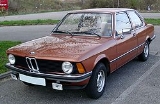
BMW E21

 
BMW E21

   Email Print
   Bookmark   Link


BMW E21


BMW E21 is the platform designation for the first BMW 3 Series
BMW 3 Series

The BMW 3 Series is an entry-level luxury car/compact executive car manufactured by the German automaker BMW since May 1975. Successor to the BMW New Class, it has been produced in five different generations and in no less than five different car body styles....
 compact executive car
Compact executive car

Compact executive car is a mainly United Kingdom car classification term applied to premium cars smaller than executive cars. In American English, they are usually referred to as Entry-level luxury car....
, produced by the German automaker BMW
BMW

, is an independent German automotive industry founded in 1916. It also produces BMW Motorrad, is the owner of the MINI brand and is the parent company of Rolls-Royce Motor Cars....
 from 1975 to 1983. This series was the immediate successor to the BMW 2002 and was superseded by the BMW E30 platform.

r the direction of its 51% percent shareholder, Herbert Quandt
Herbert Quandt

Herbert Werner Quandt , was a Germany industrialist who is regarded as having saved BMW when it was at the point of bankruptcy and made huge profit in doing so....
, BMW decided upon a replacement for their aging 2002. Without it, there was the distinct possibility of BMW leaving its core mission of building driver oriented cars, and alienating an existing customer base long enamored with the company's 2002 model.

Paul Bracq
Paul Bracq

Paul Bracq is one of the world's leading automotive designers as well as one of the world's leading automotive artists. Among Bracq's designs is a vehicle considered to be among the finest ever built, the Mercedes-Benz 600....
, Director of Design at BMW from 1970–1974, is credited with setting the design direction of the E21 3 Series, while Wilhelm Hofmeister
Hofmeister kink

The Hofmeister kink is an automobile design feature seen on modern BMWs. It is a low forward bend in the C-pillar of the car, which is the piece of metal that separates the rear side windows from the rear glass....
 is credited with first drawing the small forward wedge at the base of the C-pillar, a strong design trait of the first 3 Series.


Discussion
Ask a question about 'BMW E21'
Start a new discussion about 'BMW E21'
Answer questions from other users
Full Discussion Forum


Encyclopedia


BMW E21 is the platform designation for the first BMW 3 Series
BMW 3 Series

The BMW 3 Series is an entry-level luxury car/compact executive car manufactured by the German automaker BMW since May 1975. Successor to the BMW New Class, it has been produced in five different generations and in no less than five different car body styles....
 compact executive car
Compact executive car

Compact executive car is a mainly United Kingdom car classification term applied to premium cars smaller than executive cars. In American English, they are usually referred to as Entry-level luxury car....
, produced by the German automaker BMW
BMW

, is an independent German automotive industry founded in 1916. It also produces BMW Motorrad, is the owner of the MINI brand and is the parent company of Rolls-Royce Motor Cars....
 from 1975 to 1983. This series was the immediate successor to the BMW 2002 and was superseded by the BMW E30 platform.

Development and early history

Under the direction of its 51% percent shareholder, Herbert Quandt
Herbert Quandt

Herbert Werner Quandt , was a Germany industrialist who is regarded as having saved BMW when it was at the point of bankruptcy and made huge profit in doing so....
, BMW decided upon a replacement for their aging 2002. Without it, there was the distinct possibility of BMW leaving its core mission of building driver oriented cars, and alienating an existing customer base long enamored with the company's 2002 model.

Paul Bracq
Paul Bracq

Paul Bracq is one of the world's leading automotive designers as well as one of the world's leading automotive artists. Among Bracq's designs is a vehicle considered to be among the finest ever built, the Mercedes-Benz 600....
, Director of Design at BMW from 1970–1974, is credited with setting the design direction of the E21 3 Series, while Wilhelm Hofmeister
Hofmeister kink

The Hofmeister kink is an automobile design feature seen on modern BMWs. It is a low forward bend in the C-pillar of the car, which is the piece of metal that separates the rear side windows from the rear glass....
 is credited with first drawing the small forward wedge at the base of the C-pillar, a strong design trait of the first 3 Series. In 1975 Claus Luthe
Claus Luthe

Claus Luthe, was an important German car designer, responsible for the NSU Ro 80 as well as a number of Audi and BMW models. He was one of the first designers to embrace a digital approach to design, passing the designs from the design department to engineering in electronic format....
 replaced Bracq and became the owner of the project.

In July 1975, BMW’s Board of Management first presented this new model series in the Munich Olympic Stadium for public appraisal. The frontal view of the new car was dominated by the BMW trademark kidney grille standing out clearly from the radiator cover. The styling of the new car bore a resemblance to the BMW E12
BMW E12

The BMW E12 is an automobile platform that was the basis for the 1972 through 1981 BMW 5 Series mid-size car, produced by the German automaker BMW....
 5 Series.

The wedge shape of the two-door model was distinctive, extending all the way to the unusually high rear end. In response to criticism of the tail design, a black plastic trim panel between the tail lights was added. The car's styling was otherwise well received.

Measuring 4355 millimeters (171.5 inches) in length, 1610 millimeters (63.4 inches) in width, and 1380 millimeters (54.3 inches) in height, the E21 Series continued the tradition of the New Class
BMW New Class

The BMW New Class was a line of compact sedan s produced by the German automaker BMW and launched with the 1962 1500. The Straight-4 BMW M10 engine used in these cars grew over the years from 1.5 to 1.6, 1.8, and 2.0 L with the names changing to reflect this....
. With the wheelbase measuring 2563 millimeters (100.9 in), there was little body overhang in the rear wheel drive design. The track measured 1364 millimeters (53.7 in) at the front, and 1377 millimeters (54.2 in) at the rear.

The suspension incorporated rack and pinion
Rack and pinion

A rack and pinion is a pair of gears which convert rotational motion into linear motion. The circular pinion engages teeth on a flat bar - the rack....
 steering and McPherson strut suspension at the front, and semi-trailing arm type independent suspension at the rear. The power assisted brakes were discs on the front wheels, while the rear wheels had drum brakes.

Initially, a Getrag
Getrag

Getrag is a leading manufacturer of automobile manual transmissions. The company was founded on 1 May, 1935 in Ludwigsburg, Germany by Hermann Hagenmeyer as the Getriebe- und Zahnradfabrik Hermann Hagenmeyer AG ....
 four-speed manual was the standard transmission fitment. Five-speed Getrag gearboxes were fitted as standard in the 323i and others in later years, but were available at the car's release as an option, with gear ratio sets favoring either performance or economy. Alternatively, purchasers could opt for the ZF 3 HP-22 three-speed automatic transmission.

The cockpit design of the E21 marked the introduction of a new design concept, with the center console angled towards the driver. This feature has become part of BMW’s interior design philosophy for many years. As a sign of passive safety, all edges and control elements within the interior were rounded off and padded.

At the E21's release, three models were available: with 316 (1.6 litre), 318 (1.8 litre) and 320 (2.0 litre) versions of the BMW M10
BMW M10

The BMW M10/M12 was an Straight-4 piston engine produced from 1961 to 1987. Displacement ranged from 1499 cm3 to 1990 cm3....
 four cylinder engine. To draw clear visual distinction within the new model series, the 320 models came with dual headlights, while the 316 and 318 had single round headlights.

At the end of 1975, the 320i was introduced; the engine was fitted with Bosch K Jetronic
Jetronic

Jetronic is a trade name for a type of fuel injection technology marketed by Robert Bosch GmbH from the 1960s forward. Bosch licensed the concept to many automobile manufacturers....
 fuel injection, delivering on premium grade gasoline.

At introduction in the German market, the entry-level 316 retailed at DM 13 600, the 318 sold for DM 14 420, and the two 2.0 L models went for DM 15 330 and DM 17 400 respectively.

Ongoing evolution

In the mid 1970s, BMW had invested DM 110 million in a new engine series, designated as the M20
BMW M20

The M20 is an inline-6 piston engine of BMW.The 12-valve, belt driven SOHC design was introduced in the 1977 BMW 520/6 and 320/6. With displacements ranging from 2.0 to 2.7 liters, it was the "little brother" to the larger BMW M30 engine....
.

At the 1977 Frankfurt Motor Show, BMW unveiled its new variants of the E21, featuring the new six-cylinder M20
BMW M20

The M20 is an inline-6 piston engine of BMW.The 12-valve, belt driven SOHC design was introduced in the 1977 BMW 520/6 and 320/6. With displacements ranging from 2.0 to 2.7 liters, it was the "little brother" to the larger BMW M30 engine....
 engines. The four cylinder 320 model was replaced with the 320/6, featuring a two litre version of the M20 engine. The 323i model was introduced, featuring 2.3 litres and , empowering this car with a top speed of approximately 190 km/h (118 mph). The braking system was also upgraded, with the 323i featuring disc brakes on all wheels.

In the meantime however, a performance gap had developed between the 318 and the new 320/6 delivering . For the 1979/80 model year, the four-cylinder models were upgraded: the 1.8 litre power unit was revised and entered the market as a carburetor engine in the 316, while addition of Bosch K Jetronic fuel injection to the 1.8 litre engine raised the 318i to .

Since there was now also room for a new entry-level model, the 315 powered by a 1.6 litre M10 engine made its appearance in 1981.

Sales

A European study conducted by BMW in 1980 showed that with a share of 31 percent, the 320i was the best-selling 3 Series, followed by the 316 accounting for 27 percent, the 318 with a share of 24 percent, and the 323i with a share in sales of 18 percent. The purchasing motives were the car’s performance in 77 percent of all cases, its handling for 65 percent of the customers, and the special looks of a sporting saloon in 64 per cent of the reasons quoted for buying the car. Most E21 owners were satisfied with their purchase, as almost two-thirds of those surveyed stated that their next car would be another BMW.

Another inquiry showed that drivers of the E21 Series were particularly active motorists by European standards, with more than 60 per cent of those surveyed covering more than 17 000 km (10 500 miles) per year.

In May 1981, six years after the start of production, the millionth 3 Series came off the production line. Worldwide sales of the E21 topped 1.36 million at the end of E21 production in 1982, although the E21 version was not particularly popular in the lucrative United States
United States

The United States of America is a Federal government constitutional republic comprising U.S. state and a federal district. The country is situated mostly in central North America, where its Contiguous United States and Washington, D.C., the Capital districts and territories, lie between the Pacific Ocean and Atlantic Oceans, Borders of the U...
 market.

It was a reasonably popular car in Britain
United Kingdom

The United Kingdom of Great Britain and Northern Ireland, commonly known as the United Kingdom , the UK or Britain,is a sovereign state located off the northwestern coast of continental Europe....
, and helped increase the popularity of "compact executive" models. By the end of its production life in 1983, the E21 was competing fiercely in a market with the likes of the Audi 80
Audi 80

The Audi 80 is a compact executive car produced by the Germany automotive industry Audi, from 1966 to 1996. It initially shared its platform with the Volkswagen Passat, and was available as a sedan and an Avant ....
 and the new Mercedes-Benz
Mercedes-Benz

Mercedes-Benz is a German manufacturer of automobiles, buses, coach es, and trucks. It is currently a division of the parent company, Daimler AG , after previously being owned by Daimler-Benz....
 190E.

Motorsports

The Group 5
Group 5 (racing)

Group 5 was an FIA motor racing classification which was applied to four distinct categories during the years 1966 to 1982. Initially Group 5 regulations defined a Special Touring Car category and from 1970 to 1971 the classification was applied to limited production Sports Cars restricted to 5 litre engine capacity....
 version of the BMW 320, introduced in 1977 as a replacement to the already obsolete BMW 3.0 CSL
BMW E9

The BMW New Six CS is the two-door sport coup? in BMW's BMW New Six line, produced from 1968 to 1975 alongside the four-door BMW E3 sedan.It featured BMW M30 straight-6 engines of 2.5, 2.8 and 3.0 litres in road cars, with larger units used in racing....
 and became nicknamed as the Flying Brick in reference to the blocky bodyshape, was powered by a Formula 2 engine that was tuned to by BMW Motorsport
BMW Motorsport

BMW Motorsport is the division of BMW responsible for motorsport-related activities, including works-run competition programmes in touring car racing, sportscar racing and Formula One....
.

Other than the main factory team and Team McLaren who ran the IMSA
International Motor Sports Association

The International Motor Sports Association is an United States auto racing sanctioning body based in Braselton, Georgia. It was started by John Bishop, a former employee of SCCA , and his wife Peggy in 1969 with help from William France Sr....
 operation in the US
United States

The United States of America is a Federal government constitutional republic comprising U.S. state and a federal district. The country is situated mostly in central North America, where its Contiguous United States and Washington, D.C., the Capital districts and territories, lie between the Pacific Ocean and Atlantic Oceans, Borders of the U...
, the car was notably used by the BMW Junior Team, who had the likes of Manfred Winkelhock
Manfred Winkelhock

Manfred Winkelhock was a Germany racing driver. Born in Waiblingen, he was the brother of Joachim Winkelhock and father of Markus Winkelhock, both also racing drivers....
, Eddie Cheever
Eddie Cheever

Edward "Eddie" McKay Cheever, Jr. is an United States racing driver who raced for almost thirty years in Formula One, Sports car racing, CART and the Indy Racing League....
, and Marc Surer
Marc Surer

Marc Surer is a former racing driver from Switzerland. He participated in 88 Formula One World Championship Grands Prix, debuting on 9 September 1979....
 as drivers. They would help to win the 1977 Deutsche Rennsport Meisterschaft
Deutsche Rennsport Meisterschaft

Deutsche Rennsport Meisterschaft or simply DRM as it was known as, was a touring cars and Sportscar racing series. It is regarded as a predecessor of the current Deutsche Tourenwagen Masters as Germany's top national series....
 and would later go into Formula 1.

The car was also used to win the Macau
Macau Grand Prix

The Macau Grand Prix is a motor-racing event held annually in November in the streets of Macau. It is known for being the only Road racing in which both car and motorcycle races are held....
 Guia Race
Guia Race

The Macau Guia is an international touring car race run held during the Macau Grand Prix weekend. Since 2005, it has become the final round of the World Touring Car Championship, also known as the WTCC....
 in 1981 and 1982.

Summary: model range

  • 315: The most economical model, introduced to the market in reaction to the second "oil crisis" in late 1979, with a 4-cylinder
    Straight-4

    The straight-4 or inline-4 engine is a four cylinder internal combustion engine with all four cylinder mounted in a straight line along the crankcase....
     M10 1.6 L engine and a single downdraft carburetor
    Carburetor

    A carburetor or carburettor , is a device that blends Earth's atmosphere and fuel for an internal combustion engine. It was invented by Karl Benz before 1885 and patented in 1886....
    , . More spartan than the other E21 models, it was the last E21 to be built and shared production with the E30.
  • 316: The original 3-series base model with M10 1.8 L engine, .
  • 318: Slightly more powerful version with 1.8 L engine.
  • 318i: An upgraded version of the 316 featuring the M10 1.8 L engine fitted with a Bosch fuel injection
    Fuel injection

    Fuel injection is a system for mixing fuel with air in an internal combustion engine. It has become the primary fuel delivery system used in gasoline Automobile engines, having almost completely replaced carburetors in the late 1980s....
     system, introduced in 1979 as successor to the carburetted 318.
  • 320: Featured an M10 four-cylinder engine with a Solex 2-barrel downdraft carburetor, .
  • 320i: Upgraded version of 320 with an M10 engine; Bosch K Jetronic fuel injection, .
  • 320/6: Featured the new BMW 6 cylinder engine, the M20 2.0 L, and a Solex 4-barrel downdraft carburetor; replaced the 320/4 from 1979 on.
  • 323i: Featuring the M20 and Bosch K Jetronic fuel injection, the 323i was the top model of the line, , with 4 disk power assisted brakes, power steering as an option, 5 speed economic gearbox after 1980, 5 speed dogleg sport gearbox as an option and limited slip differential (25%) also as an option.


Variants

  • USA market variants featured different headlights to the European and other export versions.
  • The 320i was available in the United States market and was remarkably different from the European models. Department of Transportation
    United States Department of Transportation

    The United States Department of Transportation is a federal United States Cabinet department of the United States government of the United States concerned with transportation....
     (DOT) safety regulations required larger bumpers, different headlight sets, and DOT marker lamps on the sides.
  • Adapting the engines to meet US exhaust emissions regulations resulted in smaller engine in the 320i (downgraded to 1.8 L) and less horsepower output compared to the European market versions.
  • Companies such as Hartge
    Hartge

    Hartge is a third party car tuning company specializing in BMW, BMW MINI and Range Rover cars. Founded in 1971 in Merzig-Wadern, Germany, the company moved to its current location in Beckingen in 1974....
    , Alpina
    Alpina

    Alpina Burkard Bovensiepen GmbH is an automobile manufacturing company based in Buchloe, in the Ostallg?u district of Bavaria, Germany selling their own cars, based on BMW cars....
     and AC Schnitzer
    AC Schnitzer

    AC Schnitzer Automobile Technik is a third party tuning company based in Aachen, Germany specializing in BMW and BMW MINI cars, as well as BMW motorcycles....
     offered aftermarket modifications for the E21. For example, Alpina offered the B6 2.8. Introduced at the IAA in 1978, it was produced from March 1978 until January 1983. Only 533 units were built. The B6 2.8 transplanted the 2.8 L M30
    BMW M30

    The BMW M30 is an inline-6 cylinder engine built by BMW and was used in many different models since 1968. It was originally developed in the late 1960s as an extended 2.5 liter version of the robust inline four cylinder BMW M10 first used in the 'Neue Klasse' BMW 1500, with which it shares a number of design features, including a 30-degree c...
     engine from the 528i model into the 323i. Alpina fitted forged Mahle
    Mahle

    Mahle may refer to:*Ernst Mahle, a Brazilian composer and orchestra conductor*Mahle GmbH, a large German industrial company automotive supplier...
     pistons, modified the combustion chambers, and used a Zenith
    Zenith Carburetters

    Zenith Carburetters was a British company making carburetor. In 1955 they joined with their major pre-war rival Solex Carburettors and over time the Zenith brand name fell into disuse....
    -Pierburg-DL fuel injection
    Fuel injection

    Fuel injection is a system for mixing fuel with air in an internal combustion engine. It has become the primary fuel delivery system used in gasoline Automobile engines, having almost completely replaced carburetors in the late 1980s....
     system. These modifications raised engine output from to approximately .
  • A cabriolet conversion was offered by Karosserie Baur
    Karosserie Baur

    Baur is a Karosserie or coachbuilder in Stuttgart, Germany, which has been building BMW convertibles since the 30's. Currently, they are the body and assembly works for IVM Automotive, a member the Ed Group....
     GmbH, based on regular E21 models. The cabriolet conversion was composed of a targa
    Targa

    Targa is an old word for targe, shield. Targa or TARGA may also refer to:Car rallies*Targa Florio, Sicily, Italy*Targa New Zealand*Targa Newfoundland, Canada...
     roof and an independent rear soft top. Production of the Baur TopCabriolet began in 1978, and were sold via the BMW dealership network. All TopCabriolets included the BMW warranty. A total of 4,595 vehicles were manufactured before production ended in 1981.


Further reading


External links