
Home      Discussion      Topics      Dictionary      Almanac
Signup       Login
Atterberg Limits

Atterberg Limits

Overview
The Atterberg limits are a basic measure of the nature of a fine-grained soil
Soil
Soil is a natural body consisting of layers of mineral constituents of variable thicknesses, which differ from the parent materials in their morphological, physical, chemical, and mineralogical characteristics. It is composed of particles of broken rock that have been altered by chemical and...

. Depending on the water content
Water content
Water content or moisture content is the quantity of water contained in a material, such as soil , rock, ceramics, or wood on a volumetric or gravimetric basis...

 of the soil, it may appear in four states: solid, semi-solid, plastic and liquid. In each state the consistency and behavior of a soil is different and thus so are its engineering properties. Thus, the boundary between each state can be defined based on a change in the soil's behavior. The Atterberg limits can be used to distinguish between silt
Silt
Silt is soil or rock derived granular material of a grain size between sand and clay. Silt may occur as a soil or as suspended sediment in a surface water body...

 and clay
Clay
Clay is a naturally occurring material composed primarily of fine-grained minerals, which show plasticity through a variable range of water content, and which can be hardened when dried and/or fired...

, and it can distinguish between different types of silts and clays.
Discussion
Ask a question about 'Atterberg Limits'
Start a new discussion about 'Atterberg Limits'
Answer questions from other users
Full Discussion Forum
 
Encyclopedia
The Atterberg limits are a basic measure of the nature of a fine-grained soil
Soil
Soil is a natural body consisting of layers of mineral constituents of variable thicknesses, which differ from the parent materials in their morphological, physical, chemical, and mineralogical characteristics. It is composed of particles of broken rock that have been altered by chemical and...

. Depending on the water content
Water content
Water content or moisture content is the quantity of water contained in a material, such as soil , rock, ceramics, or wood on a volumetric or gravimetric basis...

 of the soil, it may appear in four states: solid, semi-solid, plastic and liquid. In each state the consistency and behavior of a soil is different and thus so are its engineering properties. Thus, the boundary between each state can be defined based on a change in the soil's behavior. The Atterberg limits can be used to distinguish between silt
Silt
Silt is soil or rock derived granular material of a grain size between sand and clay. Silt may occur as a soil or as suspended sediment in a surface water body...

 and clay
Clay
Clay is a naturally occurring material composed primarily of fine-grained minerals, which show plasticity through a variable range of water content, and which can be hardened when dried and/or fired...

, and it can distinguish between different types of silts and clays. These limits were created by Albert Atterberg
Albert Atterberg
Albert Mauritz Atterberg was a Swedish chemist and agricultural scientist who created the Atterberg limits that are commonly referred to by geotechnical engineers and engineering geologists today.Atterberg received his Ph.D...

, a Swedish
Sweden
Sweden , officially the Kingdom of Sweden , is a Nordic country on the Scandinavian Peninsula in Northern Europe...

 chemist. They were later refined by Arthur Casagrande
Arthur Casagrande
Arthur Casagrande was an Austrian-born American civil engineer who made important contributions to the fields of engineering geology and geotechnical engineering during its infancy...

.

Shrinkage limit


The shrinkage limit (SL) is the water content where further loss of moisture will not result in any more volume reduction. The test to determine the shrinkage limit is ASTM International
ASTM International
ASTM International , originally known as the American Society for Testing and Materials, is an international standards organization that develops and publishes voluntary consensus technical standards for a wide range of materials, products, systems, and services...

 D4943. The shrinkage limit is much less commonly used than the liquid limit and the plastic limit.

Plastic limit


The plastic limit (PL) is the water content where soil starts to exhibit plastic behavior. A thread of soil is at its plastic limit when it is rolled to a diameter of 3 mm or begins to crumble. To improve consistency, a 3 mm diameter rod is often used to gauge the thickness of the thread when conducting the test. (AKA Soil Snake Test)

Liquid limit


The liquid limit (LL) is the water content where a soil changes from plastic to liquid behavior. The original liquid limit test of Atterberg's involved mixing a pat of clay in a little round-bottomed porcelain bowl of 10-12cm diameter. A groove was cut through the pat of clay with a spatula, and the bowl was then struck many times against the palm of one hand.

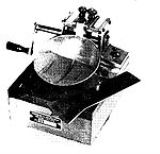
Casagrande subsequently standardized the apparatus and the procedures to make the measurement more repeatable. Soil is placed into the metal cup portion of the device and a groove is made down its center with a standardized tool. The cup is repeatedly dropped 10mm onto a hard rubber base during which the groove closes up gradually as a result of the impact. The number of blows for the groove to close for 13 mm (½ inch) is recorded. The moisture content at which it takes 25 drops of the cup to cause the groove to close is defined as the liquid limit.

Another method for measuring the liquid limit is the Cone Penetrometer
Cone Penetrometer
The Cone Penetrometer apparatus is an alternative method to the Casagrande Device in measuring the Liquid Limit of a soil sample . It is usually considered to be a more scientific approach because it is based less upon human judgment. In this method, a sample is placed in a 55 mm diameter, 40 mm...

test. It is based on the measurement of penetration into the soil of a standardized cone of specific mass. Despite the universal prevalence of the Casagrande method, the cone penetrometer is often considered to be a more consistent alternative because it minimizes the possibility of human variations when carrying out the test.

Derived limits


The values of these limits are used in a number of ways. There is also a close relationship between the limits and properties of a soil such as compressibility, permeability, and strength. This is thought to be very useful because as limit determination is relatively simple, it is more difficult to determine these other properties. Thus the Atterberg limits are not only used to identify the soil's classification, but it also allows for the use of empirical correlations for some other engineering properties.

Plasticity index


The plasticity index (PI) is a measure of the plasticity of a soil. The plasticity index is the size of the range of water contents where the soil exhibits plastic properties. The PI is the difference between the liquid limit and the plastic limit (PI = LL-PL). Soils with a high PI tend to be clay, those with a lower PI tend to be silt, and those with a PI of 0 tend to have little or no silt or clay.

Liquidity index


The liquidity index (LI) is used for scaling the natural water content of a soil sample to the limits. It can be calculated as a ratio of difference between natural water content, plastic limit, and plasticity index: LI=(W-PL)/(LL-PL) where W is the natural water content.

Activity


The activity (A) of a soil is the PI divided by the percent of clay-sized particles(less than 0.075mm size) present. Different types of clays have different specific surface areas which controls how much wetting is required to move a soil from one phase to another such as across the liquid limit or the plastic limit. From the activity one can predict the dominant clay type present in a soil sample. High activity signifies large volume change when wetted and large shrinkage when dried. Soil with high activity are very reactive chemically.

Normally, activity of clay is between 0.75 and 1.25 and in this range, clay is called normal. It is assumed that the plasticity index is approximately equal to the clay fraction (A = 1). When A is less than 0.75, it is considered inactive. When it is greater than 1.25, it is considered active.