
All Topics  
Ansel Adams

 
Ansel Adams

   Email Print
   Bookmark   Link


Ansel Adams


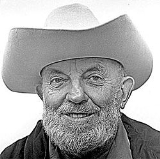
Ansel Easton Adams (February 20, 1902 – April 22, 1984) was an American photographer
Photographer

A photographer is a person who takes a photograph using a camera. A professional photographer uses photography to make a living whilst an amateur photographer does not earn a living and typically takes photographs for pleasure and to record an event, place or person for future enjoyment....
 and environmentalist, best known for his black-and-white
Black-and-white

Black-and-white is a number of monochrome forms in visual arts. Most forms of visual technology start out in black and white, then slowly evolve into color as technology progresses....
 photographs of the American West and primarily Yosemite National Park
Yosemite National Park

Yosemite National Park is a National Park Service located in the eastern portions of Tuolumne County, California, Mariposa County, California and Madera County, California counties in east central California, United States....
.

For his images, he developed the zone system
Zone system

The Zone System is a photography technique for determining optimal photographic film exposure and Photographic processing, formulated by Ansel Adams and Fred Archer in 1941....
, a way to determine proper exposure and adjust the contrast of the final print. The resulting clarity and depth characterized his photographs. Although his large-format
Large format

Large format describes large photographic films, large cameras, view cameras and processes that use a film or digital sensor, generally 4 x 5 inches or larger....
 view camera
View camera

The view camera is a type of camera first developed in the era of the Daguerreotype and still in use today, though with many refinements. It comprises a flexible bellows which forms a light-tight seal between two adjustable standards, one of which holds a Photographic lens, and the other a viewfinder or a photographic film holder....
s were difficult to use because of their size, weight, setup time, and film cost, their high resolution
Image resolution

Image resolution describes the detail an holds. The term applies equally to digital images, film images, and other types of images. Higher resolution means more image detail....
 ensured sharpness in his images.

He founded the Group f/64
Group f/64

Group f/64 was a group of seven 20th century San Francisco List of photographers who shared a common photographic style characterized by sharp-focused and carefully framed images seen through a particularly Western viewpoint....
 along with fellow photographers Edward Weston
Edward Weston

Edward Henry Weston was an United States photography, and co-founder of Group f/64. Most of his work was done using an 8 by 10 inch view camera....
 and Imogen Cunningham
Imogen Cunningham

Imogen Cunningham was an United States photographer known for her photography of botanicals, nudes and industry.Cunningham was born in Portland, Oregon....
, which in turn created the Museum of Modern Art
Museum of Modern Art

The Museum of Modern Art is an art museum located in Midtown Manhattan in New York City, USA, on 53rd Street, between Fifth and Sixth Avenues....
's department of photography.


Discussion
Ask a question about 'Ansel Adams'
Start a new discussion about 'Ansel Adams'
Answer questions from other users
Full Discussion Forum


Quotations


For me the future of the image is going to be in electronic form ... You will see perfectly beautiful images on an electronic screen. And I'd say that would be very handsome. They would be almost as close as the best reproductions.

Interview with Paul Hill (1975)

A great photograph is one that fully expresses what one feels, in the deepest sense, about what is being photographed, and is, thereby, a true manifestation of what one feels about life in its entirety..

Ansel Adams: America exhibition in the Bellagio Hotel, Las Vegas


Encyclopedia


Ansel Easton Adams (February 20, 1902 – April 22, 1984) was an American photographer
Photographer

A photographer is a person who takes a photograph using a camera. A professional photographer uses photography to make a living whilst an amateur photographer does not earn a living and typically takes photographs for pleasure and to record an event, place or person for future enjoyment....
 and environmentalist, best known for his black-and-white
Black-and-white

Black-and-white is a number of monochrome forms in visual arts. Most forms of visual technology start out in black and white, then slowly evolve into color as technology progresses....
 photographs of the American West and primarily Yosemite National Park
Yosemite National Park

Yosemite National Park is a National Park Service located in the eastern portions of Tuolumne County, California, Mariposa County, California and Madera County, California counties in east central California, United States....
.

For his images, he developed the zone system
Zone system

The Zone System is a photography technique for determining optimal photographic film exposure and Photographic processing, formulated by Ansel Adams and Fred Archer in 1941....
, a way to determine proper exposure and adjust the contrast of the final print. The resulting clarity and depth characterized his photographs. Although his large-format
Large format

Large format describes large photographic films, large cameras, view cameras and processes that use a film or digital sensor, generally 4 x 5 inches or larger....
 view camera
View camera

The view camera is a type of camera first developed in the era of the Daguerreotype and still in use today, though with many refinements. It comprises a flexible bellows which forms a light-tight seal between two adjustable standards, one of which holds a Photographic lens, and the other a viewfinder or a photographic film holder....
s were difficult to use because of their size, weight, setup time, and film cost, their high resolution
Image resolution

Image resolution describes the detail an holds. The term applies equally to digital images, film images, and other types of images. Higher resolution means more image detail....
 ensured sharpness in his images.

He founded the Group f/64
Group f/64

Group f/64 was a group of seven 20th century San Francisco List of photographers who shared a common photographic style characterized by sharp-focused and carefully framed images seen through a particularly Western viewpoint....
 along with fellow photographers Edward Weston
Edward Weston

Edward Henry Weston was an United States photography, and co-founder of Group f/64. Most of his work was done using an 8 by 10 inch view camera....
 and Imogen Cunningham
Imogen Cunningham

Imogen Cunningham was an United States photographer known for her photography of botanicals, nudes and industry.Cunningham was born in Portland, Oregon....
, which in turn created the Museum of Modern Art
Museum of Modern Art

The Museum of Modern Art is an art museum located in Midtown Manhattan in New York City, USA, on 53rd Street, between Fifth and Sixth Avenues....
's department of photography. Adams' timeless and visually stunning photographs are reproduced on calendars, posters, and in books, making his photographs widely recognizable.

Life


Childhood

Adams was born in the Western Addition of San Francisco, California
Western Addition, San Francisco, California

The Western Addition is a neighborhood in San Francisco, California, California, sandwiched between Van Ness Avenue , Golden Gate Park, the Haight-Ashbury and Lower Haight neighborhoods, and Pacific Heights, San Francisco, California....
 to distinctly upper-class parents Charles and Olive Adams. He was an only child and was named after his uncle Ansel Easton. The Adams family came from New England, having migrated from the north of Ireland in the early 1700s, but was not connected with the Presidential Adams family. His grandfather founded and built a prosperous lumber business, which his father later ran, though his father’s natural talents lay more with sciences than with business. Later in life, Adams would condemn that very same industry for cutting down many of the great redwood forests.

His mother’s family came from Baltimore and his maternal grandfather had a successful freight-hauling business but squandered his wealth in failed mining and real estate ventures in Nevada.

Ansel Adams was born in his parents' bed. When he was four years old, he was tossed face-first into a garden wall during an aftershock
Aftershock

An aftershock is an earthquake that occurs after a previous earthquake . An aftershock is in the same region of the main shock but is always of smaller magnitude strength....
 from the 1906 San Francisco earthquake
1906 San Francisco earthquake

The San Francisco earthquake of 1906 was a major earthquake that struck San Francisco, California, California and the coast of Northern California at 5:12 A.M....
, breaking his nose. Among his earliest memories was watching the ensuing fire that destroyed much of the city a few miles away. His left-leaning broken nose was never corrected and remained crooked for his entire life.

Adams was a hyperactive child and prone to frequent sickness. He had few friends but his family home and surroundings on the heights facing San Francisco Bay provided ample childhood activities. Although he had no patience for games or sports, the curious child took to nature at an early age, collecting bugs and exploring the nearby beach. His father bought a telescope and they shared the hobby enthusiastically. His parents raised him to follow the ideas of Ralph Waldo Emerson
Ralph Waldo Emerson

Ralph Waldo Emerson was an American essayist, philosopher, poet, and leader of the transcendentalism movement in the early 19th century. His teachings directly influenced the growing New Thought movement of the mid 1800s....
, to live a modest, moral life guided by a social responsibility to man and to nature.

After the death of his grandfather and the aftermath of the Panic of 1907
Panic of 1907

The Panic of 1907, also known as the 1907 Bankers' Panic, was a financial crisis that occurred in the United States when the New York Stock Exchange fell close to 50 percent from its peak the previous year....
, his father’s business suffered great financial losses and by 1912, the family’s standard of living had dropped sharply. After young Ansel was dismissed from several private schools for his restlessness and inattentiveness, his father decided to pull him out of school in 1915, at the age of 12. Adams was then educated by private tutors, his Aunt Mary, and by his father. During the Panama-Pacific International Exposition in 1915, his father insisted that, as part of his education, Adams spend a good part of each day studying the exhibits. After a while, Adams resumed and then completed his formal education by attending another private school until eighth grade.

Youth

Music became the main focus of his later youth. Possessing a photographic memory, Adams quickly learned to read music and play the piano. Through a series of dedicated piano teachers, the regimen of grueling piano exercises and strict discipline quieted his hyperactivity and his musical skills blossomed. Music also provided the channeled emotional outlet he had craved. He applied himself seriously toward becoming a concert pianist.

Adams first visited Yosemite National Park in 1916 with his family. The famous valley was the first place in the United States to be designated a protected nature area by a Congressional act, signed by Abraham Lincoln
Abraham Lincoln

Abraham Lincoln was the List of Presidents of the United States President of the United States. He successfully led the country through its greatest internal crisis, the American Civil War, preserving the Union and ending slavery....
 in 1864. He wrote of his first view of the valley which so inspired him, “the splendor of Yosemite burst upon us and it was glorious... One wonder after another descended upon us... There was light everywhere... A new era began for me." His father gave him his first camera, a Kodak Brownie box camera
Brownie (camera)

Brownie was the name of a long-running and extremely popular series of simple and inexpensive cameras made by Eastman_Kodak. The Brownie popularized low-cost photography and introduced the concept of the Snapshot ....
, during that stay and he took his first photographs with his “usual hyperactive enthusiasm”. He returned to Yosemite on his own the following year with better cameras and a tripod. In the winter, he learned basic darkroom technique working part-time for a San Francisco photo finisher. Adams avidly read photography magazines, attended camera club meetings, and went to photography and art exhibits. With his Uncle Frank he explored the High Sierra, in summer and winter, developing the stamina and skill needed to photograph at high altitude and under difficult weather conditions.

Adams Leaf in Glacier National Park
While in Yosemite, he had frequent contact with the Best family, owners of Best's Studio, who allowed him to practice on their old square piano. In 1928, Ansel Adams married Virginia Best in Best's Studio in Yosemite Valley. Virginia inherited the studio from her artist father on his death in 1935, and the Adams continued to operate the studio until 1971. The studio, now known as the Ansel Adams Gallery, remains in the hands of the Adams family.

At age 17, Adams joined the Sierra Club
Sierra Club

The Sierra Club is the oldest and largest grassroots environmental organization in the United States. It was founded on May 28, 1892 in San Francisco, California by the well-known conservationist and preservationist John Muir, who became its first president....
, a group dedicated to preserving the natural world's wonders and resources, and he was the custodian of the organization’s headquarters at Yosemite, for four years. He remained a member throughout his lifetime and served as a director, as did his wife. Adams participated in the club's annual "high trips", and was later responsible for several first ascent
First ascent

In climbing, a first ascent is the first successful, documented attainment of the top of a mountain, or the first to follow a particular climbing route....
s in the Sierra Nevada. During 1919, he contracted the lethal influenza which ravaged the world and fell seriously ill but recovered after several months to resume his outdoor life.

During his twenties, most of his friends came from musical connections, particularly violinist and amateur photographer Cedric Wright, who became his best friend as well as his philosophical and cultural mentor. Their shared philosophy came from Edward Carpenter
Edward Carpenter

Edward Carpenter was an England socialism poet, anthologist, early gay activist and socialist philosopher.A leading figure in late 19th- and early 20th-century Britain, he was instrumental in the foundation of the Fabian Society and the Labour Party ....
’s Toward Democracy, a literary work which espoused the pursuit of beauty in life and art. Adams always carried a pocket edition with him while at Yosemite. It soon became his personal philosophy as well, as Adams later stated, “I believe in beauty. I believe in stones and water, air and soil, people and their future and their fate.” He decided that the purpose of his art from now on, whether photography or music, was to reveal that beauty to others and to inspire them to the same calling.

In summer, Adams would enjoy a life of hiking, camping, and photographing, and the rest of the year he worked to improve his piano playing, expanding his piano technique and musical expression. He also gave piano lessons to make some income, finally affording a grand piano suitable to his musical ambitions. His first photographs were published in 1921 and Best’s Studio began selling his Yosemite prints the following year. His early photos already showed careful composition and sensitivity to tonal balance. In letters and cards to family, he also expresses his daring to climb to the best view points and brave the worst elements. At this point, however, Adams was still planning a career in music, even though his small hands, easily bruised by bravura playing, limited his repertoire to practiced works which benefited from his strengths of fine touch and excellent musicality. It took seven more years, though, for Adams to finally concede that at best he might become a concert pianist of limited range, an accompanist, or a piano teacher.

In the mid-1920s, Adams experimented with soft-focus, etching, bromoil, and other techniques of the pictorial photographers, such as Photo-Secession
Photo-Secession

The Photo-Secession was an early 20th century movement that promoted photography as a fine art in general and photographic pictorialism in particular....
 leader Alfred Stieglitz
Alfred Stieglitz

Alfred Stieglitz was an American photographer and modern art promoter who was instrumental over his fifty-year career in making photography an accepted art form....
 who strived to emulate Impressionism
Impressionism

Impressionism was a 19th-century art movement that began as a loose association of Paris-based artists art exhibition their art publicly in the 1860s....
 and tried to put photography on an equal artistic plane with painting by trying to mimic it. However, Adams steered clear of hand-coloring which was also popular at the time. Adams used a variety of lenses to get different effects, but eventually rejected pictorialism for a more realist approach which relied more heavily on sharp focus, heightened contrast, precise exposure, and darkroom craftsmanship.

Career

In 1927, Adams contracted for his first portfolio, in his new style, which included his famous image Monolith, the vertical western face of Half Dome
Half Dome

Half Dome is a granite dome in Yosemite National Park, located at the eastern end of Yosemite Valley ? possibly Yosemite's most familiar sight. The granite crest rises more than above the valley floor....
 taken with his Korona view camera utilizing glass plates and a dark red filter (to heighten the tonal contrasts). On that excursion, he had only one plate left and he “visualized” the effect of the blackened sky before risking the last shot. As he wrote, “I had been able to realize a desired image: not the way the subject appeared in reality but how it felt to me and how it must appear in the finished print”. As he wrote confidently in April, 1927, “My photographs have now reached a stage when they are worthy of the world’s critical examination. I have suddenly come upon a new style which I believe will place my work equal to anything of its kind.”

With the sponsorship and promotion of Albert Bender, an arts-connected businessman, Adams’s first portfolio was a success (earning nearly $4,000) and soon he received commercial assignments to photograph the wealthy patrons who bought his portfolio. Adams also came to understand how important it was that his carefully crafted photos were reproduced to best effect. At Bender’s invitation, he joined the prestigious Roxburghe Club, an association devoted to fine printing and high standards in book arts. He learned much about printing techniques, inks, design, and layout which he later applied to other projects. Unfortunately, at that time, most of his darkroom work was still being done in the basement of his parent’s home, and he was somewhat limited by barely adequate equipment.

After a cooling off period with Virginia Best during 1925–6, during which he had short-lasting relationships with various women, many of them students of his mentor Cedric Wright, he married Virginia in 1928. The newlyweds moved in with his parents to save expenses. His marriage also marked the end of his serious attempt at a musical career, as well as her ambitions to be a classical singer.
Ansel Adams   Farm Workers and Mt
Between 1929 and 1942, Adams’ works became more mature and he became more established. In the course of his 60-year career, the 1930s were a particularly productive and experimental time. Adams expanded his works, focusing on detailed close-ups as well as large forms from mountains to factories. In 1930 Taos Pueblo
Taos Pueblo

Taos Pueblo is an ancient pueblo belonging to a Taos language speaking Native Americans in the United States tribe of Pueblo people. It is approximately 1000 years old and lies about 1 mile north of the modern city of Taos, New Mexico, New Mexico, United States....
, Adams second portfolio, was published with text by writer Mary Austin. In New Mexico, he was introduced to notables from Stieglitz’s circle, including painter Georgia O’Keeffe, artist John Marin
John Marin

John Marin born in Rutherford, New Jersey, was an early United States modernist artist. He was known for his abstract landscapes and watercolors....
, and photographer Paul Strand
Paul Strand

Paul Strand was an American photographer and filmmaker who, along with fellow modernist photographers like Alfred Stieglitz and Edward Weston, helped establish photography as an art form in the 20th century....
, all of whom created famous works during their stays in the Southwest. Adams’s talkative, high-spirited nature combined with his excellent piano playing made him a hit within his enlarging circle of elite artist friends. Strand especially proved influential, sharing secrets of his technique with Adams, and finally convincing Adams to pursue photography with all his talent and energy. One of Strand’s suggestions which Adams immediately adopted was to use glossy paper rather than matte to intensify tonal values.

Through a friend with Washington connections Adams was able to put on his first solo museum exhibition at the Smithsonian Institution in 1931, featuring 60 prints taken in the High Sierra. He received an excellent review from the Washington Post, “His photographs are like portraits of the giant peaks, which seem to be inhabited by mythical gods”. Despite his success, Adams felt he was not yet up to the standards of Strand. He decided to broaden his subject matter to include still life and close-up photos, and to achieve higher quality by “visualizing” each image before taking it. He emphasized the use of small apertures and long exposures in natural light, which created sharp details with a wide range of focus, as demonstrated in Rose and Driftwood (1933), one of his finest still-life photographs.

In 1932, Adams had a group show at the M. H. de Young Museum with Imogen Cunningham
Imogen Cunningham

Imogen Cunningham was an United States photographer known for her photography of botanicals, nudes and industry.Cunningham was born in Portland, Oregon....
 and Edward Weston
Edward Weston

Edward Henry Weston was an United States photography, and co-founder of Group f/64. Most of his work was done using an 8 by 10 inch view camera....
 and they soon formed Group f/64
Group f/64

Group f/64 was a group of seven 20th century San Francisco List of photographers who shared a common photographic style characterized by sharp-focused and carefully framed images seen through a particularly Western viewpoint....
, which espoused “pure or straight photography” over pictorialism
Pictorialism

?Pictorialism was a photography movement in vogue from around 1885 following the widespread introduction of the dry-plate process. It reached its height in the early years of the 20th century, and declined rapidly after 1914 after the widespread emergence of Modernism....
 ( being a very small aperture
Aperture

In optics, an aperture is a hole or an opening through which light is admitted. More specifically, the aperture of an optical system is the opening that determines the cone angle of a bundle of ray that come to a focus in the ....
 setting that gives great depth of field
Depth of field

In optics, particularly as it relates to film and photography, the depth of field is the portion of a scene that appears sharp in the image. Although a lens can precisely focus at only one distance, the decrease in sharpness is gradual on either side of the focused distance, so that within the DOF, the unsharpness is imperceptible under nor...
). The group’s manifesto stated that “Pure photography is defined as possessing no qualities of technique, composition or idea, derivative of any other art form”. In reality, “pure photography” did borrow from some of the established principles of painting, especially compositional balance and perspective, and some manipulation of subject and effect. By these standards, not only were “soft focus” lenses prohibited but Adams earlier photo “Monolith”, which used a strong red filter to create a black sky, would have been considered unacceptable.

Following Stieglitz’s example, in 1933 Adams opened his own art and photography gallery in San Francisco which eventually became the Danysh Gallery after Adams commitments grew too burdensome. Adams also began to publish essays in photography magazines and wrote his first instructional book Making a Photograph in 1935. During the summers, he often participated in Sierra Club outings, as a paid photographer for the group, and the rest of the year a core group of the Club members socialized regularly in San Francisco. During 1933, his first child Michael was born, followed by Anne two years later.

During the 1930s, many photographers including Dorothea Lange
Dorothea Lange

Dorothea Lange was an influential United States documentary photographer and photojournalist, best known for her Great Depression-era work for the Farm Security Administration ....
 and Walker Evans
Walker Evans

Walker Evans was an United States Photography best known for his work for the Farm Security Administration documenting the effects of the Great Depression....
 believed they had a social obligation to reveal the harsh times of the Depression through their art. Mostly resistant to the “art for life’s sake” movement, Adams did begin in the 1930s to deploy his photographs in the cause of wilderness preservation. In part, he was inspired by the increasing desecration of Yosemite Valley by commercial development, including a pool hall, bowling alley, golf course, shops, and automobile traffic. He created a limited-edition book in 1938, Sierra Nevada: The John Muir Trail, as part of the Sierra Club's efforts to secure the designation of Sequoia
Sequoia National Park

Sequoia National Park is a national park in the southern Sierra Nevada , east of Visalia, California, in the United States of America. It was established in 1890 as the second U.S....
 and Kings Canyon
Kings Canyon National Park

Kings Canyon National Park is a U.S. National Park in the southern Sierra Nevada , east of Fresno, California. The park was established in 1940 and covers ....
 as national parks. This book and his testimony before Congress played a vital role in the success of the effort, and Congress designated the area as a National Park in 1940.

In 1935, Adams created many new photos of the Sierra and one of his most famous photographs, Clearing Winter Storm, captured the entire valley just as a winter storm relented, leaving a fresh coat of snow. After courting Stieglitz for three years, Adams gathered his recent work and had a solo show at the Stieglitz gallery “An American Place” in New York in 1936. The exhibition proved successful with both the critics and the buying public, and earned Adams strong praise from the revered Stieglitz. During the balance of the 1930s, Adams took on many commercial assignments to supplement the income from the struggling Best’s Studio. Until the 1970s, Adams was dependent on commercial projects to make ends meet. Some of his clients included Kodak, Fortune magazine, Pacific Gas and Electric, AT&T, and the American Trust Company. In 1939, he was named an editor of U.S. Camera, the most popular photography magazine at that time.

In 1940, Ansel put together A Pageant of Photography, the most important and largest photography show in the West to date, attended by millions of visitors. With his wife, Adams completed a children’s book and the very successful Illustrated Guide to Yosemite Valley during 1940 and 1941. Adams also began his first serious stint of teaching in 1941 at the Art Center School of Los Angeles, which included the training of military photographers. In 1943, Adams had a camera platform mounted on his car, to afford him a better vantage point over the immediate foreground and a better angle for expansive backgrounds. Most of his landscapes from that time forward were made from his car rather than from summits reached by rugged hiking, as in his earlier days.

On a trip in New Mexico weeks before the attack on Pearl Harbor in 1941, Adams shot a scene of the Moon rising above a modest village with snow-covered mountains in the background, under a dominating black sky. The photograph is one of his most famous and is named, Moonrise, Hernandez, New Mexico. The photograph’s fame was probably enhanced by Adams’s description in his later books of how it was made: the light on the crosses in the foreground was rapidly fading, and he could not find his exposure meter; however, he remembered the luminance
Luminance

Luminance is a Photometry measure of the luminous intensity per unit area of light travelling in a given direction. It describes the amount of light that passes through or is emitted from a particular area, and falls within a given solid angle....
 of the Moon, and used it to calculate the proper exposure. Adams’s earlier account was less dramatic, stating simply that the photograph was made after sunset, with exposure determined using his Weston Master meter. However the exposure was actually determined, the foreground was underexposed, the highlights in the clouds were quite dense, and the negative proved difficult to print. Over nearly 40 years, Adams re-interpreted the image, his most popular by far, using the latest darkroom equipment at his disposal, making over 1300 unique prints, most in 16″ by 20″ format. Many of the prints were made in the 1970s, finally giving Adams financial independence from commercial projects. The total value of these original prints exceeds $25,000,000; the highest price paid for a single print reached US$609,600 at Sotheby's New York auction in 2006.

In September 1941, Adams contracted with the Department of the Interior to make photographs of National Parks, Indian reservations, and other locations for use as mural-sized prints for decoration of the Department’s new building. Part of his understanding with the Department was that he might also make photographs for his own use, using his own film and processing. Although Adams kept meticulous records of his travel and expenses, he was less disciplined about recording the dates of his images, and neglected to note the date of Moonrise, so it was not clear whether it belonged to Adams or to the U.S. Government. But the position of the Moon allowed the image to eventually be dated from astronomical calculations, and it was determined that Moonrise was made on November 1, 1941, a day for which he had not billed the Department, so the image belonged to Adams. The same was not true for many of his other negatives, including The Tetons and the Snake River, which, having been made for the Mural Project, became the property of the U.S. Government.

Adams was distressed by the Japanese American Internment
Japanese American internment

Japanese American internment refers to the forcible relocation and internment of approximately 110,000 Japanese people and Japanese Americans to housing facilities called "War Relocation Camps", in the wake of Imperial Japan's attack on Pearl Harbor....
 that occurred after the Pearl Harbor
Pearl Harbor

Pearl Harbor is a harbor on the island of Oahu, Hawaii, west of Honolulu, Hawaii. Much of the harbor and surrounding lands is a United States Navy deep-water naval base....
 attack. He requested permission to visit the Manzanar War Relocation Center in the Owens Valley
Owens Valley

Owens Valley is the arid valley of the Owens River in Eastern California in the United States. The valley is approximately long, trending north-south, and is bounded by the Inyo Mountains on the east, on the southeast by the Coso Range, on the south by Rose Valley, on the west by the Sierra Nevada , and on the north by Chalfant Valley....
, at the foot of Mount Williamson
Mount Williamson

Mount Williamson, at , is the second highest mountain in both the Sierra Nevada range and the state of California. It is the sixth highest peak in the contiguous United States....
. The resulting photo-essay first appeared in a Museum of Modern Art
Museum of Modern Art

The Museum of Modern Art is an art museum located in Midtown Manhattan in New York City, USA, on 53rd Street, between Fifth and Sixth Avenues....
 exhibit, and later was published as Born Free and Equal: The Story of Loyal Japanese-Americans
Born Free and Equal

Born Free and Equal: The Story of Loyal Japanese-Americans is a book by Ansel Adams containing photographs from his 1943?4 visit to the internment camp then named Manzanar in Owens Valley, Inyo County, California....
. He also contributed to the war effort by doing many photographic assignments for the military, including making prints of secret Japanese installations in the Aleutians. Adams was the recipient of three Guggenheim
Solomon R. Guggenheim Foundation

The Solomon R. Guggenheim Foundation is a nonprofit corporation founded in 1937 by philanthropist Solomon R. Guggenheim and artist Hilla von Rebay....
 fellowships during his career, the first in 1946 to photograph every National Park. This series of photographs produced memorable images of “Old Faithful Geyser”, Grand Teton
Grand Teton

Grand Teton is the highest mountain within Grand Teton National Park, and at 13,770 feet , the second highest in the U.S. state of Wyoming. The origin of the name is controversial....
, and Mount McKinley
Mount McKinley

Mount McKinley or Denali in Alaska is the Extremes on Earth mountain peak in North America, at a height of approximately . It is the centerpiece of Denali National Park and Preserve....
.

In 1945, Adams was asked to form the first fine art photography department at the California School of Fine Arts
San Francisco Art Institute

Founded in 1871, the San Francisco Art Institute is one of the U.S.?s older and more prestigious schools of higher education in contemporary art....
 (CSFA). Adams invited Dorothea Lange
Dorothea Lange

Dorothea Lange was an influential United States documentary photographer and photojournalist, best known for her Great Depression-era work for the Farm Security Administration ....
, Imogen Cunningham
Imogen Cunningham

Imogen Cunningham was an United States photographer known for her photography of botanicals, nudes and industry.Cunningham was born in Portland, Oregon....
 and Minor White
Minor White

Minor Martin White was an United States photographer born in Minneapolis, Minnesota.White earned a degree in botany with a minor in English from the University of Minnesota in 1933....
 to become faculty members.

In 1952 Adams was one of the founders of the magazine Aperture
Aperture (magazine)

Aperture is a quarterly photography magazine based in Chelsea, Manhattan, New York, USA. The magazine is published by Aperture Foundation, a non-profit organization devoted to fine art photography....
, which was intended as a serious journal of photography showcasing its best practitioners and newest innovations. He was also a contributor to Arizona Highways, a photo-rich travel magazine which continues today. His article on Mission San Xavier del Bac
Mission San Xavier del Bac

Mission San Xavier del Bac is a historic Spain Roman Catholic Church mission located about 10 miles south of downtown Tucson, Arizona on the Tohono O'odham San Xavier Indian Reservation....
, with text by longtime friend Nancy Newhall
Nancy Newhall

Nancy Wynne Newhall was an United States photography critic. She is best known for writing the text to accompany photographs by Ansel Adams and Edward Weston, but was also a widely published writer on photography, Conservation movement, and American culture....
, was enlarged into a book published in 1954. This was the first of many collaborations with her. In June 1955, Adams began his annual workshops, teaching thousands of students until 1981.

By the 1950s, Adams came to believe that he was on the down side of his creative life. He continued with commercial assignments for another twenty years and became a consultant on a monthly retainer for Polaroid Corporation, founded by good friend Edwin Land. He made thousands of photographs with Polaroid products, El Capitan, Winter, Sunrise (1968) being the one he considered his most memorable. In the final twenty years of his life, the Hasselblad was his camera of choice, with Moon and Half Dome (1960) being his favorite photo made with that brand of camera.

In March 1963, Ansel Adams and Nancy Newhall accepted a commission from Clark Kerr
Clark Kerr

Clark Kerr was an American professor of economics and academic administrator. He was the first Chancellor of the University of California, Berkeley and twelfth president of the University of California....
, the President of the University of California
University of California

The University of California is a public university system in the U.S. state of California. Under the California Master Plan for Higher Education, the University of California is a part of the state's three-tier public higher education system, which also includes the California State University system and the California Community Colleges s...
, to produce a series of photographs of the University's campuses to commemorate its centennial celebration. The collection, titled Fiat Lux after the University's motto, was published in 1967 and now resides in the Museum of Photography at the University of California, Riverside
University of California, Riverside

The University of California, Riverside, commonly known as UCR or UC Riverside, is a public university research university and one of the ten general campuses of the University of California system....
.

In 1974, Adams had a major retrospective exhibition at the Metropolitan Museum of Art
Metropolitan Museum of Art

The Metropolitan Museum of Art is an art museum located on the eastern edge of Central Park, along what is known as Museum Mile, New York City in New York City, USA....
. Much of his time during the 1970s was spent curating and re-printing negatives from his vault, in part to satisfy the great demand of art museums which had finally created departments of photography and desired his iconic works. He also devoted his considerable writing skills and prestige to the cause of environmentalism, focusing particularly on the Big Sur
Big Sur

Big Sur is a sparsely populated region of the central California, United States, coast where the Santa Lucia Range rise abruptly from the Pacific Ocean....
 coastline of California and the protection of Yosemite from over-use. President Carter commissioned Adams to make the first official portrait of a president made by a photograph.

Contributions and influence

Romantic landscapists Albert Bierstadt
Albert Bierstadt

Albert Bierstadt was a Germany-United States painting best known for his large landscape arts of the American West. In obtaining the subject matter for these works, Bierstadt joined several journeys of the Westward Expansion....
 and Thomas Moran
Thomas Moran

Thomas Moran from Bolton, England was an artist of the Hudson River School who often painted the Rocky Mountains. Thomas Moran's vision of the Western landscape art was critical to the creation of Yellowstone National Park....
 portrayed the Grand Canyon
Grand Canyon

The Grand Canyon is a steep-sided gorge carved by the Colorado River in the United States in the state of Arizona....
 and Yosemite at the end of their reign, and were subsequently displaced by daredevil photographers Carleton Watkins, Eadweard Muybridge
Eadweard Muybridge

Eadweard J. Muybridge was an England List of photographers, known primarily for his early use of multiple cameras to capture motion , and his zoopraxiscope, a device for projecting motion pictures that pre-dated the celluloid film strip that is still used today....
, and George Fiske. But it was Adams' black-and-white photographs of the West which became the foremost record of what many of the National Parks were like before tourism, and his persistent advocacy helped expand the National Park system. He skillfully used his works to promote many of the goals of the Sierra Club and of the nascent environmental movement, but always insisted that, as far as his photographs were concerned, “beauty comes first”. His stirring images are still very popular in calendars, posters, and books.

Realistic about development and the subsequent loss of habitat, Adams advocated for balanced growth, but was pained by the ravages of “progress”. He stated, “We all know the tragedy of the dustbowls, the cruel unforgivable erosions of the soil, the depletion of fish or game, and the shrinking of the noble forests. And we know that such catastrophes shrivel the spirit of the people… The wilderness is pushed back, man is everywhere. Solitude, so vital to the individual man, is almost nowhere.”

Adams co-founded Group f/64
Group f/64

Group f/64 was a group of seven 20th century San Francisco List of photographers who shared a common photographic style characterized by sharp-focused and carefully framed images seen through a particularly Western viewpoint....
 with other masters like Edward Weston
Edward Weston

Edward Henry Weston was an United States photography, and co-founder of Group f/64. Most of his work was done using an 8 by 10 inch view camera....
, Willard Van Dyke
Willard Van Dyke

Willard Van Dyke was an American filmmaker and photographer who believed that photography could have a major influence on the world.Willard Van Dyke apprenticed with Edward Weston in 1928 and co-founded the Group f/64 in 1932 with Imogen Cunningham, Ansel Adams, and Weston....
, and Imogen Cunningham
Imogen Cunningham

Imogen Cunningham was an United States photographer known for her photography of botanicals, nudes and industry.Cunningham was born in Portland, Oregon....
. With Fred Archer
Fred Archer (photographer)

Fred Archer was a photographer best known as the co-inventor of the zone system along with Ansel Adams, circa 1939-1940.The zone system is a technique that allows photographers to translate light into specific densities on negatives and paper, giving better control over finished photographs....
, he pioneered the zone system
Zone system

The Zone System is a photography technique for determining optimal photographic film exposure and Photographic processing, formulated by Ansel Adams and Fred Archer in 1941....
, a technique for translating perceived light into specific densities on negatives and paper, giving photographers better control over finished photographs. Adams also advocated the idea of visualization (which he often called ‘previsualization’, though he later acknowledged that term to be a redundancy
Redundancy (language)

In linguistics, redundancy is considered a vital feature of language. It shields a message from possible flaws in transmission . In this way, it increases the odds of predictability of a message's meaning....
) whereby the final image is “seen” in the mind’s eye before taking the photo, toward the goal of achieving all together the aesthetic, intellectual, spiritual, and mechanical effects desired. He taught these and other techniques to thousands of amateur photographers through his publications and his workshops. His many books about photography, including the Morgan & Morgan Basic Photo Series (The Camera, The Negative, The Print, Natural Light Photography, and Artificial Light Photography) have become classics in the field.

He was elected in 1966 a fellow
Fellow

A fellow in the broadest sense is someone who is an equal or a comrade. Historically, the term fellow was also used to describe a man, particularly by those in the upper social classes....
 of the American Academy of Arts and Sciences
American Academy of Arts and Sciences

The American Academy of Arts and Sciences is an organization dedicated to scholarship and the advancement of learning. It serves as a nationwide honor society for the United States....
. In 1980 Jimmy Carter
Jimmy Carter

James Earl "Jimmy" Carter, Jr. served as the List of Presidents of the United States President of the United States from 1977 to 1981 and was the recipient of the 2002 Nobel Peace Prize....
 awarded him the Presidential Medal of Freedom
Presidential Medal of Freedom

The Presidential Medal of Freedom is a decoration bestowed by the President of the United States and is, along with theequivalent Congressional Gold Medal bestowed by an act of United States Congress, the highest Civilian decorations of the United States in the United States....
, the nation's highest civilian honor.

Adams the Tetons and the Snake River
Adams's photograph The Tetons and the Snake River has the distinction of being one of the 115 images recorded on the Voyager Golden Record
Voyager Golden Record

The Voyager Golden Record is a phonograph record included in the two Voyager program spacecraft launched in 1977. It contains sounds and images selected to portray the diversity of life and culture on Earth....
 aboard the Voyager spacecraft. These images were selected to convey information about humans, plants and animals, and geological features of the Earth to a possible alien civilization. These photographs eloquently mirror his favorite saying, a Gaelic mantra, which states “I know that I am one with beauty and that my comrades are one. Let our souls be mountains, Let our spirits be stars, Let our hearts be worlds.”

His lasting legacy includes helping to elevate photography to an art comparable with painting and music, and equally capable of expressing emotion and beauty. As he reminded his students, “It is easy to take a photograph, but it is harder to make a masterpiece in photography than in any other art medium”.

“Ansel Adams,” wrote John Szarkowski, of the N.Y. Museum of Modern Art, “attuned himself more precisely than any photographer before him to a visual understanding of the specific quality of the light that fell on a specific place at a specific moment. For Adams the natural landscape is not a fixed and solid sculpture but an insubstantial image, as transient as the light that continually redefines it. This sensibility to the specificity of light was the motive that forced Adams to develop his legendary photographic technique.”

Death

Ansel Adams died on April 22, 1984, at the age of 82 from heart failure aggravated by cancer. When he died he left behind his wife, two children (Michael born August 1933, Anne born 1935) and five grandchildren.

Publishing rights for the Adams' photographs are handled by the trustees of The Ansel Adams Publishing Rights Trust.

The Minarets Wilderness in the Inyo National Forest
Inyo National Forest

Inyo National Forest is a federally protected forest in the United States. It is mostly located in California , but has a small section in western Nevada of ....
 was renamed the Ansel Adams Wilderness
Ansel Adams Wilderness

The Ansel Adams Wilderness is a wilderness area in the Sierra Nevada of California, United States. The wilderness is part of the Inyo National Forest and Sierra National Forest National Forests....
 in 1985 in his honor. Mount Ansel Adams
Mount Ansel Adams

Mount Ansel Adams is a peak in the Sierra Nevada of California. The mountain is marks the boundary between Yosemite National Park and The Ansel Adams Wilderness and is at the head of the Lyell Fork of the Merced River, northeast of Foerster Peak and west-southwest of Electra Peak....
, an peak in the Sierra Nevada, was named for him in 1985.

The full archive of Ansel Adams' work is located at the Center for Creative Photography
Center for Creative Photography

The Center for Creative Photography , established in 1975 and located on the University of Arizona campus, is a research facility and archival repository containing the full archives of over sixty of the most famous American photographers including those of Ansel Adams, Edward Weston, Harry Callahan and Garry Winogrand, as well as a collec...
 (CCP) at the University of Arizona
University of Arizona

The University of Arizona is a land-grant and Space grant colleges Public university institution of higher education and research located in Tucson, Arizona, United States....
 in Tucson
Tucson, Arizona

Tucson is a city in and the county seat of Pima County, Arizona, Arizona, United States, located 118 miles southeast of Phoenix, Arizona and 60 miles north of the U.S.-Mexico border....
.

John Szarkowski states in the introduction to Ansel Adams: Classic Images (1985, p. 5), "The love that Americans poured out for the work and person of Ansel Adams during his old age, and that they have continued to express with undiminished enthusiasm since his death, is an extraordinary phenomenon, perhaps even unparalleled in our country's response to a visual artist."

Awards

Ansel Adams received a number of awards during his lifetime and posthumously, and there have been a few awards named for him. Some of the highlights include:

  • Doctor of Arts, Harvard University
    Harvard University

    Harvard University is a private university in Cambridge, Massachusetts, Massachusetts, United States, and a member of the Ivy League. Founded in 1636 by the colonial Massachusetts legislature, Harvard is the Colonial Colleges institution of higher learning in the United States....
  • Doctor of Arts, Yale University
    Yale University

    Yale University is a private university in New Haven, Connecticut. Founded in 1701 as the Collegiate School, Yale is the Colonial Colleges institution of higher education in the United States and is a member of the Ivy League....
  • Conservation Service Award, Department of Interior — 1968
  • Presidential Medal of Freedom
    Presidential Medal of Freedom

    The Presidential Medal of Freedom is a decoration bestowed by the President of the United States and is, along with theequivalent Congressional Gold Medal bestowed by an act of United States Congress, the highest Civilian decorations of the United States in the United States....
     — 1980
  • Mount Ansel Adams
    Mount Ansel Adams

    Mount Ansel Adams is a peak in the Sierra Nevada of California. The mountain is marks the boundary between Yosemite National Park and The Ansel Adams Wilderness and is at the head of the Lyell Fork of the Merced River, northeast of Foerster Peak and west-southwest of Electra Peak....
     — 1985
  • Ansel Adams Wilderness
    Ansel Adams Wilderness

    The Ansel Adams Wilderness is a wilderness area in the Sierra Nevada of California, United States. The wilderness is part of the Inyo National Forest and Sierra National Forest National Forests....
     — 1985
  • Ansel Adams Award
    Ansel Adams Award

    The Ansel Adams Award for Conservation Photography, named in honor of the late United States photographer Ansel Adams, is a photography award administered by the Sierra Club....
    , Sierra Club
    Sierra Club

    The Sierra Club is the oldest and largest grassroots environmental organization in the United States. It was founded on May 28, 1892 in San Francisco, California by the well-known conservationist and preservationist John Muir, who became its first president....
  • Ansel Adams Award for Conservation, the Wilderness Society
  • On December 5, 2007, California Governor Arnold Schwarzenegger
    Arnold Schwarzenegger

    Arnold Alois Schwarzenegger is an Austrian-American bodybuilder, actor, businessman, and Politics of the United States, currently serving as the List of Governors of California Governor of California of the state of California....
     and First Lady Maria Shriver
    Maria Shriver

    Maria Owings Shriver is an award-winning United States journalist, author and First Lady of California. She is married to Governor of California Arnold Schwarzenegger, and is a member of the Kennedy family....
     inducted Adams into the California Hall of Fame
    California Hall of Fame

    Conceived by First Lady Maria Shriver, the California Hall of Fame was established with The California Museum for History, Women and the Arts to honor legendary individuals and families who embody California innovative spirit and have made their mark on history....
    , located at The California Museum for History, Women and the Arts
    The California Museum for History, Women and the Arts

    The California Museum for History, Women and the Arts ? home of the California Hall of Fame ? is housed in the State Archives Building in Sacramento, one block from the State Capitol....
    .


Works

Adams Evening Mcdonald Lake Glacier National Park Aae06
Adams Church Taos Pueblo

Notable photographs

  • Monolith, The Face of Half Dome, 1927.
  • Rose and Driftwood, 1932.
  • Yosemite Valley, Clearing Winter Storm, 1937 or earlier, probably 1935.
  • Moonrise, Hernandez, New Mexico, 1941.
  • Ice on Ellery Lake, Sierra Nevada, 1941.
  • Winter morning, Sierra Nevada from Lone Pine, 1944.
  • Georgia O'Keeffe and Orville Cox at Canyon de Chelly.
  • Aspens, New Mexico, 1958.


Photographic books (partial listing)

  • Sierra Nevada the John Muir Trail, 1938, (reprinted 2006 as ISBN 0-8212-5717-X).
  • Born Free and Equal, 1944. ISBN 1-893343-05-7.
  • Yosemite and the Sierra Nevada, text from writings of John Muir, 1948.
  • The Land of Little Rain, text by Mary Austin, 1950.
  • This is the American Earth, with Nancy Newhall, 1960. ISBN 0-8212-2182-5
  • These We Inherit: The Parklands of America, with Nancy Newhall
    Nancy Newhall

    Nancy Wynne Newhall was an United States photography critic. She is best known for writing the text to accompany photographs by Ansel Adams and Edward Weston, but was also a widely published writer on photography, Conservation movement, and American culture....
    , 1962.
  • The Eloquent Light (unfinished biography of Adams by Nancy Newhall), 1963.
  • Polaroid Land Photography, 1978. ISBN 0-8212-0729-6.
  • Ansel Adams: Classic Images, 1986. ISBN 0-8212-1629-5.
  • Our Current National Parks, 1992.
  • Ansel Adams: In Color, 1993. ISBN 0-8212-1980-4.
  • Photographs of the Southwest, 1994. ISBN 0-8212-0699-0.
  • The National Park Photographs, 1995. ISBN 0-89660-056-4.
  • Yosemite, 1995. ISBN 0-8212-2196-5.
  • California, 1997. ISBN 0-8212-2369-0.
  • America's Wilderness, 1997. ISBN 1-56138-744-4.
  • Born Free and Equal
    Born Free and Equal

    Born Free and Equal: The Story of Loyal Japanese-Americans is a book by Ansel Adams containing photographs from his 1943?4 visit to the internment camp then named Manzanar in Owens Valley, Inyo County, California....
    , 2002. ISBN 1-893343-05-7.
  • Ansel Adams: The Spirit of Wild Places, 2005. ISBN 1-59764-069-7
  • Ansel Adams: 400 Photographs, 2007. ISBN 0316117722, ISBN 978-0316117722
  • Seven Portfolios of Original Photographic prints (1948, 1950, 1960, 1963, 1970, 1974, 1976)


  • , 2005. ISBN 978-0-89660-056-0.


Technical books
  • Making a Photograph, 1935.
  • Camera and Lens: The Creative Approach, 1948. ISBN 0-8212-0716-4
  • The Negative: Exposure and Development, 1948. ISBN 0-8212-0717-2
  • The Print: Contact Printing and Enlarging, 1950. ISBN 0-8212-0718-0
  • Natural Light Photography, 1952. ISBN 0-8212-0719-9
  • Artificial Light Photography, 1956. ISBN 0-8212-0720-2
  • The Camera, 1995. ISBN 0-8212-2184-1
  • The Negative, 1995. ISBN 0-8212-2186-8
  • The Print, 1995. ISBN 0-8212-2187-6
  • Examples: The Making of 40 Photographs, 1983. ISBN 0-8212-1750-X


See also

  • Ansel Adams Award
    Ansel Adams Award

    The Ansel Adams Award for Conservation Photography, named in honor of the late United States photographer Ansel Adams, is a photography award administered by the Sierra Club....
    , photography award administrated by the Sierra Club
    Sierra Club

    The Sierra Club is the oldest and largest grassroots environmental organization in the United States. It was founded on May 28, 1892 in San Francisco, California by the well-known conservationist and preservationist John Muir, who became its first president....
    .
  • Charles Hitchcock Adams
    Charles Hitchcock Adams

    Charles Hitchcock Adams was an amateur United States astronomer.He was born in Belmont, California, California, the son of William and Cassandra Adams and the last of five children....
    , Ansel Adams' father, an amateur astronomer
  • Allied Arts Guild
    Allied Arts Guild

    Allied Arts Guild, located in Menlo Park, California, stands on part of what was once a vast 35,250 acre  land grant dating back to the late 1700s....
    , in Menlo Park, California, where Adams took commercial photographics of artists' work
  • Zone system
    Zone system

    The Zone System is a photography technique for determining optimal photographic film exposure and Photographic processing, formulated by Ansel Adams and Fred Archer in 1941....
    , a unique approach to film exposure and development invented by Ansel Adams and Fred Archer
    Fred Archer (photographer)

    Fred Archer was a photographer best known as the co-inventor of the zone system along with Ansel Adams, circa 1939-1940.The zone system is a technique that allows photographers to translate light into specific densities on negatives and paper, giving better control over finished photographs....
     in 1940
  • Nature photography
    Nature photography

    Nature photography refers to a wide range of photography taken outdoors and devoted to displaying natural elements such as landscapes , wildlife, plants, and close-ups of natural scenes and textures....
  • Ansel Adams Wilderness
    Ansel Adams Wilderness

    The Ansel Adams Wilderness is a wilderness area in the Sierra Nevada of California, United States. The wilderness is part of the Inyo National Forest and Sierra National Forest National Forests....
    , a wilderness area south of Yosemite named in his honor


Additional references

  • Read, Michael, editor. Ansel Adams, New light: Essays on His Legacy and Legend (1993), The Friends of Photography, San Francisco.


External links

  • Ansel Adams (1902–1984).
  • Transcript of the Ric Burns feature documentary Ansel Adams (2002).
  • Ansel Adams — Museum Graphics.
  • Ansel Adams Gallery.
  • A restoration and preservation project of Ansel Adams in San Francisco.
  • "Suffering Under a Great Injustice" Ansel Adams's Photographs of Japanese-American Internment at Manzanar From the American Memory Collection of the Library of Congress.
  • .
  • Selection of photos at the National Archives.
  • 226 high-resolution photographs from National Archives Still Picture Branch.