
All Topics  
Aldol reaction

 
Aldol Reaction

   Email Print
   Bookmark   Link


Aldol reaction


The aldol reaction is a carbon-carbon bond
Carbon-carbon bond

A carbon-carbon bond is a covalent Chemical bond between two carbon atoms. The most common form is the single bond ? a bond composed of two electrons, one from each of the two atoms....
 formation reaction
Chemical reaction

A chemical reaction is a process that always results in the interconversion of chemical substances. The substance or substances initially involved in a chemical reaction are called reactants....
 in organic chemistry
Organic chemistry

Organic chemistry is a discipline within chemistry which involves the science study of the structure, properties, composition, chemical reaction, and preparation of chemical compounds that contain carbon....
. In its usual form, it involves the nucleophilic addition
Nucleophilic addition

In organic chemistry, a nucleophilic addition reaction is an addition reaction where in a chemical compound a p bond is removed by the creation of two new covalent bonds by the addition of a nucleophile ....
 of a ketone
Ketone

In organic chemistry, a ketone is a type of organic compound which contains a carbonyl group bonded to two other carbon atoms in the form:Neither of the substituents R1 and R2 may be equal to hydrogen ....
 enolate to an aldehyde
Aldehyde

An aldehyde is an organic compound containing a terminal carbonyl group. This functional group, which consists of a carbon atom bonded to a hydrogen atom and double bond to an oxygen atom , is called the aldehyde group....
 to form a ß-hydroxy ketone
Hydroxy ketone

A hydroxy ketone in organic chemistry is a functional group consisting of a ketone flanked by a alcohol group. In the two main classes the hydroxyl group can be placed in the alpha position or in the beta position ....
, or "aldol" (aldehyde + alcohol), a structural unit found in many naturally occurring molecules
Biomolecule

A biomolecule is any organic chemistry molecule that is produced by a living organism, including large polymeric molecules such as proteins, polysaccharides, and nucleic acids as well as small molecules such as primary metabolites, secondary metabolites, and natural products....
 and pharmaceuticals. Sometimes, the aldol addition product loses a molecule of water
Dehydration reaction

In chemistry, a dehydration reaction is usually defined as a chemical reaction that involves the loss of water from the reacting molecule. Dehydration reactions are a subset of elimination reactions....
 during the reaction to form an a,ß-unsaturated ketone. This is called an aldol condensation
Aldol condensation

An Aldol condensation is an organic reaction in which an enolate ion reacts with a carbonyl compound to form a ?-hydroxyaldehyde or ?-hydroxyketone, followed by dehydration to give a conjugated enone....
. The aldol reaction was discovered independently by Charles-Adolphe Wurtz
Charles-Adolphe Wurtz

Adolphe Wurtz was a French chemist of German extraction. He is perhaps best remembered by chemists for the Wurtz reaction, to form carbon-carbon bonds by reacting alkyl halides with sodium, and for his discoveries of ethylamine and ethylene glycol....
 and by Alexander Porfyrevich Borodin in 1872.


Discussion
Ask a question about 'Aldol reaction'
Start a new discussion about 'Aldol reaction'
Answer questions from other users
Full Discussion Forum


Recent Posts


Encyclopedia


The aldol reaction is a carbon-carbon bond
Carbon-carbon bond

A carbon-carbon bond is a covalent Chemical bond between two carbon atoms. The most common form is the single bond ? a bond composed of two electrons, one from each of the two atoms....
 formation reaction
Chemical reaction

A chemical reaction is a process that always results in the interconversion of chemical substances. The substance or substances initially involved in a chemical reaction are called reactants....
 in organic chemistry
Organic chemistry

Organic chemistry is a discipline within chemistry which involves the science study of the structure, properties, composition, chemical reaction, and preparation of chemical compounds that contain carbon....
. In its usual form, it involves the nucleophilic addition
Nucleophilic addition

In organic chemistry, a nucleophilic addition reaction is an addition reaction where in a chemical compound a p bond is removed by the creation of two new covalent bonds by the addition of a nucleophile ....
 of a ketone
Ketone

In organic chemistry, a ketone is a type of organic compound which contains a carbonyl group bonded to two other carbon atoms in the form:Neither of the substituents R1 and R2 may be equal to hydrogen ....
 enolate to an aldehyde
Aldehyde

An aldehyde is an organic compound containing a terminal carbonyl group. This functional group, which consists of a carbon atom bonded to a hydrogen atom and double bond to an oxygen atom , is called the aldehyde group....
 to form a ß-hydroxy ketone
Hydroxy ketone

A hydroxy ketone in organic chemistry is a functional group consisting of a ketone flanked by a alcohol group. In the two main classes the hydroxyl group can be placed in the alpha position or in the beta position ....
, or "aldol" (aldehyde + alcohol), a structural unit found in many naturally occurring molecules
Biomolecule

A biomolecule is any organic chemistry molecule that is produced by a living organism, including large polymeric molecules such as proteins, polysaccharides, and nucleic acids as well as small molecules such as primary metabolites, secondary metabolites, and natural products....
 and pharmaceuticals. Sometimes, the aldol addition product loses a molecule of water
Dehydration reaction

In chemistry, a dehydration reaction is usually defined as a chemical reaction that involves the loss of water from the reacting molecule. Dehydration reactions are a subset of elimination reactions....
 during the reaction to form an a,ß-unsaturated ketone. This is called an aldol condensation
Aldol condensation

An Aldol condensation is an organic reaction in which an enolate ion reacts with a carbonyl compound to form a ?-hydroxyaldehyde or ?-hydroxyketone, followed by dehydration to give a conjugated enone....
. The aldol reaction was discovered independently by Charles-Adolphe Wurtz
Charles-Adolphe Wurtz

Adolphe Wurtz was a French chemist of German extraction. He is perhaps best remembered by chemists for the Wurtz reaction, to form carbon-carbon bonds by reacting alkyl halides with sodium, and for his discoveries of ethylamine and ethylene glycol....
 and by Alexander Porfyrevich Borodin in 1872. Borodin observed the aldol dimerization of acetaldehyde
Acetaldehyde

Acetaldehyde is an organic compound with the chemical formula CarbonHydrogen3CHOxygen or MeCHO. It is a flammable liquid with a fruity smell....
 to 3-hydroxybutanal under acidic conditions. The aldol reaction is used widely in the large-scale production of commodity chemicals such as pentaerythritol
Pentaerythritol

Pentaerythritol is the organic compound with the chemical formula C4. This white, crystalline polyol is a versatile building block for the preparation of many polyfunctionalized compounds such as the explosive PETN and pentaerythritol triacrylate....
and in the pharmaceutical industry for the synthesis of stereochemically pure drugs. For example, Pfizer's initial route to the heart disease drug Lipitor (INN: atorvastatin
Atorvastatin

Atorvastatin , is a member of the drug class known as statins, used for lowering blood cholesterol. It also stabilizes plaque and prevents strokes through anti-inflammatory and other mechanisms....
), approved in 1996, employed two aldol reactions, allowing access to multigram-scale quantities of the drug.

The aldol structural motif is especially common in polyketide
Polyketide

Polyketides are secondary metabolites from bacterium, fungi, plants, and animals. Polyketides are biosynthesis by the polymerization of acetyl and propionyl subunits in a similar process to fatty acid metabolism#Synthesis ....
s, a class of natural product
Natural product

A natural product is a chemical compound or substance produced by a living organism - found in nature that usually has a pharmacological or biological activity for use in pharmaceutical drug discovery and drug design....
s from which many pharmaceuticals are derived, including the potent immunosuppressant FK506, the tetracycline
Tetracycline

Tetracycline is a broad-spectrum polyketide antibiotic produced by the Streptomyces genus of Actinobacteria, indicated for use against many bacterial infections....
 antibiotics, and the antifungal agent amphotericin B
Amphotericin B

Amphotericin B is a polyene antifungal medication, often used intravenously for systemic fungi infections. It was originally extracted from Streptomyces Streptomyces nodosus, a hypha bacterium, in 1955 at the Squibb Institute for Medical Research from cultures of an undescribed streptomycete isolated from the soil collected in the Orinoc...
. Extensive research on the aldol reaction has produced highly efficient methods which enable the otherwise challenging synthesis
Total synthesis

In principle a total synthesis is the complete chemical synthesis of complex Organic compound molecules from simpler pieces, usually without the aid of biological processes....
 of many polyketide
Polyketide

Polyketides are secondary metabolites from bacterium, fungi, plants, and animals. Polyketides are biosynthesis by the polymerization of acetyl and propionyl subunits in a similar process to fatty acid metabolism#Synthesis ....
s in the laboratory. This is important because many polyketides have medicinally interesting properties, but occur naturally in such small quantities that biological investigations are impractical. Although the synthesis of many such compounds was once considered nearly impossible, advances in aldol reaction methodology have allowed small scale polyketide synthesis to become relatively routine. In some cases, such as the highly active anti-tumor agent discodermolide
Discodermolide

-Discodermolide is a recently discovered polyketide natural product found to be a potent inhibitor of tumor cell growth. The molecule's carbon skeleton is made up of eight polypropionate and four acetate units with 13 stereocenters....
, even large scale synthesis is approaching economic viability. In biochemistry
Biochemistry

Biochemistry is the study of the chemistry processes in living organisms. It deals with the structure and function of cellular components such as proteins, carbohydrates, lipids, nucleic acids and other biomolecules....
, the aldol reaction is one of the key steps of glycolysis
Glycolysis

Glycolysis is the metabolic pathway that converts glucose, C6H12O6, into pyruvate, C3H5O3-....
, where it is catalyzed by enzymes called aldolase
Aldolase

Aldolase A is an enzyme which catalyses one of the aldol reactions: The substrate , fructose 1,6-bisphosphate is broken down into glyceraldehyde 3-phosphate and dihydroxyacetone phosphate ....
s.

The aldol reaction is particularly valuable in organic synthesis
Organic synthesis

Organic synthesis is a special branch of chemical synthesis and is concerned with the construction of organic compounds via organic reactions. Organic_chemistry molecules can often contain a higher level of complexity compared to purely Inorganic_chemistry compounds, so the synthesis of organic compounds has developed into one of the most im...
 because it produces products with two new stereogenic centers (on the a- and ß-carbon
Alpha carbon

The alpha carbon in organic chemistry refers to the first carbon that attaches to a functional group . By extension, the second carbon is the beta carbon, and so on....
 of the aldol adduct, marked with asterisks in the scheme above). Modern methods, described below, now allow the relative and absolute configuration of these centers to be controlled. This is of particular importance when synthesizing pharmaceuticals, since molecules with the same structural connectivity but different stereochemistry often have vastly different chemical and biological properties.

A variety of nucleophiles may be employed in the aldol reaction, including the enol
Enol

Enols are alkenes with a hydroxyl group affixed to one of the carbon atoms composing the double bond. Enols and carbonyl compounds are in fact isomers; this is called keto-enol tautomerism:...
s, enolates, and enol ether
Ether

Ether is a class of organic compounds which contain an ether functional group ? an oxygen atom connected to two alkyl or aryl groups ? of general formula R?O?R....
s of ketones, aldehydes, and many other carbonyl
Carbonyl

In organic chemistry, a carbonyl group is a functional group composed of a carbon atom double bond to an oxygen atom : C=O.The term carbonyl can also refer to carbon monoxide as a ligand in an inorganic or organometallic complex ; in this situation, carbon is triple-bonded to oxygen : C=O....
 compounds. The electrophilic
Electrophile

In chemistry, an electrophile is a reagent attracted to electrons that participates in a chemical reaction by accepting an electron pair in order to Chemical bond to a nucleophile....
 partner is usually an aldehyde, although many variations, such as the Mannich reaction
Mannich reaction

The Mannich reaction is an organic reaction which consists of an amino alkylation of an acidic proton placed next to a carbonyl functional group with formaldehyde and ammonia or any primary or secondary amine....
, exist. When the nucleophile and electrophile are different (the usual case), the reaction is called a crossed aldol reaction (as opposed to dimer
Dimer

File:Carboxylic acid dimers.pngA dimer is a chemical or biological entity consisting of two identical subunits called monomers, which are held together by either intramolecular forces or weaker intermolecular forces....
s formed in an aldol dimerization).
Aldolrxnpic

Mechanisms

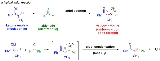
The aldol reaction may proceed via two fundamentally different mechanisms. Carbonyl compounds, such as aldehydes and ketones, can be converted to enols or enol ethers. These compounds, being nucleophilic at the a-carbon, can attack especially reactive protonated carbonyls such as protonated aldehydes. This is the "enol mechanism". Carbonyl compounds, being carbon acids, can also be deprotonated to form enolates, which are much more nucleophilic than enols or enol ethers and can attack electrophiles directly. The usual electrophile is an aldehyde, since ketones are much less reactive. This is the "enolate mechanism".

If the conditions are particularly harsh (e.g., NaOMe, MeOH, reflux
Reflux

Reflux is a technique involving the condensation of vapors and the return of this condensate to the system from which it originated. It is used in industrial and laboratory distillations....
), condensation may occur, but this can usually be avoided with mild reagents and low temperatures (e.g., LDA (a strong base), THF, −78 °C). Although the aldol addition usually proceeds to near completion, the reaction is not irreversible, since the treatment of aldol adducts with strong bases usually induces retro-aldol cleavage (gives the starting materials). Aldol condensations are irreversible.

Simple Aldol Reaction

Enol mechanism

When an acid catalyst is used, the initial step in the reaction mechanism
Reaction mechanism

In chemistry, a reaction mechanism is the step by step sequence of elementary reactions by which overall chemical change occurs .Although only the net chemical change is directly observation for most chemical reactions, experiments can often be designed that suggest the possible sequence of steps in a reaction mechanism....
 involves acid-catalyzed tautomer
Tautomer

Tautomers are isomers of organic compounds that readily interconvert by a chemical reaction called tautomerization. Commonly this reaction results in the formal migration of a hydrogen atom or proton, accompanied by a switch of a single bond and adjacent double bond....
ization of the carbonyl compound to the enol. The acid also serves to activate the carbonyl group of another molecule by protonation, rendering it highly electrophilic
Electrophile

In chemistry, an electrophile is a reagent attracted to electrons that participates in a chemical reaction by accepting an electron pair in order to Chemical bond to a nucleophile....
. The enol is nucleophilic
Nucleophile

In chemistry, a nucleophile is a reagent that forms a chemical bond to its reaction partner by donating both bonding electrons. Because nucleophiles donate electrons, they are by definition Lewis bases ....
 at the a-carbon, allowing it to attack the protonated carbonyl compound, leading to the aldol after deprotonation
Deprotonation

Deprotonation is a chemistry term that refers to the removal of a proton from a molecule, forming the conjugate base. The relative ability for a molecule to give up a proton is measured by a pKa value....
. This usually dehydrates
Dehydration reaction

In chemistry, a dehydration reaction is usually defined as a chemical reaction that involves the loss of water from the reacting molecule. Dehydration reactions are a subset of elimination reactions....
 to give the unsaturated carbonyl compound. The scheme shows a typical acid-catalyzed self-condensation of an aldehyde.

Acid catalyzed aldol mechanism
Acid catalyzed dehydration

Enolate mechanism

If the catalyst is a moderate base such as hydroxide
Hydroxide

In chemistry, hydroxide is the name for the Diatomic molecule anion OH-, consisting of oxygen and hydrogen atoms, usually derived from the Dissociation of a base ....
 ion or an alkoxide
Alkoxide

An alkoxide is the conjugate base of an alcohol and therefore consists of an organic group bonded to a negatively charged oxygen atom. They can be written as RO–, where R is the organic substituent....
, the aldol reaction occurs via nucleophilic attack by the resonance-stabilized
Resonance (chemistry)

Resonance in chemistry is a key component of valence bond theory used to graphically represent and mathematically model certain types of molecular structures when no single, conventional Lewis structure can satisfactorily represent the observed structure or explain its properties....
 enolate on the carbonyl group of another molecule. The product is the alkoxide
Alkoxide

An alkoxide is the conjugate base of an alcohol and therefore consists of an organic group bonded to a negatively charged oxygen atom. They can be written as RO–, where R is the organic substituent....
 salt of the aldol product. The aldol itself is then formed, and it may then undergo dehydration to give the unsaturated carbonyl compound. The scheme shows a simple mechanism for the base catalyzed aldol reaction of an aldehyde with itself.

Base catalyzed aldol reaction (shown using OCH3
Methoxide

Methoxide is an organic salt, and the simplest alkoxide.In Organic chemistry, the methoxide ion has a formula of CH3O- and is the conjugate base of methanol....
 as base)
Base catalyzed dehydration (frequently written incorrectly as a single step, see E1cb elimination reaction)
Although only a catalytic amount of base is required in some cases, the more usual procedure is to use a stoichiometric amount of a strong base such as LDA
Lithium diisopropylamide

Lithium diisopropylamide is the chemical compound with the formula [2CH]2NLi. Generally abbreviated LDA, it is a strong base used in organic chemistry for the deprotonation of weakly acidic compounds....
 or NaHMDS. In this case, enolate formation is irreversible, and the aldol product is not formed until the metal alkoxide of the aldol product is protonated in a separate workup step.

Zimmerman–Traxler model

More refined forms of the mechanism are known. In 1957, Zimmerman and Traxler proposed that some aldol reactions have "six-membered transition states having a chair conformation." This is now known as the Zimmerman–Traxler model. E-enolates give rise to anti products, whereas Z-enolates give rise to syn products
Syn addition

In organic chemistry, syn and anti addition are different ways in which two substituents can be added to a double bond or triple bond. This article will use alkenes as examples....
. The factors which control selectivity are the preference for placing substituents equatorially in six-membered transition states and the avoidance of syn-pentane interactions
Pentane interference

Pentane interference or syn-pentane interaction is the steric hindrance that the two terminal methyl groups experience in one of the chemical conformations of n-pentane....
, respectively. E and Z refer to the cis-trans stereochemical relationship between the enolate oxygen bearing the positive counterion and the highest priority group on the alpha carbon. In reality, only some metals such as lithium and boron reliably follow the Zimmerman–Traxler model. Thus, in some cases, the stereochemical
Stereochemistry

Stereochemistry, a subdiscipline of chemistry, involves the study of the relative spatial arrangement of atoms within molecules. An important branch of stereochemistry is the study of chirality molecules ....
 outcome of the reaction may be unpredictable.

Scheme2

Control in the Aldol reaction


The problem

The problem of "control" in the aldol addition is best demonstrated by an example. Consider the outcome of this hypothetical reaction:

Aldolcontrol1
In this reaction, two unsymmetrical ketones are being condensed using sodium ethoxide
Sodium ethoxide

Sodium ethoxide is an alkoxide salt with the chemical formula C2H5ONa....
. The basicity of sodium ethoxide is such that it cannot fully deprotonate either of the ketones, but can produce small amounts of the sodium enolate of both ketones. Effectively, this means that in addition to being potential aldol electrophiles, both ketones may also act as nucleophiles via their sodium enolate. Two electrophiles and two nucleophiles then potentially results in four possible products:

Aldolcontrol2
Thus, if one wishes to obtain only one of the cross-products, one must "control" the aldol addition.

Acidity

If one partner is considerably more acidic than the other, then control may be automatic. The most acidic proton is abstracted by the base and an enolate is formed. This type of control only works if the difference in acidity is large enough and no excess of base is used for the reaction. The simplest control is if only one of the reactants has acidic protons and only this molecule forms the enolate. For example, the addition of diethyl malonate into benzaldehyde would only produce one product:

Aldolcontrol3
In this case, the doubly activated methylene
Methylene

Methylene is the chemical species, R2C:, named after methane, in which two of the carbon atom's valence electrons form no bonds. The word is applicable to:...
 protons of the malonate
Malonate

The malonate or propanedioate ion is carbonHydrogen222− . Malonate chemical compound include salts and esters of malonic acid, such as...
 would be preferentially deprotonated by sodium ethoxide and quantitatively form the sodium enolate. Since benzaldehyde
Benzaldehyde

Benzaldehyde is a chemical compound consisting of a benzene ring with an aldehyde substituent. It is the simplest representative of the aromatic aldehydes and one of the most industrially used members of this family of compounds....
 has no acidic alpha-protons, there is only one possible nucleophile-electrophile combination; hence, control has been achieved. Note that this approach combines two elements of control: increased acidity of the alpha protons on the nucleophile and the lack of alpha protons on the electrophile.

Order of addition

One common solution is to form the enolate of one partner first, and then add the other partner under kinetic control. Kinetic control means that the forward aldol addition reaction must be significantly faster than the reverse retro-aldol reaction. For this approach to succeed, two other conditions must also be satisfied; namely, it must be possible to quantitatively form the enolate of one partner and the forward aldol reaction must be significantly faster than the transfer of the enolate from one partner to another. Common kinetic control conditions involve the formation of the enolate of a ketone with LDA
Lithium diisopropylamide

Lithium diisopropylamide is the chemical compound with the formula [2CH]2NLi. Generally abbreviated LDA, it is a strong base used in organic chemistry for the deprotonation of weakly acidic compounds....
 at −78 °C, followed by the slow addition of an aldehyde.

Enolates


Formation

The enolate may be formed by using a strong base ("hard conditions") or using a Lewis acid
Lewis acid

A Lewis acid is a chemical compound, A, that can accept a pair of electrons from a Lewis base, B, that acts as an electron-pair donor, forming an adduct, AB.Gilbert N....
 and a weak base ("soft conditions"):

Scheme3a
For deprotonation
Deprotonation

Deprotonation is a chemistry term that refers to the removal of a proton from a molecule, forming the conjugate base. The relative ability for a molecule to give up a proton is measured by a pKa value....
 to occur, the stereoelectronic requirement is that the alpha-C-H sigma bond
Sigma bond

In chemistry, sigma bonds are the strongest type of covalent bond chemical bond. Sigma bonding is most clearly defined for diatomic molecules using the language and tools of symmetry groups....
 must be able to overlap with the pi* orbital of the carbonyl
Carbonyl

In organic chemistry, a carbonyl group is a functional group composed of a carbon atom double bond to an oxygen atom : C=O.The term carbonyl can also refer to carbon monoxide as a ligand in an inorganic or organometallic complex ; in this situation, carbon is triple-bonded to oxygen : C=O....
:

Scheme3c

Geometry

Extensive studies have been performed on the formation of enolates under many different conditions. It is now possible to generate, in most cases, the desired enolate geometry:

Scheme3
For ketones, most enolization conditions give Z enolates. For ester
Ester

An ester is an often Aroma compound organic chemistry or partially organic compound formed by the reaction between an acid and an alcohol or aromatic alcohol with the elimination of water....
s, most enolization conditions give E enolates. The addition of HMPA
Hexamethylphosphoramide

Hexamethylphosphoramide, often abbreviated HMPA, is an organophosphorus compound having the chemical formula [2N]3PO. This colorless liquid is a useful polar aprotic solvent and additive in organic synthesis....
 is known to reverse the stereoselectivity
Stereoselectivity

In chemistry, stereoselectivity is the property of a chemical reaction in which a single reactant forms an unequal mixture of Stereoisomerism during the stereospecificity creation of a new stereocenter or during the stereospecificity transformation of a pre-existing one....
 of deprotonation.

Scheme3b
The stereoselective formation of enolates has been rationalized with the so-called Ireland model, although its validity is somewhat questionable. In most cases, it is not known which, if any, intermediates are monomer
Monomer

A monomer is a small molecule that may become Chemistry chemical bonding to other monomers to form a polymer....
ic or oligomer
Oligomer

In chemistry, an oligomer consists of a limited number of monomer units , in contrast to a polymer which, at least in principle, consists of an unbounded number of monomers....
ic in nature; nonetheless, the Ireland model remains a useful tool for understanding enolates.

Scheme3d
In the Ireland model, the deprotonation is assumed to proceed by a six-membered monomeric transition state. The larger of the two substituents on the electrophile (in the case above, methyl is larger than proton) adopts an equatorial disposition in the favored transition state, leading to a preference for E enolates. The model clearly fails in many cases; for example, if the solvent mixture is changed from THF to 23% HMPA-THF (as seen above), the enolate geometry is inexplicably reversed.

Kinetic versus thermodynamic enolates

If an unsymmetrical ketone is subjected to base, it has the potential to form two regioisomeric enolates (ignoring enolate geometry). For example:

Enolateregio1
The trisubstituted enolate is considered the kinetic
Thermodynamic reaction control

Thermodynamic reaction control or kinetic reaction control in a chemical reaction can decide the composition in a reaction product mixture when competing pathways lead to different products and the reaction conditions influence the selectivity....
 enolate while the tetrasubstituted enolate is considered the thermodynamic enolate. The alpha hydrogen deprotonated to form the kinetic enolate is less hindered, and therefore deprotonated more quickly. In general, tetrasubstituted olefins are more stable than trisubstituted olefins due to hyperconjugative stabilization. The ratio of enolate regioisomers is heavily influenced by the choice of base. For the above example, kinetic control may be established with LDA at −78 °C, giving 99:1 selectivity of kinetic: thermodynamic enolate, while thermodynamic control may be established with triphenylmethyllithium
Organolithium reagent

An organolithium reagent is an organometallic compound with a direct covalent bond between a carbon and a lithium atom. As the electropositive nature of lithium puts most of the charge density of the bond on the carbon atom, effectively creating a carbanion, organolithium compounds are extremely powerful base s and carbon nucleophiles....
 at room temperature
Room temperature

Room temperature is a common term to denote a certain temperature within enclosed space at which humans are accustomed.Room temperature is thus often indicated by general human comfort, with the common range of 10celsius to 23?C , though climate may acclimatize people to higher or lower temperatures....
, giving 10:90 selectivity.

In general, kinetic enolates are favored by cold temperatures, relatively ionic metal-oxygen bonds, and rapid deprotonation using a slight excess of a strong, hindered base while thermodynamic enolates are favored by higher temperatures, relatively covalent metal-oxygen bonds, and longer equilibration times for deprotonation using a slight sub-stoichiometric amount of strong base. Use of a sub-stoichiometric amount of base allows some small fraction of unenolized carbonyl compound to equilibrate the enolate to the thermodynamic regioisomer by acting as a proton shuttle.

Stereoselectivity

The aldol reaction is particularly useful because two new stereogenic centers are generated in one reaction. Extensive research has been performed to understand the reaction mechanism and improve the selectivity observed under many different conditions. The syn/anti convention is commonly used to denote the relative stereochemistry at the a- and ß-carbon.

The convention applies when propionate (or higher order) nucleophiles are added to aldehydes. The R group of the ketone and the R group of the aldehyde are aligned in a "zig zag" pattern in the plane of the paper (or screen), and the disposition of the formed stereocenters is deemed syn or anti, depending if they are on the same or opposite sides of the main chain.

Older papers use the
erythro
Erythrose

Erythrose is a tetrose carbohydrate with chemical formula Carbon4Hydrogen8Oxygen4. It has one aldehyde group and so is part of the aldose family. The natural isomer is D-erythrose....
-threo
Threose

Threose is a tetrose carbohydrate with chemical formula 484. It has one aldehyde group and so is part of the aldose family. It exists in both D and L stereoisomers....
nomenclature familiar from carbohydrate chemistry.

E versus Z enolates

There is no significant difference between the level of stereoinduction observed with
E and Z enolates:

Evszstereoselectivity
Evszstereoselectivity2

Metal ion

The enolate metal cation may play a large role in determining the level of stereoselectivity in the aldol reaction. Boron
Boron

Boron is a chemical element with atomic number 5 and the chemical symbol B. Boron is a trivalent metalloid element which occurs abundantly in the evaporite ores borax and ulexite....
 is often used because its bond length
Bond length

In molecular geometry, bond length or bond distance is the average distance between nuclei of two chemical bond atoms in a molecule....
s are significantly shorter than that of other metals such as lithium
Lithium

Lithium is a chemical element with the symbol Li and atomic number 3. It is a soft alkali metal with a silver-white color. Under standard conditions for temperature and pressure, it is the lightest metal and the least dense solid element....
, aluminium
Aluminium

Aluminium or aluminum is a silvery white and ductile member of the boron group of chemical elements. It has the symbol Al; its atomic number is 13....
, or magnesium
Magnesium

Magnesium is a chemical element with the symbol Mg, atomic number 12, atomic weight 24.3050 and common oxidation number +2.Magnesium, an alkaline earth metal, is the ninth most abundance of the chemical elements in the universe by mass....
. For example, boron-carbon and boron-oxygen bonds are 1.4–1.5 Å and 1.5–1.6 Å in length, respectively, whereas typical metal-carbon and metal-oxygen bonds are typically 1.9–2.2 Å and 2.0–2.2 Å in length, respectively. This has the effect of "tightening" the transition state
Transition state

The transition state of a chemical reaction is a particular configuration along the reaction coordinate. It is defined as the state corresponding to the highest energy along this reaction coordinate....
:

Metalion

Stereoselectivity: Alpha stereocenter on the enolate

The aldol reaction may exhibit "substrate-based stereocontrol", in which existing chirality
Chirality (chemistry)

The term chiral is used to describe an object that is non-Superposition on its mirror image.Human hands are perhaps the most universally recognized example of chirality: The left hand is a non-superposable mirror image of the right hand; no matter how the two hands are oriented, it is impossible for all the major features of both hands...
 on either reactant influences the stereochemical outcome of the reaction. This has been extensively studied, and in many cases, one can predict the sense of asymmetric induction
Asymmetric induction

Asymmetric induction in stereochemistry describes the preferential formation in a chemical reaction of one enantiomer or diastereoisomer over the other as a result of the influence of a optical isomerism feature present in the Substrate , reagent, catalyst or environment....
, if not the absolute level of diastereoselectivity. If the enolate contains a stereocenter
Stereocenter

A stereocenter, or stereogenic center, is any point, though not necessarily an atom, in a molecule bearing groups such that an interchanging of any two groups leads to a stereoisomer ....
 in the alpha position, excellent stereocontrol may be realized.

Enolatealphacenter
In the case of an E enolate, the dominant control element is allylic 1,3-strain
Allylic strain

Allylic strain or 1,3-allylic strain in organic chemistry and its associated strain energy results from an unfavorable molecular conformation for the allyl group....
 whereas in the case of a Z enolate, the dominant control element is the avoidance of 1,3-diaxial interactions. The general model is presented below:

Enolatealphacentermodel
For clarity, the stereocenter on the enolate has been epimer
Epimer

In chemistry, epimers are diastereomers that differ in configuration of only one stereogenic center. Diastereomers are a class of stereoisomers that are non-superposable, non-mirror images of one another, unlike enantiomers which are non-superposable mirror images of one another....
ized; in reality, the opposite diastereoface of the aldehyde would have been attacked. In both cases, the 1,3-syn diastereomer is favored. There are many examples of this type of stereocontrol:

Enolatealphacentereg

Stereoselectivity: Alpha stereocenter on the electrophile

When enolates attacks aldehydes with an alpha stereocenter, excellent stereocontrol is also possible. The general observation is that
E enolates exhibit Felkin diastereoface selection, while Z enolates exhibit anti-Felkin selectivity. The general model is presented below:

Aldehydealphamodel
Since
Z enolates must react through a transition state
Transition state

The transition state of a chemical reaction is a particular configuration along the reaction coordinate. It is defined as the state corresponding to the highest energy along this reaction coordinate....
 which either contains a destabilizing syn-pentane interaction or anti-Felkin rotamer,
Z-enolates exhibit lower levels of diastereoselectivity in this case. Some examples are presented below:

Aldehydealphaeg

Stereoselectivity: Merged model for stereoinduction

If both the enolate and the aldehyde both contain pre-existing chirality, then the outcome of the "double stereodifferentiating" aldol reaction may be predicted using a merged stereochemical model that takes into account the enolate facial bias, enolate geometry, and aldehyde facial bias. Several examples of the application of this model are given below:
Mergedmodel

Evans' oxazolidinone chemistry

Modern organic syntheses now require the synthesis of compounds in enantiopure form. Since the aldol addition reaction creates two new stereocenters, up to four stereoisomers may result.

Evansaldol1
Many methods which control both relative stereochemistry (i.e., syn or anti, as discussed above) and absolute stereochemistry
Stereochemistry

Stereochemistry, a subdiscipline of chemistry, involves the study of the relative spatial arrangement of atoms within molecules. An important branch of stereochemistry is the study of chirality molecules ....
 (i.e.,
R or S) have been developed.

Evansaldol2
A widely used method is the Evans' acyl
Acyl

An acyl group is a functional group derived by the removal of one or more hydroxyl groups from an oxoacid.. In organic chemistry, the acyl group is usually derived from a carboxylic acid of the form RCarbon Oxygen hydroxyl....
 oxazolidinone method. Developed in the late 1970s and 1980s by David A. Evans
David A. Evans

David A. Evans is the Abbott and James Lawrence Emeritus Professor of Chemistry in the Department of Chemistry and Chemical Biology at Harvard University....
 and coworkers, the method works by temporarily creating a chiral enolate by appending a chiral auxiliary
Chiral auxiliary

A chiral auxiliary is a chemical compound or unit that is temporarily incorporated into an organic synthesis so that it can be carried out asymmetrically with the selective formation of one of two enantiomers...
. The pre-existing chirality from the auxiliary is then transferred to the aldol adduct by performing a diastereoselective aldol reaction. Upon subsequent removal of the auxiliary, the desired aldol stereoisomer is revealed.

Evansaldol3
In the case of the Evans' method, the chiral auxiliary appended is an oxazolidinone, and the resulting carbonyl compound is an imide
Imide

Organic chemistryIn organic chemistry, imide is a functional group consisting of two carbonyl groups bound to nitrogen. Imides are generally prepared directly from ammonia or a primary amine, and either carboxylic acid or acid anhydrides....
. A number of oxazolidinones are now readily available in both enantiomeric forms. These may cost roughly $10–$20 US dollars per gram, rendering them relatively expensive.

Evansaldol4
The acylation
Acylation

In chemistry, acylation is the process of adding an acyl group to a compound. The compound providing the acyl group is called the acylating agent....
 of an oxazolidinone is a convenient procedure, and is informally referred to as "loading done".
Z-enolates, leading to syn-aldol adducts, can be reliably formed using boron-mediated soft enolization:

Evansaldol5
Often, a single diastereomer
Diastereomer

Diastereomers are stereoisomers that are not enantiomers . Diastereomers can have different physical properties and different reactivity. In another definition diastereomers are pairs of isomers that have opposite configurations at one or more of the chiral centers but are not mirror images of each other ....
 may be obtained by one crystallization
Crystallization

Crystallization is the process of formation of solid crystals Precipitation from a solution, melting or more rarely Deposition directly from a gas....
 of the aldol adduct. Unfortunately, anti-aldol adducts cannot be obtained reliably with the Evans method. Despite the cost and the limitation to give only
syn adducts, the method's superior reliability, ease of use, and versatility render it the method of choice in many situations. Many methods are available for the cleavage of the auxiliary:

Evansaldol6
Upon construction of the imide, both syn and anti-selective aldol addition reactions may be performed, allowing the assemblage of three of the four possible stereoarrays: syn selective: and anti selective:

Evansaldol7
In the syn-selective reactions, both enolization methods give the
Z enolate, as expected; however, the stereochemical outcome of the reaction is controlled by the methyl stereocenter, rather than the chirality of the oxazolidinone. The methods described allow the stereoselective assembly of polyketide
Polyketide

Polyketides are secondary metabolites from bacterium, fungi, plants, and animals. Polyketides are biosynthesis by the polymerization of acetyl and propionyl subunits in a similar process to fatty acid metabolism#Synthesis ....
s, a class of natural products which often feature the aldol retron.

Modern aldol chemistry

Recent methodology now allows a much wider variety of aldol reactions to be conducted, often with a catalytic amount of chiral ligand. When reactions employ small amounts of enantiomerically pure ligands to induce the formation of enantiomerically pure products, the reactions are typically termed "catalytic, asymmetric"; for example, many different catalytic, asymmetric aldol reactions are now available.

Acetate aldol reactions

A key limitation to the chiral auxiliary
Chiral auxiliary

A chiral auxiliary is a chemical compound or unit that is temporarily incorporated into an organic synthesis so that it can be carried out asymmetrically with the selective formation of one of two enantiomers...
 approach described previously is the failure of N-acetyl imide
Imide

Organic chemistryIn organic chemistry, imide is a functional group consisting of two carbonyl groups bound to nitrogen. Imides are generally prepared directly from ammonia or a primary amine, and either carboxylic acid or acid anhydrides....
s to react selectively. An early approach was to use a temporary thioether
Thioether

A thioether is a functional group in organic chemistry that has the structure R1-S-R2 as shown on right. Like many other sulfur-containing compounds, Volatile organic compound thioethers characteristically have foul odors....
 group:

Mukaiyama aldol reaction

The Mukaiyama aldol reaction is the nucleophilic addition
Nucleophilic addition

In organic chemistry, a nucleophilic addition reaction is an addition reaction where in a chemical compound a p bond is removed by the creation of two new covalent bonds by the addition of a nucleophile ....
 of silyl enol ether
Silyl enol ether

Silyl enol ethers in organic chemistry are a class of organic compounds sharing a common functional group composed of an enolate bonded through its oxygen terminus to an organosilicon group....
s to aldehyde
Aldehyde

An aldehyde is an organic compound containing a terminal carbonyl group. This functional group, which consists of a carbon atom bonded to a hydrogen atom and double bond to an oxygen atom , is called the aldehyde group....
s catalyzed by a Lewis acid
Lewis acid

A Lewis acid is a chemical compound, A, that can accept a pair of electrons from a Lewis base, B, that acts as an electron-pair donor, forming an adduct, AB.Gilbert N....
 such as boron trifluoride
Boron trifluoride

Boron trifluoride is the chemical compound with the chemical formula BF3. This pungent colourless toxic gas forms white fumes in moist air....
 or titanium tetrachloride
Titanium tetrachloride

Titanium tetrachloride is the inorganic compound with the chemical formula TiCl4. It is an important intermediate in the production of titanium metal and the pigment titanium dioxide....
. The Mukaiyama aldol reaction does not follow the Zimmerman-Traxler model. Carreira has described particularly useful asymmetric methodology with silyl ketene acetals, noteworthy for its high levels of enantioselectivity and wide substrate scope.

The method works on unbranched
Branching (chemistry)

In polymer chemistry, branching occurs by the replacement of a substituent, e.g, a hydrogen atom, on a monomer subunit, by another covalent bond chain of that polymer; or, in the case of a graft copolymer, by a Chain of another type....
 aliphatic aldehydes, which are often poor electrophile
Electrophile

In chemistry, an electrophile is a reagent attracted to electrons that participates in a chemical reaction by accepting an electron pair in order to Chemical bond to a nucleophile....
s for catalytic, asymmetric processes. This may be due to poor electronic and steric differentiation between their enantiofaces.

The analogous vinylogous
Vinylogous

Vinylogous reactivity is the behavior of a vinyl group in conjugation with an electron-withdrawing group analogous to the reactions of the electron-withdrawing group itself; typically, this is a carbonyl group....
 Mukaiyama aldol process can also be rendered catalytic and asymmetric. The example shown below works efficiently for aromatic (but not aliphatic) aldehydes and the mechanism is believed to involve a chiral, metal-bound dienolate.

Crimmins thiazoldinethione aldol

A more recent version of the Evans' auxiliary is the
Crimmins thiazoldinethione. The yields, diastereoselectivities, and enantioselectivities of the reaction are generally high, although not as high as in comparable Evans cases. Unlike the Evans auxiliary, however, the thiazoldinethione can perform acetate aldol reactions (ref: Crimmins, Org. Lett. 2007, 9(1), 149–152.) and can produce the "Evans syn" or "non-Evans syn" adducts by simply varying the amount of (−)-sparteine
Sparteine

Sparteine is a class 1a antiarrhythmic agent; a sodium channel blocker. It is an alkaloid and can be extracted from scotch broom. It is the predominant alkaloid in Lupinus mutabilis, and is thought to chelate the bivalents calcium and magnesium....
. The reaction is believed to proceed via six-membered, titanium-bound transition state
Transition state

The transition state of a chemical reaction is a particular configuration along the reaction coordinate. It is defined as the state corresponding to the highest energy along this reaction coordinate....
s, analogous to the proposed transition states for the Evans auxiliary.

Organocatalytic aldol reactions

An exciting new development is the use of chiral secondary amine
Amine

Amines are organic compounds and functional groups that contain a base nitrogen atom with a lone pair. Amines are derivative s of ammonia, wherein one or more hydrogen atoms are replaced by organic substituents such as alkyl and aryl groups....
 catalysts. These secondary amines form transient enamine
Enamine

An enamine is an saturation compound derived by the reaction of an aldehyde or ketone with a secondary amine followed by loss of H2O....
s when exposed to ketones, which may react enantioselectively with suitable aldehyde electrophiles. This is known as
enamine catalysis, a type of organocatalysis
Organocatalysis

In organic chemistry, the term Organocatalysis refers to a form of catalysis, whereby the rate of a chemical reaction is increased by an organic compound referred to as an "organocatalyst" consisting of carbon, hydrogen, sulfur and other nonmetal elements found in organic compounds ...
, since the catalyst is entirely based on a small organic molecule. In a seminal example, proline
Proline

Proline is an a-amino acid, one of the twenty DNA-encoded amino acids. Its codons are CCU, CCC, CCA, and CCG. It is not an essential amino acid, which means that humans can synthesize it....
 efficiently catalyzed the cyclization of a triketone:

This reaction is known as the Hajos-Parrish reaction (also known as the Hajos-Parrish-Eder-Sauer-Wiechert reaction, referring to a contemporaneous report from Schering of the reaction under harsher conditions). Under the Hajos-Parrish conditions only a catalytic amount of proline is necessary (3 mol%). There is no danger of an achiral background reaction because the transient enamine intermediates are much more nucleophilic than their parent ketone enols. This strategy is particularly powerful because it offers a simple way of generating enantioselectivity in reactions without using transition metals, which have the possible disadvantages of being toxic or expensive.

Interestingly, proline-catalyzed aldol reactions do not show any non-linear effects (the enantioselectivity of the products is directly proportional to the enantiopurity of the catalyst). Combined with isotopic labelling evidence and computational studies
Computational chemistry

Computational chemistry is a branch of chemistry that uses computers to assist in solving chemical problems. It uses the results of theoretical chemistry, incorporated into efficient computer programs, to calculate the structures and properties of molecules and solids....
, the proposed reaction mechanism
Reaction mechanism

In chemistry, a reaction mechanism is the step by step sequence of elementary reactions by which overall chemical change occurs .Although only the net chemical change is directly observation for most chemical reactions, experiments can often be designed that suggest the possible sequence of steps in a reaction mechanism....
 for proline-catalyzed aldol reactions is as follows:

This strategy allows the otherwise challenging cross-aldol reaction between two aldehydes. In general, cross-aldol reactions between aldehydes are typically challenging because they can polymerize
Polymerization

In polymer chemistry, polymerization is a process of reacting monomer molecules together in a chemical reaction to form three-dimensional networks or polymer chains....
 easily or react unselectively to give a statistical mixture of products. The first example is shown below:

In contrast to the preference for syn adducts typically observed in enolate-based aldol additions, these organocatalyzed aldol additions are anti-selective. In many cases, the organocatalytic conditions are mild enough to avoid polymerization. However, selectivity requires the slow syringe-pump controlled addition of the desired electrophilic partner because both reacting partners typically have enolizable protons. If one aldehyde has no enolizable protons or alpha- or beta-branching, additional control can be achieved.

An elegant demonstration of the power of asymmetric organocatalytic aldol reactions was disclosed by MacMillan and coworkers in 2004 in their synthesis of differentially protected carbohydrate
Carbohydrate

Carbohydrates or saccharides are the most abundant of the four major classes of biomolecules. They fill numerous roles in living things, such as the storage and transport of energy and structural components ....
s. While traditional synthetic methods accomplish the synthesis of hexose
Hexose

In organic chemistry, a hexose is a monosaccharide with six carbon atoms, having the chemical formula C6H12O6. Hexoses are classified by functional group, with aldohexoses having an aldehyde at position 1, and ketohexoses having a ketone at position 2....
s using variations of iterative protection-deprotection strategies, requiring 8–14 steps, organocatalysis can access many of the same substrates using an efficient two-step protocol involving the proline-catalyzed dimerization of alpha-oxyaldehydes followed by tandem Mukaiyama aldol cyclization.

The aldol dimerization of alpha-oxyaldehydes requires that the aldol adduct, itself an aldehyde, be inert to further aldol reactions. Earlier studies revealed that aldehydes bearing alpha-alkyloxy or alpha-silyloxy substituent
Substituent

In organic chemistry, a substituent is an atom or group of atoms substituted in place of a hydrogen atom on the parent chain of a hydrocarbon. The suffix -yl is used when naming organic compounds that contain a substituent....
s were suitable for this reaction, while aldehydes bearing Electron-withdrawing groups such as acetoxy were unreactive. The protected erythrose
Erythrose

Erythrose is a tetrose carbohydrate with chemical formula Carbon4Hydrogen8Oxygen4. It has one aldehyde group and so is part of the aldose family. The natural isomer is D-erythrose....
 product could then be converted to four possible sugars via Mukaiyama aldol addition followed by lactol
Lactol

In organic chemistry, a lactol is the functional group formed by the intramolecular nucleophilic addition of a hydroxyl group to an aldehyde. A lactol is the cyclic equivalent of a hemiacetal....
 formation. This requires appropriate diastereocontrol in the Mukaiyama aldol addition and the product silyloxycarbenium ion
Carbenium ion

A carbenium ion is a carbocation of the trivalent and classical type R3C+. A carbonium ion is a carbocation of the penta- or tetracoordinated nonclassical type such as an ion of the type R5C+....
 to preferentially cyclize, rather than undergo further aldol reaction. In the end, glucose
Glucose

Glucose , a monosaccharide also known as grape sugar, blood sugar, or corn sugar, is a very important carbohydrate in biology....
, mannose
Mannose

Mannose is a sugar monomer of the hexose series of carbohydrates....
, and allose
Allose

Allose is an aldohexose sugar. It is a rare monosaccharide that has been isolated from the leaves of the African shrub Protea rubropilosa. It is soluble in water and practically insoluble in methanol....
 were synthesized:

"Direct" aldol additions

In the usual aldol addition, a carbonyl compound is deprotonated to form the enolate. The enolate is added to an aldehyde or ketone, which forms an alkoxide, which is then protonated on workup. A superior method, in principle, would avoid the deprotonation-aldol-protonation sequence in favor of a "direct aldol addition". The major issue in such a process is that the aldol addition generates an alkoxide, which is much more basic than the starting materials, precluding catalyst turnover:

One approach, recently demonstrated by Evans, is to silylate the aldol adduct:

This method is more cost effective and industrially useful than the more typical enolate-based procedures. A more recent, biomimetic approach by Shair uses beta-thioketoacids as the nucleophile. The ketoacid moiety is decarboxylated
Decarboxylation

Decarboxylation is any chemical reaction in which a carboxyl group is split off from a compound as carbon dioxide ....
 in situ
In situ

In situ is a Latin phrase meaning in the place. It is used in many different contexts....
 (the chiral ligand
Chiral ligand

In chemistry a chiral ligand is a specially adapted ligand used for asymmetric synthesis. This ligand is an enantiopure organic compound which combines with a metal center by chelation to form an asymmetric catalyst....
 is a bisoxazoline
Bisoxazoline ligand

In chemistry, bisoxazoline ligands are chiral ligands based on a bis oxazoline skeleton and used in combination with a metal compound in asymmetric synthesis as a chiral catalyst ....
). Interestingly, aromatic and branched aliphatic aldehydes are typically poor substrates.

Biological aldol reactions


Examples of aldol reactions in biochemistry include the splitting of fructose-1,6-bisphosphate into dihydroxyacetone
Dihydroxyacetone

Dihydroxyacetone is a simple carbohydrate that is primarily used as an ingredient in sunless tanning products. It is often derived from plant sources such as sugar beets and sugar cane, by the fermentation of glycerin....
 and glyceraldehyde-3-phosphate in the second stage of glycolysis
Glycolysis

Glycolysis is the metabolic pathway that converts glucose, C6H12O6, into pyruvate, C3H5O3-....
 is a reverse aldol reaction catalysed by the enzyme aldolase A.

Simple sugars are cyclic aldol trimers of acetaldehyde that can be prepared synthetically.

See also

  • Aldol-Tishchenko reaction
    Aldol-Tishchenko reaction

    The Aldol-Tishchenko reaction is a tandem reaction involving an Aldol reaction and a Tishchenko reaction. In organic synthesis it is a method to convert aldehydes and ketones into 1,3-hydroxyl compounds....
  • Aldonic acid
    Aldonic acid

    An aldonic acid is any of a family of sugar acids obtained by oxidation of the aldehyde functional group of an aldoses to form a carboxylic acid functional group....
  • Baylis-Hillman reaction
    Baylis-Hillman reaction

    The Baylis-Hillman reaction is an organic reaction of an aldehyde and an a,?-saturation electron-withdrawing group catalyzed by DABCO to give an allyl alcohol ....
  • Cannizzaro reaction
    Cannizzaro reaction

    The Cannizzaro reaction, named after its discoverer Stanislao Cannizzaro, is a chemical reaction that involves the base -induced disproportionation of an aldehyde lacking a hydrogen atom in the alpha position....
  • Ivanov reaction
    Ivanov reaction

    The Ivanov reaction is the chemical reaction of the dianions of aryl acetic acids with electrophiles, primarily carbonyl compounds or isocyanates....
  • Knoevenagel condensation
    Knoevenagel condensation

    The Knoevenagel condensation reaction is an organic reaction named after Emil Knoevenagel. It is a modification of the Aldol condensation .A Knoevenagel condensation is a nucleophilic addition of an active hydrogen compound to a carbonyl group followed by a dehydration reaction in which a molecule of water is eliminated ....
  • Reformatsky reaction