
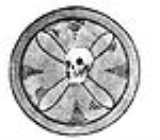
The
6th Night Fighter Squadron is an inactive
United States Air ForceThe United States Air Force is the aerial warfare service branch of the United States Armed Forces and one of the American uniformed services. Initially part of the United States Army, the USAF was formed as a separate branch of the military on September 18, 1947 under the National Security Act of...
unit. Its last assignment was with
Seventh Air ForceThe Seventh Air Force is a numbered air force of the United States Air Force Pacific Air Forces . It is headquartered at Osan Air Base, Republic of Korea....
, being inactivated at Wheeler Field,
HawaiiHawaii is the newest of the 50 U.S. states , and is the only U.S. state made up entirely of islands. It is the northernmost island group in Polynesia, occupying most of an archipelago in the central Pacific Ocean, southwest of the continental United States, southeast of Japan, and northeast of...
on February 20, 1947.
Discussion
Ask a question about '6th Night Fighter Squadron'
Start a new discussion about '6th Night Fighter Squadron'
Answer questions from other users
|
The
6th Night Fighter Squadron is an inactive
United States Air ForceThe United States Air Force is the aerial warfare service branch of the United States Armed Forces and one of the American uniformed services. Initially part of the United States Army, the USAF was formed as a separate branch of the military on September 18, 1947 under the National Security Act of...
unit. Its last assignment was with
Seventh Air ForceThe Seventh Air Force is a numbered air force of the United States Air Force Pacific Air Forces . It is headquartered at Osan Air Base, Republic of Korea....
, being inactivated at Wheeler Field,
HawaiiHawaii is the newest of the 50 U.S. states , and is the only U.S. state made up entirely of islands. It is the northernmost island group in Polynesia, occupying most of an archipelago in the central Pacific Ocean, southwest of the continental United States, southeast of Japan, and northeast of...
on February 20, 1947.
It saw combat in Central, South, and Southwest Pacific, December 7, 1941 – August 14, 1945.
Lineage
- Organized as 6th Aero Squadron on March 13, 1917
- Redesignated: 6th Squadron on March 14, 1921
- Redesignated: 6th Pursuit Squadron on January 25, 1923
- Redesignated: 6th Pursuit Squadron (Interceptor) on December 6, 1939
- Redesignated: 6th Fighter Squadron on May 15, 1942
- Redesignated: 6th Night Fighter Squadron on January 17, 1943
- Inactivated on: February 20, 1947
Assignments
- Hawaiian Department, 13 March 1917
- 2d Observation (later 5th Observation; 5th Pursuit and Bombardment; 5th Composite) Group
The 5th Operations Group is an operational component of the United States Air Force 5th Bomb Wing, stationed at Minot Air Force Base, North Dakota...
, 15 September 1919
- 18th Pursuit (later Fighter) Group
The 18th Operations Group is the operational flying component of the United States Air Force 18th Wing, stationed at Kadena Air Base, Okinawa, Japan....
, January 1927
- 15th Fighter Group, 16 March 1943
- VII Fighter Command, 5 June 1944
- Attached to 318th Fighter Group
The 318th Fighter Group was a World War II United States Army Air Forces combat organization. It served primarily in the Pacific Ocean theater of World War II.-History:...
, 11 January-16 March 1945
- 7th Fighter Wing, 12 May 1945
- Pacific Air Command, 1 January 1946
- Fifth Air Force
The Fifth Air Force is a numbered air force of the United States Air Force Pacific Air Forces . It is headquartered at Yokota Air Base, Japan....
, 11 June 1946-20 February 1947
- Attached to 314th Composite Wing
- Upon inactivation, personnel and equipment reassigned to 339th Fighter Squadron (All Weather)
The 339th Flight Test Squadron is a United States Air Force unit based at Robins AFB, Georgia. It is part of the Warner Robins Air Logistics Center, with a mission to certify aircraft as worthy to return to service...
Stations
- Fort Kamehameha
Fort Kamehameha was a United States Army military base that was the site of several coastal artillery batteries to defend Pearl Harbor starting in 1907 in Honolulu, Hawaii.-History:The eastern areas of the fort were in the district called Moanalua...
, Hawaii Territory, March 13, 1917
- Ford Island (later Luke Field), Hawaii Territory,September 25, 1918
- Wheeler Army Airfield
Wheeler Army Airfield , also known as Wheeler Field and formerly as Wheeler Air Force Base, is a United States Army post located in the City & County of Honolulu and in the Wahiawa District of the Island of O'ahu, Hawaii...
, Hawaii Territory, January 11, 1927
- Kahuku Army Airfield
Kahuku Army Airfield is a former wartime airfield in Hawaii. It was located in the northern part of the Island of Oahu.-World War II:Possibly developed as an emergency field dating to the 1930s, but it was not until the United States entered World War II that the airfield was developed...
, Hawaii Territory, August 30, 1942
- Kipapa Gulch Army Airfield Hawaii Territory, November 17, 1942 – March 3, 1944
- Detached: Koli Airfield
Also known as "Bomber 3 Field", Koli Airfield is a former World War II airfield on Guadalcanal, Solomon Islands in the South Pacific, located near Koli Point, fifteen miles east of Henderson Field, close to the Metapona River to the east and the Naumbu River to the west...
, GuadalcanalGuadalcanal is a tropical island in the South-Western Pacific. The largest island in the Solomons, it was discovered by the Spanish expedition of Alvaro de Mendaña in 1568...
, Solomon IslandsSolomon Islands is a sovereign state in Oceania, east of Papua New Guinea, consisting of nearly one thousand islands. It covers a land mass of . The capital, Honiara, is located on the island of Guadalcanal...
, February 28 – December 15, 1943
- Detached: Jackson Airfield (7 Mile Drome)
Jacksons International Airport , also known as Port Moresby Airport, is located 5 miles outside Port Moresby, in Papua New Guinea...
, Port MoresbyPort Moresby , or Pot Mosbi in Tok Pisin, is the capital and largest city of Papua New Guinea . It is located on the shores of the Gulf of Papua, on the southeastern coast of the island of New Guinea, which made it a prime objective for conquest by the Imperial Japanese forces during 1942–43...
, New GuineaNew Guinea is the world's second largest island, after Greenland, covering a land area of 786,000 km2. Located in the southwest Pacific Ocean, it lies geographically to the east of the Malay Archipelago, with which it is sometimes included as part of a greater Indo-Australian Archipelago...
, April 18 – December 15, 1943
- John Rogers Field
Kalaeloa Airport , also called John Rodgers Field and formerly Naval Air Station Barbers Point, is a joint civil-military regional airport of the State of Hawaii established on July 1, 1999 to replace the Ford Island NALF facilities which closed on June 30 of the same year...
, Hawaii Territory, March 3 – October 28, 1944
- Detached: East Field
East Field is a former World War II airfield on Saipan in the Mariana Islands.-History:Saipan had been occupied by the Japanese since World War I, and by mid-1944, the Americans had advanced inside the Japanese ring of defense in the Pacific Theater...
, SaipanSaipan is the largest island of the United States Commonwealth of the Northern Mariana Islands , a chain of 15 tropical islands belonging to the Marianas archipelago in the western Pacific Ocean with a total area of . The 2000 census population was 62,392...
, Mariana IslandsThe Mariana Islands are an arc-shaped archipelago made up by the summits of 15 volcanic mountains in the north-western Pacific Ocean between the 12th and 21st parallels north and along the 145th meridian east...
, June 21, 1944 – May 1, 1945
- Kipapa Gulch Army Airfield Hawaii Territory, October 28, 1944
- Wheeler Army Airfield
Wheeler Army Airfield , also known as Wheeler Field and formerly as Wheeler Air Force Base, is a United States Army post located in the City & County of Honolulu and in the Wahiawa District of the Island of O'ahu, Hawaii...
, Hawaii Territory, October 2, 1945
- Atsugi Airfield
is a naval air base located in the cities of Yamato and Ayase in Kanagawa Prefecture, Japan. It is the largest United States Navy air base in the Pacific Ocean and houses the squadrons of Carrier Air Wing 5, which deploys with the aircraft carrier...
, JapanJapan is an island nation in East Asia. Located in the Pacific Ocean, it lies to the east of the Sea of Japan, China, North Korea, South Korea and Russia, stretching from the Sea of Okhotsk in the north to the East China Sea and Taiwan in the south...
, June 11, 1946
- Yokota Airfield
, is a United States Air Force base in the city of Fussa, one of 26 cities in the Tama Area, or Western Tokyo.The base houses 14,000 personnel. The base occupies a total area of and has a runway...
, JapanJapan is an island nation in East Asia. Located in the Pacific Ocean, it lies to the east of the Sea of Japan, China, North Korea, South Korea and Russia, stretching from the Sea of Okhotsk in the north to the East China Sea and Taiwan in the south...
, September 1, 1946 – February 20, 1947.
Aircraft operated
- N-G, R-6 and HS2L (1918–1920)
- Airco DH-4, HS2L, JN-6, MB-3, Fokker D-VIII (1920–1926)
- PW-9, DH-4 C-2 (1927–1930)
- P-12
The Boeing P-12 or F4B was an American pursuit aircraft that was operated by the United States Army Air Corps and United States Navy.-Design and development:...
, PW-9-Bibliography:*Lloyd S. Jones, U.S. Naval Fighters Fallbrook CA: Aero Publishers, 1977, pp. 35-38. ISBN 0-8168-9254-7.*Swanborough, Gordon and Bowers, Peter M. United States Navy Aircraft since 1911. London: Putnam. Second edition 1976. ISBN 0-370-10054-9....
, B-12The Martin B-10 was the first all-metal monoplane bomber to go into regular use by the United States Army Air Corps, entering service in June 1934...
, OA-3 (1931–1938)
- P-26
The American Boeing P-26 Peashooter, was the first all-metal production fighter aircraft and the first pursuit monoplane used by the United States Army Air Corps...
, P-36The Curtiss P-36 Hawk, also known as the Curtiss Hawk Model 75, was an American-designed and built fighter aircraft of the 1930s and 40s. A contemporary of both the Hawker Hurricane and Messerschmitt Bf 109, it was one of the first of a new generation of combat aircraft—a sleek monoplane design...
, B-12The Martin B-10 was the first all-metal monoplane bomber to go into regular use by the United States Army Air Corps, entering service in June 1934...
, A-12|-See also:-References:NotesBibliography* Eden, Paul and Soph Moeng, eds. The Complete Encyclopedia of World Aircraft. London: Amber Books Ltd., 2002, ISBN 0-7607-3432-1....
, OA-9The Grumman G-21 Goose amphibious aircraft was designed as an eight-seat "commuter" plane for businessmen in the Long Island area. The Goose was Grumman’s first monoplane to fly, its first twin-engined aircraft, and its first aircraft to enter commercial airline service...
(1939–1941)
- Curtiss P-40
The Curtiss P-40 Warhawk was an American single-engine, single-seat, all-metal fighter and ground attack aircraft that first flew in 1938. The P-40 design was a modification of the previous Curtiss P-36 Hawk which reduced development time and enabled a rapid entry into production and operational...
, 1941–1942
- B-18 Bolo
The Douglas B-18 Bolo was a United States Army Air Corps and Royal Canadian Air Force bomber of the late 1930s and early 1940s. The Bolo was built by Douglas Aircraft Company and based on its DC-2 and was developed to replace the Martin B-10....
, 1942
- P-70 Havoc, 1942–1944
- P-38 Lightning
The Lockheed P-38 Lightning was a World War II American fighter aircraft built by Lockheed. Developed to a United States Army Air Corps requirement, the P-38 had distinctive twin booms and a single, central nacelle containing the cockpit and armament...
, 1943
- Republic P-47 Thunderbolt, 1943–1945
- Northrop P-61 Black Widow, 1944–1947
See also