
All Topics  
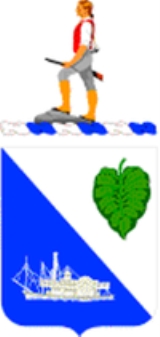
442nd Regimental Combat Team

 
442nd Regimental Combat Team

   Email Print
   Bookmark   Link


442nd Regimental Combat Team


The 442nd Infantry, formerly the 442nd Regimental Combat Team of the United States Army
United States Army

The United States Army is the branch of the United States Armed Forces responsible for Army operations. It is the largest and oldest established branch of the U.S....
, was an Asian American
Asian American

Asian Americans are United States of Asian people. They include sub-ethnic groups such as Chinese Americans, Filipino Americans, Indian Americans, Vietnamese Americans, Korean Americans, Japanese Americans and others whose national origin is from the Asia....
 unit composed of mostly Japanese American
Japanese American

are Americans of Japanese heritage. Japanese Americans have historically been among the three largest Asian American communities, but in recent decades have become the sixth largest group at roughly 1,204,205, including those of mixed-race or mixed-ethnicity....
s who fought in Europe during the Second World War. The families of many of its soldiers were subject to internment
Japanese American internment

Japanese American internment refers to the forcible relocation and internment of approximately 110,000 Japanese people and Japanese Americans to housing facilities called "War Relocation Camps", in the wake of Imperial Japan's attack on Pearl Harbor....
.


Discussion
Ask a question about '442nd Regimental Combat Team'
Start a new discussion about '442nd Regimental Combat Team'
Answer questions from other users
Full Discussion Forum


Recent Posts


Encyclopedia


442 Regimental Combat Team
The 442nd Infantry, formerly the 442nd Regimental Combat Team of the United States Army
United States Army

The United States Army is the branch of the United States Armed Forces responsible for Army operations. It is the largest and oldest established branch of the U.S....
, was an Asian American
Asian American

Asian Americans are United States of Asian people. They include sub-ethnic groups such as Chinese Americans, Filipino Americans, Indian Americans, Vietnamese Americans, Korean Americans, Japanese Americans and others whose national origin is from the Asia....
 unit composed of mostly Japanese American
Japanese American

are Americans of Japanese heritage. Japanese Americans have historically been among the three largest Asian American communities, but in recent decades have become the sixth largest group at roughly 1,204,205, including those of mixed-race or mixed-ethnicity....
s who fought in Europe during the Second World War. The families of many of its soldiers were subject to internment
Japanese American internment

Japanese American internment refers to the forcible relocation and internment of approximately 110,000 Japanese people and Japanese Americans to housing facilities called "War Relocation Camps", in the wake of Imperial Japan's attack on Pearl Harbor....
. The 442nd was a self-sufficient fighting force, and fought with uncommon distinction in Italy
Italy

Italy , officially the Italian Republic , is a country located on the Italian Peninsula in Southern Europe and on the two largest islands in the Mediterranean Sea, Sicily and Sardinia....
, southern France
France

France , officially the French Republic , is a country whose Metropolitan France is located in Western Europe and that also comprises various Overseas departments and territories of France....
, and Germany
Germany

Germany , officially the Federal Republic of Germany , is a country in Central Europe. It is bordered to the north by the North Sea, Denmark, and the Baltic Sea; to the east by Poland and the Czech Republic; to the south by Austria and Switzerland; and to the west by France, Luxembourg, Belgium, and the Netherlands....
. The unit became the most highly decorated military unit in the history of the United States Armed Forces, including 21 Medal of Honor
Medal of Honor

The Medal of Honor is the highest Awards and decorations of the United States military awarded by the United States government. It is bestowed on a member of the United States armed forces who distinguishes himself "conspicuously by gallantry and intrepidity at the risk of his life above and beyond the call of duty while engaged in an action...
 recipients, earning the nickname “The Purple Heart Battalion.”

Background

Most Japanese Americans who fought in WWII were Nisei
Nisei

During the early years of World War II, Japanese Americans were forcibly Japanese American internment from their homes in the Pacific coast states because military leaders and public opinion combined to fan unproven fears of sabotage....
, second-generation Japanese Americans born in the U.S. Nevertheless, shortly after the Japanese attack on Pearl Harbor
Pearl Harbor

Pearl Harbor is a harbor on the island of Oahu, Hawaii, west of Honolulu, Hawaii. Much of the harbor and surrounding lands is a United States Navy deep-water naval base....
 on December 7 1941, Japanese American men were categorized as 4C
Selective Service System

The Selective Service System serves at least two purposes. It is the means by which the United States administers conscription in the United States....
 (enemy alien) and therefore non-draftable. On February 19 1942, President
President of the United States

The President of the United States is the head of state and head of government of the United States and is the highest political official in the United States by influence and recognition....
 Franklin D. Roosevelt
Franklin D. Roosevelt

Franklin Delano Roosevelt , often referred to by his initials FDR, was the List of Presidents of the United States President of the United States....
 signed Executive Order 9066
Executive Order 9066

United States Executive Order 9066 was a presidential Executive order issued during World War II by U.S. President Franklin D. Roosevelt on February 19, 1942, using his authority as Commander-in-Chief to exercise war powers to send ethnic groups to internment camps....
, authorizing military authorities “to prescribe military areas in such places and of such extent as he or the appropriate Military Commander may determine, from which any or all persons may be excluded, and with respect to which, the right of any person to enter, remain in, or leave shall be subject to whatever restrictions the Secretary of War or the appropriate Military Commander may impose in his discretion.” Although the order did not refer specifically to people of Japanese ancestry, it set the stage for the internment of people of Japanese descent. In March 1942, Lieutenant General
Lieutenant General (United States)

In the United States Army, the United States Marine Corps and the United States Air Force, lieutenant general is a 3 star rank general officer rank, with the U.S....
 John L. DeWitt
John L. DeWitt

John Lesesne DeWitt was an American Army general, best known for his role in the Japanese-American internment during World War II. In the course of carrying out policy, he issued military proclamations that applied to American men, women and children who happened to have Japanese ancestry, restricting their civil rights and directing that th...
, head of the Western Defense Command, issued the first of 108 military proclamations that resulted in the forced removal of more than 110,000 people of Japanese ancestry on the West Coast from their homes and placed in guarded concentration camps behind barbed wire, or (as the government euphemisticly referred to them) relocation camps.

In Hawai'i, martial law, complete with curfews and blackouts, was imposed. A large portion of the population was of Japanese descent (150,000 out of 400,000 people in 1937) and internment was deemed not practicable, mostly for economic reasons. When the War Department called for the removal of all soldiers of Japanese ancestry from active service in early 1942, General
General

A General officer is an Officer of high military rank. The term or equivalent is used by nearly every country in the world. General can be used as a generic term for all grades of general officer, or it can specifically refer to a single rank that is just called general....
 Delos C. Emmons, commander of the U.S. Army in Hawai’i, decided to discharge those in the Hawai’i Territorial Guard, which was composed mainly of ROTC students from the University of Hawai’i
University of Hawaii

The University of Hawaii System, formally the University of Hawaii and popularly known as UH, is a public, co-educational college and university system that confers associate, bachelor, master, doctoral and post-doctoral degrees through three university campuses, seven community college campuses, an employment training center, th...
. However, he kept the more than 1,300 Japanese American soldiers of the 298th and 299th Infantry regiments of the Hawai’i National Guard
United States National Guard

The National Guard of the United States is a Military reserve force composed of U.S. state National Guard militia members or units under federally recognized active or inactive Military of the United States service for the United States ....
. The discharged members of the Hawai’i Territorial Guard petitioned General Emmons to allow them to assist in the war effort. The petition was granted and they formed a group called the Varsity Victory Volunteers (VVV), which performed various construction jobs for the military. General Emmons, worried about the loyalty of Japanese American soldiers in the event of a Japanese invasion, recommended to the War Department that those in the 298th and 299th regiments be organized into a “Hawai’ian Provisional Battalion” and sent to the mainland. The move was authorized, and on June 5 1942, the Hawai’ian Provisional Battalion set sail for training. They landed at Oakland, California
Oakland, California

Oakland , founded in 1852, is the eighth-largest city in the U.S. state of California and the county seat of Alameda County, California. Oakland is approximately 8 miles east of San Francisco and the cities are separated by San Francisco Bay....
 on June 10 1942 and two days later were sent to Camp McCoy, Wisconsin
Wisconsin

Wisconsin is one of the fifty U.S. state in the United States of America, located in the north central part of the United States. It borders two of the five Great Lakes and four U.S....
. On June 15 1942, the battalion was designated the 100th Infantry Battalion (Separate)
U.S. 100th Infantry Battalion

The 100th Battalion, 442d Infantry is the only remaining combat arms unit in the U.S. Army Reserve, the other units in the Army Reserve being combat support or combat service support....
 — the “One Puka Puka”.

The 100th performed so well in training that, on February 1 1943, the U.S. government reversed its decision on Japanese Americans serving in the armed forces, and approved the formation of a Japanese American combat unit. A few days later, the government required that all internees answer a loyalty questionnaire, which was used to register the Nisei for the draft. Question 27 of the questionnaire asked males eligible to register for the draft, “Are you willing to serve in the armed forces of the United States on combat duty, wherever ordered?” while question 28 asked all internees, “Will you swear unqualified allegiance to the United States of America and faithfully defend the United States from any or all attack by foreign or domestic forces, and forswear any form of allegiance or obedience to the Japanese emperor, or any other foreign government, power or organization?

Nearly a quarter of the Nisei males answered with a no or a qualified answer to both questions; some even left them blank. However, more than 75% indicated that they were willing to enlist in the U.S. armed forces (although not all of them really did) and swear allegiance to the U.S. The U.S. Army called for 1,500 volunteers from Hawai’i and 3,000 from the mainland. An overwhelming 10,000 men from Hawai’i came forth. However the announcement was met with less enthusiasm on the mainland, where the vast majority of draft age men of Japanese ancestry and their families were held in internment camps. The Army revised the quota, calling for 2,900 men from Hawai’i, and 1,500 from the mainland. Only 1,256 volunteered from the mainland. In the end, around 3,000 men from Hawaii and 800 men from the mainland were inducted. President Roosevelt announced the formation of the 442nd Infantry Regimental Combat Team (the Go For Broke regiment), famously saying, “Americanism is not, and never was, a matter of race or ancestry.”

Training and organization

The 100th Infantry Battalion relocated to Camp Shelby
Camp Shelby

Camp Shelby is a military post whose North Gate begins at the southern boundary of Hattiesburg, Mississippi, on United States Highway 49. It is the largest state owned training site in the nation, has a long history of serving the country and is considered by many as ?a national treasure.? During wartime, the camp's mission is to serve as...
 in Mississippi
Mississippi

Mississippi is a U.S. state located in the Deep South of the United States. Jackson, Mississippi is the state capital and largest city. The state's name comes from the Mississippi River, which flows along its western boundary, and takes its name from the Anishinaabe language word misi-ziibi ....
. Eventually, the 100th was joined by 3,000 volunteers from Hawai’i and 800 from the mainland camps. As a regimental combat team
Regimental combat team

A regimental combat team was a provisional major infantry unit of the United States Army during the Second World War and Korean War. The regimental combat team, or "R.C.T.", was formed by augmenting a regular infantry regiment with smaller tank, artillery, combat engineer, mechanized_warfare cavalry, reconnaissance, Signals , Anti-aircraft wa...
, the 442nd RCT was a self-sufficient fighting formation of three infantry
Infantry

Infantry are soldiers who are primarily trained for the role of fighting on foot. A soldier in the infantry is known as an infantryman. Infantry units have more physically demanding training than other branches of armies, and place a greater emphasis on fitness, physical strength and aggression....
 battalions (originally 1st, 2nd, and 3rd Battalions, 442nd Infantry, and later the 100th Infantry Battalion in place of the 1st), the 522nd Field Artillery Battalion, the 232nd Engineering Company, an anti-tank company, cannon company, service company, medical detachment, headquarters companies, and the 206th Army Band.

Initially, there was tension between volunteers from the islands (known as “buddhaheads,” from the Japanese/English term buta-head, meaning “pig-headed”) and those from the mainland (“kotonks” or “katonks”, alleged to be the sound of a coconut hitting an empty head). The rivalry dissipated after visits were organized to the internment camps where the mainlanders’ families were being held.

Although they were permitted to volunteer to fight, Americans of Japanese ancestry were generally forbidden to fight in combat in the Pacific Theater
Pacific Ocean theater of World War II

The Pacific Ocean theater was one of four major naval theatres of war of World War II, that pitted forces of the Empire of Japan against those of the United States, Commonwealth of Nations, the Dutch East Indies and Free_French_Forces#The_struggle_for_control_of_French_colonies....
. No such limitations were placed on Americans of German or Italian ancestry who fought against the Axis Powers
Axis Powers

The Axis powers were those countries that were opposed to the Allies of World War II during World War II. The three major Axis powers - Nazi Germany, Kingdom of Italy , and Empire of Japan - were part of a military alliance on the signing of the Tripartite Pact in September 1940, which officially founded the Axis powers....
 in the European Theater, mostly due to practicality, as there were many more German and Italian Americans compared to Japanese Americans. However, many men deemed proficient enough in the Japanese language were approached, or sometimes ordered, to join the Military Intelligence Service (MIS) to serve as translators/interpreters and spies in the Pacific, as well as in the China Burma India Theater. These men were sent to the MIS Language School at Camp Savage
Camp Savage

Camp Savage is the former site of a Military Intelligence Service language school operating during World War II. The school itself was established in San Francisco, but was moved in 1942 to Savage, Minnesota, Minnesota in the interest of national security....
, Minnesota
Minnesota

Minnesota is a U.S. state in the Midwestern United States of the United States. The twelfth largest state by area in the U.S., it is the twenty-first most populous, with just over five million residents....
 to improve their language skills and receive training in military intelligence. While the 442nd trained in Mississippi, the 100th departed for Oran
Oran

Oran is a city on the Mediterranean Sea coast in northwestern Algeria. Oran marked the largest westernmost metropolitan area of the then Ottoman Empire....
 in North Africa to join the forces destined to invade Italy
Italy

Italy , officially the Italian Republic , is a country located on the Italian Peninsula in Southern Europe and on the two largest islands in the Mediterranean Sea, Sicily and Sardinia....
.

Combat

442nd Us Army Rct Squad Leader in France
The 100th landed at Oran
Oran

Oran is a city on the Mediterranean Sea coast in northwestern Algeria. Oran marked the largest westernmost metropolitan area of the then Ottoman Empire....
, Algeria
Algeria

Algeria , officially the People's Democratic Republic of Algeria, is a country located in North Africa. It is the largest country of the Mediterranean sea, second largest in the Arab World, and the second largest on the African continent and the eleventh-largest country in the world in terms of land area....
 on September 2, 1943, and was originally scheduled to guard supply trains in North Africa. However, the battalion C.O., Colonel Farrant L. Turner insisted that the 100th be given a combat assignment. The battalion was subsequently attached to the U.S. 34th Infantry Division
U.S. 34th Infantry Division

The 34th Infantry Division is an Army Division of the United States National Guard of the United States that participated in World War I, World War II and continues to serve today, with most of the Division part of the Minnesota National Guard and Iowa National Guard National Guard of the United States....
 on September 8, 1943 in order to replace the 2nd Battalion of the 133rd Infantry Regiment which had been assigned the task of guarding Allied Force Headquarters in Algiers.

The 100th sailed from North Africa with 1,300 men on September 19, 1943 and landed on the beachhead at Salerno
Salerno

Salerno is a town in southern Italy, capital of the Province of Salerno of the same name, in the region of Campania. It is located on the Gulf of Salerno on the Tyrrhenian Sea....
 on September 22, 1943. On September 29, Sergeant Shigeo Takata of B Company became the first member of the unit to be killed in action. Later that day, Private Keichi Tanaka, also of B Company, was killed in a separate action, making him the unit's second KIA.

After obtaining its initial objective of Monte Milleto, the 100th joined the assault on Monte Cassino
Battle of Monte Cassino

The Battle of Monte Cassino was a costly series of four battles during World War II, fought by the Allies of World War II with the intention of breaking through the Winter Line and seizing Rome....
. The 100th fought valiantly, suffering many casualties; by February 1944, it could muster only 521 men. The depleted battalion joined the defense of the beachhead
Beachhead

Beachhead is a military term used to describe the line created when a unit reaches a beach, and begins to defend that area of beach, while other reinforcements help out, until a unit large enough to begin advancing has arrived....
 at Anzio until May 1944, and then added momentum to the push for Rome
Rome

Rome is the capital city of Italy and Lazio, and is Italy's largest and most populous city, with 2,724,347 residents in an urban area of some ....
, but was halted only ten miles from the city. Some believe that the 100th was deliberately halted to allow non-Nisei soldiers to liberate Rome.

The 442nd Combat Team, less its 1st Battalion, which had remained in the U.S. to train Nisei replacements after many of its members were levied as replacements for the 100th, sailed from Hampton Roads, Virginia, on 1 May 1944, and landed 28 May at Anzio and joined the 100th Battalion in Civitavecchia
Civitavecchia

Civitavecchia is a town and comune of the province of Rome in the central Italy region of Latium. A Port on the Tyrrhenian Sea, it is located 80 kilometers west-north-west of Rome, across the Mignone river....
 north of Rome on June 10 1944, attached to the 34th Infantry Division. On 10 August 1944, the 100th Battalion was officially assigned to the 442nd Regimental Combat Team as its 1st battalion, but was allowed to keep its unit designation in recognition of its distinguished fighting record. The 1st Battalion 442nd Infantry at Camp Shelby was then redesignated the 171st Infantry Battalion (Separate) on 5 September 1944.

The combined unit continued in the push up Italy, now attached to the 88th Infantry Division, before joining the invasion of southern France
France

France , officially the French Republic , is a country whose Metropolitan France is located in Western Europe and that also comprises various Overseas departments and territories of France....
, where the 442nd participated in the fight to liberate Bruyères
Bruyères

Bruy?res is a town in France. It is the centre of a Communes of France in the Vosges Departments of France, and also the main town in its Cantons of France....
, and was next attached to the 36th Infantry Division, originally a Texas National Guard
Texas National Guard

The Texas National Guard consists of the:*Texas Army National Guard*Texas Air National GuardThe Guard is administered by the adjutant general, an appointee of the governor of Texas....
 outfit. The 442nd famously rescued the "Lost Battalion
Lost Battalion (World War II)

"The Lost Battalion" refers to the 1st Battalion, 141st Infantry , which was surrounded by Wehrmacht in the Vosges Mountains on 24 October 1944....
" at Biffontaine
Biffontaine

Biffontaine is a village in the valley of the River Neun?, near Bruy?res, in France. It is the centre of a Communes of France in the Vosges Departments of France....
. Pursuant to army tradition of never leaving soldiers behind, over a five-day period, from October 26 to October 30 1944, the 442nd suffered the loss of nearly half of its roster—over 800 casualties, including 121 dead — while rescuing 211 members of the 36th Infantry Division's 1st Battalion, 141st Infantry, which had been surrounded by German forces in the Vosges mountains
Vosges mountains

For the department of France of the same name, see Vosges.The Vosges are a range of low mountains in eastern France, near its border with Germany....
 since October 24.

Following the Vosges, the 442nd was sent to the Franco-Italian border on November 28 to relieve the soon-to-be-disbanded 1st Special Service Force. The 442nd remained there, refitting and training, until March 25, 1945, when it returned to the Fifth Army in Italy and was attached to the U.S. 92nd Infantry Division
U.S. 92nd Infantry Division

The 92nd Infantry Division was a unit of the United States Army in World War I and World War II. Nicknamed the "Buffalo Soldiers Division", this Racial segregation unit was the only African American infantry division to see combat in Europe during WWII, as part of the U.S....
.

On the Italian front, the 442nd had contact with another segregated American unit, the 92nd Infantry Division, as well as segregated troops of the British and French colonial empires (Black Africans, Moroccans, Algerians, Indians, Gurkhas, Jews and Palestinians) and the non-segregated Brazilian Expeditionary Force which had in its ranks ethnic Japanese.

The 442nd returned to heavy combat, seizing Monte Belvedere on April 7 and Carrara
Carrara

Carrara is a city in the province of Massa-Carrara , famous for the white or blue-gray marble quarried there. It is on the Carrione river, some 100 km west-northwest of Florence....
 on April 10. The 522nd Field Artillery Battalion remained in northern France and joined the push into Germany in 1945. Scouts from the 522nd were among the first Allied troops to release prisoners from the Dachau concentration camp
Dachau concentration camp

Dachau was a Nazi Germany Nazi concentration camps, and the first one opened in Germany, located on the grounds of an abandoned munitions factory near the medieval town of Dachau, about 16 km northwest of Munich in the state of Bavaria which is located in southern Germany....
.

The 442nd is commonly reported to have suffered a casualty rate of 314 percent, informally derived from 9,486 Purple Heart
Purple Heart

The Purple Heart is a United States Awards and decorations of the United States military awarded in the name of the President of the United States to those who have been wounded or killed while serving on or after April 5, 1917 with the Military of the United States....
s divided by some 3,000 original in-theater personnel. U.S. Army battle reports show the official casualty rate, combining KIA
Killed in action

Killed in action is a Casualty classification generally used by Military to describe the deaths of their own forces by other hostile forces....
 (killed) with MIA
Missing in action

Missing in action is a status assigned to armed services personnel who are reported missing during active service. They may have been killed in action or Wounded in action in action, or become a prisoner of war, or may have Desertion....
 (missing) and WIA
Wounded in action

WIA is a three letter abbreviation standing for Wounded In Action.It is used to describe soldiers who have been Wound while fighting in a combat zone during war time, but have not been killed....
 (wounded and removed from action) totals, is 93%, still uncommonly high. Many of the Purple Hearts were awarded during the campaign in the Vosges Mountains and some of the wounded were soldiers who were victims of trenchfoot. But many victims of trenchfoot were forced by superiors—or willingly chose—to return to the front even though they were classified as "wounded in action". Wounded soldiers would often escape from hospitals to return to the front line battles.

Decorations

The 442nd RCT became the most decorated unit in U.S. military history for its size and length of service, with its component 100th Infantry Battalion earning the nickname “The Purple Heart Battalion.” The 442nd RCT received 7 Presidential Unit Citations
Presidential Unit Citation (US)

The Presidential Unit Citation, originally called the Distinguished Unit Citation, is awarded to units of the Armed Forces of the United States and allies for extraordinary heroism in action against an armed enemy on or after 7 December 1941 ....
 (5 earned in one month), and its members received 18,143 awards, including:
  • 21 Medals of Honor (the first awarded posthumously to PFC
    Private First Class

    In many armed forces in the world, Private First Class is a rank held by junior enlisted persons....
     Sadao Munemori
    Sadao Munemori

    Sadao S. Munemori was a Posthumous recognition recipient of the Medal of Honor, after he sacrificed his life to save those of his colleagues, at Seravezza, Italy, during the closing stages of World War II....
    , Company A, 100th Battalion, for action near Seravezza, Italy
    Seravezza, Italy

    Seravezza is a town and commune belonging to the Province of Lucca, in northern Tuscany, Italy. It is located in Versilia, close to the Apuan Alps....
    , on April 5, 1945; the others upgraded from other awards in June 2000). Recipients include:
    • Barney F. Hajiro
      Barney F. Hajiro

      Barney F. Hajiro, Military Medal is a former United States Army soldier and a recipient of the United States military's highest decoration?the Medal of Honor?for his actions in World War II....
    • Mikio Hasemoto
      Mikio Hasemoto

      Mikio Hasemoto was a soldier in United States Army who received the Medal of Honor in World War II during actions in Cerasuolo, Italy. Hasemoto, of Asian Pacific descent, fought with the 100th Infantry Battalion when he was killed while repelling an attack against numerically superior German forces....
    • Joe Hayashi
      Joe Hayashi

      Joe J. Hayashi was a United States Army soldier and a recipient of the United States military's highest decoration?the Medal of Honor?for his actions in World War II....
    • Shizuya Hayashi
      Shizuya Hayashi

      Shizuya Hayashi was a soldier in the 100th Infantry Battalion of the United States Army who was awarded the Medal of Honor for actions in Cerasuolo, Italy during World War II....
    • Daniel K. Inouye
    • Yeiki Kobashigawa
      Yeiki Kobashigawa

      Yeiki Kobashigawa was a soldier in United States Army who received the Medal of Honor in World War II during actions near Lanuvio, Italy. Kobashigawa, who fought with the 100th Infantry Battalion, was awarded the Medal of Honor for leading a squad in destroying several German machine gun nests....
    • Robert T. Kuroda
      Robert T. Kuroda

      Robert T. Kuroda was a United States Army soldier and a recipient of the United States military's highest decoration?the Medal of Honor?for his actions in World War II....
    • Kaoru Moto
      Kaoru Moto

      Kaoru Moto was a United States Army soldier and a recipient of the United States military's highest decoration?the Medal of Honor?for his actions in World War II....
    • Sadao Munemori
      Sadao Munemori

      Sadao S. Munemori was a Posthumous recognition recipient of the Medal of Honor, after he sacrificed his life to save those of his colleagues, at Seravezza, Italy, during the closing stages of World War II....
    • Kiyoshi K. Muranaga
      Kiyoshi K. Muranaga

      Kiyoshi K. Muranaga was a United States Army soldier and a recipient of the United States military's highest decoration?the Medal of Honor?for his actions in World War II....
    • Masato Nakae
      Masato Nakae

      Masato Nakae was a Private in the United States Army who served with the 100th Battalion, 442nd Infantry Regiment during World War II. He was one of 22 Americans of Japanese descent awarded the Medal of Honor on June 21, 2000 by President Bill Clinton....
    • Shinyei Nakamine
      Shinyei Nakamine

      Shinyei Nakamine was a soldier in the 100th Infantry Battalion of the United States Army who received the United States' highest decoration for valor - The Medal of Honor, for actions in La Torreto, Italy during World War II....
    • William K. Nakamura
      William K. Nakamura

      William Kenzo Nakamura was a United States Army soldier and a recipient of the United States military's highest decoration?the Medal of Honor?for his actions in World War II....
    • Joe M. Nishimoto
      Joe M. Nishimoto

      Private First Class Joe M. Nishimoto was a member of the highly decorated 442nd Regimental Combat Team which served in the European theater during World War II....
    • Allan M. Ohata
      Allan M. Ohata

      Allan Masahuru Ohata was a soldier in the 100th Infantry Battalion who received the Medal of Honor, the highest decoration for valor in the United States military, for action in Cerasuolo, Italy during World War II....
    • James K. Okubo
      James K. Okubo

      James K. Okubo was a United States Army soldier and a recipient of the United States military's highest decoration?the Medal of Honor?for his actions in World War II....
    • Yukio Okutsu
      Yukio Okutsu

      Yukio Okutsu was a United States Army soldier and a recipient of the United States military's highest decoration?the Medal of Honor?for his actions in World War II....
    • Frank H. Ono
      Frank H. Ono

      Frank H. Ono was a United States Army soldier and a recipient of the United States military's highest decoration?the Medal of Honor?for his actions in World War II....
    • Kazuo Otani
      Kazuo Otani

      Kazuo Otani was a United States Army soldier and a recipient of the United States military's highest decoration?the Medal of Honor?for his actions in World War II....
    • George T. Sakato
      George T. Sakato

      George T. Sakato is a former United States Army soldier and a recipient of the United States military's highest decoration?the Medal of Honor?for his actions in World War II....
    • Ted T. Tanouye
      Ted T. Tanouye

      Ted T. Tanouye was a United States Army soldier and a recipient of the United States military's highest decoration?the Medal of Honor?for his actions in World War II....


  • 52 Distinguished Service Crosses (including 19 Distinguished Service Crosses which were upgraded to Medals of Honor in June 2000)
  • 1 Distinguished Service Medal
  • 560 Silver Star
    Silver Star

    The Silver Star is the third highest Awards and decorations of the United States military that can be awarded to a member of any branch of the United States Armed Forces....
    s (plus 28 Oak Leaf Cluster
    Oak leaf cluster

    An oak leaf cluster or oakleaves is a common device which is placed on Military of the United States awards and decorations to denote those who have received more than one bestowal of a particular decoration....
    s for a second award)
  • 22 Legion of Merit Medals
    Legion of Merit

    The Legion of Merit is a Awards and decorations of the United States military of the United States armed forces that is awarded for exceptionally meritorious conduct in the performance of outstanding services and achievements....
  • 15 Soldier’s Medals
    Soldier's Medal

    The Soldier's Medal is a Awards and decorations of the United States Army of the United States Army. It was introduced by a law passed by Congress of the United States on July 2, 1926....
  • 4,000 Bronze Stars
    Bronze Star Medal

    The Bronze Star Medal is a Military of the United States individual Awards and decorations of the United States military which may be awarded for bravery, acts of merit, or meritorious service....
     (plus 1,200 Oak Leaf Clusters for a second award; one Bronze Star was upgraded to a Medal of Honor in June 2000)
  • 9,486 Purple Heart
    Purple Heart

    The Purple Heart is a United States Awards and decorations of the United States military awarded in the name of the President of the United States to those who have been wounded or killed while serving on or after April 5, 1917 with the Military of the United States....
    s


Unit fight song


Four-Forty-Second Infantry -- We're the boys of Hawai'i nei -- We'll fight for you And the Red, White and Blue, And go to the front . . . And back to Honolulu-lulu. Fighting for dear old Uncle Sam Go for broke! HOOH! We don't give a damn! We'll round up the Huns At the point of our guns, And vict'ry will be ours! GO FOR BROKE! FOUR-FOUR-TWO! GO FOR BROKE! FOUR-FOUR-TWO! And vict'ry will be ours!

The song may have originally been written for the 100th Battalion and would have originally had
One-Puka-Puka in place of Four-Forty-Second, thus explaining the reference to Hawai'i nei (Beautiful Hawai'i) and the vow to go back to Honolulu.

After the war

The stellar record of the Japanese Americans serving in the 442nd and in the Military Intelligence Service (US Pacific Theater forces in WWII) helped change the minds of anti-Japanese American critics in the US and resulted in easing of restrictions and the eventual release of the 120,000 strong community well before the end of WWII.

However, the unit’s exemplary service and many decorations did not change the attitudes of the general U.S. population to people of Japanese descent after World War II. Veterans were welcomed home by signs that read “No Japs Allowed” and “No Japs Wanted,” and many veterans were denied service in shops and restaurants, and had their homes and property vandalized.

One notable national effect of the service of the 442nd was to help convince Congress to end its opposition towards Hawaii's statehood petition. Twice before 1959, residents of Hawaii asked to be admitted to the US as the 49th state, but each time Congress was fearful of having a co-equal state that had a majority non-white population. The exemplary record of the Japanese Americans serving in the 442nd and the loyalty showed by the rest of Hawaii's population during World War II overcame those fears and allowed Hawaii to be admitted as the 50th state (Alaska was granted statehood just prior).

In post-war American popular slang, the phrase "going for broke" was adopted from the 442nd's unit motto "Go for Broke," which was derived from the Hawaiian pidgin
Pidgin

A pidgin is a simplified language that develops as a means of communication between two or more groups that do not have a language in common, in situations such as trade....
 phrase used by craps shooters risking all their money in one roll of the dice.

Anti-Japanese sentiment remained strong into the 1960s, but faded along with other once-common prejudices, even while remaining strong in certain circles. Conversely, the story of the 442nd provided a leading example of what was to become the controversial model minority
Model minority

Model minority refers to a minority ethnic, Race , or religion social group whose members achieve a higher degree of success than the population average....
 stereotype
Stereotype

A stereotype is a preconceived idea that attributes certain characteristics to all the members of class or set. The term is often used with a negative connotation when referring to an oversimplified, exaggerated, or demeaning assumption that a particular individual possesses the characteristics associated with the class due to his or her me...
.

Demobilization and rebirth

The 442nd RCT was demobilized in Honolulu in 1946, but reactivated in 1947 in the U.S. Army Reserve. It was mobilized in 1968 to refill the Strategic Reserve
Military reserve

A military reserve, tactical reserve, or strategic reserve is a group of military personnel or units which are initially not committed to a battle by their commander so that they are available to address unforeseen situations or exploit suddenly developing opportunities....
 during the Vietnam War
Vietnam War

The Vietnam War, also known as the Second Indochina Wars, the Vietnam Conflict, or often in Vietnam the American War occurred in Vietnam, Laos and Cambodia from 1959 to April 30, 1975....
, and carries on the honors and traditions of the unit. Today, the 100th Battalion, 442nd Infantry
U.S. 100th Infantry Battalion

The 100th Battalion, 442d Infantry is the only remaining combat arms unit in the U.S. Army Reserve, the other units in the Army Reserve being combat support or combat service support....
, is the only infantry unit of the Army Reserve. The battalion headquarters is at Fort Shafter
Fort Shafter

Fort Shafter is in Honolulu, Hawaii, extending up the interfluve between Kalihi and Moanalua valleys, as well as onto the coastal plain at Mapunapuna....
, Hawai’i, with subordinate units based in Hilo, American Samoa
American Samoa

American Samoa is an Territories of the United States of the United States located in the South Pacific Ocean, southeast of the sovereign state of Samoa, formerly known as Western Samoa....
, Saipan
Saipan

Saipan is the largest island and Capital of the United States Northern Mariana Islands , a chain of 15 tropical islands belonging to the Marianas archipelago in the western Pacific Ocean with a total area of 115.39 km? ....
, and Guam
Guam

Guam , officially the Territory of Guam, is an island in the western Pacific Ocean and is an organized, unincorporated insular area of the United States....
. The only military presence in American Samoa
American Samoa

American Samoa is an Territories of the United States of the United States located in the South Pacific Ocean, southeast of the sovereign state of Samoa, formerly known as Western Samoa....
 consists of the Battalion's B and C companies

In August 2004, the battalion was mobilized for duty in Iraq
Iraq

Iraq , officially the Republic of Iraq , is a country in Western Asia spanning most of the northwestern end of the Zagros Mountains, the eastern part of the Syrian Desert and the northern part of the Arabian Desert....
, stationed at Logistics Support Area Anaconda
Logistics Support Area Anaconda

Joint Base Balad, formerly Balad Air Base and Logistics Support Area Anaconda, or simply LSA Anaconda - formerly known as Al-Bakir Air Base and known in popular media as Camp Anaconda - is one of the largest United States military bases in Iraq which was formerly the largest Iraqi air base....
 in the city of Balad, which is located about 50 miles northwest of Baghdad
Baghdad

Baghdad is the Capital of Iraq and of Baghdad Governorate, with which it is also coterminous. With a municipal population estimated at 6.5 million, it is the largest city in Iraq, and the second largest city in the Arab World....
. Lt. Colonel Colbert Low assumed command of the battalion only a few weeks after the battalion arrived at Logistical Support Area Anaconda. As of January 2006, the 100th had returned home with the exception of some 100 artillery
Artillery

Artillery is a military Combat Arms which employs any apparatus, machine, an assortment of tools or instruments, a system or systems used as weapons for the discharge of large projectiles in combat as a major contribution of fire power within the overall military capability of an armed force....
 personnel. One soldier was killed by an improvised explosive device
Improvised explosive device

An improvised explosive device is a bomb constructed and deployed in ways other than in conventional military action. They may be partially comprised of conventional military explosives, such as an artillery round, attached to a detonating mechanism....
 attack. A total of 4 members of the battalion were killed in action before they returned home in January 2006.

California
California

California is a U.S. state on the West Coast of the United States of the United States, along the Pacific Ocean. It is bordered by Oregon to the north, Nevada to the east, Arizona to the southeast, and to the south the Mexico state of Baja California....
 has given three state highway segments honorary designations for Japanese American
Japanese American

are Americans of Japanese heritage. Japanese Americans have historically been among the three largest Asian American communities, but in recent decades have become the sixth largest group at roughly 1,204,205, including those of mixed-race or mixed-ethnicity....
 soldiers:
  • State Route 23
    California State Route 23

    State Route 23 is a state highway in the U.S. state of California. The route runs roughly from Fillmore, California to Malibu, California. This route is part of the California Freeway and Expressway System....
     between U.S. Route 101 and State Route 118
    California State Route 118

    State Route 118 is a state highway in the United States state of California that begins running west to east through Ventura County, California and Los Angeles County, California counties in southern California....
     is named the
    Military Intelligence Memorial Freeway;
  • State Route 99
    California State Route 99

    State Route 99 , commonly known as Highway 99 or 99, is a north-south state highway in the U.S. state of California, stretching almost the entire length of the Central Valley ....
     between Fresno
    Fresno, California

    Fresno is a city in California, USA, the county seat of Fresno County, California, and the second largest inland city in the state, after San Jose, California....
     and Madera
    Madera, California

    Madera is a city in and the county seat of Madera County, California, California, United States. It is a principal city of the Madera–Chowchilla, California Metropolitan Statistical Area,which encompasses all of Madera County....
     is named the
    100th Infantry Battalion Memorial Highway;
  • State Route 99
    California State Route 99

    State Route 99 , commonly known as Highway 99 or 99, is a north-south state highway in the U.S. state of California, stretching almost the entire length of the Central Valley ....
     between Salida
    Salida, California

    Salida is a census-designated place in Stanislaus County, California, California, in the United States. As of the United States Census, 2000, the CDP population was 12,560....
     and Manteca
    Manteca, California

    Manteca is a city in , United States. As of November 2005, the city's population is approximately some 65,000 residents. Manteca is well known due to its reputable and once famous Manteca Waterslides....
     is named the
    442nd Regimental Combat Team Memorial Highway.


A nationwide campaign to urge the U.S. Postal Service to issue a commemorative postage stamp to honor the contributions of the Japanese American soldiers of World War II was begun in 2006 in California.

Prominent members

  • Daniel Inouye
    Daniel Inouye

    born September 7, 1924 is an American politician who currently serves as the senior United States Senate from Hawaii. He has been a U.S. Senator since 1963, and is currently the third-most-senior member after fellow Democratic Party Robert Byrd and Ted Kennedy....
    , U.S. Representative from Hawaii (1959–1962); U.S. Senator from Hawaii (1962–); Awarded Medal of Honor
    Medal of Honor

    The Medal of Honor is the highest Awards and decorations of the United States military awarded by the United States government. It is bestowed on a member of the United States armed forces who distinguishes himself "conspicuously by gallantry and intrepidity at the risk of his life above and beyond the call of duty while engaged in an action...
  • Spark Matsunaga
    Spark Matsunaga

    Spark Masayuki Matsunaga was a United States Senate from Hawaii. He was an United States United States Democratic Party whose legislation in the United States Senate led to the creation of the Commission on Wartime Relocation and Internment of Civilians....
    , U.S. Representative from Hawaii (1962–1976); U.S. Senator from Hawaii (1977–1990)
  • Susumu Ito, Emeritus Professor of Cell Biology and Anatomy, Harvard Medical School (1960–1990)
  • Colonel
    Colonel

    Colonel is a military rank of a commissioned officer, with corresponding ranks existing in almost every country in the world. It is also used in some police forces and other paramilitary rank structures....
     Young-Oak Kim
    Young-Oak Kim

    Colonel Young-Oak Kim was a highly decorated U.S. Army combat veteran of World War II and the Korean War. He was a member of the U.S. 100th Infantry Battalion and 442nd Regimental Combat Team, a combat leader victorious in many critical battles in Italy and France during World War II....
    ; the only Korean American
    Korean American

    Korean Americans are United States of Koreans origin. The Korean American community is the fifth largest Asian American subgroup, after the Chinese American, Filipino American, Indian American, and Vietnamese American communities....
     officer during his service in 442nd Infantry. First officer from an ethnic minority in U.S. history to command an Army combat battalion.
  • Dale Ishimoto
    Dale Ishimoto

    Dale Ishimoto was an American actor of Japanese people descent. He was born in Delta, Colorado in 1923 and was raised in Guadalupe, California....
    , actor in many films, TV shows, and commercials


Bibliography


Works about the 442nd

  • American Pastime
    American Pastime (film)

    American Pastime is a 2007 in film film set in the Topaz War Relocation Center, a Utah camp which housed thousands of people during the Japanese American internment during World War II....
    While the film is fiction, it depicts life inside the internment camps, where baseball was one of the major diversions from the reality of the internees' lives. Location scenes were filmed in bleak, desolate land, not far from the site of the actual internment camp. Lane Nomura, the oldest son enlists in the Army, as a member of the 442nd Regimental Combat Team, the famed "Purple Heart Battalion." The unit motto, "Go for broke!" provides inspiration at a climactic moment, and reference is made to the losses taken by the 442nd during the rescue of the Lost Battalion.
  • Go For Broke! This 1951 film dramatizes the lives and wartime heroics of the 442nd Regimental Combat Team. The film stars Van Johnson
    Van Johnson

    Van Johnson was an American film and television actor and dancer who was a major star at Metro-Goldwyn-Mayer studios during World War II.Johnson was the embodiment of the "boy next door," playing "the red-haired, freckle-faced soldier, sailor or bomber pilot who used to live down the street" in MGM movies during the Second World War years...
     as a young officer, reluctant about his assignment to the 442nd. He comes to respect the Nisei troops, eventually refusing a transfer back to his original Texas unit. The movie also starred a number of veterans of the 442nd.
  • The One Puka Puka episode of The Gallant Men
    The Gallant Men

    The Gallant Men was a 1962-1963 American Broadcasting Company television series which depicted an infantry company of United States soldiers fighting their way through Italy in World War II....
    television series featured the unit with guest stars Poncie Ponce and George Takei
    George Takei

    George Hosato Takei Altman is an American actor, best known for his role in the TV series Star Trek: The Original Series, in which he played Hikaru Sulu on the USS Enterprise ....
    .
  • The James Michener novel Hawaii
    Hawaii (novel)

    Hawaii is a novel by James Michener published in 1959. Written in episodic format, like most of Michener's works, the book narrates the story of the original Hawaiians, who sailed to the islands from Bora Bora, the early United States missionaries and merchants, and the China and Japanese immigrants who traveled to work and seek their f...
     features a chapter detailing the 442nd's experiences, although its designation is changed to the 222nd and many of the members appear under fictionalized names.
  • Ed Sakamoto wrote a play about the 100th/442nd entitled Our Hearts Were Touched by Fire, which was performed in Honolulu and Los Angeles.
  • In the series of four Karate Kid
    The Karate Kid

    The Karate Kid is a 1984 in film film directed by John G. Avildsen and written by Robert Mark Kamen, starring Ralph Macchio, Pat Morita and Elisabeth Shue....
    movies, Keisuke Miyagi is a main character portrayed as a World War II veteran who had fought in the 442nd and received the Medal of Honor
    Medal of Honor

    The Medal of Honor is the highest Awards and decorations of the United States military awarded by the United States government. It is bestowed on a member of the United States armed forces who distinguishes himself "conspicuously by gallantry and intrepidity at the risk of his life above and beyond the call of duty while engaged in an action...
    . The fourth film,
    The Next Karate Kid
    The Next Karate Kid

    The Next Karate Kid is a 1994 in film film starring Hilary Swank and Pat Morita. It is the fourth movie in The Karate Kid series. It was directed by Christopher Cain, written by Mark Lee with music by Bill Conti....
    , begins with a reunion of the 442nd, in which Sen. Daniel Inouye
    Daniel Inouye

    born September 7, 1924 is an American politician who currently serves as the senior United States Senate from Hawaii. He has been a U.S. Senator since 1963, and is currently the third-most-senior member after fellow Democratic Party Robert Byrd and Ted Kennedy....
     gives a speech and Mr Miyagi wears his Medal of Honor
    Medal of Honor

    The Medal of Honor is the highest Awards and decorations of the United States military awarded by the United States government. It is bestowed on a member of the United States armed forces who distinguishes himself "conspicuously by gallantry and intrepidity at the risk of his life above and beyond the call of duty while engaged in an action...
     for the only time in any of the four films.
  • In 2005, Lane Nishikawa
    Lane Nishikawa

    Lane Nishikawa is an American actor, filmmaker, playwright and performance artist. He is Sansei and his work often deals with Asian American history and identity issues....
     directed and starred in the independent film,
    Only the Brave
    Only the Brave

    Only the Brave is a 2007 in film independent film about the U.S. 100th Infantry Battalion/442nd Regimental Combat Team, a segregated World War II fighting unit completely made up of Japanese Americans, which for its size and length service became the most decorated unit in U.S....
    , which is a fictional account of the rescue of the Lost Battalion.
  • The December 9, 2007 episode of the CBS
    CBS

    CBS Broadcasting Inc. is an American radio network and television network. The name is derived from the initials of Columbia Broadcasting System, its former legal name....
     TV show
    Cold Case
    Cold Case

    Cold Case is an United States police procedural television series revolving around a fictionalized Philadelphia Police Department division in Pennsylvania that specializes in investigating cold cases....
    centers around the Japanese internment camps
    Japanese internment camps

    May refer to:* Japanese Canadian internment* Japanese American internment* List of Japanese-run internment camps during World War II...
     and discusses the 442nd Regional Combat Team.
  • Ken Burns
    Ken Burns

    Kenneth Lauren Burns is an United States director and producer of documentary films known for his style of making use of archival footage and photographs....
    ' 2007 PBS WWII documentary "The War
    The War (documentary)

    The War is a 2007 World War II Documentary film produced by United States Film director Ken Burns and Lynn Novick, narrated primarily by Keith David....
    " explores the stories of four American towns' experiences with the war. Burns' 15 hour documentary goes in depth in describing the many battles of WWII, including those of the 442nd Infantry Regiment.


See also

  • Admission of Hawaii Act
  • Colonel Virgil R. Miller
    Virgil R. Miller

    Colonel Virgil Rasmuss Miller was a United States Army officer who served as Regimental Commander of the 442nd Regimental Combat Team , a unit which was composed of "Nisei" , during World War II....
    , 422nd Regimental Combat Team Commander.
  • Go For Broke Monument
    Go For Broke Monument

    The Go For Broke Monument in Little Tokyo, Los Angeles, California commemorates Japanese Americans who served in the United States Army during World War II....
  • Japanese American internment
    Japanese American internment

    Japanese American internment refers to the forcible relocation and internment of approximately 110,000 Japanese people and Japanese Americans to housing facilities called "War Relocation Camps", in the wake of Imperial Japan's attack on Pearl Harbor....
  • John E. Dahlquist
    John E. Dahlquist

    General John Ernest Dahlquist was a U.S. Army general and World War II division commander. In the course of his career, he commanded three different army divisions, commanded at the corps and field army level, and rose to 4 star rank....
  • Manzanar
    Manzanar

    Manzanar is most widely known as the site of one of ten concentration camps where over 110,000 Japanese Americans were imprisoned during World War II....


External links

  • (pentagon.mil)
  • (defenselink.mil)
  • compiled by members of the 442nd Combat Team, Mitsuye Yamada papers, Special Collections and Archives, The UC Irvine Libraries, via Calisphere.
  • . The New York Times
    The New York Times

    The New York Times is an American daily newspaper published in New York City. The largest metropolitan newspaper in the United States, "The Gray Lady"?named for its staid appearance and style?is regarded as a national newspaper of record....
    . 2008-08-16.
  • produced by the