All Topics  
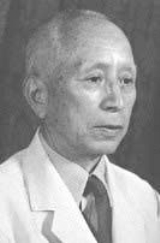
Yoshijiro Umezu

 
Yoshijiro Umezu

   Email Print
   Bookmark   Link


Yoshijiro Umezu


(4 January 1882 - 8 January 1949) was a general in the Imperial Japanese Army
Imperial Japanese Army

The Imperial Japanese Army , or literally Army of Empire of Greater Japan was the official ground based armed force of Imperial Japan from 1867 to 1945....
 in World War II
World War II

World War II, or the Second World War , was a global military conflict which involved a Participants in World War II, including all of the great powers, organised into two opposing military alliances: the Allies of World War II and the Axis powers....
.

u was born in Oita prefecture
Oita Prefecture

is a Prefectures of Japan of Japan located on Kyushu Island. The prefectural capital is the city of Oita, Oita....
. He graduated from the 15th class of the Imperial Japanese Army Academy in 1903 and served in the infantry
Infantry

Infantry are soldiers who are primarily trained for the role of fighting on foot. A soldier in the infantry is known as an infantryman. Infantry units have more physically demanding training than other branches of armies, and place a greater emphasis on fitness, physical strength and aggression....
. After graduation at the top of the 23rd class of the Army Staff College
Army War College (Japan)

The ; Short form: of the Empire of Japan was founded in 1882 in Minato, Tokyo, Tokyo to modernity and Westernization the Imperial Japanese Army. Much of the empire's elite including Prime Minister of Japan during the period of Japanese militarism were graduates of the college....
, he was sent to Europe
Europe

Europe is, conventionally, one of the world's seven continents. Comprising the westernmost peninsula of Eurasia, Europe is generally divided from Asia to its east by the water divide of the Ural Mountains, the Ural , the Caspian Sea, and by the Caucasus Mountains to the southeast....
 for further studies in Germany
Germany

Germany , officially the Federal Republic of Germany , is a country in Central Europe. It is bordered to the north by the North Sea, Denmark, and the Baltic Sea; to the east by Poland and the Czech Republic; to the south by Austria and Switzerland; and to the west by France, Luxembourg, Belgium, and the Netherlands....
 and Denmark
Denmark

Denmark is a Scandinavian country in northern Europe and the senior member of the Kingdom of Denmark. It is the southernmost of the Nordic countries....
. While in Denmark, he was also a military observor from Japan in World War I
World War I

World War I, or the First World War , was a global military conflict which involved the Great powers, organized into two opposing military alliances: the Allies of World War I and the Central Powers....
. From 1919-1921, he was appointed military attaché
Military attaché

A military attach? is a military expert who is attached to a diplomatic mission . This post is normally filled by a high-ranking Officer .In general, a military attach? serves on the diplomatic staff of an embassy or consulate....
 to Switzerland
Switzerland

Switzerland is a landlocked Swiss Alps country of roughly 7.7 million people in Western Europe with an area of 41,285 km?. Switzerland is a federal republic consisting of 26 states called Cantons of Switzerland....
.


Discussion
Ask a question about 'Yoshijiro Umezu'
Start a new discussion about 'Yoshijiro Umezu'
Answer questions from other users
Full Discussion Forum


Encyclopedia


(4 January 1882 - 8 January 1949) was a general in the Imperial Japanese Army
Imperial Japanese Army

The Imperial Japanese Army , or literally Army of Empire of Greater Japan was the official ground based armed force of Imperial Japan from 1867 to 1945....
 in World War II
World War II

World War II, or the Second World War , was a global military conflict which involved a Participants in World War II, including all of the great powers, organised into two opposing military alliances: the Allies of World War II and the Axis powers....
.

Biography

Umezu was born in Oita prefecture
Oita Prefecture

is a Prefectures of Japan of Japan located on Kyushu Island. The prefectural capital is the city of Oita, Oita....
. He graduated from the 15th class of the Imperial Japanese Army Academy in 1903 and served in the infantry
Infantry

Infantry are soldiers who are primarily trained for the role of fighting on foot. A soldier in the infantry is known as an infantryman. Infantry units have more physically demanding training than other branches of armies, and place a greater emphasis on fitness, physical strength and aggression....
. After graduation at the top of the 23rd class of the Army Staff College
Army War College (Japan)

The ; Short form: of the Empire of Japan was founded in 1882 in Minato, Tokyo, Tokyo to modernity and Westernization the Imperial Japanese Army. Much of the empire's elite including Prime Minister of Japan during the period of Japanese militarism were graduates of the college....
, he was sent to Europe
Europe

Europe is, conventionally, one of the world's seven continents. Comprising the westernmost peninsula of Eurasia, Europe is generally divided from Asia to its east by the water divide of the Ural Mountains, the Ural , the Caspian Sea, and by the Caucasus Mountains to the southeast....
 for further studies in Germany
Germany

Germany , officially the Federal Republic of Germany , is a country in Central Europe. It is bordered to the north by the North Sea, Denmark, and the Baltic Sea; to the east by Poland and the Czech Republic; to the south by Austria and Switzerland; and to the west by France, Luxembourg, Belgium, and the Netherlands....
 and Denmark
Denmark

Denmark is a Scandinavian country in northern Europe and the senior member of the Kingdom of Denmark. It is the southernmost of the Nordic countries....
. While in Denmark, he was also a military observor from Japan in World War I
World War I

World War I, or the First World War , was a global military conflict which involved the Great powers, organized into two opposing military alliances: the Allies of World War I and the Central Powers....
. From 1919-1921, he was appointed military attaché
Military attaché

A military attach? is a military expert who is attached to a diplomatic mission . This post is normally filled by a high-ranking Officer .In general, a military attach? serves on the diplomatic staff of an embassy or consulate....
 to Switzerland
Switzerland

Switzerland is a landlocked Swiss Alps country of roughly 7.7 million people in Western Europe with an area of 41,285 km?. Switzerland is a federal republic consisting of 26 states called Cantons of Switzerland....
.

In the 1920s Umezu was a member of the Toseiha
Toseiha

was a political faction in the Imperial Japanese Army, active in the 1920s and 1930s.Led by General Kazushige Ugaki, along with Hajime Sugiyama, Koiso Kuniaki, Yoshijiro Umezu, Tetsuzan Nagata and Hideki Tojo, the Toseiha was a grouping of officers united primarily by their opposition to the Kodoha faction led by General Araki Sad...
 led by General Kazushige Ugaki
Kazushige Ugaki

was a general in the Imperial Japanese Army, and twice Governor-General of Korea....
 along with Gen Sugiyama, Koiso Kuniaki, Tetsuzan Nagata
Tetsuzan Nagata

was a general in the Imperial Japanese Army, famous as the victim of the Aizawa Incident of 1935....
 and Hideki Tojo
Hideki Tojo

Hideki Tojo was a general in the Imperial Japanese Army and the 40th Prime Minister of Japan during much of World War II, from 18 October 1941 to 22 July 1944....
. They represented a politically moderate
Moderate

In politics and religion, a moderate is an individual who holds an intermediate position between two viewpoints, neither to be extreme or radical by those applying the term....
 line between the armed forces, in opposition to the radical
Radicalism (historical)

The term Radical was used during the late 18th century for proponents of the Radical Movement. It later become a general term for those favoring or seeking political reforms which include dramatic changes to the social order....
 Kodaha movement guided by Sadao Araki
Sadao Araki

Baron was a general in the Imperial Japanese Army before World War II. A charismatic leader and one of the principal nationalist right-wing political theorists in the late Japanese Empire, he was regarded as the leader of the Kodoha within the politicized Japanese Army....
. He served as an instructor at the Army Staff College from 1923-1924, and was commander of the IJA 3rd Infantry Regiment from 1924-1926.

In the late 1920s and early 1930s, Umezu held a number of staff positions within the Imperial Japanese Army General Staff. He was promoted to major general
Major General

Major General or Major-General is a military rank used in many countries. It is derived from the older rank of Sergeant Major General. A Major General is a high-ranking officer, normally subordinate to the rank of Lieutenant General and senior to the ranks of Brigadier and Brigadier General....
 in August 1930. Umezu returned to the field as a lieutenant general
Lieutenant General

Lieutenant General is a military rank used in many countries. The rank traces its origins to the Middle Ages where the title of Lieutenant General was held by the second in command on the battlefield, who was normally subordinate to a Captain General....
 and commander of the Japanese China Garrison Army
Japanese China Garrison Army

The was formed 1 June 1901 as the , as part of Empire of Japan contribution to the international coalition in China during the Boxer Rebellion. It was renamed the China Garrison Army on 24 April 1912....
 from 1934-1935 and as commander of the IJA 2nd Division from 1935-1936.

Recalled to Japan in 1936, he was appointed Vice Minster of War
Ministry of War of Japan

The , more popularly known as the Ministry of War of Japan was the Cabinet -level ministry from 1872-1945 in charge with administration of the Imperial Japanese Army ....
 from 1936-1938. He returned to China
China

China is a Culture of China, an ancient civilization, and, depending on perspective, a national or multinational entity extending over a large area in East Asia....
 in 1938 as commander in chief of the IJA 1st Army
Japanese First Army

The Japanese First Army was formed 26 August 1937 commanding troops in North China under Northern China Area Army during the Second Sino-Japanese War....
, and subsequently commander in chief of the Kwangtung Army from 1939-1944. He was promoted to full general
General

A General officer is an Officer of high military rank. The term or equivalent is used by nearly every country in the world. General can be used as a generic term for all grades of general officer, or it can specifically refer to a single rank that is just called general....
 in August 1939.

In July 1944, Umezu became the final Chief the Imperial Japanese Army General Staff and a member of the Supreme War Council
Supreme War Council (Japan)

The Supreme War Council was established during the development of representative Government of Meiji Japan in Meiji period Japan to further strengthen the authority of the state....
. Along with War Minister
Ministry of War of Japan

The , more popularly known as the Ministry of War of Japan was the Cabinet -level ministry from 1872-1945 in charge with administration of the Imperial Japanese Army ....
 Korechika Anami
Korechika Anami

was a general in the Imperial Japanese Army during World War II, and was Ministry of War of Japan at the surrender of Japan....
 and Soemu Toyoda
Soemu Toyoda

was an admiral in the Imperial Japanese Navy in World War II....
, Chief of Imperial Japanese Navy General Staff
Imperial Japanese Navy General Staff

The was the highest organ within the Imperial Japanese Navy. In charge of planning and operations, it was headed by an Admiral headquartered in Tokyo....
, Umezu opposed surrender in August 1945; he believed that the military should fight on, forcing the Allies
Allies of World War II

The Allies of World War II were the countries officially opposed to the Axis powers of World War II during the World War II. Within the ranks of the Allies powers, the British Empire, the Soviet Union, and the United States of America were known as "The Big Three"....
 to sustain such heavy losses in an invasion of Japan, that Japan negotiate for peace under better terms. He was aware of the planned coup d’etat by junior officers opposed to the surrender, but did nothing to either aid or hinder it. He was personally ordered by Emperor Hirohito sign the instrument of surrender on behalf of the armed forces on 2 September 1945 and was thus the Army's senior representative during the surrender ceremonies
Surrender of Japan

The surrender of Japan in August 1945 brought World War II to a close. On August 10, 1945, after the Soviet Union Soviet invasion of Manchuria and the United States atomic bombings of Hiroshima and Nagasaki, Japan's leaders at the Supreme War Council decided, in principle, to accept the terms the Allies of World War II had set down...
 on the battleship
Battleship

A battleship is a large, heavily armour warship with a main artillery battery consisting of the largest calibre of guns. Battleships were larger, better armed, and better armored than cruisers and destroyers....
 USS Missouri
USS Missouri (BB-63)

USS Missouri is a United States Navy Iowa class battleship, and was the fourth ship of the United States Navy to be named in honor of the U.S....
 at the end of World War II
World War II

World War II, or the Second World War , was a global military conflict which involved a Participants in World War II, including all of the great powers, organised into two opposing military alliances: the Allies of World War II and the Axis powers....
.

After the war, he was arrested by the SCAP authorities
Supreme Commander of the Allied Powers

Supreme Commander of the Allied Powers was the title held by General Douglas MacArthur during the Occupation of Japan following World War II. Although subsequently there were, and continue to exist, other Supreme Allied Commanders, the SCAP title per se has only ever been given to MacArthur....
 and tried as a war criminal at the International Military Tribunal for the Far East
International Military Tribunal for the Far East

The International Military Tribunal for the Far East , also known as the Tokyo Trial, the Tokyo War Crimes Tribunal or simply as the Tribunal, was convened to criminal procedure the leaders of the Empire of Japan for three types of crimes: "Class A" , "Class B" , and "Class C" , committed during World War II....
 in Tokyo
Tokyo

, officially , is one of the 47 prefectures of Japan of Japan and located on the eastern side of the main island Honshu. The twenty-three special wards of Tokyo, each governed as a city, cover the area that was once the Tokyo City in the eastern part of the prefecture, and total over 8 million people....
. He was found guilty of counts 1, 27, 29, 31 and 32 of waging a war of aggression
War of aggression

A war of aggression is a military conflict waged absent the justification of self-defense. Waging such a war of aggression is a crime under the customary international law....
 and sentenced to life imprisonment
Life imprisonment

Life imprisonment or life incarceration is a sentence of prison for a serious crime, often for most or even all of the criminal's remaining life, but in fact for a period which varies between jurisdictions: many countries have a maximum possible period of time a prisoner may be incarcerated, or require the possibility of parole after...
 on 12 November 1948. While in prison, he became a convert to Christianity
Christianity

Christianity is a Monotheistic religion #Christian view religion centered on the life and teachings of Jesus as New Testament view on Jesus' life....
. Umezu died from rectal cancer in prison in 1949.
Japanesesurrender

Books


External links

  • *