

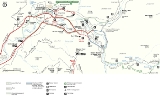
Yosemite Valley

Encyclopedia
Yosemite Valley is a glacial valley in Yosemite National Park
in the western Sierra Nevada mountains of California
, carved out by the Merced River
. The valley is about 8 miles (12.9 km) long and up to a mile deep, surrounded by high granite
summits such as Half Dome
and El Capitan
, and densely forested with pine
s. A multitude of streams including Tenaya, Illilouette and Bridalveil Creeks join in the valley, and flow out of the valley's mouth as the Merced River, which eventually flows to the Pacific Ocean
. The valley is renowned for its natural beauty, and is widely regarded as the centerpiece of Yosemite National Park, attracting visitors from around the world.
The Valley is the main attraction in the park for the majority of visitors, and a bustling hub of activity during "tourist season", with an array of visitor facilities clustered in the middle. There are both hiking trail loops that stay within the valley and trailhead
s that lead to higher elevations, all of which afford glimpses of the park's many scenic wonders.
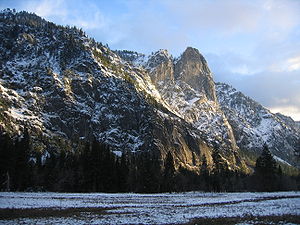 Yosemite Valley is located on the western slope of the Sierra Nevada mountains, 150 miles (240 km) due east of San Francisco. It stretches for 7.5 miles (11 km) in a roughly east-west direction, with an average width of about 1 mile (1.6 km).
Yosemite Valley represents only one percent of the park area, but this is where most visitors arrive and stay. More than half a dozen creeks tumble from hanging valleys at the top of granite
cliff
s that can rise 3000–4000 feet (900–1200 m) above the valley floor, which itself is 4000 ft (1200 m) above sea level
. These streams combine into the Merced River
, which flows out from the western end of the valley, down the rest of its canyon
to the San Joaquin Valley
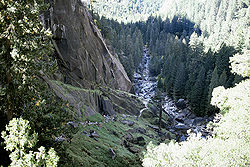
. The flat floor of Yosemite Valley holds both forest and large open meadow
s, which provide breathtaking views of the surrounding crests and waterfall
s.
Below is a description of these features, looking first at the walls above, moving west to east as a visitor does when entering the valley, then visiting the waterfalls and other water features, returning east to west with the flow of water.
The first view of Yosemite Valley many visitors see is the Tunnel View
. So many paintings were made from a viewpoint nearby that the National Park Service named that viewpoint Artist Point.
The view from the lower (western) end of the Valley contains the great granite monolith
El Capitan
on the left, and Cathedral Rocks on the right with Bridalveil Fall
. Just past this spot the Valley suddenly widens with the Cathedral Spires, then the pointed obelisk
of Sentinel Rock to the south. Across the Valley on the northern side are the Three Brothers
, rising one above the other like gables built on the same angle – the highest crest is Eagle Peak, with the two below known as the Middle and Lower Brothers.
To this point, the Valley has been curving gently to the left, to the north. Now a grand curve back to the right begins, with Yosemite Falls on the north, followed by the Royal Arches, topped by North Dome. Opposite to the south is Glacier Point
, 3,200 feet (975 m) above the Valley floor. At this point the Valley splits into two, one section slanting northeast, with the other curving from south to southeast. Between them both, at the eastern end of the valley, is Half Dome
, the most famous and most recognizable natural feature in the Sierra Nevada. Above and to the northeast of Half Dome is Cloud's Rest; at 9926 feet (3025 m), the highest point around Yosemite Valley.
A fan of creeks and forks of the Merced River take drainage from the Sierra crest and combine at Merced Lake. The Merced then flows down to the end of its canyon (Little Yosemite Valley
), where it begins what is often called the Giant Staircase. The first drop is Nevada Fall
, which drops 594 feet (181 m), bouncing off the granite slope below it. Below is Vernal Fall, 317 feet (97 m) high, one of the most picturesque waterfalls in the Valley. The Merced then descends rapids to meet Illilouette Creek, which drops from the valley rim to form Illilouette Fall
. They combine at the base of the gorges that contain each stream, and then flow around the Happy Isles to meet Tenaya Creek at the eastern end of Yosemite Valley proper.
Tenaya Creek flows southwest from Tenaya Lake
and down Tenaya Canyon, finally flowing between Half Dome and North Dome before joining the Merced River. The following falls tumble from the Valley rim to join it at various points:
for regional information
The features in Yosemite Valley are made of granitic
rock that was emplaced as pluton
s miles deep during the late Cretaceous
. Over time the Sierra Nevada was uplifted and this rock was exposed at the surface where it was modified by erosion
.
The oldest of these granitic rocks occur along the Merced River Gorge west of the valley and are thought to be 114 million years old. The El Capitan
pluton intruded the valley forming most of the granitic rock that makes up much of the central part of the valley including Cathedral Rocks
, Three Brothers
and of course El Capitan. The youngest pluton of Yosemite Valley is the 87 million year old Half Dome
granodiorite which makes up most of the rock seen at Glacier Point
, the Royal Arches and its namesake Half Dome.
For the last 30 million years, glacier
s have periodically filled much of the valley. The most current glaciation, the Wisconsinian was not, however, the most severe. Ice age
s previous to the Wisconsinian were colder and lasted longer. Their glaciers were huge and covered nearly all the landmarks around Yosemite Valley except Half Dome, Eagle Peak
, Sentinel Dome
, and the top of El Capitan. Wisconsinian glaciers, however, only reached Bridalveil Fall
in the valley. The glaciers widened the valley, but much of its width is in fact due to previous stream erosion
and mass wasting
along vertical joints in the valley's walls.
After the retreat of many of these glaciers, a stand of Lake Yosemite
developed. The valley floor owes its flatness to sediment deposited by these stands (the last glaciers in the valley were small and did not remove much old lake sediment). The last stand of Lake Yosemite was about 5.5 miles (8.9 km) long and was impounded by a terminal moraine
near the base of El Capitan. It was later filled by sediment, becoming a swamp
y meadow.
The parallel Tenaya Canyon
and Little Yosemite Canyon glaciers were, at their largest, 2,000 feet (600 m) deep where they flowed into the Yosemite Valley near the base of Half Dome. They also formed Cloud's Rest behind Half Dome as an arête
.
Near Glacier Point
there is 2,000 feet (600 m) of mostly glacial sediment with at least six separate sequences of Lake Yosemite sediments. Here, huge and highly erosive pre-Wisconsinian glaciers are thought to be responsible for excavating the bedrock valley floor, and much smaller Wisconsinian glaciers were responsible for depositing glacial debris.
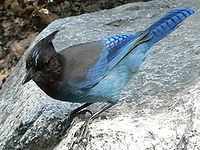
 The biological community on the floor of Yosemite Valley is a diverse one, with more than 400 species of grasses and wildflowers and thousands of species of insects having been identified there. At the most general level, the valley can be classified as a dry Yellow pine
forest with a number of large open meadows. Plant and animal species that make up a significant part of this natural community include:
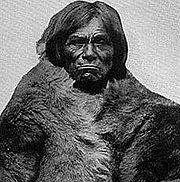 Native Americans have lived in the Yosemite region for as long as 8,000 years. The first people that we have record of was a band of Native Americans
that called the Valley "Ah-wah-nee" and themselves the Ahwahnechee
. This group had trading and family ties to Mono Lake
Paiute
s from the eastern side of the Sierra Nevada. They annually burned the vegetation on the Valley floor, which promoted the black oak
and kept the meadows and forests open. This protected the supply of their principal food, acorn
s, and reduced the chance of ambush. At the time of first European contact, this band was led by Chief Tenaya
(Teneiya), who was raised by his mother among the Mono Lake Paiutes.
led to conflicts between miners and natives, and the volunteer Mariposa Battalion was formed by the state of California as a punitive expedition
against natives in the Yosemite area. In 1851 the Battalion was led by Major James D. Savage, whose trading post on the Merced River had been raided by the Awaneechee. This and other missions resulted in Chief Teneiya and the Awaneechee spending some months on a reservation in the San Joaquin Valley. The band returned the next year to the Valley, but took refuge among the Mono Paiutes after further conflicts with miners. Most of the Awaneechee (along with Teneiya) were chased back to the Valley and killed by the Paiutes after violating hospitality by stealing horses.
While the members of that first expedition of the Mariposa Battalion
had heard rumours of what could be found up the Merced River, none were prepared for what they saw March 27, 1851 from what is now called Old Inspiration Point (close to the better visited Tunnel View). Dr. Lafayette Bunnell
later wrote:
Camping that night on the Valley floor, the group agreed with the suggestion of Dr. Bunnell to call it "Yo-sem-i-ty", mistakenly believing it to be the native name. (Bunnell was also the first of many to underestimate the height of the Valley walls; one San Francisco newspaper demanded of him that his estimate of 1500 feet (450 m) for the valley rim – less than half the true height – be cut in half before publication).
James Hutchings (who organized the first tourist party to the Valley in 1855) along with artist Thomas Ayers, is responsible for much of the earliest publicity about Yosemite, creating articles and entire magazine issues about the Valley. Ayres' highly detailed angularly exaggerated artwork and his written accounts were distributed nationally and an art exhibition of his drawings was held in New York City.
Two of Hutchings' first group of tourists, Milton and Houston Mann, built the first toll route into the valley, with development of the first hotels in the area and other trails quickly following. Orchards were planted and livestock grazed in Valley meadows, with damage to native ecosystems as the result.
, clergyman Thomas Starr King
and leading landscape architect Frederick Law Olmsted
were among those who urged Senator John Conness of California to try to preserve Yosemite.
 President Abraham Lincoln
signed a bill on June 30, 1864 granting Yosemite Valley and the Mariposa Grove
of Giant Sequoias to the State of California "for public use, resort and recreation," the two tracts "shall be inalienable for all time". This was the first time in history that a federal government had set aside scenic lands simply to protect them and to allow for their enjoyment by all people.
There is a difference between designating an area a park and making it work. California did not set up an administration for the park until 1866 which appointed Galen Clark
as the parks guardian. An 11 year struggle followed to resolve homesteading claims in the valley. The challenge of increasing tourism, with the need to first build stagecoach roads, then the Yosemite Valley Railroad
, along with hotels and other facilities in and around the Valley was met during the rest of the 19th century. But much environmental damage was caused to the valley itself at that time. The problems that Yosemite Park had under state control was one of the factors in establishing Yellowstone National Park
as the first completely national park in 1872.
Due to the difficulty of traveling there, early visitors to the valley came for several weeks to a couple of months and brought their entire family and many of their possessions. Early hotel
s were therefore set up for extended stays and catered primarily to wealthy patrons who could be away from home for extended periods. A good example of one of these hotels still in operation is the Wawona Hotel
which was constructed in the 1880s.
While the Valley was now a park, the surrounding territory was still subject to logging, mining and grazing. John Muir
publicized the damage to the subalpine meadows surrounding the Valley, and in 1890, a national park was created which included a much larger territory, enclosing Yosemite Valley and Mariposa Grove. As with Yellowstone, the new federal park was put under U.S. Army jurisdiction until 1914. In 1906 the Valley and Mariposa Grove was ceded back to the federal government. The National Park Service
took over Yosemite upon its creation in 1916.
 Curry Village used to be the site where villagers and visitors watched the famous Yosemite Firefall
. These "falls" were really red hot embers that were dropped in large batches from Glacier Point. This practice was stopped in 1969 as part of the Park Service's long process of de-emphasizing artificial park attractions.
On July 6, 1996 a massive rock slide, weighing an estimated 60–80,000 tons, crashed 1800 feet (550 m) into the valley from the east side of Glacier Point, travelling at over 160 mph (260 km/h). Dust blanketed that part of the valley for days, and the wind speed in front of the slide is estimated to have been 300 mph (480 km/h). One person was killed in the slide.
Yosemite is now a world rock climbing
attraction. The massive 'big walls' of granite have been climbed countless times since the 1950s and have pushed climbers' abilities to new heights. While climbers traditionally take several days to climb the monolith
s, bivvying
on the rock faces, modern climbing techniques have allowed ascents to be made in mere hours. Many climbers stay at Camp 4
before beginning their big wall assaults.
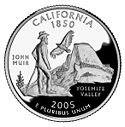
Half Dome figures prominently on the reverse side of the California
state quarter.
Yosemite National Park
Yosemite National Park is a United States National Park spanning eastern portions of Tuolumne, Mariposa and Madera counties in east central California, United States. The park covers an area of and reaches across the western slopes of the Sierra Nevada mountain chain...
in the western Sierra Nevada mountains of California
California
California is a state located on the West Coast of the United States. It is by far the most populous U.S. state, and the third-largest by land area...
, carved out by the Merced River
Merced River
The Merced River , in the central part of the U.S. state of California, is a -long tributary of the San Joaquin River flowing from the Sierra Nevada into the Central Valley. It is most well known for its swift and steep course through the southern part of Yosemite National Park, and the...
. The valley is about 8 miles (12.9 km) long and up to a mile deep, surrounded by high granite
Granite
Granite is a common and widely occurring type of intrusive, felsic, igneous rock. Granite usually has a medium- to coarse-grained texture. Occasionally some individual crystals are larger than the groundmass, in which case the texture is known as porphyritic. A granitic rock with a porphyritic...
summits such as Half Dome
Half Dome
Half Dome is a granite dome in Yosemite National Park, located in northeastern Mariposa County, California, at the eastern end of Yosemite Valley — possibly Yosemite's most familiar rock formation. The granite crest rises more than above the valley floor....
and El Capitan
El Capitan
El Capitan is a vertical rock formation in Yosemite National Park, located on the north side of Yosemite Valley, near its western end. The granite monolith extends about from base to summit along its tallest face, and is one of the world's favorite challenges for rock climbers.The formation was...
, and densely forested with pine
Pine
Pines are trees in the genus Pinus ,in the family Pinaceae. They make up the monotypic subfamily Pinoideae. There are about 115 species of pine, although different authorities accept between 105 and 125 species.-Etymology:...
s. A multitude of streams including Tenaya, Illilouette and Bridalveil Creeks join in the valley, and flow out of the valley's mouth as the Merced River, which eventually flows to the Pacific Ocean
Pacific Ocean
The Pacific Ocean is the largest of the Earth's oceanic divisions. It extends from the Arctic in the north to the Southern Ocean in the south, bounded by Asia and Australia in the west, and the Americas in the east.At 165.2 million square kilometres in area, this largest division of the World...
. The valley is renowned for its natural beauty, and is widely regarded as the centerpiece of Yosemite National Park, attracting visitors from around the world.
The Valley is the main attraction in the park for the majority of visitors, and a bustling hub of activity during "tourist season", with an array of visitor facilities clustered in the middle. There are both hiking trail loops that stay within the valley and trailhead
Trailhead
A trailhead is the point at which a trail begins, where the trail is often intended for hiking, biking, horseback riding, or off-road vehicles...
s that lead to higher elevations, all of which afford glimpses of the park's many scenic wonders.
Description
Yosemite Valley represents only one percent of the park area, but this is where most visitors arrive and stay. More than half a dozen creeks tumble from hanging valleys at the top of granite
Granite
Granite is a common and widely occurring type of intrusive, felsic, igneous rock. Granite usually has a medium- to coarse-grained texture. Occasionally some individual crystals are larger than the groundmass, in which case the texture is known as porphyritic. A granitic rock with a porphyritic...
cliff
Cliff
In geography and geology, a cliff is a significant vertical, or near vertical, rock exposure. Cliffs are formed as erosion landforms due to the processes of erosion and weathering that produce them. Cliffs are common on coasts, in mountainous areas, escarpments and along rivers. Cliffs are usually...
s that can rise 3000–4000 feet (900–1200 m) above the valley floor, which itself is 4000 ft (1200 m) above sea level
Sea level
Mean sea level is a measure of the average height of the ocean's surface ; used as a standard in reckoning land elevation...
. These streams combine into the Merced River
Merced River
The Merced River , in the central part of the U.S. state of California, is a -long tributary of the San Joaquin River flowing from the Sierra Nevada into the Central Valley. It is most well known for its swift and steep course through the southern part of Yosemite National Park, and the...
, which flows out from the western end of the valley, down the rest of its canyon
Canyon
A canyon or gorge is a deep ravine between cliffs often carved from the landscape by a river. Rivers have a natural tendency to reach a baseline elevation, which is the same elevation as the body of water it will eventually drain into. This forms a canyon. Most canyons were formed by a process of...
to the San Joaquin Valley
San Joaquin Valley
The San Joaquin Valley is the area of the Central Valley of California that lies south of the Sacramento – San Joaquin River Delta in Stockton...
. The flat floor of Yosemite Valley holds both forest and large open meadow
Meadow
A meadow is a field vegetated primarily by grass and other non-woody plants . The term is from Old English mædwe. In agriculture a meadow is grassland which is not grazed by domestic livestock but rather allowed to grow unchecked in order to make hay...
s, which provide breathtaking views of the surrounding crests and waterfall
Waterfall
A waterfall is a place where flowing water rapidly drops in elevation as it flows over a steep region or a cliff.-Formation:Waterfalls are commonly formed when a river is young. At these times the channel is often narrow and deep. When the river courses over resistant bedrock, erosion happens...
s.
Below is a description of these features, looking first at the walls above, moving west to east as a visitor does when entering the valley, then visiting the waterfalls and other water features, returning east to west with the flow of water.
The first view of Yosemite Valley many visitors see is the Tunnel View
Wawona Tunnel
The Wawona Tunnel is a highway tunnel in Yosemite National Park, which carries Wawona Road through a mountain on the south side of the Merced River...
. So many paintings were made from a viewpoint nearby that the National Park Service named that viewpoint Artist Point.
The view from the lower (western) end of the Valley contains the great granite monolith
Monolith
A monolith is a geological feature such as a mountain, consisting of a single massive stone or rock, or a single piece of rock placed as, or within, a monument...
El Capitan
El Capitan
El Capitan is a vertical rock formation in Yosemite National Park, located on the north side of Yosemite Valley, near its western end. The granite monolith extends about from base to summit along its tallest face, and is one of the world's favorite challenges for rock climbers.The formation was...
on the left, and Cathedral Rocks on the right with Bridalveil Fall
Bridalveil Fall (Yosemite)
Bridalveil Fall is one of the most prominent waterfalls in the Yosemite Valley in California, seen yearly by millions of visitors to Yosemite National Park....
. Just past this spot the Valley suddenly widens with the Cathedral Spires, then the pointed obelisk
Obelisk
An obelisk is a tall, four-sided, narrow tapering monument which ends in a pyramid-like shape at the top, and is said to resemble a petrified ray of the sun-disk. A pair of obelisks usually stood in front of a pylon...
of Sentinel Rock to the south. Across the Valley on the northern side are the Three Brothers
Three Brothers (Yosemite)
The Three Brothers is a rock formation, in Yosemite Valley, California, USA. It is located just east of El Capitan and consists of Eagle Peak , and Middle and Lower Brothers....
, rising one above the other like gables built on the same angle – the highest crest is Eagle Peak, with the two below known as the Middle and Lower Brothers.
To this point, the Valley has been curving gently to the left, to the north. Now a grand curve back to the right begins, with Yosemite Falls on the north, followed by the Royal Arches, topped by North Dome. Opposite to the south is Glacier Point
Glacier Point
thumb|right|upright|Glacier Point, as seen from [[Yosemite Valley]]. In springtime, this cliff face is covered with dozens of freshets and tiny waterfalls from the snowmelt, the largest being [[Staircase Falls]]....
, 3,200 feet (975 m) above the Valley floor. At this point the Valley splits into two, one section slanting northeast, with the other curving from south to southeast. Between them both, at the eastern end of the valley, is Half Dome
Half Dome
Half Dome is a granite dome in Yosemite National Park, located in northeastern Mariposa County, California, at the eastern end of Yosemite Valley — possibly Yosemite's most familiar rock formation. The granite crest rises more than above the valley floor....
, the most famous and most recognizable natural feature in the Sierra Nevada. Above and to the northeast of Half Dome is Cloud's Rest; at 9926 feet (3025 m), the highest point around Yosemite Valley.
Water
Snow melting in the Sierra forms creeks and lakes. In the surrounding region, these creeks flow to the edge of the Valley to form cataracts and waterfalls.A fan of creeks and forks of the Merced River take drainage from the Sierra crest and combine at Merced Lake. The Merced then flows down to the end of its canyon (Little Yosemite Valley
Little Yosemite Valley
Little Yosemite Valley is, as the name implies, a smaller glacial valley upstream in the Merced River drainage from the Yosemite Valley in Yosemite National Park. The Merced River meanders through the long flat valley, draining out over Nevada Fall and Vernal Fall before emptying into the main...
), where it begins what is often called the Giant Staircase. The first drop is Nevada Fall
Nevada Fall
Nevada Fall is a high waterfall on the Merced River in Yosemite National Park, California. It is located below the granite dome, Liberty Cap, at the west end of Little Yosemite Valley. The waterfall is widely recognized by its "bent" shape, in which the water free-falls for roughly the first third...
, which drops 594 feet (181 m), bouncing off the granite slope below it. Below is Vernal Fall, 317 feet (97 m) high, one of the most picturesque waterfalls in the Valley. The Merced then descends rapids to meet Illilouette Creek, which drops from the valley rim to form Illilouette Fall
Illilouette Fall
Illilouette Fall is a 370 foot waterfall in Yosemite National Park. It is located in a small side canyon directly across from Vernal Falls, and is visible from the trail to Vernal and Nevada Falls. The best vantage point is from the Panorama Trail as it descends from Glacier Point....
. They combine at the base of the gorges that contain each stream, and then flow around the Happy Isles to meet Tenaya Creek at the eastern end of Yosemite Valley proper.
Tenaya Creek flows southwest from Tenaya Lake
Tenaya Lake
Tenaya Lake is a lake in Yosemite National Park, located between Yosemite Valley and Tuolumne Meadows.Tenaya Lake was created by the Tenaya branch of the Tuolumne Glacier as it passed through Tenaya Canyon. The lake is supplied by a network of creeks and springs including Murphy Creek to the...
and down Tenaya Canyon, finally flowing between Half Dome and North Dome before joining the Merced River. The following falls tumble from the Valley rim to join it at various points:
- Yosemite FallsYosemite FallsYosemite Falls is the highest measured waterfall in North America. Located in Yosemite National Park in the Sierra Nevada of California, it is a major attraction in the park, especially in late spring when the water flow is at its peak....
(2,425 ft) Upper Yosemite Fall (1,430 ft), the middle cascades (675 ft), and Lower Yosemite Fall (320 ft). (Yosemite Creek) - Snow Creek FallsSnow Creek FallsSnow Creek Falls is a long series of cascades located in Yosemite National Park toward the eastern extent of Yosemite Valley. It descends a steep gorge on a sizeable stream that originates in May Lake to the north, dropping east of the trail that leaves the Valley above Mirror Lake en route to...
(2,140 ft) - Sentinel FallSentinel FallSentinel Falls is a long series of cascades descending into Yosemite Valley alongside Sentinel Rock. It is a tiered waterfall consisting of 6 major drops totaling , the longest single drop being . It ranks on many lists as the twelfth highest waterfall in the world, although in truth it is roughly...
s (1,920 ft) - Ribbon Fall (1,612 ft)
- Royal Arch CascadeRoyal Arch CascadeRoyal Arch Cascade is a waterfall located on the north wall of Yosemite Valley and the Yosemite National Park, USA, within walking distance from the Ahwahnee Hotel. The falls are high and are usually dry by June...
(1,250 ft) - Lehamite FallsLehamite FallsLehamite Falls is located in Yosemite National Park. It consists of a long series of steep cascades that fall into Yosemite Valley, in a manner similar to Sentinel Fall. The falls are located in a small cleft in the north wall of the valley known as Indian Canyon, immediately to the right of...
(1,180 ft) - Staircase FallsStaircase FallsStaircase Falls is a series of waterfalls located on Gossamer Creek in Yosemite National Park, California. The falls descend a total of into Yosemite Valley over a series of steps. Staircase Falls is relatively ephemeral and only flows after rainfall. It is usually dry by May. The falls are...
(1,020 ft) - Bridalveil FallBridalveil Fall (Yosemite)Bridalveil Fall is one of the most prominent waterfalls in the Yosemite Valley in California, seen yearly by millions of visitors to Yosemite National Park....
(620 ft). (Bridalveil Creek) - Nevada FallNevada FallNevada Fall is a high waterfall on the Merced River in Yosemite National Park, California. It is located below the granite dome, Liberty Cap, at the west end of Little Yosemite Valley. The waterfall is widely recognized by its "bent" shape, in which the water free-falls for roughly the first third...
(594 ft) - Silver Strand FallsSilver Strand FallsSilver Strand Falls drops 574 feet along Meadow Brook, at the western end of Yosemite Valley, within Yosemite National Park. The falls are commonly thought to drop 1170 feet , this is incorrect...
(574 ft) - Vernal Fall (318 ft)
Natural Yosemite Valley
Geology
See Geology of the Yosemite areaGeology of the Yosemite area
The exposed geology of the Yosemite area includes primarily granitic rocks with some older metamorphic rock. The first rocks were laid down in Precambrian times, when the area around Yosemite National Park was on the edge of a very young North American continent...
for regional information
The features in Yosemite Valley are made of granitic
Granite
Granite is a common and widely occurring type of intrusive, felsic, igneous rock. Granite usually has a medium- to coarse-grained texture. Occasionally some individual crystals are larger than the groundmass, in which case the texture is known as porphyritic. A granitic rock with a porphyritic...
rock that was emplaced as pluton
Intrusion
An intrusion is liquid rock that forms under Earth's surface. Magma from under the surface is slowly pushed up from deep within the earth into any cracks or spaces it can find, sometimes pushing existing country rock out of the way, a process that can take millions of years. As the rock slowly...
s miles deep during the late Cretaceous
Cretaceous
The Cretaceous , derived from the Latin "creta" , usually abbreviated K for its German translation Kreide , is a geologic period and system from circa to million years ago. In the geologic timescale, the Cretaceous follows the Jurassic period and is followed by the Paleogene period of the...
. Over time the Sierra Nevada was uplifted and this rock was exposed at the surface where it was modified by erosion
Erosion
Erosion is when materials are removed from the surface and changed into something else. It only works by hydraulic actions and transport of solids in the natural environment, and leads to the deposition of these materials elsewhere...
.
The oldest of these granitic rocks occur along the Merced River Gorge west of the valley and are thought to be 114 million years old. The El Capitan
El Capitan
El Capitan is a vertical rock formation in Yosemite National Park, located on the north side of Yosemite Valley, near its western end. The granite monolith extends about from base to summit along its tallest face, and is one of the world's favorite challenges for rock climbers.The formation was...
pluton intruded the valley forming most of the granitic rock that makes up much of the central part of the valley including Cathedral Rocks
Cathedral Rocks
Cathedral Rocks are a series of four abrupt cliffs interspersed by short glaciers and surmounted by sharp peaks. The cliffs extend for along the south side of Ferrar Glacier and form part of the north shoulder of the Royal Society Range, in Victoria Land. They were discovered and named on...
, Three Brothers
Three Brothers (Yosemite)
The Three Brothers is a rock formation, in Yosemite Valley, California, USA. It is located just east of El Capitan and consists of Eagle Peak , and Middle and Lower Brothers....
and of course El Capitan. The youngest pluton of Yosemite Valley is the 87 million year old Half Dome
Half Dome
Half Dome is a granite dome in Yosemite National Park, located in northeastern Mariposa County, California, at the eastern end of Yosemite Valley — possibly Yosemite's most familiar rock formation. The granite crest rises more than above the valley floor....
granodiorite which makes up most of the rock seen at Glacier Point
Glacier Point
thumb|right|upright|Glacier Point, as seen from [[Yosemite Valley]]. In springtime, this cliff face is covered with dozens of freshets and tiny waterfalls from the snowmelt, the largest being [[Staircase Falls]]....
, the Royal Arches and its namesake Half Dome.
For the last 30 million years, glacier
Glacier
A glacier is a large persistent body of ice that forms where the accumulation of snow exceeds its ablation over many years, often centuries. At least 0.1 km² in area and 50 m thick, but often much larger, a glacier slowly deforms and flows due to stresses induced by its weight...
s have periodically filled much of the valley. The most current glaciation, the Wisconsinian was not, however, the most severe. Ice age
Ice age
An ice age or, more precisely, glacial age, is a generic geological period of long-term reduction in the temperature of the Earth's surface and atmosphere, resulting in the presence or expansion of continental ice sheets, polar ice sheets and alpine glaciers...
s previous to the Wisconsinian were colder and lasted longer. Their glaciers were huge and covered nearly all the landmarks around Yosemite Valley except Half Dome, Eagle Peak
Eagle Peak (Mariposa County, California)
Eagle Peak is the highest of the Three Brothers, a rock formation, above Yosemite Valley in California. This independent peak is located just east of El Capitan. John Muir considered the view from the summit to be "most comprehensive of all the views" available from the north wall.- Recreation...
, Sentinel Dome
Sentinel Dome
Sentinel Dome is a granite dome in Yosemite National Park, United States. It lies on the south wall of Yosemite Valley, southwest of Glacier Point and northeast of Profile Cliff....
, and the top of El Capitan. Wisconsinian glaciers, however, only reached Bridalveil Fall
Bridalveil Fall (Yosemite)
Bridalveil Fall is one of the most prominent waterfalls in the Yosemite Valley in California, seen yearly by millions of visitors to Yosemite National Park....
in the valley. The glaciers widened the valley, but much of its width is in fact due to previous stream erosion
Erosion
Erosion is when materials are removed from the surface and changed into something else. It only works by hydraulic actions and transport of solids in the natural environment, and leads to the deposition of these materials elsewhere...
and mass wasting
Mass wasting
Mass wasting, also known as slope movement or mass movement, is the geomorphic process by which soil, regolith, and rock move downslope under the force of gravity. Types of mass wasting include creep, slides, flows, topples, and falls, each with its own characteristic features, and taking place...
along vertical joints in the valley's walls.
After the retreat of many of these glaciers, a stand of Lake Yosemite
Lake Yosemite
Lake Yosemite is an artificial freshwater lake located approximately five miles east of Merced, California in the rolling Sierra Foothills. UC Merced is situated approximately half a mile south of Lake Yosemite...
developed. The valley floor owes its flatness to sediment deposited by these stands (the last glaciers in the valley were small and did not remove much old lake sediment). The last stand of Lake Yosemite was about 5.5 miles (8.9 km) long and was impounded by a terminal moraine
Moraine
A moraine is any glacially formed accumulation of unconsolidated glacial debris which can occur in currently glaciated and formerly glaciated regions, such as those areas acted upon by a past glacial maximum. This debris may have been plucked off a valley floor as a glacier advanced or it may have...
near the base of El Capitan. It was later filled by sediment, becoming a swamp
Swamp
A swamp is a wetland with some flooding of large areas of land by shallow bodies of water. A swamp generally has a large number of hammocks, or dry-land protrusions, covered by aquatic vegetation, or vegetation that tolerates periodical inundation. The two main types of swamp are "true" or swamp...
y meadow.
The parallel Tenaya Canyon
Tenaya Canyon
Tenaya Canyon is a dramatic and dangerous canyon in Yosemite National Park, California, USA, that runs from the outlet of Tenaya Lake 10 miles down to Yosemite Valley, carrying water in Tenaya Creek through a series of spectacular cascades and pools and thence into a deep canyon below Cloud's Rest,...
and Little Yosemite Canyon glaciers were, at their largest, 2,000 feet (600 m) deep where they flowed into the Yosemite Valley near the base of Half Dome. They also formed Cloud's Rest behind Half Dome as an arête
Arete
Areté is the term meaning "virtue" or "excellence", from Greek ἈρετήArete may also be used:*as a given name of persons or things:**Queen Arete , a character in Homer's Odyssey.***197 Arete, an asteroid....
.
Near Glacier Point
Glacier Point
thumb|right|upright|Glacier Point, as seen from [[Yosemite Valley]]. In springtime, this cliff face is covered with dozens of freshets and tiny waterfalls from the snowmelt, the largest being [[Staircase Falls]]....
there is 2,000 feet (600 m) of mostly glacial sediment with at least six separate sequences of Lake Yosemite sediments. Here, huge and highly erosive pre-Wisconsinian glaciers are thought to be responsible for excavating the bedrock valley floor, and much smaller Wisconsinian glaciers were responsible for depositing glacial debris.
Ecology
Yellow pine
Yellow pine may refer to the following:*Certain pines in the subgenus Pinus subgenus Pinus:**In American forestry, a term for several closely related species of pine with yellow tinted wood, including the Southern Yellow Pines , and the non-Southern yellow pines and several others...
forest with a number of large open meadows. Plant and animal species that make up a significant part of this natural community include:
- Trees – Ponderosa PinePonderosa PinePinus ponderosa, commonly known as the Ponderosa Pine, Bull Pine, Blackjack Pine, or Western Yellow Pine, is a widespread and variable pine native to western North America. It was first described by David Douglas in 1826, from eastern Washington near present-day Spokane...
, Lodgepole PineLodgepole PineLodgepole Pine, Pinus contorta, also known as Shore Pine, is a common tree in western North America. Like all pines, it is evergreen.-Subspecies:...
, Sugar PineSugar PinePinus lambertiana, commonly known as the sugar pine or sugar cone pine, is the tallest and most massive pine, with the longest cones of any conifer...
, White FirWhite FirWhite Fir is a fir native to the mountains of western North America, occurring at altitudes of 900-3,400 m. It is a medium to large evergreen coniferous tree growing to 25–60 m tall and with a trunk diameter of up to 2 m . It is popular as an ornamental landscaping tree and as a Christmas Tree...
, Incense-cedar, California black oakCalifornia Black OakQuercus kelloggii, the California Black Oak, also known as simply Black Oak, or Kellogg Oak, is an oak in the red oak section , native to western North America...
, Interior live oakInterior Live OakQuercus wislizeni, known by the common names Interior Live Oak, and Sierra Live Oak, is an evergeen oak, highly variable and often shrubby, found in areas of California in the United States. It also occurs south into northern Baja California in Mexico...
, Coast Douglas-firCoast Douglas-firPseudotsuga menziesii, known as Douglas-fir, Oregon Pine, or Douglas spruce, is an evergreen conifer species native to western North America. Its variety Pseudotsuga menziesii var. menziesii, also known as coast Douglas-fir grows in the coastal regions, from west-central British Columbia, Canada...
, California laurel, Bigleaf MapleBigleaf MapleAcer macrophyllum is a large deciduous tree in the genus Acer.It can grow to be up to 35 m tall, but more commonly grows 15 m to 20 m tall. It is native to western North America, mostly near the Pacific coast, from southernmost Alaska to southern California...
, Scouler's WillowWillowWillows, sallows, and osiers form the genus Salix, around 400 species of deciduous trees and shrubs, found primarily on moist soils in cold and temperate regions of the Northern Hemisphere...
, Pacific DogwoodPacific DogwoodThe Pacific Dogwood, Cornus nuttallii , is a species of dogwood native to western North America from lowlands of southern British Columbia to mountains of southern California. An inland population occurs in central Idaho. Cultivated examples are found as far north as Haida Gwaii...
, White alderAlderAlder is the common name of a genus of flowering plants belonging to the birch family . The genus comprises about 30 species of monoecious trees and shrubs, few reaching large size, distributed throughout the North Temperate Zone and in the Americas along the Andes southwards to...
, Western Balsam PoplarBalsam poplarThe balsam poplars — also known as Populus sect. Tacamahaca — are a group of about 10 species of poplars, indigenous to North America and eastern Asia, distinguished by the balsam scent of their buds, the whitish undersides of their leaves, and the leaf petiole being round in cross-section... - Shrubs – Whiteleaf manzanitaManzanitaManzanita is a common name for many species of the genus Arctostaphylos. They are evergreen shrubs or small trees present in the chaparral biome of western North America, where they occur from southern British Columbia, Washington to California, Arizona and New Mexico in the United States, and...
, Mountain misery, Western azaleaAzaleaAzaleas are flowering shrubs comprising two of the eight subgenera of the genus Rhododendron, Pentanthera and Tsutsuji . Azaleas bloom in spring, their flowers often lasting several weeks...
, American dogwoodDogwoodThe genus Cornus is a group of about 30-60 species of woody plants in the family Cornaceae, commonly known as dogwoods. Most dogwoods are deciduous trees or shrubs, but a few species are nearly herbaceous perennial subshrubs, and a few of the woody species are evergreen...
, BuckbrushCeanothusCeanothus L. is a genus of about 50–60 species of shrubs or small trees in the buckthorn family Rhamnaceae. The genus is confined to North America, the center of its distribution in California, with some species in the eastern United States and southeast Canada, and others extending as far south...
, Deer brush, Sierra gooseberryGooseberryThe gooseberry or ; Ribes uva-crispa, syn. R. grossularia) is a species of Ribes, native to Europe, northwestern Africa and southwestern Asia... - Wildflowers – Indian pinkLobeliaLobelia is a genus of flowering plant comprising 360–400 species, with a subcosmopolitan distribution primarily in tropical to warm temperate regions of the world, a few species extending into cooler temperate regions...
, Soap plantSoap plantThe Soap Plants, Soaproots or Amoles are the genus Chlorogalum of flowering plants. Less common names for them include Soap Lilies. They are endemic to western North America, from Oregon to Baja California, and are mostly found in California.The Soap Plants grow as perennial plants, from a bulb,...
, California PoppyCalifornia poppyThe California poppy is a perennial and annual plant, native to the United States, and the official state flower of California.- Description :...
, Miner's lettuce, Purple Chinese Houses, Purple milkweedAsclepias cordifoliaAsclepias cordifolia is a species of milkweed commonly called Heart-leaf milkweed or Purple milkweed . It is native to the western United States , growing between elevation in the northern Sierra Nevada and Cascade ranges...
, Pacific StarflowerTrientalis latifoliaTrientalis latifolia is a low-growing perennial with leaves distributed levelly in a single group....
, Western buttercup, Pineapple weedPineapple weedMatricaria discoidea, commonly known as pineappleweed, wild chamomile, and disc mayweed is an annual plant native to North America and Northeast Asia but which has become a cosmopolitan weed. It is in the family Asteraceae. The flowers exude a chamomile/pineapple aroma when crushed... - Mammals – California Ground SquirrelCalifornia Ground SquirrelThe California ground squirrel , is a common and easily observed ground squirrel of the western United States and the Baja California peninsula; it is common in Oregon and California and its range has relatively recently extended into Washington and northwestern Nevada...
, Western Gray SquirrelWestern Gray SquirrelThe Western Gray Squirrel is an arboreal rodent found along the western coast of the United States and Canada.In some places, this species has also been known as the Silver-gray Squirrel, the California Gray Squirrel, the Oregon Gray Squirrel, the Columbian Gray Squirrel and the Banner-tail...
, Chickaree, Mule DeerMule DeerThe mule deer is a deer indigenous to western North America. The Mule Deer gets its name from its large mule-like ears. There are believed to be several subspecies, including the black-tailed deer...
, American Black BearAmerican black bearThe American black bear is a medium-sized bear native to North America. It is the continent's smallest and most common bear species. Black bears are omnivores, with their diets varying greatly depending on season and location. They typically live in largely forested areas, but do leave forests in...
, BobcatBobcatThe bobcat is a North American mammal of the cat family Felidae, appearing during the Irvingtonian stage of around 1.8 million years ago . With twelve recognized subspecies, it ranges from southern Canada to northern Mexico, including most of the continental United States...
, CoyoteCoyoteThe coyote , also known as the American jackal or the prairie wolf, is a species of canine found throughout North and Central America, ranging from Panama in the south, north through Mexico, the United States and Canada... - Birds – Dark-eyed JuncoDark-eyed JuncoThe Dark-eyed Junco is the best-known species of the juncos, a genus of small grayish American sparrows. This bird is common across much of temperate North America and in summer ranges far into the Arctic...
, Mountain ChickadeeMountain ChickadeeThe Mountain Chickadee is a small songbird, a passerine bird in the tit family Paridae. Often, it is still placed in the genus Parus with most other tits, but mtDNA cytochrome b sequence data and morphology suggest that separating Poecile more adequately expresses these birds' relationships...
, Black-headed GrosbeakBlack-headed GrosbeakThe Black-headed Grosbeak, Pheucticus melanocephalus, is a medium-size seed-eating bird in the same family as the Northern Cardinal, the Cardinalidae. It is sometimes considered conspecific with the Rose-breasted Grosbeak, P...
, White-headed WoodpeckerWhite-headed WoodpeckerThe White-headed Woodpecker is a non-migratory woodpecker that resides in pine forests of the mountains of western North America. It has a black body and white head. It has white primary feathers that form a crescent in flight...
, Steller's JaySteller's JayThe Steller's Jay is a jay native to western North America, closely related to the Blue Jay found in the rest of the continent, but with a black head and upper body. It is also known as the Long-crested Jay, Mountain Jay, and Pine Jay...
, American DipperAmerican DipperThe American Dipper , also known as a Water Ouzel, is a stocky dark grey bird with a head sometimes tinged with brown, and white feathers on the eyelids cause the eyes to flash white as the bird blinks. It is 16.5 cm long and weighs on average 46 g...
, Common RavenCommon RavenThe Common Raven , also known as the Northern Raven, is a large, all-black passerine bird. Found across the northern hemisphere, it is the most widely distributed of all corvids... - Reptiles – Gilbert's SkinkGilbert's SkinkGilbert's Skink is a heavy-bodied medium-sized lizard of the family of skinks living in the south-western United States. It grows to about 7 to 12 cm total length.- Taxonomy :...
, Northern Alligator LizardNorthern Alligator LizardThe Northern Alligator Lizard is a medium-sized lizard that occurs on the North American west coast.- Taxonomy :This lizard was formerly known under the scientific name of Gerrhonotus coeruleus , but is nowadays classed as Elgaria coerulea. There are four subspecies:* E.c...
, RattlesnakeRattlesnakeRattlesnakes are a group of venomous snakes of the genera Crotalus and Sistrurus of the subfamily Crotalinae . There are 32 known species of rattlesnake, with between 65-70 subspecies, all native to the Americas, ranging from southern Alberta and southern British Columbia in Canada to Central... - Amphibians – Sierra Nevada SalamanderLungless salamanderThe Plethodontidae, or Lungless salamanders, are a family of salamanders. Most species are native to the western hemisphere, from British Columbia to Brazil, although a few species are found in Sardinia, Europe south of the Alps, and South Korea...
Hiking
Several trails lead out of the Valley, including- The John Muir TrailJohn Muir TrailThe John Muir Trail is a long-distance trail in the Sierra Nevada mountain range of California, running between the northern terminus at Happy Isles in Yosemite Valley and the southern terminus located on the summit of Mount Whitney . For almost all of its length, the trail is in the High Sierra...
--- running 212 miles (341 km) to Mount WhitneyMount WhitneyMount Whitney is the highest summit in the contiguous United States with an elevation of . It is on the boundary between California's Inyo and Tulare counties, west-northwest of the lowest point in North America at Badwater in Death Valley National Park... - The Mist TrailMist TrailThe Mist Trail is one of the most popular short hikes in Yosemite National Park, California, USA. The hike follows the Merced River, starting at Happy Isles in Yosemite Valley, past Vernal Fall, Emerald Pool, to Nevada Fall.-Description:...
--- with views of Vernal FallsVernal FallsVernal Fall is a waterfall on the Merced River just downstream of Nevada Fall in Yosemite National Park, California.The feature is accessible via the Mist Trail, which climbs close enough to the fall so that hikers must travel through the fall's mist...
and Nevada FallNevada FallNevada Fall is a high waterfall on the Merced River in Yosemite National Park, California. It is located below the granite dome, Liberty Cap, at the west end of Little Yosemite Valley. The waterfall is widely recognized by its "bent" shape, in which the water free-falls for roughly the first third... - The Four Mile TrailFour Mile TrailFour Mile Trail is a moderate to strenuous trail leading from Yosemite Valley to Glacier Point. The trail begins at the valley floor west of the Swinging Bridge recreation area, and climbs the south side up to Glacier Point, an elevation change of ....
--- leading to Glacier Point. - The Yosemite Falls Trail --- to the top of Yosemite Falls
History
The recent history of the Valley is the history of human visitors, first Native Americans, then European settlers, then visitors from around the world.Native Americans in Yosemite
Native Americans in the United States
Native Americans in the United States are the indigenous peoples in North America within the boundaries of the present-day continental United States, parts of Alaska, and the island state of Hawaii. They are composed of numerous, distinct tribes, states, and ethnic groups, many of which survive as...
that called the Valley "Ah-wah-nee" and themselves the Ahwahnechee
Ahwahnechee
The Ahwahnechee are a Native American people who traditionally lived in the Yosemite Valley. They are related to the Northern Paiute and Mono tribes. The Ahwahnechee people's heritage can be found all over Yosemite National Park.-History:The Ahwahnechee lived in Yosemite Valley for centuries...
. This group had trading and family ties to Mono Lake
Mono Lake
Mono Lake is a large, shallow saline lake in Mono County, California, formed at least 760,000 years ago as a terminal lake in a basin that has no outlet to the ocean...
Paiute
Paiute
Paiute refers to three closely related groups of Native Americans — the Northern Paiute of California, Idaho, Nevada and Oregon; the Owens Valley Paiute of California and Nevada; and the Southern Paiute of Arizona, southeastern California and Nevada, and Utah.-Origin of name:The origin of...
s from the eastern side of the Sierra Nevada. They annually burned the vegetation on the Valley floor, which promoted the black oak
California Black Oak
Quercus kelloggii, the California Black Oak, also known as simply Black Oak, or Kellogg Oak, is an oak in the red oak section , native to western North America...
and kept the meadows and forests open. This protected the supply of their principal food, acorn
Acorn
The acorn, or oak nut, is the nut of the oaks and their close relatives . It usually contains a single seed , enclosed in a tough, leathery shell, and borne in a cup-shaped cupule. Acorns vary from 1–6 cm long and 0.8–4 cm broad...
s, and reduced the chance of ambush. At the time of first European contact, this band was led by Chief Tenaya
Chief Tenaya
Chief Tenaya was a Native American chief of the Yosemite Valley people in California.-Background:Tenaya's father was the chief of the Ahwahneechee , which means "people of the Ahwahnee" . The Ahwahneechee had become a tribe distinct from the other tribes in the area...
(Teneiya), who was raised by his mother among the Mono Lake Paiutes.
The Mariposa Battalion and the first tourists
The first non-natives to see Yosemite Valley were probably members of the 1833 Joseph Walker Party, which was the first to cross the Sierra Nevada from east to west. But the first descriptions of Yosemite came nearly 20 years later. The 1849 California Gold RushCalifornia Gold Rush
The California Gold Rush began on January 24, 1848, when gold was found by James W. Marshall at Sutter's Mill in Coloma, California. The first to hear confirmed information of the gold rush were the people in Oregon, the Sandwich Islands , and Latin America, who were the first to start flocking to...
led to conflicts between miners and natives, and the volunteer Mariposa Battalion was formed by the state of California as a punitive expedition
Punitive expedition
A punitive expedition is a military journey undertaken to punish a state or any group of persons outside the borders of the punishing state. It is usually undertaken in response to perceived disobedient or morally wrong behavior, but may be also be a covered revenge...
against natives in the Yosemite area. In 1851 the Battalion was led by Major James D. Savage, whose trading post on the Merced River had been raided by the Awaneechee. This and other missions resulted in Chief Teneiya and the Awaneechee spending some months on a reservation in the San Joaquin Valley. The band returned the next year to the Valley, but took refuge among the Mono Paiutes after further conflicts with miners. Most of the Awaneechee (along with Teneiya) were chased back to the Valley and killed by the Paiutes after violating hospitality by stealing horses.
While the members of that first expedition of the Mariposa Battalion
Mariposa Battalion
Mariposa Battalion was a California State Militia unit formed in 1851 to fight the Yosemites and Chowchillas in the Mariposa War.After a force under Mariposa County Sheriff James Burney was found unequal to the task of defeating the Indians, Burney made an appeal to Governor John McDougal for help...
had heard rumours of what could be found up the Merced River, none were prepared for what they saw March 27, 1851 from what is now called Old Inspiration Point (close to the better visited Tunnel View). Dr. Lafayette Bunnell
Lafayette Bunnell
Lafayette Houghton Bunnell was an American physician, explorer, author, and an explorer of Yosemite Valley, born in Rochester, New York.-Biography:...
later wrote:
Camping that night on the Valley floor, the group agreed with the suggestion of Dr. Bunnell to call it "Yo-sem-i-ty", mistakenly believing it to be the native name. (Bunnell was also the first of many to underestimate the height of the Valley walls; one San Francisco newspaper demanded of him that his estimate of 1500 feet (450 m) for the valley rim – less than half the true height – be cut in half before publication).
James Hutchings (who organized the first tourist party to the Valley in 1855) along with artist Thomas Ayers, is responsible for much of the earliest publicity about Yosemite, creating articles and entire magazine issues about the Valley. Ayres' highly detailed angularly exaggerated artwork and his written accounts were distributed nationally and an art exhibition of his drawings was held in New York City.
Two of Hutchings' first group of tourists, Milton and Houston Mann, built the first toll route into the valley, with development of the first hotels in the area and other trails quickly following. Orchards were planted and livestock grazed in Valley meadows, with damage to native ecosystems as the result.
Yosemite: The first park
The work of Ayres gave easterners an appreciation for Yosemite Valley and started a movement to preserve it. Influential figures such as Galen ClarkGalen Clark
Galen Clark is known as the first European American to discover the Mariposa Grove of Giant Sequoia trees, and is notable for his role in gaining legislation to protect it and the Yosemite area, and for 24 years serving as Guardian of Yosemite National Park.-Early life and education:Galen Clark...
, clergyman Thomas Starr King
Thomas Starr King
Thomas Starr King was an American Unitarian and Universalist minister, influential in California politics during the American Civil War. Starr King spoke zealously in favor of the Union and was credited by Abraham Lincoln with preventing California from becoming a separate republic...
and leading landscape architect Frederick Law Olmsted
Frederick Law Olmsted
Frederick Law Olmsted was an American journalist, social critic, public administrator, and landscape designer. He is popularly considered to be the father of American landscape architecture, although many scholars have bestowed that title upon Andrew Jackson Downing...
were among those who urged Senator John Conness of California to try to preserve Yosemite.
Abraham Lincoln
Abraham Lincoln was the 16th President of the United States, serving from March 1861 until his assassination in April 1865. He successfully led his country through a great constitutional, military and moral crisis – the American Civil War – preserving the Union, while ending slavery, and...
signed a bill on June 30, 1864 granting Yosemite Valley and the Mariposa Grove
Mariposa Grove
Mariposa Grove is a sequoia grove located near Wawona, California, United States, in the southernmost part of Yosemite National Park. It is the largest grove of Giant Sequoias in the park, with several hundred mature examples of the tree...
of Giant Sequoias to the State of California "for public use, resort and recreation," the two tracts "shall be inalienable for all time". This was the first time in history that a federal government had set aside scenic lands simply to protect them and to allow for their enjoyment by all people.
There is a difference between designating an area a park and making it work. California did not set up an administration for the park until 1866 which appointed Galen Clark
Galen Clark
Galen Clark is known as the first European American to discover the Mariposa Grove of Giant Sequoia trees, and is notable for his role in gaining legislation to protect it and the Yosemite area, and for 24 years serving as Guardian of Yosemite National Park.-Early life and education:Galen Clark...
as the parks guardian. An 11 year struggle followed to resolve homesteading claims in the valley. The challenge of increasing tourism, with the need to first build stagecoach roads, then the Yosemite Valley Railroad
Yosemite Valley Railroad
The Yosemite Valley Railroad was a short-line railroad operating from 1907 to 1945 in the state of California, mostly following the Merced River from Merced to Yosemite National Park, carrying a mixture of passenger and freight traffic...
, along with hotels and other facilities in and around the Valley was met during the rest of the 19th century. But much environmental damage was caused to the valley itself at that time. The problems that Yosemite Park had under state control was one of the factors in establishing Yellowstone National Park
Yellowstone National Park
Yellowstone National Park, established by the U.S. Congress and signed into law by President Ulysses S. Grant on March 1, 1872, is a national park located primarily in the U.S. state of Wyoming, although it also extends into Montana and Idaho...
as the first completely national park in 1872.
Due to the difficulty of traveling there, early visitors to the valley came for several weeks to a couple of months and brought their entire family and many of their possessions. Early hotel
Hotel
A hotel is an establishment that provides paid lodging on a short-term basis. The provision of basic accommodation, in times past, consisting only of a room with a bed, a cupboard, a small table and a washstand has largely been replaced by rooms with modern facilities, including en-suite bathrooms...
s were therefore set up for extended stays and catered primarily to wealthy patrons who could be away from home for extended periods. A good example of one of these hotels still in operation is the Wawona Hotel
Wawona Hotel
The Wawona Hotel is a historic hotel located within Yosemite National Park. It was declared a National Historic Landmark in 1987.Wawona Hotel is one of the oldest mountain resort hotels in California and a classic of Victorian era resorts. The Victorian style hotel was built in 1876 to serve...
which was constructed in the 1880s.
While the Valley was now a park, the surrounding territory was still subject to logging, mining and grazing. John Muir
John Muir
John Muir was a Scottish-born American naturalist, author, and early advocate of preservation of wilderness in the United States. His letters, essays, and books telling of his adventures in nature, especially in the Sierra Nevada mountains of California, have been read by millions...
publicized the damage to the subalpine meadows surrounding the Valley, and in 1890, a national park was created which included a much larger territory, enclosing Yosemite Valley and Mariposa Grove. As with Yellowstone, the new federal park was put under U.S. Army jurisdiction until 1914. In 1906 the Valley and Mariposa Grove was ceded back to the federal government. The National Park Service
National Park Service
The National Park Service is the U.S. federal agency that manages all national parks, many national monuments, and other conservation and historical properties with various title designations...
took over Yosemite upon its creation in 1916.
Modern history
Yosemite Firefall
The Yosemite Firefall was a summer time ritual that lasted from 1872 until 1968 in which burning hot embers were dropped a height of about 3000 feet from the top of Glacier Point in Yosemite National Park down to the valley below, and from a distance looked similar to a glowing water fall because...
. These "falls" were really red hot embers that were dropped in large batches from Glacier Point. This practice was stopped in 1969 as part of the Park Service's long process of de-emphasizing artificial park attractions.
On July 6, 1996 a massive rock slide, weighing an estimated 60–80,000 tons, crashed 1800 feet (550 m) into the valley from the east side of Glacier Point, travelling at over 160 mph (260 km/h). Dust blanketed that part of the valley for days, and the wind speed in front of the slide is estimated to have been 300 mph (480 km/h). One person was killed in the slide.
Yosemite is now a world rock climbing
Rock climbing
Rock climbing also lightly called 'The Gravity Game', is a sport in which participants climb up, down or across natural rock formations or artificial rock walls. The goal is to reach the summit of a formation or the endpoint of a pre-defined route without falling...
attraction. The massive 'big walls' of granite have been climbed countless times since the 1950s and have pushed climbers' abilities to new heights. While climbers traditionally take several days to climb the monolith
Monolith
A monolith is a geological feature such as a mountain, consisting of a single massive stone or rock, or a single piece of rock placed as, or within, a monument...
s, bivvying
Bivouac shelter
A bivouac traditionally refers to a military encampment made with tents or improvised shelters, usually without shelter or protection from enemy fire or such a site where a camp may be built. It is also commonly used to describe a variety of improvised camp sites such as those used in scouting and...
on the rock faces, modern climbing techniques have allowed ascents to be made in mere hours. Many climbers stay at Camp 4
Camp 4 (Yosemite)
Camp 4 is a campground in Yosemite National Park. It became notable after World War II as the hangout for rock climbers with many spending months there . It is located near Yosemite Falls, on the north side of the valley. There is a single parking lot at the campground, and no driveways connecting...
before beginning their big wall assaults.
Half Dome figures prominently on the reverse side of the California
California
California is a state located on the West Coast of the United States. It is by far the most populous U.S. state, and the third-largest by land area...
state quarter.
See also
- Geology of the Yosemite areaGeology of the Yosemite areaThe exposed geology of the Yosemite area includes primarily granitic rocks with some older metamorphic rock. The first rocks were laid down in Precambrian times, when the area around Yosemite National Park was on the edge of a very young North American continent...
- History of the Yosemite areaHistory of the Yosemite areaFor over 3,000 years Sierra Miwok, Mono, Paiute, and other Native American groups have lived in the central Sierra Nevada region of California. When European Americans first visited the area that would later become Yosemite National Park, a band of Miwok-speaking Native Americans called the...
External links
- The Geologic Story of Yosemite Valley by N. King Huber (USGS, 1987) authoritative and up-to-date summary of Yosemite's geology
- Origin of Yosemite Valley, Chapter 4, "Glaciers of California", by Bill Guyton
- Historic Yosemite Indian Chiefs – with photos
- Daily updating time-lapse movies of Yosemite Valley
- Yosemite Extreme Panoramic Imaging Project aiming at stitching 10,000 high resolution images