

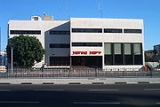
Yedioth Ahronoth

Encyclopedia
Yedioth Ahronoth is a daily newspaper published in Tel Aviv
, Israel
. Since the 1970s, it has been the most widely circulated paper in Israel. In a TGI survey comparing the last half of 2009 with the same period in 2008, Yedioth Ahronoth retained the title of most widely read newspaper in Israel but saw its market share fall only slightly from 35.9 to 33.9 percent. In July 2010, though a TGI survey of the media reported that Israel HaYom
overtook
Yedioth Aharonoth as the most read newspaper in terms of exposure with a rate of 35.2% compared with Yedioth' s 34.9%. After only a few months of publication of a weekend edition, it scored it 25.7% of exposure compared with Yedioths 43.7% rate.
ran the paper with Noah as the first managing editor.
In 1948, a large group of journalists and staff members led by Azriel Carlebach
, who was editor at the time, left to form Yedioth Maariv, later known as Maariv. Carlebach was replaced by Herzl Rosenblum
. This began an on-going battle for circulation and prestige between the rival newspapers, which peaked during the 1990s when both papers were discovered to have bugged one another's phones.
showed that Yedioth Ahronoths coverage of the 2009 Israeli legislative election
was biased in favor of Kadima
and its leader Tzipi Livni
in most editorial decisions and that the paper chooses to play down events that don't help to promote a positive image for her, while on the other hand, touting and inflating events that help promote Livni and her party. Oren Frisco reached a similar conclusion after the 2009 Knesset
elections, writing that throughout the campaign, Yediot Ahronoth was biased against Benjamin Netanyahu
.
It is owned by the Yedioth Ahronoth Group, which also owns stocks in several Israeli companies, such as "Channel 2
", a commercial television channel; "Hot", the Cable TV company; "Yedioth Tikshoret", a group of weekly local newspapers; Vesti, a Russian language
newspaper; magazines, such as the weekly TV guide magazine Pnai Plus
and weekly women's magazine La'Isha; and other non-media companies. Shilo De-Beer was promoted to editor in April 2007.
Tel Aviv
Tel Aviv , officially Tel Aviv-Yafo , is the second most populous city in Israel, with a population of 404,400 on a land area of . The city is located on the Israeli Mediterranean coastline in west-central Israel. It is the largest and most populous city in the metropolitan area of Gush Dan, with...
, Israel
Israel
The State of Israel is a parliamentary republic located in the Middle East, along the eastern shore of the Mediterranean Sea...
. Since the 1970s, it has been the most widely circulated paper in Israel. In a TGI survey comparing the last half of 2009 with the same period in 2008, Yedioth Ahronoth retained the title of most widely read newspaper in Israel but saw its market share fall only slightly from 35.9 to 33.9 percent. In July 2010, though a TGI survey of the media reported that Israel HaYom
Israel HaYom
Israel HaYom is an Israeli national Hebrew-language free daily newspaper first published on July 30, 2007 and currently published in Tabloid format. The name is a variation of the popular USA Today, though there is no relation between the two publications...
overtook
Yedioth Aharonoth as the most read newspaper in terms of exposure with a rate of 35.2% compared with Yedioth
History
Yedioth Ahronoth was established in the late 1930s by an investor named Nachum Kumarov. It was the first evening paper in the British Mandate of Palestine, and attempted to emulate the format of the London Evening Standard. Running into financial difficulties, Kumarov sold the paper to Yehuda Mozes, a wealthy land dealer who regarded the paper as an interesting hobby and a long-term financial investment. His sons, Reuben and NoahNoah Mozes
Noah Mozes was an Israeli newspaper publisher, and the long-time managing editor of the Israeli newspaper Yedioth Aharonoth.-Biography:He was the son of Yehuda Mozes, and was initially an agronomist...
ran the paper with Noah as the first managing editor.
In 1948, a large group of journalists and staff members led by Azriel Carlebach
Azriel Carlebach
Dr. Ezriel Carlebach was a journalist and editorial writer during the period of Jewish settlement in Palestine and during the early days of the state of Israel...
, who was editor at the time, left to form Yedioth Maariv, later known as Maariv. Carlebach was replaced by Herzl Rosenblum
Herzl Rosenblum
Dr Herzl Rosenblum was an Israeli journalist and politician. A signatory of the Israeli declaration of independence, he worked as editor of Yedioth Ahronoth for more than 35 years.-Biography:...
. This began an on-going battle for circulation and prestige between the rival newspapers, which peaked during the 1990s when both papers were discovered to have bugged one another's phones.
Political leaning
A study conducted by Moran Rada with the Israeli Democracy InstituteIsraeli Democracy Institute
The Israeli Democracy Institute is non-profit organization in Israel, founded in 1991, which aims at forming policies and to initiate reforms in the different fields of the state and its institutions in order to apply laws, implement them and to strengthen the democracy values in Israel.-...
showed that Yedioth Ahronoths coverage of the 2009 Israeli legislative election
Israeli legislative election, 2009
Elections for the 18th Knesset were held in Israel on 10 February 2009. These elections became necessary due to the resignation of Prime Minister Ehud Olmert as leader of the Kadima party, and the failure of his successor, Tzipi Livni, to form a coalition government...
was biased in favor of Kadima
Kadima
Kadima is a centrist and liberal political party in Israel. It was established on 24 November 2005 by moderates from Likud largely to support the issue of Ariel Sharon's unilateral disengagement plan, and was soon joined by like-minded Labor politicians...
and its leader Tzipi Livni
Tzipi Livni
Tzipporah Malkah "Tzipi" Livni is an Israeli lawyer and politician. She is the current Israeli Opposition Leader and leader of Kadima, the largest party in the Knesset. Raised an ardent nationalist, Livni has become one of her nation's leading voices for the two-state solution. In Israel she has...
in most editorial decisions and that the paper chooses to play down events that don't help to promote a positive image for her, while on the other hand, touting and inflating events that help promote Livni and her party. Oren Frisco reached a similar conclusion after the 2009 Knesset
Knesset
The Knesset is the unicameral legislature of Israel, located in Givat Ram, Jerusalem.-Role in Israeli Government :The legislative branch of the Israeli government, the Knesset passes all laws, elects the President and Prime Minister , approves the cabinet, and supervises the work of the government...
elections, writing that throughout the campaign, Yediot Ahronoth was biased against Benjamin Netanyahu
Benjamin Netanyahu
Benjamin "Bibi" Netanyahu is the current Prime Minister of Israel. He serves also as the Chairman of the Likud Party, as a Knesset member, as the Health Minister of Israel, as the Pensioner Affairs Minister of Israel and as the Economic Strategy Minister of Israel.Netanyahu is the first and, to...
.
Today
Today, the paper is headed by Noah Mozes's son, Arnon Mozes. For many years it was edited by Herzl Rosenblum's son, Moshe Vardi, who was replaced in 2005 by Rafi Ginat. It is published in tabloid format, and according to one author, its marketing strategy emphasizes "drama and human interest over sophisticated analysis." It has been described as "undoubtedly the country's number-one paper." The paper is open to a wide range of political views.It is owned by the Yedioth Ahronoth Group, which also owns stocks in several Israeli companies, such as "Channel 2
Channel 2 (Israel)
Channel 2 is an Israeli commercial television channel.- History :In 1990, after 13 years of deliberations, the Knesset passed a law that paved the way for the establishment of commercial television in Israel. The goal was to enhance pluralism and create competition. Channel 2 began broadcasting on...
", a commercial television channel; "Hot", the Cable TV company; "Yedioth Tikshoret", a group of weekly local newspapers; Vesti, a Russian language
Russian language
Russian is a Slavic language used primarily in Russia, Belarus, Uzbekistan, Kazakhstan, Tajikistan and Kyrgyzstan. It is an unofficial but widely spoken language in Ukraine, Moldova, Latvia, Turkmenistan and Estonia and, to a lesser extent, the other countries that were once constituent republics...
newspaper; magazines, such as the weekly TV guide magazine Pnai Plus
Pnai Plus
Pnai Plus is an Israeli magazine published weekly, which covers the world of entertainment and television worldwide and is a local TV guide. Created in 1989 and owned by Yedioth Ahronoth, the magazine contains sections such as cinema, music, culture, and food....
and weekly women's magazine La'Isha; and other non-media companies. Shilo De-Beer was promoted to editor in April 2007.