


Yamagata Prefecture

Encyclopedia
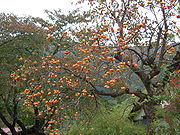
Fruit

Demographics
As of October 2004, Yamagata Prefecture had a population of 1,223,000 http://www.stat.go.jp/english/data/jinsui/2004np/zuhyou/15k16-04.xls. This represented a 5.3% decrease on the previous year, giving Yamagata the equal-fourth highest depopulation rate in Japan http://www.stat.go.jp/english/data/jinsui/2004np/zuhyou/15k16-07.xls. This figure consists of a 2.2% natural decrease in the population, and a net 3.1% emigration to other prefectures, again one of the highest rates in Japan.The prefecture also has one of the oldest populations in Japan. As of 2004, 12.8% of the population was aged between 65 and 74, and 12.1% was over 75 (the fourth and third highest in Japan, respectively) http://www.stat.go.jp/english/data/jinsui/2004np/zuhyou/15k16-12.xls. Over 40% of households in Yamagata contain one or more relatives aged 65 or over (one of the three highest in Japan) http://www.stat.go.jp/data/chiri/map/c_koku/pdf/map15.pdf.
Festivals and events
Yamagata Prefecture has a number of annual festivals and events.The largest is the hanagasa matsuri (花笠祭り) which takes place in Yamagata City
Yamagata City
* Yamagata , the capital city of Yamagata Prefecture* Yamagata , a city in Gifu Prefecture...
on the first weekend in August, when thousands of people perform the hanagasa dance in the city centre and attracts up to 300,000 spectators. Yamagata City is the home of the bi-annual Yamagata International Documentary Film Festival
Yamagata International Documentary Film Festival
The Yamagata International Documentary Film Festival is a documentary film festival held biennially in Yamagata, Japan.It was first held in October 1989, which makes it one of the longest running documentary film festivals in the world and the most distinguished such festival in Asia...
in October.
In February, a snow lantern festival is held in Yonezawa at the Uesugi Shrine. Hundreds of candle-lit lanterns light pathways dug into the snow around the shrine. Yonezawa is also the site of the Uesugi Festival (上杉祭り, uesugi matsuri) in mid-spring. The festival's highlight is a re-enactment of the 'Battle of Kawanakajima' on the banks of the Matsukawa River.
In September, Yamagata Prefecture is famous for its imoni
Imoni
is a type of thick potato and meat soup eaten traditionally in the autumn in the Tōhoku region of Japan. Yamagata Prefecture in particular is famous for its imoni, but other prefectures in the region also have their own different varieties....
, a potato stew popular in Northern Japan during the autumn. Imonikai, potato soup parties, are very popular during this season, and many tourists come to Yamagata Prefecture specifically for its particular style of imoni.
Art
Beginning in 2003, Yamagata city officials with the aid of Tōhoku University of Art and Design began a three-year project in which the Buddhist art of the city’s temples would be catalogued and compared to a set of guidelines in order to identify “cultural assets.” One hundred and ninety temples have had their works of art examined and several significant examples of Buddhist sculpture have been discovered. At Heisenji Temple, in the Hirashimizu district, a particularly rare statue, a seated VairocanaVairocana
Vairocana is a celestial Buddha who is often interpreted as the Bliss Body of the historical Gautama Buddha; he can also be referred to as the dharmakaya Buddha and the great solar Buddha. In Sino-Japanese Buddhism, Vairocana is also seen as the embodiment of the Buddhist concept of shunyata or...
Buddha made from zelkova
Zelkova
Zelkova is a genus of six species of deciduous trees in the elm family Ulmaceae, native to southern Europe, and southwest and eastern Asia. They vary in size from shrubs to large trees up to 35 m tall . The leaves are alternate, with serrated margins, and a symmetrical base to the leaf blade...
wood, was found. Other significant works include sculptures from the Heian Period
Heian period
The is the last division of classical Japanese history, running from 794 to 1185. The period is named after the capital city of Heian-kyō, or modern Kyōto. It is the period in Japanese history when Buddhism, Taoism and other Chinese influences were at their height...
(794–1185) and Kamakura Period
Kamakura period
The is a period of Japanese history that marks the governance by the Kamakura Shogunate, officially established in 1192 in Kamakura by the first shogun Minamoto no Yoritomo....
(1192–1333).
The Yamagata Museum of Art, located in Yamagata City, was opened in 1964 through the efforts of a foundation led by Yoshio Hattori, the president of Yamagata Shimbun and Yamagata Broadcasting Co, Ltd. The permanent collection consists of three types of art: Japanese and Asian, regional, and French. Special exhibitions are held periodically.
Language
Yamagata Prefecture is known for its local dialect Yamagata-ben, sometimes thought of as backward sounding and the butt of jokes in other parts of Japan. The 2004 movie Swing GirlsSwing Girls
is a 2004 comedy film co-written and directed by the Japanese filmmaker Shinobu Yaguchi about the efforts of a group of high school girls to form a jazz band....
(スウィングガールズ), co-written and directed by Shinobu Yaguchi
Shinobu Yaguchi
is a Japanese film director and screenwriter. He specializes in feel-good "zero to hero" films, where a group of people take up an unlikely activity, face a number of obstacles, but finally succeed. His film Waterboys was particularly successful and led to a TV series which entered its third...
, is set in Yamagata and makes use of Yamagata-ben for comedic purposes.
Sports
The sports teams listed below are based in Yamagata.Football (soccer)
- Montedio YamagataMontedio YamagataMontedio Yamagata is a professional association football club based in Yamagata Prefecture in Japan. The club plays in J. League Division 1.Montedio is a coined word combining two Italian words Monte and Dio .-History:...
Volleyball
- Pioneer Red WingsPioneer Red WingsPioneer Red Wings is a women's volleyball team based in Tendo city, Yamagata, Japan. It plays in V.Premier League. The club was founded in 1979.The owner of the team is Tohoku Pioneer-History:...
(TendoTendo, Yamagatais a city located in Yamagata Prefecture, Japan.As of 2008, the city has an estimated population of 63,483 and a population density of 562 persons per km²...
)
Airports
- Yamagata Airport (Tokyo, Osaka, Nagoya, Sapporo by Japan AirlinesJapan Airlinesis an airline headquartered in Shinagawa, Tokyo, Japan. It is the flag carrier of Japan and its main hubs are Tokyo's Narita International Airport and Tokyo International Airport , as well as Nagoya's Chūbu Centrair International Airport and Osaka's Kansai International Airport...
) - Shonai Airport (Tokyo, Osaka, Sapporo by All Nippon AirwaysAll Nippon Airways, also known as or ANA, is one of the largest airlines in Japan. It is headquartered at the Shiodome City Center in the Shiodome area in Minato, Tokyo, Japan. It operates services to 49 destinations in Japan and 35 international routes and employed over 14,000 employees as of May 2009...
)
Railways (JR East)
- Yamagata ShinkansenYamagata ShinkansenThe is a Mini-shinkansen route in Japan, operated by East Japan Railway Company . It provides service between Tokyo and Shinjō in Yamagata Prefecture over the tracks of the Tōhoku Shinkansen and the Ōu Main Line....
- Senzan LineSenzan LineThe is a railway line in Japan. Part of the East Japan Railway Company system, it runs from Sendai Station in Sendai, Miyagi Prefecture to Yamagata Station in Yamagata, acting as a connector between the Tōhoku Main Line/Tōhoku Shinkansen and the Ōu Main Line in southern Tōhoku. It also provides...
- Aterazawa LineAterazawa LineThe is a railway line in Yamagata Prefecture, Japan, operated by East Japan Railway Company . It runs between Kita-Yamagata Station in Yamagata to Aterazawa Station in Ōe...
- Yonesaka LineYonesaka LineThe is a rail line in Japan. Part of the East Japan Railway Company system, it runs from Yonezawa Station in Yamagata Prefecture to Sakamachi Station in Niigata Prefecture...
- Rikuu West Line
- Rikuu East Line
- Flower Nagai LineFlower Nagai LineThe is a Japanese railway line in Yamagata Prefecture, Japan. It runs from Akayu Station in Nanyō to Arato Station in Shirataka.The Flower Nagai Line is the only line operated by the third sector , which took over the former JR East line in 1988....
- Ōu Main LineOu Main LineThe is a railway line in Japan, operated by the East Japan Railway Company . It runs from Fukushima Station in Fukushima, Fukushima through Akita Station in Akita, Akita to Aomori Station in Aomori, Aomori Prefecture...
- Uetsu Main LineUetsu Main LineThe is a railway in the Tōhoku and Chūbu regions of Japan. Part of the East Japan Railway Company system, it connects Niitsu Station in the city of Niigata and Akita Station in Akita...
Tourism
The temple of Yama-deraYama-dera
Yama-dera is about a twenty minute train ride northeast of Yamagata City, in Yamagata Prefecture, Japan at the foot of the steep hill Houshuuyama....
, carved into the mountainside near Yamagata City
Yamagata, Yamagata
is the capital city of Yamagata Prefecture in Japan.As of July 1, 2011, the city has an estimated population of 253,951 with 97,457 households and a population density of 665.94 persons per km². The total area is 381.34 km². The city was founded on April 1, 1889.-Culture:The , one of Tōhoku's...
, is a major attraction.
The Dewa Sanzan are three holy mountains that form a traditional pilgrimage for followers of the Shugendō
Shugendo
is a highly syncretic Buddhic religion or sect and mystical-spiritual tradition which originated in pre-Feudal Japan, in which enlightenment is equated with attaining oneness with the . This perception of experiential "awakening" is obtained through the understanding of the relationship between...
branch of Shintō. The famous Gojudo (five-story pagoda) is at the base of Mt. Haguro
Mt. Haguro
is one of the Three Mountains of Dewa in the ancient province of Dewa . As the lowest of the three mountains, standing at , it is the only one that is accessible throughout the year....
, the lowest of the three mountains.
Mount Zaō
Mount Zao
is a complex volcano on the border between Yamagata Prefecture and Miyagi Prefecture in Japan. It consists of a cluster of stratovolcanoes and is the most active volcano in northern Honshū. The central volcano of the group includes several lava domes and a tuff cone, Goshiki-dake, which contains...
is a famous winter ski resort, also known for its snow monsters (frozen snow covered trees) in the winter, and the Okama crater lake, also known as the Goshiki Numa (Five Color Lake) because its colour changes according to the weather.
Newspapers
- Yamagata Shimbun http://yamagata-np.jp/
- Yonezawa Shimbun
- Shonai Nippo
- Okitama Times http://www.okitamatimes.co.jp/
TV and radio
- YBC TV and Radio (NNNNippon News NetworkNippon News Network is a commercial television news network in Japan. The network is owned by Nippon Television, which itself is controlled by publishing company Yomiuri Shimbun. NNN operates a 24-hour news network, News 24, and its programming is aired on NTV stations.-Nippon News Network...
, JRNJapan Radio NetworkJapan Radio Network or JRN is a commercial radio network in Japan. The network is run by TBS Radio & Communications, Inc. .-Japan Radio Network stations:...
, and NRNNational Radio Network (Japan)National Radio Network is a commercial radio network in Japan. The network is run by Nippon Cultural Broadcasting, Incorporated and Nippon Broadcasting System, Incorporated . It is not connected in any way with the National Radio Network in the United States.-National Radio Network stations:...
) - YTS TV(ANNAll-Nippon News Network, or ANN, is a commercial television news network in Japan run by TV Asahi Corporation.-All-Nippon News Network stations:-Remote Controller Buttons of Digital TV:*1: Kyushu Asahi Broadcasting*3: TV Miyazaki*5: 20 ANN stations...
) - TUY TV(JNN)
- SAY TV(FNNFuji News NetworkFuji News Network is a commercial television news network in Japan. The network is run by Fuji Television Network, Inc..-Fuji News Network stations:-External links:*...
) - Rhythm Station(Japan FM Network)