


Wissenschaft des Judentums

Encyclopedia
Wissenschaft des Judentums ("Jewish Studies" or "Judaic Studies" in German
), refers to a nineteenth-century movement premised on the critical investigation of Jewish literature and culture, including rabbinic literature
, using scientific methods to analyze the origins of Jewish traditions.
, (a pupil of Hegel), and his associates . Other members included Heinrich Heine
, Leopold Zunz
, Moses Moser, and Michael Beer, (youngest brother of Meyerbeer). It was an attempt to provide a construct for the Jews as a Volk or people in their own right, independent of their religious traditions. As such it sought to validate their secular cultural traditions as being on an equal footing with those adduced by Johann Gottfried Herder
and his followers for the German people. Immanuel Wolf’s influential essay Über den Begriff einer Wissenschaft des Judentums (On the Concept of a Jewish Science) of 1822, has such ideas in mind. The failure of the Verein, attributable largely to the far greater attraction, amongst German Jews, of identification with German culture, was followed, significantly, by the conversion to Christianity
of many of its leading figures, including Gans and Heine.
, in his book The Pity of it All, places the movement in the context of anti-Semitic riots in Germany in 1819. The purpose, Elon writes, "was to bring ordinary Jews into the orbit of German Kultur and at the same time reinforce their Jewish identity by bridging the gulf between secular and religious education." In essence, it sought to make Jews more German.
, as evinced in Goethe's ideas of Bildung
, and endeavored to have "Jewish Studies
" introduced into the university curriculum as a respectable area of study, freeing the field from the prevailing bias that regarded Judaism as an inferior precursor to Christianity and studied it as such. They also developed and advocated a style of scholarship which allowed complete freedom in the interpretation of traditional texts, and which might be pursued without concerns about the practical ramifications such interpretations might have for religious observance and religious life .
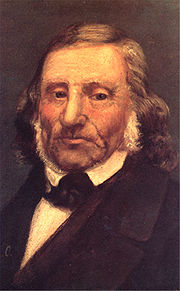
Leopold Zunz
(1794–1886), one of the movement's leading figures, devoted much of his work to rabbinic literature. At the time, Christian
thinkers maintained that the Jews' contribution ended with the Bible
, and Zunz began to publish in the area of post-biblical rabbinic literature
. His essays Etwas über die rabbinische Literatur and Zur Geschichte und Literatur addressed this issue. His biography of Rashi
of Troyes
was pivotal. When the Prussian
government forbade preaching sermons in German synagogues, on the grounds that the sermon
was an exclusively Christian institution, Zunz wrote ”History of the Jewish Sermon” in 1832. This work has been described as "the most important Jewish book published in the 19th century." It lays down principles for the investigation of the Rabbinic exegesis (Midrash
) and of the siddur
(prayer-book of the synagogue).
Nevertheless, throughout most of its existence and despite certain of its most prominent practitioners, such as Steinschneider, being vocal opponents of religion, Wissenschaft des Judentums was very much a religious movement—pursued largely by rabbis at Jewish seminaries who were engaged in preparing their students for rabbinical careers. In a foreshadowing of the reform movement, Zunz often led services, which were accompanied by an organ, in the vernacular German, rather than Hebrew. Many of these Wissenschaft scholars, such as Z. Frankel and H. Graetz, while employing critical methods in their investigations, still considered the Jewish religion and Jewish history to be reflective of a divine revelation and guidance, while some, such as D. Hoffman, yet regarded even the Biblical word to be the product of divine revelation. It was this essentially religious nature of Wissenschaft des Judentums that made it even more dangerous in the eyes of its opponents. Christians even thought that a more liberal form of Judaism would attract converts, or would keep Jews from converting to Christianity, and so the government forced Zunz's synagogue to close.
and Rashi
and Hillel the Elder
and Abraham ibn Ezra
, and in those prior generations of scholars they see their own Wissenschaft spirit and likeness.
In the Wissenschaft approach to scholarship, then, the earlier generations of scholars become "de-sanctified" and "re-humanized". Wissenschaft scholars feel completely free to pass judgment on the intellectual and scholarly capacities of earlier scholars, evaluating their originality, competence, and credibility, and pointing out their failures and limitations. The Wissenschaft scholars, while respectful of their predecessors, have no patience for a concept such as yeridat ha-dorot
. For them, the classical authorities are no more beyond dispute and critique than are contemporary scholars; the opinions of ibn Ezra
and Steinschneider may be presented in the same sentence without any sense of impropriety, and either one may then be debunked with the same forwardness. No doubt this de-sanctification of the Jewish luminaries provided further grist for the opponents of the movement.
departments (and, indeed, some yeshivas) around the world, it is possible to regard the publication of the Jewish Encyclopedia
in 1901–1906 as the culmination and final flowering of this era in Jewish studies . The choice of English
over German
as the language for this epochal work is a further sign that an era of German scholarship was drawing to a close. In the early years of the new century the Wissenschaft culture and style of scholarship was transplanted to a certain extent to bodies such as the Institute for Jewish Studies at Hebrew University (e.g., Gershom Scholem
) and Jewish Studies departments at American universities such as Brandeis
and Harvard (e.g., Harry Austryn Wolfson
).
. He and other traditional religious scholars representing urban and sophisticated Orthodox constituencies regarded the Wissenschaft movement as draining traditional Jewish knowledge of its "sacral power", and utterly failing to meet the needs of the living Jewish community. The Orthodox orientation of Wissenschaft figures such as David Zvi Hoffmann did not spare them from Hirsch's condemnation.
is best known for Die Philosophie des Judentums (Reinhardt
, 1933), translations of which are available in Hebrew, Spanish
, English
, Japanese
, etc. The English title is The Philosophy of Judaism: The History of Jewish Philosophy from Biblical Times to Franz Rosenzweig (New York, 1964).
Roth sees in this publication "the last product in the direct line of the authentic Judaeo-German 'Science of Judaism'" (more commonly known as Wissenschaft des Judentums). While the movement did not utterly expire with the publication Guttman's work—its spirit living on in the work of G. Scholem and H.A. Wolfson among many others—it is certainly the case that the Wissenschaft movement in Germany had by the 1930s already ceased to thrive.
The original German edition of Philosophie des Judentums ends with Hermann Cohen
, the primary influence on Guttman's own philosophy, while the later Hebrew edition includes Franz Rosenzweig
. It is also notable that Guttman's work excludes major thinkers of the Kabbalistic school, which reflects his own attitude toward Jewish philosophy

German language
German is a West Germanic language, related to and classified alongside English and Dutch. With an estimated 90 – 98 million native speakers, German is one of the world's major languages and is the most widely-spoken first language in the European Union....
), refers to a nineteenth-century movement premised on the critical investigation of Jewish literature and culture, including rabbinic literature
Rabbinic literature
Rabbinic literature, in its broadest sense, can mean the entire spectrum of rabbinic writings throughout Jewish history. However, the term often refers specifically to literature from the Talmudic era, as opposed to medieval and modern rabbinic writing, and thus corresponds with the Hebrew term...
, using scientific methods to analyze the origins of Jewish traditions.
The Verein für Cultur und Wissenschaft der Juden
The first organized attempt at developing and disseminating Wissenschaft des Judentums was the Verein für Cultur und Wissenschaft der Juden (Society for Jewish Culture and Science), founded around 1819 by Eduard GansEduard Gans
Eduard Gans was a German jurist.He was born in Berlin of prosperous Jewish parents. He studied law first at the Friedrich Wilhelm University, Berlin, then at Göttingen, and finally at Heidelberg, where he attended G. W. F. Hegel's lectures, and became thoroughly imbued with the principles of...
, (a pupil of Hegel), and his associates . Other members included Heinrich Heine
Heinrich Heine
Christian Johann Heinrich Heine was one of the most significant German poets of the 19th century. He was also a journalist, essayist, and literary critic. He is best known outside Germany for his early lyric poetry, which was set to music in the form of Lieder by composers such as Robert Schumann...
, Leopold Zunz
Leopold Zunz
Leopold Zunz was a German Reform rabbi and writer, the founder of what has been termed "Jewish Studies" or "Judaic Studies" , the critical investigation of Jewish literature, hymnology and ritual...
, Moses Moser, and Michael Beer, (youngest brother of Meyerbeer). It was an attempt to provide a construct for the Jews as a Volk or people in their own right, independent of their religious traditions. As such it sought to validate their secular cultural traditions as being on an equal footing with those adduced by Johann Gottfried Herder
Johann Gottfried Herder
Johann Gottfried von Herder was a German philosopher, theologian, poet, and literary critic. He is associated with the periods of Enlightenment, Sturm und Drang, and Weimar Classicism.-Biography:...
and his followers for the German people. Immanuel Wolf’s influential essay Über den Begriff einer Wissenschaft des Judentums (On the Concept of a Jewish Science) of 1822, has such ideas in mind. The failure of the Verein, attributable largely to the far greater attraction, amongst German Jews, of identification with German culture, was followed, significantly, by the conversion to Christianity
Christianity
Christianity is a monotheistic religion based on the life and teachings of Jesus as presented in canonical gospels and other New Testament writings...
of many of its leading figures, including Gans and Heine.
The Wissenschaft des Judentums movement
Despite the lack of success of the Verein für Cultur und Wissenschaft der Juden, its principles inspired many Jewish thinkers to invest their efforts in a wider Wissenschaft des Judentums movement, and also provoked a conservative reaction (see Opposition). The historian Amos ElonAmos Elon
-Biography:Amos Elon was born in Vienna. He immigrated to Mandate Palestine in 1933. He studied law and history in Israel and England. He was married to Beth Elon, a New York-born literary agent, with whom he had one daughter, Danae. In the 1990s, Elon began to spend much of his time in Italy...
, in his book The Pity of it All, places the movement in the context of anti-Semitic riots in Germany in 1819. The purpose, Elon writes, "was to bring ordinary Jews into the orbit of German Kultur and at the same time reinforce their Jewish identity by bridging the gulf between secular and religious education." In essence, it sought to make Jews more German.
Goals
Proponents of Wissenschaft des Judentums attempted to place Jewish culture on par with Western European cultureWestern culture
Western culture, sometimes equated with Western civilization or European civilization, refers to cultures of European origin and is used very broadly to refer to a heritage of social norms, ethical values, traditional customs, religious beliefs, political systems, and specific artifacts and...
, as evinced in Goethe's ideas of Bildung
Bildung
The term refers to the German tradition of self-cultivation, , wherein philosophy and education are linked in manner that refers to a process of both personal and cultural maturation...
, and endeavored to have "Jewish Studies
Jewish studies
Jewish studies is an academic discipline centered on the study of Jews and Judaism. Jewish studies is interdisciplinary and combines aspects of history , religious studies, archeology, sociology, languages , political science, area studies, women's studies, and ethnic studies...
" introduced into the university curriculum as a respectable area of study, freeing the field from the prevailing bias that regarded Judaism as an inferior precursor to Christianity and studied it as such. They also developed and advocated a style of scholarship which allowed complete freedom in the interpretation of traditional texts, and which might be pursued without concerns about the practical ramifications such interpretations might have for religious observance and religious life .
Leopold Zunz
Leopold Zunz
Leopold Zunz was a German Reform rabbi and writer, the founder of what has been termed "Jewish Studies" or "Judaic Studies" , the critical investigation of Jewish literature, hymnology and ritual...
(1794–1886), one of the movement's leading figures, devoted much of his work to rabbinic literature. At the time, Christian
Christianity
Christianity is a monotheistic religion based on the life and teachings of Jesus as presented in canonical gospels and other New Testament writings...
thinkers maintained that the Jews' contribution ended with the Bible
Bible
The Bible refers to any one of the collections of the primary religious texts of Judaism and Christianity. There is no common version of the Bible, as the individual books , their contents and their order vary among denominations...
, and Zunz began to publish in the area of post-biblical rabbinic literature
Rabbinic literature
Rabbinic literature, in its broadest sense, can mean the entire spectrum of rabbinic writings throughout Jewish history. However, the term often refers specifically to literature from the Talmudic era, as opposed to medieval and modern rabbinic writing, and thus corresponds with the Hebrew term...
. His essays Etwas über die rabbinische Literatur and Zur Geschichte und Literatur addressed this issue. His biography of Rashi
Rashi
Shlomo Yitzhaki , or in Latin Salomon Isaacides, and today generally known by the acronym Rashi , was a medieval French rabbi famed as the author of a comprehensive commentary on the Talmud, as well as a comprehensive commentary on the Tanakh...
of Troyes
Troyes
Troyes is a commune and the capital of the Aube department in north-central France. It is located on the Seine river about southeast of Paris. Many half-timbered houses survive in the old town...
was pivotal. When the Prussian
Kingdom of Prussia
The Kingdom of Prussia was a German kingdom from 1701 to 1918. Until the defeat of Germany in World War I, it comprised almost two-thirds of the area of the German Empire...
government forbade preaching sermons in German synagogues, on the grounds that the sermon
Sermon
A sermon is an oration by a prophet or member of the clergy. Sermons address a Biblical, theological, religious, or moral topic, usually expounding on a type of belief, law or behavior within both past and present contexts...
was an exclusively Christian institution, Zunz wrote ”History of the Jewish Sermon” in 1832. This work has been described as "the most important Jewish book published in the 19th century." It lays down principles for the investigation of the Rabbinic exegesis (Midrash
Midrash
The Hebrew term Midrash is a homiletic method of biblical exegesis. The term also refers to the whole compilation of homiletic teachings on the Bible....
) and of the siddur
Siddur
A siddur is a Jewish prayer book, containing a set order of daily prayers. This article discusses how some of these prayers evolved, and how the siddur, as it is known today has developed...
(prayer-book of the synagogue).
Attitude toward religion
Despite the outstanding scholarship of Wissenschaft personalities such as Zunz and H. Graetz (most of whom pursued their scholarly labors on their own time as privatgelehrter), the Wissenschaft movement as a whole had a tendency to present Judaism as an historical relic with frequently apologetic overtones, and often ignored matters of contemporary relevance.ZunzZunzZunz, Zuntz is a Yiddish surname: , Belgian pharmacologist* Leopold Zunz , German Reform rabbi* Gerhard Jack Zunz , British civil engineer- Zuntz :* Nathan Zuntz , German physiologist...
felt obliged to assume that Judaism had come to an end, and that it was the task of Wissenschaft des Judentums to provide a judicious accounting of the varied and rich contributions which Judaism had made to civilization. In a similar spirit, Steinschneider is said to have once quipped that Wissenschaft des Judentums seeks to ensure that Judaism will receive a proper burial, in which scholarship amounts to an extended obituary properly eulogizing the deceased.
Nevertheless, throughout most of its existence and despite certain of its most prominent practitioners, such as Steinschneider, being vocal opponents of religion, Wissenschaft des Judentums was very much a religious movement—pursued largely by rabbis at Jewish seminaries who were engaged in preparing their students for rabbinical careers. In a foreshadowing of the reform movement, Zunz often led services, which were accompanied by an organ, in the vernacular German, rather than Hebrew. Many of these Wissenschaft scholars, such as Z. Frankel and H. Graetz, while employing critical methods in their investigations, still considered the Jewish religion and Jewish history to be reflective of a divine revelation and guidance, while some, such as D. Hoffman, yet regarded even the Biblical word to be the product of divine revelation. It was this essentially religious nature of Wissenschaft des Judentums that made it even more dangerous in the eyes of its opponents. Christians even thought that a more liberal form of Judaism would attract converts, or would keep Jews from converting to Christianity, and so the government forced Zunz's synagogue to close.
Attitude toward earlier scholarship
Indeed, one detects in the writings of many Wissenschaft scholars not only an intense love of scholarship "for its own sake", but also a genuine affinity for the rabbis and scholars of old, whose works they find themselves documenting, editing, publishing, analyzing, and critiquing. Indeed, far from disparaging or despising the Jewish religion and its many generations of rabbinical scholars, the majority of Wissenschaft practitioners are very keen to take ownership of the Jewish scholarly tradition. They see themselves as the rightful heirs and successors to Saadia GaonSaadia Gaon
Saʻadiah ben Yosef Gaon was a prominent rabbi, Jewish philosopher, and exegete of the Geonic period.The first important rabbinic figure to write extensively in Arabic, he is considered the founder of Judeo-Arabic literature...
and Rashi
Rashi
Shlomo Yitzhaki , or in Latin Salomon Isaacides, and today generally known by the acronym Rashi , was a medieval French rabbi famed as the author of a comprehensive commentary on the Talmud, as well as a comprehensive commentary on the Tanakh...
and Hillel the Elder
Hillel the Elder
Hillel was a famous Jewish religious leader, one of the most important figures in Jewish history. He is associated with the development of the Mishnah and the Talmud...
and Abraham ibn Ezra
Abraham ibn Ezra
Rabbi Abraham ben Meir Ibn Ezra was born at Tudela, Navarre in 1089, and died c. 1167, apparently in Calahorra....
, and in those prior generations of scholars they see their own Wissenschaft spirit and likeness.
In the Wissenschaft approach to scholarship, then, the earlier generations of scholars become "de-sanctified" and "re-humanized". Wissenschaft scholars feel completely free to pass judgment on the intellectual and scholarly capacities of earlier scholars, evaluating their originality, competence, and credibility, and pointing out their failures and limitations. The Wissenschaft scholars, while respectful of their predecessors, have no patience for a concept such as yeridat ha-dorot
Yeridat ha-dorot
Yeridat ha-dorot , meaning literally "the decline of the generations", or nitkatnu ha-dorot , meaning "the diminution of the generations", is a concept in classical Rabbinic Judaism and contemporary Orthodox Judaism expressing a belief of the intellectual inferiority of subsequent, and contemporary...
. For them, the classical authorities are no more beyond dispute and critique than are contemporary scholars; the opinions of ibn Ezra
Abraham ibn Ezra
Rabbi Abraham ben Meir Ibn Ezra was born at Tudela, Navarre in 1089, and died c. 1167, apparently in Calahorra....
and Steinschneider may be presented in the same sentence without any sense of impropriety, and either one may then be debunked with the same forwardness. No doubt this de-sanctification of the Jewish luminaries provided further grist for the opponents of the movement.
Legacy
Although the Wissenschaft movement produced a vast number of scholarly publications of lasting value, and its influence still reverberates through Jewish StudiesJewish studies
Jewish studies is an academic discipline centered on the study of Jews and Judaism. Jewish studies is interdisciplinary and combines aspects of history , religious studies, archeology, sociology, languages , political science, area studies, women's studies, and ethnic studies...
departments (and, indeed, some yeshivas) around the world, it is possible to regard the publication of the Jewish Encyclopedia
Jewish Encyclopedia
The Jewish Encyclopedia is an encyclopedia originally published in New York between 1901 and 1906 by Funk and Wagnalls. It contained over 15,000 articles in 12 volumes on the history and then-current state of Judaism and the Jews as of 1901...
in 1901–1906 as the culmination and final flowering of this era in Jewish studies . The choice of English
English language
English is a West Germanic language that arose in the Anglo-Saxon kingdoms of England and spread into what was to become south-east Scotland under the influence of the Anglian medieval kingdom of Northumbria...
over German
German language
German is a West Germanic language, related to and classified alongside English and Dutch. With an estimated 90 – 98 million native speakers, German is one of the world's major languages and is the most widely-spoken first language in the European Union....
as the language for this epochal work is a further sign that an era of German scholarship was drawing to a close. In the early years of the new century the Wissenschaft culture and style of scholarship was transplanted to a certain extent to bodies such as the Institute for Jewish Studies at Hebrew University (e.g., Gershom Scholem
Gershom Scholem
Gerhard Scholem who, after his immigration from Germany to Palestine, changed his name to Gershom Scholem , was a German-born Israeli Jewish philosopher and historian, born and raised in Germany...
) and Jewish Studies departments at American universities such as Brandeis
Brandeis University
Brandeis University is an American private research university with a liberal arts focus. It is located in the southwestern corner of Waltham, Massachusetts, nine miles west of Boston. The University has an enrollment of approximately 3,200 undergraduate and 2,100 graduate students. In 2011, it...
and Harvard (e.g., Harry Austryn Wolfson
Harry Austryn Wolfson
Harry Austryn Wolfson was a scholar, philosopher, and historian at Harvard University, the first chairman of a Judaic Studies Center in the United States...
).
Opposition
The Wissenschaft movement drew criticism from traditional elements in the Jewish community, who regarded it as sterile at best, and at worst damaging to the religious community. A key opposition leader was Samson Raphael HirschSamson Raphael Hirsch
Samson Raphael Hirsch was a German rabbi best known as the intellectual founder of the Torah im Derech Eretz school of contemporary Orthodox Judaism...
. He and other traditional religious scholars representing urban and sophisticated Orthodox constituencies regarded the Wissenschaft movement as draining traditional Jewish knowledge of its "sacral power", and utterly failing to meet the needs of the living Jewish community. The Orthodox orientation of Wissenschaft figures such as David Zvi Hoffmann did not spare them from Hirsch's condemnation.
Guttmann and his Philosophie des Judentums
Julius GuttmannJulius Guttmann
Julius Guttmann , born Yitzchak Guttmann was a German-born rabbi, Jewish theologian, and philosopher of religion.- Biography :...
is best known for Die Philosophie des Judentums (Reinhardt
Reinhardt
Reinhardt may refer to:* Reinhardt University, Waleska, Georgia, USAPeople with the surname Reinhardt:*see Reinhardt People with the given name Reinhardt:* Reinhardt Kristensen, Danish invertebrate biologist,...
, 1933), translations of which are available in Hebrew, Spanish
Spanish language
Spanish , also known as Castilian , is a Romance language in the Ibero-Romance group that evolved from several languages and dialects in central-northern Iberia around the 9th century and gradually spread with the expansion of the Kingdom of Castile into central and southern Iberia during the...
, English
English language
English is a West Germanic language that arose in the Anglo-Saxon kingdoms of England and spread into what was to become south-east Scotland under the influence of the Anglian medieval kingdom of Northumbria...
, Japanese
Japanese language
is a language spoken by over 130 million people in Japan and in Japanese emigrant communities. It is a member of the Japonic language family, which has a number of proposed relationships with other languages, none of which has gained wide acceptance among historical linguists .Japanese is an...
, etc. The English title is The Philosophy of Judaism: The History of Jewish Philosophy from Biblical Times to Franz Rosenzweig (New York, 1964).
Roth sees in this publication "the last product in the direct line of the authentic Judaeo-German 'Science of Judaism'" (more commonly known as Wissenschaft des Judentums). While the movement did not utterly expire with the publication Guttman's work—its spirit living on in the work of G. Scholem and H.A. Wolfson among many others—it is certainly the case that the Wissenschaft movement in Germany had by the 1930s already ceased to thrive.
The original German edition of Philosophie des Judentums ends with Hermann Cohen
Hermann Cohen
Hermann Cohen was a German-Jewish philosopher, one of the founders of the Marburg School of Neo-Kantianism, and he is often held to be "probably the most important Jewish philosopher of the nineteenth century".-Life:...
, the primary influence on Guttman's own philosophy, while the later Hebrew edition includes Franz Rosenzweig
Franz Rosenzweig
Franz Rosenzweig was an influential Jewish theologian and philosopher.-Early life:Franz Rosenzweig was born in Kassel, Germany to a middle-class, minimally observant Jewish family...
. It is also notable that Guttman's work excludes major thinkers of the Kabbalistic school, which reflects his own attitude toward Jewish philosophy
Jewish philosophy
Jewish philosophy , includes all philosophy carried out by Jews, or, in relation to the religion of Judaism. Jewish philosophy, until modern Enlightenment and Emancipation, was pre-occupied with attempts to reconcile coherent new ideas into the tradition of Rabbinic Judaism; thus organizing...
List of Wissenschaft des Judentums personalities
- W. Bacher
- Eduard GansEduard GansEduard Gans was a German jurist.He was born in Berlin of prosperous Jewish parents. He studied law first at the Friedrich Wilhelm University, Berlin, then at Göttingen, and finally at Heidelberg, where he attended G. W. F. Hegel's lectures, and became thoroughly imbued with the principles of...
- H. Graetz
- J. Guttmann
- D. Hoffman
- Moses Moser
- Solomon Judah Loeb Rapoport
- Solomon SchechterSolomon SchechterSolomon Schechter was a Moldavian-born Romanian and English rabbi, academic scholar, and educator, most famous for his roles as founder and President of the United Synagogue of America, President of the Jewish Theological Seminary of America, and architect of the American Conservative Jewish...
- M. Steinschneider
- Leopold ZunzLeopold ZunzLeopold Zunz was a German Reform rabbi and writer, the founder of what has been termed "Jewish Studies" or "Judaic Studies" , the critical investigation of Jewish literature, hymnology and ritual...
External links
- Goldestein Goren Intl. Center, e-lectures Wissenschaft des Judentums http://hsf.bgu.ac.il/cjt/files/electures/glWissenschaft.htm
- Iancu, Carol From the "Science of Judaism" to the "New Israeli historians" - landmarks for a history of Jewish historiography http://www.unibuc.ro/eBooks/filologie/hebra/2-10.htm