

Winograd Commission

Encyclopedia
- For other Winograd Commissions, see Eliyahu Winograd.
The Winograd Commission is an Israel
Israel
The State of Israel is a parliamentary republic located in the Middle East, along the eastern shore of the Mediterranean Sea...
i government
Cabinet of Israel
The Cabinet of Israel is a formal body composed of government officials called ministers, chosen and led by the Prime Minister. The Prime Minister must appoint members based on the distribution of votes to political parties during legislative elections, and its composition must be approved by a...
-appointed commission of inquiry, chaired by retired judge Eliyahu Winograd
Eliyahu Winograd
Eliyahu Winograd is a former Israeli acting Supreme Court judge and former president of the Tel Aviv District Court. Between September 11, 2006 and April 30, 2007 he chaired the Winograd Commission to investigate the failures experienced by Israel during the 2006 Israel-Lebanon conflict.Winograd...
, which investigated and drew lessons from the Israel-Hezbollah War (or the Second Lebanon War as it is known in Israel). The Committee had its first plenary session
Plenary session
Plenary session is a term often used in conferences to define the part of the conference when all members of all parties are to attend.These sessions may contain a broad range of content from keynotes to panel discussions and are not necessarily related to a specific style of delivery.The term has...
on September 18, 2006 and began summoning
Summons
Legally, a summons is a legal document issued by a court or by an administrative agency of government for various purposes.-Judicial summons:...
and hearing testimonies from witness
Witness
A witness is someone who has firsthand knowledge about an event, or in the criminal justice systems usually a crime, through his or her senses and can help certify important considerations about the crime or event. A witness who has seen the event first hand is known as an eyewitness...
es on November 2 of that year. On April 30, 2007 the Commission released its preliminary report, harshly criticizing key decision-makers. At the same time, it has been praised as testimony to the fortitude of Israel's democracy
Democracy
Democracy is generally defined as a form of government in which all adult citizens have an equal say in the decisions that affect their lives. Ideally, this includes equal participation in the proposal, development and passage of legislation into law...
and ability to self-criticize
Self-criticism
Self-criticism refers to the pointing out of things critical/important to one's own beliefs, thoughts, actions, behaviour or results; it can form part of private, personal reflection or a group discussion.-Philosophy:...
, impressing even Hezbollah leader Hassan Nasrallah
Hassan Nasrallah
Hasan Nasrallah, became the third Secretary General of the Lebanese political and paramilitary organization Hezbollah after Israel assassinated the previous leader, Abbas al-Musawi, in 1992. Hezbollah in its entirety is considered a terrorist organization by The United States, the Netherlands,...
. The final Winograd Commission report was announced in Binyanei HaUma in Jerusalem on January 30, 2008.
Background
The Israeli public, press, and parliament supported the war against Hezbollah as a legitimate response to an attack on sovereign Israeli territory and a long overdue reaction to rocket attacks on northern Israel, but they questioned its implementation.Israelis have been debating the war since it was concluded. Critics note that the kidnapped soldiers were not rescued and that Hezbollah is rearming and has been strengthened politically. The government claims success in forcing Hezbollah from the border, in degrading its arms, and in pressuring the Lebanese government, aided by international forces, to assert itself in south Lebanon. Israeli officials took Hezbollah leader Hassan Nasrallah’s admission that he would not have authorized the July 12 action if he had known how strongly Israel would react as confirmation that the group had been weakened and that Israel’s deterrence had been strengthened.
During the war the Israeli government provided insufficient material support, including necessities, to the Home Front population of about one million people in northern Israel who were instructed to remain in shelters for much of the war's duration. Government support networks were not activated or were inadequately run. Much of the burden to care for vulnerable populations was left to individual volunteers and charities. The conditions of, and access to, shelters were often substandard and government assistance to northern Israelis in transportation and accommodations in central and southern Israel was highly lacking. Government inaction caused the weakest segments of Israeli society in affected areas to suffer the worst of the day-to-day privations.
On the military front there were tactical, operative and logistic failures, including the flow of intelligence
Military intelligence
Military intelligence is a military discipline that exploits a number of information collection and analysis approaches to provide guidance and direction to commanders in support of their decisions....
. Many Israeli commanders and troops were ill-prepared and ill-trained to meet the combat conditions, in particular, with respect to Hezbollah's use of portable antitank
Anti-tank warfare
Anti-tank warfare was created by the need to seek technology and tactics to destroy tanks and their supporting infantry during the First World War...
weapons, such as the 9К115-2 Metis-M. Unlike in Gaza
Gaza
Gaza , also referred to as Gaza City, is a Palestinian city in the Gaza Strip, with a population of about 450,000, making it the largest city in the Palestinian territories.Inhabited since at least the 15th century BC,...
and the West Bank
West Bank
The West Bank ) of the Jordan River is the landlocked geographical eastern part of the Palestinian territories located in Western Asia. To the west, north, and south, the West Bank shares borders with the state of Israel. To the east, across the Jordan River, lies the Hashemite Kingdom of Jordan...
, troops inside armor, or taking shelter in houses, became highly vulnerable to these weapons, which led to the majority of Israeli military casualties in the war. As well, with the mobilization of reserve divisions, a host of logistical failures, such as ordnance and food shortages, began affecting reserve soldiers.
A key strategic question relates to the controversial decision to launch full-scale warfare in response to the abduction of two individual soldiers and killing of eight soldiers in the process.
After the war, increasing public criticism and protest over these issues was placed on Israeli Prime Minister Ehud Olmert
Ehud Olmert
Ehud Olmert is an Israeli politician and lawyer. He served as Prime Minister of Israel from 2006 to 2009, as a Cabinet Minister from 1988 to 1992 and from 2003 to 2006, and as Mayor of Jerusalem from 1993 to 2003....
, especially to have him call for the establishment of a Supreme Court
Supreme Court of Israel
The Supreme Court is at the head of the court system and highest judicial instance in Israel. The Supreme Court sits in Jerusalem.The area of its jurisdiction is all of Israel and the Israeli-occupied territories. A ruling of the Supreme Court is binding upon every court, other than the Supreme...
-appointed state commission of inquiry to look at all levels of government and the military (including the prime minister and chief of staff).
For a time it was unclear which of the three areas —cabinet, military, and civilian homefront— would be investigated by whom, and how. On August 28, Olmert announced the creation of a governmental inspection probe led by former director of Mossad
Mossad
The Mossad , short for HaMossad leModi'in uleTafkidim Meyuchadim , is the national intelligence agency of Israel....
Nahum Admoni
Nahum Admoni
Nahum Admoni was the Director of the Mossad from 1982 to 1989. Born in Jerusalem to Polish immigrants, he fought in the 1948 Arab-Israeli War in the SHAI, the Haganah intelligence branch, and later in the newly created Israeli Defense Force Intelligence...
; it became the prototype for the Winograd Commission. A military inspection probe, led by former Chief of Staff
Ramatkal
The Chief of the General Staff, also known as the Commander-in-Chief of the Israel Defense Forces is the supreme commander and Chief of Staff of the Israel Defense Forces. At any given time, the Chief of Staff is the only active officer holding the IDF's highest rank, Rav Aluf , which is usually...
, Amnon Lipkin-Shahak
Amnon Lipkin-Shahak
Amnon Lipkin-Shahak is a former Chief of Staff of the Israel Defense Forces, Member of the Knesset andMinister of Transportation and Tourism.-Military service:Lipkin-Shahak started his military service as a teenager in the military boarding-school in Haifa...
which on August 22 ceased work after five days of operations due to increasing public dissatisfaction and calls for a state commission, was also set to be renewed. Olmert hinted that the State Comptroller would examine the civilian homefront, to the public consternation of the latter. In response to these growing criticisms, Olmert chose to replace Admoni with retired judge Eliyahu Winograd
Eliyahu Winograd
Eliyahu Winograd is a former Israeli acting Supreme Court judge and former president of the Tel Aviv District Court. Between September 11, 2006 and April 30, 2007 he chaired the Winograd Commission to investigate the failures experienced by Israel during the 2006 Israel-Lebanon conflict.Winograd...
as chair of the governmental inspection probe (with Olmert thereby responding to calls that any leading commission or probe needs to be headed by a retired judge); the probe itself, turned into a commission with a wider mandate, amounting to near-equal authority to a state commission.
Authority and operation
The commission has the same mandate as a state commission, except that its members were not appointed by the Supreme CourtSupreme Court of Israel
The Supreme Court is at the head of the court system and highest judicial instance in Israel. The Supreme Court sits in Jerusalem.The area of its jurisdiction is all of Israel and the Israeli-occupied territories. A ruling of the Supreme Court is binding upon every court, other than the Supreme...
and that its recommendations, especially with respect to resignations, may not possess the same legal weight. During its first week, the commission somewhat controversially engaged in preliminary meetings with top decision makers (including Olmert) who were later to be summoned as witnesses. For the next several weeks, the commission studied material and worked to decide on the direction of its investigation. On November 2, it began hearing testimonies from witnesses, beginning with the head of the Israel National Emergency Economic Authority, Brigadier-General (res.) Arnon Ben-Ami, who was asked why the Authority failed to be activated during the war despite repeated calls to do so. On November 4, it met in a closed session to hear testimonies by outgoing head of the Directorate of Military Intelligence
Aman (IDF)
The Directorate of Military Intelligence is Israel's central, overarching military intelligence, of the Israel Defense Forces. Aman was created in 1950, when the Intelligence Department was spun off from the IDF's General Staff ; the Intelligence Department itself was composed largely of former...
Amos Yadlin
Amos Yadlin
Aluf Amos Yadlin is a former general in the Israeli Air Force and was the head of the Israeli Military Intelligence Directorate, known as Aman. Before being promoted to head of Aman, Yadlin was the Israel Defense Forces military attaché to Washington, D.C.. Previously in his career he headed...
. On November 7, the commission heard testimonies from Vice Prime Minister
Deputy Leader of Israel
Deputy leaders in Israel fall into three categories: Acting Prime Minister, Deputy Prime Minister, and Vice Prime Minister. Deputy Prime Minister and Vice Prime Minister are honorary rather than official executive positions, but entitle the office-holder to a place in the cabinet.Acting Prime...
Shimon Peres
Shimon Peres
GCMG is the ninth President of the State of Israel. Peres served twice as the eighth Prime Minister of Israel and once as Interim Prime Minister, and has been a member of 12 cabinets in a political career spanning over 66 years...
and from Director-general
Director-general
The term director-general is a title given the highest executive officer within a governmental, statutory, NGO, third sector or not-for-profit institution.-European Union:...
of the Ministry of Defense
Ministry of Defense (Israel)
The Ministry of Defence of the government of Israel, is the governmental department responsible for defending the State of Israel from internal and external military threats...
Gabi Ashkenazi
Gabi Ashkenazi
Gavriel "Gabi" Ashkenazi , was the Chief of General Staff of the Israel Defence Forces from 2007 to 2011.- Background and early life :...
.
On February 6, 2007, the Israeli High Court of Justice ruled against Meretz
Meretz-Yachad
New Movement-Meretz , previously known as Meretz, then Yachad, and then Meretz-Yachad is a left-wing, Zionist, social democratic political party in Israel....
MK
Knesset
The Knesset is the unicameral legislature of Israel, located in Givat Ram, Jerusalem.-Role in Israeli Government :The legislative branch of the Israeli government, the Knesset passes all laws, elects the President and Prime Minister , approves the cabinet, and supervises the work of the government...
Zehava Galon's petition. She had petitioned the court to force the commission to hold public meetings and publish minutes, even before the preliminary report was to be published. The ruling was given after the commission had completed hearing testimonies behind closed doors. The High Court decided that "the Winograd Commission had a duty to permit exposure of the content of its deliberations, and the evidence presented to the commission, as much as possible, without harming the security or other national interests of the first degree." As a result of the ruling the commission put up a website on March 23, 2007, where the testimonies are to be published (as of now only testimonies by only three witnesses are available: Shimon Peres
Shimon Peres
GCMG is the ninth President of the State of Israel. Peres served twice as the eighth Prime Minister of Israel and once as Interim Prime Minister, and has been a member of 12 cabinets in a political career spanning over 66 years...
, Major-General (Res.
Military reserve force
A military reserve force is a military organization composed of citizens of a country who combine a military role or career with a civilian career. They are not normally kept under arms and their main role is to be available to fight when a nation mobilizes for total war or to defend against invasion...
) Amos Malka, and Brigadier-General (Res.) Arnon Ben Ami). Also available on the website is other information regarding the commission's activity put out by the commission.
Preliminary report
Prime Minister of Israel
The Prime Minister of Israel is the head of the Israeli government and the most powerful political figure in Israel . The prime minister is the country's chief executive. The official residence of the prime minister, Beit Rosh Hamemshala is in Jerusalem...
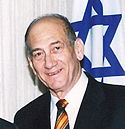
Ehud Olmert
Ehud Olmert
Ehud Olmert is an Israeli politician and lawyer. He served as Prime Minister of Israel from 2006 to 2009, as a Cabinet Minister from 1988 to 1992 and from 2003 to 2006, and as Mayor of Jerusalem from 1993 to 2003....
, then Minister of Defense
Ministry of Defense (Israel)
The Ministry of Defence of the government of Israel, is the governmental department responsible for defending the State of Israel from internal and external military threats...
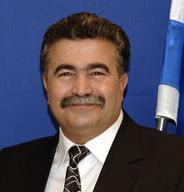
Amir Peretz
Amir Peretz
Amir Peretz is an Israeli politician and member of the Knesset for the Labour Party. He is a former Defense Minister of Israel and former leader of the Labour Party, having left those positions in June 2007....
, and the IDF Chief of Staff
Ramatkal
The Chief of the General Staff, also known as the Commander-in-Chief of the Israel Defense Forces is the supreme commander and Chief of Staff of the Israel Defense Forces. At any given time, the Chief of Staff is the only active officer holding the IDF's highest rank, Rav Aluf , which is usually...
during the war, Dan Halutz
Dan Halutz
' is an Israeli Air Force Lt. General and former Chief of Staff of the Israel Defense Forces and commander of the Israeli Air Force. Halutz was appointed as Chief of Staff on June 1, 2005. On January 17, 2007 he announced his resignation. He has a degree in economics. He was born to a Mizrahi...
.
On April 28, 2007, Israel's Channel Ten
Israel 10
Channel 10 , formerly known as Israel 10 is a commercial broadcasting television channel licensed in Israel. It operates under the auspices of the Second Israeli Broadcasting Authority .-History:...
nightly news edition leaked information from the preliminary report. The leaked copy reportedly criticized Olmert for having no "organized plan" in launching the war and called his move "misguided and rash judgment". The commission also accused Olmert, who lacks significant military experience, of not consulting the military leadership enough, and authorizing operations without input from other sources. It further criticized Olmert for failing to foresee the possible outcomes of the war. On Israeli Channel 2
Channel 2 (Israel)
Channel 2 is an Israeli commercial television channel.- History :In 1990, after 13 years of deliberations, the Knesset passed a law that paved the way for the establishment of commercial television in Israel. The goal was to enhance pluralism and create competition. Channel 2 began broadcasting on...
's news, the report was quoted as saying that Olmert had "failed" in his duty during the war. Nevertheless, according to Channel Ten, the report did not go so far as to call for the Prime Minister's dismissal.
Channel 2 also reported that the preliminary report also criticizes Peretz and Halutz, saying the Minister of Defense had failed, and that Halutz possessed "over-charisma", preventing the government from asking him to present alternatives to his plans for the war.
The report, covering the years leading up to the war (2000–2006) as well as the first few days of the war (July 12-July 17), was released on April 30, 2007, and contained serious criticisms of Prime Minister Olmert, Defence Minister Amir Peretz and Chief of Staff Dan Halutz.
Nevertheless, Peretz has tried to spin the report's findings in his favor, saying the report shows he "displayed understanding that more experienced people had not shown and that he need not resign immediately," despite the fact that the report quite clearly found that Peretz's "serving as Minister of Defense during the war impaired Israel's ability to respond well to its challenges."
Many public figures called upon Olmert and Peretz to resign. Notable among them was then Foreign Minister Tzipi Livni
Tzipi Livni
Tzipporah Malkah "Tzipi" Livni is an Israeli lawyer and politician. She is the current Israeli Opposition Leader and leader of Kadima, the largest party in the Knesset. Raised an ardent nationalist, Livni has become one of her nation's leading voices for the two-state solution. In Israel she has...
. Olmert refused to resign claiming Israel needed stability at that stage, and that new elections would be disruptive. Also in criticism of Olmert, Avigdor Yitzhaki
Avigdor Yitzhaki
Avigdor Yitzhaki is an Israeli politician. He is a former member of the Knesset for Kadima, having been the party's parliamentary group chairman and head of the coalition....
, head of the Kadima
Kadima
Kadima is a centrist and liberal political party in Israel. It was established on 24 November 2005 by moderates from Likud largely to support the issue of Ariel Sharon's unilateral disengagement plan, and was soon joined by like-minded Labor politicians...
faction and coalition chairman resigned in light of Olmert's refusal to step down.
Livni's post was the topic of one of the only positive comments in the report. The commission noted that "that from the first few days of the war it prepared the diplomatic ground that led to Security Council Resolution 1701
United Nations Security Council Resolution 1701
United Nations Security Council Resolution 1701 is a resolution that was intended to resolve the 2006 Israel-Lebanon conflict.It was unanimously approved by the United Nations Security Council on 11 August 2006. The Lebanese cabinet, which includes two members of Hezbollah, unanimously approved the...
that brought a cease-fire."
On May 3, 2007, three days after the release of the preliminary report, the Knesset
Knesset
The Knesset is the unicameral legislature of Israel, located in Givat Ram, Jerusalem.-Role in Israeli Government :The legislative branch of the Israeli government, the Knesset passes all laws, elects the President and Prime Minister , approves the cabinet, and supervises the work of the government...
held an extraordinary session to debate the report's findings. Opposition leader Benjamin Netanyahu
Benjamin Netanyahu
Benjamin "Bibi" Netanyahu is the current Prime Minister of Israel. He serves also as the Chairman of the Likud Party, as a Knesset member, as the Health Minister of Israel, as the Pensioner Affairs Minister of Israel and as the Economic Strategy Minister of Israel.Netanyahu is the first and, to...
called for Olmert to resign, but Kadima MPs supported the prime minister and a vote of no-confidence was not held. Later that day, tens of thousands of protesters gathered at Rabin Square
Rabin Square
Rabin Square , formerly Kings of Israel Square , is the largest open public city square in central Tel Aviv, Israel. Over the years it has been the site of numerous political rallies, parades, and other public events...
in Tel Aviv
Tel Aviv
Tel Aviv , officially Tel Aviv-Yafo , is the second most populous city in Israel, with a population of 404,400 on a land area of . The city is located on the Israeli Mediterranean coastline in west-central Israel. It is the largest and most populous city in the metropolitan area of Gush Dan, with...
, calling on Olmert and his government to resign. On May 4, an IBA
Israel Broadcasting Authority
Israel Broadcasting Authority is Israel's state broadcasting network.It grew out of the radio station Kol Yisrael, which made its first broadcast as an independent station on . The name of the organisation operating Kol Yisrael was changed to Israel Broadcasting Service in 1951...
poll showed that nearly 80 percent favour Olmert's resignation.
Final report
The Final Report of the Commission to Investigate the Lebanon Campaign in 2006 (the Winograd Committee) was submitted on 30 Jan 2008 to the then Prime minister, Mr. Ehud Olmert, and to the Minister of Defense, Mr. Ehud Barak. A press release covered some of the major conclusions. The committee stood behind everything they had said in the Interim Report.The report categorised the 2nd Lebanon war as a serious missed opportunity. The war had ended without clear military victory, a much smaller para-military organization successfully resisted against a much larger force which had complete air superiority among other technological advantages. Palestinian rockets aimed at Israel's civilian population continued throughout the war which Israel could not effectively stop. Life in the affected regions of Israel was seriously disrupted, with many civilians either leaving their homes temporarily or spending time in shelters. When Israel initiated a large scale ground offensive the offensive did not result in military gains and was not completed.
Some of the troubling findings revealed that there were serious failings and shortcomings in the decision-making processes at both the political and military levels, in preparedness, decision-making and performance in the IDF, particularly the army, in strategic thinking and planning, in both the political and the military echelons, and in the defence of the civilian population and in coping with rockets.
The decision to react immediately to the kidnapping limited Israel's range of options to only two, a stand-off war or an invasion. Israel went to war before it had decided which option to use and military and political echelons failed to have a serious discussion of the options or decide between them. Even so, until the first week of August, Israel was unprepared to launch a large-scale ground operation.
As a result, Israel was 'dragged' into a ground operation too late. Despite the fact that it was a limited war initiated by Israel itself, Israel did not use its military force well and effectively. Israel did not gain a political achievement because of military successes.
In the end, the IDF failed to provide an effective military response to the challenges posed. This conclusion must not take away the great willingness of the soldiers, especially reserve soldiers, to serve and fight in the war. There were many instances of heroism, courage, self-sacrifice and devotion of many commanders and soldiers. The air force in particular was superb, however they alone could not prove decisive as the air force was necessarily limited, due to the weaknesses in the overall performance of the IDF.
The war had significant diplomatic achievements. SC resolution 1701, and the fact it was adopted unanimously, was an achievement for Israel, despite an absence of preparatory staff work and discussions. The staff work done in the Ministry of Foreign Affairs concerning the adoption of a favorable resolution in the Security Council was, in the main, quick, systematic and efficient.
The 2nd Lebanon War again shows that Israel cannot survive in this region, unless all the people of the region believe that Israel has the leadership, military capabilities, and social robustness to allow her to deter those of its neighbors who wish to harm her. Israel must seek peace with its neighbors and make necessary compromises but this must be done from a position of social, political and military strength.
Members
Commission members as of September 18, 2006, include:- Chair: Justice (ret.) Eliyahu WinogradEliyahu WinogradEliyahu Winograd is a former Israeli acting Supreme Court judge and former president of the Tel Aviv District Court. Between September 11, 2006 and April 30, 2007 he chaired the Winograd Commission to investigate the failures experienced by Israel during the 2006 Israel-Lebanon conflict.Winograd...
- Law Professor Ruth GavisonRuth GavisonRuth Gavison is an Israeli Law professor at the Hebrew University in Jerusalem. She is also a Senior Fellow Emeritus at the Israel Democracy Institute...
- Political Science Professor Yehezkel DrorYehezkel DrorYehezkel Dror is a former professor of political science at Hebrew University, Jerusalem.-Biography:Dror was born in Vienna, Austria, in 1928, and emigrated to the Mandate Palestine with his family in 1938....
- AlufAlufAluf is the term used for General and Admiral in the Israel Defense Forces . In addition to the Aluf rank itself, there are four other ranks which are derivatives of the word...
(ret.) Menachem Einan - Aluf (ret.) Chaim Nadel
Criticism
Dutch-Israeli military historian and author Martin van CreveldMartin van Creveld
Martin Levi van Creveld is an Israeli military historian and theorist.Van Creveld was born in the Netherlands in the city of Rotterdam, and has lived in Israel since shortly after his birth. He holds degrees from the London School of Economics and the Hebrew University of Jerusalem, where he has...
criticized some of Winograd’s findings for failing to take into account the successes brought about by Israel's military campaign. He concluded that the war was not a failure, and argued that Hezbollah “had the fight knocked out of it,” lost hundreds of its members and that the organization was “thrown out of South Lebanon,” replaced by “a fairly robust United Nations peacekeeping force.” He also stressed that as a result of the war, Israel is experiencing a level of calm on the Lebanon border not seen in over four decades.
External links
- "Official website of the Winograd Commission"
- "Establishment of the Winograd Committee" (Israel Ministry of Foreign AffairsForeign Affairs Minister of IsraelThe Foreign Affairs Minister of Israel is the political head of the Israeli Ministry of Foreign Affairs. The position is one of the most important in the Israeli cabinet after Prime Minister and Defense Minister...
) - Official English summary of the Winograd's panel interim report Press Release (via The Wall Street JournalThe Wall Street JournalThe Wall Street Journal is an American English-language international daily newspaper. It is published in New York City by Dow Jones & Company, a division of News Corporation, along with the Asian and European editions of the Journal....
[PDF]), via The Jerusalem Post - "Second Winograd War" - on the power Struggles Behind the Committee
- "Report of the Main Findings of the Winograd Commission"
- The Winograd Report: The Political Arena
- Editor's Notes: A searing indictment, by Jerusalem Post Editor, David Horovitz
- In Washington: Winograd cracks the ice MJ Rosenberg, Jerusalem Post May 9, 2007
- Thomas Friedman: Hezbollah win negated by Israel's strength
- Israel’s Bombing of Civilians Extended War, Olmert Told Panel by Steven ErlangerSteven ErlangerSteven J. Erlanger is an American journalist who has been the Paris bureau chief for The New York Times since 2008. Erlanger joined the Times in September 1987....
, New York Times May 11, 2007 - Olmert's Troubles Test Israel's Democracy
- In aftermath of bungled war, Israel embraces culture of criticism Dion Nissenbaum
- From the Israel Democracy InstituteIsrael Democracy InstituteThe Israel Democracy Institute , established in 1991, is an independent, nonpartisan, nonprofit think tank in Jerusalem, Israel. -History and goals:...
- Lessons of Winograd by Shlomo Avineri, Jerusalem Post May 2, 2007
- Winograd report prompts Lebanese to question Hezbollah by Yoav Stern, HaaretzHaaretzHaaretz is Israel's oldest daily newspaper. It was founded in 1918 and is now published in both Hebrew and English in Berliner format. The English edition is published and sold together with the International Herald Tribune. Both Hebrew and English editions can be read on the Internet...
May 5, 2007 - The Winograd report YnetnewsYnetnewsYnetnews is the online English language Israeli news website of Yedioth Ahronoth, Israel’s most-read newspaper, and the Hebrew Israel news portal, Ynet...
- all articles.