
Home      Discussion      Topics      Dictionary      Almanac
Signup       Login
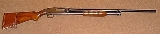
Winchester Model 1912

Winchester Model 1912

Overview
The Winchester
Winchester Repeating Arms Company
The Winchester Repeating Arms Company was a prominent American maker of repeating firearms, located in New Haven, Connecticut. The Winchester brand is today used under license by two subsidiaries of the Herstal Group, Fabrique Nationale of Belgium and the Browning Arms Company of Morgan, Utah.-...

 Model 1912
(also commonly known as the Model 12, or M12) is a hammerless slide-action, i.e., pump-action
Pump-action
A pump-action rifle or shotgun is one in which the handgrip can be pumped back and forth in order to eject a spent round of ammunition and to chamber a fresh one. It is much faster than a bolt-action and somewhat faster than a lever-action, as it does not require the trigger hand to be removed from...

, shotgun
Shotgun
A shotgun is a firearm that is usually designed to be fired from the shoulder, which uses the energy of a fixed shell to fire a number of small spherical pellets called shot, or a solid projectile called a slug...

 with an external tube magazine. Popularly-named the Perfect Repeater at its introduction, it largely set the standard for pump action shotguns over its 51 year high-rate production life. From 1912 until first discontinued by Winchester in 1963, nearly two million Model 12 shotguns were produced in various grades and barrel lengths. Initially chambered for 20 gauge only, the 12 and 16 gauge versions came out in 1914, and the 28 gauge version came out in 1934. A .410 version was never produced; instead, a scaled-down version of the Model 12 known as the Model 42, directly derived from scaled drawings of the Model 12, was produced for .410.
Discussion
Ask a question about 'Winchester Model 1912'
Start a new discussion about 'Winchester Model 1912'
Answer questions from other users
Full Discussion Forum
 
Unanswered Questions
Encyclopedia
The Winchester
Winchester Repeating Arms Company
The Winchester Repeating Arms Company was a prominent American maker of repeating firearms, located in New Haven, Connecticut. The Winchester brand is today used under license by two subsidiaries of the Herstal Group, Fabrique Nationale of Belgium and the Browning Arms Company of Morgan, Utah.-...

 Model 1912
(also commonly known as the Model 12, or M12) is a hammerless slide-action, i.e., pump-action
Pump-action
A pump-action rifle or shotgun is one in which the handgrip can be pumped back and forth in order to eject a spent round of ammunition and to chamber a fresh one. It is much faster than a bolt-action and somewhat faster than a lever-action, as it does not require the trigger hand to be removed from...

, shotgun
Shotgun
A shotgun is a firearm that is usually designed to be fired from the shoulder, which uses the energy of a fixed shell to fire a number of small spherical pellets called shot, or a solid projectile called a slug...

 with an external tube magazine. Popularly-named the Perfect Repeater at its introduction, it largely set the standard for pump action shotguns over its 51 year high-rate production life. From 1912 until first discontinued by Winchester in 1963, nearly two million Model 12 shotguns were produced in various grades and barrel lengths. Initially chambered for 20 gauge only, the 12 and 16 gauge versions came out in 1914, and the 28 gauge version came out in 1934. A .410 version was never produced; instead, a scaled-down version of the Model 12 known as the Model 42, directly derived from scaled drawings of the Model 12, was produced for .410.

Description


The Model 1912 (shortened to Model 12 in 1919) was the next step from the Winchester Model 1897
Winchester Model 1897
The Winchester Model 1897, also known as the Model 97, M97, or Trench Gun, was a pump-action shotgunwith an external hammer and tube magazine manufactured by the Winchester Repeating Arms Company. The Model 1897 was an evolution of the Winchester Model 1893 designed by John Browning. From 1897...

 hammer-fired shotgun, which in turn had evolved from the earlier Winchester Model 1893 shotgun. The Model 12 was designed by Winchester engineer Thomas Crosley Johnson, and was based in part on the M1893/97 design by John Browning
John Browning
John Moses Browning , born in Ogden, Utah, was an American firearms designer who developed many varieties of military and civilian firearms, cartridges, and gun mechanisms, many of which are still in use around the world...

. It was an entirely new design initially available in 20 gauge only (12 and 16 gauge guns were not sold until 1914). The Model 12 was the first truly successful internal hammer pump-action shotgun ever produced. Its tubular magazine was loaded through the bottom of the gun. Empty shotgun shells ejected to the right. Depending on the particular wooden transformer plug installed in the magazine, two, three, or four shells could be stored in the tubular magazine. The magazine holds six, 2¾" 12 ga. shells, when no plug is installed, unlike most shotguns of today which hold 4 or 5 shells. With forged and machined steel parts, the ultimate reason for discontinuation in 1963 was that it was too expensive to produce at a competitive price. The primary competition at this time came from the much less expensive Remington Model 870
Remington 870
The Remington Model 870 is a U.S.-made pump-action shotgun manufactured by Remington Arms Company, Inc. It is widely used by the public for sport shooting, hunting, and self-defense. It is also commonly used by law enforcement and military organizations worldwide.-Development:The Remington 870 was...

, which had been introduced in 1950. The majority of "modern" Model 12 shotguns manufactured after the 1930s were chambered for 2¾-inch shotgun shells, only, although some specialized models such as the Heavy Duck Gun Model 12 were chambered for 3" Super Speed and Super X shells basically a 3" magnum. Some early 16 gauge Model 12's, however, were chambered for 2 9/16-inch shotgun shells, the 12 gauge guns had chambers that were 2⅝" and the 20 gauges had chambers that were 2½". To add further confusion, some of these early Model 12's have subsequently been modified, with their chambers lengthened to accept 2¾-inch shotgun shells, while others remain in their factory-stock chamber lengths. Careful inspection by a gunsmith is always recommended to determine whether or not it is safe to fire a modern 2¾-inch shotgun shell in older Model 12's.

Special commemorative examples were nonetheless produced by Winchester after 1963 through 2006, through specialized gun collector purchase programs, but the Perfect Repeater shotgun was never mass-produced after 1963. The Winchester factory announced a complete closing of the factory facility in January 2006, thus ending the Model 12's long and illustrious career at the age of 95 years.

Military Use


The United States armed forces
United States armed forces
The United States Armed Forces are the military forces of the United States. They consist of the Army, Navy, Marine Corps, Air Force, and Coast Guard.The United States has a strong tradition of civilian control of the military...

 used various versions of the Model 12 in World War I
World War I
World War I , which was predominantly called the World War or the Great War from its occurrence until 1939, and the First World War or World War I thereafter, was a major war centred in Europe that began on 28 July 1914 and lasted until 11 November 1918...

, World War II
World War II
World War II, or the Second World War , was a global conflict lasting from 1939 to 1945, involving most of the world's nations—including all of the great powers—eventually forming two opposing military alliances: the Allies and the Axis...

, Korea
Korean War
The Korean War was a conventional war between South Korea, supported by the United Nations, and North Korea, supported by the People's Republic of China , with military material aid from the Soviet Union...

, and in the early part of the Vietnam War
Vietnam War
The Vietnam War was a Cold War-era military conflict that occurred in Vietnam, Laos, and Cambodia from 1 November 1955 to the fall of Saigon on 30 April 1975. This war followed the First Indochina War and was fought between North Vietnam, supported by its communist allies, and the government of...

, until inventory was exhausted after the Model 12's initial production ceased in 1963. Versions of the Model 12 were type classified as the Model 12 or M12 for short. Approximately 20,000 Model 12 trench guns
Combat shotgun
A combat shotgun is a shotgun that is intended for use in an offensive role, typically by a military force. The earliest shotguns specifically designed for combat were the trench guns or trench shotguns issued in World War I...

 were purchased by the US Army in World War I, differing from the civilian version by having a shorter barrel, a perforated steel heat shield, and a M1917 bayonet
M1917 Bayonet
The M1917 bayonet was designed to be used with the US M1917 Enfield .30 caliber rifle, as well as with the Winchester Model 1897 and M12 trench shotguns. The blade was 16 inches long...

 adapter.
More than 80,000 Model 12 shotguns were purchased during World War II
World War II
World War II, or the Second World War , was a global conflict lasting from 1939 to 1945, involving most of the world's nations—including all of the great powers—eventually forming two opposing military alliances: the Allies and the Axis...

 by the United States Marine Corps
United States Marine Corps
The United States Marine Corps is a branch of the United States Armed Forces responsible for providing power projection from the sea, using the mobility of the United States Navy to deliver combined-arms task forces rapidly. It is one of seven uniformed services of the United States...

, Army Air Forces
United States Army Air Forces
The United States Army Air Forces was the military aviation arm of the United States of America during and immediately after World War II, and the direct predecessor of the United States Air Force....

, and Navy
United States Navy
The United States Navy is the naval warfare service branch of the United States Armed Forces and one of the seven uniformed services of the United States. The U.S. Navy is the largest in the world; its battle fleet tonnage is greater than that of the next 13 largest navies combined. The U.S...

, mostly for use in the Pacific theater
Pacific War
The Pacific War, also sometimes called the Asia-Pacific War refers broadly to the parts of World War II that took place in the Pacific Ocean, its islands, and in East Asia, then called the Far East...

. Riot gun
Riot shotgun
A riot shotgun is a shotgun designed or modified for use as a primarily defensive weapon, primarily by the use of a short barrel. The riot shotgun is used by military personnel for guard duty and was at one time used for riot control, and is commonly used as a patrol weapon by law enforcement...

 versions of the Model 12, lacking the heat shield and bayonet, were purchased by the Army for use in defending bases and in protecting Air Forces aircraft against saboteurs when parked. The Navy similarly purchased and used the riot gun version for protecting Navy ships and personnel while in foreign ports. The Marine Corps used the trench gun version of the Model 12 to great success in taking Japanese-occupied islands in the Pacific. The primary difference in Model 12 shotguns between the World War II trench gun version versus the World War I trench gun version was that the original design, containing six rows of holes in the perforated heat shield, was reduced to only four rows during 1942.

During the Korean War, the Marines used the Model 12 extensively. Likewise, the Marines and Army used the Model 12 during the early part of the Vietnam War, until, due to the Model 12's production ending in 1963, and the high rate of wartime use, the Model 12 shotguns in inventory were consumed. The Ithaca 37
Ithaca 37
The Ithaca 37 is a pump-action shotgun made in large numbers for the civilian, military, and police markets. It utilizes a novel combination ejection/loading port on the bottom of the gun which leaves the sides closed to the elements. In addition, the outline of the gun is clean...

 soon filled the void caused by the end of the Model 12's production, especially among U.S. Navy SEALS
United States Navy SEALs
The United States Navy's Sea, Air and Land Teams, commonly known as Navy SEALs, are the U.S. Navy's principal special operations force and a part of the Naval Special Warfare Command as well as the maritime component of the United States Special Operations Command.The acronym is derived from their...

.

Unlike most modern pump-action shotguns, the Winchester Model 12 had no trigger disconnector
Trigger disconnector
A trigger disconnector is a type of safety in a firearm, which prevents the trigger from being held down after a shot has been fired. This disallows either automatic fire or deliberate "slam fire", depending upon the particular firearm's action. Notable firearms that lack this feature include...

. Like the earlier Model 1897, it too fired each time the action closed with the trigger depressed. That and its 6-shot capacity made it effective for close-combat. As fast as one could pump the action, another shot would be fired.

See List of individual weapons of the U.S. Armed Forces

External links