

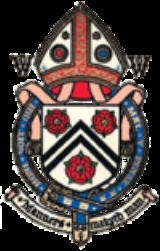
Winchester College

Encyclopedia
Winchester College is an independent school
for boys in the British public school tradition
, situated in Winchester
, Hampshire
, the former capital of England
. It has existed in its present location for over 600 years and claims the longest unbroken history of any school in England
(see List of the oldest schools in the United Kingdom). It is the oldest of the original nine English public schools defined by the Public Schools Act 1868
which also included Eton
, Harrow
, Charterhouse
and Shrewsbury
.
Collegium Sanctae Mariae prope Wintoniam, or Collegium Beatae Mariae Wintoniensis prope Winton, which translates into English
as St Mary's College, near Winchester, or The College of the Blessed Mary of Winchester, near Winchester. It is sometimes referred to by pupils, former pupils and others as "Win: Coll:", and is more widely known as just "Winchester".
, the school "has arguably the finest tradition of scholarship of any school in the country", is "uniquely civilised", and provides an "academically, comradely and architecturally privileged boyhood most Wykehamists treasure throughout their lives." The upper-class lifestyle magazine Tatler
named the school as its "Public School of the Year" in 2010.
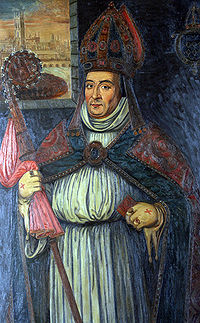
, Bishop of Winchester
and Chancellor to both Edward III and Richard II
, and the first 70 poor scholars entered the school in 1394. It was founded in conjunction with New College, Oxford
, for which it was designed to act as a feeder: the buildings of both colleges were designed by master mason William Wynford
. This double foundation was the model for Eton College
and King's College, Cambridge
some 50 years later (a sod of earth and a number of scholars from Winchester were sent to Eton for its foundation), and for Westminster School
, Christ Church, Oxford
and Trinity College, Cambridge
in Tudor times.
In addition to the 70 scholars and 16 "Quiristers" (choristers), the statutes provided for ten "noble Commoners". These Commoners ("Commoners in Collegio") were paying guests of the Headmaster or Second Master in his official apartments in College. Other paying pupils ("Commoners extra Collegium"), either guests of one of the Masters in his private house or living in lodgings in town, grew in numbers till the late 18th century, when they were all required to live in "Old Commoners" and town boarding was banned. In the 19th century this was replaced by "New Commoners", and the numbers fluctuated between 70 and 130: the new building was compared unfavourably to a workhouse, and as it was built over an underground stream, epidemics of typhus and malaria were common.
In the late 1850s four boarding houses were planned (but only three built, namely A, B and C), to be headed by housemasters: the plan, since dropped, was to increase the number of scholars to 100 so that there would be "College", "Commoners" and "Houses" consisting of 100 pupils each. In the 1860s "New Commoners" was closed and converted to classrooms, and its members were divided among four further boarding houses (D, E, G and H, collectively known as "Commoner Block"). At the same time two more houses (F and I) were acquired and added to the "Houses" category; a tenth (K) was acquired in 1905 and allotted to "Commoners". (The distinction between "Commoners" and "Houses" is now of purely sporting significance (see Winchester College Football
), and "a Commoner" now means any pupil who is not a scholar.) There are therefore now ten houses in addition to College, which continues to occupy the original 14th century buildings, and the total number of pupils is almost 700. From the late 1970s there has been a continual process of extension to and upgrading of College Chambers.
The Scholars live in the original buildings, known as College; an individual scholar is known as a "Collegeman". College is not usually referred to as a house, except for the purposes of categorisation: hence the terms 'housemaster of College' and 'College house' are not generally used. The housemaster of College is now known as the 'Master in College', though these duties formerly belonged to the Second Master. Within the school, 'College' refers only to the body of scholars (and their buildings); 'Winchester College' and 'the college' refer to the school as a whole.
Every pupil at Winchester, apart from the Scholars, lives in a boarding house
, chosen or allocated when applying to Winchester. It is here that he studies, eats and sleeps. Each house is presided over by a housemaster (who takes on the role in addition to teaching duties) and a number of house tutors (usually five or six – Mon to Fri). Houses compete in school competitions, mostly in sporting competitions. Each house has an official name, usually based on the family name of the first housemaster, which is used mainly as a postal address. Each house also has an informal name, which is more frequently used in speech, usually based on the name or nickname of an early housemaster. Each house also has a letter assigned to it, in the order of their founding, to act as an abbreviation, especially on laundry tags. A member of a house is described by the informal name of the house with "-ite" suffixed, as "a Furleyite", "a Toyeite", "a Cookite" and so on. The houses have been ordered by their year of founding. College does not have an informal name, although the abbreviation Coll is sometimes used, especially on written work. It also has a letter assigned to it, X, but it is considered bad form to use this except as a laundry mark or in lists of sporting fixtures. (In the early 20th century the Commoner houses were limited to 35 members each, and for sporting purposes College was divided into "College East" and "College West", denoted by X and Y respectively. This division is now wholly obsolete.)
Each house also had a set of house colours, which adorned the ribbon worn around boys' "strats" (straw hats). The wearing of strats was abolished for Commoners in around 1984 – Collegemen had ceased to wear them years earlier. They can however still occasionally be seen being sported on Winchester Day.
like other major public schools
. Those wishing to enter a Commoner house make their arrangements with the relevant housemaster some two years before sitting the exam, usually sitting a test set by the housemaster and an interview. Those applying to College do not take the normal entrance examination but instead sit a separate, harder, exam called "Election": successful candidates may obtain, according to their performance, a scholarship, an exhibition
or a Headmaster's nomination to join a Commoner House (without remission of fees).
Admission to College is on academic merit, as measured in the Election examination, regardless of financial means, though the original statutes specified that the foundation existed for poor scholars and required entrants to take an oath that their net income did not exceed a figure chosen as the average income for the time. Scholars enjoyed a remission of fees, amounting for much of the 20th century to two-thirds of the total. This remission has since been progressively reduced, and is due to be abolished altogether. The intention is to maintain the academic and institutional distinction between Scholars and Commoners, while using the money saved in bursaries for those pupils least able to pay, Scholars and Commoners alike.
The Chapel's most striking feature is its stained glass
. The East window depicts the stem of Jesse. Down the Chapel's north and south sides is a collection of saints. Little of the original medieval glass, designed by Thomas Glazier
, survives. A firm of glaziers in Shrewsbury was tasked with cleaning the glass in the 1820s. At that time there was no known process for cleaning the badly deteriorated glass and so it was copied, while most of the original glass was scattered or destroyed. Some pieces have been recovered. The south west corner holds the largest piece, bought and donated by Kenneth Clark
. Five other figures bequeathed by Otto von Kienbusch and two more donated by Coleorton Church, Leicestershire were placed in Fromond's Chantry in 1978.
Until Victorian times the chapel was divided into a Chapel and Ante-Chapel, and had decorative panelling. This panelling was recovered by the school in the 1960s and used in the building of New Hall, the school concert hall, the design of which was specifically planned so as to house it.
The Chapel Choir
sings regular services in the Chapel, as well as other venues. This consists of sixteen Quiristers (who attend the Pilgrims School) and a similar number of senior boys and a few dons (masters). There is also a choir to sing the services in Michla .
The exterior of the Chapel and the Hall have recently undergone extensive restoration of the stonework.
proper classrooms were built, and pupils had the option of joining "Parallel Div" for the study of history and modern languages. Later still a "Sen: Science Div" was added. Science teaching at Winchester had a high reputation: one of the early science masters duplicated the experiments of Hertz about radio waves, the equipment for which is still preserved at Science School.
For much of the 20th century the senior forms were divided among three "ladders": the A ladder for classics, the B ladder for history and modern languages and the C ladder for mathematics and science. There was also a vertical division, in descending order, into Sixth Book (equivalent to the sixth form at other schools), Senior Part, Middle Part and Junior Part: depending on ability, new boys were placed in either Junior or Middle Part.
The school now offers a wide range of subjects, and no longer has a system of ladders. In 2008 it abandoned A-level as its matriculation credential and adopted the Cambridge Pre-U on the grounds that this will strengthen the quality of the school's intellectual life. In addition to normal lessons, all boys throughout the school are required to attend a class called Division, Div for short, which focuses on parts of history, literature and politics that do not lead to external examinations. The purpose is to ensure a broad education which does not focus solely on examinations.
He was educated at Scotch College, Perth, from which he went on to read English at the University of Western Australia, having won a Commonwealth Scholarship. He then began his graduate studies at the University of Kent at Canterbury. After brief teaching appointments at Dover College and Abingdon School, he proceeded to further study at Oxford. He was first Senior Scholar at Keble College, then a Junior Research Fellow, Tutor and Dean of Degrees at Lincoln College. He taught in the Theology Faculty at Oxford.
Dr Townsend took up a teaching post at Eton College in 1985. He left as Head of English in 1989 to become Headmaster of Sydney Grammar School. While in Sydney, Dr Townsend was Patron of the Australian Musicians' Academy and President of the New South Wales Classical Association. After ten years in that post, he returned to England to become Headmaster of Oundle School. In 2005 he was appointed Headmaster of Winchester.
Dr Townsend has written books, articles and reviews in the areas of church history, religious literature and education. He has been a Governor of Terra Nova School (Cheshire) 1999–2003, Old Buckenham Hall School (Suffolk) 1999–2006, Ardvreck School (Crieff, Scotland) 2000–2005, Ampleforth College (Yorkshire) 2003–2006, Bramcote Lorne School (Nottinghamshire) 2003–2005, Mowden Hall School (Northumberland) 2000–2007 and Worth School (Sussex) 2004–2010. He is currently a member of the Court of the University of Southampton, a Governor of The Pilgrims' School (Winchester), St Swithun's School (Winchester), and St John's School Beaumont (Windsor). He is a Trustee of the Cothill Educational Trust and a Trustee of the United Church Schools Trust. He is an Adviser to the United Learning Trust, the African Leadership Academy, the Raffles Institution of Singapore, and the National College of Music (London). In 2010 he became Dean of a group of ten schools known as the Winchester International Symposium, each of which has agreed to meet annually in each of the schools in rotation, when senior pupils and staff will study an aspect of global development; the member schools are African Leadership Academy (South Africa), Colegio Claustro Moderno (Colombia), Garodia International Centre for Learning (India), Johannes Kepler Grammar School (Czech Republic), Karachi Grammar School (Pakistan), Montgomery Bell Academy (USA), Nada High School (Japan), Raffles Institution (Singapore), Shiyan Co-operation High School (China) and Winchester College (UK).
He is an Honorary Liveryman of the Grocers' Company. He is married to Cathy and they have two adult children.
The Notions Test was until recently an important tradition in most houses, in which juniors were required to answer questions about notions. Although now banned on various grounds including the European human rights conventions, the test was usually administered to new boys during their first term at the school by more senior boys, and aimed to test and demonstrate their familiarity with the vocabulary, history and traditions of the school. College Notions was more elaborate and continued for a few years longer than the Commoner tests. It took the form of an end-of-term celebration and marked the point at which new Collegemen formally became known as Jun: Men.
 Situated to the west of Meads, this cloister serves as a memorial to the Wykehamist dead of the two World Wars. It was designed by Sir Herbert Baker
and dedicated in 1924 and again in 1948.
A bronze bust of Air Chief Marshal Lord Dowding
sits on the west side of the cloister.
War Cloister occupies a strategic position on Kingsgate Street (accessed via "South Africa Gate", which commemorates the Wykehamist dead of the 1899–1902 Boer War), so that most Commoners go through it on their way to and from class, (Furleyites and Freddyites tend to walk past the Common Room and the Queen Elizabeth II theatre, then along Meads Path).
Another older war memorial in the school is the entry chamber to Chapel, known as "Crimea" after the Crimean War of the early 1850s, and bearing the names of Wykehamists who died at the siege of Sevastopol.
The post of Jun: Cap: Prae: (junior chapel prefect) has recently been abolished and has been replaced by Ollae Praefectus (Oll: Prae:), which literally translates as "prefect of tub". (This is the revival of an ancient office, which was suppressed in the 19th century when the office of Bib: Prae: was created. The duties were to do with catering, especially the disposal of uneaten food from College lunch, which was collected in a special wooden vat and given to the poor. This vat or tub is still on display in College Hall.)
Each Officer, in addition to his specialized duties, has charge of a College Chamber (day-room). Thus when IVth Chamber was reopened, increasing the number of chambers to six, a sixth Officer was created, the Coll: Lib: Prae:, in charge of Upper Coll: Lib: (the fiction library available to Collegemen). The post had previously existed informally, but the holder used not to rank as an Officer.
Formerly, there were one or two (originally five) further prefects "in full power", invariably, though improperly, known as Co: Praes. Officers and Co: Praes had authority throughout the school; the remaining prefects had authority only in College. Nowadays, while there are still six officers, they have little to do with the running of the school and are mainly responsible for their respective chambers, and there are no other College Co: Praes. In practice, only the Prefect of Hall has significant duties outside College.
The present practice is for all fifth-years in College to be prefects. Each officer nominates a prefect from those members of his year who are not officers to act as his deputy within his chamber; any prefects left over are sometimes known as "Jemimas" (reason unknown). The seven senior inferiors (non-prefects) in College are known as Custodes Candelarum (tollykeepers), but this is a purely nominal dignity. The next senior person in a chamber after the prefects and tollykeepers was once known as the in loco, and kept the accounts for Chamber Tea.
declined and disappeared a few decades ago. College prefects used to engage junior boys as "valets": by the 1960s this had become a voluntary arrangement in which the valets were paid for their services, and the system disappeared altogether in the early 1970s. Similarly in the 1970s some Commoner houses retained traditions, for example in Toye's, of "trap-cads", who would perform services for senior boys for money and other benefits. Junior Collegemen still take it in turns to perform services ("sweat") for the whole Chamber such as bringing down bread and milk. The College Officers each engage (and pay) a second-year as a "writer" (Latin: "Scriptor"), to perform a variety of duties, more or less related to the position held by their Officer – for example, the Cap: Prae:'s writer lights the candles in Chapel before services, while the Schol: Prae:'s writer collects and delivers the morning's newspapers to each chamber. Sweats were officially abolished in 2005. However they remain commonplace in most houses and are organised for first and second year boys to do by their respective Housemasters.
(also known as 'Win: Co: Fo:' or, more recently, 'Winkies'), played only at Winchester. It is played in Common Time (the spring term), the main game in Short Half (the autumn term) being Association football. In Cloister Time (the summer term) the main sports are tennis
and cricket
.
Winchester Football could be considered a cross between football and rugby
, though this analogy shouldn't be taken too far since there are significant differences. For example, the ball can only be carried, like in rugby, if caught full toss. Furthermore, no football-type "dribbling" is allowed since the player may not touch the ball more than once at a time. Neither can the ball be passed to a team-mate, except by back-heeling to a teammate behind. Furthermore, a player who finds himself upfield must return to the point at which his teammate last kicked the ball before being able to join in the game again, unless in the interim an opposite player has touched the ball. The current form of the game can be played by teams of 6, 10, or 15. There are also rugby-type scrums known as "hots", which feature 8 forwards in the 15-player version and 3 in the 6-player version of the game. The objective is to kick the ball over the opponent's goal line ("worms"). The field ("canvas") is 73 m (240 ft) long and 24.5 m (60 ft) wide. It is delimited lengthwise by canvas netting and by posts threaded with a heavy rope that run parallel 1 metre inside the netting, and 1 metre above the ground.
There is also a distinctive Winchester version of Fives
, resembling Rugby Fives
but with a buttress on the court. Winchester currently has 4 active Winchester fives courts. It has been claimed that Rugby Fives
and Winchester Fives are both forms of "Wessex Fives", and that Thomas Arnold
took with him the game of Wessex Fives he played as a boy at what is now Warminster School
when he became the Headmaster of Rugby School
.
At one time Winchester was one of the Lord's
schools, competing in a trilateral cricket tournament with Eton
and Harrow
; and for this reason the first cricket eleven is still known as "Lords" (with or without the apostrophe). Since 1855 Winchester has not taken part in this, instead playing Eton alternately at the two schools. Eton Match, when played at Winchester, was until recently the major event attended by Old Wykehamists and the main showcase for the school and its activities, but now most of the non-cricket-related functions have been moved to "Wykeham Day" in the autumn. Eton Match itself has now been replaced by "Winchester Day", featuring a match between Wykehamists and Old Wykehamists.
Rackets is also played. Should the same person be Captain of Lord's and Captain of Rackets, he is known as "Lord of Lords and Prince of Princes", in allusion to Prince's Club
in London.
The "Winchester Ice Club" was formed in 1904 by R. L. G. Irving
; amongst its first members was George Mallory
, who later died on Mount Everest.
The organisation was founded in 1860 as "The Winchester College Rifle Volunteer Corps" by various boys in their top year as a result of the perceived threat of Napoleon III after the Orsini plot, and remained entirely autonomous until it was taken over by the Second Master in 1868; It was enrolled as a Cadet Corps in the 1st Hants Volunteer Battalion. In 1908, the Officer Training Corps was established, and by 1914, through the request of the War Office
that Senior Cadets be given appropriate training for the war effort, almost every student became involved in the Corps, though it was never explicitly compulsory. In the Second World War, it was renamed as "The Junior Training Corps",though its function was still to prepare boys for Officer responsibilities. Montgomery remarked on inspecting the Corps in 1946 that there was "latent leadership in all ranks". In 1948, the "Junior Training Corps" became known as the "Combined Cadet Force" (CCF) which incorporated RAF and RN
sections. In 1963, "Alternative Service Activities" were introduced for boys who did not want to join the CCF. Pupils were made eligible to opt out of the CCF at the end of their second year: this is still the school's policy. In 2010, Winchester's Combined Cadet Force received the Queen's Colours, a regimental decoration.
, Twyford School
and Stamford School
under similar circumstances, and was popular among 19th century English public schoolboys. For example, it is mentioned in the early chapters of Tom Brown's Schooldays
. Paradoxically, although the subject of the song is the joy of breaking from the school grind and returning home for the holidays, it is often taken as symbolising the idyllic, nostalgic view of English public school life in the 19th century. It should not be confused with another song of the same name
, but with completely different tune and lyrics, written by Robert S. Ambrose.
The traditional tune (linked here and here ) was composed by John Reading. A new tune, by Malcolm Archer, was officially adopted by the school in about 2007, and is linked here.
According to legend, the text was composed by a pupil in the 17th century, who was confined for misconduct during the Whitsun
holidays. (On one account, he was tied to a pillar.) It is said that he carved the words on the bark of a tree, which was thereafter called "Domum Tree", and cast himself into Logie (the river running through the school grounds). There is still a "Domum Cottage" in that area.
The song is sung at the end of the summer term
, and on other occasions when a school song is normally sung. There is also a "Domum Dinner" held around the same time, for leavers. (It was formerly restricted to those former scholars of Winchester who were also scholars of New College and various distinguished guests). Until the reforms of the 19th century, there were three successive Election Dinners held during Election Week, culminating in a Domum Ball. Originally these festivities occurred around Whitsun, as suggested by the seasonal references in the song, but when Election Week was moved to the end of the summer term in June or July the Domum celebrations were moved with it.
It is rather remarkable that the author apparently treated 'domum' as a neuter noun. One could argue that domum is the accusative, meaning "homeward", and that dulce is used adverbially.
Here is the chorus (in Latin, with English translation):
Domum, domum, dulce domum!
Domum, domum, dulce domum;
Dulce, dulce dulce domum!
Dulce domum resonemus.
Home, home, joyous home! (or: Homeward, homeward, joyously homeward!)
Home, home, joyous home!
Joyous, joyous, joyous home!
Hurrah for joyous home!
– William of Wykeham
Motto of Winchester College and New College, Oxford
Broad of Church and broad of mind,
Broad before and broad behind,
A keen ecclesiologist,
A rather dirty Wykehamist.
– John Betjeman
"The Wykehamist"
Leader in London's preservation lists
And least Wykehamical of Wykehamists{:}
Clan chief of Paddington's distinguished set,
Pray go on living to a hundred yet!
– John Betjeman
"For Patrick" (about Patrick Balfour, 3rd Baron Kinross)
You can always tell a Wykehamist, but you can never tell him much
– Anon.
These Wykehamists have the kind of mind that likes to relax by composing Alcaics on the moving parts of their toy trains.
– Evelyn Waugh
Would you doubt the word of a Wykehamist?
– Edward Grey, 1st Viscount Grey of Fallodon
O, Eternal God, the Life and the Resurrection of all them that believe in Thee, always to be praised as well for the Dead as for those that be Alive, we give Thee most hearty Thanks for our Founder, William of Wykeham; and all other our Benefactors, by whose Benefits we are here brought up to Godliness and the studies of good Learning; beseeching Thee that we, well using all these Thy Blessings to the Praise and Honour of Thy Holy Name, may at length be brought to the Immortal Glory of the Resurrection, through Jesus Christ our Lord. Amen.
– "Thanksgiving for the Founder" as at present used on commemoration days
("OFT"). All of the schools involved agreed to make penalty payments totalling three million pounds into a trust designed to benefit pupils who attended the schools during the period in which fee information was shared. The OFT offered both Winchester College and Eton a fifty percent reduction in their penalties in return for their full cooperation with the investigation. However, Mrs Jean Scott, the head of the Independent Schools Council, said that independent schools had always been exempt from anti-cartel rules applied to business, were following a long-established procedure in sharing the information with each other, and that they were unaware of the change to the law (on which they had not been consulted). She wrote to John Vickers, the OFT director-general, saying, "They are not a group of businessmen meeting behind closed doors to fix the price of their products to the disadvantage of the consumer. They are schools that have quite openly continued to follow a long-established practice because they were unaware that the law had changed."
Independent school
An independent school is a school that is independent in its finances and governance; it is not dependent upon national or local government for financing its operations, nor reliant on taxpayer contributions, and is instead funded by a combination of tuition charges, gifts, and in some cases the...
for boys in the British public school tradition
Public School (UK)
A public school, in common British usage, is a school that is neither administered nor financed by the state or from taxpayer contributions, and is instead funded by a combination of endowments, tuition fees and charitable contributions, usually existing as a non profit-making charitable trust...
, situated in Winchester
Winchester
Winchester is a historic cathedral city and former capital city of England. It is the county town of Hampshire, in South East England. The city lies at the heart of the wider City of Winchester, a local government district, and is located at the western end of the South Downs, along the course of...
, Hampshire
Hampshire
Hampshire is a county on the southern coast of England in the United Kingdom. The county town of Hampshire is Winchester, a historic cathedral city that was once the capital of England. Hampshire is notable for housing the original birthplaces of the Royal Navy, British Army, and Royal Air Force...
, the former capital of England
England
England is a country that is part of the United Kingdom. It shares land borders with Scotland to the north and Wales to the west; the Irish Sea is to the north west, the Celtic Sea to the south west, with the North Sea to the east and the English Channel to the south separating it from continental...
. It has existed in its present location for over 600 years and claims the longest unbroken history of any school in England
England
England is a country that is part of the United Kingdom. It shares land borders with Scotland to the north and Wales to the west; the Irish Sea is to the north west, the Celtic Sea to the south west, with the North Sea to the east and the English Channel to the south separating it from continental...
(see List of the oldest schools in the United Kingdom). It is the oldest of the original nine English public schools defined by the Public Schools Act 1868
Public Schools Act 1868
The Public Schools Act 1868 was enacted by the British Parliament to reform and regulate nine of the leading English boys' schools. They were described as "public schools" as admission was open to boys from anywhere and was not limited to those living in a particular locality...
which also included Eton
Eton College
Eton College, often referred to simply as Eton, is a British independent school for boys aged 13 to 18. It was founded in 1440 by King Henry VI as "The King's College of Our Lady of Eton besides Wyndsor"....
, Harrow
Harrow School
Harrow School, commonly known simply as "Harrow", is an English independent school for boys situated in the town of Harrow, in north-west London.. The school is of worldwide renown. There is some evidence that there has been a school on the site since 1243 but the Harrow School we know today was...
, Charterhouse
Charterhouse School
Charterhouse School, originally The Hospital of King James and Thomas Sutton in Charterhouse, or more simply Charterhouse or House, is an English collegiate independent boarding school situated at Godalming in Surrey.Founded by Thomas Sutton in London in 1611 on the site of the old Carthusian...
and Shrewsbury
Shrewsbury School
Shrewsbury School is a co-educational independent school for pupils aged 13 to 18, founded by Royal Charter in 1552. The present campus to which the school moved in 1882 is located on the banks of the River Severn in Shrewsbury, Shropshire, England...
.
Official name
According to its statutes, the school is called in LatinLatin
Latin is an Italic language originally spoken in Latium and Ancient Rome. It, along with most European languages, is a descendant of the ancient Proto-Indo-European language. Although it is considered a dead language, a number of scholars and members of the Christian clergy speak it fluently, and...
Collegium Sanctae Mariae prope Wintoniam, or Collegium Beatae Mariae Wintoniensis prope Winton, which translates into English
English language
English is a West Germanic language that arose in the Anglo-Saxon kingdoms of England and spread into what was to become south-east Scotland under the influence of the Anglian medieval kingdom of Northumbria...
as St Mary's College, near Winchester, or The College of the Blessed Mary of Winchester, near Winchester. It is sometimes referred to by pupils, former pupils and others as "Win: Coll:", and is more widely known as just "Winchester".
Reputation
According to the commercially published Good Schools GuideThe Good Schools Guide
The Good Schools Guide is a guide to British schools .- Overview :The guide is compiled by a team of editors, which according to the official website "comprises some 50 editors, writers, researchers and contributors; mostly parents but some former headteachers." The website states that it is...
, the school "has arguably the finest tradition of scholarship of any school in the country", is "uniquely civilised", and provides an "academically, comradely and architecturally privileged boyhood most Wykehamists treasure throughout their lives." The upper-class lifestyle magazine Tatler
Tatler
Tatler has been the name of several British journals and magazines, each of which has viewed itself as the successor of the original literary and society journal founded by Richard Steele in 1709. The current incarnation, founded in 1901, is a glossy magazine published by Condé Nast Publications...
named the school as its "Public School of the Year" in 2010.
History
Winchester College was founded in 1382 by William of WykehamWilliam of Wykeham
William of Wykeham was Bishop of Winchester, Chancellor of England, founder of Winchester College, New College, Oxford, New College School, Oxford, and builder of a large part of Windsor Castle.-Life:...
, Bishop of Winchester
Bishop of Winchester
The Bishop of Winchester is the head of the Church of England diocese of Winchester, with his cathedra at Winchester Cathedral in Hampshire.The bishop is one of five Church of England bishops to be among the Lords Spiritual regardless of their length of service. His diocese is one of the oldest and...
and Chancellor to both Edward III and Richard II
Richard II of England
Richard II was King of England, a member of the House of Plantagenet and the last of its main-line kings. He ruled from 1377 until he was deposed in 1399. Richard was a son of Edward, the Black Prince, and was born during the reign of his grandfather, Edward III...
, and the first 70 poor scholars entered the school in 1394. It was founded in conjunction with New College, Oxford
New College, Oxford
New College is one of the constituent colleges of the University of Oxford in the United Kingdom.- Overview :The College's official name, College of St Mary, is the same as that of the older Oriel College; hence, it has been referred to as the "New College of St Mary", and is now almost always...
, for which it was designed to act as a feeder: the buildings of both colleges were designed by master mason William Wynford
William Wynford
William Wynford was one of the most successful English master masons of the 14th century, using the new Perpendicular Gothic style. He is first mentioned in 1360 when at work at Windsor Castle as warden of masons' work...
. This double foundation was the model for Eton College
Eton College
Eton College, often referred to simply as Eton, is a British independent school for boys aged 13 to 18. It was founded in 1440 by King Henry VI as "The King's College of Our Lady of Eton besides Wyndsor"....
and King's College, Cambridge
King's College, Cambridge
King's College is a constituent college of the University of Cambridge, England. The college's full name is "The King's College of our Lady and Saint Nicholas in Cambridge", but it is usually referred to simply as "King's" within the University....
some 50 years later (a sod of earth and a number of scholars from Winchester were sent to Eton for its foundation), and for Westminster School
Westminster School
The Royal College of St. Peter in Westminster, almost always known as Westminster School, is one of Britain's leading independent schools, with the highest Oxford and Cambridge acceptance rate of any secondary school or college in Britain...
, Christ Church, Oxford
Christ Church, Oxford
Christ Church or house of Christ, and thus sometimes known as The House), is one of the largest constituent colleges of the University of Oxford in England...
and Trinity College, Cambridge
Trinity College, Cambridge
Trinity College is a constituent college of the University of Cambridge. Trinity has more members than any other college in Cambridge or Oxford, with around 700 undergraduates, 430 graduates, and over 170 Fellows...
in Tudor times.
In addition to the 70 scholars and 16 "Quiristers" (choristers), the statutes provided for ten "noble Commoners". These Commoners ("Commoners in Collegio") were paying guests of the Headmaster or Second Master in his official apartments in College. Other paying pupils ("Commoners extra Collegium"), either guests of one of the Masters in his private house or living in lodgings in town, grew in numbers till the late 18th century, when they were all required to live in "Old Commoners" and town boarding was banned. In the 19th century this was replaced by "New Commoners", and the numbers fluctuated between 70 and 130: the new building was compared unfavourably to a workhouse, and as it was built over an underground stream, epidemics of typhus and malaria were common.
In the late 1850s four boarding houses were planned (but only three built, namely A, B and C), to be headed by housemasters: the plan, since dropped, was to increase the number of scholars to 100 so that there would be "College", "Commoners" and "Houses" consisting of 100 pupils each. In the 1860s "New Commoners" was closed and converted to classrooms, and its members were divided among four further boarding houses (D, E, G and H, collectively known as "Commoner Block"). At the same time two more houses (F and I) were acquired and added to the "Houses" category; a tenth (K) was acquired in 1905 and allotted to "Commoners". (The distinction between "Commoners" and "Houses" is now of purely sporting significance (see Winchester College Football
Winchester College Football
Winchester College Football, also known as Winkies, WinCoFo or simply "Our Game", is a code of football played at Winchester College. It is akin to the Eton Field and Wall Games and the Harrow Game in that it enjoys a large following from Wykehamists and old Wykehamists but is not played outside...
), and "a Commoner" now means any pupil who is not a scholar.) There are therefore now ten houses in addition to College, which continues to occupy the original 14th century buildings, and the total number of pupils is almost 700. From the late 1970s there has been a continual process of extension to and upgrading of College Chambers.
Boarding houses
| Official Name | Informal Name | House Letter |
|---|---|---|
| Chernocke House | Furley's | A |
| Moberly's | Toye's | B |
| Du Boulay's | Cook's | C |
| Fearon's | Kenny's | D |
| Morshead's | Freddie's | E |
| Hawkins' | Chawker's | F |
| Sergeant's | Phil's | G |
| Bramston's | Trant's | H |
| Turner's | Hopper's | I |
| Kingsgate House | Beloe's | K |
The Scholars live in the original buildings, known as College; an individual scholar is known as a "Collegeman". College is not usually referred to as a house, except for the purposes of categorisation: hence the terms 'housemaster of College' and 'College house' are not generally used. The housemaster of College is now known as the 'Master in College', though these duties formerly belonged to the Second Master. Within the school, 'College' refers only to the body of scholars (and their buildings); 'Winchester College' and 'the college' refer to the school as a whole.
Every pupil at Winchester, apart from the Scholars, lives in a boarding house
Boarding house
A boarding house, is a house in which lodgers rent one or more rooms for one or more nights, and sometimes for extended periods of weeks, months and years. The common parts of the house are maintained, and some services, such as laundry and cleaning, may be supplied. They normally provide "bed...
, chosen or allocated when applying to Winchester. It is here that he studies, eats and sleeps. Each house is presided over by a housemaster (who takes on the role in addition to teaching duties) and a number of house tutors (usually five or six – Mon to Fri). Houses compete in school competitions, mostly in sporting competitions. Each house has an official name, usually based on the family name of the first housemaster, which is used mainly as a postal address. Each house also has an informal name, which is more frequently used in speech, usually based on the name or nickname of an early housemaster. Each house also has a letter assigned to it, in the order of their founding, to act as an abbreviation, especially on laundry tags. A member of a house is described by the informal name of the house with "-ite" suffixed, as "a Furleyite", "a Toyeite", "a Cookite" and so on. The houses have been ordered by their year of founding. College does not have an informal name, although the abbreviation Coll is sometimes used, especially on written work. It also has a letter assigned to it, X, but it is considered bad form to use this except as a laundry mark or in lists of sporting fixtures. (In the early 20th century the Commoner houses were limited to 35 members each, and for sporting purposes College was divided into "College East" and "College West", denoted by X and Y respectively. This division is now wholly obsolete.)
Each house also had a set of house colours, which adorned the ribbon worn around boys' "strats" (straw hats). The wearing of strats was abolished for Commoners in around 1984 – Collegemen had ceased to wear them years earlier. They can however still occasionally be seen being sported on Winchester Day.
Admission
Winchester has its own entrance examination, and does not use Common EntranceCommon Entrance
Common Entrance Examinations are taken by some children in the UK as part of the admissions process for academically selective secondary schools at age 13 or 11. Most of the secondary schools that use Common Entrance for admission are public schools; most of the schools that routinely prepare...
like other major public schools
Public School (UK)
A public school, in common British usage, is a school that is neither administered nor financed by the state or from taxpayer contributions, and is instead funded by a combination of endowments, tuition fees and charitable contributions, usually existing as a non profit-making charitable trust...
. Those wishing to enter a Commoner house make their arrangements with the relevant housemaster some two years before sitting the exam, usually sitting a test set by the housemaster and an interview. Those applying to College do not take the normal entrance examination but instead sit a separate, harder, exam called "Election": successful candidates may obtain, according to their performance, a scholarship, an exhibition
Exhibition (scholarship)
-United Kingdom and Ireland:At the universities of Dublin, Oxford and Cambridge, and at Westminster School, Eton College and Winchester College, and various other UK educational establishments, an exhibition is a financial award or grant to an individual student, normally on grounds of merit. The...
or a Headmaster's nomination to join a Commoner House (without remission of fees).
Admission to College is on academic merit, as measured in the Election examination, regardless of financial means, though the original statutes specified that the foundation existed for poor scholars and required entrants to take an oath that their net income did not exceed a figure chosen as the average income for the time. Scholars enjoyed a remission of fees, amounting for much of the 20th century to two-thirds of the total. This remission has since been progressively reduced, and is due to be abolished altogether. The intention is to maintain the academic and institutional distinction between Scholars and Commoners, while using the money saved in bursaries for those pupils least able to pay, Scholars and Commoners alike.
Chapel
Situated on the south side of Chamber Court, the Chapel is part of the original College buildings and retains its original wooden fan-vaulted ceiling. Built to accommodate just over 100 people, it long ago became too small to accommodate the whole school (currently 690 boys). Additional seating installed in the re-ordering and extension carried out by the Victorian architect Butterfield allows the Chapel to seat 320 people. On Sundays half the houses worship in Chapel, while the other half worship (at the same time) in St Michael's Church (known as Michla), a redundant parish church central among the boarding houses, which the College took over in the last century. Weekly choral services are sung by the Choir in Chapel on Tuesdays and by the Quiristers on Thursday and Saturday evenings in Fromond's Chantry, which is in the middle of the Cloisters. Roman Catholic boys attend mass every Sunday morning in Michla.The Chapel's most striking feature is its stained glass
Stained glass
The term stained glass can refer to coloured glass as a material or to works produced from it. Throughout its thousand-year history, the term has been applied almost exclusively to the windows of churches and other significant buildings...
. The East window depicts the stem of Jesse. Down the Chapel's north and south sides is a collection of saints. Little of the original medieval glass, designed by Thomas Glazier
Thomas Glazier
Thomas Glazier of Oxford was a master glazier active in England during the late 14th and early 15th century; he is one of the earliest identifiable stained glass artists, and is considered a leading proponent of the International Gothic style....
, survives. A firm of glaziers in Shrewsbury was tasked with cleaning the glass in the 1820s. At that time there was no known process for cleaning the badly deteriorated glass and so it was copied, while most of the original glass was scattered or destroyed. Some pieces have been recovered. The south west corner holds the largest piece, bought and donated by Kenneth Clark
Kenneth Clark
Kenneth McKenzie Clark, Baron Clark, OM, CH, KCB, FBA was a British author, museum director, broadcaster, and one of the best-known art historians of his generation...
. Five other figures bequeathed by Otto von Kienbusch and two more donated by Coleorton Church, Leicestershire were placed in Fromond's Chantry in 1978.
Until Victorian times the chapel was divided into a Chapel and Ante-Chapel, and had decorative panelling. This panelling was recovered by the school in the 1960s and used in the building of New Hall, the school concert hall, the design of which was specifically planned so as to house it.
The Chapel Choir
Winchester College Chapel Choir
Winchester College Chapel Choir is a renowned British choir that sings in the Chapel of Winchester College. When William of Wykeham founded Winchester College in 1382 he made provision for 16 boys called Quiristers to sing the Chapel services...
sings regular services in the Chapel, as well as other venues. This consists of sixteen Quiristers (who attend the Pilgrims School) and a similar number of senior boys and a few dons (masters). There is also a choir to sing the services in Michla .
The exterior of the Chapel and the Hall have recently undergone extensive restoration of the stonework.
Academic structure
Until the 1860s the predominant subject of instruction was classics, and there was one main schoolroom used as both the classroom and the place of preparation, under extremely noisy conditions: there were adjacent rooms used for French and mathematics. Under the headmastership of George RiddingGeorge Ridding
George Ridding , English headmaster and bishop, was born at Winchester College, of which his father, the Rev. Charles Ridding, vicar of Andover, was a fellow....
proper classrooms were built, and pupils had the option of joining "Parallel Div" for the study of history and modern languages. Later still a "Sen: Science Div" was added. Science teaching at Winchester had a high reputation: one of the early science masters duplicated the experiments of Hertz about radio waves, the equipment for which is still preserved at Science School.
For much of the 20th century the senior forms were divided among three "ladders": the A ladder for classics, the B ladder for history and modern languages and the C ladder for mathematics and science. There was also a vertical division, in descending order, into Sixth Book (equivalent to the sixth form at other schools), Senior Part, Middle Part and Junior Part: depending on ability, new boys were placed in either Junior or Middle Part.
The school now offers a wide range of subjects, and no longer has a system of ladders. In 2008 it abandoned A-level as its matriculation credential and adopted the Cambridge Pre-U on the grounds that this will strengthen the quality of the school's intellectual life. In addition to normal lessons, all boys throughout the school are required to attend a class called Division, Div for short, which focuses on parts of history, literature and politics that do not lead to external examinations. The purpose is to ensure a broad education which does not focus solely on examinations.
The Headmaster
Dr Ralph Douglas Townsend is Headmaster of Winchester College. He was previously Headmaster of Oundle School and before that Headmaster of Sydney Grammar School.He was educated at Scotch College, Perth, from which he went on to read English at the University of Western Australia, having won a Commonwealth Scholarship. He then began his graduate studies at the University of Kent at Canterbury. After brief teaching appointments at Dover College and Abingdon School, he proceeded to further study at Oxford. He was first Senior Scholar at Keble College, then a Junior Research Fellow, Tutor and Dean of Degrees at Lincoln College. He taught in the Theology Faculty at Oxford.
Dr Townsend took up a teaching post at Eton College in 1985. He left as Head of English in 1989 to become Headmaster of Sydney Grammar School. While in Sydney, Dr Townsend was Patron of the Australian Musicians' Academy and President of the New South Wales Classical Association. After ten years in that post, he returned to England to become Headmaster of Oundle School. In 2005 he was appointed Headmaster of Winchester.
Dr Townsend has written books, articles and reviews in the areas of church history, religious literature and education. He has been a Governor of Terra Nova School (Cheshire) 1999–2003, Old Buckenham Hall School (Suffolk) 1999–2006, Ardvreck School (Crieff, Scotland) 2000–2005, Ampleforth College (Yorkshire) 2003–2006, Bramcote Lorne School (Nottinghamshire) 2003–2005, Mowden Hall School (Northumberland) 2000–2007 and Worth School (Sussex) 2004–2010. He is currently a member of the Court of the University of Southampton, a Governor of The Pilgrims' School (Winchester), St Swithun's School (Winchester), and St John's School Beaumont (Windsor). He is a Trustee of the Cothill Educational Trust and a Trustee of the United Church Schools Trust. He is an Adviser to the United Learning Trust, the African Leadership Academy, the Raffles Institution of Singapore, and the National College of Music (London). In 2010 he became Dean of a group of ten schools known as the Winchester International Symposium, each of which has agreed to meet annually in each of the schools in rotation, when senior pupils and staff will study an aspect of global development; the member schools are African Leadership Academy (South Africa), Colegio Claustro Moderno (Colombia), Garodia International Centre for Learning (India), Johannes Kepler Grammar School (Czech Republic), Karachi Grammar School (Pakistan), Montgomery Bell Academy (USA), Nada High School (Japan), Raffles Institution (Singapore), Shiyan Co-operation High School (China) and Winchester College (UK).
He is an Honorary Liveryman of the Grocers' Company. He is married to Cathy and they have two adult children.
Notions
A notion is a manner or tradition peculiar to Winchester College. The word notion is also used to refer to unique and peculiar words used (with diminishing frequency) in the school. An example is "toytime", meaning prep or homework. It can also refer to more recent slang, some of which features the altering of vowels in certain words for facetious emphasis.The Notions Test was until recently an important tradition in most houses, in which juniors were required to answer questions about notions. Although now banned on various grounds including the European human rights conventions, the test was usually administered to new boys during their first term at the school by more senior boys, and aimed to test and demonstrate their familiarity with the vocabulary, history and traditions of the school. College Notions was more elaborate and continued for a few years longer than the Commoner tests. It took the form of an end-of-term celebration and marked the point at which new Collegemen formally became known as Jun: Men.
War Cloister
Herbert Baker
Sir Herbert Baker was a British architect.Baker was the dominant force in South African architecture for two decades, 1892–1912....
and dedicated in 1924 and again in 1948.
A bronze bust of Air Chief Marshal Lord Dowding
Hugh Dowding, 1st Baron Dowding
Air Chief Marshal Hugh Caswall Tremenheere Dowding, 1st Baron Dowding GCB, GCVO, CMG was a British officer in the Royal Air Force...
sits on the west side of the cloister.
War Cloister occupies a strategic position on Kingsgate Street (accessed via "South Africa Gate", which commemorates the Wykehamist dead of the 1899–1902 Boer War), so that most Commoners go through it on their way to and from class, (Furleyites and Freddyites tend to walk past the Common Room and the Queen Elizabeth II theatre, then along Meads Path).
Another older war memorial in the school is the entry chamber to Chapel, known as "Crimea" after the Crimean War of the early 1850s, and bearing the names of Wykehamists who died at the siege of Sevastopol.
College
Traditionally there were always 18 prefects in College, though since the mid-20th century there have been fewer, 10 to 14 being typical. Of these, five (later increased to six) hold salaried offices. Historically, these were as follows, in descending order of seniority:- Aulae Praefectus (Aul: Prae:, Prefect of Hall), the head boy of the school. ("Hall", in this connection, is not restricted to the dining hall but means the College as a whole, as in the phrases "Trinity Hall" and "hall of residence".) He acts jointly with the Sen: Co: Prae: (see below).
- Bibliothecae Praefectus (Bib: Prae:, Prefect of Library), until recently in charge of Moberly Library (the school academic library); this function has now been taken over by a full-time librarian.
- Scholae Praefectus (Schol: Prae:, Prefect of School), in charge of bookings of the old School building and miscellaneous other functions.
- two Capellae Praefecti (Cap: Prae:, Prefects of Chapel): functions obvious. Formerly they took turns to officiate; until recently practice has been to differentiate between the "Sen: Cap: Prae:" and the "Jun: Cap: Prae:". Nowadays there is only one Cap: Prae:
The post of Jun: Cap: Prae: (junior chapel prefect) has recently been abolished and has been replaced by Ollae Praefectus (Oll: Prae:), which literally translates as "prefect of tub". (This is the revival of an ancient office, which was suppressed in the 19th century when the office of Bib: Prae: was created. The duties were to do with catering, especially the disposal of uneaten food from College lunch, which was collected in a special wooden vat and given to the poor. This vat or tub is still on display in College Hall.)
Each Officer, in addition to his specialized duties, has charge of a College Chamber (day-room). Thus when IVth Chamber was reopened, increasing the number of chambers to six, a sixth Officer was created, the Coll: Lib: Prae:, in charge of Upper Coll: Lib: (the fiction library available to Collegemen). The post had previously existed informally, but the holder used not to rank as an Officer.
Formerly, there were one or two (originally five) further prefects "in full power", invariably, though improperly, known as Co: Praes. Officers and Co: Praes had authority throughout the school; the remaining prefects had authority only in College. Nowadays, while there are still six officers, they have little to do with the running of the school and are mainly responsible for their respective chambers, and there are no other College Co: Praes. In practice, only the Prefect of Hall has significant duties outside College.
The present practice is for all fifth-years in College to be prefects. Each officer nominates a prefect from those members of his year who are not officers to act as his deputy within his chamber; any prefects left over are sometimes known as "Jemimas" (reason unknown). The seven senior inferiors (non-prefects) in College are known as Custodes Candelarum (tollykeepers), but this is a purely nominal dignity. The next senior person in a chamber after the prefects and tollykeepers was once known as the in loco, and kept the accounts for Chamber Tea.
Commoner Houses
Outside College there is a Sen: Co: Prae: (Senior Commoner Prefect), who acts as joint Head Boy with the Prefect of Hall. There are then a number of Co: Praes (Commensalibus Praefecti, Commoner Prefects) with authority over all Commoners: traditionally, no Commoner has authority over any Collegeman. Nowadays, there is generally only one Co: Prae: per house, who acts as the senior house prefect. However, in the house where the "Sen: Co: Prae:" is resident, there is sometimes another "Co: Prae:" who has been nominated as the Head of House. In addition, each house has a number of House Prefects, with authority only in that house. The Co: Praes (heads of houses) meet weekly together with the Prefect of Hall and Head Master to discuss the running of the school.Sweat(s)
The system of faggingFagging
Fagging was a traditional educational practice in British boarding private schools and also many other boarding schools, whereby younger pupils were required to act as personal servants to the most senior boys...
declined and disappeared a few decades ago. College prefects used to engage junior boys as "valets": by the 1960s this had become a voluntary arrangement in which the valets were paid for their services, and the system disappeared altogether in the early 1970s. Similarly in the 1970s some Commoner houses retained traditions, for example in Toye's, of "trap-cads", who would perform services for senior boys for money and other benefits. Junior Collegemen still take it in turns to perform services ("sweat") for the whole Chamber such as bringing down bread and milk. The College Officers each engage (and pay) a second-year as a "writer" (Latin: "Scriptor"), to perform a variety of duties, more or less related to the position held by their Officer – for example, the Cap: Prae:'s writer lights the candles in Chapel before services, while the Schol: Prae:'s writer collects and delivers the morning's newspapers to each chamber. Sweats were officially abolished in 2005. However they remain commonplace in most houses and are organised for first and second year boys to do by their respective Housemasters.
Sport
Winchester College has its own game, Winchester College footballWinchester College Football
Winchester College Football, also known as Winkies, WinCoFo or simply "Our Game", is a code of football played at Winchester College. It is akin to the Eton Field and Wall Games and the Harrow Game in that it enjoys a large following from Wykehamists and old Wykehamists but is not played outside...
(also known as 'Win: Co: Fo:' or, more recently, 'Winkies'), played only at Winchester. It is played in Common Time (the spring term), the main game in Short Half (the autumn term) being Association football. In Cloister Time (the summer term) the main sports are tennis
Tennis
Tennis is a sport usually played between two players or between two teams of two players each . Each player uses a racket that is strung to strike a hollow rubber ball covered with felt over a net into the opponent's court. Tennis is an Olympic sport and is played at all levels of society at all...
and cricket
Cricket
Cricket is a bat-and-ball game played between two teams of 11 players on an oval-shaped field, at the centre of which is a rectangular 22-yard long pitch. One team bats, trying to score as many runs as possible while the other team bowls and fields, trying to dismiss the batsmen and thus limit the...
.
Winchester Football could be considered a cross between football and rugby
Rugby football
Rugby football is a style of football named after Rugby School in the United Kingdom. It is seen most prominently in two current sports, rugby league and rugby union.-History:...
, though this analogy shouldn't be taken too far since there are significant differences. For example, the ball can only be carried, like in rugby, if caught full toss. Furthermore, no football-type "dribbling" is allowed since the player may not touch the ball more than once at a time. Neither can the ball be passed to a team-mate, except by back-heeling to a teammate behind. Furthermore, a player who finds himself upfield must return to the point at which his teammate last kicked the ball before being able to join in the game again, unless in the interim an opposite player has touched the ball. The current form of the game can be played by teams of 6, 10, or 15. There are also rugby-type scrums known as "hots", which feature 8 forwards in the 15-player version and 3 in the 6-player version of the game. The objective is to kick the ball over the opponent's goal line ("worms"). The field ("canvas") is 73 m (240 ft) long and 24.5 m (60 ft) wide. It is delimited lengthwise by canvas netting and by posts threaded with a heavy rope that run parallel 1 metre inside the netting, and 1 metre above the ground.
There is also a distinctive Winchester version of Fives
Fives
Fives is a British sport believed to derive from the same origins as many racquet sports. In fives, a ball is propelled against the walls of a special court using gloved or bare hands as though they were a racquet.-Background:...
, resembling Rugby Fives
Rugby Fives
Rugby Fives is a handball game, similar to squash, played in an enclosed court. It has similarities with Winchester Fives and Eton Fives....
but with a buttress on the court. Winchester currently has 4 active Winchester fives courts. It has been claimed that Rugby Fives
Rugby Fives
Rugby Fives is a handball game, similar to squash, played in an enclosed court. It has similarities with Winchester Fives and Eton Fives....
and Winchester Fives are both forms of "Wessex Fives", and that Thomas Arnold
Thomas Arnold
Dr Thomas Arnold was a British educator and historian. Arnold was an early supporter of the Broad Church Anglican movement...
took with him the game of Wessex Fives he played as a boy at what is now Warminster School
Warminster School
Warminster School, originally called Lord Weymouth's Grammar School, is a co-educational independent day and boarding school at Warminster, Wiltshire, for students aged three to eighteen...
when he became the Headmaster of Rugby School
Rugby School
Rugby School is a co-educational day and boarding school located in the town of Rugby, Warwickshire, England. It is one of the oldest independent schools in Britain.-History:...
.
At one time Winchester was one of the Lord's
Lord's Cricket Ground
Lord's Cricket Ground is a cricket venue in St John's Wood, London. Named after its founder, Thomas Lord, it is owned by Marylebone Cricket Club and is the home of Middlesex County Cricket Club, the England and Wales Cricket Board , the European Cricket Council and, until August 2005, the...
schools, competing in a trilateral cricket tournament with Eton
Eton College
Eton College, often referred to simply as Eton, is a British independent school for boys aged 13 to 18. It was founded in 1440 by King Henry VI as "The King's College of Our Lady of Eton besides Wyndsor"....
and Harrow
Harrow School
Harrow School, commonly known simply as "Harrow", is an English independent school for boys situated in the town of Harrow, in north-west London.. The school is of worldwide renown. There is some evidence that there has been a school on the site since 1243 but the Harrow School we know today was...
; and for this reason the first cricket eleven is still known as "Lords" (with or without the apostrophe). Since 1855 Winchester has not taken part in this, instead playing Eton alternately at the two schools. Eton Match, when played at Winchester, was until recently the major event attended by Old Wykehamists and the main showcase for the school and its activities, but now most of the non-cricket-related functions have been moved to "Wykeham Day" in the autumn. Eton Match itself has now been replaced by "Winchester Day", featuring a match between Wykehamists and Old Wykehamists.
Rackets is also played. Should the same person be Captain of Lord's and Captain of Rackets, he is known as "Lord of Lords and Prince of Princes", in allusion to Prince's Club
Prince's Club
There were two sporting clubs in Knightsbridge, London, England, known as Prince's Club.The "Old Prince's Club" was built in 1853 and closed in 1940...
in London.
The "Winchester Ice Club" was formed in 1904 by R. L. G. Irving
Robert Lock Graham Irving
Robert Lock Graham Irving , was an English schoolmaster, writer and mountaineer. As an author, he used the name R. L. G. Irving, while to his friends he was Graham Irving.-Life and family:...
; amongst its first members was George Mallory
George Mallory
George Herbert Leigh Mallory was an English mountaineer who took part in the first three British expeditions to Mount Everest in the early 1920s....
, who later died on Mount Everest.
Combined Cadet Force
Pupils of the school in their second year are currently required to serve in the College's Combined Cadet Force.The organisation was founded in 1860 as "The Winchester College Rifle Volunteer Corps" by various boys in their top year as a result of the perceived threat of Napoleon III after the Orsini plot, and remained entirely autonomous until it was taken over by the Second Master in 1868; It was enrolled as a Cadet Corps in the 1st Hants Volunteer Battalion. In 1908, the Officer Training Corps was established, and by 1914, through the request of the War Office
War Office
The War Office was a department of the British Government, responsible for the administration of the British Army between the 17th century and 1964, when its functions were transferred to the Ministry of Defence...
that Senior Cadets be given appropriate training for the war effort, almost every student became involved in the Corps, though it was never explicitly compulsory. In the Second World War, it was renamed as "The Junior Training Corps",though its function was still to prepare boys for Officer responsibilities. Montgomery remarked on inspecting the Corps in 1946 that there was "latent leadership in all ranks". In 1948, the "Junior Training Corps" became known as the "Combined Cadet Force" (CCF) which incorporated RAF and RN
Royal Navy
The Royal Navy is the naval warfare service branch of the British Armed Forces. Founded in the 16th century, it is the oldest service branch and is known as the Senior Service...
sections. In 1963, "Alternative Service Activities" were introduced for boys who did not want to join the CCF. Pupils were made eligible to opt out of the CCF at the end of their second year: this is still the school's policy. In 2010, Winchester's Combined Cadet Force received the Queen's Colours, a regimental decoration.
Headmasters
Domum
The school song is "Dulce Domum", which is sung on the approach of and at the break-up of the school for the Summer holidays. It is also sung at Abingdon SchoolAbingdon School
Abingdon School is a British day and boarding independent school for boys situated in Abingdon, Oxfordshire , previously known as Roysse's School. In 1998 a formal merger took place between Abingdon School and Josca's, a preparatory school four miles to the west at Frilford...
, Twyford School
Twyford School
Twyford School is a co-educational, independent, preparatory boarding and day school, located in the village of Twyford, Hampshire.-History:Twyford claims to be the oldest preparatory school in the United Kingdom....
and Stamford School
Stamford School
Stamford School is an English independent school situated in the market town of Stamford, Lincolnshire, England. It has been a member of the Headmasters' and Headmistresses' Conference since 1920.-History:...
under similar circumstances, and was popular among 19th century English public schoolboys. For example, it is mentioned in the early chapters of Tom Brown's Schooldays
Tom Brown's Schooldays
Tom Brown's Schooldays is a novel by Thomas Hughes. The story is set at Rugby School, a public school for boys, in the 1830s; Hughes attended Rugby School from 1834 to 1842...
. Paradoxically, although the subject of the song is the joy of breaking from the school grind and returning home for the holidays, it is often taken as symbolising the idyllic, nostalgic view of English public school life in the 19th century. It should not be confused with another song of the same name
Dulce Domum
"Dulce Domum" is a song written by Robert S. Ambrose in 1876.-External links:* *...
, but with completely different tune and lyrics, written by Robert S. Ambrose.
The traditional tune (linked here and here ) was composed by John Reading. A new tune, by Malcolm Archer, was officially adopted by the school in about 2007, and is linked here.
According to legend, the text was composed by a pupil in the 17th century, who was confined for misconduct during the Whitsun
Whitsun
Whitsun is the name used in the UK for the Christian festival of Pentecost, the seventh Sunday after Easter, which commemorates the descent of the Holy Spirit upon Christ's disciples...
holidays. (On one account, he was tied to a pillar.) It is said that he carved the words on the bark of a tree, which was thereafter called "Domum Tree", and cast himself into Logie (the river running through the school grounds). There is still a "Domum Cottage" in that area.
The song is sung at the end of the summer term
Summer term
Summer term is the name of the summer academic term at many British schools and universities and elsewhere in the world.In the UK, 'Summer term' runs from the Easter holiday until the end of the academic year in June or July, and thus corresponds to the Easter term at Cambridge University, and...
, and on other occasions when a school song is normally sung. There is also a "Domum Dinner" held around the same time, for leavers. (It was formerly restricted to those former scholars of Winchester who were also scholars of New College and various distinguished guests). Until the reforms of the 19th century, there were three successive Election Dinners held during Election Week, culminating in a Domum Ball. Originally these festivities occurred around Whitsun, as suggested by the seasonal references in the song, but when Election Week was moved to the end of the summer term in June or July the Domum celebrations were moved with it.
It is rather remarkable that the author apparently treated 'domum' as a neuter noun. One could argue that domum is the accusative, meaning "homeward", and that dulce is used adverbially.
Here is the chorus (in Latin, with English translation):
Domum, domum, dulce domum!
Domum, domum, dulce domum;
Dulce, dulce dulce domum!
Dulce domum resonemus.
Home, home, joyous home! (or: Homeward, homeward, joyously homeward!)
Home, home, joyous home!
Joyous, joyous, joyous home!
Hurrah for joyous home!
Winchester quotations
Manners makyth man– William of Wykeham
William of Wykeham
William of Wykeham was Bishop of Winchester, Chancellor of England, founder of Winchester College, New College, Oxford, New College School, Oxford, and builder of a large part of Windsor Castle.-Life:...
Motto of Winchester College and New College, Oxford
New College, Oxford
New College is one of the constituent colleges of the University of Oxford in the United Kingdom.- Overview :The College's official name, College of St Mary, is the same as that of the older Oriel College; hence, it has been referred to as the "New College of St Mary", and is now almost always...
Broad of Church and broad of mind,
Broad before and broad behind,
A keen ecclesiologist,
A rather dirty Wykehamist.
– John Betjeman
John Betjeman
Sir John Betjeman, CBE was an English poet, writer and broadcaster who described himself in Who's Who as a "poet and hack".He was a founding member of the Victorian Society and a passionate defender of Victorian architecture...
"The Wykehamist"
Leader in London's preservation lists
And least Wykehamical of Wykehamists{:}
Clan chief of Paddington's distinguished set,
Pray go on living to a hundred yet!
– John Betjeman
John Betjeman
Sir John Betjeman, CBE was an English poet, writer and broadcaster who described himself in Who's Who as a "poet and hack".He was a founding member of the Victorian Society and a passionate defender of Victorian architecture...
"For Patrick" (about Patrick Balfour, 3rd Baron Kinross)
You can always tell a Wykehamist, but you can never tell him much
– Anon.
These Wykehamists have the kind of mind that likes to relax by composing Alcaics on the moving parts of their toy trains.
– Evelyn Waugh
Evelyn Waugh
Arthur Evelyn St. John Waugh , known as Evelyn Waugh, was an English writer of novels, travel books and biographies. He was also a prolific journalist and reviewer...
Would you doubt the word of a Wykehamist?
– Edward Grey, 1st Viscount Grey of Fallodon
Edward Grey, 1st Viscount Grey of Fallodon
Edward Grey, 1st Viscount Grey of Fallodon KG, PC, FZL, DL , better known as Sir Edward Grey, Bt, was a British Liberal statesman. He served as Foreign Secretary from 1905 to 1916, the longest continuous tenure of any person in that office...
O, Eternal God, the Life and the Resurrection of all them that believe in Thee, always to be praised as well for the Dead as for those that be Alive, we give Thee most hearty Thanks for our Founder, William of Wykeham; and all other our Benefactors, by whose Benefits we are here brought up to Godliness and the studies of good Learning; beseeching Thee that we, well using all these Thy Blessings to the Praise and Honour of Thy Holy Name, may at length be brought to the Immortal Glory of the Resurrection, through Jesus Christ our Lord. Amen.
– "Thanksgiving for the Founder" as at present used on commemoration days
Price-fixing
In 2005, Winchester College was one of fifty of the country's leading independent schools which were found guilty of running an unlawful price-fixing cartel by the Office of Fair TradingOffice of Fair Trading
The Office of Fair Trading is a not-for-profit and non-ministerial government department of the United Kingdom, established by the Fair Trading Act 1973, which enforces both consumer protection and competition law, acting as the UK's economic regulator...
("OFT"). All of the schools involved agreed to make penalty payments totalling three million pounds into a trust designed to benefit pupils who attended the schools during the period in which fee information was shared. The OFT offered both Winchester College and Eton a fifty percent reduction in their penalties in return for their full cooperation with the investigation. However, Mrs Jean Scott, the head of the Independent Schools Council, said that independent schools had always been exempt from anti-cartel rules applied to business, were following a long-established procedure in sharing the information with each other, and that they were unaware of the change to the law (on which they had not been consulted). She wrote to John Vickers, the OFT director-general, saying, "They are not a group of businessmen meeting behind closed doors to fix the price of their products to the disadvantage of the consumer. They are schools that have quite openly continued to follow a long-established practice because they were unaware that the law had changed."
See also
- List of Victoria Crosses by school
- Notions (Winchester College)Notions (Winchester College)Notions make up a highly specialised form of slang used by pupils at Winchester College. An individual slang word or expression is known as a notion...
- Winchester College footballWinchester College FootballWinchester College Football, also known as Winkies, WinCoFo or simply "Our Game", is a code of football played at Winchester College. It is akin to the Eton Field and Wall Games and the Harrow Game in that it enjoys a large following from Wykehamists and old Wykehamists but is not played outside...
- New College SchoolNew College SchoolNew College School is an independent preparatory school for boys in Oxford. It was founded in 1379 by William of Wykeham to provide for the education of 16 choristers for the chapel of New College, Oxford....
- Papyrus Oxyrhynchus 80Papyrus Oxyrhynchus 80Papyrus Oxyrhynchus 80 is a police report, written in Greek. The manuscript was written on papyrus in the form of a sheet. It was discovered by Grenfell and Hunt in 1897 in Oxyrhynchus. The document was written between 238-244. Currently it is housed in the library of the Winchester College in...
Further reading
- Adams, Wykehamica: Oxford, London and Winchester 1878
- Cook, A. K., About Winchester College: London 1917
- Custance, R., (ed.), Winchester College: Sixth Centenary Essays: Oxford, 1982 ISBN 0-19-920103-X
- Dilke, Christopher, Dr Moberly's Mint-Mark: A Study of Winchester College: London 1965
- Fearon, W. A., The Passing of Old Winchester: Winchester 1924, repr. 1936
- Firth, J. D'E., Winchester College: Winchester 1961
- Kirby, T. F., Annals of Winchester College: London 1892
- Leach, Arthur F., A History of Winchester College: London 1899
- Mansfield, Robert, School Life at Winchester College: 1866
- Rich, Recollections of the Two St. Mary Winton Colleges: 1883
- Sabben-Clare, James, Winchester College: Paul Cave Publications, 1981, ISBN 0-86146-023-5
- Stevens, Charles, Winchester Notions: The English Dialect of Winchester College: London, 1998
- Tuckwell, The Ancient Ways: Winchester Fifty Years Ago: 1893
- Charles WordsworthCharles WordsworthThe Reverend Charles Wordsworth, M.A. was bishop of Bishop of St Andrews, Dunkeld and Dunblane in Scotland. He was a classical scholar, and taught at a public schools in England and Scotland...
, The College of St Mary Winton near Winchester: Oxford and London, 1848
External links
- Winchester College website
- Victoria County History (Hampshire) s.v. St. Mary's College
- A history of the Quiristers of Winchester College
- http://www.astoft.co.uk/winchestercollege Pages on the architecture of the College
- http://www.goodschoolsguide.co.uk/school/winchester-college.htmlProfile at The Good Schools GuideThe Good Schools GuideThe Good Schools Guide is a guide to British schools .- Overview :The guide is compiled by a team of editors, which according to the official website "comprises some 50 editors, writers, researchers and contributors; mostly parents but some former headteachers." The website states that it is...
] - Winchester Local Guide