

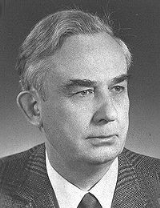
Willi Hennig

Encyclopedia
Emil Hans Willi Hennig was a German
biologist
who is considered the founder of phylogenetic systematics, also known as cladistics
. With his works on evolution
and systematics
he revolutionised the view of the natural order of beings. As a taxonomist, he specialised in dipterans (ordinary flies and mosquitoes).
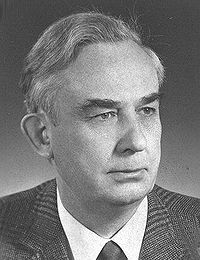
, Oberlausitz. His mother Marie Emma, née Groß, worked as a maid and, later, factory worker. His father Karl Ernst Emil Hennig was a rail worker. Willi had two brothers, Fritz Rudolf Hennig, who became a minister, and Karl Herbert, who went missing at Leningrad in 1943.
In the spring of 1919, Willi Hennig started school in Dürrhennersdorf, and subsequently was at school in Taubenheim an der Spree and Oppach. Rudolf Hennig described the family as calm; his father possessed an even temperament.
As of 1927, Willi Hennig continued his education at the Realgymnasium and boarding school in Klotzsche near Dresden
. Here he met his first mentor M. Rost. Rost had an interest in insects and introduced Hennig to Wilhelm Meise
, who worked as a scientist at the Dresdener Museum für Tierkunde (Zoological Museum Dresden). In 1930, Hennig skipped a year, and graduated on February 26, 1932. As early as 1931, Willi Hennig composed an essay entitled Die Stellung der Systematik in der Zoologie ("The state of systematics in zoology") as part of his school work, published posthumously in 1978. It showed his interest as well as his considered treatment of systematic problems. Besides school, Hennig worked as a volunteer at the museum and, in collaboration with Meise, saw to the systematic and biogeographical investigation of the "flying" snakes of the genus Dendrophis
that became his first published work.
From the summer semester of 1932 onwards, Hennig read zoology, botany and geology at the University of Leipzig. He would continue to visit the Museum in Dresden. There, he met the curator of the entomological collection, the Dipteran expert Fritz Isidor van Emden. Hennig saw him regularly until van Emden was expelled from National Socialist Germany for having a Jewish wife.
Hennig, however, developed a deep friendship with Emden's successor, Klaus Günther. Hennig was able to conclude his studies with a dissertation entitled, Beiträge zur Kenntnis des Kopulationsapparates der cyclorrhaphen Dipteren. By this time, Hennig had published eight scientific papers. Besides his 300-page revision of the Tylidae (now classed as Micropezidae
), there were further papers on Diptera and the agamid genus Draco of gliding lizards. After his studies, Hennig was Volontär at the State Museum for Zoology in Dresden
. On January 1, 1937, he obtained a scholarship from the Deutsche Forschungsgemeinschaft
(DFG) to work at the German Entomological Institute of the Kaiser-Wilhelm-Gesellschaft in Berlin-Dahlem
. On May 13, 1939, Hennig married his former fellow student Irma Wehnert. By 1945, they had three sons, Wolfgang (born 1941), Bernd (born 1943) and Gerd (born 1945).
, he was deployed in the infantry in Poland, France, Denmark and Russia. He was injured by grenade shrapnel in 1942 and was subsequently used as entomologist at the Institute for Tropical Medicine and Hygiene in Berlin, carrying the title "Sonderführer Z". Just before the war ended, he was sent to Italy to the 10th Army, Heeresgruppe C, to fight malaria
and other epidemic diseases. At the end of the war in May 1945, he was captured by the British while he was with the Malaria training corps at the Gulf of Briest, and was only released in the autumn. Through his active participation in war as soldier and scientist Hennig was later subjected to accusations that he had been a member of the National Socialist party, especially by the Italian biologist and founder of panbiogeography, Leon Croizat
. However, there is no evidence to support the claim. Hennig was never a member of the National Socialist party and did not support their views on any public occasion.
During his time as prisoner of war, Hennig began to draft his most important contribution to systematics, not published until 1950. The rough draft was composed with pencil and ballpoint pen into an A4 exercise book, spanning 170 pages. During the war, he also published a further 25 scientific papers. Most of the correspondence and literature research was conducted by his wife, Irma.
. On October 10 of the same year, he was offered a professorship with teaching responsibilities, which he fulfilled lecturing on special zoology of invertebrates, systematic zoology and taxonomic practicals. In the same year, he published his Basic outline of a theory of phylogenetic systematics, and further works on the methodology of phylogenetic systematics followed in the ensuing years, accompanied by numerous taxonomic works about Diptera. His two-volume Pocket book of zoology, in which he applied phylogenetic systematics to invertebrates for the first time, was particularly successful.
He continued working at the German Entomological Institute in the Soviet Sector of Berlin, Berlin-Friedrichshagen, all the while living in the American sector in Berlin-Steglitz. On a trip to France with his son on August 13, 1961, he heard of the impending Berlin Wall and returned to Berlin immediately to quit his appointment. Moving to East Berlin was out of the question, as Hennig held anti-communist views and already had a troubled relationship with the Sozialistische Einheitspartei Deutschlands (Socialist Unity Party of Germany, SED) that was the sole political party of East Germany, as Hennig had repeatedly helped employees of the institute gain employment in the West.
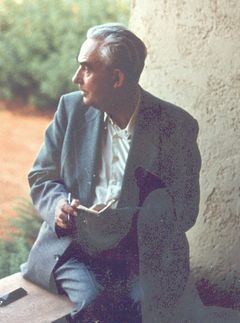 In West Berlin, Hennig was given an interim post at the Technische Universität Berlin as Distinguished Professor. He rejected offers from the U.S. Department of Agriculture in Washington, D.C.
and an offer made by his friend Elmo Hardy, to become a Research Fellow at the University of Hawaii
in Honolulu, citing as reasons that the education of his sons took priority for him, and that he needed to have the "cultural witnesses of the antique Greek-Roman Europe within ready access". He instead decided on a post at the State Museum of Natural History in Stuttgart http://science.naturkundemuseum-bw.de/en, where he was given a department for phylogenetic research. In April 1963, he moved to Ludwigsburg
-Pflugfelden for this position. The scientific collections of the museum had been provisorily kept in Ludwigsburg and remained here until their re-housing at the new site of the museum at Stuttgart's Löwentor, in 1985.
Hennig's works in Stuttgart dealt almost exclusively with taxonomic revisions of Dipterans. For the Stuttgarter Beiträge zur Naturkunde, where he published the majority of his works, he completed 29 issues by the end of his life. Significant are the review articles published in Erwin Lindner
's Flies of the Palaearctic Regions and the Handbuch der Zoologie. The cladistic methodology was also represented in several published works, foremost among them the article, Cladistic analysis or cladistic classification? A reply to Ernst Mayr (1974), intended as an internationally accessible reply to the criticism Ernst Mayr
had made of Hennig's phylogenetic systematics.
Willi Hennig only visited international institutions abroad twice, in spite of receiving many invitations for guest lectures. From September 1 to November 30, 1967, he worked at the Entomology Research Institute at Canada's Department of Agriculture in Ottawa
and participated in the International Congress of Entomology in Canberra
from August 22 to 30, 1972. With his wife, he also visited Bangkok, New Guinea (where much of Mayr's understanding of bird taxonomy originated) and Singapore on this latter trip. His stay in Canada was also used for visits to various entomological collections in museums of the US, including Cambridge, Chicago
, Washington, D.C.
and New York
, always in the hope of finding further amber inclusions of Dipterans, that featured prominently in his research of the late 1960s and early 1970s. On the initiative of Klaus Günther, who by then held a chair at the Freie Universität Berlin, Hennig was given an honorary doctorate on December 4, 1968; for health reasons, he could not accept this honour in person, and it was presented to him by Günther on March 21, 1969 in Stuttgart. On the initiative of students whom he had lectured on several animal taxa, Hennig was made an honorary professor at the Eberhard Karls University of Tübingen
on February 27, 1970.
In the night of November 5, 1976, Hennig died of a heart attack
at Ludwigsburg. He had previously repeatedly cancelled lectures with reference to his fading health, and had already had an attack on his journey to Ottawa. He was interred on November 10 at the Bergfriedhof in Tübingen
.
Articles:
Germans
The Germans are a Germanic ethnic group native to Central Europe. The English term Germans has referred to the German-speaking population of the Holy Roman Empire since the Late Middle Ages....
biologist
Biologist
A biologist is a scientist devoted to and producing results in biology through the study of life. Typically biologists study organisms and their relationship to their environment. Biologists involved in basic research attempt to discover underlying mechanisms that govern how organisms work...
who is considered the founder of phylogenetic systematics, also known as cladistics
Cladistics
Cladistics is a method of classifying species of organisms into groups called clades, which consist of an ancestor organism and all its descendants . For example, birds, dinosaurs, crocodiles, and all descendants of their most recent common ancestor form a clade...
. With his works on evolution
Evolution
Evolution is any change across successive generations in the heritable characteristics of biological populations. Evolutionary processes give rise to diversity at every level of biological organisation, including species, individual organisms and molecules such as DNA and proteins.Life on Earth...
and systematics
Systematics
Biological systematics is the study of the diversification of terrestrial life, both past and present, and the relationships among living things through time. Relationships are visualized as evolutionary trees...
he revolutionised the view of the natural order of beings. As a taxonomist, he specialised in dipterans (ordinary flies and mosquitoes).
Early years and studies
Hennig was born in DürrhennersdorfDürrhennersdorf
Dürrhennersdorf is a municipality in the district Görlitz, in Saxony, Germany.-References:...
, Oberlausitz. His mother Marie Emma, née Groß, worked as a maid and, later, factory worker. His father Karl Ernst Emil Hennig was a rail worker. Willi had two brothers, Fritz Rudolf Hennig, who became a minister, and Karl Herbert, who went missing at Leningrad in 1943.
In the spring of 1919, Willi Hennig started school in Dürrhennersdorf, and subsequently was at school in Taubenheim an der Spree and Oppach. Rudolf Hennig described the family as calm; his father possessed an even temperament.
As of 1927, Willi Hennig continued his education at the Realgymnasium and boarding school in Klotzsche near Dresden
Dresden
Dresden is the capital city of the Free State of Saxony in Germany. It is situated in a valley on the River Elbe, near the Czech border. The Dresden conurbation is part of the Saxon Triangle metropolitan area....
. Here he met his first mentor M. Rost. Rost had an interest in insects and introduced Hennig to Wilhelm Meise
Wilhelm Meise
Wilhelm Meise was a German ornithologist. He studied at the University of Berlin from 1924-1928, where he did his Ph.D. dissertation on the distribution of the Carrion Crow and the Hooded Crow, and hybridization between them under the supervision of Professor Erwin Stresemann, ....
, who worked as a scientist at the Dresdener Museum für Tierkunde (Zoological Museum Dresden). In 1930, Hennig skipped a year, and graduated on February 26, 1932. As early as 1931, Willi Hennig composed an essay entitled Die Stellung der Systematik in der Zoologie ("The state of systematics in zoology") as part of his school work, published posthumously in 1978. It showed his interest as well as his considered treatment of systematic problems. Besides school, Hennig worked as a volunteer at the museum and, in collaboration with Meise, saw to the systematic and biogeographical investigation of the "flying" snakes of the genus Dendrophis
Dendrelaphis
Dendrelaphis is a genus of colubrid snakes, which includes various tree snakes of Australia, New Guinea and Asia. There are over twenty described species in this genus.- Species :'...
that became his first published work.
From the summer semester of 1932 onwards, Hennig read zoology, botany and geology at the University of Leipzig. He would continue to visit the Museum in Dresden. There, he met the curator of the entomological collection, the Dipteran expert Fritz Isidor van Emden. Hennig saw him regularly until van Emden was expelled from National Socialist Germany for having a Jewish wife.
Hennig, however, developed a deep friendship with Emden's successor, Klaus Günther. Hennig was able to conclude his studies with a dissertation entitled, Beiträge zur Kenntnis des Kopulationsapparates der cyclorrhaphen Dipteren. By this time, Hennig had published eight scientific papers. Besides his 300-page revision of the Tylidae (now classed as Micropezidae
Micropezidae
The Micropezidae are a moderate-sized family of acalyptrate muscoid flies in the insect order Diptera, comprising about 500 species in about 50 genera and 5 subfamilies worldwide,...
), there were further papers on Diptera and the agamid genus Draco of gliding lizards. After his studies, Hennig was Volontär at the State Museum for Zoology in Dresden
Staatliches Museum für Tierkunde Dresden
The State Museum of Zoology in Dresden is a natural history museum that houses 10,000-50,000 specimens, including skeletons and large insect collections. Many are types. The collection suffered war damage and whilst catalogued the database is not computerized. Loans are possible and material can...
. On January 1, 1937, he obtained a scholarship from the Deutsche Forschungsgemeinschaft
Deutsche Forschungsgemeinschaft
The Deutsche Forschungsgemeinschaft is an important German research funding organization and the largest such organization in Europe.-Function:...
(DFG) to work at the German Entomological Institute of the Kaiser-Wilhelm-Gesellschaft in Berlin-Dahlem
Dahlem (Berlin)
Dahlem is a locality of the Steglitz-Zehlendorf borough in southwestern Berlin. Until Berlin's 2001 administrative reform it was a part of the former borough of Zehlendorf. Dahlem is one of the most affluent parts of the city and home to the main campus of the Free University of Berlin with the...
. On May 13, 1939, Hennig married his former fellow student Irma Wehnert. By 1945, they had three sons, Wolfgang (born 1941), Bernd (born 1943) and Gerd (born 1945).
As a military entomologist
Willi Hennig was drafted in 1938 to train for the infantry and concluded this course in 1939. As of the start of World War IIWorld War II
World War II, or the Second World War , was a global conflict lasting from 1939 to 1945, involving most of the world's nations—including all of the great powers—eventually forming two opposing military alliances: the Allies and the Axis...
, he was deployed in the infantry in Poland, France, Denmark and Russia. He was injured by grenade shrapnel in 1942 and was subsequently used as entomologist at the Institute for Tropical Medicine and Hygiene in Berlin, carrying the title "Sonderführer Z". Just before the war ended, he was sent to Italy to the 10th Army, Heeresgruppe C, to fight malaria
Malaria
Malaria is a mosquito-borne infectious disease of humans and other animals caused by eukaryotic protists of the genus Plasmodium. The disease results from the multiplication of Plasmodium parasites within red blood cells, causing symptoms that typically include fever and headache, in severe cases...
and other epidemic diseases. At the end of the war in May 1945, he was captured by the British while he was with the Malaria training corps at the Gulf of Briest, and was only released in the autumn. Through his active participation in war as soldier and scientist Hennig was later subjected to accusations that he had been a member of the National Socialist party, especially by the Italian biologist and founder of panbiogeography, Leon Croizat
Léon Camille Marius Croizat
Leon Camille Marius Croizat was a French-Italian scholar and botanist who developed a synthesis of evolution of biological form over space, in time, which he named Panbiogeography.-Life:...
. However, there is no evidence to support the claim. Hennig was never a member of the National Socialist party and did not support their views on any public occasion.
During his time as prisoner of war, Hennig began to draft his most important contribution to systematics, not published until 1950. The rough draft was composed with pencil and ballpoint pen into an A4 exercise book, spanning 170 pages. During the war, he also published a further 25 scientific papers. Most of the correspondence and literature research was conducted by his wife, Irma.
1950s: Basic outline of a theory of phylogenetic systematics
From December 1, 1945 to March 31, 1947, Willi Hennig stood in for his thesis supervisor Paul Buchner as assistant to Professor Friedrich Hempelmann at the University of Leipzig, giving lectures in general biology, zoology and special zoology of insects. He returned to the German Entomological Institute in Berlin on April 1, 1947, and gave up his position in Leipzig. From 1 November 1949 he led the section for systematic entomology and was second director of the institute. On August 1, 1950, he habilitated in zoology at the Brandenburgische Landeshochschule in PotsdamPotsdam
Potsdam is the capital city of the German federal state of Brandenburg and part of the Berlin/Brandenburg Metropolitan Region. It is situated on the River Havel, southwest of Berlin city centre....
. On October 10 of the same year, he was offered a professorship with teaching responsibilities, which he fulfilled lecturing on special zoology of invertebrates, systematic zoology and taxonomic practicals. In the same year, he published his Basic outline of a theory of phylogenetic systematics, and further works on the methodology of phylogenetic systematics followed in the ensuing years, accompanied by numerous taxonomic works about Diptera. His two-volume Pocket book of zoology, in which he applied phylogenetic systematics to invertebrates for the first time, was particularly successful.
He continued working at the German Entomological Institute in the Soviet Sector of Berlin, Berlin-Friedrichshagen, all the while living in the American sector in Berlin-Steglitz. On a trip to France with his son on August 13, 1961, he heard of the impending Berlin Wall and returned to Berlin immediately to quit his appointment. Moving to East Berlin was out of the question, as Hennig held anti-communist views and already had a troubled relationship with the Sozialistische Einheitspartei Deutschlands (Socialist Unity Party of Germany, SED) that was the sole political party of East Germany, as Hennig had repeatedly helped employees of the institute gain employment in the West.
1961 to 1976
Washington, D.C.
Washington, D.C., formally the District of Columbia and commonly referred to as Washington, "the District", or simply D.C., is the capital of the United States. On July 16, 1790, the United States Congress approved the creation of a permanent national capital as permitted by the U.S. Constitution....
and an offer made by his friend Elmo Hardy, to become a Research Fellow at the University of Hawaii
University of Hawaii
The University of Hawaii System, formally the University of Hawaii and popularly known as UH, is a public, co-educational college and university system that confers associate, bachelor, master, and doctoral degrees through three university campuses, seven community college campuses, an employment...
in Honolulu, citing as reasons that the education of his sons took priority for him, and that he needed to have the "cultural witnesses of the antique Greek-Roman Europe within ready access". He instead decided on a post at the State Museum of Natural History in Stuttgart http://science.naturkundemuseum-bw.de/en, where he was given a department for phylogenetic research. In April 1963, he moved to Ludwigsburg
Ludwigsburg
Ludwigsburg is a city in Baden-Württemberg, Germany, about north of Stuttgart city centre, near the river Neckar. It is the largest and primary city of the Ludwigsburg urban district with about 87,000 inhabitants...
-Pflugfelden for this position. The scientific collections of the museum had been provisorily kept in Ludwigsburg and remained here until their re-housing at the new site of the museum at Stuttgart's Löwentor, in 1985.
Hennig's works in Stuttgart dealt almost exclusively with taxonomic revisions of Dipterans. For the Stuttgarter Beiträge zur Naturkunde, where he published the majority of his works, he completed 29 issues by the end of his life. Significant are the review articles published in Erwin Lindner
Erwin Lindner
Erwin Lindner was a German entomologist mainly interested in Diptera.He was born in Böglins, Memmingen , 7 April 1888 and died in Stuttgart 30 November 1988, aged 100 years....
's Flies of the Palaearctic Regions and the Handbuch der Zoologie. The cladistic methodology was also represented in several published works, foremost among them the article, Cladistic analysis or cladistic classification? A reply to Ernst Mayr (1974), intended as an internationally accessible reply to the criticism Ernst Mayr
Ernst Mayr
Ernst Walter Mayr was one of the 20th century's leading evolutionary biologists. He was also a renowned taxonomist, tropical explorer, ornithologist, historian of science, and naturalist...
had made of Hennig's phylogenetic systematics.
Willi Hennig only visited international institutions abroad twice, in spite of receiving many invitations for guest lectures. From September 1 to November 30, 1967, he worked at the Entomology Research Institute at Canada's Department of Agriculture in Ottawa
Ottawa
Ottawa is the capital of Canada, the second largest city in the Province of Ontario, and the fourth largest city in the country. The city is located on the south bank of the Ottawa River in the eastern portion of Southern Ontario...
and participated in the International Congress of Entomology in Canberra
Canberra
Canberra is the capital city of Australia. With a population of over 345,000, it is Australia's largest inland city and the eighth-largest city overall. The city is located at the northern end of the Australian Capital Territory , south-west of Sydney, and north-east of Melbourne...
from August 22 to 30, 1972. With his wife, he also visited Bangkok, New Guinea (where much of Mayr's understanding of bird taxonomy originated) and Singapore on this latter trip. His stay in Canada was also used for visits to various entomological collections in museums of the US, including Cambridge, Chicago
Chicago
Chicago is the largest city in the US state of Illinois. With nearly 2.7 million residents, it is the most populous city in the Midwestern United States and the third most populous in the US, after New York City and Los Angeles...
, Washington, D.C.
Washington, D.C.
Washington, D.C., formally the District of Columbia and commonly referred to as Washington, "the District", or simply D.C., is the capital of the United States. On July 16, 1790, the United States Congress approved the creation of a permanent national capital as permitted by the U.S. Constitution....
and New York
New York City
New York is the most populous city in the United States and the center of the New York Metropolitan Area, one of the most populous metropolitan areas in the world. New York exerts a significant impact upon global commerce, finance, media, art, fashion, research, technology, education, and...
, always in the hope of finding further amber inclusions of Dipterans, that featured prominently in his research of the late 1960s and early 1970s. On the initiative of Klaus Günther, who by then held a chair at the Freie Universität Berlin, Hennig was given an honorary doctorate on December 4, 1968; for health reasons, he could not accept this honour in person, and it was presented to him by Günther on March 21, 1969 in Stuttgart. On the initiative of students whom he had lectured on several animal taxa, Hennig was made an honorary professor at the Eberhard Karls University of Tübingen
Eberhard Karls University of Tübingen
Eberhard Karls University, Tübingen is a public university located in the city of Tübingen, Baden-Württemberg, Germany. It is one of Germany's oldest universities, internationally noted in medicine, natural sciences and the humanities. In the area of German Studies it has been ranked first among...
on February 27, 1970.
In the night of November 5, 1976, Hennig died of a heart attack
Myocardial infarction
Myocardial infarction or acute myocardial infarction , commonly known as a heart attack, results from the interruption of blood supply to a part of the heart, causing heart cells to die...
at Ludwigsburg. He had previously repeatedly cancelled lectures with reference to his fading health, and had already had an attack on his journey to Ottawa. He was interred on November 10 at the Bergfriedhof in Tübingen
Tübingen
Tübingen is a traditional university town in central Baden-Württemberg, Germany. It is situated south of the state capital, Stuttgart, on a ridge between the Neckar and Ammer rivers.-Geography:...
.
Selected works
Books:- Die Larvenformen der Dipteren, 3 vols., Berlin: Akademie-Verlag, 1948-1952.
- Grundzüge einer Theorie der phylogenetischen Systematik, Berlin: Deutscher Zentralverlag, 1950.
- Phylogenetic Systematics, translated by D. Davis and R. Zangerl, Urbana: University of Illinois Press, 1966 (reprinted 1979).
- Die Stammesgeschichte der Insekten, Frankfurt an Main: Verlag von Waldemar Kramer, 1969.
- Phylogenetische Systematik, edited by Prof. Dr. Wolfgang Hennig, Berlin and Hamburg: Verlag Paul Parey, 1982.
- Aufgaben und Probleme stammesgeschichtlicher Forschung, Berlin: Paul Parey, 1984.
Articles:
- "Die Schlangengattung Dendrophis," Zoologischer Anzeiger, vol. 99, 1932, 273-297 (gemeinsam mit W. Meise).
- "Beziehungen zwischen geographischer Verbreitung und systematischer Gliederung bei einigen Dipterenfamilien: ein Beitrag zum Problem der Gliederung systematischer Kategorien höherer Ordnung," Zoologischer Anzeiger, vol. 116, 1936, 161-175.
- "Revision der Gattung Draco (Agamidae)," Temminckia: a Journal of Systematic Zoology, vol. 1, 1936, 153-220.
- "Über einige Gesetzmäßigkeiten der geographischen Variation in der Reptiliengattung Draco L.: „parallele“ und konvergente Rassenbildung," Biolog. Zentralblatt, vol. 56, 1936, 549-559.
- "Die Gattung Rachicerus Walker und ihre Verwandten im Baltischen Bernstein," Zool. Anz., vol. 123, 1938, 33-41.
- "Probleme der biologischen Systematik," Forschungen und Fortschritte, vol. 21/23, 1947, 276-279.
- "Kritische Bemerkungen zum phylogenetischen System der Insekten," Beiträge zur Entomologie, vol. 3 (Sonderheft), 1953, 1-85.
- "Flügelgeäder und System der Dipteren unter Berücksichtigung der aus dem Mesozoikum beschriebenen Fossilien," Beiträge zur Entomologie, vol. 4, 1954, 245-388.
- "Systematik und Phylogenese," Bericht Hunderjahrfeier Dtsch. Ent. Ges., 1956, 50-71.
- "Die Familien der Diptera Schizophora und ihre phylogenetischen Verwandtschaftsbeziehungen," Beitr. Ent., vol. 8, 1958, 508-688.
- "Die Dipteren-Fauna von Neuseeland als systematisches und tiergeographisches Problem," Beitr. Ent., vol. 10, 1960, 221-329.
- "Phylogenetic Systematics," Ann. Rev. Entomol., vol. 10, 1965, 97-116.
- "Dixidae aus dem Baltischen Bernstein, mit Bemerkungen über einige andere fossile Arten aus der Gruppe Culicoidea," Beitr. Naturkde, vol. 153, 1966, 1-16.
- "Die sogenannten „niederen Brachycera“ im Baltischen Bernstein," Beitr. Naturkde, vol. 174, 1967, 1-51.
- "Kritische Bemerkungen über den Bau der Flügelwurzel bei den Dipteren und die Frage nach der Monophylie der Nematocera," Beitr. Naturkde, vol. 193, 1968, 1-23.
- "Cladistic Analysis or Cladistic Classification? A reply to Ernst Mayr," Syst. Zool., vol. 24, 1975, 244-256.